



Host a Virtual Halloween Party: Audio,…

20 Minimalist Halloween Nail Ideas for…

Can Free Affinity Help You Build…

12 Lower-Sugar Halloween Treat Swaps Worth…

Can Hostinger AI Builder Launch a…

A 5-Step Screen-Free Autumn Reading Ritual…

Plug-In Solar Panels UK: Are They…

15 Last-Minute Zoom Halloween Costumes for…

Meta One Explained: Is the Subscription…

10 Low-Fuss Dog Halloween Ideas: Comfort…

Plaud One Explained: Can AI Earbuds…

9 Gothic Dinner Table Ideas for…

Namecheap vs Dynadot

7 UK Ghost Tours and How…

Convertkit Vs Beehiiv

Do You Really Need a £420…

Bluehost vs Siteground

15 Gentle Spooky Autumn Books to…

Namecheap review

How to Remove Halloween Face Paint…
A walking pad sounds wonderfully simple until it has to fit your desk, floor, room, storage space, children, pets, calls and the person downstairs who did not request an indoor migration pattern. The best walking pads can help desk workers move more during admin, webinars, reading and planning, but only if they physically work in your actual home. This is not about motivation first. It is about fit, noise, safety and realistic work tasks.
Check desk height before buying.
Choose by room constraint, not speed.
Think about noise and floor vibration.
Match the pad to realistic work tasks.
Check storage weight and wheels.
Treat child and pet safety seriously.
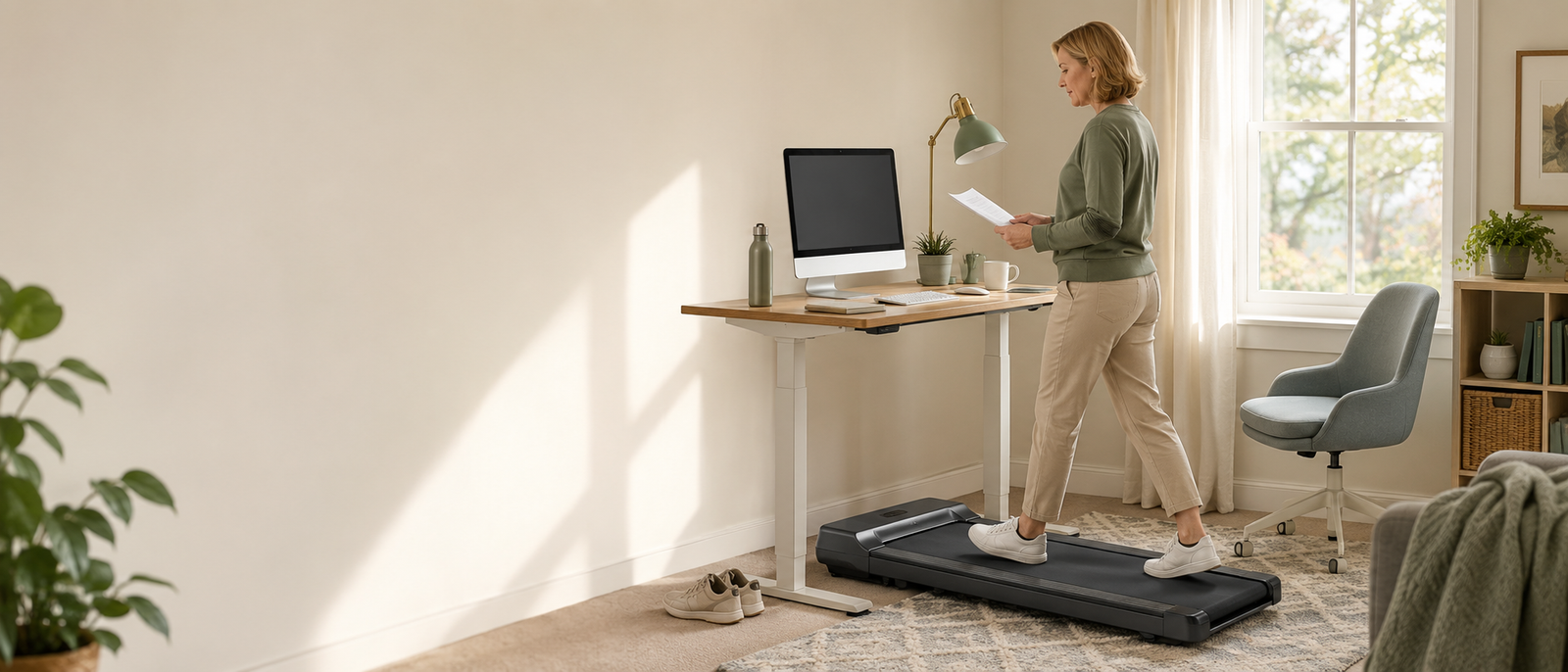
Most Relevant Audience
This article is for remote workers, home workers, desk workers, freelancers, bloggers, creators, side hustlers, parents, carers and small business owners who want more movement without turning lunch breaks into formal gym appointments. It is especially useful if you work in short school-hour blocks, share your workspace with family life or need gentle movement that does not take over the whole room.
What Makes A Walking Pad Worth Buying
It needs a standing-height setup
A walking pad only works for desk work if you have a standing-height desk, adjustable desk or stable riser. A normal seated desk will not do the job. If your screen is too low or your keyboard sits awkwardly, walking while working can create shoulder, wrist and neck irritation.
It must fit the room
Measure the pad, the space around it and where it will live when not in use. A walking pad that technically fits but blocks a doorway, cupboard or family walkway will become annoying fast. Small home offices need movement tools that do not behave like permanent furniture.
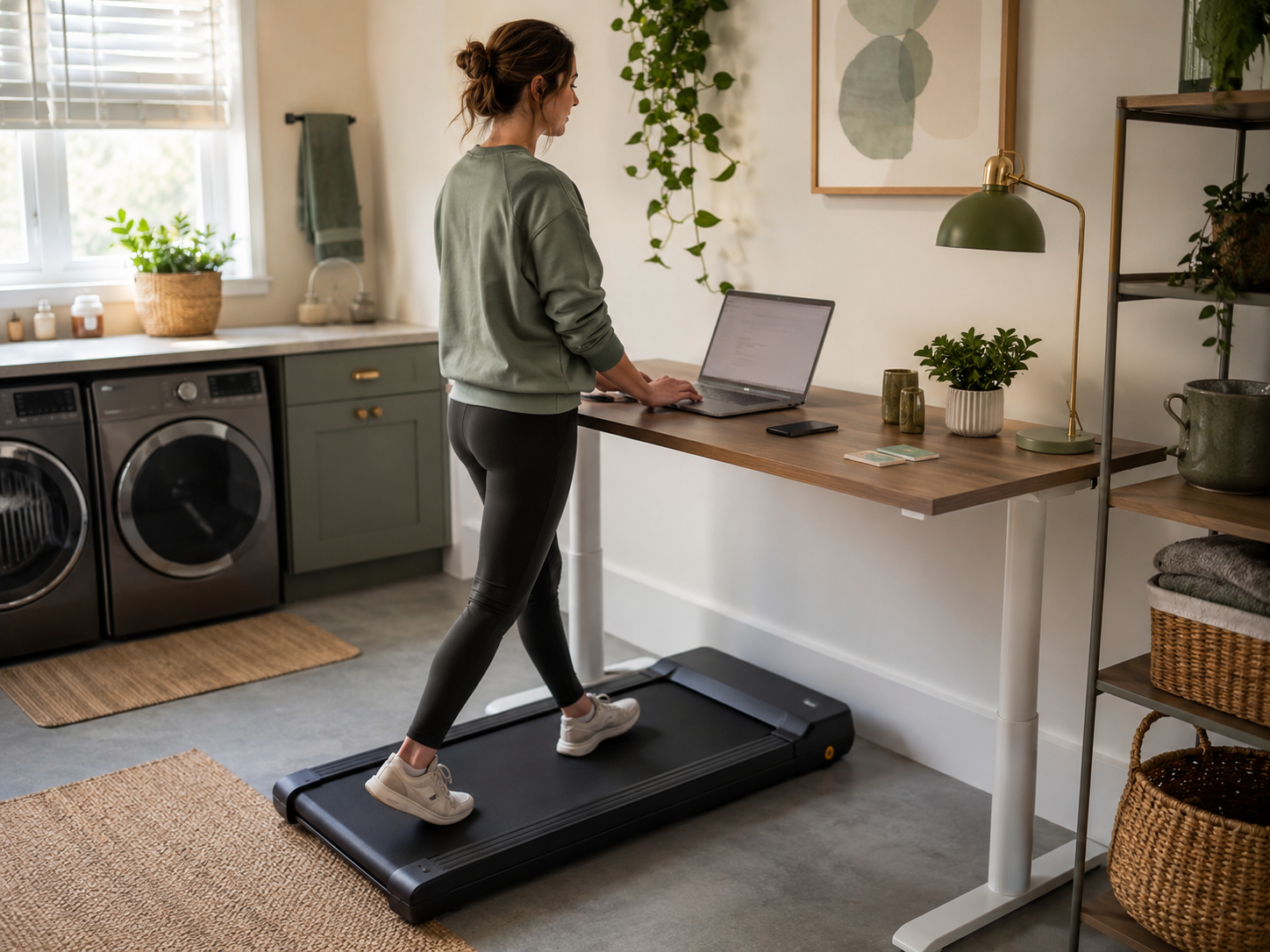
It should stay quiet enough
Noise is not just motor sound. Footfall, belt movement, floor vibration and room acoustics all matter. This is especially important in flats, upstairs rooms and shared homes. A walking pad you avoid because it feels too loud is not really supporting your workday.
It should suit the work you do
Walking pads are best for calls, webinars, reading, planning and light admin. They are less ideal for detailed writing, design work, spreadsheets or anything needing precise mouse control. Buy for the tasks you can genuinely do while moving, not the fantasy of typing perfectly at speed.
The Real Buying Question
Do not start with the fastest model. Ask whether the walking pad fits your desk, floor, storage, noise limits and work habits. A good walking pad should make gentle movement easier. It should not turn your home office into a wobbly fitness experiment with emails attached.
Choose By Your Main Constraint
Small room
Choose a compact model if floor space is your biggest problem. Check both use size and storage size. A smaller pad can work well for tight spaces, but only if the belt still feels stable enough. Compact should not mean nervous little steps while answering emails.
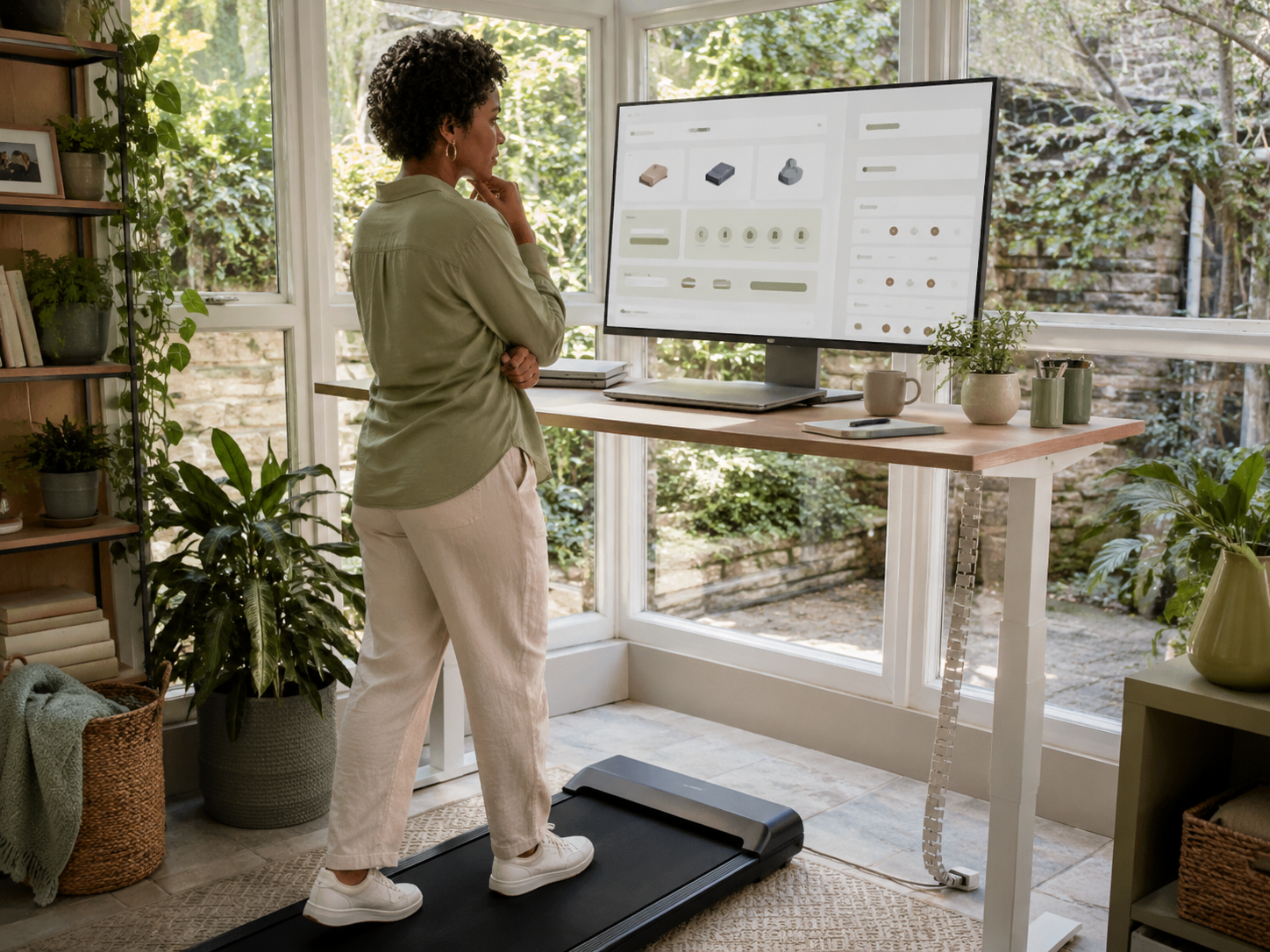
Shared home or calls
Choose the quietest practical option if you work near bedrooms, homework areas, family spaces or call-heavy routines. Test microphone noise before important meetings. A walking pad can help during webinars or admin, but it should not become the soundtrack to everyone else’s day.
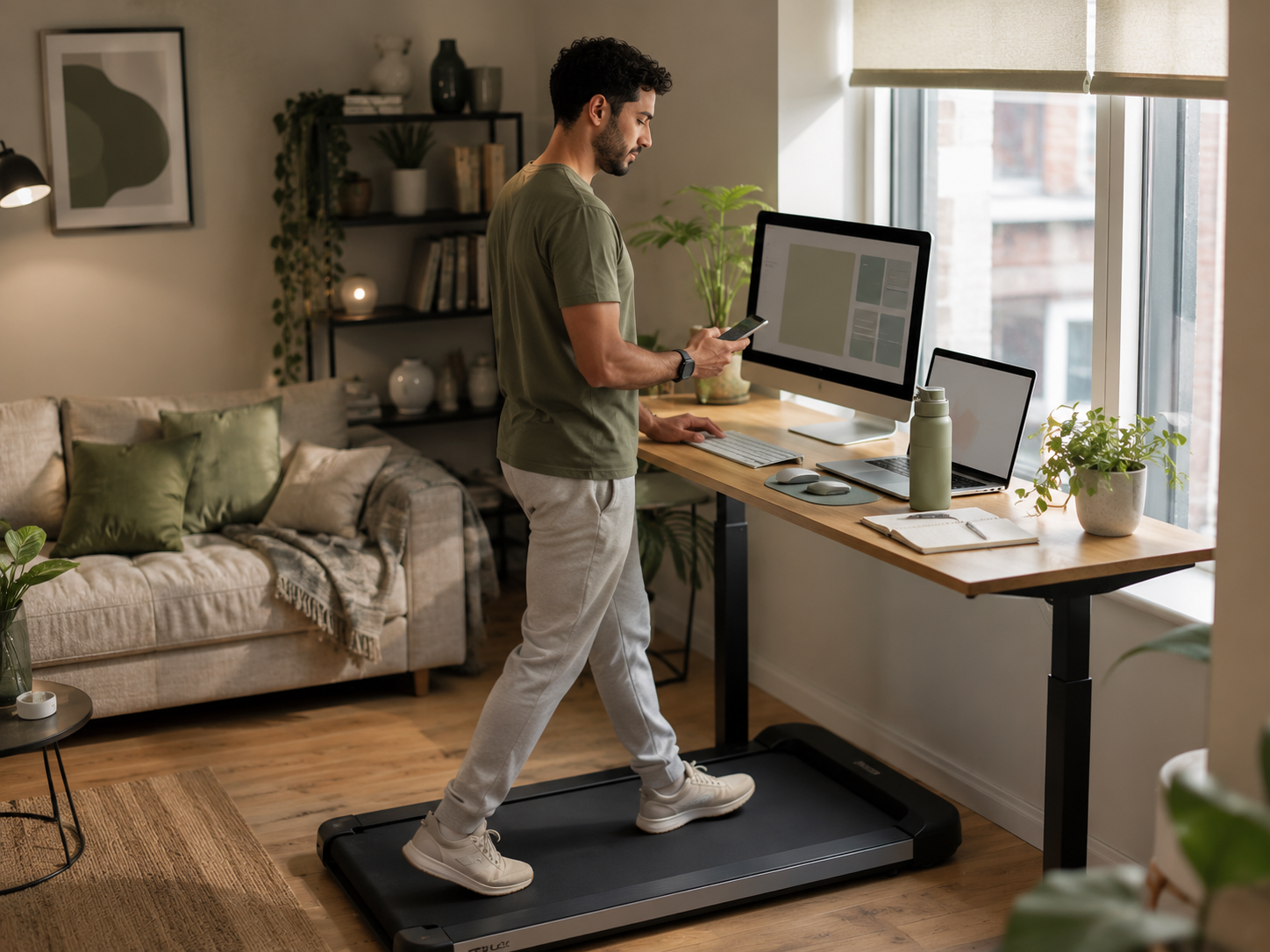
Upstairs flat or thin floors
Check floor type, vibration transfer and building rules if relevant before buying. A treadmill mat may help reduce vibration and protect flooring, but it will not make every setup silent. If you live above someone, noise and footfall matter more than product-page optimism.
Limited storage
Check weight, wheels, folding design and where the pad will live after use. Parents and carers may need to move it before children come home or when the room becomes family space again. A pad that is too heavy to move may quietly stop being used.
Make Practical Fit The Main Feature
This article is not really about becoming more motivated. It is about whether a walking pad will work in your real home. Space, noise, desk height, storage and safety decide whether you use it regularly. The best walking pads are the ones that fit those limits before they promise anything else.
Best Walking Pads Review
Match The Machine To The Job
UREVO is the best first comparison for everyday desk walking. DeerRun Q1 Mini suits compact budget use. Sperax works as a simple entry-level option. WalkingPad X21 fits buyers who want a premium folding treadmill-style machine, not just quiet steps under a desk during emails.
Walking Pad vs Treadmill
Walking pads are for gentle movement
Walking pads are usually designed for slower, lower-intensity walking. They work well for calls, reading, webinars and light admin. Their main advantage is convenience. You can add steps without changing clothes, leaving home or turning lunchtime into a gym appointment with paperwork.
Treadmills are for stronger exercise
Traditional treadmills are usually better for running, incline work, higher speeds and structured workouts. They are often larger, heavier and louder. If your main goal is proper exercise sessions, a treadmill may suit you better than a compact walking pad.
Folding treadmill styles sit between both
Some models, including WalkingPad X21, sit closer to a foldable treadmill than a simple under-desk pad. That can be useful if you want more exercise flexibility. It may be less ideal if your only goal is quiet, slow walking while typing.
Desk walking needs lower expectations
Walking while working is movement support, not a workout performance. Slow speed, relaxed posture and stable footing matter more than pace. If your work gets worse, reduce the speed or use the pad only for easier tasks.
Walking While Working Should Feel Boring
The best walking pad pace for work is usually slower than your ego expects. You should be able to read, talk and think without feeling chased by your own equipment. If you are typing like a panicked flamingo, slow down. Movement should support the task, not wrestle it.
Noise, Vibration And Upstairs Use
Motor noise is only one part
Walking pad noise is not just the motor. Belt movement, footfall, floor vibration and room acoustics all matter. A machine can sound fine in one room and annoying in another. Upstairs rooms, flats and shared homes need extra caution before long walking sessions.
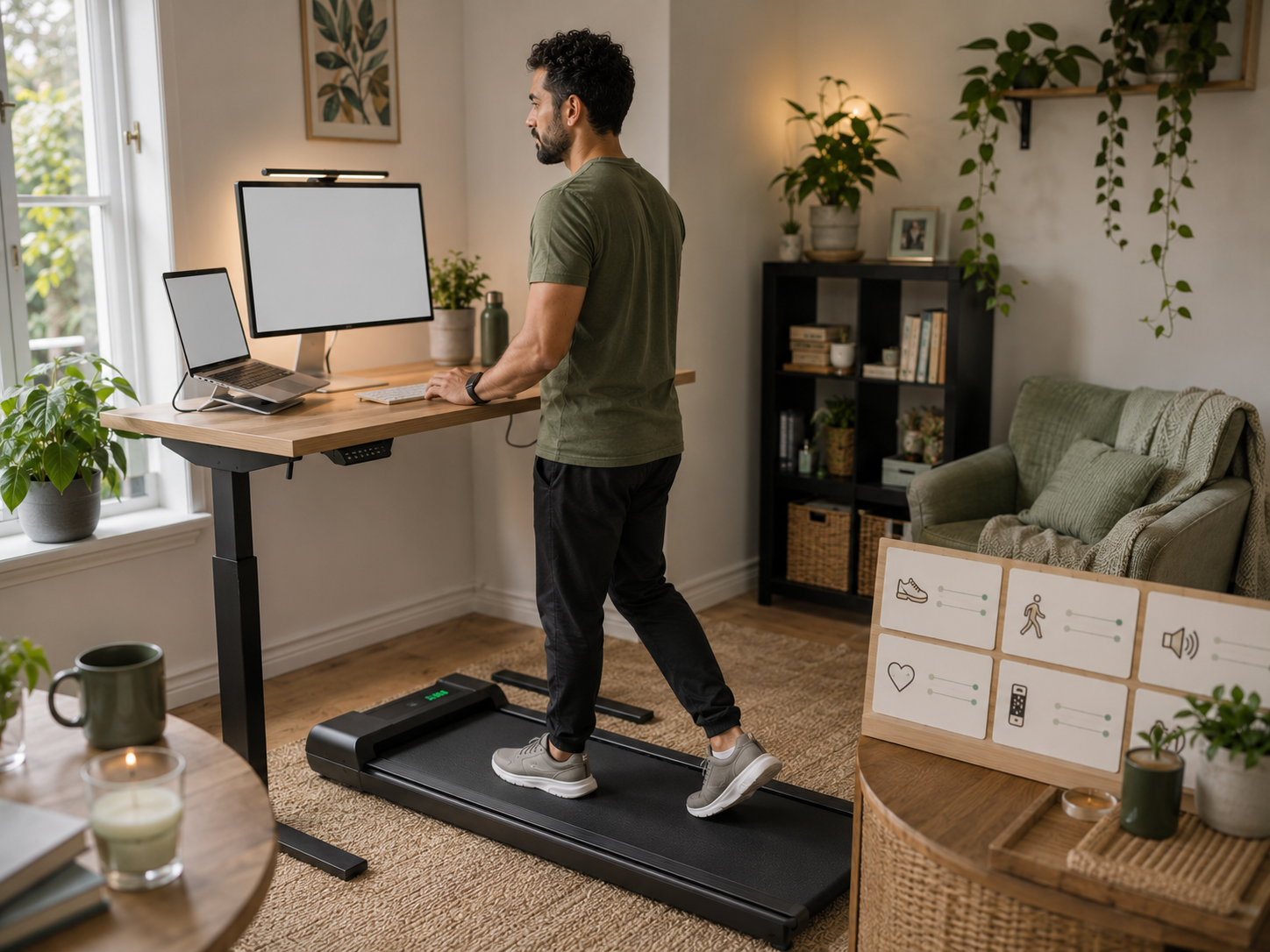
Mats can help, but not magic
A treadmill mat can reduce vibration, protect flooring and make the setup feel more stable. It will not make every walking pad silent. If vibration travels through your floor, shorter sessions, slower speeds and careful timing may matter more than buying another accessory.
Calls need testing first
Walking during calls can be useful, but only if noise stays low and your breathing stays normal. Test the pad with your microphone before using it in important meetings. Nobody needs a client call to sound like it has light airport infrastructure underneath it.
Timing matters in family spaces
If your workspace is near bedrooms, homework areas or shared rooms, choose walking times carefully. A quiet school-hour admin block may work well. Bedtime, homework chaos or the moment everyone comes home may not be the best time for powered movement.
Sound Can Decide Whether You Use It
A walking pad can look perfect online and still fail at home if it is too loud, too vibrational or too awkward for shared spaces. Noise is not a minor detail. It decides whether the pad becomes part of your routine or something you only use when nobody else is around to resent it.
Desk Height, Safety And Typing Comfort
Desk height comes first
Your elbows should feel relaxed, your screen should sit at a sensible height and your shoulders should not climb toward your ears. A walking pad with a poor desk setup is not wellness. It is standing discomfort with a moving belt underneath.
Typing may feel different
Typing while walking changes accuracy and focus. Start with easy admin, calls, reading or planning. Save detailed writing, design work and spreadsheets for sitting or standing still if walking makes you slower, tense or strangely annoyed.
Children and pets need clear boundaries
A walking pad is a moving machine, not a harmless desk accessory. Keep children, pets, toys, cables and laundry away from the belt. Store it safely, unplug it when needed and do not leave it where curious hands, paws or tiny vehicles can investigate.
Footing should feel stable
Follow the manufacturer’s guidance on footwear and use. Some people prefer walking shoes; others use pads lightly in socks if allowed. The key is stable footing. Your webinar should not include a subplot where your socks and the belt enter negotiations.
Why This Matters If You Work From Home
If sitting too long keeps draining your body and mood, a walking pad can support short movement blocks during the day. It pairs naturally with small movement habits, realistic step goals and desk-worker fitness apps because the aim is not athletic reinvention. It is interrupting long sitting before your body starts filing complaints.
Speed Range, Weight Capacity And Storage
Slow speeds matter most for work
For desk use, low speed control matters more than maximum speed. You need a pace that lets you talk, think and use a keyboard comfortably. Fast speeds are better for exercise blocks, not for writing emails unless you enjoy typos with cardio.
Weight capacity needs checking
Always check the stated weight capacity for the exact model. A suitable capacity supports safer use and better motor performance. Do not guess from photos or reviews. Walking pads are practical tools, but they still need to match the person using them.
Storage decides daily use
A walking pad that stores easily is more likely to stay in rotation. Check whether it fits under a sofa, bed, desk or against a wall. Also check weight, wheels and how awkward it is to move. Heavy convenience is still inconvenience.
Belt size affects confidence
A narrow belt can make walking feel tense, especially if you are new to desk walking. Wider belts usually feel more stable, but they take up more space. Choose the belt size that fits both your room and your comfort, not just the smallest machine online.
Common Walking Pad Buying Mistakes
Buying before measuring the room
Measure the workspace before buying. Check the walking pad length, width, storage position and the space around your desk. Do not trust the hopeful part of your brain that says “it will probably fit.” That part has never met your cupboard.
Ignoring desk setup
A walking pad without the right desk height can create shoulder, wrist and neck discomfort. If your screen is too low or keyboard too high, walking will not feel good. Fix the workstation before expecting the walking pad to solve sitting.
Choosing speed over stability
Fast speeds look impressive, but stability matters more for desk work. A smooth belt, comfortable width and predictable controls are more important than chasing a pace you cannot use while working. For calls and admin, slow and steady is the point.
Forgetting storage reality
If the walking pad is awkward to store, you may stop using it. Check weight, wheels, folding design and where it will live between sessions. A machine that blocks the room will eventually lose to normal household irritation.
FAQ
What is the best walking pad for home office use?
The best walking pad for home office use depends on your desk, space, floor and noise limits. UREVO 2-in-1 Walking Pad is a strong overall option, DeerRun Q1 Mini suits compact budgets, Sperax is a simple entry-level pick, and WalkingPad X21 is better for premium folding treadmill-style use.
Are walking pads worth it for desk workers?
Walking pads can be worth it for desk workers who want gentle movement during calls, reading, admin or webinars. They are most useful when they fit your room, desk height, storage space, noise tolerance and realistic work tasks.
Can you use a walking pad while working?
You can use a walking pad while working, but it depends on the task. Walking suits calls, reading, webinars, planning and light admin. Detailed typing, design work or spreadsheets may be harder, especially until you find a comfortable slow pace.
What is the difference between a walking pad and a treadmill?
A walking pad is usually smaller and designed for slower walking, often under or near a desk. A treadmill is usually larger and better for running, incline work or higher-intensity exercise. Some premium folding models sit between both categories.
Are walking pads too noisy for upstairs rooms?
Some walking pads may be too noisy or vibrational for upstairs rooms, depending on the model, flooring, building and walking style. Motor noise, footfall and vibration all matter. A mat may help, but it will not make every setup silent.
Should I buy UREVO, DeerRun, Sperax or WalkingPad?
Choose UREVO if you want a strong overall walking pad for desk-worker movement. Choose DeerRun Q1 Mini if compact budget use matters. Sperax suits simple entry-level walking. WalkingPad X21 is better if you want a premium folding treadmill-style option with more exercise flexibility.
Final Verdict
The best walking pads are not automatically the fastest, flashiest or most expensive. They are the ones that fit your desk, room, floor, storage space, noise tolerance and the way you actually work from home.
You should not buy the fastest walking pad just because sitting too much feels bad. Choose the one that fits your standing desk setup, floor, shared home, storage limits and realistic tasks. Gentle movement during calls, admin, reading and planning is useful only when the machine works with your home rather than taking it over.


