


Host a Virtual Halloween Party: Audio,…

Autumn Comfort Food: How to Eat…

Cosy Spooky Desk Styling: Quick Ideas…

Outdoor Halloween Movie Night: Setup, Sound…

The Calm Autumn Reset: 10 Small…

Create an Autumn Wind-Down Routine That…

Heated Throw vs Heated Blanket vs…

Autumn Sleep Reset: Light, Temperature and…

Dehumidifiers Explained: When Are They Actually…

A Realistic Autumn Walking Routine for…

Autumn Social Reset: Small Plans for…

Heated Airer vs Dehumidifier: Which Is…

Calm Autumn Reset: 10 Small Changes…
The weather has turned and soups and stews are back. This is a food-first guide to getting more fibre from ordinary autumn meals across a working day at home: porridge, baked potatoes, bean-packed stews and sensible snacks.
No supplements, no overhaul. Just small swaps drawn from NHS, British Heart Foundation and British Nutrition Foundation advice.
Quick Overview
- UK guidelines say adults should aim for 30g of fibre a day, and most fall short.
- Porridge with fruit and baked potatoes with the skin on are NHS-listed warming options.
- Adding beans, lentils, chickpeas and vegetables to stews, soups and curries is an NHS tip for more fibre.
- Frozen and tinned vegetables count towards 5 A Day, so they suit busy days.
- Build up slowly and drink fluids, because a sudden jump can cause bloating.
- A varied mix of fibre-rich foods beats chasing one perfect number.
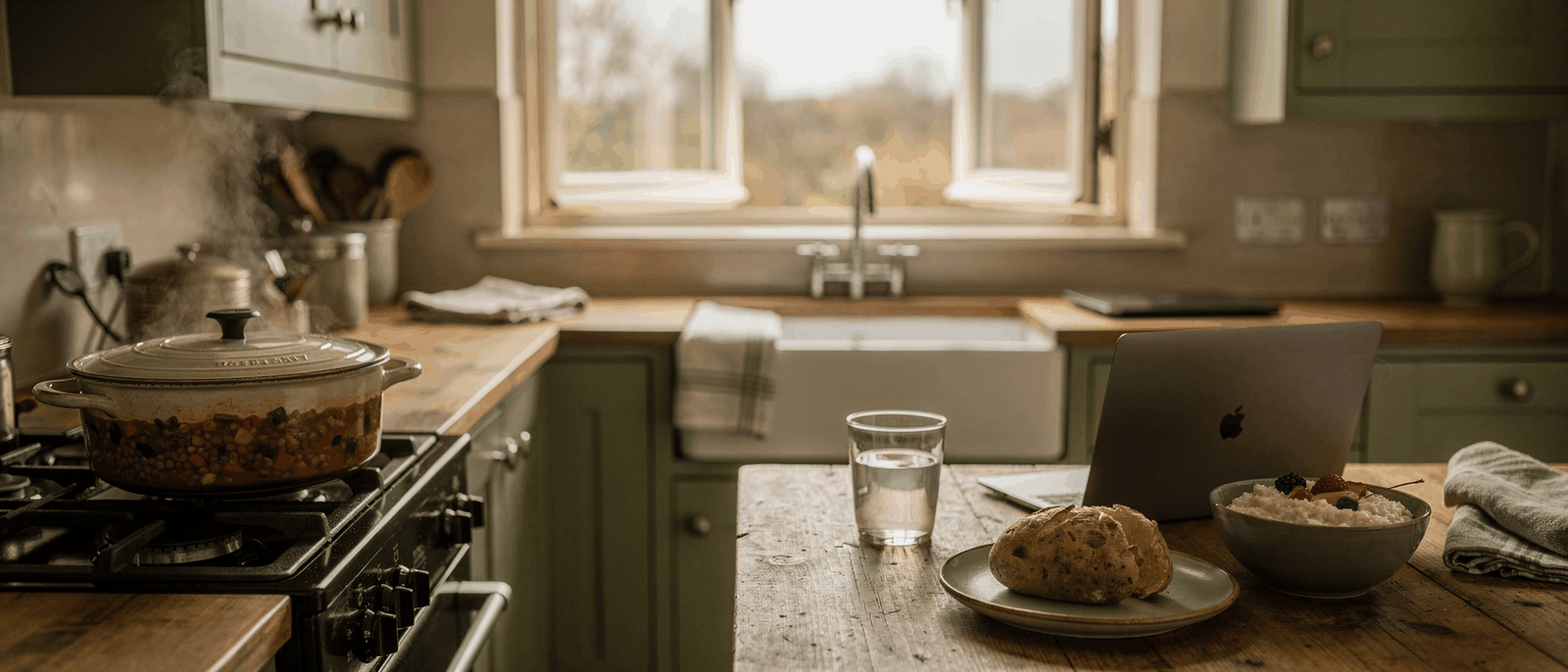
The UK fibre picture: 30g guideline, lower reality
The guideline and the NHS figure
The NHS says government guidelines call for adult fibre intake to rise to 30g a day as part of a healthy balanced diet, and that most adults eat an average of about 20g a day. That is the NHS wording on pages we checked on 18 October 2026, and newer survey data points lower.
Eating plenty of fibre is associated with a lower risk of heart disease, stroke, type 2 diabetes and bowel cancer, according to the NHS.
What the latest survey found
The National Diet and Nutrition Survey 2019 to 2023, published on GOV.UK in June 2025, reports that 96% of adults did not meet the UK fibre recommendation. A Nutrition Bulletin summary of the survey puts mean intake for adults aged 19 to 64 at 16.4g a day.
We give both figures because they come from different survey periods, and we have not blended them. Neither means anyone is deficient. The British Nutrition Foundation adds in its 2026 report that much UK fibre comes from lower-fibre staples eaten in large quantities, such as bread and cereal products, so everyday swaps matter.
Breakfast: a warming bowl or wholegrain toast
Porridge with fruit
The NHS lists plain porridge with fruit as a warming winter breakfast. Start with plain oats and add fruit you already have: a chopped apple, a banana, some berries from the freezer.
Make it before you open the laptop and eat it at the kitchen table, not between emails.
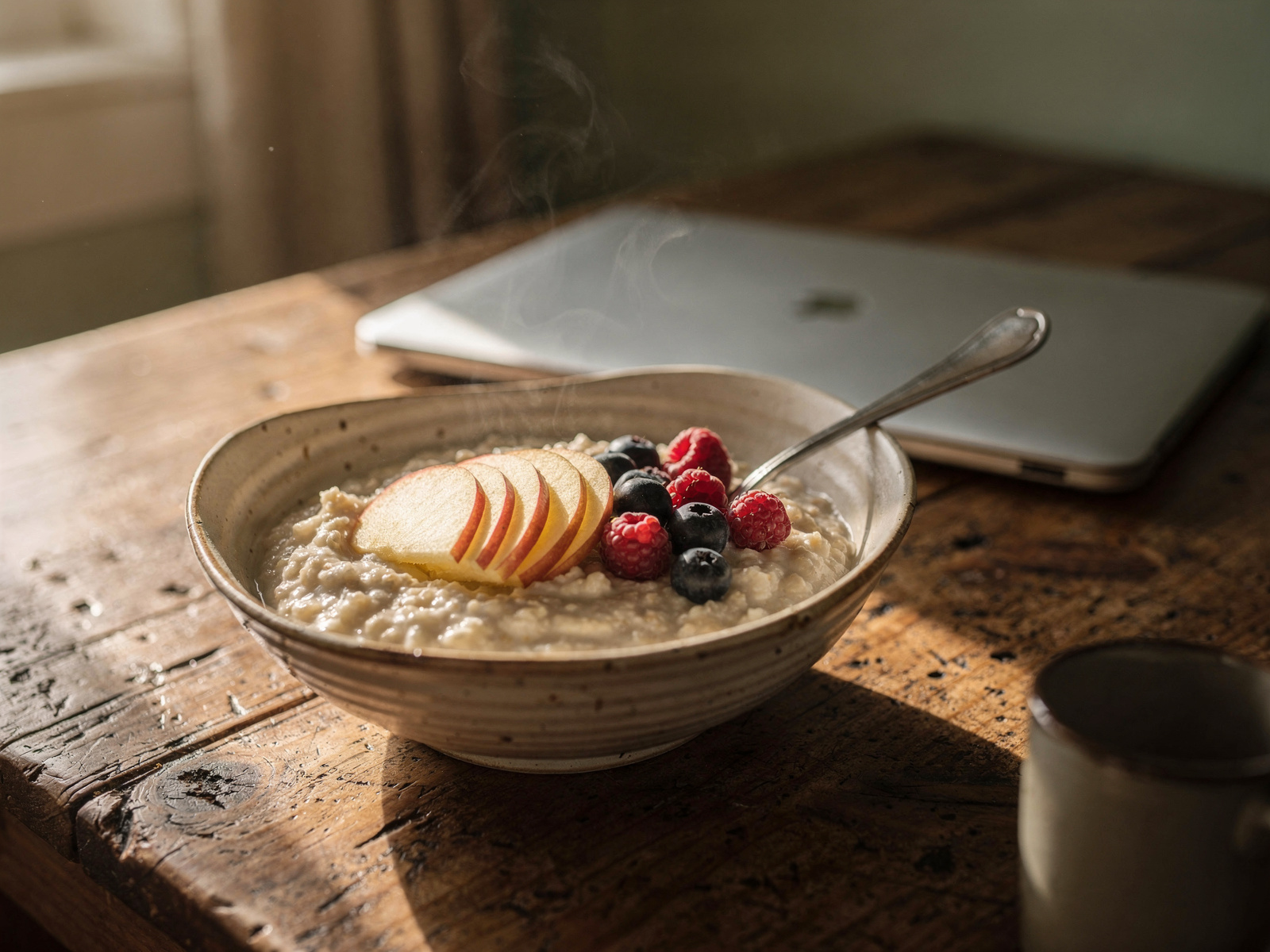
A worked example from the NHS
If porridge is not your thing, the NHS gives one worked example: 2 slices of wholemeal toast with peanut butter, followed by a medium-size orange, should give around 8.3g of fibre.
That is the NHS illustration for that exact breakfast, not a rule for every breakfast, and loaves and spreads vary, so check the label on your own bread. It shows how a familiar plate can be a sensible starting point.
Wholegrain versions of what you already eat
The British Nutrition Foundation notes that bread and cereal products contribute a lot of UK fibre, so a higher-fibre loaf or cereal is a low-effort swap. The Eatwell Guide adds that higher-fibre versions of white bread and pasta exist, which helps if you dislike wholemeal.
If you stir dates or dried fruit into porridge, the NHS advises eating them as part of the meal rather than as a between-meal snack, because they are sticky and can raise the risk of tooth decay.
Desk lunch: baked potato or batch-cooked soup
Simple: baked potato and beans
The NHS suggests a baked potato for lunch and says eating the skin gives more fibre. Whether you use the oven or the microwave, keep the skin on and top it with baked beans.
Baked beans count towards 5 A Day, according to the NHS, and the combination is easy to repeat on a busy day.
Made ahead: bean soup for the week
Cook a pot of soup or stew with beans, lentils or chickpeas, then portion it into containers so a desk lunch is a reheat. Frozen and tinned vegetables are fine; the NHS says they count towards 5 A Day, and lists baked beans, lentils, chickpeas and tinned tomatoes among them.
If you buy ready-made soups or sauces, check the labels and choose lower-salt, lower-sugar versions, as the NHS advises.
Evening one-pot meals: let the pulses do the work
Bulk out the pot
These are NHS tips for more fibre, not a promise of any particular total. Before you serve tonight's stew, chilli or curry, run down this list:
- Add a tin of beans, lentils or chickpeas to stews, curries and salads.
- Put plenty of vegetables into the sauce, stew or curry; frozen and tinned are fine.
- Mix up the pulses and vegetables across the week rather than repeating one.
- Cook a big pot so tomorrow's lunch is already sorted.
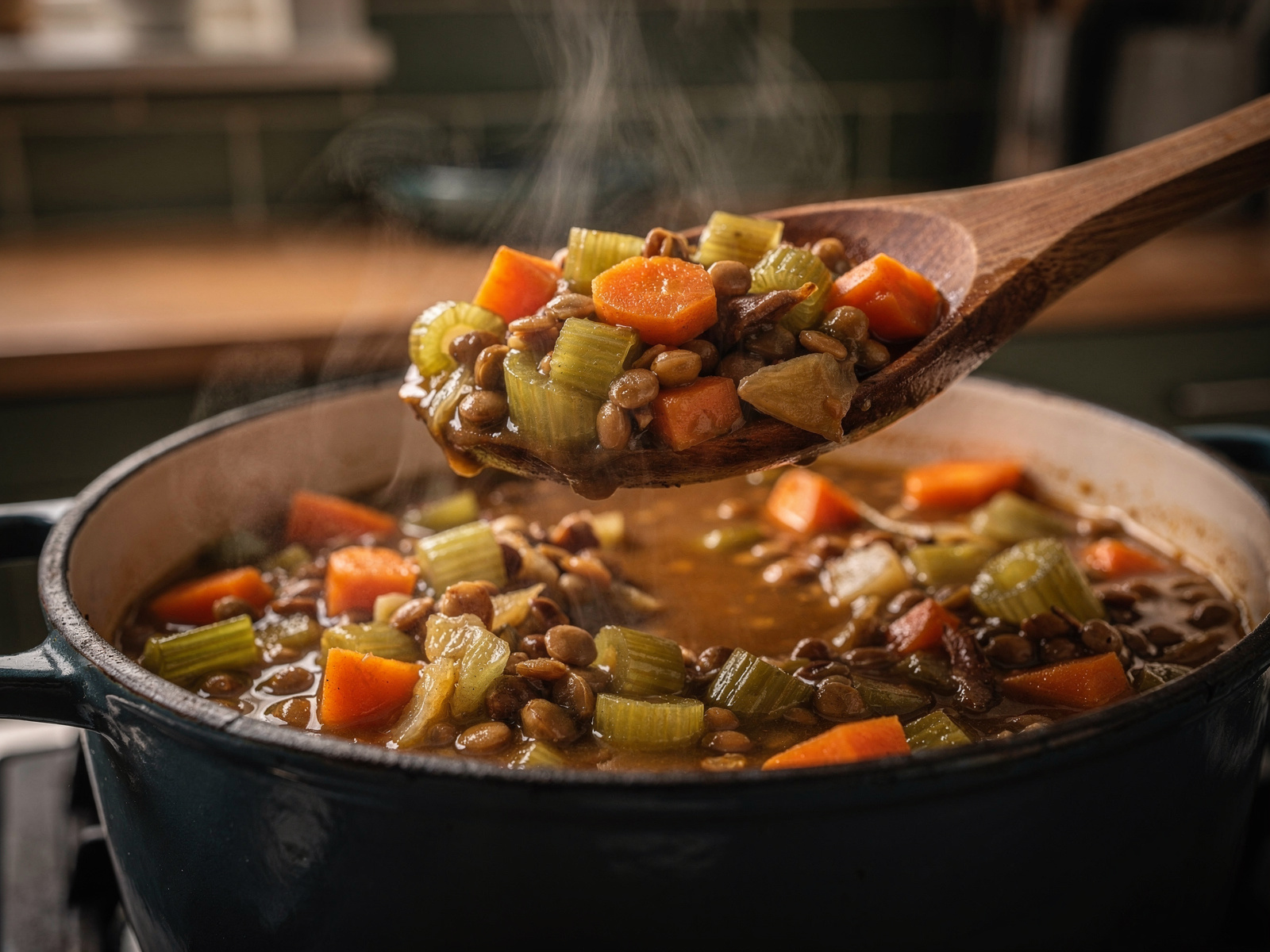
Choose the starch on the side
The Eatwell Guide says starchy foods should make up just over a third of the food we eat, and to choose higher-fibre or wholegrain versions. That means brown rice or wholewheat pasta with your stew or curry, or potatoes with the skins left on.
The British Nutrition Foundation says a variety of fibre-rich foods appears more beneficial than relying on a single source, so rotating the starch through the week is a good habit. No single swap fixes a fibre gap.
Kit is optional
You do not need gadgets. A large pot does the job. A blender for smoothing soup, or a slow cooker for leaving a stew while you work, are optional extras if you already like using them, and neither changes the fibre in the food.
Snacks that earn their place
A short desk-snack list
The British Nutrition Foundation lists fruit, nuts and seeds among fibre sources. For a working afternoon, keep these within reach:
- A piece of fruit, such as an apple or a pear.
- A small handful of nuts or seeds.
- A slice of wholegrain toast.
- Raw vegetable sticks, if you prefer something savoury.
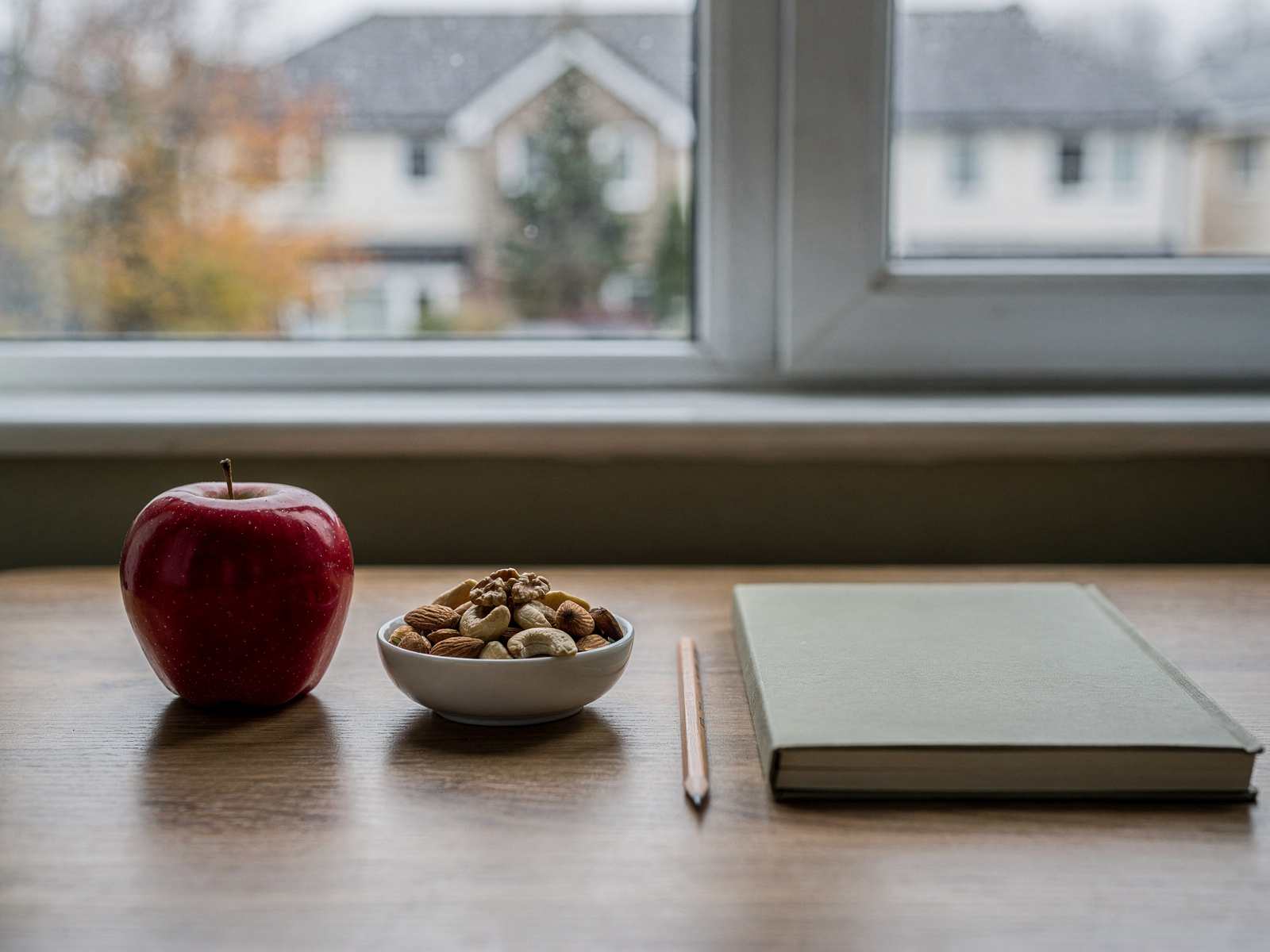
Frozen and tinned are fine too
If fresh fruit and veg have run out, the NHS says almost every type of fresh, frozen, tinned and dried fruit and veg counts towards 5 A Day. An adult portion is 80g, or 30g for dried fruit. That is a 5 A Day point, not a fibre figure.
Snacks are a pleasant extra, not a way to fill a fibre gap.
Go gently: build up slowly and drink fluids
Change one meal at a time
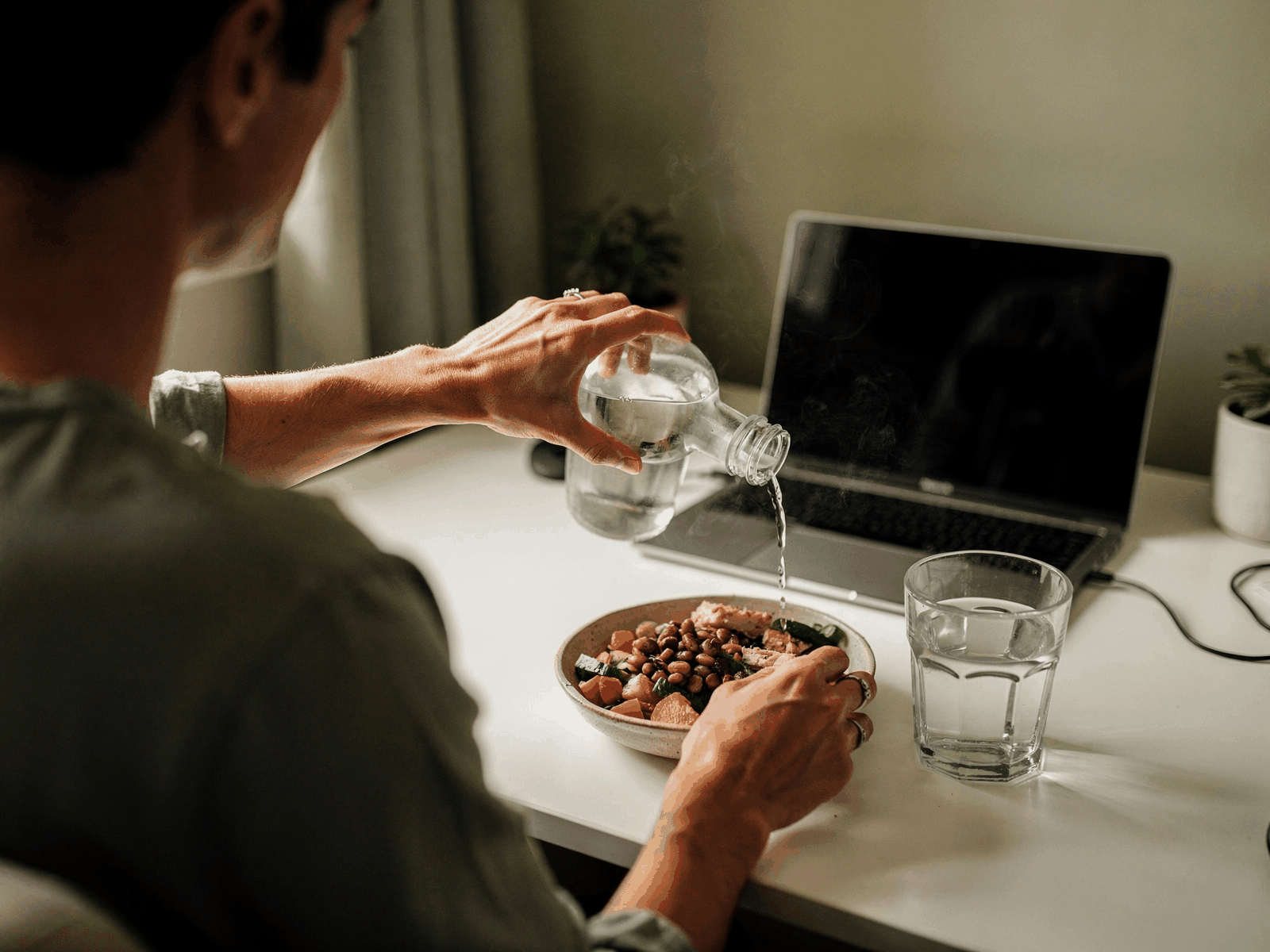
Change one meal at a time. Introduce fibre gradually and drink plenty of fluid. If a change leaves you uncomfortable, stay where you are for a while before adding the next one.
Why the pace matters
NHS inform, the Scottish NHS information service, advises that anyone needing to eat more fibre should introduce it gradually and drink plenty of fluid, because a sudden increase can lead to bloating and stomach cramps.
At a desk it is easy to forget to drink. A water bottle or a hydration tracker is an optional extra if you need a nudge; a glass on the desk works just as well.
Food first, and when to ask
A British Heart Foundation senior dietitian says whole foods such as fruit and vegetables are the best source of fibre, and warns against fibre powders, supplements and extreme 'fibremaxxing'. We follow that and recommend none.
If you have a gut condition or ongoing symptoms, speak to a GP, pharmacist or dietitian before changing what you eat.
A simple one-day sample plan
Breakfast
Porridge with fruit, or two slices of wholemeal toast with peanut butter and an orange, as in the NHS example. Either way, the first meal already has a wholegrain starch.
Lunch
A baked potato with the skin eaten and baked beans on top, or a bowl of bean soup from the batch you cooked earlier in the week.
Evening
A one-pot stew or curry with beans, lentils or chickpeas and plenty of vegetables, served with brown rice, wholewheat pasta or potatoes with the skins on.
Snack
A piece of fruit or a small handful of nuts. If you fancy dried fruit, have it with a meal rather than between meals.
Variety matters more than perfection
Mix it up and skip the scoring
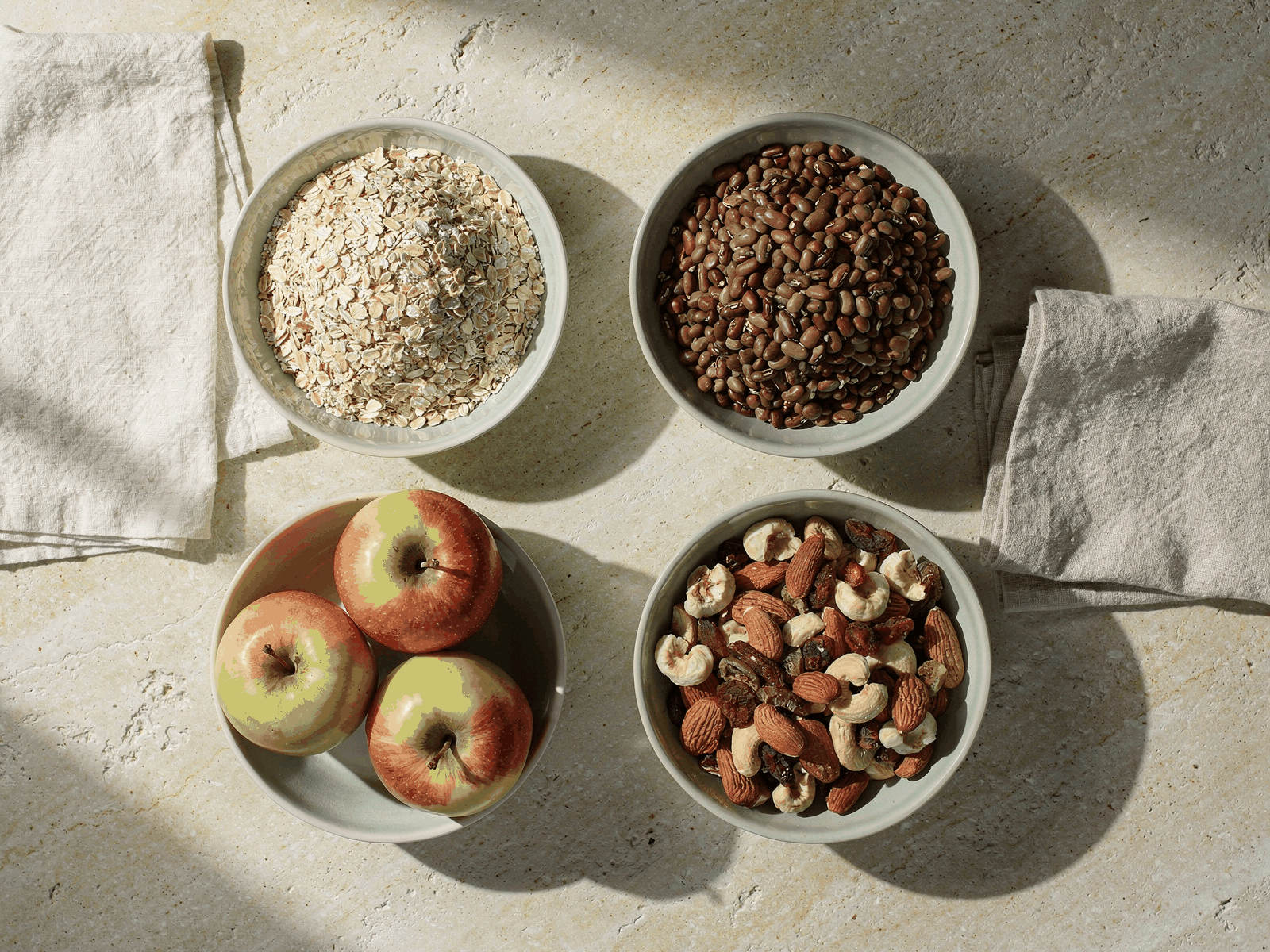
The British Nutrition Foundation says fibre comes from wholegrains, pulses, fruit, vegetables, nuts and seeds, and that eating a variety appears more beneficial than relying on one source. There is no plant count to hit and nothing to score.
Given the survey figures, a day that does not reach 30g is ordinary, not a failure. Keep the approach food-first, as the BHF advises, and let the habits build week by week.
FAQ
What is the UK fibre guideline?
The NHS says government guidelines advise that adult fibre intake should increase to 30g a day as part of a healthy balanced diet. It is a population guideline, not a personal medical target.
Why do you quote both 20g and 16.4g?
They come from different sources and survey periods: the NHS figure is about 20g a day, while the 2019 to 2023 National Diet and Nutrition Survey gives 16.4g for ages 19 to 64. We have kept them separate.
Do baked beans and tinned vegetables count?
For 5 A Day, yes. The NHS lists baked beans, lentils, chickpeas and tinned tomatoes among the foods that count. That is a 5 A Day point, not a fibre figure, so check labels.
Do I need a fibre supplement?
No. The BHF advises food first and cautions against powders and supplements, so this guide recommends none. If you are unsure, ask a pharmacist or GP.
Why do I feel bloated since changing my meals?
A sudden rise in fibre can cause bloating, according to NHS inform, so build up gradually and drink plenty of fluid. If symptoms persist, speak to a GP or pharmacist.
Verdict
Pick one swap per meal this week: wholegrain or higher-fibre starch, skins left on potatoes, pulses or vegetables in the stew, and fruit or nuts as the snack. Then build up gradually.
The main caveat is pace. Go gently, drink fluids, and speak to a GP, pharmacist or dietitian if you have a gut condition or ongoing symptoms. For more routines that keep your energy steady through the working day, start with our everyday energy hub.