


Host a Virtual Halloween Party: Audio,…

20 Minimalist Halloween Nail Ideas for…

Can Free Affinity Help You Build…

12 Lower-Sugar Halloween Treat Swaps Worth…

Can Hostinger AI Builder Launch a…

A 5-Step Screen-Free Autumn Reading Ritual…

Plug-In Solar Panels UK: Are They…

15 Last-Minute Zoom Halloween Costumes for…

Meta One Explained: Is the Subscription…

10 Low-Fuss Dog Halloween Ideas: Comfort…

Plaud One Explained: Can AI Earbuds…

9 Gothic Dinner Table Ideas for…

Namecheap vs Dynadot

7 UK Ghost Tours and How…

Convertkit Vs Beehiiv

Do You Really Need a £420…

Bluehost vs Siteground

15 Gentle Spooky Autumn Books to…

Namecheap review

How to Remove Halloween Face Paint…
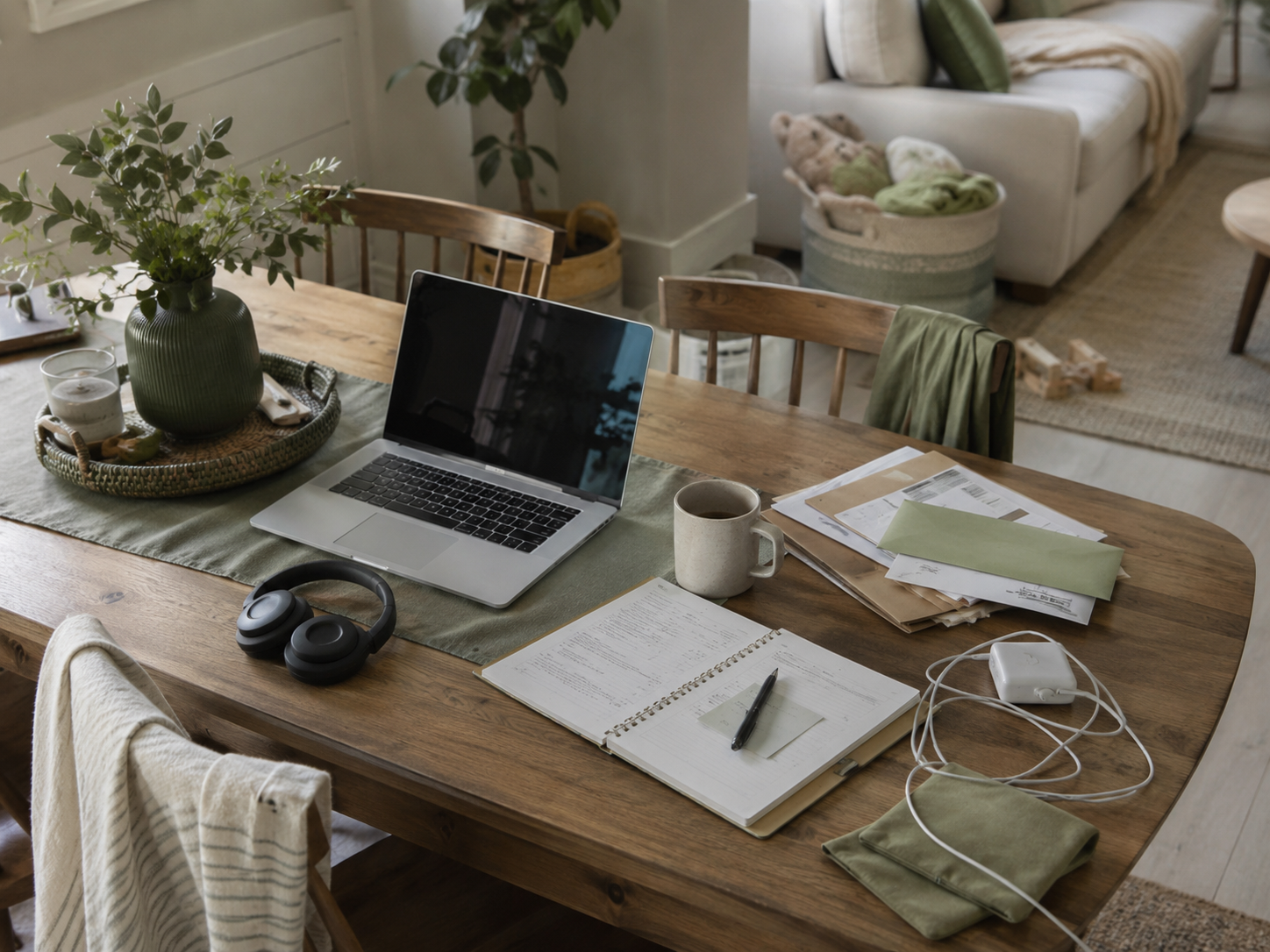
Home offices rarely take over all at once. They spread slowly: a laptop on the dining table, chargers in the living room, notebooks by the bed and work thoughts following you into rooms that used to feel like rest. The problem is not always laziness or mess. It is usually a lack of clear edges. When work has no defined place, it starts borrowing every place.
Home offices spread through small habits.
Portable work makes boundaries harder.
Visible work adds mental load.
Small homes feel the pressure first.
Cables and papers create work creep.
Better boundaries beat perfect minimalism.
Reclaim space with simple resets.

Most Relevant Audience
This article is for remote workers, freelancers, creators, side hustlers, bloggers, small business owners and hybrid workers whose work tools keep drifting into the rest of the home. It is especially relevant if your office is a corner, shared room, kitchen table or bedroom setup rather than a separate room with a door.
Work becomes too portable
The laptop is useful because it can move. That is also the problem. It starts at the desk, then appears on the sofa, kitchen table, bed and anywhere with a plug socket and mild optimism. Portable work makes flexibility easier, but it also removes the natural edge between “I am working” and “I live here.”
Convenience beats boundaries
Most home office creep starts with convenience. You leave the charger nearby because you will need it later. The notebook stays on the table because tomorrow’s task is “quick”. A parcel sits by the sofa because it is technically work-related. None of these choices feels dramatic, but together they let work quietly claim more space.
Every room gets a job
The dining table becomes the desk. The sofa becomes the email corner. The bedroom becomes the planning zone. The kitchen becomes the place where you reply to one message while waiting for toast. Eventually, rooms stop having clear meanings. Rest spaces feel less restful because work keeps leaving fingerprints everywhere.
Work thoughts follow the objects
Visible work objects create visible reminders. A laptop says “finish that task”. A notebook says “remember that idea”. A parcel says “deal with me”. When these reminders are scattered around the home, your brain keeps picking them up. Even when you are not working, the house keeps showing you work-shaped evidence.
Small homes feel it faster
Small homes, shared homes and multi-use rooms feel the pressure first. If your office is also the dining area, bedroom corner or living room shelf, there is less space for work to spread before it starts affecting daily life. The goal is not a showroom office. It is clearer edges inside the space you actually have.
The real problem
Home office creep is usually not about being messy. It is about work having no agreed stopping point. When the laptop, papers, chargers and work thoughts can go anywhere, they eventually do. Clear physical boundaries make it easier for your brain to understand when the workday has ended, even if your commute is only six steps and a suspiciously tired sigh.
Physical boundaries
Physical boundaries tell work where it belongs. That could be a desk, a corner, a tray, a cupboard, a basket or one side of the table. The boundary does not need to be fancy. It just needs to be consistent enough that work items have somewhere to return instead of spreading around the house like they pay council tax.
Time boundaries
Time boundaries tell work when it is allowed to happen. Without them, the home office becomes an all-day background setting. A small shutdown routine helps: close the laptop, clear the surface, put the notebook away and stop “just checking” things after dinner. The ritual matters because it gives the day an ending.
Visual boundaries
Visual boundaries reduce mental noise. If you can see your work from the sofa, bed or dinner table, your brain may keep treating it as active. This is why visible clutter feels heavier than hidden clutter. A closed drawer, storage box or folded laptop stand can give your nervous system fewer tiny work reminders.
Emotional boundaries
Emotional boundaries matter because home working can make guilt portable too. You may feel like you should always be doing one more thing because the tools are right there. A healthier boundary says: work has a place, rest has a place, and neither should have to fight for custody of the living room.
Why the edges matter
The point is not to create a perfect minimalist home where every cable lives in a labelled drawer and nobody ever leaves a mug near a laptop. The point is to stop work from feeling permanently open. Even a small boundary can make the home feel less like one long unfinished task.
Remote workers
Remote workers often start with one tidy desk and slowly gain work objects in every room. The problem gets worse when messages, meetings and deadlines follow the laptop around. A defined setup and shutdown routine can help the home feel less like an office that happens to contain a kettle.
Side hustlers
Side hustlers often work in the margins: evenings, weekends, early mornings and awkward gaps between life. That makes boundaries harder. The laptop may stay out because the next task is never far away. A small storage rule helps: when the session ends, the work tools go back somewhere specific.
Creators and bloggers
Creators and bloggers collect notebooks, tripods, chargers, products, drafts, ideas, cables and half-finished content plans. It can spread quickly because creative work has many small pieces. A clear kit zone or project basket can stop the whole home becoming a content production cupboard with furniture.
Small-space workers
Small-space workers need boundaries even more, not less. If there is no spare room, use smaller signals: a folding desk, laptop stand, storage box, cable pouch or end-of-day reset. Boundaries do not have to be big to work. They just have to be obvious enough to repeat.

The small-space rule
If your home is small, do not aim for perfect separation. Aim for repeatable separation. A laptop that closes, a basket that holds work items, a table that gets cleared and a charger that has one home can make a big difference. The boundary can be simple as long as it happens often.
The small-space rule
Work items live everywhere
If chargers, notebooks, papers, devices and parcels are spread across several rooms, your office has started expanding. One item is normal. A trail of work objects is a system problem. Give work items a return point so the home does not become a slow treasure hunt with invoices.
Rest spaces feel less restful
If the sofa, bed or dining table now reminds you of tasks, the boundary has blurred. Rest spaces need fewer work cues. That does not mean you can never work elsewhere, but it does mean work should leave when the session ends. Otherwise rest starts feeling like delayed admin.
You keep “just checking” things
The phrase “just checking” is where many boundaries go to suffer. If you keep checking emails, dashboards, messages or orders from every room, work is no longer contained. Decide which checks matter and where they happen. Your phone does not need to turn the whole home into a reception desk.
Clearing up feels impossible
When work stuff has no home, tidying becomes decision-making. Every cable, notebook and paper asks where it should go. That is tiring. Create simple homes for common items: charger pouch, work tray, notebook shelf, parcel corner, laptop storage. Less deciding means easier resetting.


The easiest fix to start with
Choose one visible work creep and contain it first. Cables, papers, notebooks or parcels are good starting points because they spread quickly and make rooms feel busier. You do not need to overhaul the whole home. One clear return point can make the space feel calmer by tonight.
The easiest fix to start with
Create a work landing zone
A work landing zone is one place where work items return at the end of the day. It can be a desk, shelf, basket, drawer or box. The point is not beauty. The point is containment. When the laptop, notebook and charger have somewhere to go, the rest of the home gets a chance to exhale.
Reset one surface daily
Pick one surface that must return to home mode each day. The dining table is a good place to start because it affects meals, family time and visual calm. Clear the laptop, cables, papers and cups. A single reset surface can make the whole home feel less taken over.
Use portable boundaries
If your workspace moves, make the boundary move too. A laptop tray, cable pouch, storage basket or folding stand can help keep work contained. Portable work needs portable rules. Otherwise the equipment spreads faster than your intention to “sort it out tomorrow”.
Protect the bedroom
Try not to let the bedroom become the overflow office. Notebooks by the bed, chargers on the floor and laptops on the duvet make rest feel negotiable. If you must work there occasionally, remove the work items afterwards. The bedroom should not have to compete with tomorrow’s task list.
Related money note
If your home office keeps spreading because your setup is awkward, Creator Desk Setup Shopping List is the natural money follow-up. Sometimes the answer is not more willpower. It is a better desk, storage, lighting, cable control or compact setup that gives work a proper place instead of letting it annex the dining table.
Related money note
Why does my home office keep spreading around the house?
Your home office keeps spreading because work tools are portable, convenient and often left where you last used them. Without a clear return point, laptops, papers, chargers and notebooks drift into shared rooms. The fix is not perfect tidiness. It is giving work a defined place to start and stop.
How do I stop work from taking over my home?
Start by creating one work zone and one end-of-day reset habit. Put the laptop, charger, notebook and papers back in the same place after work. Clear one key surface daily, such as the dining table. Small repeated boundaries work better than a huge organising project you avoid.
Why does working from home make my space feel messy?
Working from home makes space feel messy because work adds visible objects, decisions and reminders to rooms that used to have one purpose. Even small items can create mental noise when they appear everywhere. Cables, papers, devices and parcels make the home feel busier because they all suggest unfinished tasks.
How can I separate work and home in a small space?
Use repeatable signals instead of relying on a separate room. A foldaway desk, laptop stand, basket, tray, drawer or storage box can help. Put work items away when the session ends. In a small space, separation is often created by routines and containers, not walls.
What are the signs my home office needs better boundaries?
Signs include work items in several rooms, a dining table that never clears, chargers by the bed, notebooks on the sofa, constant email checking and rest spaces that no longer feel restful. If the home keeps reminding you of work after hours, the boundary needs attention.
Final verdict
Home offices start taking over because work loses clear physical boundaries. The laptop moves, the charger follows, papers spread, parcels wait and suddenly every room has a small job. The problem is not usually laziness. It is work borrowing space because nobody told it where to stop.
You do not need a perfect showroom office to fix it. Start with one work zone, one reset surface and one place where work items return at the end of the day. The goal is simple: let your home feel like home again, not an office with softer trousers.


