




Host a Virtual Halloween Party: Audio,…

The Best Lighting for Darker Autumn…

Can Free Affinity Help You Build…

Create an Autumn Wind-Down Routine That…

Can Hostinger AI Builder Launch a…

Heated Throw vs Heated Blanket vs…

Plug-In Solar Panels UK: Are They…

Autumn Sleep Reset: Light, Temperature and…

Meta One Explained: Is the Subscription…

The Best Ways to Dry Washing…

Plaud One Explained: Can AI Earbuds…

Dehumidifiers Explained: When Are They Actually…

Namecheap vs Dynadot

A Realistic Autumn Walking Routine for…

Convertkit Vs Beehiiv

Autumn Social Reset: Small Plans for…

Bluehost vs Siteground

Sekonda Smart Ring vs Oura Ring…

Namecheap review

Make Your Home Cosier Without Turning…
The clocks go back at 2am on Sunday 25 October 2026, says GOV.UK, and the UK returns to GMT. There is more daylight in the evening during BST and less in the morning, so evenings now darken sooner.
Here are ten small, low-cost changes to light, warmth, air and evenings at home. Each has a skip-if note. You only need two.
Quick Overview
- Clocks go back on 25 October 2026, so your home evenings will darken sooner.
- Light changes: a daytime walk, a task lamp, and a daylight lamp only if mornings bother you.
- Warmth changes: start inside the Energy Saving Trust's usual 18°C to 21°C range, and try a throw first.
- Air changes: check for draughts but keep ventilating, and wipe window condensation as it appears.
- Routine changes: a screen-free midday break, a clear shutdown and a steadier evening.
- Every change has a skip-if note, so you can rule things out fast.
- Pick two this week: one from light, warmth or air, and one from routine.
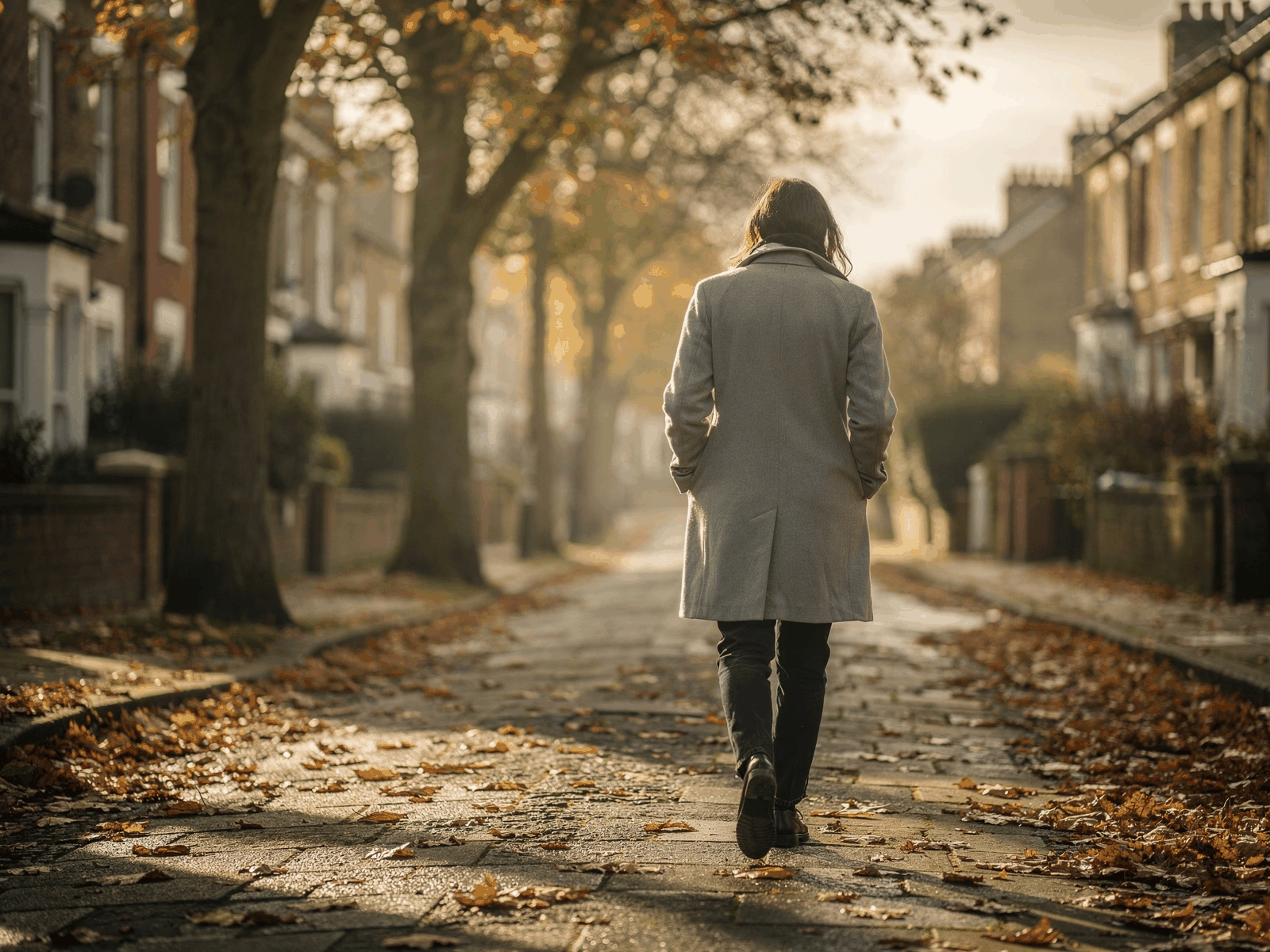
Light: get outside while it is still light
Change 1: a daylight walk
Try this: a short walk in daylight most days, before, during or after work. NHS self-care advice for seasonal low mood includes getting as much natural daylight as you can and going outside in the daytime every day. NHS Every Mind Matters adds that even a quick walk before, during or after work can be a helpful mental break. Think of it as a comfort habit, not a treatment.
Daytime also suits better than late evening: the NHS recommends 150 minutes of exercise a week for adults and advises avoiding exercise in the 4 hours before bed. Skip this if you already get outside daily. If low mood lasts, speak to a GP and see the NHS page on seasonal affective disorder.
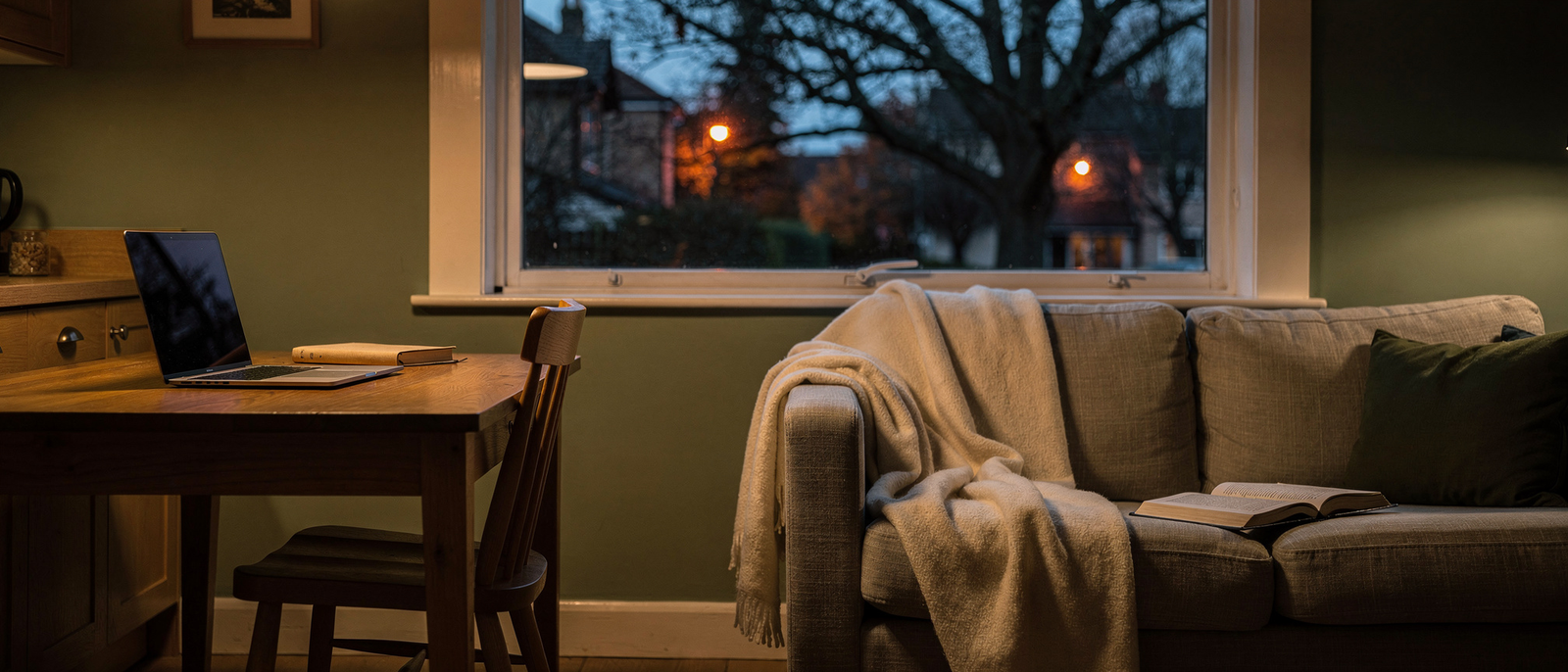
Light: a task lamp for dark afternoons
Change 2: a task lamp
Try this: switch the lamp on before the afternoon light fades, not after. Skip this if your desk already has good light. MyHotips has not tested any lamp, so this is a type to look for, not a recommendation. If you do buy one, look for:
- Dimming, so it suits both grey afternoons and evenings
- An adjustable arm, so you can aim the light
- Warm-to-neutral light rather than harsh white
- A position that avoids glare on the screen
Light: a daylight lamp, only if dark mornings bother you
Change 3: an optional daylight lamp
Try the free options first: the walk, the task lamp and a steadier routine. If dark mornings at your desk still feel gloomy, a daylight lamp used early in the day is an optional comfort extra. It does not treat or prevent low mood or seasonal affective disorder, and if low mood lasts, speak to a GP.
Skip this if your room is already bright or you do not want another gadget. MyHotips has not tested any daylight lamp, so no model is recommended.
Warmth: a comfortable range and a sensible schedule
Change 4a: a comfortable range
The Energy Saving Trust says most people should set the thermostat to the lowest comfortable temperature, usually between 18°C and 21°C. Comfort varies: older people, those with health conditions and anyone home for long periods may need it warmer.
Try this: start inside the range and adjust a degree at a time until you stop noticing the room. Skip this if your household already needs it warmer.
Change 4b: a schedule that fits your day
The Energy Saving Trust suggests setting heating to come on about half an hour before you wake up and go off about half an hour before bed. That suits a typical routine, but a home worker may want a different one.
Try this: set the timer around your real day and see how your desk feels after a few days. Skip this if your schedule already matches how you live. This is general guidance, not bill advice.
Starting points, not targets
Neither the range nor the timing is a target. If the room feels fine at your desk, leave the settings alone. If you are cold, add a layer before moving the dial.
Warmth: a throw before the thermostat
Change 5: a warm throw
Try this: put a throw over your knees or shoulders first, then check whether you still want the heating up. If you choose an electric one, look for auto shut-off and a washable cover, and follow the maker's instructions.
Skip this if you are not cold when seated. MyHotips has not tested any throw, so this is a type to look for, not a recommendation.
Air: draughts and condensation, in balance
Change 6: a draught check
Try this: on a cold day, feel along window and door edges for moving air. The Energy Saving Trust illustrates that professional draught proofing of windows and doors could save around £55 a year in Great Britain (checked on 18 October 2026; prices can change). Treat that as an illustration for a typical home, not a guarantee.
The Trust also warns that adding more draught proofing to an already well-sealed home may increase the risk of poor air quality, so keep the room ventilated. Skip this if your home already feels well sealed.
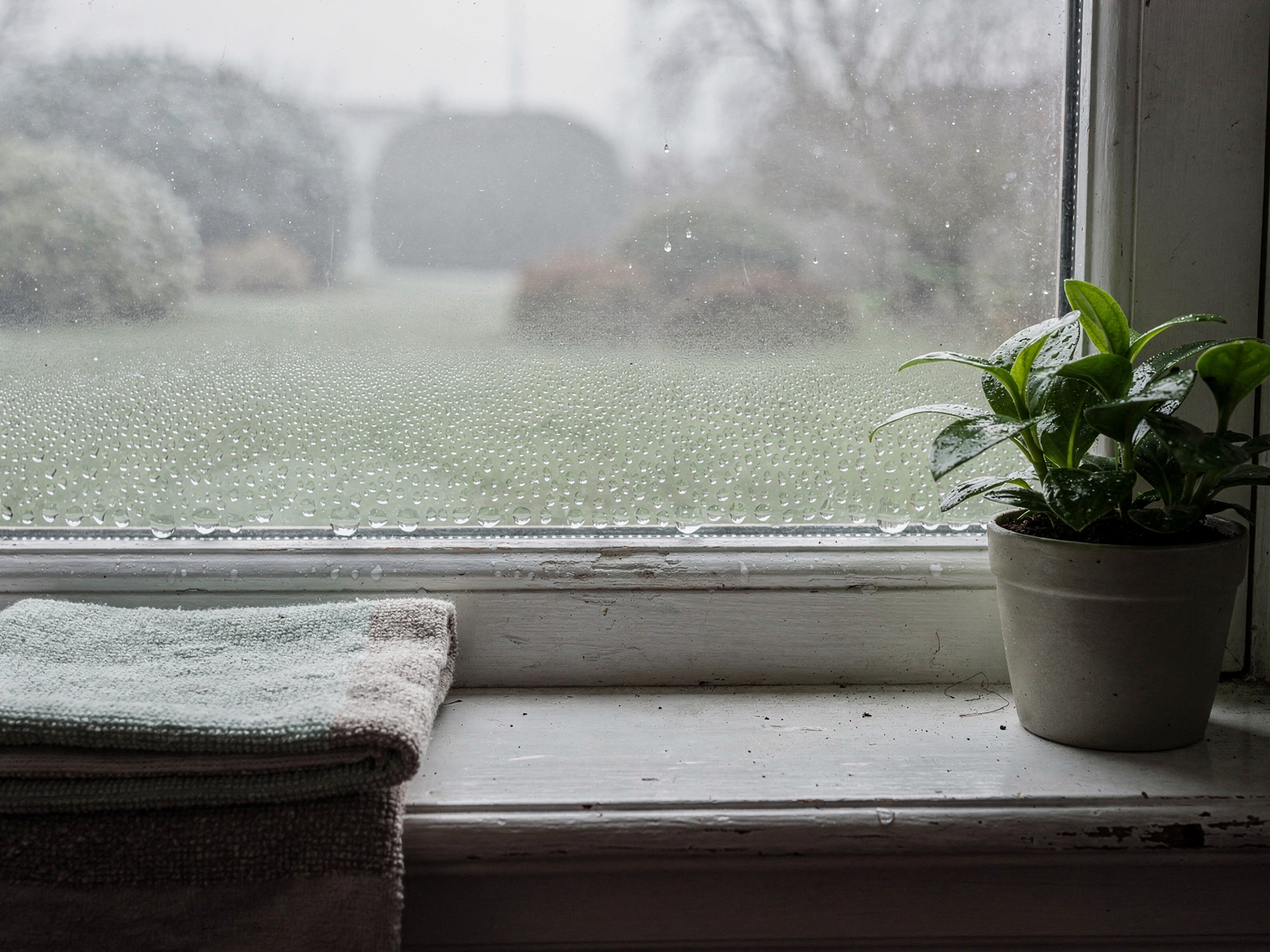
Change 7: ventilate and watch condensation
A Welsh Government booklet on condensation, damp and mould gives general advice: water vapour builds up from breathing, drying clothes, cooking and bathing. It suggests opening windows regularly, especially after making moisture, using trickle vents, and closing the door of a steamy room.
Try this: air the room briefly each day and wipe window condensation. GOV.UK says damp and mould primarily affect the airways and lungs, which is why it is worth watching. If you rent, tell your landlord about persistent damp or mould. Skip this if your windows stay dry.
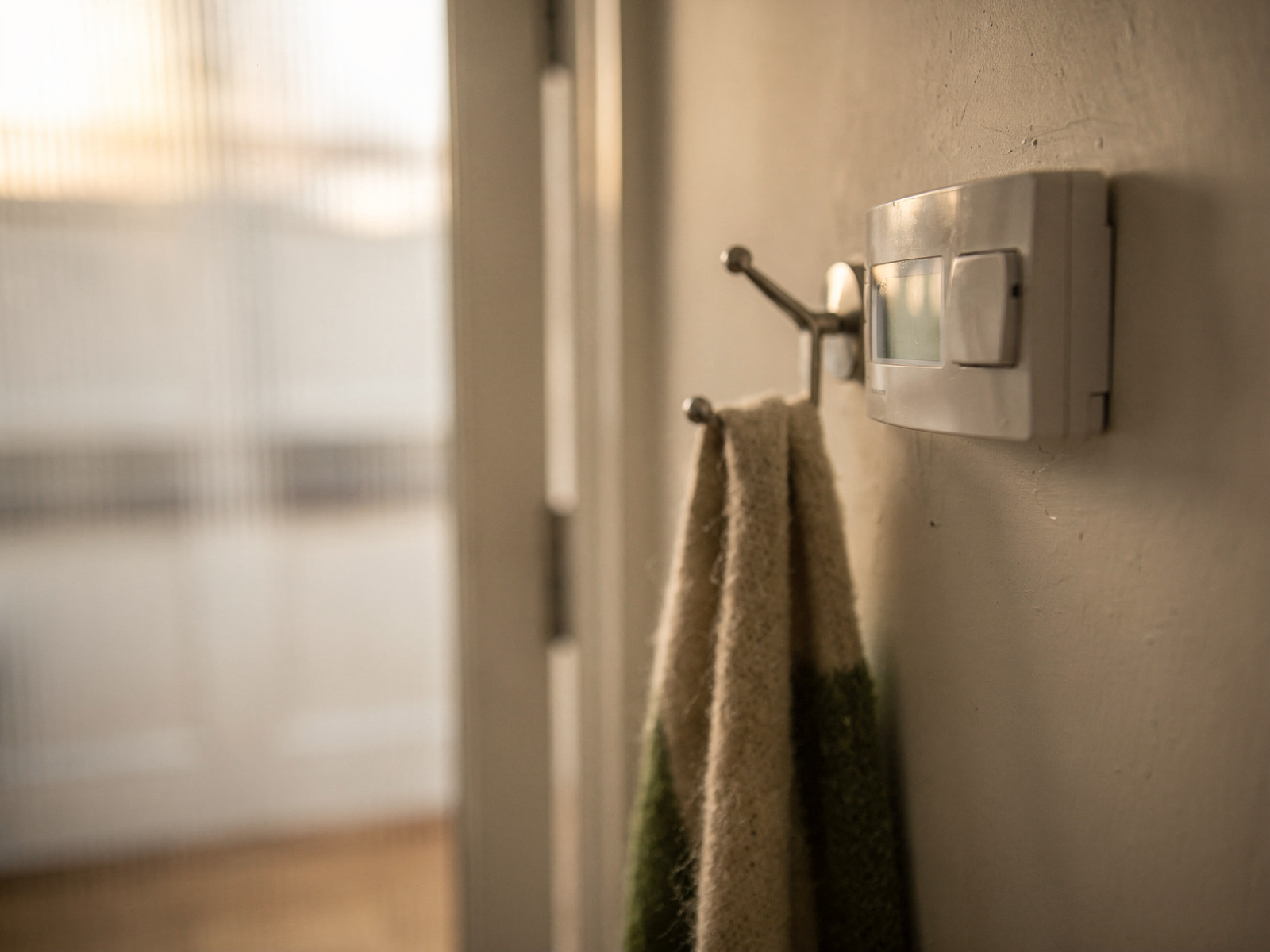
Optional: a thermometer-hygrometer
If you want to track room humidity, a thermometer-hygrometer is the type to look for. It shows temperature and humidity at a glance, so you can see whether a room stays damp after cooking or drying clothes. MyHotips has not tested any, so no model is recommended. Skip it if wiping the window tells you enough.
Routine: a break in the day, a clear end to it
Change 8: a screen-free midday break
Try this: swap one screen block for a phone call, paper planning or admin, then add a short walk. HSE guidance for employers says jobs should, where possible, mix screen-based and non-screen-based work to prevent fatigue and vary visual and mental demands.
That is a reference point, not a duty on you, and there is no magic number of minutes. Skip this if your day already mixes tasks.
Change 9: a clear shutdown
Try this short script: close the laptop, write tomorrow's top task on paper, then tidy or cover the desk. Some NHS sleep advice suggests bedrooms should ideally be for sleeping only, or at least that you avoid sitting or lying on the bed during the day.
If you work near your bed, a closed laptop and a covered corner are worth trying. Skip this if you work in a separate room.
Routine: a steadier, screen-free evening
Change 10: a steadier evening
The NHS suggests going to bed and waking at the same time every day, and not using devices such as smartphones right before bed. NHS Every Mind Matters suggests trying to avoid phones, tablets or computers for an hour before bed, because blue light from screens can make it harder to fall asleep.
Try this: pick one fixed wake time, and a point an hour before bed when screens go away. Skip this if shifts or caring make fixed times unrealistic.
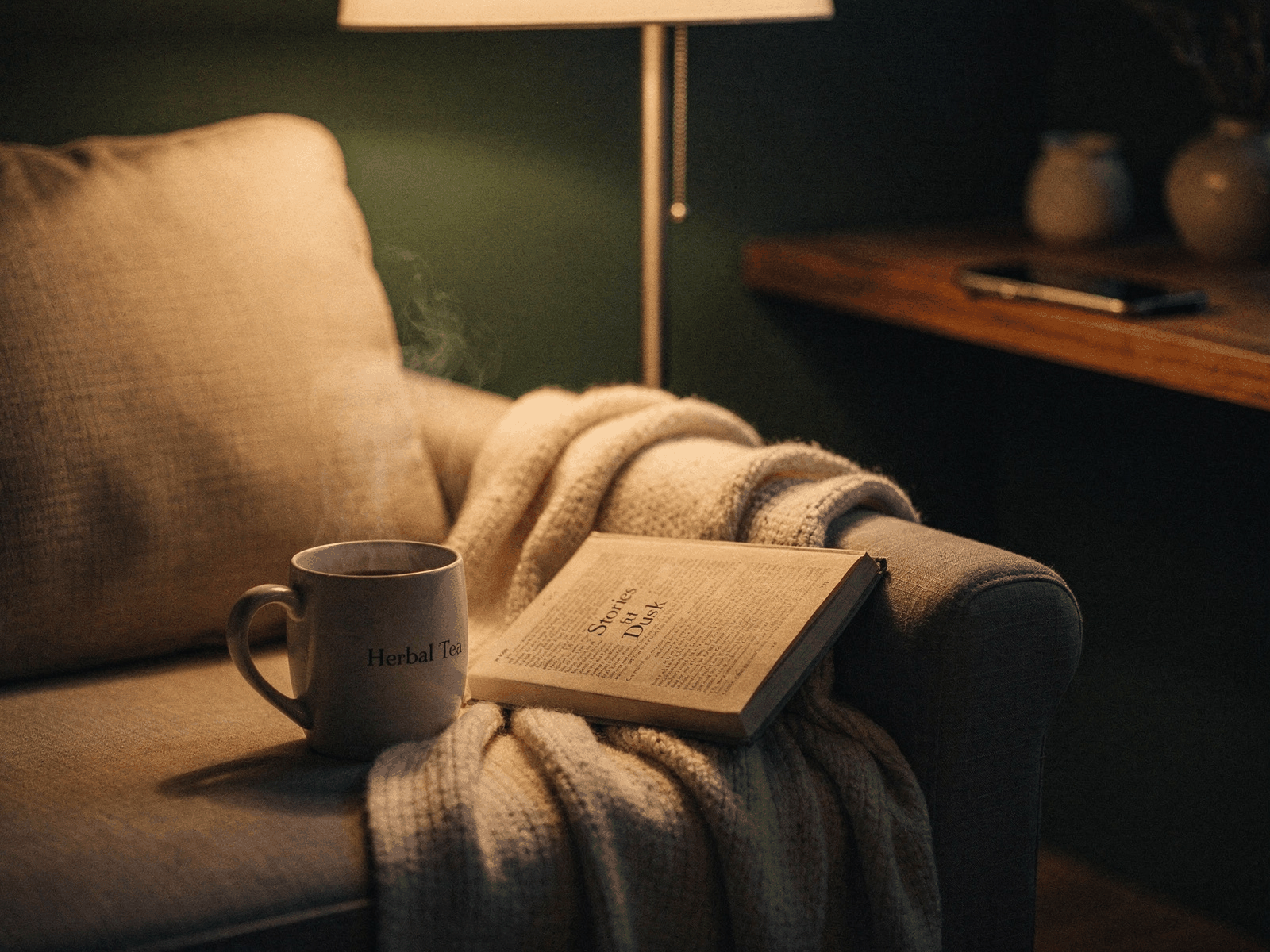
What to do in that hour
Keep it hands-on and low-light: a paper book, music, a puzzle or some colouring. MyHotips has not tested any craft or colouring kit, and none is needed. The only point is that your hands are busy and the screen is in another room.
Frequently asked questions
When do the clocks go back in 2026?
GOV.UK says UK clocks go back 1 hour at 2am on Sunday 25 October 2026, and the UK returns to GMT. There is more evening daylight during BST and less in the mornings, so after the change evenings darken sooner.
What thermostat temperature should I use?
The Energy Saving Trust says most people should use the lowest comfortable temperature, usually 18°C to 21°C. Comfort varies, and older people, those with health conditions and anyone home for long periods may need it warmer, so treat the range as a starting point.
Is a daylight lamp a treatment?
No. Here it is only an optional comfort extra for dark mornings, and MyHotips has not tested any. NHS self-care advice for seasonal low mood mentions natural daylight and going outside daily. If low mood lasts, speak to a GP and see the NHS page.
Should I draught-proof everything?
Not necessarily. The Energy Saving Trust warns that adding more draught proofing to an already well-sealed home may increase the risk of poor air quality. Check for obvious gaps, keep ventilating, and open windows briefly after cooking, bathing or drying clothes.
Should I exercise in the evening?
NHS Every Mind Matters advises avoiding exercise in the 4 hours before bed, so being active in the morning or early afternoon is better. A daytime walk fits that more neatly than a late workout.
Verdict: pick two this week
Pick two changes: one from light, warmth or air, and one from routine. Say a kitchen-table worker chooses the daylight walk and the screen-free hour, and leaves the other eight alone. That is a complete reset. Drop any change whose skip-if note describes you.
The biggest reservation is that these are general comfort habits, not treatment; if low mood lasts, speak to a GP. Choose your two before the clocks change on Sunday.


