



Fitbit Edge vs Fitbit Air vs…

Autumn Comfort Food: How to Eat…

Soup Maker vs Saucepan: Which Suits…

The Best Lighting for Darker Autumn…

Create an Autumn Wind-Down Routine That…

Heated Throw vs Heated Blanket vs…

Autumn Sleep Reset: Light, Temperature and…

Dehumidifiers Explained: When Are They Actually…

A Realistic Autumn Walking Routine for…

Autumn Social Reset: Small Plans for…

Sekonda Smart Ring vs Oura Ring…

Make Your Home Cosier Without Turning…
A home office can look fine on camera while quietly feeling like a sealed box of stale air, laptop heat, dust, lunch leftovers and “why is it so stuffy in here?” A good air purifier will not fix your posture, emails or workload, but it can make a small workspace feel fresher if the room gets dusty, pet-heavy, pollen-prone or hard to ventilate.
A home-office air purifier is most useful in small, stuffy, dusty or poorly ventilated rooms.
Look for proper filtration, suitable room coverage and easy replacement filters.
Noise matters because you may need it running during calls, writing sessions or focus blocks.
Bigger is not always better; the right size for your room matters more.
Air purifiers can help with dust, pollen and airborne particles, but they do not replace cleaning or ventilation.
They do not solve damp, leaks or mould at the source.
The best choice is the purifier you will actually use consistently.
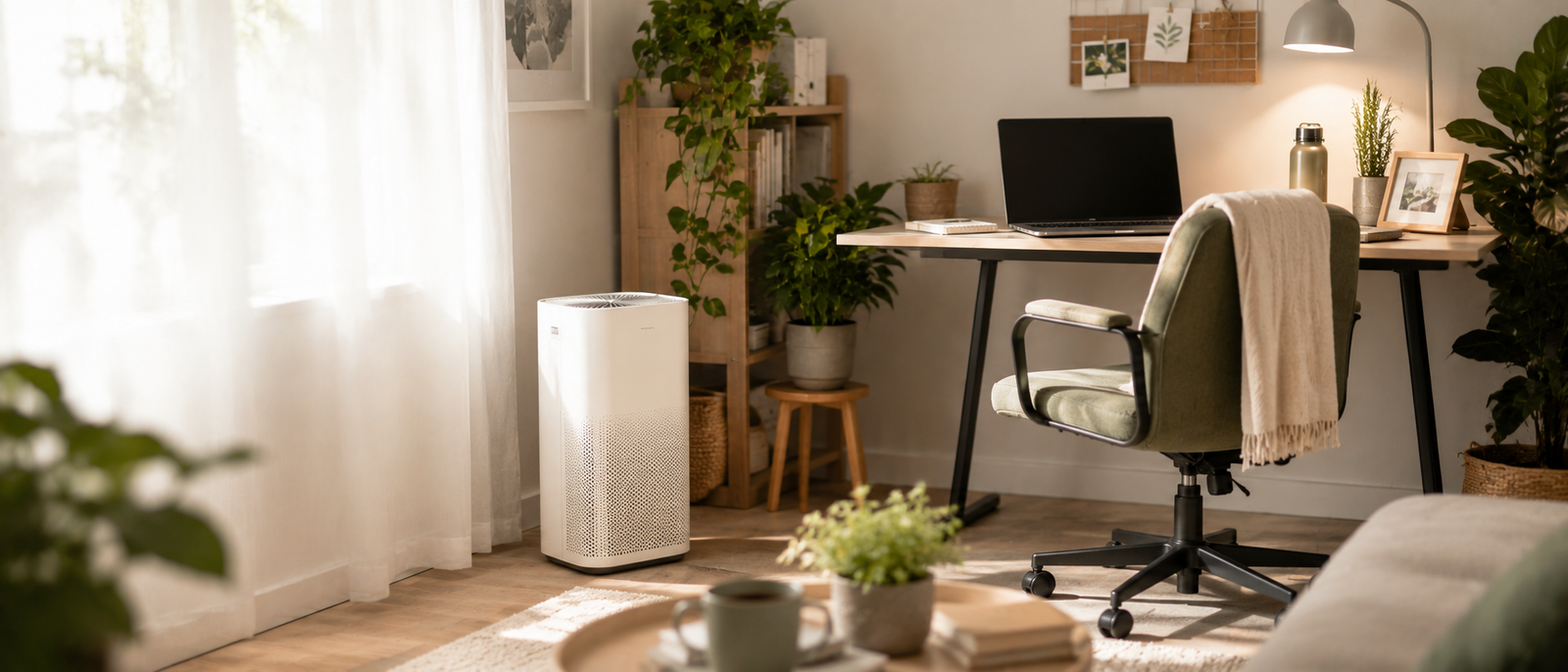
Most Relevant Audience
This guide is for remote workers, home workers, freelancers, bloggers, creators, side hustlers, parents, carers and small business owners who spend long blocks of time in one room.
It is especially useful if your desk room feels stale, dusty, pet-heavy, pollen-prone, stuffy after calls or difficult to ventilate because of traffic noise, weather, outside air quality or awkward windows.
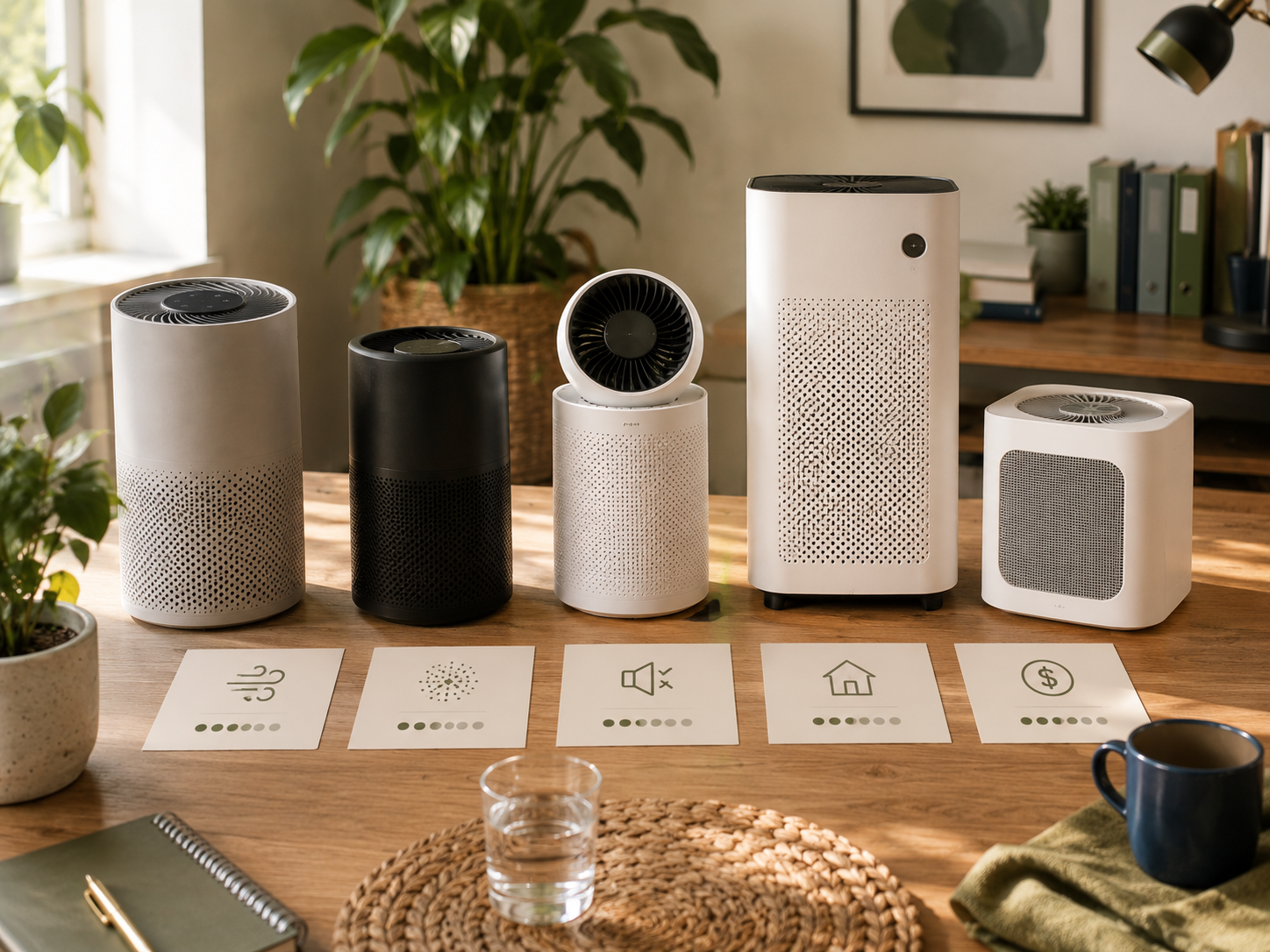
What To Look For In A Home-Office Air Purifier
Proper filtration
Filtration is the main reason to buy an air purifier.
Look for clear filter information rather than vague “fresh air” claims. Many buyers want HEPA or HEPA-style filtration for airborne particles such as dust, pollen and pet dander. Also check whether the purifier uses a carbon filter if smells are part of the problem.
Room coverage
Room size matters more than dramatic product photos.
A purifier that is too weak for the room may run constantly without doing much. A purifier that is far too large may be bulky, noisy or unnecessary for a small office. Check the manufacturer’s room-size guidance against the actual space you work in.
Noise level
Noise matters because this is a work room, not a hallway.
A purifier that sounds fine in a shop may feel annoying beside your desk during calls, writing sessions or late-afternoon focus blocks. Check noise levels and look for lower fan settings or sleep modes if you need quiet background operation.
Filter replacement
Replacement filters are not a small detail.
Before buying, check how often filters need changing, how much they cost and whether they are easy to find. A cheap air purifier can become less impressive if the filters are awkward, expensive or constantly out of stock.
Placement
A purifier needs enough open space around it to work properly.
Do not wedge it behind a chair, under piles of paperwork or beside a curtain that blocks the airflow. The best purifier is one you can place sensibly, leave running when needed and maintain without rearranging the whole room.
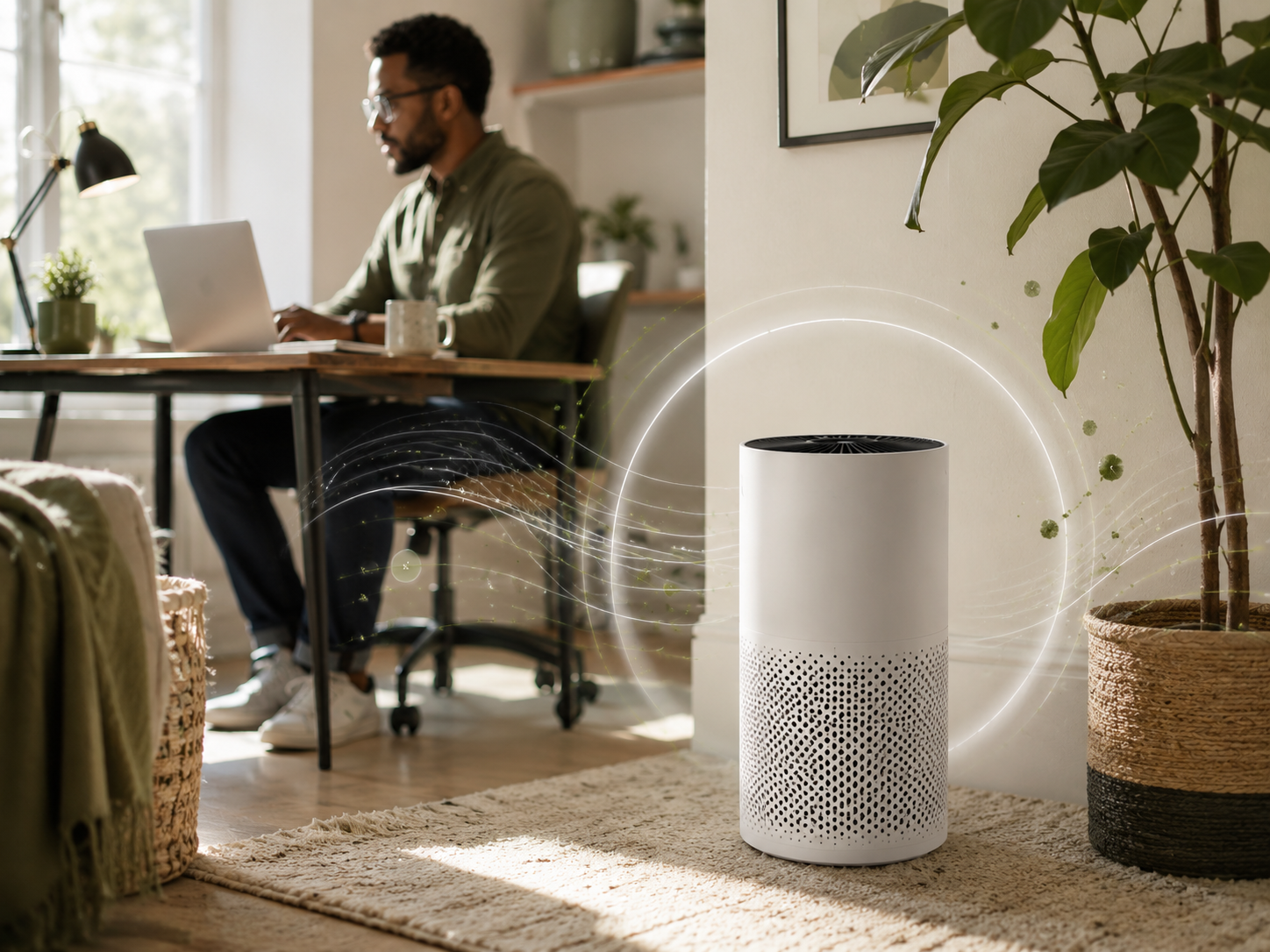
This guide is about choosing an air purifier for a home office: filtration, room size, noise, filter costs, placement and everyday usability. It is not a full home-office setup guide, a cooling guide or a medical air-quality plan. Here, the focus is whether an air purifier can make the room you work in feel cleaner, fresher and easier to stay in.
Best Air Purifiers For Home Office
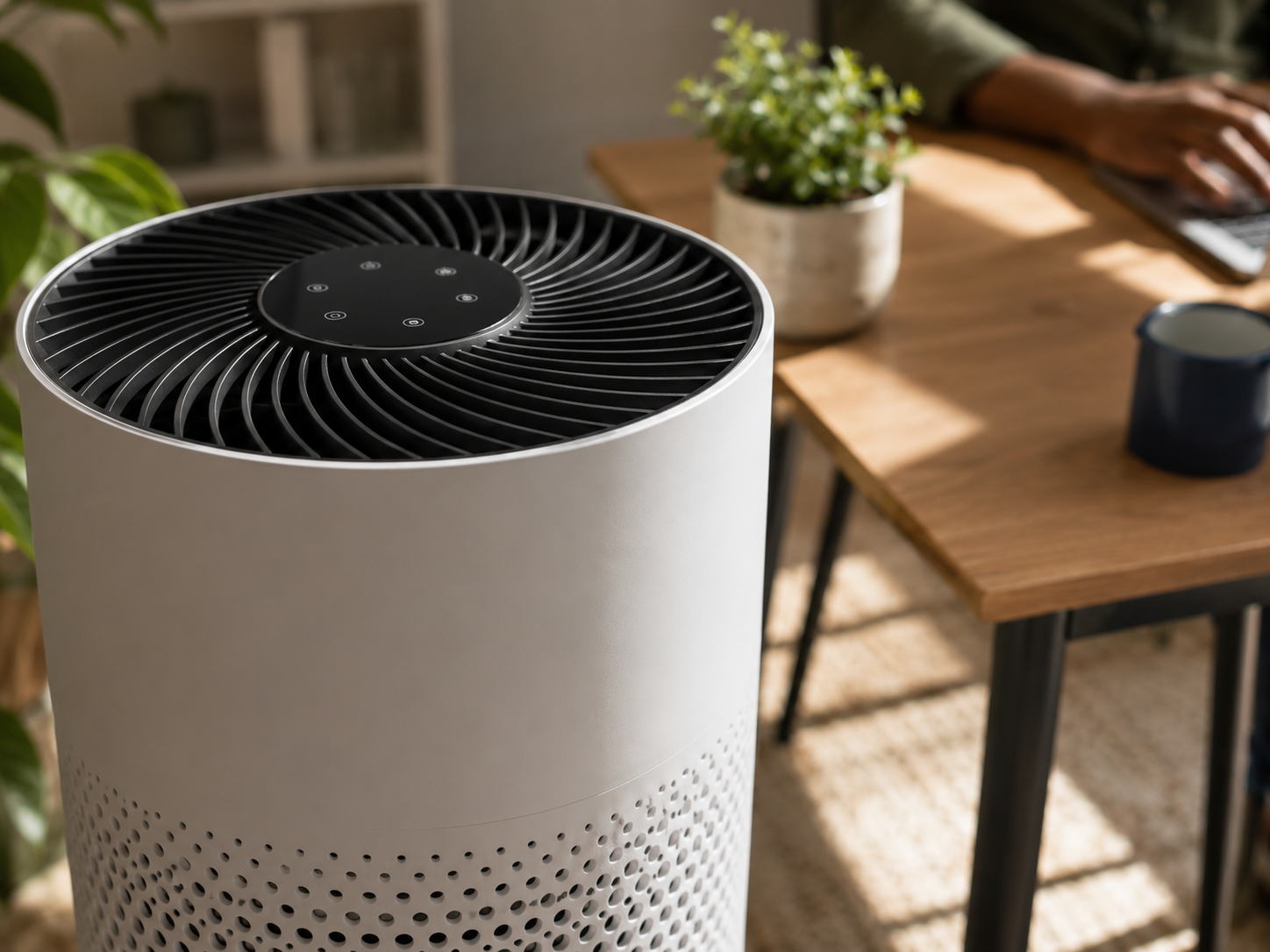
Why Air Quality Matters In A Working Room
A home-office air purifier is not only about “clean air” in a vague lifestyle way. It is about making the room feel more workable when you spend serious time in it.
A stale workspace can make a normal afternoon feel heavier, especially when the laptop is warm, the door is shut and the air has that “I have been thinking too hard in here” feeling.
This matters because home workers often stay in one room for hours without the natural movement of an office day. There is no walk to a meeting room, no commute reset and sometimes no reason to open the door until your brain starts quietly buffering.
So the practical point is simple: do not buy an air purifier as a magic productivity charm. Buy one if your room genuinely feels dusty, stale, stuffy, pet-heavy, pollen-prone or hard to ventilate. It should support the working environment, not become another gadget that sits there judging you.
Price And Running Costs
With air purifiers, the purchase price is only part of the decision.
The real cost includes replacement filters, electricity use and whether the purifier is powerful enough for the room you actually use. Cheaper models can be useful for small spaces, but check filter availability before buying.
If replacement filters are hard to find or surprisingly expensive, the low upfront cost may not feel so clever later.
More expensive models can be worth it if they are quieter, better suited to your room size, easier to maintain or more pleasant to live with every day. But do not overbuy just because a model looks impressive.
Also think about where it will sit. If the purifier is too bulky, awkward or noisy, you may keep turning it off. The best value option is not always the cheapest. It is the one that fits your room, budget and routine well enough to keep using.
Air Purifier Vs Fan Vs Open Window
Air purifier
An air purifier is best when you want to reduce airborne particles such as dust, pollen or pet dander in a specific room.
It can be especially useful when opening a window is not practical because of noise, traffic, weather, smoke or pollen. It does not replace cleaning or ventilation, but it can help improve the feel of a stale workspace.
Fan
A fan helps move air and can make a room feel cooler, but a standard fan does not clean the air.
It may help comfort, especially in summer, but it can also move dust around if the room is already dusty. Use a fan for airflow and cooling. Use a purifier for filtration. If a product claims to do both, check the filter details carefully.
Open window
Opening a window can help ventilation, but it depends on your surroundings.
If you live near traffic, building work, smoke, pollen or noise, opening the window may not always feel better. For many home workers, the best setup is a mix: ventilate when it makes sense, clean regularly and use an air purifier when the room needs extra support.
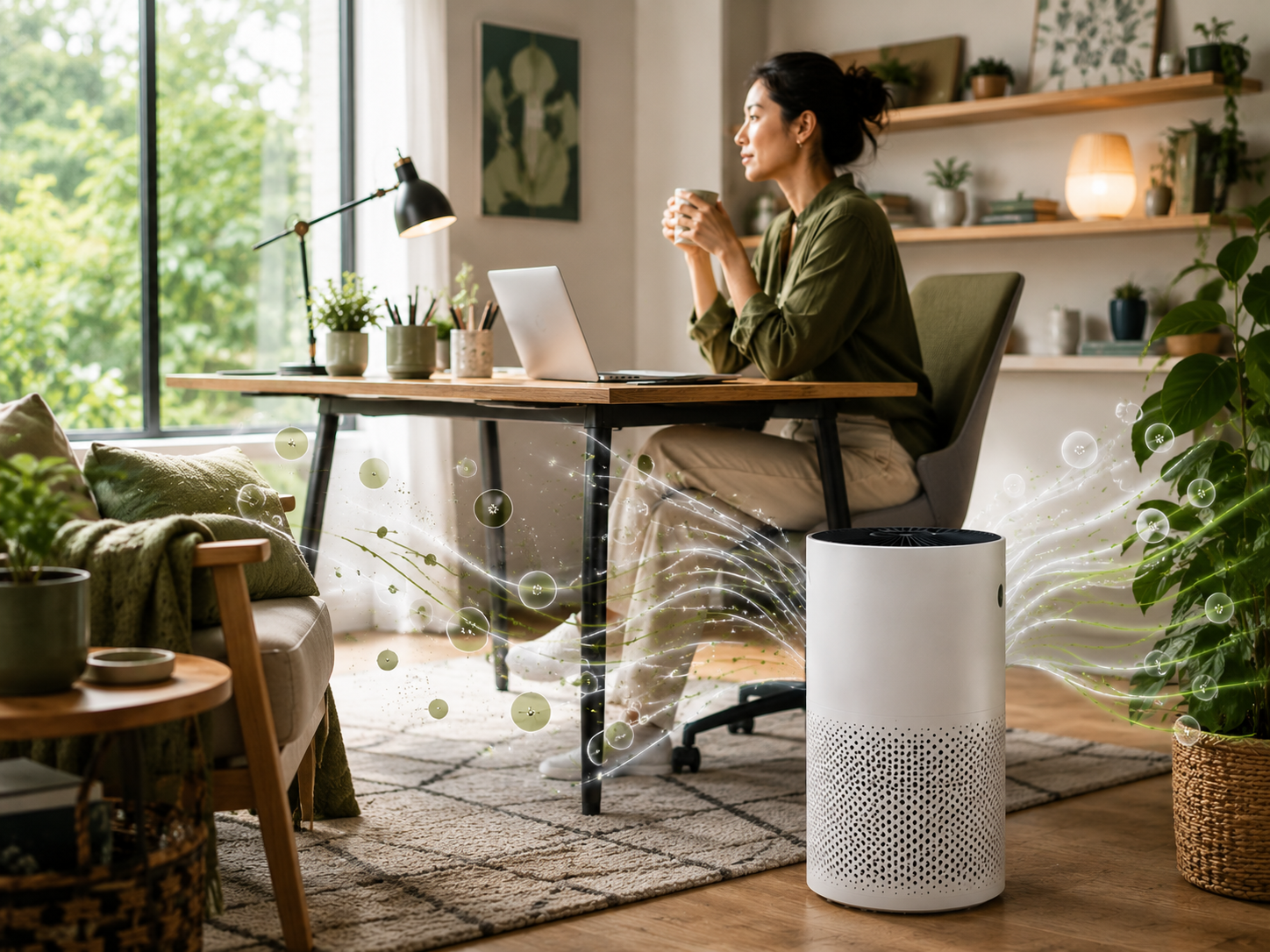
Who Benefits Most From A Home-Office Air Purifier
Pet owners
If your dog, cat or other furry supervisor spends time in the office, an air purifier may help with pet dander and general airborne fluff.
It will not replace vacuuming, washing blankets or cleaning under the desk, but it can make the air feel fresher if the room starts to feel heavy.
Pollen-sensitive workers
If pollen makes your eyes, nose or focus worse, a purifier in the room where you work may be helpful during peak seasons.
Keep windows closed when pollen is high, clean surfaces regularly and avoid treating the purifier as the only fix. It works best as part of a wider routine.
Dusty desk-room users
Some home offices gather dust quickly because of books, shelves, carpets, fabric chairs, old paperwork and general life clutter.
An air purifier can help reduce airborne dust, but it will not fix piles of paper, uncleaned vents or the mysterious cable nest under the desk.
Small-room home workers
Small rooms can get stale quickly, especially with a laptop, monitor, lamp and closed door.
If you work in a box room or corner office, a compact purifier can make the space feel less airless. Look for something quiet and appropriately sized rather than a huge unit that dominates the room.
Shared-home workers
If you share your home with family, housemates, pets or children, your office air may be affected by more than your own work habits.
Cooking smells, laundry, dust, doors opening and pets wandering in can all change how the room feels. A purifier may help, but placement and consistent use matter.
Common Air Purifier Buying Mistakes
Ignoring filter costs
The filter is not an optional extra. It is central to how the purifier works.
Before buying, check replacement costs and availability. If you cannot easily replace the filter, the purifier may slowly become less useful while still looking like it is doing something.
Buying for looks only
A sleek purifier is nice, but performance, room size, filter type and noise level matter more.
This is a home-office tool, not a decorative sculpture. If it looks beautiful but annoys you during calls, it will probably end up unplugged.
Expecting it to fix damp or mould
An air purifier may help reduce some airborne particles, but it does not solve damp, leaks, condensation or mould at the source.
If you have mould or persistent damp, deal with the underlying problem properly. Do not ask a small machine in the corner to fight a building issue by itself.
Confusing airflow with filtration
This is one of the easiest mistakes.
A fan can move air and make the room feel better, but that does not mean it is filtering fine particles. If your main concern is dust, pollen, pet dander or stale indoor air, make sure you are buying an actual purifier rather than a cooling product that only moves air around.
Believing vague air-freshening claims
Be careful with products that sound impressive but do not clearly explain how they filter air.
Look for clear filtration details, room-size guidance and replacement-filter information. If a product relies mostly on vague freshness language, slow down before buying.
Using it only when the room already feels awful
Air purifiers often work best when used consistently.
If you only switch one on once the room already feels stuffy, dusty or irritating, it may take longer to help. Use it before the room feels unpleasant, especially during long work blocks or high-pollen days.
Helpful Alternatives And Add-Ons
Better cleaning routine
A purifier helps, but cleaning still matters.
Vacuum regularly, wipe surfaces, wash soft furnishings and clear desk dust. If the room is full of dust traps, the purifier has more work to do. Reduce the source where you can.
Better airflow
If the room feels hot more than dusty, airflow may be the bigger issue.
A fan can help with cooling and circulation when the air feels still. That is not a direct replacement for purification, but it can make a small workspace feel more comfortable.
Better ventilation habits
Ventilation still matters when it is practical.
Opening a window at the right time, leaving the door open between calls or airing the room before a long work block can help reduce stale air. Just use judgement. If the outdoor air is full of traffic fumes, smoke, pollen or noise, ventilation may need to be timed more carefully.
Better lighting and desk comfort
Air quality is only one part of a healthy workspace.
Lighting, posture, screen height, noise and temperature all affect how the room feels. If your whole setup is uncomfortable, an air purifier may help the air but not the bigger problem. Treat it as one piece of the home-office environment.
FAQ
Do air purifiers help in a home office?
Yes, air purifiers can help if your home office feels dusty, stuffy, pollen-heavy, pet-heavy or hard to ventilate.
They are most useful in rooms where you spend long blocks of time and want cleaner-feeling air. They work best alongside cleaning and sensible ventilation.
Do air purifiers cool a room?
Most air purifiers do not cool a room like a fan or air conditioner.
They move air through filters, which may make the room feel fresher, but they are not designed mainly for cooling. If heat is the main problem, you may need airflow or cooling support as well.
Is a fan the same as an air purifier?
No. A standard fan moves air. An air purifier filters air.
Some premium products may combine airflow with purification, but you need to check the exact model. Do not assume a product cleans the air just because it makes the room feel breezier.
Where should I put an air purifier in my office?
Place it where air can move around it properly.
Avoid blocking the intake or outlet with furniture, walls, curtains, boxes or cables. A spot near the desk can work well, but not if it becomes noisy, intrusive or awkward.
Is an air purifier worth it for working from home?
An air purifier can be worth it if your workspace regularly feels stale, dusty, pollen-prone or uncomfortable.
It is less essential if your room already has good ventilation and does not bother you. The best test is simple: does the room’s air quality affect how you feel while working? If yes, a purifier may be a sensible upgrade.
What should I check before buying an air purifier?
Check room coverage, filter type, replacement-filter cost, noise level, size, power use and placement.
Also check whether it is a true air purifier or mainly an airflow product. If you need filtration, do not buy something that only moves air around.
Final Verdict
The best air purifier for a home office is not necessarily the biggest, most expensive or most feature-packed model. It is the one that suits your room size, runs quietly enough for work, has filters you can replace easily and fits into your routine without becoming another thing to manage.
If your home office feels dusty, stale, pet-heavy, pollen-prone or hard to ventilate, an air purifier can be a genuinely useful upgrade. It will not make work effortless, but it can make the room feel cleaner and less draining during long blocks at the desk.
Levoit Air Purifiers and Blueair Air Purifiers are strong names to compare if you want dedicated purifier options. Pro Breeze Air Purifiers, Honeywell HEPA Air Purifiers and Inventor Air Purifiers may also be worth considering depending on your room size, budget and preferred style of appliance.
Focus on proper filtration, room coverage, noise level and running costs. Be careful with products that only move air if what you really need is filtration. Fans and cooling appliances can help comfort, but they do not automatically clean the air unless the specific model is designed to do that.
For busy home workers, the real win is making the room easier to stay in without feeling boxed in. Cleaner air, better airflow, sensible breaks and a less stuffy setup can make a long workday feel less like you are trying to build a business from inside a storage cupboard.