



Host a Virtual Halloween Party: Audio,…

20 Minimalist Halloween Nail Ideas for…

Can Free Affinity Help You Build…

12 Lower-Sugar Halloween Treat Swaps Worth…

Can Hostinger AI Builder Launch a…

A 5-Step Screen-Free Autumn Reading Ritual…

Plug-In Solar Panels UK: Are They…

15 Last-Minute Zoom Halloween Costumes for…

Meta One Explained: Is the Subscription…

10 Low-Fuss Dog Halloween Ideas: Comfort…

Plaud One Explained: Can AI Earbuds…

9 Gothic Dinner Table Ideas for…

Namecheap vs Dynadot

7 UK Ghost Tours and How…

Convertkit Vs Beehiiv

Do You Really Need a £420…

Bluehost vs Siteground

15 Gentle Spooky Autumn Books to…

Namecheap review

How to Remove Halloween Face Paint…
Under desk bikes vs walking pads is really a question about fit, not ambition. Both can help home workers add movement to long desk days, but they ask different things from your room and routine. Under-desk bikes and ellipticals offer lower-disruption seated movement. Walking pads offer more movement, but need more space, desk-height planning and task fit. The better choice is the one that fits your real workday well enough to use after the novelty fades.
Bikes suit seated desk work
Ellipticals can feel smoother
Walking pads suit step goals
Walking needs more setup
Bikes usually need less space
Task type matters most
Neither option fixes habits alone
Most Relevant Audience
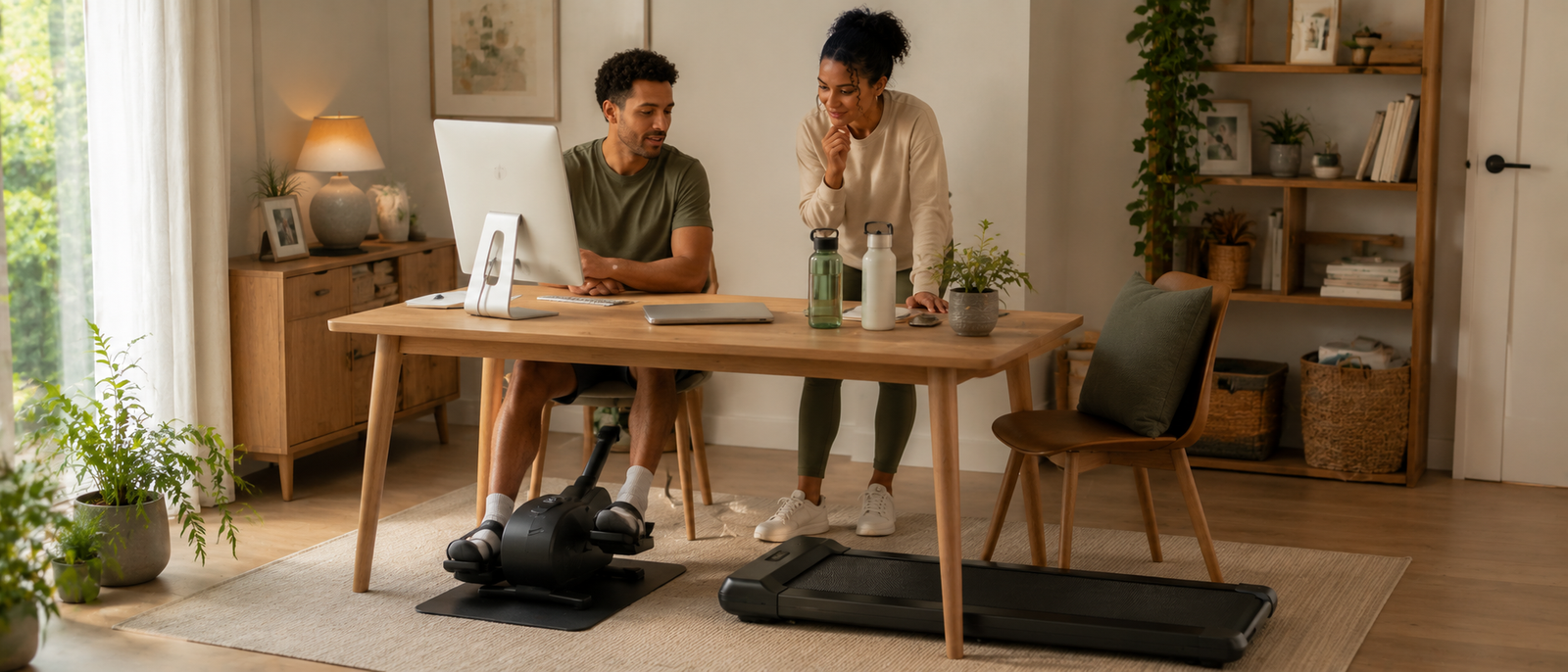
This guide is for remote workers, home workers, freelancers, bloggers, creators, side hustlers, parents, carers and small business owners who sit for long stretches and want more movement during the day.
It is especially useful if you are choosing between seated pedalling, an under-desk elliptical or a walking pad, and you want a practical answer before buying another object for the home office.
Quick Decision Guide
Choose an under desk bike if focus matters most
An under desk bike is usually the easier choice if you want movement during focused desk work. You stay seated, keep the same monitor height and avoid changing your whole desk setup.
This can work well for email, admin, reading, light calls and some writing. It may not feel dramatic, but low-disruption movement is often easier to repeat.
Choose an under desk elliptical if comfort matters
An under desk elliptical can be a good middle option if you want seated movement with a smoother, lower-impact feel.
Cubii-style ellipticals are often chosen by people who want quiet movement under a desk without a full bike shape. Check desk clearance, pedal height, stride feel and whether your knees have enough room before buying.
Choose a walking pad if steps motivate you
A walking pad is better if you want full-body movement, step goals and a clearer break from sitting.
It suits low-focus tasks, reading, webinars, admin and walking between work blocks. It needs more room, more setup planning and a desk height that works while standing.
Choose neither if habits are the real issue
Sometimes the better first step is not equipment. It might be scheduled movement breaks, a smartwatch nudge, a lunchtime walk, standing during certain calls or short stretches between tasks.
If you already ignore every reminder and rarely take breaks, test a smaller habit first. Equipment supports movement. It does not automatically create the routine.
This guide is not mainly about whether walking pads are worth it or which model to buy. It is about whether seated movement or standing movement fits your workday better. If you already know you want a walking pad, a dedicated walking pad review will help more. If you are still choosing the type of desk movement, start here.
What Both Products Are Trying To Solve
Long sitting
Both under-desk bikes and walking pads aim to reduce long sitting by making movement easier to access during the workday.
They do this differently. Bikes let you move while seated. Walking pads create a more active standing setup. Neither is automatically better. The real question is which one you can use safely, comfortably and consistently.
Low movement awareness
Both options can make you more aware of how still the day has become. That can matter for home workers whose routine moves from chair to kitchen and back again.
A smartwatch or step tracker can help too. If your main issue is simply forgetting to move, a reminder may be enough before buying larger equipment.
Afternoon energy dips
Light movement can support a steadier-feeling workday for some people, especially when it replaces long uninterrupted sitting.
That does not mean a desk bike or walking pad will fix fatigue by itself. Sleep, food, breaks, workload and stress still matter. Movement tools work best as part of a wider routine.
Under Desk Bikes Explained
What they are good for
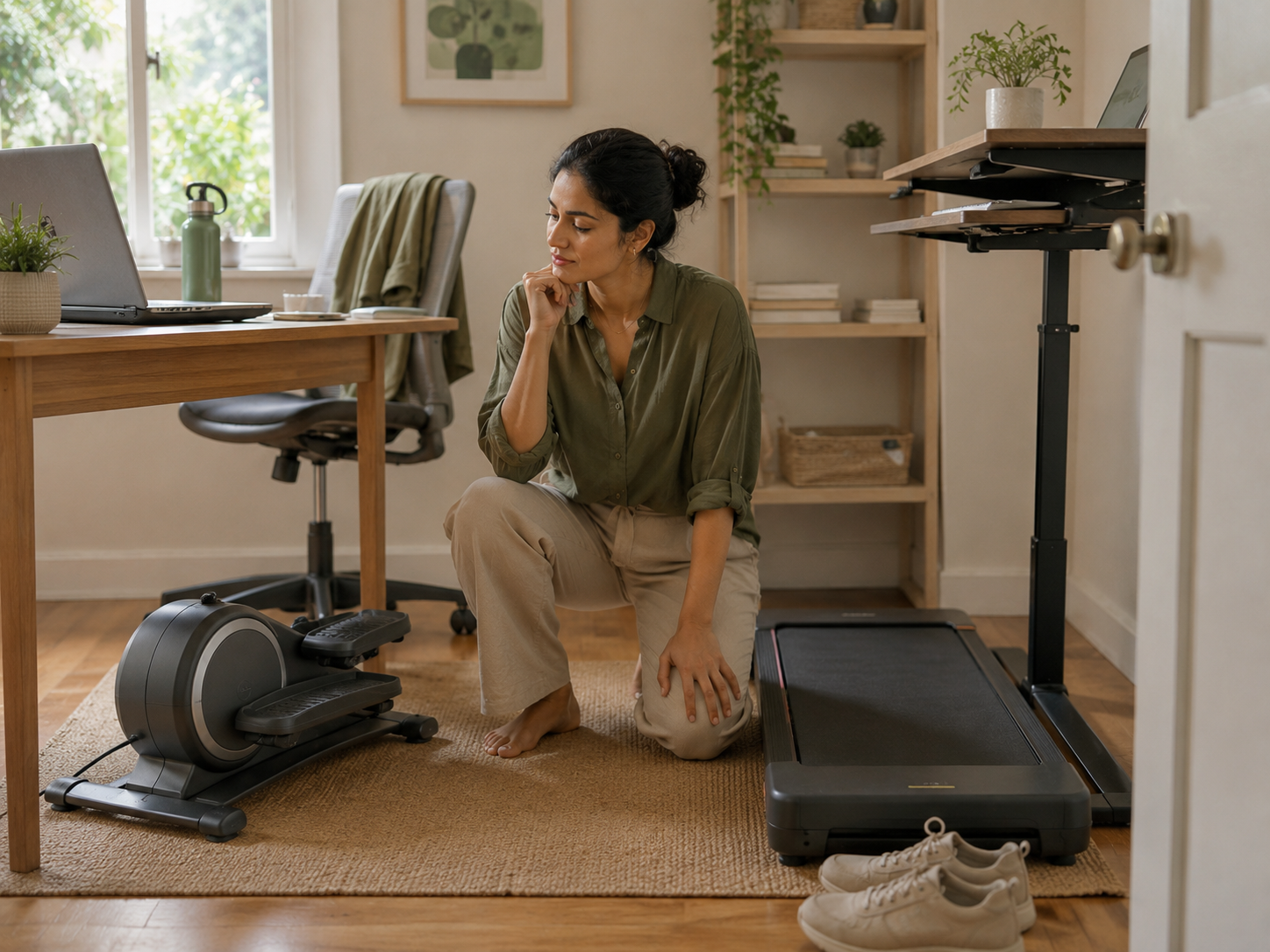
Under desk bikes are best for seated movement during tasks where you still need a normal desk setup. Examples include DeskCycle-style pedal units, compact under-desk bikes and seated cycling tools.
They can be useful if you want movement without standing, changing desk height or needing extra floor length behind the desk. They are often easier to try in smaller workspaces.
What to check before buying
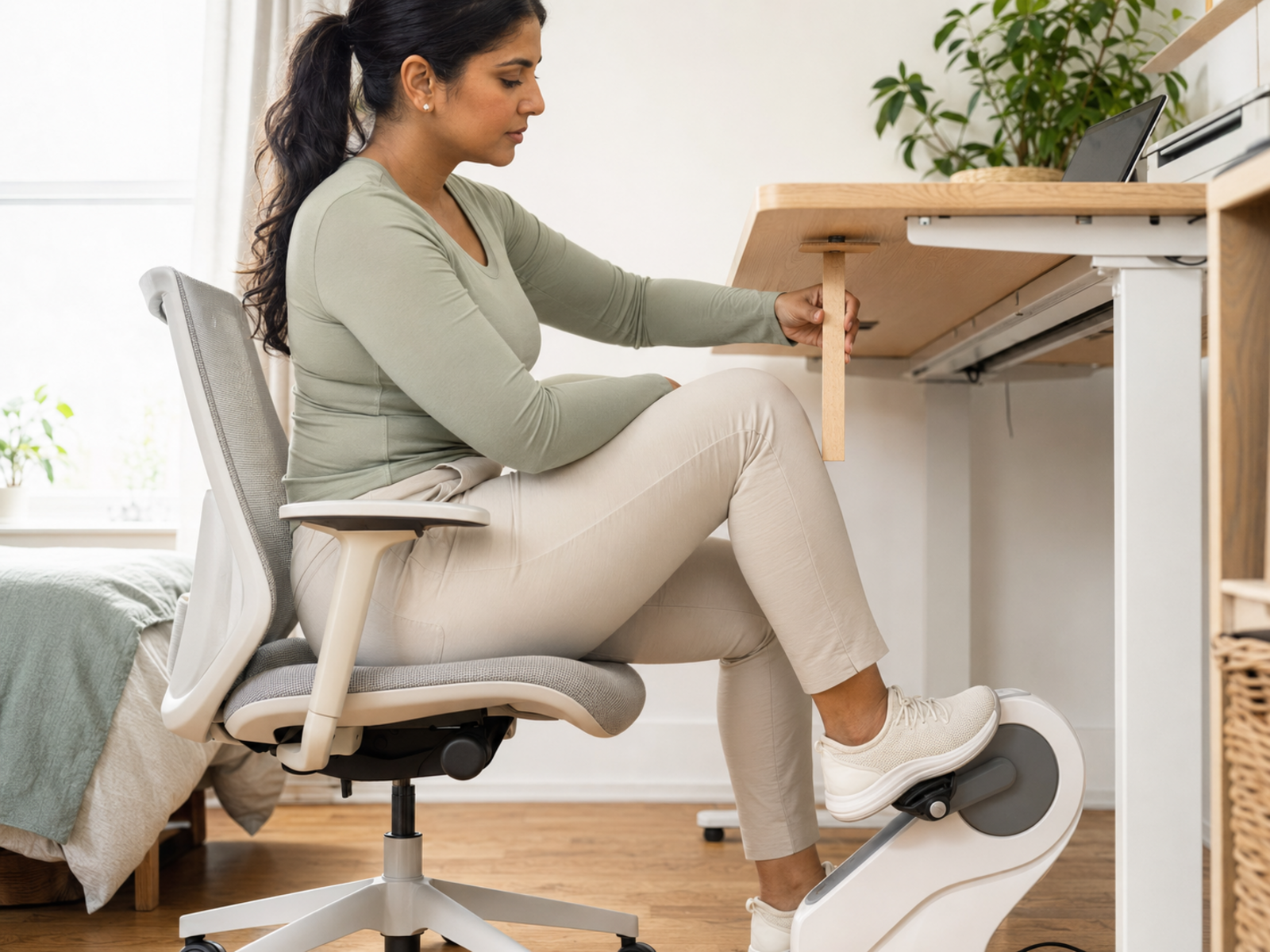
Check pedal height, desk clearance, resistance settings, stability, noise and whether your chair moves while pedalling.
Chair type matters. Rolling chairs may slide unless locked or placed on a suitable surface. Dining chairs may feel stable but less adjustable. If the pedalling position changes your posture, the setup may not stay comfortable.
Knee clearance and user height
Knee clearance is one of the biggest under-desk bike issues. Shorter users, taller users and people with lower desks may all experience the setup differently.
Check the pedal path, desk underside and chair height before buying. A bike can technically fit under a desk but still feel cramped when your knees move.
Under desk bikes vs ellipticals
Under-desk bikes usually feel more like seated cycling. Under-desk ellipticals often feel smoother and may create less up-and-down knee movement depending on the design.
Ellipticals can suit people who want gentler motion, but they still need enough clearance. The best option is the one that feels comfortable while typing, reading or taking calls.
Walking Pads Explained
What they are good for
Walking pads are best for people who want step-based movement during light work or between tasks.
They can help if long sitting is the main issue and you have enough space for safe use and storage. They also suit people motivated by steps, walking blocks or post-lunch movement.
What to check first
Before comparing walking pads, check whether your desk height works while standing. You may need a standing desk or standing desk converter.
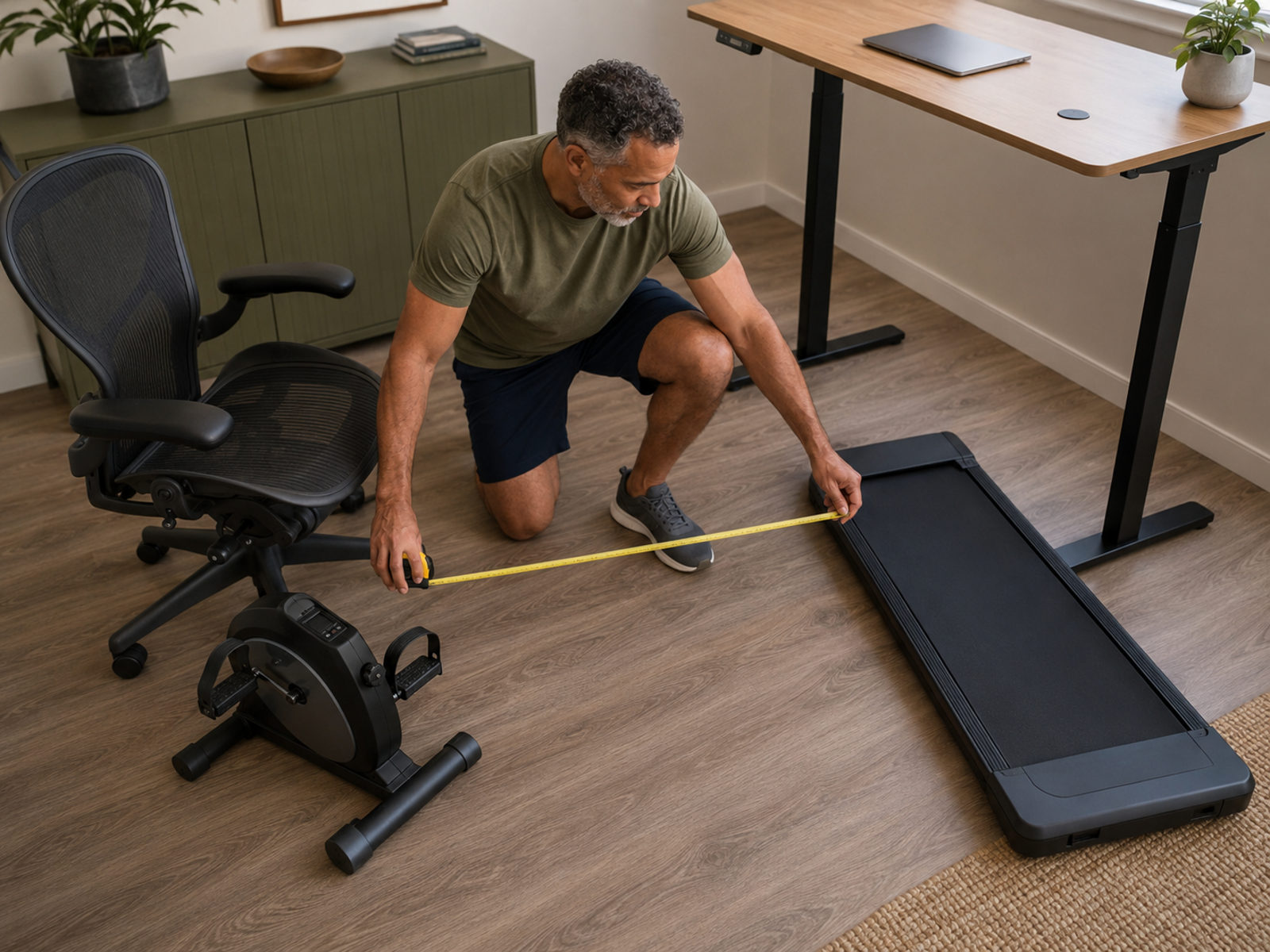
Also consider room space, storage, noise, floor type, calls, children, pets and how easily you can step on and off. If those basics do not work, product features will not rescue the setup.
Who should be cautious
Walking pads may be less useful if your work is mostly deep writing, design, detailed spreadsheets, video calls or tasks requiring steady hands and full attention.
They may still work between tasks, but they may not be realistic for every work block. Buy for the tasks you actually do, not the routine you wish you had.
Seated Movement vs Standing Movement
Seated movement
Seated movement is easier to fit into many workdays. You keep your chair, screen height and typing setup mostly the same.
This is why under desk bikes and ellipticals can work well for focused desk work. The movement is smaller and less disruptive, which can make it easier to repeat.
Standing movement
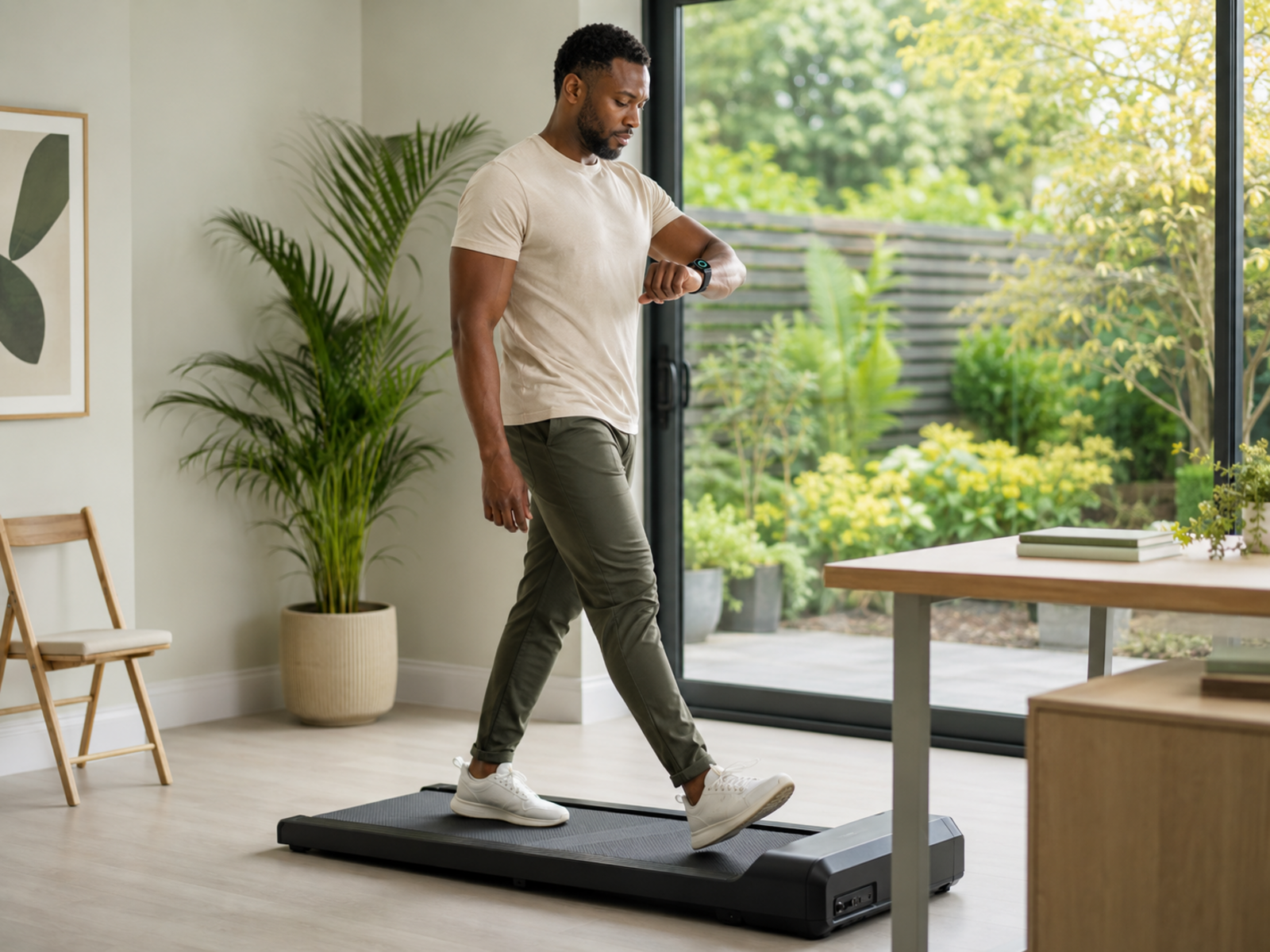
Standing movement feels more active and can break up sitting more clearly. Walking pads are better if you want steps, upright posture changes and a stronger shift away from chair-based work.
The trade-off is setup. You need desk height, balance, space and task fit. Standing movement asks more from the room and from your attention.
The practical winner
The winner depends on your real day. If you need quiet, seated, low-disruption movement, choose a bike or elliptical. If you want steps and can support a standing setup, consider a walking pad.
Neither choice is a personality test. It is a fit decision.
Best Option For Real Workday Situations
Best for focused desk work
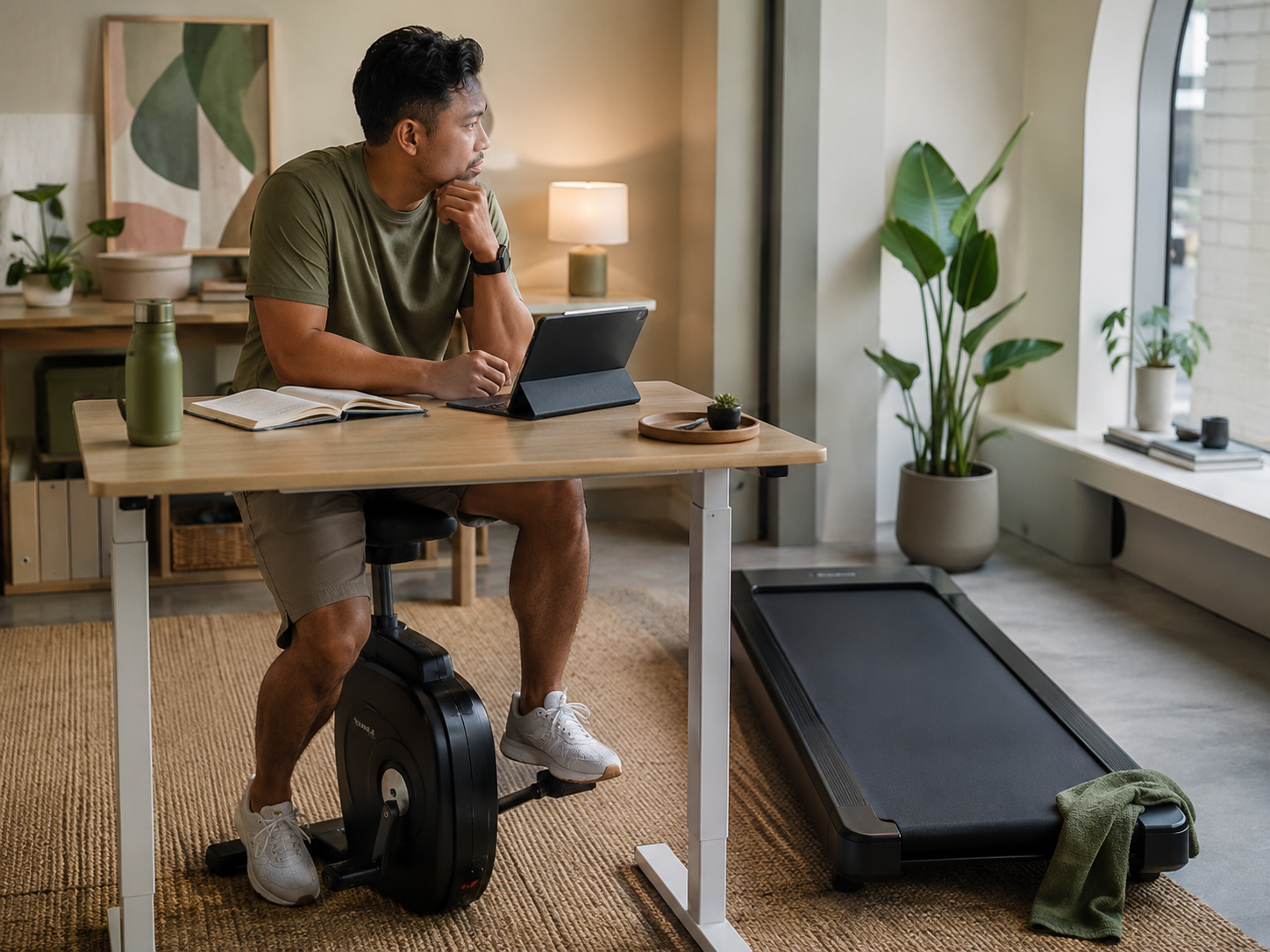
Under desk bikes are usually better for focused desk work because you can stay seated and keep your normal screen position.
They suit people who want movement without changing the whole workspace. If your work involves writing, editing, spreadsheets or detailed admin, seated pedalling may be easier than walking.
Best for calls and meetings
Under desk bikes or ellipticals are usually easier for calls because the movement can stay more discreet.
Walking pads can work for listen-only meetings, but they may affect camera framing, sound and how settled you feel. For client calls, presentations or serious meetings, walking may be less practical.
Best for small spaces
Under desk bikes and compact ellipticals usually win for small spaces. They often need less floor length and can be easier to store.
Walking pads need more room for safe use, stepping on and off, and storage. In a bedroom corner or shared room, that matters.
Best for step goals
Walking pads are better if steps motivate you. They directly support step count and can make short walking blocks easier during the day.
Under desk bikes still create movement, but they may not satisfy someone who specifically wants walking, step tracking or a stronger break from sitting.
Best for consistency
The most consistent option is the one with the least friction. For some people, that is seated pedalling during admin. For others, it is walking for ten minutes between tasks.
Choose the tool that fits the moment you will actually repeat. Consistency matters more than the product looking impressive.
Noise, Storage And Setup Differences
Noise
Noise depends on the product, floor, speed, shoes, resistance and room. Under-desk bikes and ellipticals can be quiet, but some create pedal, resistance or chair movement noise.
Walking pads add motor and footfall noise. This matters in flats, shared homes, call-heavy workdays and rooms near sleeping children or other workers.
Storage
Under desk bikes and ellipticals are often easier to tuck away, although they can still be awkward around chair legs, cables and small desks.
Walking pads usually need a bigger storage plan. Before buying one, decide where it goes when not in use. A product that blocks the room may quickly become annoying.
Setup
Under desk bikes need chair position, desk clearance, resistance control and comfortable pedalling space. Walking pads need standing desk height, screen position, keyboard comfort and safe floor space.
Both need planning. The mistake is assuming the product alone solves the setup.
Pros And Cons
Pros
Under desk bikes and ellipticals are easier to use while seated, often fit smaller rooms better and can suit focused desk work. Walking pads offer more upright movement, support step goals and can make long sitting easier to interrupt.
Both can help when they fit your real routine. The best benefit is repeatable movement that does not require a full workout plan.
Cons
Under desk bikes can feel cramped, affect knee clearance and may not satisfy people who want walking or step counts. Walking pads need more space, better desk setup and more task planning.
Both can become unused if they are bought before checking work style, storage, noise, comfort and habit fit.
Common Buying Mistakes
Buying before checking task fit
Do not buy based only on the idea of moving more. Think about the work you actually do.
If your day is mostly deep focus, a seated bike may be easier. If your day includes light admin and you want steps, a walking pad may fit better.
Ignoring knee and desk clearance
Under-desk bikes and ellipticals need enough space for your knees to move comfortably.
Check desk height, chair height, pedal path and whether your posture changes while pedalling. If you feel cramped, the product may sit unused.
Forgetting desk height for walking
Walking pads usually need a standing desk or standing desk converter. If your screen and keyboard are not comfortable while standing, walking will feel awkward quickly.
Check the standing setup before committing. The walking pad is only one part of the workstation.
Expecting movement to fix the whole day
A desk bike or walking pad can support movement, but it cannot fix skipped lunch, poor sleep, workload pressure or no breaks.
Use movement tools as support, not proof that you have solved wellness. A better routine still needs space to happen.
Comparing products too early
If you are not sure which category fits, do not start with model rankings. Decide seated movement vs walking first.
Once you know the type, then read product-specific guides. Walking pad reviews are useful after you know a walking pad actually makes sense.
Cheaper Movement Options To Try First
Scheduled walking breaks
Try walking for five to ten minutes between work blocks. This is the simplest way to test whether movement helps your energy and focus.
If this works but you struggle to leave the desk, a walking pad may make sense later.
A smartwatch or step tracker
A smartwatch or tracker can help you notice movement patterns before buying larger equipment.
If step goals or stand reminders help, you may only need better prompts. If reminders help but the room makes movement difficult, then desk movement tools become more relevant.
Standing breaks
Standing during certain calls or admin blocks can help you test whether upright work fits your routine.
If standing feels useful but too still, a walking pad may be worth exploring. If standing itself feels awkward, fix desk height first.
Simple mobility tools
Resistance bands, a yoga mat or short stretch routines can support movement without taking over the workspace.
These are good first steps if budget, space or noise make larger equipment unrealistic.
FAQ
Are under desk bikes better than walking pads?
Under desk bikes are better if you want seated movement, smaller-space use and less disruption during focused work.
Walking pads are better if you want step-based movement, more upright activity and have a suitable standing desk setup. The better option depends on your tasks, room and habits.
Are walking pads worth it for home workers?
Walking pads can be worth it for home workers who sit for long stretches, have enough space and can use them during light tasks or between work blocks.
They are less useful if your space is cramped, your desk height is wrong or your work requires deep focus most of the day.
Can you work properly while using an under desk bike?
Many people can use an under desk bike during light or moderate desk tasks, especially reading, admin, email and some calls.
It may be less suitable if pedalling distracts you, affects posture or causes discomfort. Start slowly and check desk clearance carefully.
Which is better for small spaces?
Under desk bikes and compact ellipticals are usually better for small spaces because they need less floor length and are easier to store.
Walking pads need more room for safe use, stepping on and off, and storage when not in use.
Are under desk bikes good for long sitting days?
Under desk bikes can help add movement to long sitting days because they let you move while seated.
They do not replace standing, walking, stretching or breaks completely, but they can reduce how still the day feels.
Should I buy a walking pad or try cheaper movement first?
Try cheaper movement first if you are unsure. Use walking breaks, standing blocks, a smartwatch nudge or simple mobility routines.
If those help and you still want movement built into the desk area, then compare under desk bikes, ellipticals and walking pads.
Final Verdict
Under desk bikes vs walking pads comes down to movement format. Under desk bikes and ellipticals suit seated movement, smaller spaces and focused desk work. Walking pads suit step goals, upright movement and people with enough room, suitable desk height and tasks that work while walking.
Neither option is automatically better. The best desk movement tool is the one that fits your real tasks, room, body and habits well enough to be used regularly, not just admired during the first week.


