




Host a Virtual Halloween Party: Audio,…

The Calm Autumn Reset: 10 Small…

Can Free Affinity Help You Build…

The Best Lighting for Darker Autumn…

Can Hostinger AI Builder Launch a…

Create an Autumn Wind-Down Routine That…

Plug-In Solar Panels UK: Are They…

Autumn Sleep Reset: Light, Temperature and…

Meta One Explained: Is the Subscription…

The Best Ways to Dry Washing…

Plaud One Explained: Can AI Earbuds…

Dehumidifiers Explained: When Are They Actually…

Namecheap vs Dynadot

A Realistic Autumn Walking Routine for…

Convertkit Vs Beehiiv

Autumn Social Reset: Small Plans for…

Bluehost vs Siteground

Sekonda Smart Ring vs Oura Ring…

Namecheap review

Make Your Home Cosier Without Turning…
With darker autumn evenings, a cold spare room, box room or garden office can make desk work miserable. Should you warm yourself with a heated throw or heated blanket, or heat the room?
This article compares the three options on running cost, where they work and safety. Nothing was tested by MyHotips; the figures come from published estimates.
Quick Overview
- A heated throw suits one person at a desk or sofa for the working day.
- A heated blanket is made for bed, so it is not really a desk solution.
- Room heat warms everyone in a shared room. The Energy Saving Trust says portable heaters can be expensive to run, and a 2kW fan heater works out at about 52p an hour on our calculation.
- Running cost is watts ÷ 1,000 × hours × unit rate, using your own figures.
- Our examples use about 26p per kWh, checked on 18 October 2026 and valid to 31 December 2026.
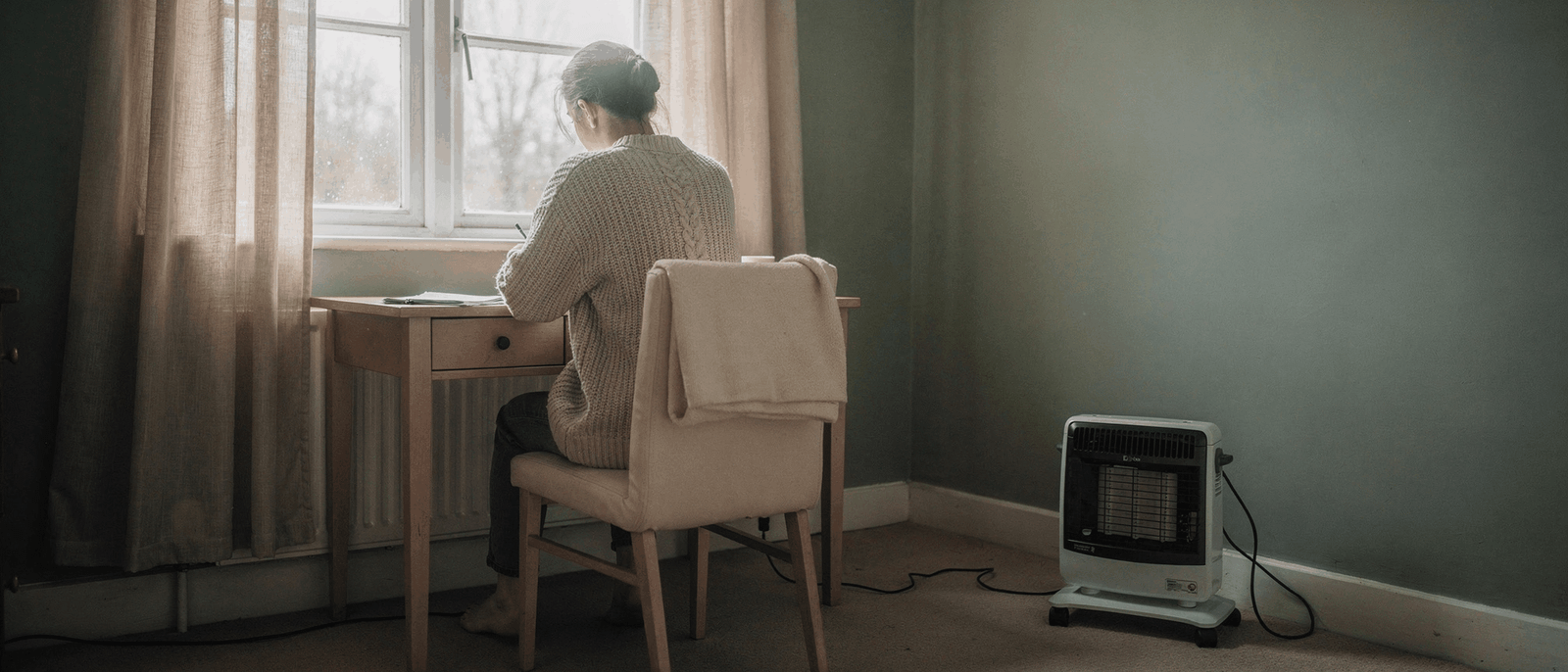
The three options in plain English
Heated throw
A heated throw is an electric cover that sits over your lap or shoulders. It is the option most likely to suit a desk or sofa, because it moves with you. It warms you directly, not the air around you.

Heated blanket
A heated blanket is usually an under- or over-blanket made for a bed. That makes it a different job from desk warmth, and the maker's instructions for how it should be used matter more than convenience.
Heating the room
Central heating or a portable heater warms the space for anyone in it. Moneysupermarket notes that electric blankets are not a direct replacement for central heating, because they warm individuals or beds rather than whole rooms. The same logic applies to a throw.
What published estimates say it costs to run
Heated throw (Uswitch)
Uswitch estimates a heated throw rated at 0.3 kWh costs about 8p an hour at the October 2026 rate of 26.32p per kWh, or about 63p for eight hours. That assumes it is always on maximum, so treat it as a worst case, not a typical cost. Uswitch says lower settings cut the cost and real wattage varies by product.
Blankets (retailer and reviewer)
Retailer Keplin says an electric underblanket on low to medium costs around 6p for eight hours, and a heated throw around 8p for the same period, based on the Ofgem average rate. Trusted Reviews says electric blankets typically cost 2p to 4p an hour. Read these as pennies for a night, or a few pence an hour.
Fan heater (our calculation)
Moneysupermarket describes electric fan heaters as using around 2kW. At 26.32p per kWh, that comes to roughly 52p an hour on our own calculation. Heater wattage varies, so check the label on yours. The formula is the same as for the throw, only the wattage changes; the next section shows the sum.
Side by side: warming yourself (throw or blanket)
The same five points, in the same order, for each way of keeping warm.
- Running cost: about 8p an hour for a 300W throw on maximum (Uswitch); Trusted Reviews puts blankets at a few pence an hour.
- Where it works: on the person using it, at a desk, on a sofa or in bed. It does not warm the room.
- Warm-up speed: no published timing was sourced, and none is claimed.
- Who it suits: one person. A throw is for sitting, a blanket is made for bed.
- Safety: Electrical Safety First advises against an electric blanket for an infant or for a person insensitive to heat, and against under-blankets on an adjustable bed. It also advises buying from a reputable retailer.
Side by side: warming the room (fan heater)
The same five points, in the same order.
- Running cost: roughly 52p an hour for a 2kW heater on our calculation at 26.32p per kWh.
- Where it works: one room, for anyone in it. The Energy Saving Trust says portable heaters warm a single room and can be expensive to run.
- Warm-up speed: no published timing was sourced, and none is claimed.
- Who it suits: a shared room, in short bursts rather than all day.
- Safety: Electrical Safety First says to keep fan heaters away from curtains, bedding and furniture, and to keep the vents clear.
Why the figures differ
Settings and real wattage explain most of the gaps, plus the different rate each source assumed. These are estimates from a comparison site, a retailer and a reviewer, not independent tests, and MyHotips has not tested anything. Our own sums use about 26p per kWh, checked on 18 October 2026. On buying, EDF says electric blankets and heated throws cost around £30 to £150 depending on size and finish quality. Prices can change and vary by retailer.
Work out your own running cost
The formula and a worked example
Cost is watts ÷ 1,000 × hours × unit rate. Here is the sum at the capped rate checked on 18 October 2026, valid to 31 December 2026 and due to change on 1 January:
- 300W throw: 0.3 kWh for an hour on maximum, so about 8p an hour, or about 63p for eight hours (Uswitch).
- 2kW fan heater: 2 kWh for an hour, so about 52p an hour on our calculation.
- Your own sum: take the wattage from the product label, the unit rate from your bill, then multiply.
Make it your own
Fixed tariffs and different regions pay different unit rates, so your bill beats our figure. We have left out the standing charge. This is arithmetic, not energy advice. The same method works on other winter appliances, as in our heated airer and dehumidifier comparison.

Heated throw vs heated blanket for a working day
Heated throw: check the wattage
The 8p an hour estimate is a maximum-setting worst case, while Keplin's retailer estimate is around 8p for eight hours. Settings and real wattage explain the gap, so check the label before relying on either figure. No warm-up timings were sourced for a throw or a blanket, and none are claimed.
Heated blanket: built around the bed
A heated blanket is made for a bed, so Electrical Safety First's cautions apply: not for an infant or for a person insensitive to heat, and no under-blankets on an adjustable bed.
Heated cushions
A heated cushion is a desk-sized alternative that, like a throw, warms one person rather than the space.
When heating the room makes sense
What only room heat can do
Only room heat helps when more than one person is in the space, because a throw warms just one. The Energy Saving Trust says portable electric heaters warm a single room and can be expensive to run, since electricity costs more per unit of heat than main heating systems. At roughly 52p an hour for a fan heater on our calculation, that points to short bursts rather than all day. If the room is always cold, Smart Energy GB says poor insulation may be the real issue.
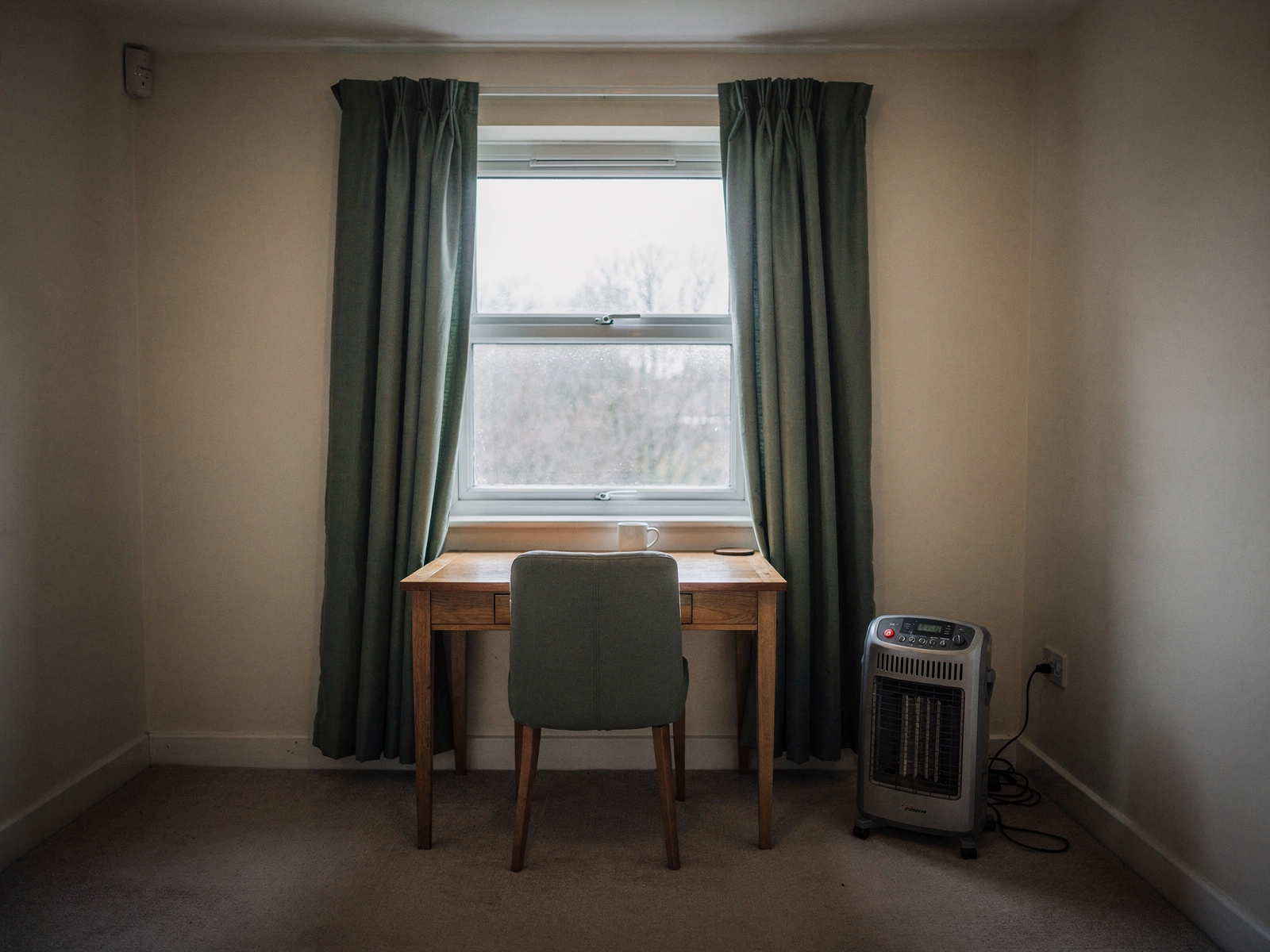
Safety box for heaters
Electrical Safety First says to keep fan heaters away from flammable materials and to keep their vents clear so dust and fluff do not restrict airflow. The same applies in a spare room or a garden office. The manufacturer's instructions come first. Quick check before you switch on:
- Clear space around the heater, away from curtains, bedding and furniture.
- Vents free of dust and fluff.
- Instructions read and followed.
Which one for which day
Desk day, just you
A throw. It warms one person where they sit, and the 300W example is about 8p an hour on maximum, less on lower settings (Uswitch).
Bed
A blanket made for bed, used as the maker instructs. It is not the desk answer, and Trusted Reviews puts bed blankets at a few pence an hour.
Shared space
Room heat, in short bursts. A throw only warms one person, so a shared room needs the room itself warmed. A 2kW fan heater is roughly 52p an hour.
Room below about 18°C
Smart Energy GB, citing NHS guidance, says the NHS advises at least 18°C in the rooms you use most, as general guidance; needs vary, so check NHS advice. A room thermometer shows your real figure.
The one-minute rule
Ask who needs warming, then where. One person at a desk: throw. Bed: a blanket made for bed. More than one person, or a room below about 18°C: room heat in short bursts. Then run the cost sum with your own numbers. Once the temperature is sorted, comfort at the desk is the next job, and our ergonomics guide covers it on a budget.
Safety checklist before you plug in
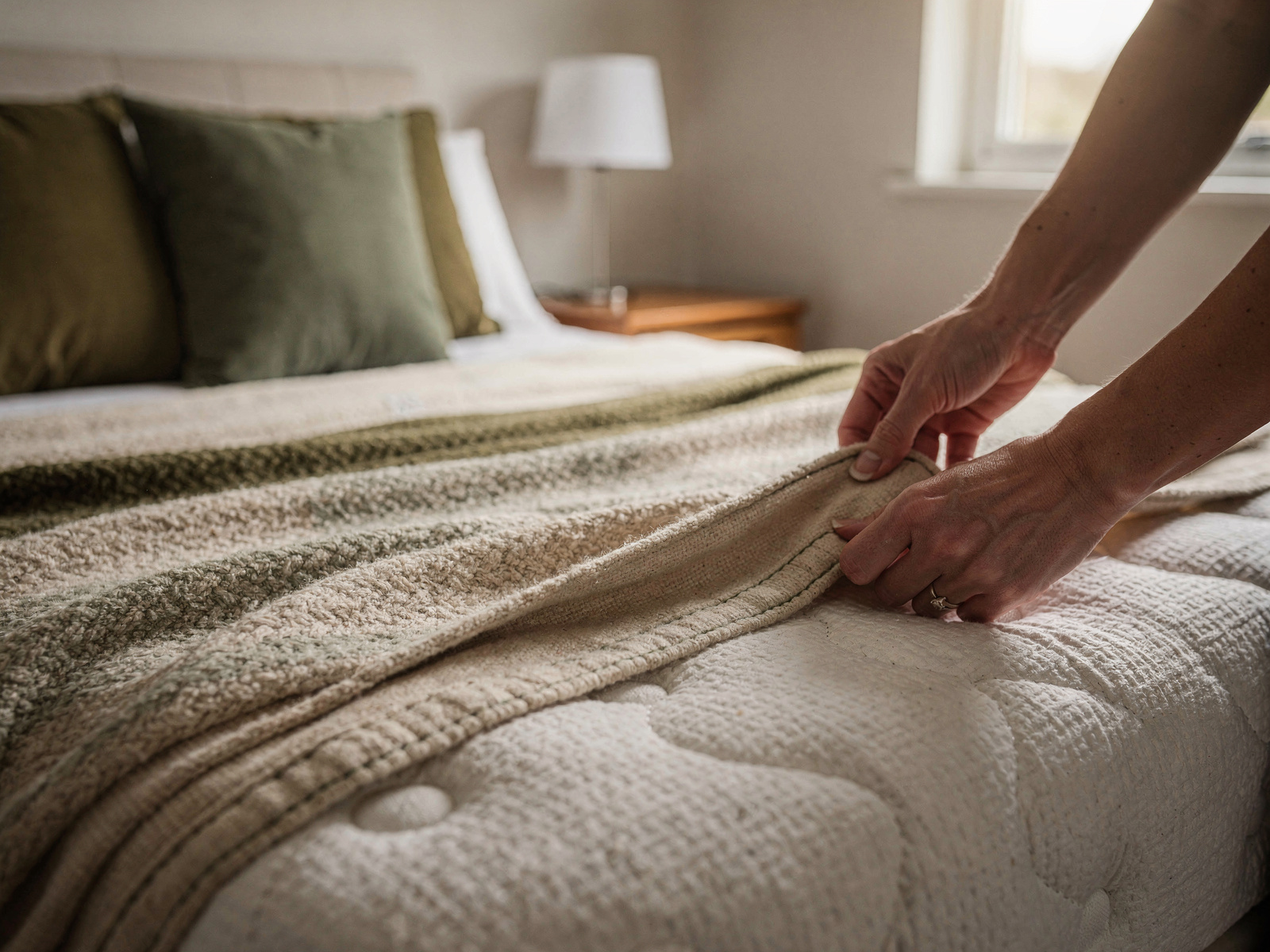
Electrical Safety First advice in short
Always follow the manufacturer's instructions. We do not describe any product as safe, and this list is no guarantee:
- Replace an electric blanket about every ten years.
- Check regularly for scorching, burn marks and visible or damaged wires, and do not use a damaged one.
- Buy from a reputable retailer rather than a third-party online seller.
Pros and cons at a glance
Pros
- Throws and blankets warm the person using them directly.
- Published estimates put throws and blankets at pennies an hour.
- A throw moves between desk and sofa.
- Room heat covers the whole space for everyone in it.
Cons
- Throws and blankets do not heat a room and are not a heating replacement.
- Wattage varies, so published figures are only a guide.
- Blankets need regular safety checks and are made for bed.
- Room heat costs most per hour, and portable heaters can be expensive to run.
FAQs
Will a heated throw replace heating in my home office?
No. Moneysupermarket notes that blankets warm individuals rather than whole rooms, and the same applies to a throw. It can make a cool desk more comfortable, but it does not warm the room or anyone else in it.
How do I work out what a throw or heater costs?
Multiply watts ÷ 1,000 by hours and by your unit rate. Our examples use the capped rate checked on 18 October 2026, valid to 31 December. It changes on 1 January, so use the figure on your own bill.
Is a heated blanket OK at a desk?
Heated blankets are made for beds, so check the manufacturer's instructions before using one anywhere else. A heated throw is the product designed for sitting use. Electrical Safety First's guidance on who should avoid electric blankets still applies.
How often should I replace an electric blanket?
Electrical Safety First recommends replacing one every ten years, and checking regularly for scorching, burn marks and visible or damaged wires. Do not use a damaged one, and follow the manufacturer's instructions.
Is 18°C right for everyone?
No. The NHS advises at least 18°C in the rooms you use most as general guidance. Smart Energy GB notes it may be too low for some people, including older adults and those with certain health conditions. Check NHS advice for your situation.
Verdict
Pick by job. A throw suits one person at a desk, a blanket belongs on the bed, and room heat is for shared spaces or rooms below about 18°C, used in short bursts because it costs most per hour. The biggest reservation is that every cost here is a published estimate that depends on wattage and tariff. Next step: find the wattage on the label and the unit rate on your bill, then run the sum.
For the wider picture of a workspace that suits you through the colder months, start with our healthy home work guide.


