



Host a Virtual Halloween Party: Audio,…

20 Minimalist Halloween Nail Ideas for…

Can Free Affinity Help You Build…

12 Lower-Sugar Halloween Treat Swaps Worth…

Can Hostinger AI Builder Launch a…

A 5-Step Screen-Free Autumn Reading Ritual…

Plug-In Solar Panels UK: Are They…

15 Last-Minute Zoom Halloween Costumes for…

Meta One Explained: Is the Subscription…

10 Low-Fuss Dog Halloween Ideas: Comfort…

Plaud One Explained: Can AI Earbuds…

9 Gothic Dinner Table Ideas for…

Namecheap vs Dynadot

7 UK Ghost Tours and How…

Convertkit Vs Beehiiv

Do You Really Need a £420…

Bluehost vs Siteground

15 Gentle Spooky Autumn Books to…

Namecheap review

How to Remove Halloween Face Paint…
Most resistance band reviews focus on workouts, as if everyone is one playlist away from becoming a home-gym person. Desk workers usually need something less dramatic. The best resistance bands for desk workers should help with tight shoulders, sleepy hips, stiff backs and quick movement breaks between emails, calls and chair-shaped regret. You do not need a full workout plan first. You need the right band for the problem your desk day keeps creating.
Choose by problem, not workout ambition.
Use flat bands for shoulders and mobility.
Pick fabric loops for hips and glutes.
Choose handles for strength sessions.
Check latex, comfort and skin feel.
Start with one light band and one loop.

Most Relevant Audience
This article is for desk workers, remote workers, home workers, freelancers, bloggers, creators, side hustlers, parents, carers and small business owners who want quick, low-space movement tools for stiffness, posture support, mobility and strength. It is especially useful if your day involves school-hour work sprints, calls, admin, tight shoulders, sleepy hips and the creeping suspicion that your chair is slowly winning.
What Makes Resistance Bands Useful For Desk Workers?
They interrupt long sitting
Resistance bands are useful because they make movement easy to start. Keep one near your desk and use it for a two-minute reset between tasks. That matters when your day is full of calls, tabs, admin and “I’ll move later” promises that quietly expire.
They need very little space
A resistance band does not need a spare room, heavy equipment or a dramatic workout mat rollout. It fits in a drawer, bag or desk corner. This makes it practical for small homes, shared spaces and people who do not want their office to become a gym with invoices.
They support mobility and strength
Bands can help with stretching, shoulder mobility, upper-back activation, hip work, glute activation and simple strength moves. They are not only for workouts. Used gently, they can help desk workers bring movement back into muscles that have spent too long pretending to be office furniture.
They work without a workout mood
You do not need to be inspired to use a resistance band. That is the advantage. A few pull-aparts after school admin, side steps while waiting for the kettle or one stretch after a difficult call can count. The goal is movement that survives real life.
The Real Buying Question
Do not start with the toughest band or the biggest set. Ask which band you will actually use between real tasks. The best resistance bands for desk workers should feel easy to grab, safe to control and simple enough that movement happens before stiffness turns into your afternoon personality.
Choose By Desk-Worker Problem
Tight shoulders
Choose a traditional flat resistance band if tight shoulders are your main problem. Flat bands work well for gentle pull-aparts, shoulder mobility, chest openers and controlled stretching. They are easier to adjust than many loop bands because you can change your grip length.
Weak upper back
Choose a flat band or tube band with handles if your upper back needs strengthening. Rows, pull-aparts and controlled pulling movements can help desk workers who spend hours leaning into screens. Start light and focus on smooth control instead of yanking the band like it owes you money.
Sleepy hips and glutes
Choose fabric loop bands for hips and glutes. They suit side steps, glute bridges, squats and lower-body activation. This is useful if sitting leaves your hips stiff or your lower body feeling switched off after long work blocks.
Quick movement breaks
Choose mini resistance bands if you want tiny movement snacks throughout the day. They are small, easy to store and useful for quick activation exercises. Keep one near your desk if you want movement to happen before your brain can turn it into a project.
Short strength sessions
Choose tube bands with handles if you want more strength-focused exercises. They work well for rows, curls, presses and pulldowns. This style suits planned ten-minute sessions better than tiny between-email stretches, because handles and anchors can need a little more setup.
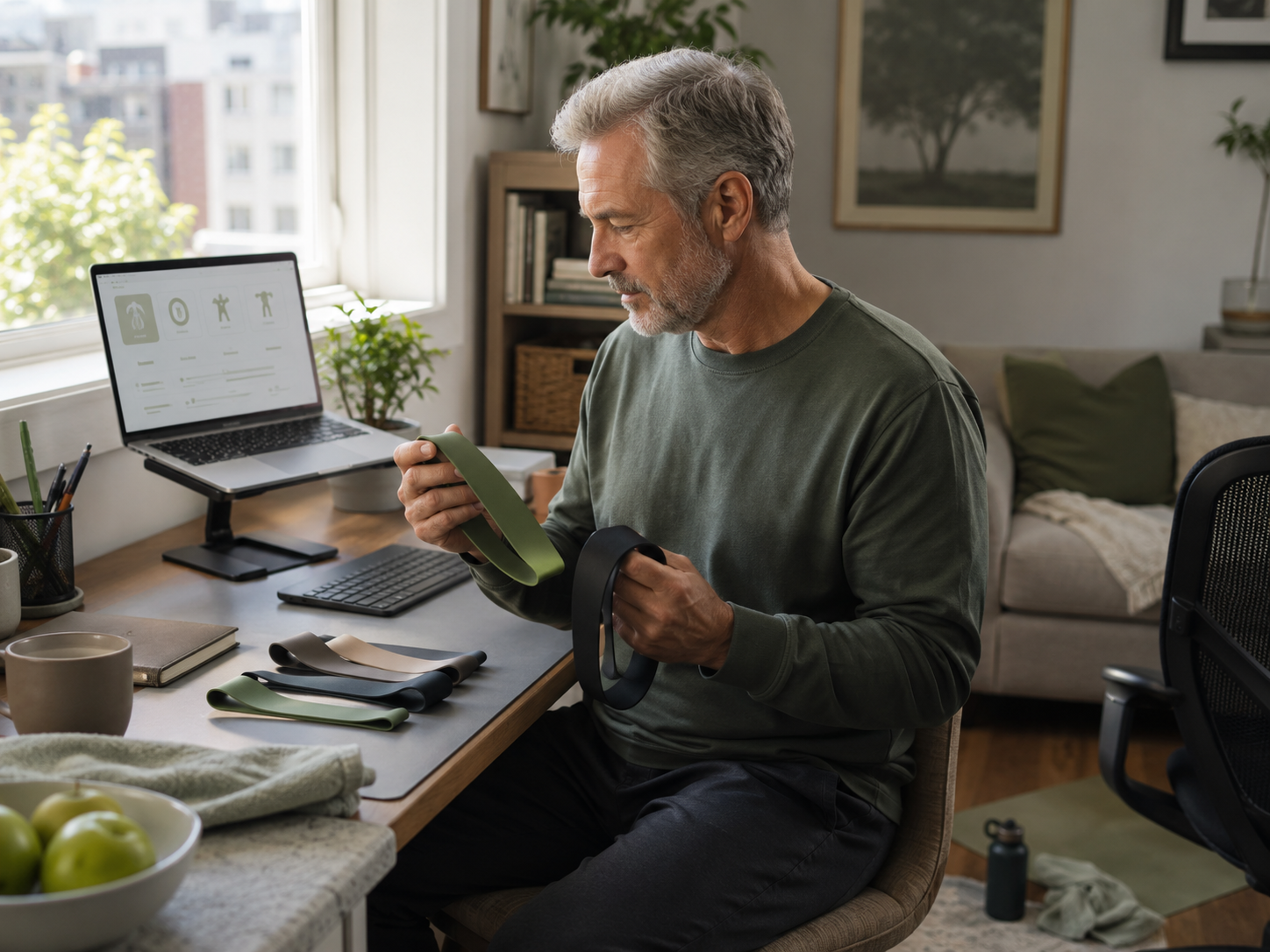
No idea what to do
Use Nike Training Club as free guided support to use with bands. It is not a resistance band, but it can help you follow mobility, stretching and strength sessions instead of staring at new equipment like it should provide instructions telepathically.
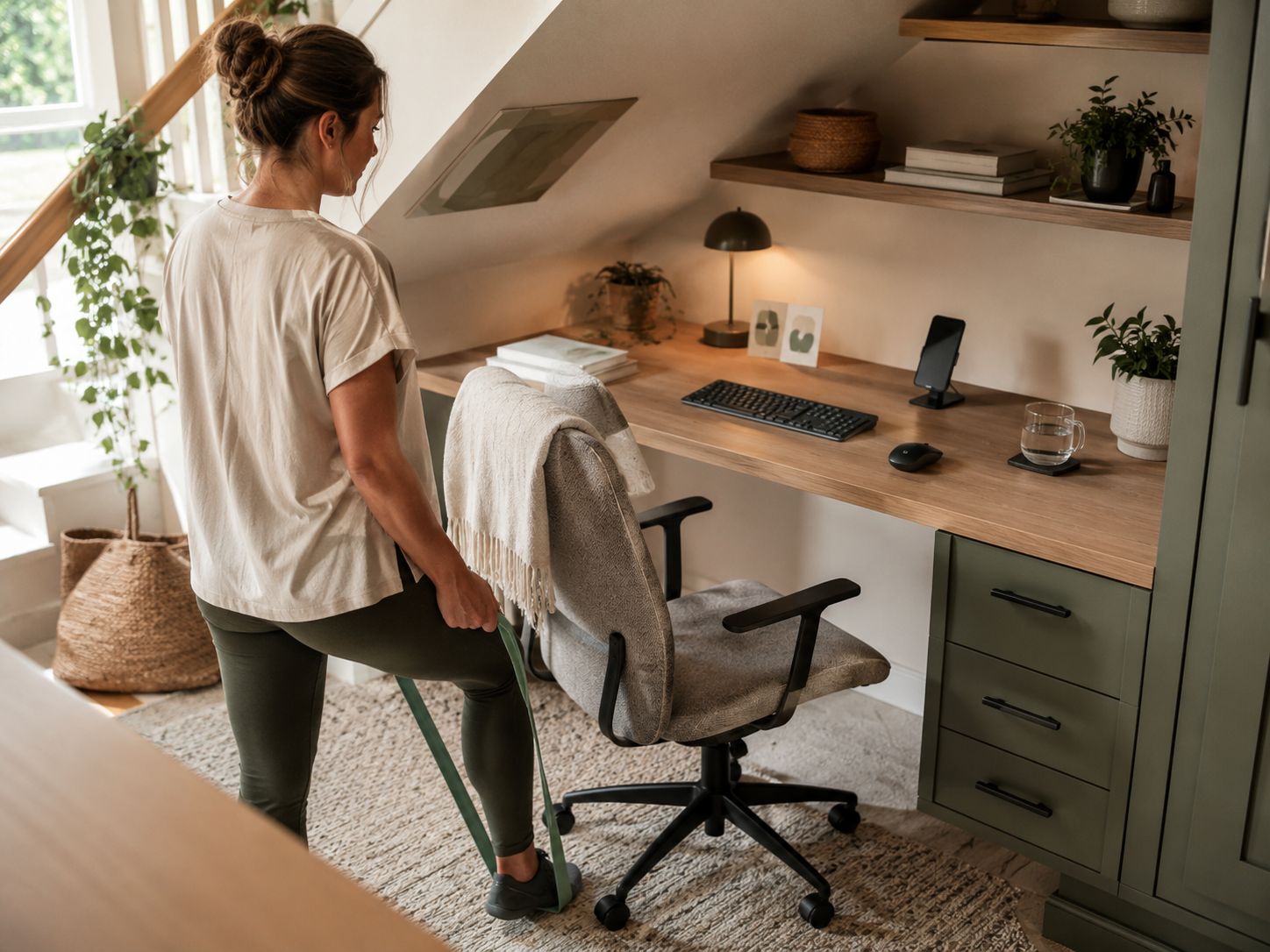
If You Are Unsure, Start Here
For most beginners, a light flat band and one comfortable fabric loop are enough. The flat band covers shoulders, chest, mobility and gentle upper-body work. The fabric loop covers hips, glutes and lower-body activation. Add tube bands later if you want more structured strength training.
Best Resistance Bands for Desk Workers
Best free guided support to use with bands: Nike Training Club
Nike Training Club is a useful free app if you want guided mobility, stretching and strength sessions. Keep it as support rather than the main product choice. The band gives you the tool. A guided app helps you decide what to do with it when your brain is full of emails.
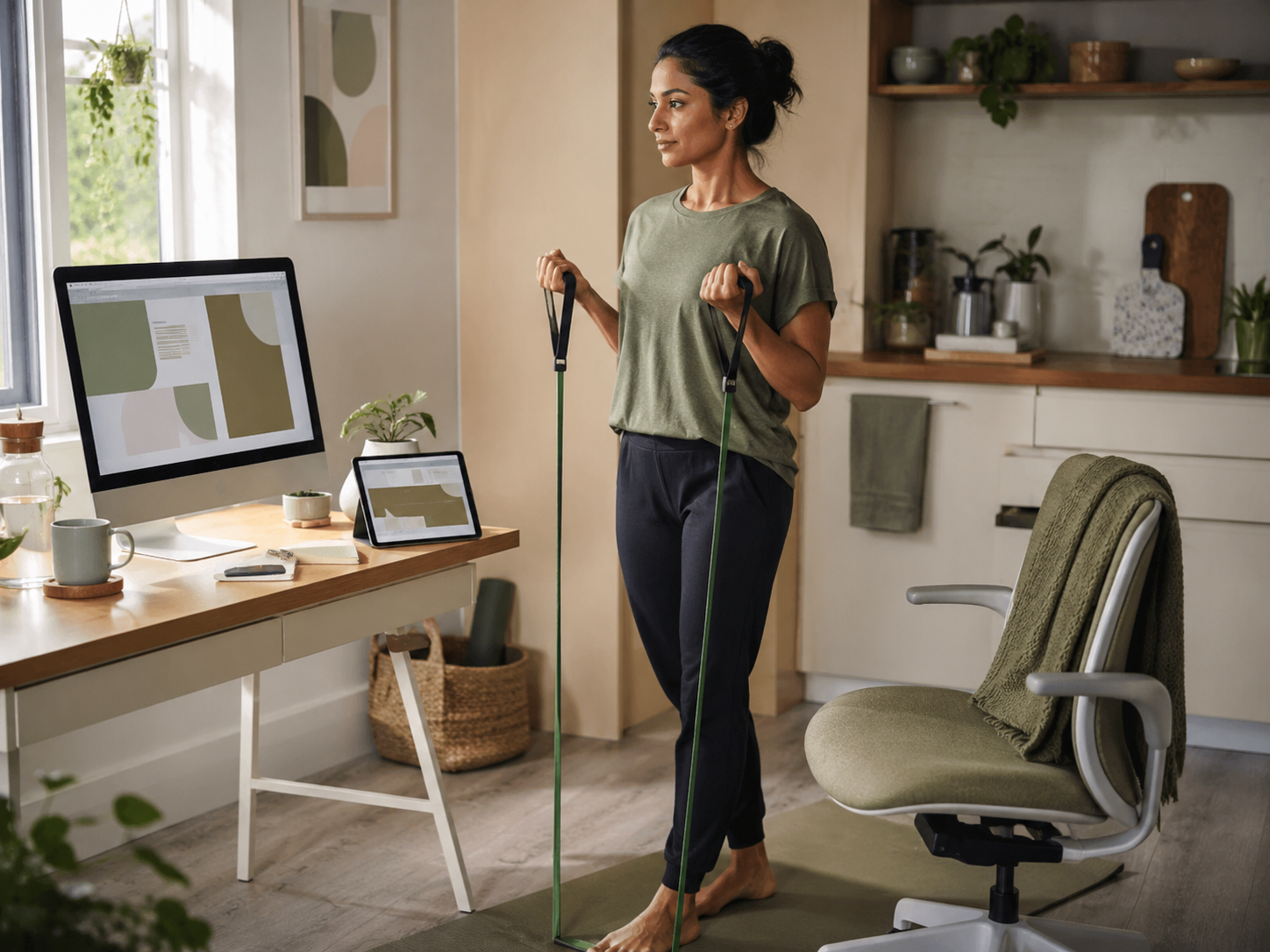
Match The Band To The Movement
Fabric loops are best for hips and glutes. Flat bands suit stretching, mobility and careful shoulder work. Tube bands with handles are better for strength exercises. Mini loops are useful for quick desk-friendly movement snacks. Nike Training Club can help if you need guided sessions instead of inventing moves while your kettle boils.
Fabric Loop Bands
Best for lower-body activation
Fabric loop bands are usually best for glutes, hips and lower-body activation. They work well for side steps, glute bridges, squats and seated activation moves. The thicker fabric can feel more comfortable for lower-body work because it is less likely to pinch, twist or roll into a tiny elastic insult.
Check size and resistance
Fabric loops can feel stronger than they look. Check resistance level, loop size and comfort before assuming a heavy band is better. Beginners may prefer a lighter option first, especially for side steps or glute work during short breaks.
Traditional Flat Resistance Bands
Best for stretching and mobility
Traditional flat resistance bands are useful for stretching, shoulder mobility, controlled resistance and rehab-style moves. Many are latex-based, but latex-free options may be available. Check material details before buying if you have latex sensitivity, skin irritation concerns or dislike rubber smell.
Good for careful upper-body work
Flat bands work well for pull-aparts, gentle rows, external rotations and chest-opening movements. They are also easy to store near your desk. Start with lighter resistance and focus on smooth control, especially if your shoulders already feel tight from typing, mousing and video calls.
Tube Resistance Bands With Handles
Best for strength exercises
Tube resistance bands with handles feel more like strength-training equipment. They are useful for rows, presses, curls, pulldowns and standing exercises. Handles can make gripping easier, especially if flat bands feel awkward. Choose this style if you want short strength sessions rather than only tiny stretch breaks.
Less casual for quick resets
Tube bands can be slightly less desk-break friendly because they may need more setup or anchoring. That does not make them bad. It simply means they suit planned ten-minute sessions better than a thirty-second stretch between emails. Buy them if you will actually use the strength options.
Mini Resistance Band Sets
Best for movement snacks
Mini bands are small loop bands that suit quick movement snacks during the day. They are useful for glute activation, side steps, warm-ups and simple lower-body exercises. A small set with different resistance levels can help beginners start light and build gradually.
Check comfort and rolling
Some mini bands roll, pinch or feel uncomfortable depending on material, resistance and exercise. Lighter bands are usually easier for beginners to control. If you mainly want lower-body work and hate rolling, fabric loops may feel better than thin latex mini bands.
Start Smaller Than You Think
Desk workers usually do not need the strongest band first. A lighter band used safely and often is more helpful than a heavy band that turns every movement into a personal challenge. Resistance should feel controlled, not like you are negotiating with elastic during a work break.
Resistance Levels, Materials And Beginner Safety
Light resistance is enough at first
Start with light or medium resistance if you are new to bands. The aim is control, comfort and consistency. Heavy bands can encourage poor form, shoulder shrugging or jerky movement. Your first goal is to move better, not prove dominance over a strip of rubber.
Check material and skin comfort
Some bands contain latex or rubber materials that may irritate sensitive skin or bother people with allergies. Check product materials before buying. Fabric bands can feel softer for lower-body work, while latex-free flat bands may suit people who need a different material.
Inspect the band before use
Check bands for cracks, tears, thinning, fraying or damaged handles before using them. Replace worn bands rather than hoping elastic has become philosophical about failure. A snapped band is not a wellness moment, especially if it happens near your face during a quick shoulder exercise.
Control the return phase
The return phase matters. Do not let the band snap back quickly. Slow, controlled movement keeps exercises safer and more useful. This is especially important for shoulder, neck and upper-back work, where rushing can turn a helpful reset into a new complaint.
Bands Should Feel Supportive, Not Punishing
Resistance bands are not a test of toughness. They are a small tool for helping your body move after long sitting. Keep the resistance manageable, the movements slow and the session short enough to repeat. Consistency beats dramatic effort that leaves the band untouched for three weeks.
Desk-Friendly Stretches And Strength Moves
Shoulder pull-aparts
Shoulder pull-aparts can help wake up the upper back after laptop work. Hold a flat band in front of you and gently pull outward, keeping shoulders relaxed. Try a few after school admin, a writing block or a difficult message. Keep the movement slow and small.
Seated or standing rows
Rows help strengthen the upper back, which desk workers often neglect. Use a tube band with handles or a flat band anchored safely. Pull elbows back gently and avoid shrugging. Rows are useful after long typing sessions because they remind your back it has responsibilities.
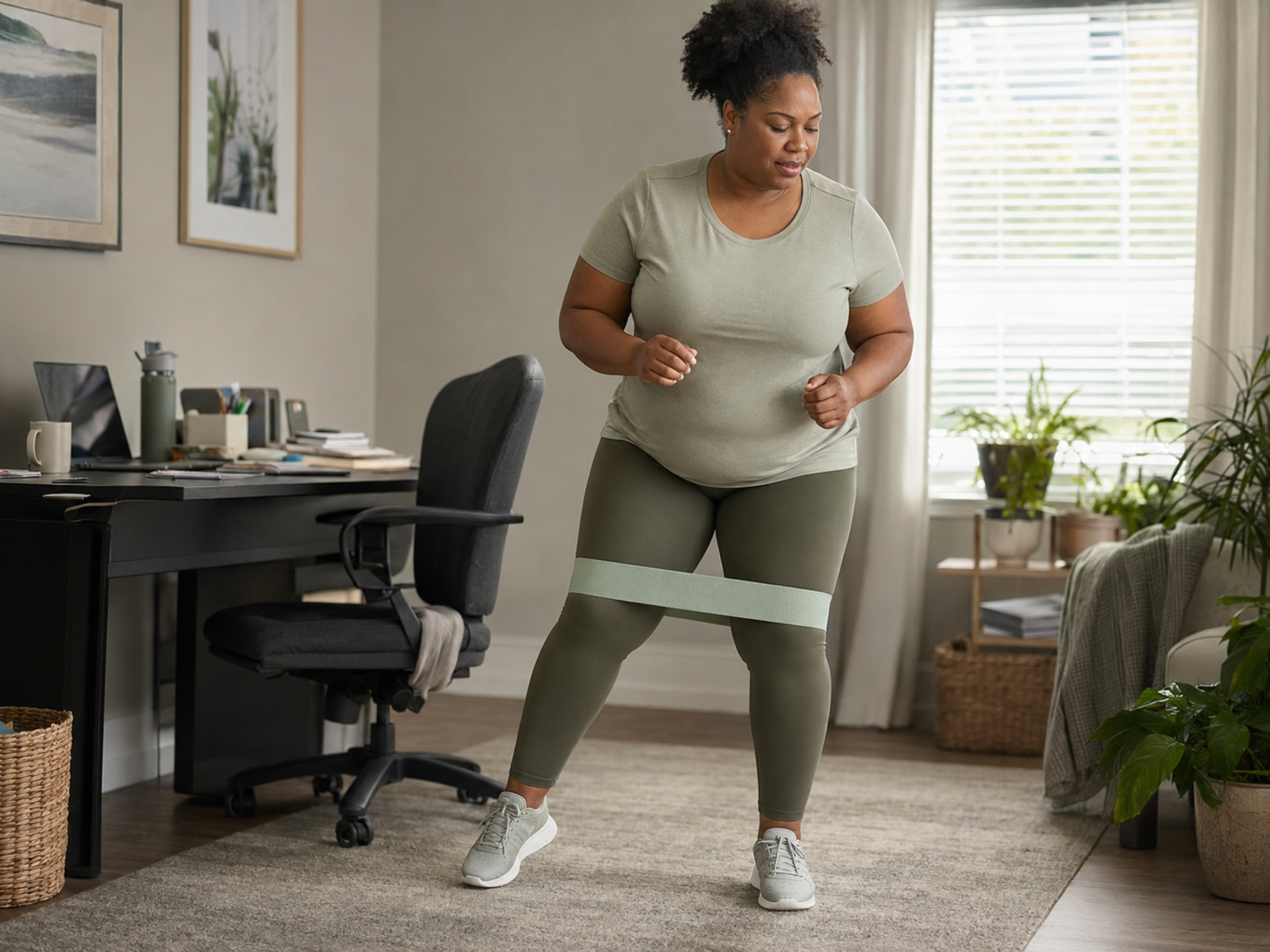
Side steps with a loop band
Side steps with a mini or fabric loop band can activate glutes and hips. Place the band around your thighs or ankles depending on comfort and exercise level. Take small controlled steps while waiting for the kettle, before lunch or before school pick-up to shift out of laptop mode.
Chest openers and gentle stretches
Flat bands can support chest openers, shoulder mobility and gentle stretching. These moves can feel useful after calls, writing blocks or screen-heavy work. Keep them slow and comfortable. The aim is relief and movement, not turning a two-minute break into circus rehearsal.
Movement Snacks Count
A resistance band does not have to mean a full workout. Two minutes between emails, five side steps before lunch or a few rows after a call can still help. For busy home workers, small repeatable movements often beat perfect routines that never survive contact with real life.
How Bands Help Posture, Shoulders And Hips
Upper back work matters
Desk posture often collapses forward because screens, keyboards and phones pull attention inward. Band rows and pull-aparts can help strengthen the muscles that support a more open position. This does not magically fix posture, but it gives your body better options than slowly becoming punctuation.
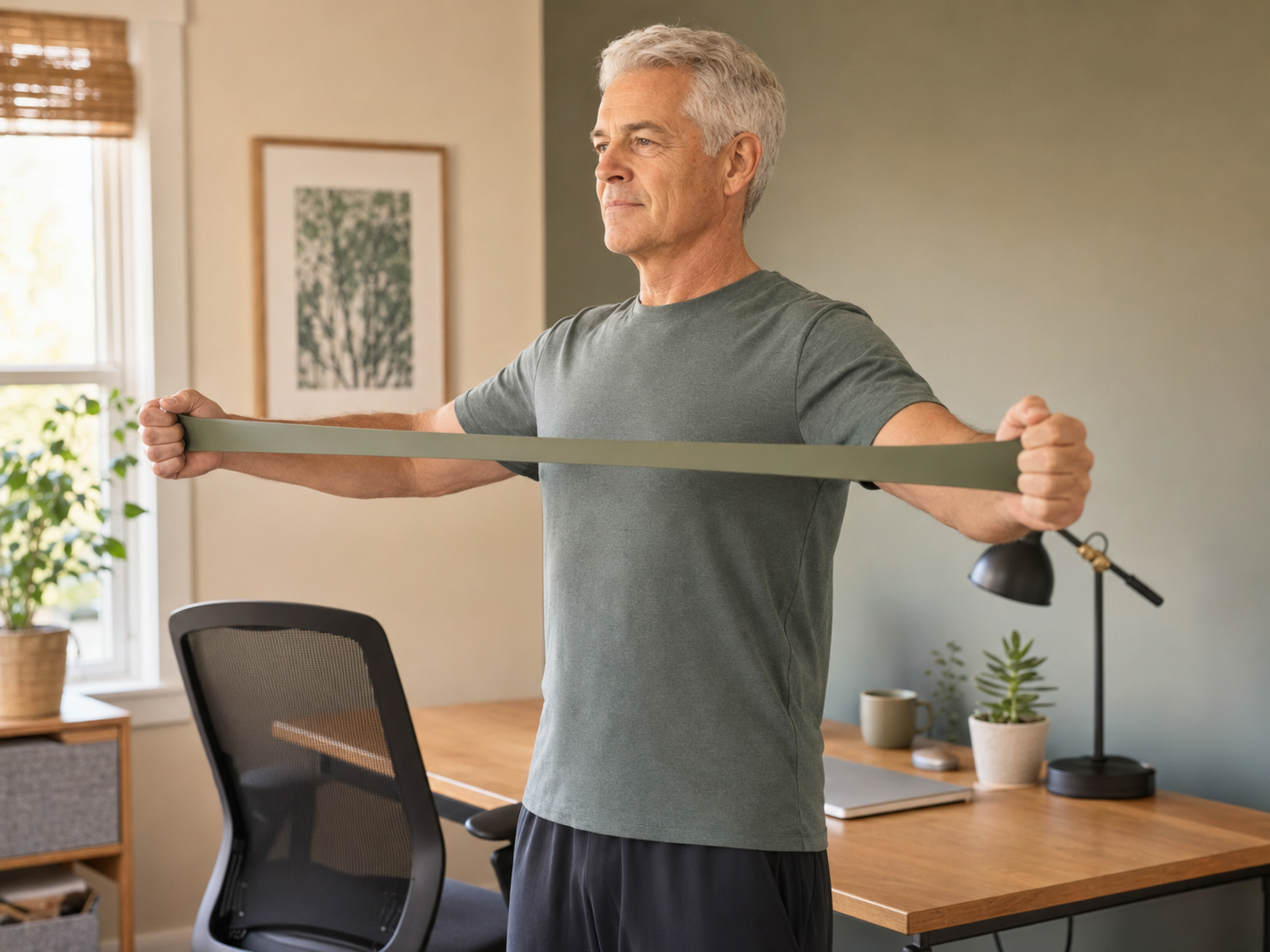
Hips need movement too
Sitting keeps hips flexed for long stretches. Loop bands can help with glute activation, side steps and gentle lower-body work. This is useful for desk workers because stiff hips can affect comfort, movement and how tired your body feels after a day of barely moving.
Shoulders need gentle range
Shoulders often feel tight after typing, mousing and video calls. Flat bands can help with gentle mobility and controlled movement. Keep the resistance light and avoid forcing range. If your shoulders are already irritated, careful movement is better than dramatic stretching with heroic facial expressions.
Posture support is active
Posture is not only about sitting up straight. It is about strength, mobility, breaks, desk setup and awareness. Resistance bands can support the active part by helping your upper back, shoulders and hips move more often. They are useful support, not a magic posture spell.
Why This Matters If You Work From Home
If your body feels stiff by mid-afternoon, bands can help you add movement without leaving the house, changing clothes or pretending you suddenly have a gym schedule. They pair naturally with desk stretches, mini movement breaks and simple fitness apps because the goal is practical movement, not lifestyle theatre.
Common Resistance Band Buying Mistakes
Buying the wrong style
A fabric loop, flat band, tube band and mini band are not the same tool. Buying the wrong style can make the exercises you want harder. Match the band to the movement first, then choose resistance level and set size.
Buying only the heaviest band
The strongest band is not automatically the best value. If it is too hard to control, you will use poor form or avoid it completely. Desk workers need manageable resistance that supports repeatable movement, not a band that feels like it has personal issues with your shoulders.
Ignoring anchors and face safety
Be careful with door anchors, handles and any move that brings a stretched band near your face. Check grip, anchor points and band condition first. A workday reset should not involve testing the structural optimism of your furniture.
Turning every break into a workout
A resistance band break does not need to become a full session. If every use requires motivation, sweat and a timer app, you may stop doing it. Keep some movements tiny and repeatable. The best desk-worker band is the one that survives ordinary Wednesdays.
FAQ
What are the best resistance bands for desk workers?
The best resistance bands for desk workers depend on the movement you want. Decathlon Fabric Resistance Bands suit lower-body activation, TheraBand Professional Resistance Bands suit stretching and mobility, Bodylastics Stackable Tube Resistance Bands suit strength exercises, and Fit Simplify Resistance Loop Bands suit quick desk-friendly movement breaks.
Are resistance bands good for people who sit all day?
Resistance bands can be good for people who sit all day because they make short movement breaks easier. They can support shoulder mobility, upper-back strength, hip activation and gentle stretching without needing much space or a full workout setup.
What type of resistance band should beginners use?
Beginners often do well with one light flat band and one comfortable fabric loop. The flat band helps with stretching and shoulder mobility, while the fabric loop supports hips and glutes. Start lighter than you think and build gradually.
Are fabric resistance bands better than latex bands?
Fabric resistance bands can be better for lower-body exercises because they may feel more comfortable and less likely to roll. Latex or flat bands are often better for stretching, mobility and upper-body work. Check materials carefully if you have latex sensitivity.
Can resistance bands help with posture?
Resistance bands can support posture by strengthening the upper back, improving shoulder mobility and helping desk workers move more often. They do not fix posture alone. Desk setup, regular breaks, strength, mobility and comfort all matter too.
How often should desk workers use resistance bands?
Desk workers can use resistance bands for short breaks a few times per week or in tiny daily movement snacks. Even two to five minutes can help if the exercises are safe and consistent. Stop if pain appears and keep movements controlled.
Final Verdict
The best resistance bands for desk workers are not the toughest, flashiest or most gym-looking options. They are the bands you can keep nearby and use safely between real work tasks, without changing clothes or pretending your office is now a training facility.
Start with one light flat band and one comfortable fabric loop if you are unsure. Use flat bands for stretching and shoulders, fabric loops for hips and glutes, tube bands with handles for strength and mini bands for quick movement snacks. You need one simple tool, a few repeatable moves and a way to stop your workday turning you into office furniture.


