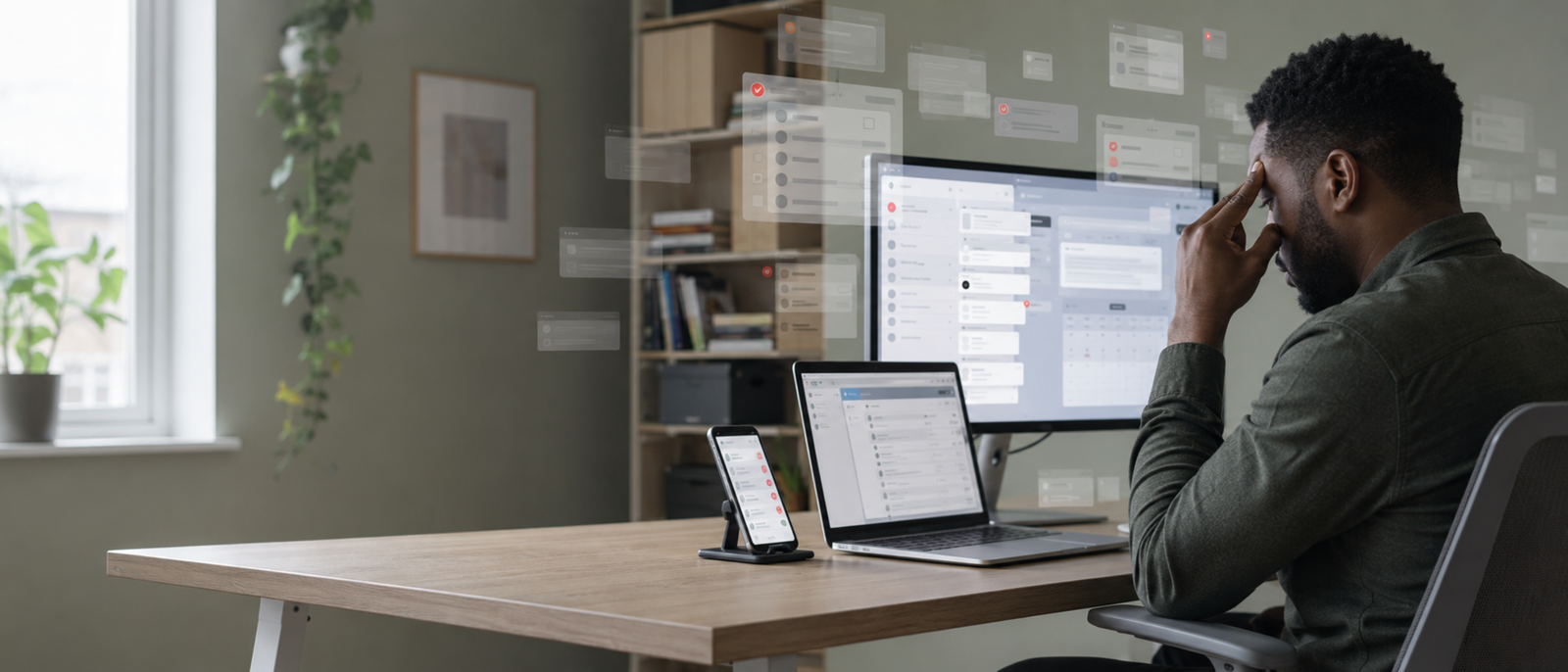
Modern work is increasingly digital. Emails arrive constantly, messages appear across multiple platforms, and browsers fill with open tabs while projects spread across several apps. While these tools help us stay connected and productive, they can also create a new form of stress that many remote workers experience every day. This stress is often invisible.
It does not appear as physical clutter on your desk, but it exists in the form of notifications, unread messages, open tabs, and unfinished tasks scattered across digital platforms. Digital calm is the practice of reducing this noise and creating systems that allow you to work online without feeling overwhelmed by technology.
This cornerstone guide introduces the core ideas behind digital calm. It briefly highlights the main topics within this area so you can understand how digital stress develops and how to manage it. Each of the topics introduced here is explored in greater depth in the dedicated articles within this section.
Related guide: Email overload and why it drains your energy
Quick Overview
In this section you will discover:
This page introduces the key ideas behind digital calm. The full guides linked throughout this page explore each topic in detail.
The Main Sources of Digital Stress
Email Overload
Email is one of the most common sources of digital stress.
Many professionals receive dozens or even hundreds of messages each day. The constant need to read, respond, and organize messages can create mental pressure that follows you throughout the workday.
Explore the full guide: Email overload and why it drains your energy

Digital Clutter
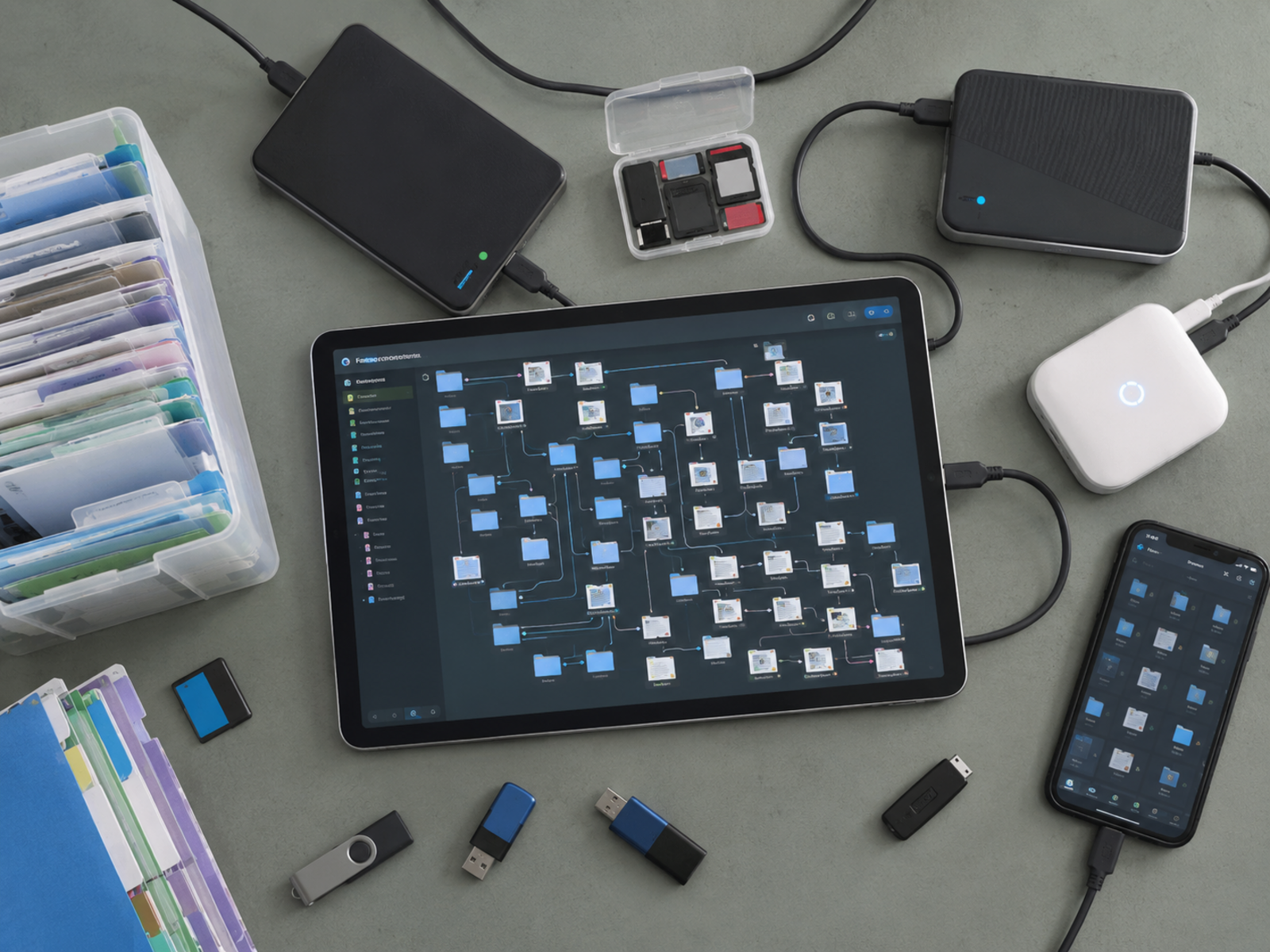
Digital clutter builds gradually.
Open browser tabs, scattered files, unfinished documents, and multiple productivity tools can create a sense of chaos even when your physical workspace is clean.
Full article: Digital clutter and mental load when working from home
Notification Burnout
Notifications from messaging apps, project tools, and social platforms constantly interrupt focus.
Even small alerts can break concentration and force your brain to repeatedly restart tasks.

Meeting Fatigue
Video meetings have become a daily reality for many remote workers.
However, too many meetings can reduce time for focused work and increase mental exhaustion.
Full guide: Meeting fatigue and how to recover your day

The Hidden Effects of Digital Overload
Reduced Focus
When your attention is constantly interrupted by digital alerts, it becomes harder to concentrate deeply.
This often leads to slower progress and increased frustration.

Mental Fatigue
Switching between tasks, messages, and apps consumes significant mental energy.
Over time this constant cognitive switching can leave you feeling exhausted even when the workload itself is manageable.

Loss of Work Boundaries
Digital tools often blur the boundaries between work and personal life.
Emails and messages may appear long after the workday has ended.
Related guide: Digital boundaries for side hustlers and home workers

Persistent Mental Load
When unfinished tasks remain visible across multiple digital platforms, the brain continues to track them even when you are trying to relax.
Related guide: Too many tabs open: the hidden stress of digital work

Building Digital Calm

Achieving digital calm does not mean abandoning technology. Instead, it involves building systems that allow you to use digital tools without letting them dominate your attention.
Simple strategies include:
When digital systems become simpler and more intentional, mental clarity often improves significantly.
Related guide: Simple systems that make working from home feel lighter
Final Thoughts
Digital calm is an increasingly important skill for people who work online.
While technology enables remote work and digital businesses, it can also introduce new forms of stress that quietly affect productivity and wellbeing.
This guide introduces the core ideas behind managing digital overload. The detailed articles within this section explore each topic further and provide practical strategies for building calmer digital work habits.
FAQ
What is digital calm?
Digital calm refers to reducing digital distractions and creating systems that support focused work.
Why is digital overload stressful?
Constant notifications, messages, and open tasks create mental pressure that can reduce focus and increase fatigue.
Can digital habits affect productivity?
Yes. Frequent interruptions and task switching can significantly reduce productivity.
How can I start improving digital calm?
Start by reducing notifications and organizing tasks into a simple system that keeps digital clutter manageable.







