

Host a Virtual Halloween Party: Audio,…

20 Minimalist Halloween Nail Ideas for…

Can Free Affinity Help You Build…

12 Lower-Sugar Halloween Treat Swaps Worth…

Can Hostinger AI Builder Launch a…

A 5-Step Screen-Free Autumn Reading Ritual…

Plug-In Solar Panels UK: Are They…

15 Last-Minute Zoom Halloween Costumes for…

Meta One Explained: Is the Subscription…

10 Low-Fuss Dog Halloween Ideas: Comfort…

Plaud One Explained: Can AI Earbuds…

9 Gothic Dinner Table Ideas for…

Namecheap vs Dynadot

7 UK Ghost Tours and How…

Convertkit Vs Beehiiv

Do You Really Need a £420…

Bluehost vs Siteground

15 Gentle Spooky Autumn Books to…

Namecheap review

How to Remove Halloween Face Paint…
This guide is about using automation to reduce repeated remembering, not building the cleverest productivity system. Start with the thought that keeps coming back: send the invoice, book the appointment, follow up, pay the bill or update the task. If automation can catch that repeat loop without creating more noise, it has earned its place.
Automate repeated remembering first.
Calendars protect time and reminders.
Workflows reduce manual admin.
Email automation helps follow-ups.
Billing systems reduce money stress.
Notion can tidy task systems.
Simple automation beats clever clutter.

Most Relevant Audience
This guide is for remote workers, home workers, freelancers, bloggers, creators, side hustlers, parents, carers and small business owners who feel mentally crowded by repeat admin. It is especially useful if you keep remembering important things at random times: send that invoice, follow up with that client, book the appointment, reply to the lead, update the task, pay the bill or move the deadline before it becomes tomorrow’s problem.
What Mental Load Looks Like When You Work From Home
It is not only the work
Mental load is not just the big project on your desk. It is the invisible layer of remembering around it. You might be working while also tracking school forms, client replies, dinner, payments, content plans, appointments and the message you forgot to answer yesterday. That background remembering can be tiring even when nothing dramatic happens.
It appears between tasks
Mental load often shows up in the gaps: making coffee, opening a browser, walking to another room or trying to sleep. That is when your brain brings up every loose task at once. Automation helps when it catches predictable reminders before they become interruptions.
It creates decision fatigue
When every task needs you to remember, decide and act, small jobs start feeling heavier than they should. A reminder, recurring calendar block, saved workflow or automated follow-up reduces the number of times you have to restart the same thinking. That is the real value.
It affects home life too
Working from home can blur admin and personal life. Work reminders arrive during dinner. Home tasks interrupt client work. Bills and appointments sit beside content plans. Good automation should help separate and contain those things, not make every part of life feel like one giant to-do list.
It rewards simple systems
The best automation is often boring. It reminds, repeats, files, follows up or moves information without demanding much attention. If an automation needs constant checking, fixing and explaining to yourself, it may be adding mental load instead of reducing it.


Start with the repeated thought
This guide is about using automation to reduce repeated remembering, not building the cleverest productivity system. Start with the thought that keeps coming back: send the invoice, book the appointment, follow up, pay the bill or update the task. If automation can catch that repeat loop, it has earned its place.
What Automation Should And Should Not Do
It should remove repeat remembering
Automation works best when the same thing needs to happen again and again. Recurring reminders, appointment links, follow-up emails, invoice prompts, task buttons and simple workflows can all help. The goal is to stop relying on memory for predictable tasks.

It should support boundaries
Calendar automation can protect breaks, school runs, admin time, focus blocks and shutdown routines. That matters because home workers often let work stretch into every available gap. A reminder or blocked slot cannot enforce boundaries alone, but it can make them harder to forget.
It should protect money and wellbeing
For solo workers, money admin is not only a business issue. Forgotten invoices, missed payments and last-minute billing can add real stress. Simple billing reminders, invoice prompts and payment checks can support both income and calm. A lighter money system can be a wellness tool when it stops financial admin from living in your head all week.
It should stay easy to maintain
Every automation becomes part of your system. If you create too many, you may spend more time managing automations than doing the work. Start small. Keep only what saves real mental effort. Delete automations that create noise.
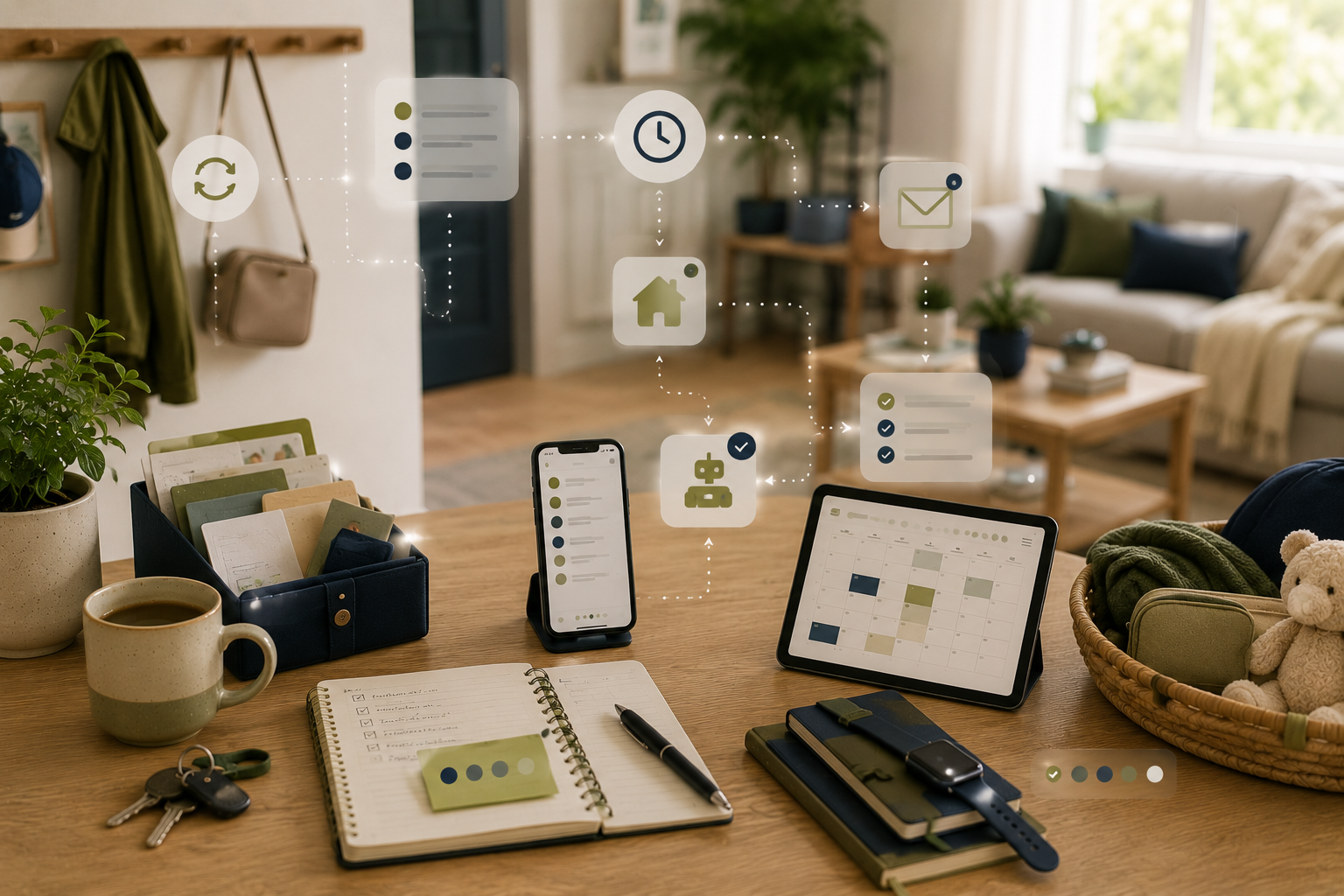
Useful Automation Tools For Busy Home Workers
Google Calendar Automations
Google Calendar can help with recurring reminders, appointment scheduling, time blocks and shared schedule visibility. It is best for appointments, routines, reminders, focus blocks and protecting personal commitments. Skip it as your first fix if the real issue is task detail rather than time. Start with one recurring reminder or appointment link before building a complicated calendar system.
Billing And Invoice Automation
Billing and invoice automation can reduce the stress of remembering invoices, payment dates, recurring charges and money admin. It is best for freelancers, side hustlers and small business owners who forget billing until it becomes urgent. Skip it if you need professional accounting advice first. Use tools carefully, check details and keep a human review point for money decisions.


Automate the boring repeat first
The best first automation is rarely impressive. It is usually something small that keeps coming back: the same reminder, the same follow-up, the same invoice step, the same calendar booking or the same task setup. If it repeats and drains attention, it is a good candidate.
Small Automations That Save The Most Brain Space
Recurring appointment reminders
Use recurring calendar reminders for regular appointments, school timings, payment dates, content publishing days or weekly admin blocks. This is simple, but powerful. A reminder that appears at the right time is better than trusting your brain to remember during a busy afternoon.
Appointment booking links
Appointment scheduling can reduce the back-and-forth of finding a time that works. This is useful for client calls, consultations, coaching sessions or recurring meetings. It also protects your availability because people choose from times you have already decided are workable.
Invoice and payment prompts
Billing reminders can protect you from remembering money admin only when cash flow gets uncomfortable. Use reminders, templates or billing software prompts for invoices, due dates and recurring payments. This reduces stress and helps money admin become less emotionally loaded.
Task-system buttons
A Notion button or template can create the same project steps without rebuilding them every time. This is useful for repeated content, client onboarding, weekly reviews or admin workflows. The point is to reduce setup friction, not decorate the task system.

What Not To Automate Too Early
Unclear processes
If you do not know the steps yet, automation may preserve the confusion. Do the task manually a few times first. Once the pattern is obvious, automate the repeatable parts. A messy process does not become clearer just because software runs it faster.
Sensitive communication
Messages involving complaints, personal situations, client concerns or emotional tone should be handled carefully. Automation can remind you to respond or prepare a draft, but avoid sending sensitive messages automatically unless the content is genuinely safe and appropriate.
Work you should stop doing
Some tasks should not be automated. They should be removed, simplified, delegated or delayed. If a task has no real value, automation only helps it continue more efficiently. Ask whether the task still deserves a place in your week.
Systems you do not use
Do not automate inside tools you already avoid. If you dislike opening a certain app, adding automation will not magically make it useful. Start with the tools already close to your real routine.
Everything at once
Trying to automate calendar, email, billing, task management and app workflows in one weekend can become its own mental-load event. Choose one repeated pain point. Fix that. Then decide whether anything else is worth automating.

How To Keep Automation From Becoming Another Job
Keep a short automation list
Write down the automations you actually use. Include what they do and where they live. This prevents forgotten workflows from running quietly in the background. It also helps when something breaks, duplicates or starts sending reminders you no longer need.
Review once a month
A short monthly automation check can save future frustration. Ask what still helps, what creates noise and what needs changing. If an automation no longer reduces mental load, pause it or delete it.
Use clear names
Name automations in plain language, such as “new lead to task list” or “Friday invoice reminder.” Clear names help you understand your system later. Future you should not need detective skills to work out what a workflow does.
Avoid unnecessary notifications
Automation should reduce interruptions, not create more of them. Only send alerts where action is needed. If every automation creates a notification, your mental load may simply move from memory to inbox noise.
Keep the human checkpoint
For important work, keep a point where you review before something final happens. This is especially useful for money, client communication and public content. Automation can prepare the step. You can still approve the decision.

Common Automation Mistakes Busy Workers Make
Automating before simplifying
If a workflow has too many steps, simplify it before automating it. Automation can make a bad process run faster, but it will not make it better. Remove unnecessary steps first, then automate what remains.
Chasing clever setups
A clever system is not automatically a useful system. If the automation looks impressive but saves little brain space, it may not be worth maintaining. Choose relief over complexity.
Forgetting personal life admin
Home-worker automation is not only for business tasks. Appointments, bills, school reminders, household routines and personal commitments also create mental load. The right reminder can protect your evening as much as your workday.
Letting tools multiply
Google Calendar, Zapier, systeme.io, Notion and billing tools can all help, but too many overlapping systems can create confusion. Give each tool a clear job. Calendar holds time. Task systems hold actions. Billing tools handle money admin. Email tools handle repeat communication.
Expecting automation to fix overload
Automation can remove repeat remembering, but it cannot make an unreasonable workload healthy. If there is simply too much to carry, the answer may also include rest, delegation, boundaries, simplification or saying no. Automation is support, not a personality transplant.

FAQ
How can automation reduce mental load?
Automation can reduce mental load by handling repeated reminders, follow-ups, calendar bookings, task creation, billing prompts and simple workflows. It helps when it removes something you keep carrying in your head. The best automation reduces remembering, not just clicks.
What should busy home workers automate first?
Start with the task you keep forgetting or repeating most often. Good first options include recurring calendar reminders, appointment scheduling, invoice prompts, simple email follow-ups or task templates. Choose one small automation before building a bigger system.
Is Zapier useful for solo workers?
Zapier can be useful for solo workers if they regularly move information between apps. For example, it can help connect forms, spreadsheets, email tools, task systems or notifications. It is less useful if your workflow is not repeated or clear yet.
Can Google Calendar automation help with work-life balance?
Google Calendar automation can help by protecting reminders, recurring routines, appointment slots and boundaries. It will not create balance by itself, but it can make important commitments harder to forget. Use it for breaks, admin time, personal appointments and shutdown cues.
Is systeme.io good for email automation?
systeme.io can be useful for simple creator-business email automation, such as welcome sequences, lead magnet delivery and basic follow-ups. It is best when you already know the emails you need to send. Automation should support a clear message, not replace strategy.
How do I stop automation becoming too complicated?
Keep automation small, named clearly and tied to one real problem. Review your automations regularly, delete what no longer helps and avoid connecting tools just because you can. The goal is less mental load, not more system maintenance.
Final Verdict
Automation for busy home workers is worth it when it removes repeat mental load. Google Calendar can protect time and reminders. Zapier can connect repeated app actions. systeme.io can reduce manual email follow-up. Billing and invoice automation can make money admin less stressful. Notion automation can tidy repeated task workflows.
The goal is not to automate your whole life. It is to stop carrying every tiny responsibility in your head. Start with one repeated thought, build one simple automation and keep only what makes the workday feel lighter.


