


Can Hostinger AI Builder Launch a…

Christmas Gifts for Home Workers That…

Plug-In Solar Panels UK: Are They…

Halloween Decorations Worth Buying — and…

Meta One Explained: Is the Subscription…

Anti-Optimisation Wellness: Can a Sunrise Lamp…

Plaud One Explained: Can AI Earbuds…

Sunrise Lamps Explained: What They Actually…

Namecheap vs Dynadot

Lifesum Review UK: Is Premium Worth…

Convertkit Vs Beehiiv

Garmin CIRQA Review: Screen-Free Tracking Without…

Bluehost vs Siteground

Garden Gatherings – Summer Is The…

Namecheap review

Portable Outdoor Speakers for Garden Offices

Cloudways Vs WP Engine

Outdoor WiFi Extenders For Garden Offices

Dropshipping Explained

Portable Pools For Home Workers This…
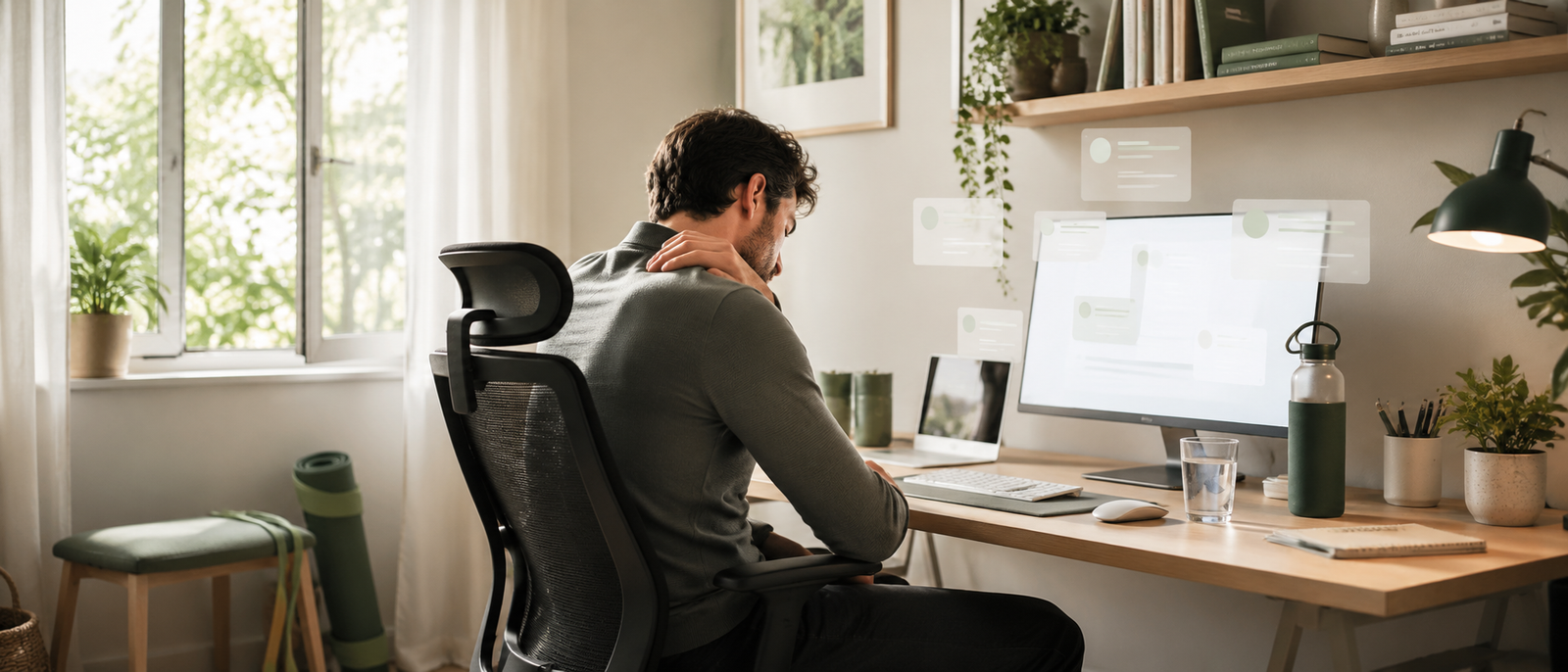
A desk job can drain you even when your body barely moves. That sounds strange until you notice what is actually happening: your eyes stare at screens, your shoulders hold tension, your brain switches tasks, your posture quietly collapses and your nervous system keeps responding to messages, tabs and decisions. Stillness is not the same as rest. Your body may be sitting, but plenty of you is still working overtime.
Desk jobs drain real energy.
Stillness is not proper rest.
Screens create eye fatigue.
Poor posture holds tension.
Mental load builds quietly.
Low movement affects energy.
Small resets help recovery.
Most Relevant Audience
This article is for desk workers, remote workers, home workers, freelancers, bloggers, creators and small business owners who feel exhausted after a day of “just sitting”. It is especially useful if you finish work stiff, foggy, tense or strangely drained without understanding why.
Why your desk job makes you tired
Sitting still still uses energy
Sitting still looks easy from the outside, but your body is still working. Muscles hold you upright, your neck supports your head, your eyes track the screen and your brain keeps processing information. A long desk day can leave you tired because the body is not resting. It is holding one limited position for hours.
Mental load adds up
Desk jobs often involve constant small decisions. Reply now or later? Which task matters first? Is this message urgent? Where did that file go? None of these choices feels huge alone. Together, they create mental load. By the end of the day, you may feel exhausted from thinking, switching and deciding rather than moving.
Screens drain attention
Screen fatigue is one reason desk work feels heavier than it looks. Your eyes focus, refocus and process bright digital information for hours. Add messages, tabs, documents, calls and dashboards, and your attention stays under pressure. The result can be tired eyes, foggy focus and that odd feeling of being worn out by sitting down.
Posture creates tension
Poor posture can make desk work physically tiring. A low laptop, unsupported chair or awkward keyboard position can make your neck, shoulders, back and wrists work harder than they should. Tension often builds so gradually that you do not notice until the workday ends and your body starts sending strongly worded feedback.
Low movement lowers energy
Low movement can make energy feel sluggish. Your body likes regular position changes, walking, stretching and small resets. When the day becomes chair, screen, chair, screen, kettle, chair, your system has fewer natural refresh points. Sitting still for hours can leave you oddly tired because nothing has helped the body wake back up.

The tiredness makes sense
You are not tired because you did nothing. You are tired because your workday asked your body to stay still while your brain, eyes, posture and attention kept working. That kind of tiredness is easy to dismiss, but it is real. Desk work can be quiet and draining at the same time.
Desk tiredness vs real rest
Stillness is not rest
Rest gives the body and mind a chance to recover. Stillness only means you are not moving much. Sitting at a desk with tense shoulders, open tabs, bright screens and constant decisions is not the same as relaxing. Your body may be stationary, but your attention is still on duty.

Physical tiredness can come from tension
You do not need heavy lifting to feel physically tired. Held tension can be tiring too. Tight shoulders, clenched jaw, hunched posture and a stiff lower back all use energy. Desk workers often carry that tension for hours, especially during calls, deadlines or focused work.

Mental fatigue feels different
Mental fatigue can feel like fog, irritability, slow thinking or an urge to do shallow tasks. You may not feel sleepy exactly. Instead, everything feels harder to start. That can happen after hours of decision-making, screen use, messages and task switching, even when your body has barely left the chair.
Recovery needs more than collapsing
After a desk-heavy day, collapsing on the sofa may feel natural, but it may not fully reset you. If the body is stiff and the mind is still buzzing, passive rest can feel incomplete. Gentle movement, a digital shutdown and a clear workday ending often help more than simply stopping.
The real difference
A desk job can make you tired because it combines mental effort with physical under-use. Your brain is busy, but your body is stuck. That mismatch matters. Recovery works better when you address both sides: clear the mental load and give the body a reason to move again.
Small energy resets during the workday
Move between tasks
Use task changes as movement cues. After sending a draft, finishing a call or completing a focus block, stand up for a minute. Stretch, walk, refill water or look out of a window. Tiny resets help because they interrupt the long sitting pattern before tiredness settles in too deeply.
Reset your eyes
Your eyes need breaks from near-distance screen focus. Look away from the screen regularly, blink properly and avoid filling every pause with your phone. A screen break is not very useful if it just moves from laptop to smaller screen. Give your eyes a different job for a moment.
Release desk tension
Shoulders, neck and jaw often hold more tension than people realise. Roll your shoulders, relax your jaw, stretch your chest or change your sitting position. These small movements can reduce the feeling that your body has been bracing all day. The aim is relief, not a full workout.
Reduce task switching
Task switching burns energy because your brain has to restart again and again. Keep one main task visible where possible. Batch messages. Close unnecessary tabs. Protect short blocks of focused work. Less switching can make the day feel calmer, even if the workload stays the same.
Add a proper finish line
End the day with a short reset: capture loose tasks, close tabs, move your body and clear the desk enough for tomorrow. This helps separate work from the evening. Without a finish line, desk tiredness can follow you into dinner like the laptop has been invited.

Make recovery practical
The best energy reset is not dramatic. It is something you can do on a normal workday when you are busy, mildly annoyed and already behind. Stand up. Look away. Capture the next task. Close the extra tabs. Drink water. Small actions help because desk fatigue is usually built from small repeats.
Common desk worker energy mistakes
Blaming yourself for feeling tired
Many desk workers think they should not feel tired because they have not been physically active. That is unfair. Mental load, screen fatigue, tension and low movement can all drain energy. The tiredness is not proof that you are weak. It is a sign that the workday has a cost.
Waiting until the end to move
Movement works better when it appears throughout the day, not only after hours of stiffness. A walk after work helps, but it does not fully replace regular breaks. Add small movement before your body gets loud. Prevention is easier than trying to negotiate with locked hips at 6pm.
Resting with more screens
After screen-heavy work, more screen time may not feel as restorative as expected. Watching something can be enjoyable, but your eyes and attention may still need a break first. Try a short walk, shower, stretch or screen-free pause before jumping into another glowing rectangle.
Ignoring the desk setup
A poor setup can make every workday more tiring. If your screen is too low, chair is uncomfortable or keyboard position is awkward, your body has to compensate. Fix the most obvious strain first. Better screen height and support can reduce the hidden energy cost of sitting.
Related money note
Better tools can reduce repetitive admin, limit unnecessary switching and make work feel less scattered. The point is not buying gadgets for fun. It is removing avoidable friction so your energy is not spent fighting your own setup.
Related wellness guides
Sitting Too Long
Sitting Too Long is the best next read if your desk tiredness comes with stiffness, heavy legs, tight hips or poor posture. It explains what long sitting does to the body and how small movement breaks can fit a realistic desk-based day.
Working From Home Without Wrecking Your Health
Working From Home Without Wrecking Your Health is the broader pillar guide if desk fatigue is part of a bigger pattern. It covers posture, movement, screen breaks, food, hydration, boundaries and energy for people working from home.
Meeting Fatigue And How To Recover Your Day
Meeting Fatigue And How To Recover Your Day is useful if calls leave you drained before the real work begins. Meetings can add listening fatigue, camera pressure and decision overload, especially when they arrive back-to-back.
The Best End-of-Day Reset For Desk Workers
The Best End-of-Day Reset For Desk Workers is the practical follow-up if you finish work stiff, scattered and still half-attached to the laptop. A short reset can help your body and mind leave the desk properly.
FAQ
Why does my desk job make me so tired?
Your desk job can make you tired because sitting still is not the same as resting. Your brain makes decisions, your eyes focus on screens, your posture holds tension and your attention keeps switching. Low movement also reduces natural energy resets during the day.
Can sitting all day make you feel exhausted?
Yes, sitting all day can make you feel exhausted. Long stillness can contribute to stiffness, sluggish energy, poor posture and mental fog. The body usually feels better with regular movement, even if that movement is small. Short breaks can help interrupt the tired, heavy feeling.
Why do I feel drained after working from home?
Working from home can feel draining because movement drops, boundaries blur and digital tools stay close all day. You may sit for long periods, check messages constantly and carry unfinished tasks into the evening. The tiredness often comes from mental load, screen fatigue and too little physical reset.
How can desk workers get more energy?
Desk workers can get more energy by adding short movement breaks, improving posture, reducing task switching, taking screen breaks and creating a clear end-of-day routine. You do not need a dramatic fitness plan. Small repeatable resets are often more useful during a busy workday.
Is mental fatigue different from physical tiredness?
Mental fatigue and physical tiredness can feel different, but they often overlap. Mental fatigue may feel like fog, low motivation or difficulty starting tasks. Physical tiredness may feel like stiffness, heaviness or tension. Desk work can create both because the mind is busy while the body stays still.
Final verdict
Why your desk job makes you tired is not a mystery once you look at the whole workday. Your body sits still, but your brain, eyes, posture and nervous system keep working. That combination can leave you drained even when you have barely moved.
The answer is not to pretend desk work is easy. Build small resets into the day: move between tasks, rest your eyes, release tension, reduce switching and close work properly. You are not tired because you did nothing. You are tired because the day asked different parts of you to work in different, awkward ways.






