

Host a Virtual Halloween Party: Audio,…

20 Minimalist Halloween Nail Ideas for…

Can Free Affinity Help You Build…

12 Lower-Sugar Halloween Treat Swaps Worth…

Can Hostinger AI Builder Launch a…

A 5-Step Screen-Free Autumn Reading Ritual…

Plug-In Solar Panels UK: Are They…

15 Last-Minute Zoom Halloween Costumes for…

Meta One Explained: Is the Subscription…

10 Low-Fuss Dog Halloween Ideas: Comfort…

Plaud One Explained: Can AI Earbuds…

9 Gothic Dinner Table Ideas for…

Namecheap vs Dynadot

7 UK Ghost Tours and How…

Convertkit Vs Beehiiv

Do You Really Need a £420…

Bluehost vs Siteground

15 Gentle Spooky Autumn Books to…

Namecheap review

How to Remove Halloween Face Paint…
A healthier work-from-home routine is not about waking at 5am, becoming suspiciously calm or building a desk setup that looks like it has never seen a snack wrapper. Real home working is messier than that. The aim is to make the day less draining with small repeatable habits: more movement, fewer screen-heavy stretches, better boundaries, calmer starts and a proper finish line so work does not follow you around the house wearing slippers.
Routine matters more than motivation.
Start the day with less noise.
Move before stiffness wins.
Protect your eyes from screens.
Use boundaries, not willpower.
End work with a clear reset.
Keep habits realistic and repeatable.
Most Relevant Audience
This article is for remote workers, home workers, freelancers, bloggers, creators, side hustlers and small business owners who want healthier workdays without pretending every day is perfectly organised. It is especially useful if you feel stiff, distracted, tired, screen-heavy or unsure where work ends.
Why your routine matters more than motivation
Motivation changes with sleep, workload, stress and whether your inbox has decided to be dramatic. Routine helps because it removes some daily negotiation. When movement, screen breaks, water, planning and shutdown habits are built into the day, you do not have to keep reinventing health from scratch every morning.
A low-stress start to the workday
A healthier routine starts before the work rush takes over. Avoid opening every app, inbox and dashboard at once. Choose one real first task, clear the obvious clutter and give your brain a softer landing into work. The first 15 minutes should help you settle, not immediately throw you into digital traffic.
Desk setup habits that reduce strain
Your desk setup does not need to be expensive, but it should stop making your body compensate all day. Raise the screen if needed, support your back, keep the keyboard comfortable and avoid long sessions hunched over a laptop. Small setup improvements matter because posture strain builds quietly before it starts shouting.
Movement breaks that fit real work
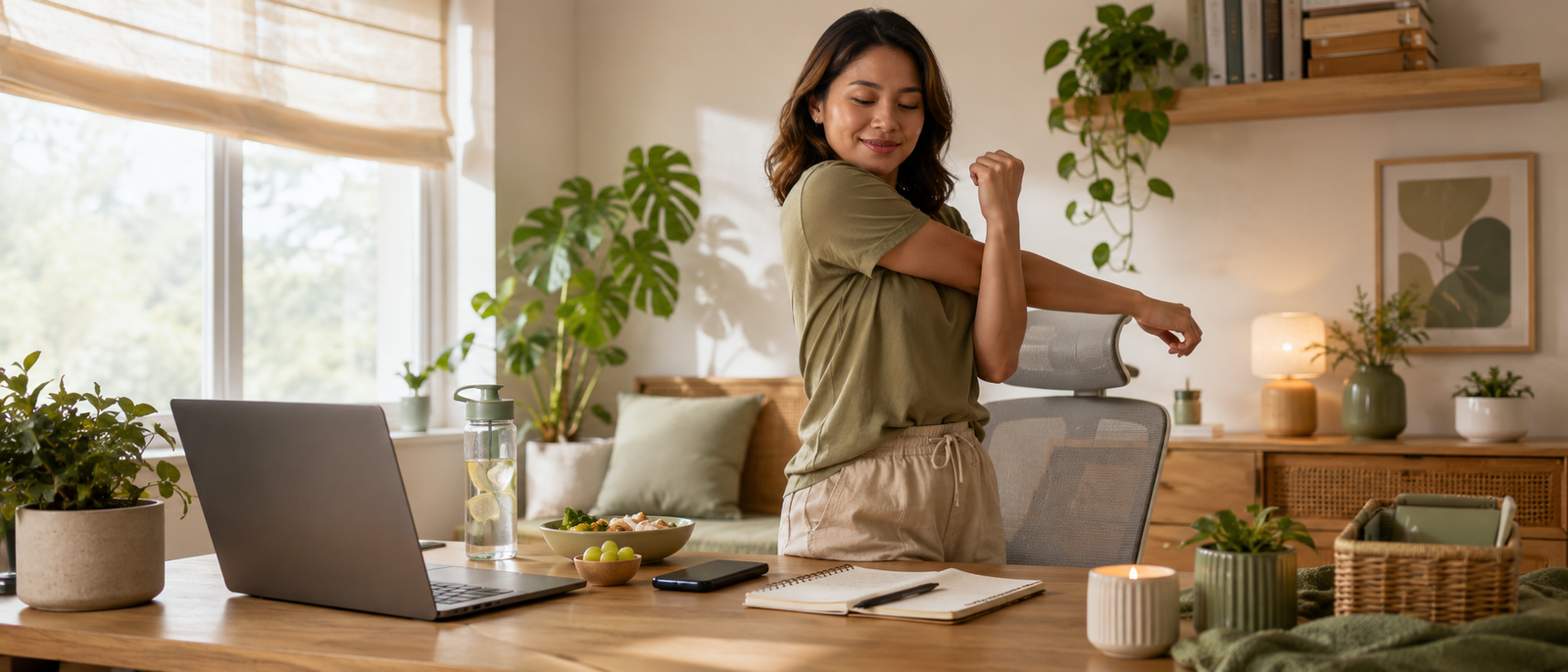
Movement breaks work best when they fit what you already do. Stand after a call, walk when the kettle boils or stretch after finishing a task. The point is not to create a gym routine between emails. It is to stop stillness becoming the default setting before your shoulders start applying for separate housing.
Screen breaks and eye relief
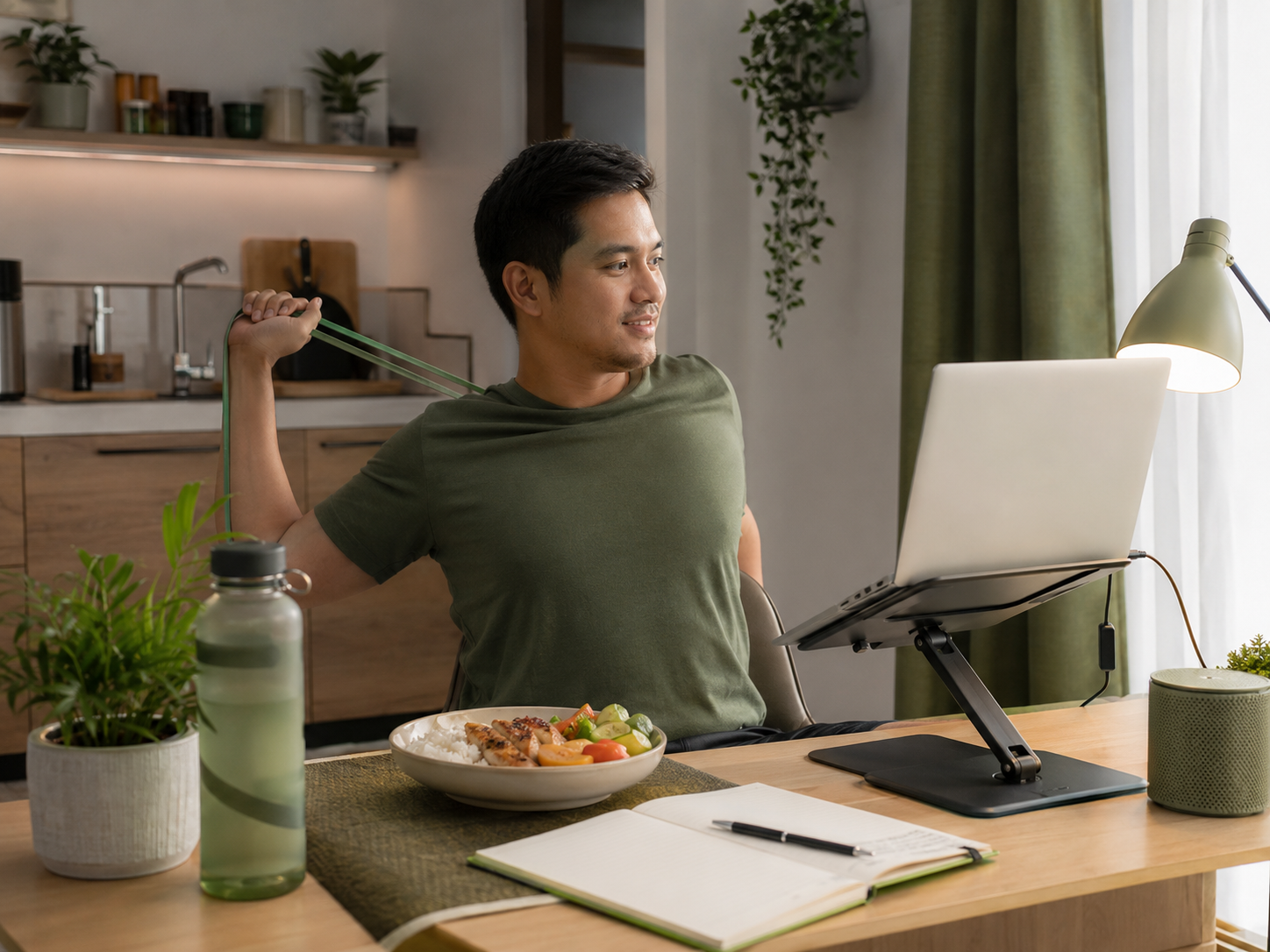
Working from home often means one screen for meetings, writing, research, messages, admin and “relaxing” afterwards. Your eyes need a different job sometimes. Look away regularly, step back from the screen and avoid turning every pause into phone scrolling. A screen break should not just be the same tired eyes on a smaller rectangle.
The realistic routine rule
A healthier routine has to survive a normal day, not an imaginary perfect one. If a habit only works when you sleep brilliantly, have no urgent messages and feel unusually inspired, it will not last. The best work-from-home habits are small, repeatable and useful even when the day is slightly untidy.
Food, hydration and afternoon energy
Food and hydration are easy to ignore when the kitchen is nearby but the day is busy. Skipped meals, random snacks and too little water can make the afternoon feel heavier than it should. Keep water visible, plan a proper lunch when possible and avoid asking your brain to run on stress, caffeine and crumbs.
Digital boundaries and notification control
A healthy routine needs quieter digital rules. Notifications, messages, comments, emails and dashboards can make the day feel urgent from the first hour. Turn off low-value alerts, batch-check messages where possible and protect focus blocks. You do not need to disappear. Fewer tiny digital elbows poking your attention is the goal.
Separating work time from home time
Remote work gets unhealthy when work has no clear edge. The laptop stays open, messages follow you into dinner and a “quick task” appears before bed. Clear start and stop signals help your brain understand when work is allowed to happen. Without boundaries, home becomes one long flexible office with better trousers.
The end-of-day reset
An end-of-day reset helps work close properly. Capture tomorrow’s first task, close unnecessary tabs, clear one surface and move your body for a few minutes. This does not need to be a dramatic evening ritual. It simply tells your brain and body that the desk day has ended.
The routine should lower pressure
A good routine should make working from home feel less physically and mentally expensive. It should not become another performance project. If your routine creates guilt, simplify it. Start with the habits that remove the most friction: movement, water, fewer notifications, a cleaner first task and a clearer finish line.
Morning
Begin with a short landing routine. Open only what you need, check the first task and keep notifications quiet for a small block. A calm morning does not need to be elaborate. It just needs to stop the inbox, messages and dashboard checks from deciding the mood of the day before you have properly started.
Midday
Use midday as a reset point, not just a place where work slides into more work. Move, eat something sensible, drink water and look away from screens. If the morning has been noisy, take two minutes to choose the next task clearly. A better midday can prevent the afternoon from collapsing into tab-hopping.
Afternoon
Afternoon energy often needs support. Try a short walk, stretch, water refill or light change before forcing more focus. Reduce notifications during your main afternoon task if possible. When energy dips, choose one clear next action instead of opening five tabs and hoping motivation arrives wearing a cape.
Evening
The evening routine should help you leave work behind. Close tabs, write tomorrow’s first task, clear the desk and stop checking messages after your chosen boundary. If work lives at home, the ending matters more, not less. Your brain needs a signal that the workday is no longer open for business.
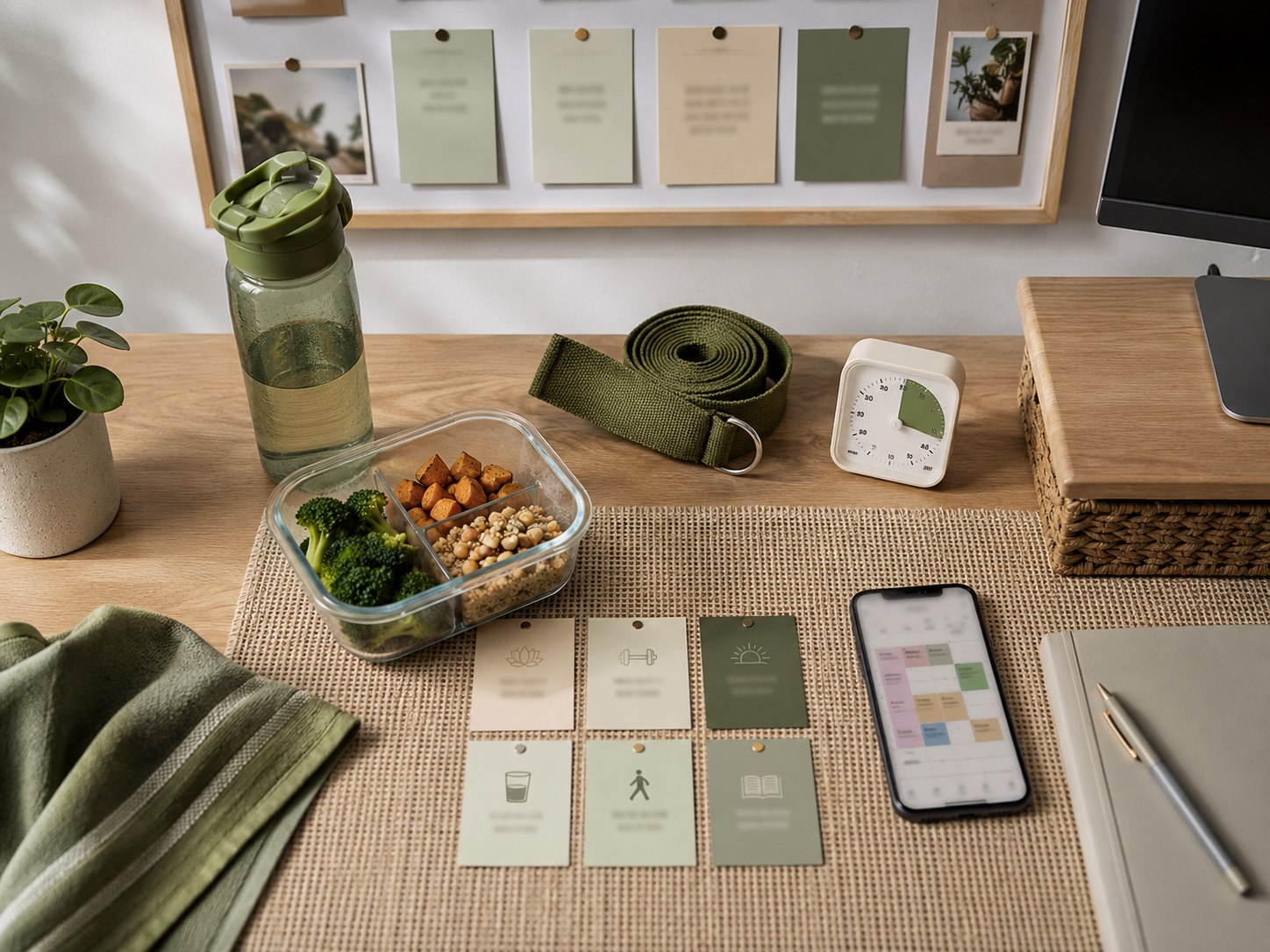
Start with the weakest point
Do not rebuild the whole day at once. Pick the part that is costing you the most energy. Chaotic mornings need a calmer first task. Collapsing afternoons need movement, hydration and fewer interruptions. Open-ended evenings need a shutdown routine. A healthier work-from-home routine grows from the friction you actually feel.
Start with the weakest point
Making the routine too ambitious
The fastest way to ruin a routine is to make it depend on a completely different version of yourself. Start smaller. A two-minute movement break, one glass of water, a short shutdown note or fewer notifications is enough to begin. Consistency beats dramatic plans that vanish by Thursday.
Ignoring the body until it complains
Stiffness, tired eyes, tight shoulders and low energy are early signals. Do not wait until discomfort becomes impossible to ignore. Build small body checks into the day: move, stretch, change position and adjust your screen. Your body should not need to file a formal complaint before you listen.
Letting digital noise run the day
A routine will struggle if every app can interrupt it. Notifications, inboxes, dashboards and messages can pull attention apart before the real work happens. Decide what deserves instant access and what can wait. Digital boundaries make healthy habits easier because the day stops being shaped by every ping.
Skipping the shutdown
Without a shutdown, remote work can stay mentally open all evening. Closing the laptop is a start, but loose tasks may keep circling. Write the next step, close digital clutter and reset the workspace. Tomorrow starts better when today does not leave the desk looking emotionally unresolved.
Related money note
Better tools can reduce repetitive admin, improve focus and make daily systems easier to maintain. The point is not to buy more tech. It is to remove avoidable friction so your work-from-home routine protects energy instead of draining it.
Related money note
Working From Home Without Wrecking Your Health
Working From Home Without Wrecking Your Health is the broader pillar guide if you want to understand how remote work affects posture, movement, screen time, food, hydration, boundaries and energy. It is the natural companion to building a healthier daily routine.
Sitting Too Long
Sitting Too Long is the next read if your routine needs more movement. It explains how long sitting affects posture, energy, stiffness and focus, then shows how small movement breaks can fit into realistic desk-based work.
How To Create A Low-Stress Start To Your Workday
How To Create A Low-Stress Start To Your Workday helps if your mornings feel crowded before work begins. A calmer first 15 minutes can make the whole day feel less reactive, especially when you work from home.
The Best End-of-Day Reset For Desk Workers
The Best End-of-Day Reset For Desk Workers is useful if work follows you into the evening. A simple shutdown routine can help clear digital clutter, ease stiffness and create a proper finish line for the day.
Related wellness guides
What is a healthy work-from-home routine?
A healthy work-from-home routine is a repeatable daily structure that supports your body, focus and rest. It includes movement breaks, screen breaks, hydration, simple planning, better desk habits, digital boundaries and a clear end-of-day reset. The routine does not need to be perfect to be useful.
How can I stay healthy while working from home?
Stay healthy while working from home by moving regularly, improving your desk setup, taking screen breaks, drinking water, eating properly and setting boundaries around work time. Start with small habits you can repeat. A realistic routine works better than a dramatic plan you cannot maintain.
How often should I take breaks when working from home?
Take breaks often enough that sitting, screen fatigue and mental load do not build for hours unchecked. Stand between tasks, move after calls, rest your eyes and step away from the desk during natural transitions. Short breaks throughout the day are usually easier to keep than one big reset later.
How do I separate work and home when working remotely?
Separate work and home by creating clear start and stop signals. Use a defined workspace where possible, keep work tools contained and create an end-of-day shutdown routine. Even in a small home, small boundaries help your brain understand when work has ended.
Why does working from home make me feel tired?
Working from home can feel tiring because movement drops, screen time increases, boundaries blur and notifications keep pulling attention away. Long sitting and skipped breaks can add to the problem. The tiredness often comes from many small drains, not one obvious mistake.
Final verdict
A healthier work-from-home routine should protect energy and wellbeing without pretending every day is perfectly organised. You do not need a lifestyle photoshoot routine. What matters is a handful of reliable habits that help you move, focus, rest your eyes, reduce digital noise and close work properly.
Start with one part of the day: morning, midday, afternoon or evening. Fix the biggest friction first, then build slowly. The goal is simple: make remote work feel less draining, less chaotic and less likely to turn you into part of the furniture.


