


Host a Virtual Halloween Party: Audio,…

20 Minimalist Halloween Nail Ideas for…

Can Free Affinity Help You Build…

12 Lower-Sugar Halloween Treat Swaps Worth…

Can Hostinger AI Builder Launch a…

A 5-Step Screen-Free Autumn Reading Ritual…

Plug-In Solar Panels UK: Are They…

15 Last-Minute Zoom Halloween Costumes for…

Meta One Explained: Is the Subscription…

10 Low-Fuss Dog Halloween Ideas: Comfort…

Plaud One Explained: Can AI Earbuds…

9 Gothic Dinner Table Ideas for…

Namecheap vs Dynadot

7 UK Ghost Tours and How…

Convertkit Vs Beehiiv

Do You Really Need a £420…

Bluehost vs Siteground

15 Gentle Spooky Autumn Books to…

Namecheap review

How to Remove Halloween Face Paint…
The best desk stretches for busy workdays are the ones you can use without turning relief into another scheduled event. You do not need a mat, a clear floor or a different outfit. You need a small menu of stretches for the areas that get stiff during screen-heavy work: neck, shoulders, wrists, upper back, hips, lower back, legs and calves. The aim is not perfect flexibility. It is to give your body useful position changes before stiffness settles in.
Start with no-equipment stretches
Match the stretch to the tight area
Neck and shoulders need regular resets
Wrists need breaks from typing
Hips and calves matter too
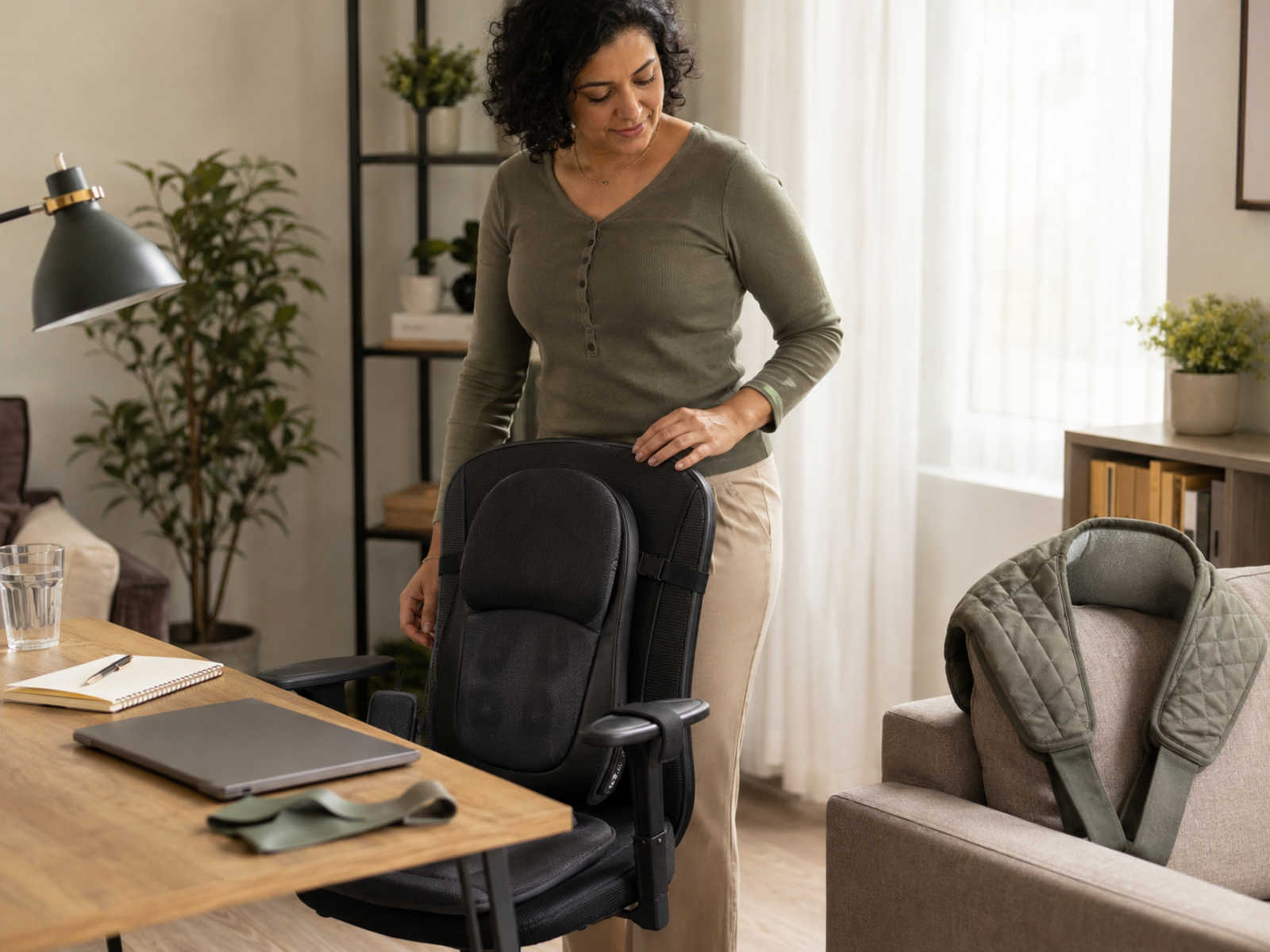
Bands and straps are optional helpers
Setup fixes reduce repeat stiffness
Most Relevant Audience
This guide is for remote workers, home workers, freelancers, bloggers, creators, side hustlers, parents, carers and small business owners who spend long stretches at a desk.
It is especially useful if you feel stiff, hunched, tight, restless or physically stale during busy workdays, but do not want stretching to become a complicated routine you have to manage.
What Makes A Good Desk Stretch?
It matches what feels tight
Desk stiffness does not always show up in one place. Some days it is your neck and shoulders. Other days it is your wrists, hips, lower back, calves or the general feeling that your body has been parked too long.
Choose the area that needs attention first. A good desk stretch solves the stiffness you actually feel, not the one a perfect routine says you should have.
It fits into real work gaps
A useful stretch should fit before a call, after a typing block, between meetings or during a short pause.
If it needs too much preparation, it may not happen. The easier it is to start, the more useful it becomes during a busy workday.
It feels gentle and controlled
Desk stretches should feel mild, steady and comfortable. They are not flexibility tests.
Avoid forcing your neck, yanking your shoulders or pushing into sharp discomfort. If a stretch feels wrong, stop. The goal is to reduce stiffness, not create a new problem before lunch.
It works without equipment first
No-equipment stretches are the best starting point because they remove friction. Shoulder rolls, chest openers, wrist stretches, hip resets and calf stretches can all be done near the desk.
Tools can help later, but they should support the habit rather than become the reason you delay starting.
It encourages position changes
A good stretch is also a change of position. Sitting still for hours can make the body feel locked, even if your posture is decent.
Use stretches as short resets. Stand, move, breathe and return. The value is often in interrupting stillness before it becomes discomfort.
Desk stiffness can move around. A long call may leave your shoulders tight. A writing block may affect your wrists. A sitting-heavy afternoon may show up in your hips, lower back or calves. Use this guide as a simple stretch menu, not a strict routine. Pick the reset that matches what feels tight and repeat the useful ones.
Desk Stretches To Try During Busy Workdays
Neck And Shoulder Desk Stretches
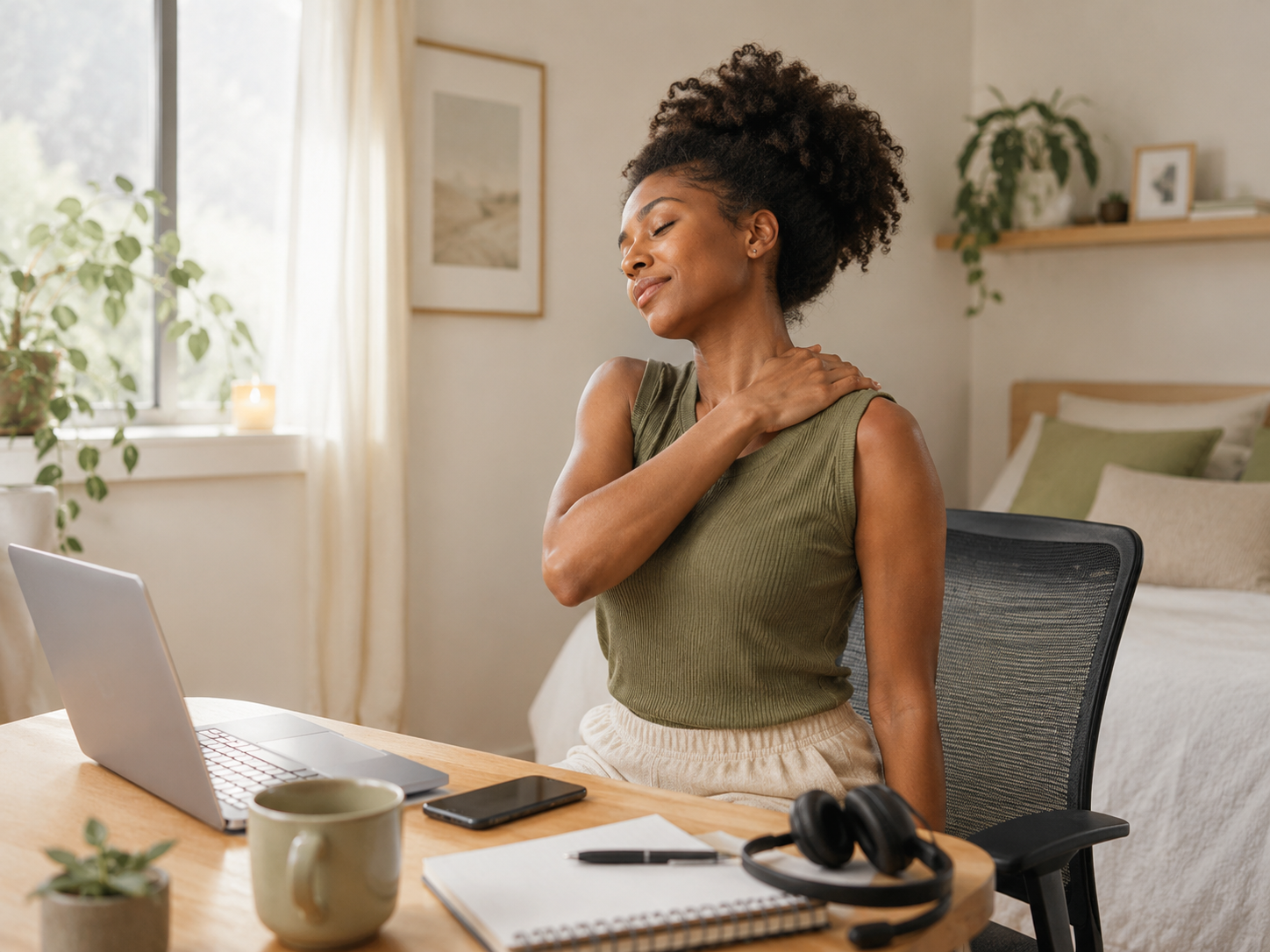
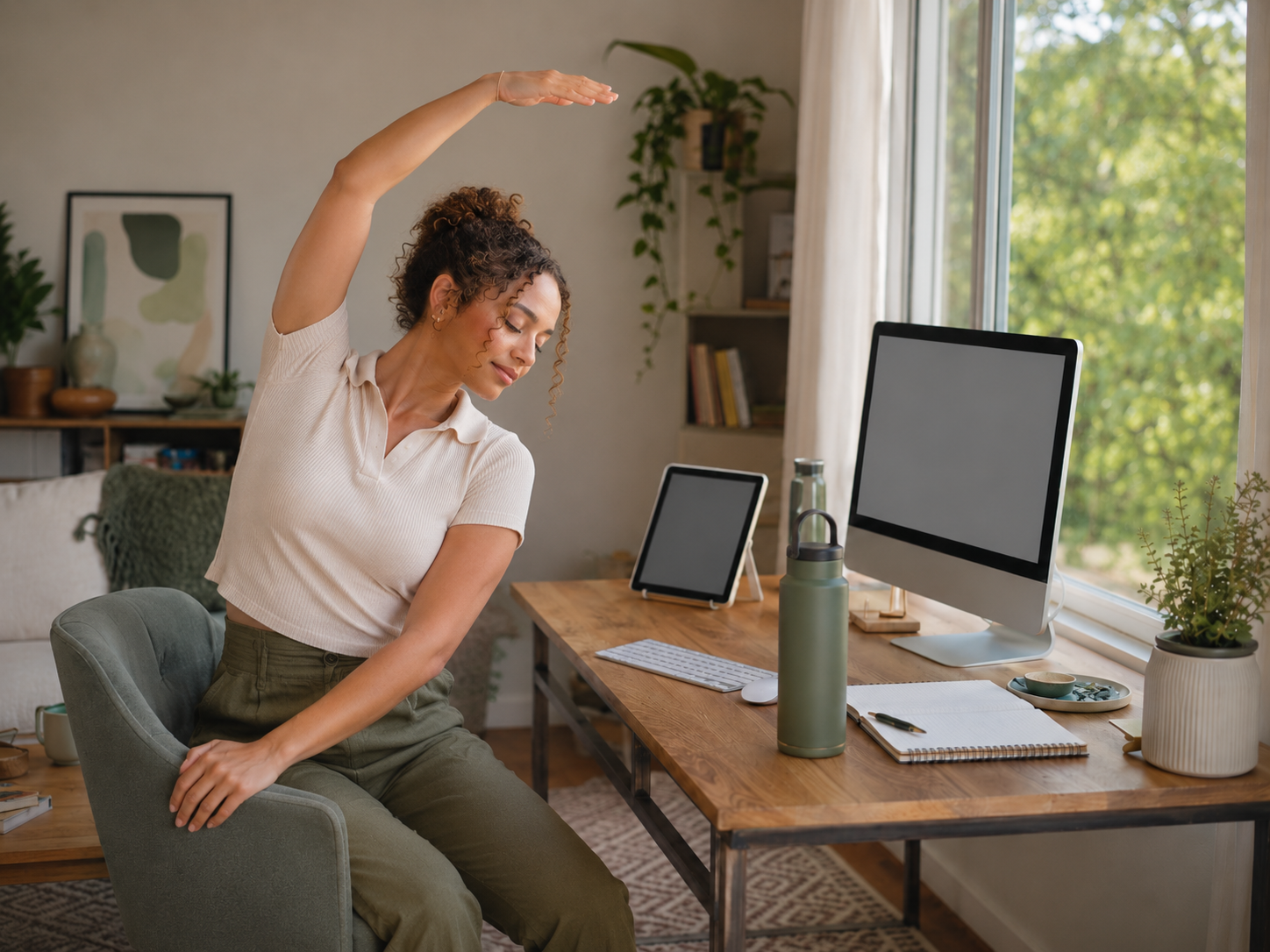
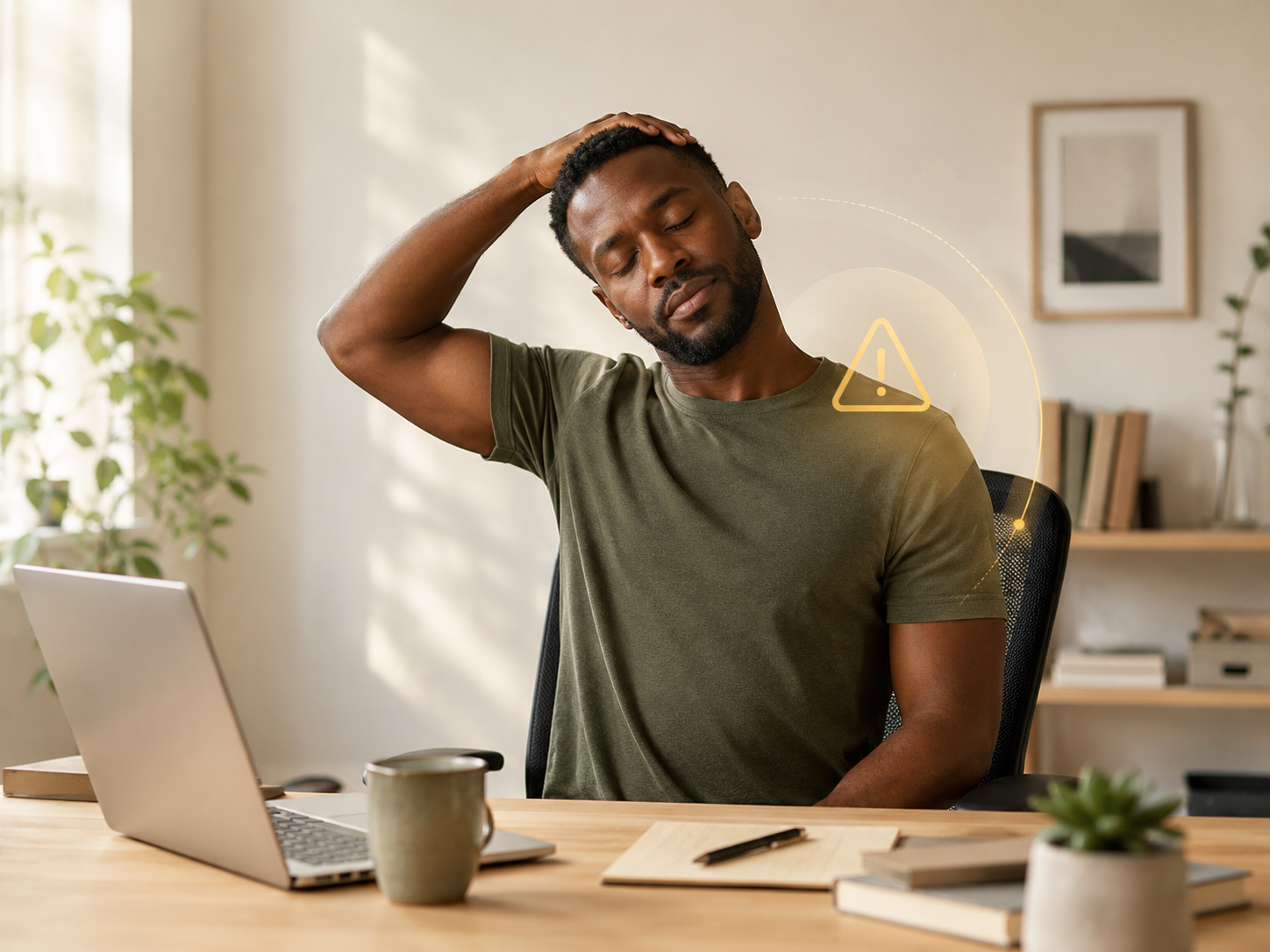
Gently turn your head side to side, then roll your shoulders slowly backward five times. Let the shoulders drop after each roll.
Use this after calls, screen-heavy work or focused typing. Keep the movement small and comfortable. The aim is to release the habit of holding tension near your ears.
Upper Back And Chest Opening Stretches
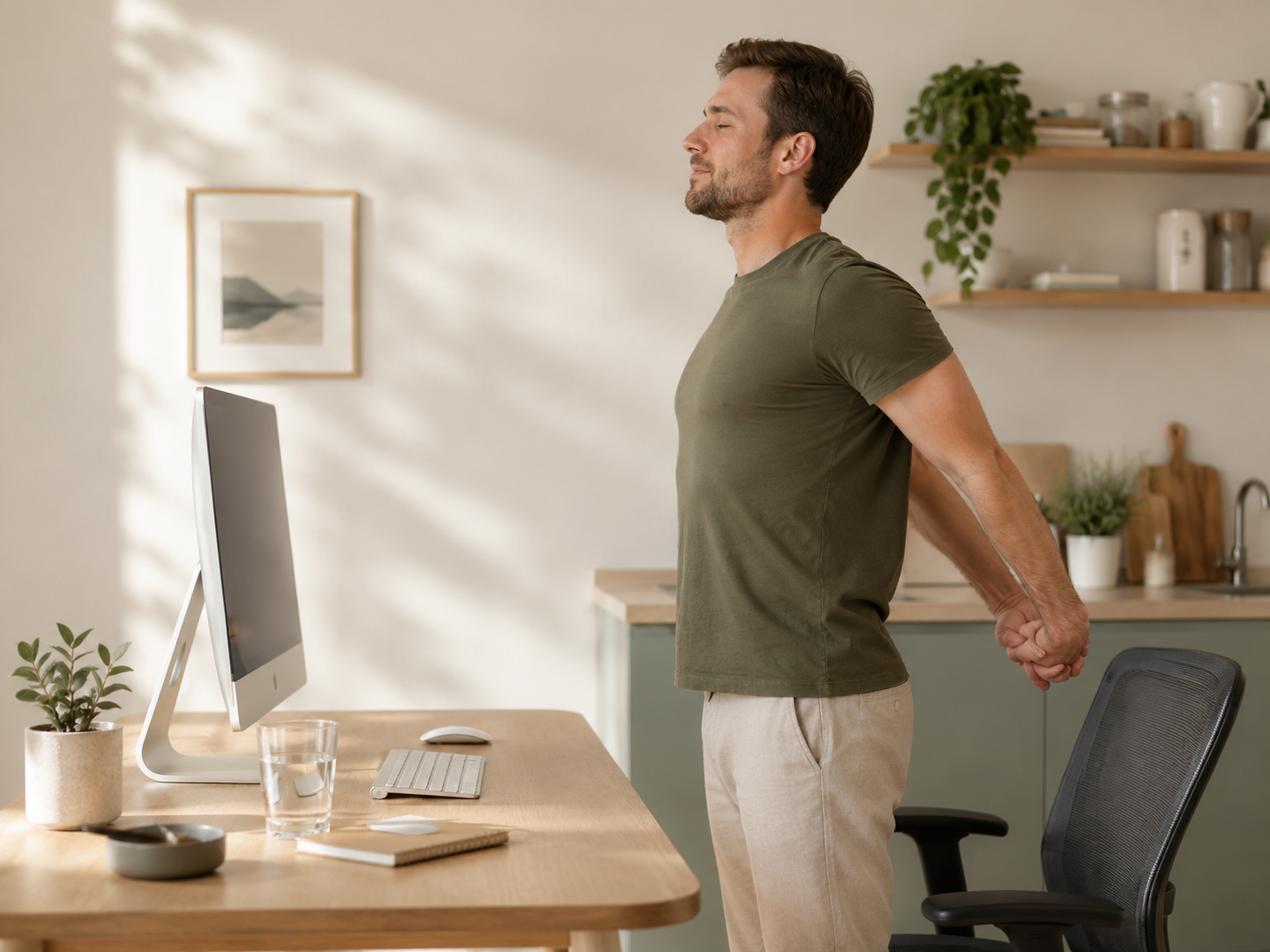
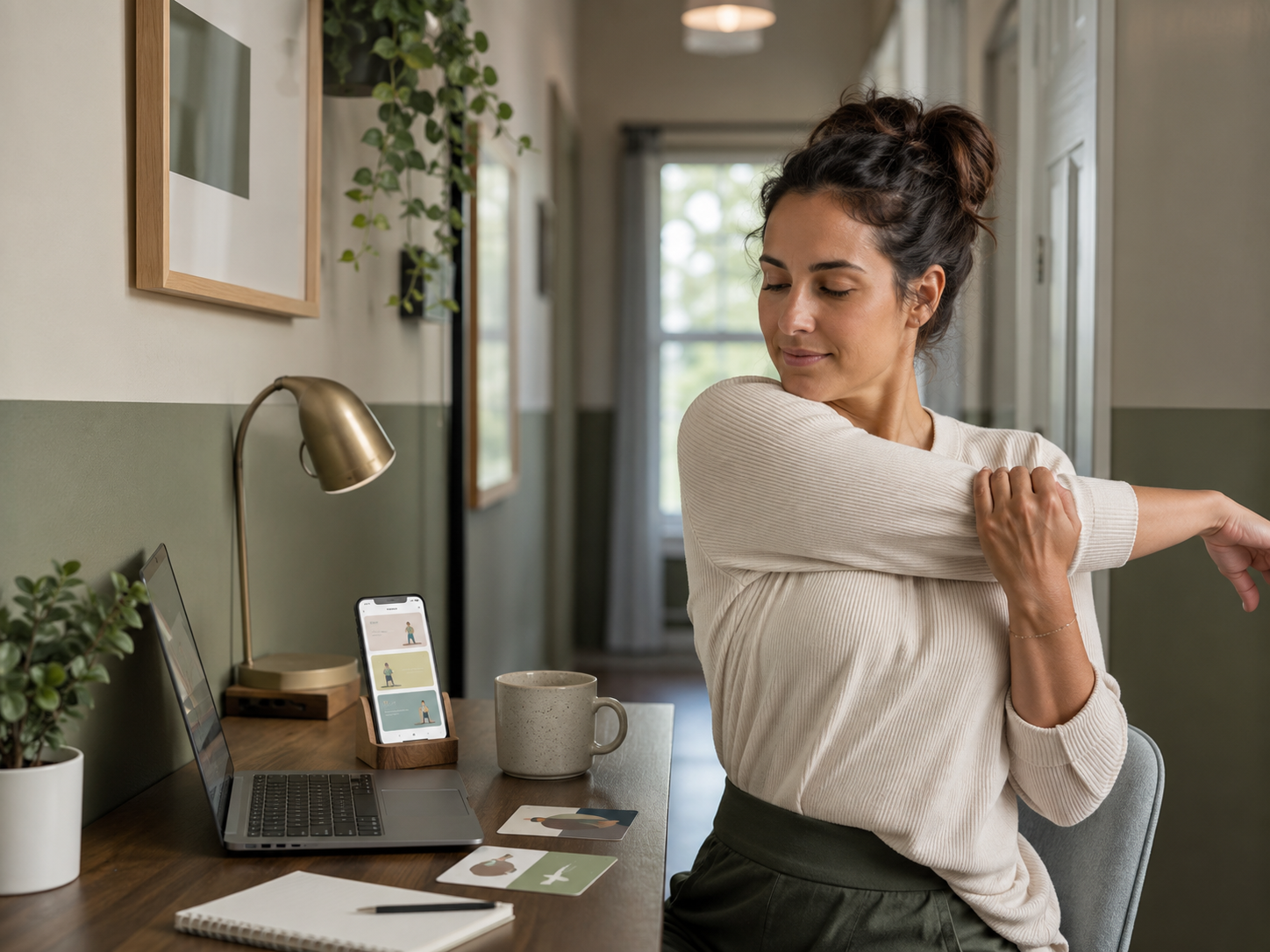
Clasp your hands in front of you and gently round your upper back. Then stand and place your hands behind your lower back or on your chair to open the chest.
This helps counter the rounded position many desk workers hold while typing. Keep the chest opener mild and avoid forcing the arms high.
Wrist And Forearm Stretches
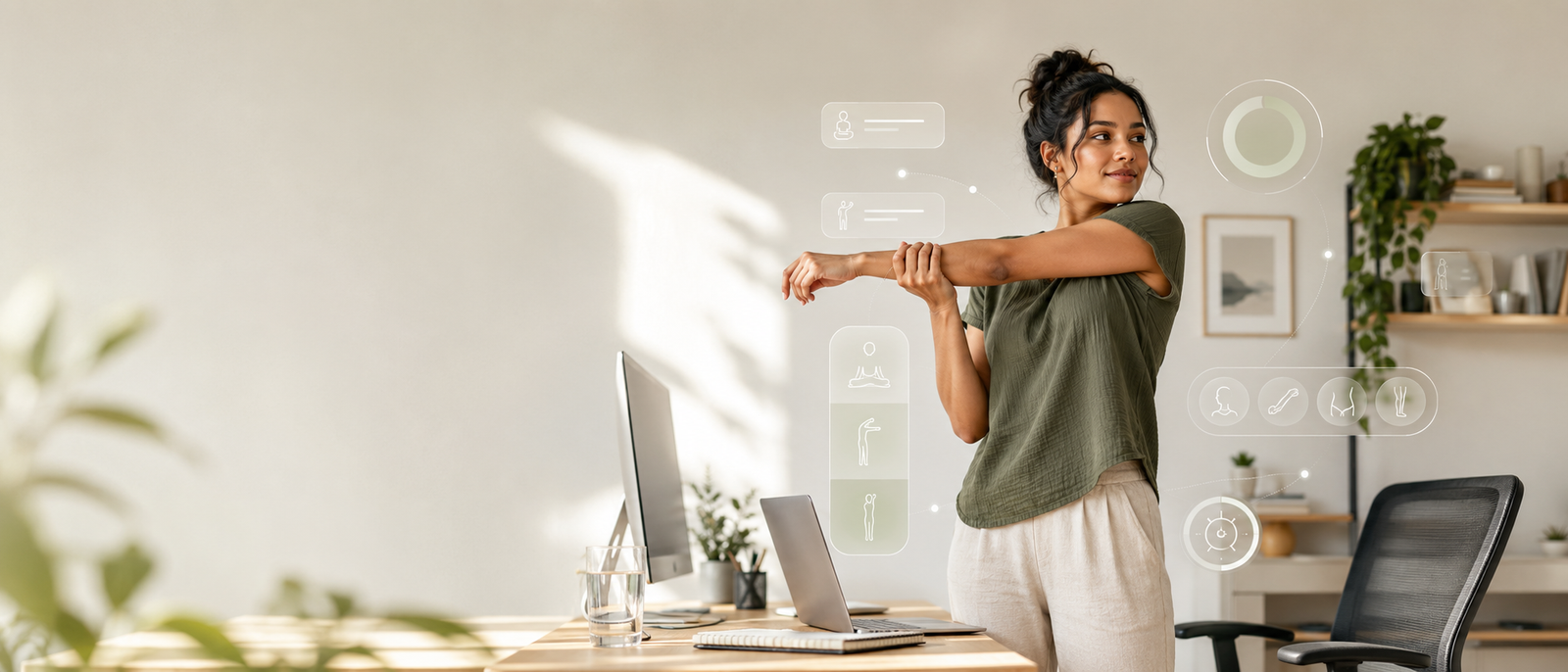
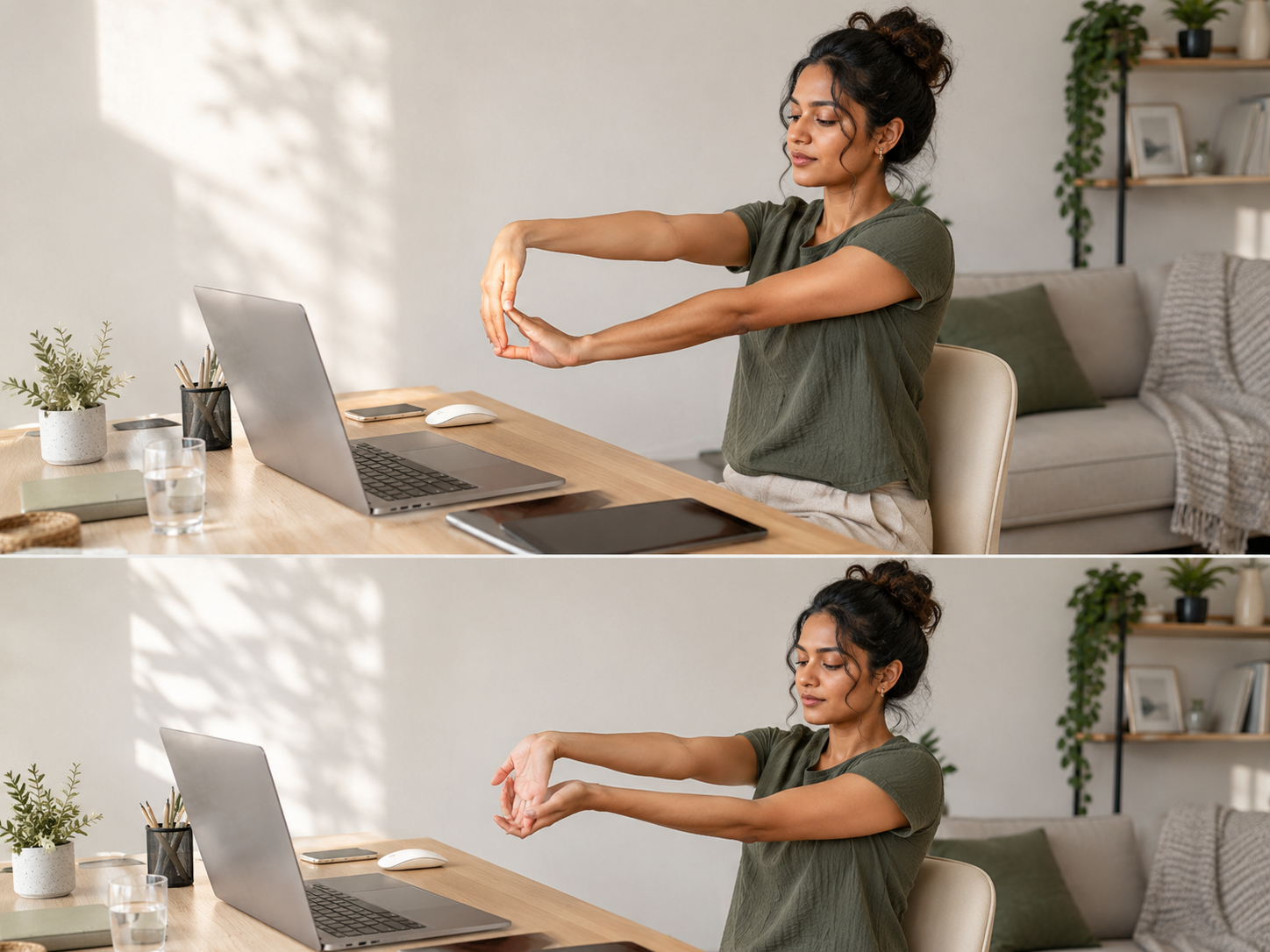
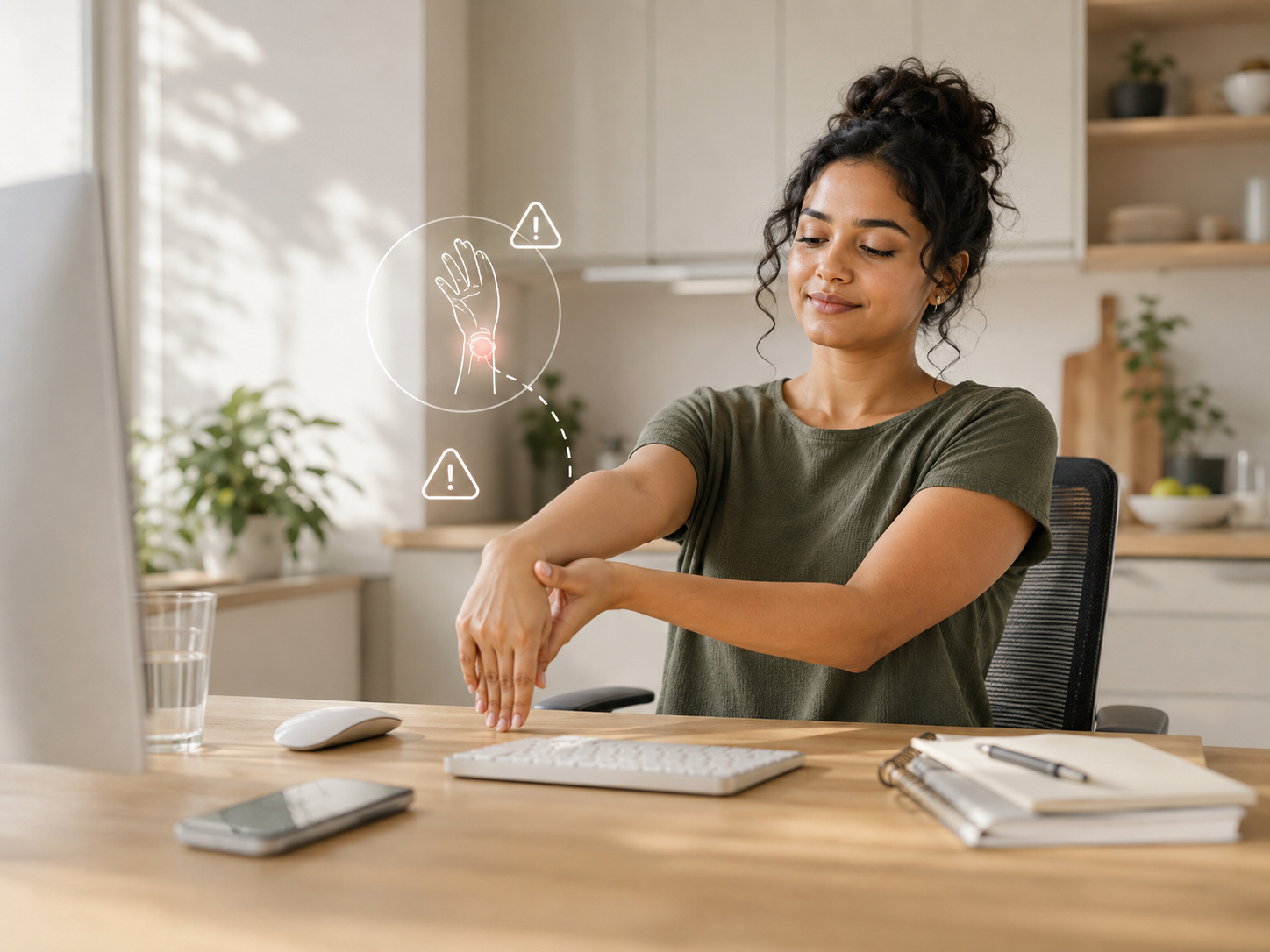
Stretch one arm forward with the palm down. Use the other hand to gently guide the fingers back. Then turn the palm up and repeat lightly.
Use this after typing, scrolling or mouse-heavy work. Keep the stretch gentle, especially if your wrists already feel sore or tired.
Lower Back And Hip Stretches
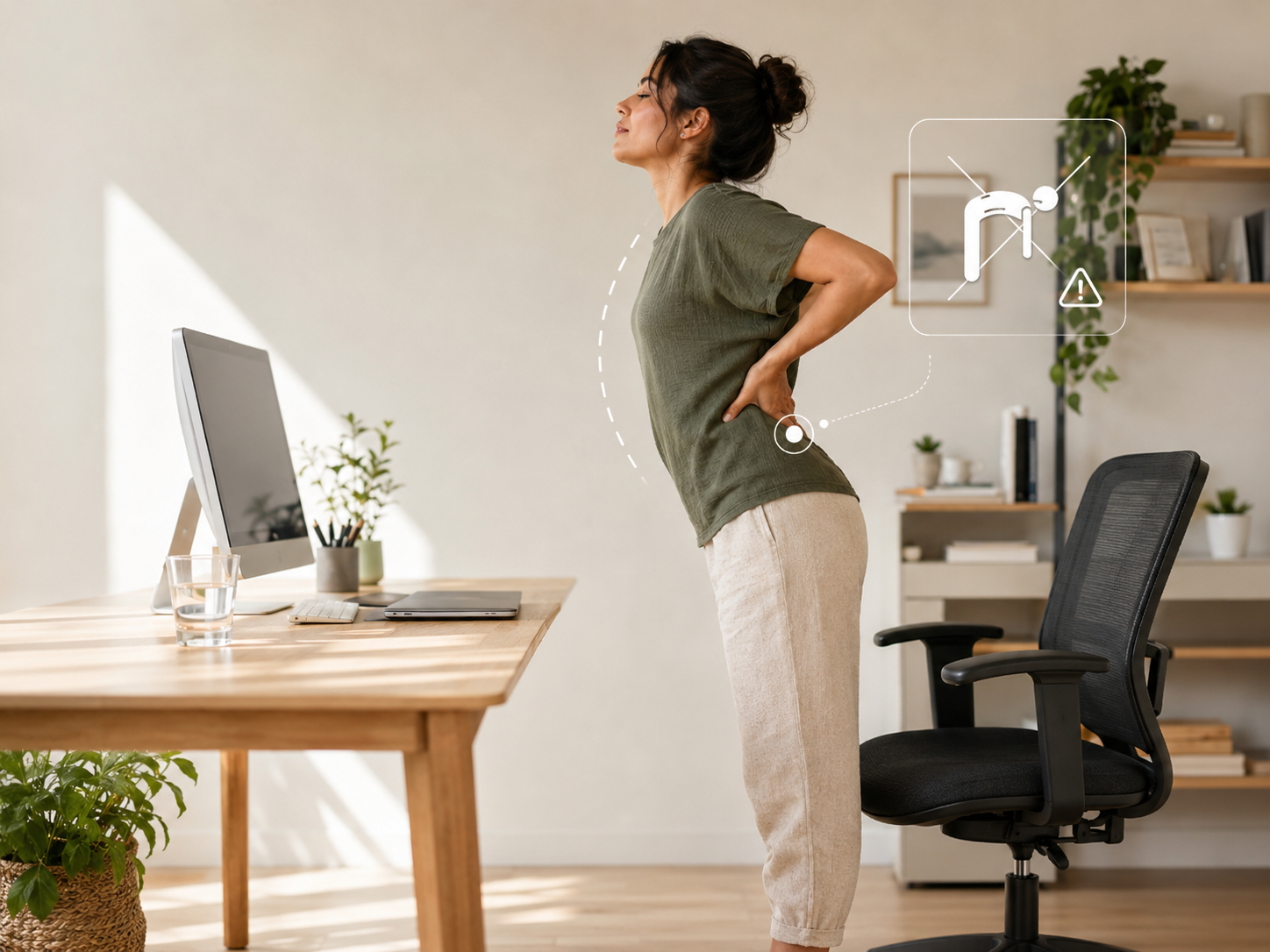
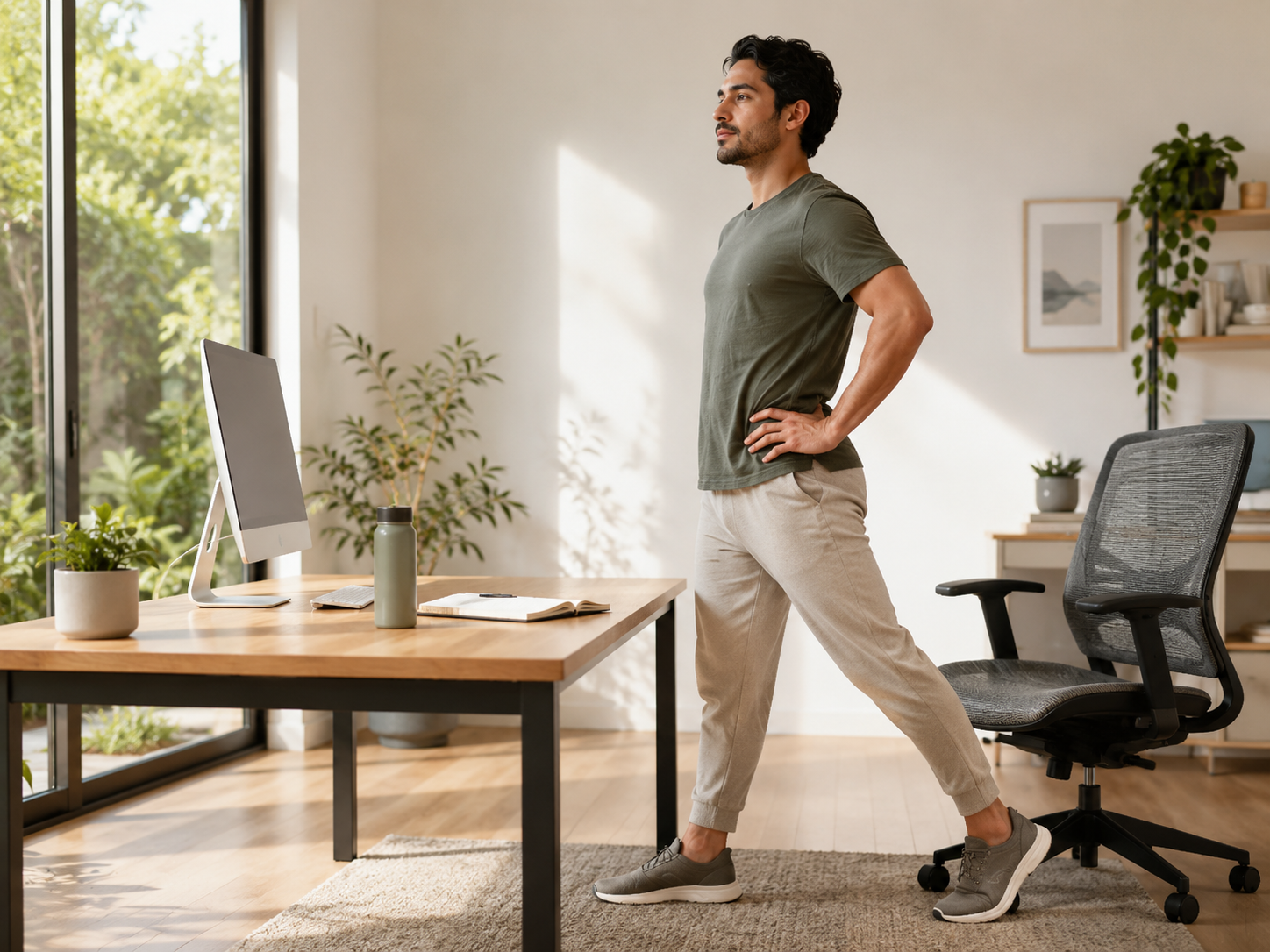
Stand tall, step one foot slightly back and gently tuck the pelvis under. You may feel a light stretch at the front of the hip.
For the lower back, stand with hands on hips and gently shift position. Keep everything controlled. Avoid forcing deep bends during a quick desk reset.
Leg And Calf Stretches At Your Desk
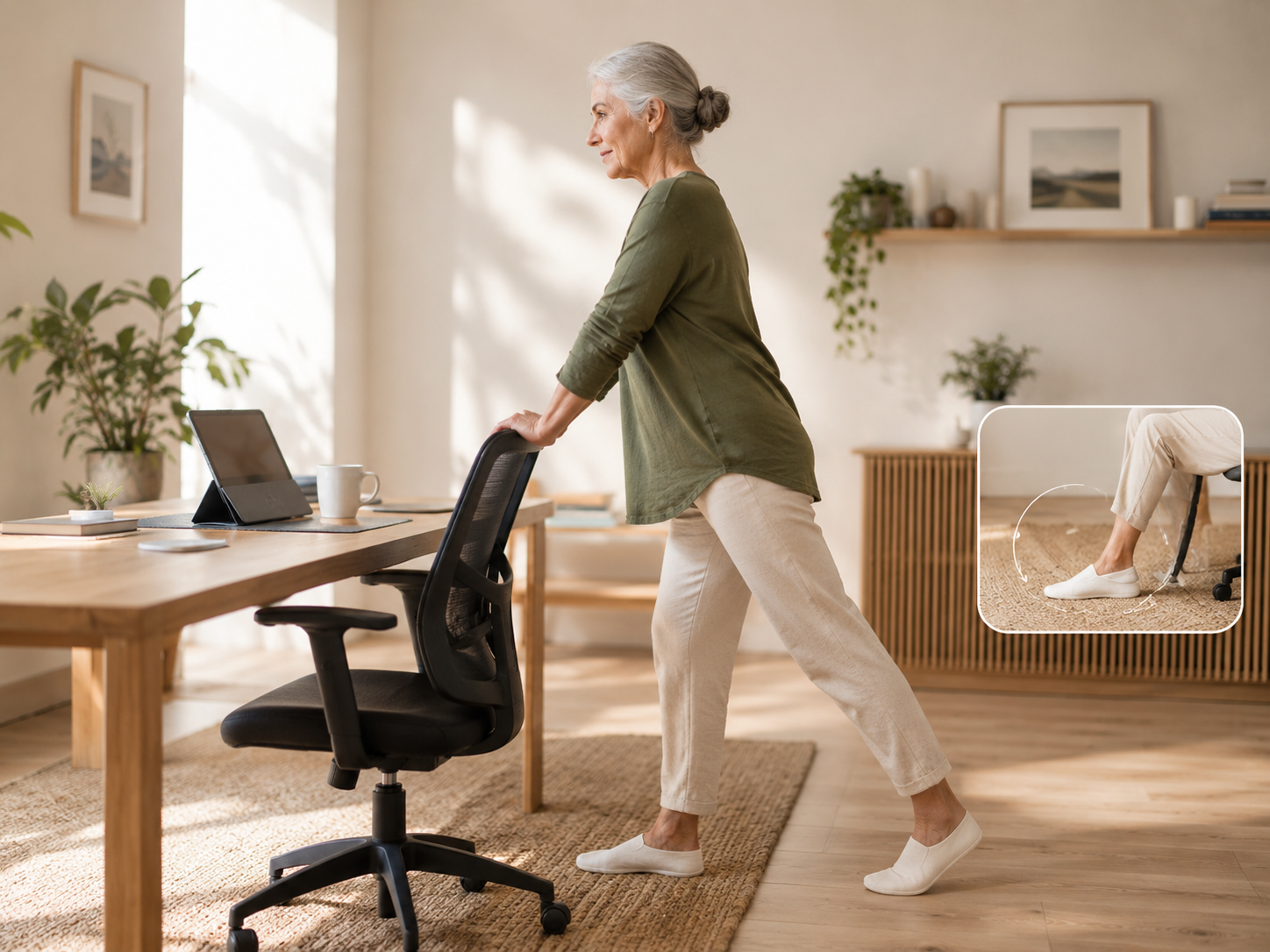
Stand behind your chair or near a wall. Step one foot back, keep the heel down and gently stretch the calf. Switch sides.
You can also do slow ankle circles while seated. These are simple ways to remind the lower body that sitting is not the only position available.
Optional Tools That Can Help
No-Equipment Desk Stretches
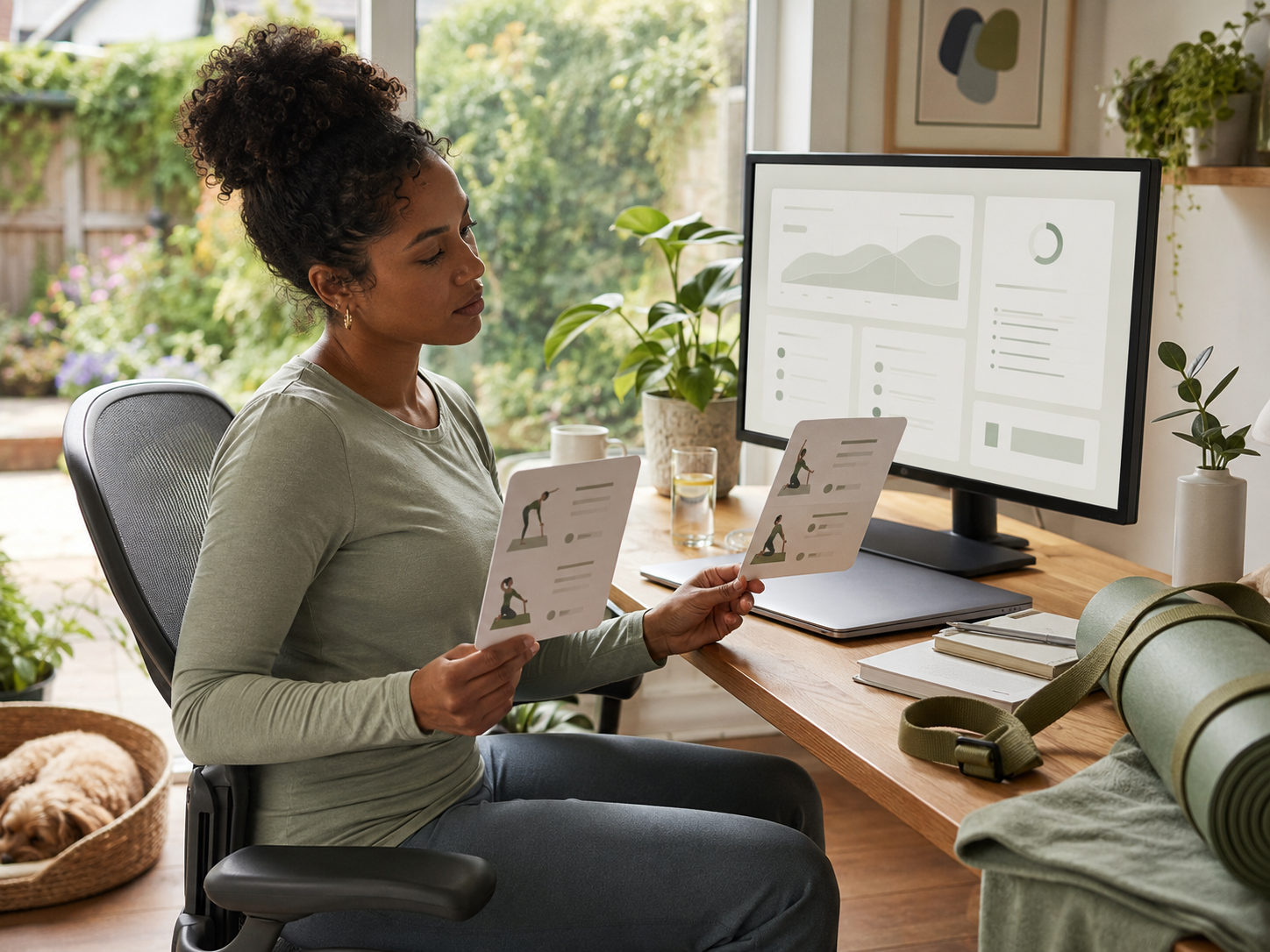
No-equipment stretches are the easiest place to begin. They need no setup, storage or buying decision.
Start with two or three moves you can remember: shoulder rolls, wrist release and a standing hip reset. Add more only when the habit feels natural.
Best Stretches For Real Workday Moments
Best before the first call
Before the first call, do shoulder rolls, a chest opener and one gentle neck turn each side.
This helps you start the day with less upper-body tension. It also stops the first meeting from locking you into the same hunched position you used yesterday.
Best between meetings
Between meetings, stand up and choose one stretch: calves, hips, chest or wrists.
Do not try to do everything. A short reset is enough to change position and give your body a different signal before the next conversation begins.
Best after long typing
After long typing, focus on wrists, forearms, shoulders and upper back.
Use a wrist release, shoulder rolls and a gentle upper-back stretch. This is especially useful after writing, editing, replying to messages or working through admin.
Best for afternoon stiffness
Afternoon stiffness often needs a broader reset. Stand, stretch the calves, open the chest and gently reset the hips.
Keep it simple and slow. The goal is to interrupt the slump before the second half of the day feels heavier than it needs to.
Best when you cannot leave the chair
If you cannot stand, try ankle circles, seated shoulder rolls, wrist stretches and a gentle seated upper-back round.
Chair-friendly stretches are useful during short gaps, reading tasks or days when stepping away is difficult. Small still counts.
Common Desk Stretching Mistakes
Waiting until you feel locked up
Stretching is easier before stiffness becomes intense. Use small cues: after calls, before lunch, after typing blocks or when your shoulders start creeping upward.
Do not wait for the perfect break. A thirty-second reset now is often more realistic than a full routine later.
Stretching too hard
A desk stretch should not feel sharp, strained or painful. Forcing a deeper stretch can make the body guard more, not relax.
Keep the stretch mild and controlled. If something feels wrong, stop and choose a simpler reset.
Doing too many stretches at once
A long stretch list can become another task you avoid. Start with three reliable options: one for upper body, one for wrists and one for hips or legs.
Build from there only if the routine feels easy.
Ignoring the desk setup
Stretching helps, but it cannot fully undo a poor setup. A low laptop, awkward mouse reach or unsupportive chair can keep recreating tension.
If the same area gets tight every day, check the workstation too. Stretching and setup should work together.
Forgetting the lower body
Desk stretching often focuses on the neck and shoulders, but hips, calves and legs matter too.
Long sitting keeps the lower body still. Add at least one lower-body reset to your day, even if it is just a calf stretch or a short standing break.
FAQ
What are the best desk stretches for busy workdays?
The best desk stretches for busy workdays are simple, repeatable and low-friction. Good options include shoulder rolls, neck turns, chest openers, wrist releases, hip resets and calf stretches.
Start with two or three stretches you can remember easily. A short routine you repeat is better than a perfect one you avoid.
How often should desk workers stretch?
A practical starting point is to stretch briefly every hour or between work blocks.
You can also stretch after calls, long typing sessions, lunch or screen-heavy tasks. The exact timing matters less than building regular position changes into the day.
Can desk stretches help with stiffness from sitting?
Desk stretches can help interrupt stiffness from long sitting by changing position and moving areas that have been still for too long.
They are not a cure for pain or poor setup, but they can be useful when combined with better ergonomics and regular movement.
What stretches can I do without leaving my chair?
Chair-friendly options include shoulder rolls, wrist stretches, ankle circles, seated upper-back rounding and gentle neck turns.
Keep the movements slow and comfortable. If your chair rolls, make sure you are stable before moving your legs or shifting position.
Are resistance bands useful for desk stretches?
Resistance bands can be useful for gentle upper-back and shoulder work, especially if you want more variety than no-equipment stretches.
Choose light resistance and simple movements. The band should make the stretch break easier to repeat, not turn it into a workout.
How do I remember to stretch during work?
Use natural cues: after calls, before lunch, after writing blocks or when switching tasks. A timer app or smart watch reminder can also help.
Keep the reminder simple. “Stretch for thirty seconds” is often enough.
Final Verdict
The best desk stretches for busy workdays are not complicated. Start with simple moves for the areas that feel tight most often: neck, shoulders, wrists, upper back, hips, lower back, legs and calves.
No-equipment stretches are enough to begin. Timer apps, smart watch reminders, resistance bands, stretching straps and ergonomic setup upgrades can help, but the real win is repetition. You do not need a perfect stretch routine. You need a few simple resets you will actually use.


