



Host a Virtual Halloween Party: Audio,…

20 Minimalist Halloween Nail Ideas for…

Can Free Affinity Help You Build…

12 Lower-Sugar Halloween Treat Swaps Worth…

Can Hostinger AI Builder Launch a…

A 5-Step Screen-Free Autumn Reading Ritual…

Plug-In Solar Panels UK: Are They…

15 Last-Minute Zoom Halloween Costumes for…

Meta One Explained: Is the Subscription…

10 Low-Fuss Dog Halloween Ideas: Comfort…

Plaud One Explained: Can AI Earbuds…

9 Gothic Dinner Table Ideas for…

Namecheap vs Dynadot

7 UK Ghost Tours and How…

Convertkit Vs Beehiiv

Do You Really Need a £420…

Bluehost vs Siteground

15 Gentle Spooky Autumn Books to…

Namecheap review

How to Remove Halloween Face Paint…
Mini movement breaks are for people who know sitting all day is not helping, but do not want a full workout routine taking over the calendar. The goal is not to become an exercise person overnight. It is to interrupt long sitting in small, realistic ways: standing up, walking for two minutes, stretching one tight area or using a simple reminder.
If the break feels easy enough to repeat, it has a better chance of becoming part of the workday.
Two minutes can still count
Movement breaks are not workouts
Desk stretches reduce friction
Walking pauses work well
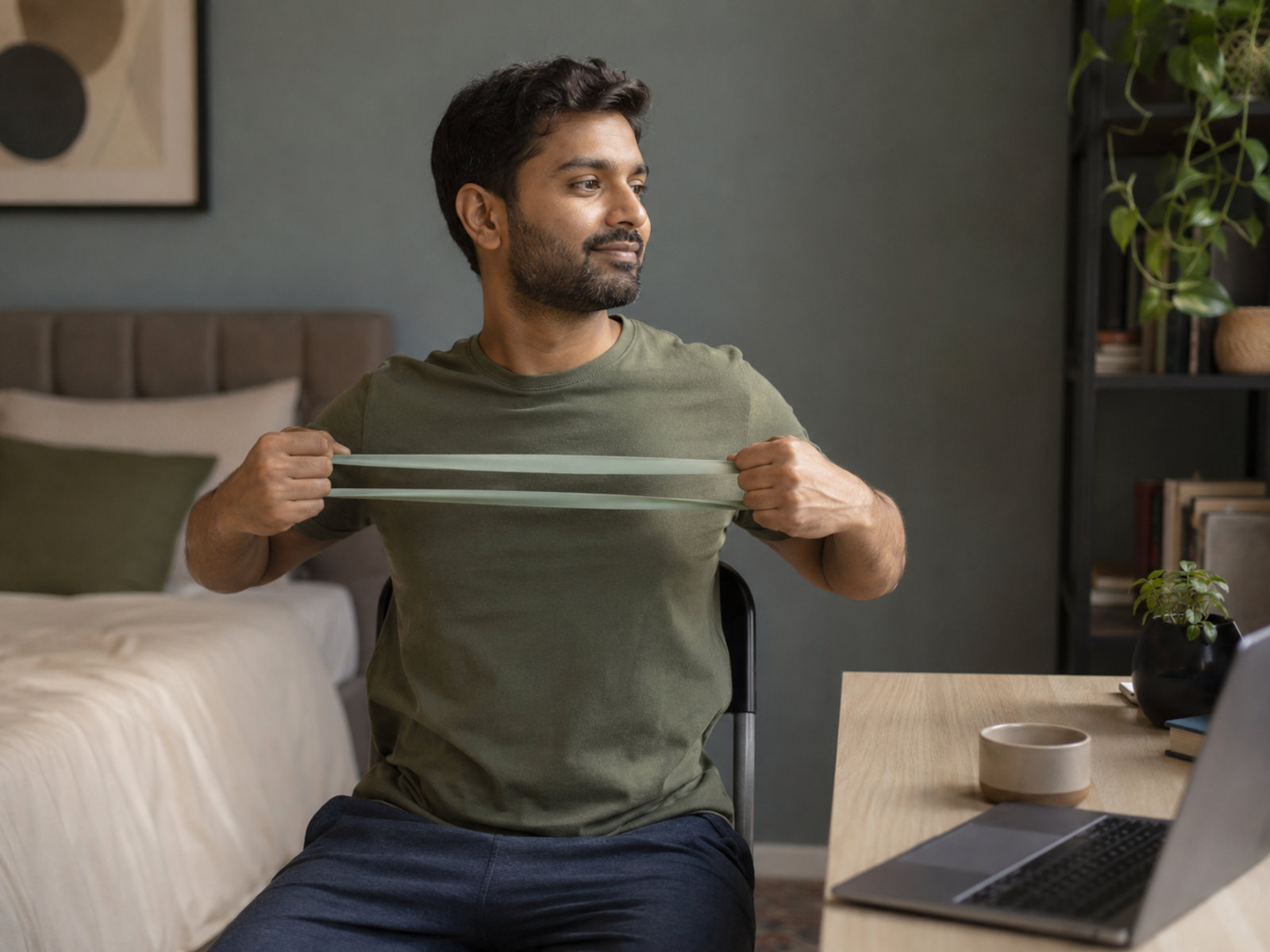
Resistance bands add light variety
Timers can help without nagging
Repeatable beats impressive
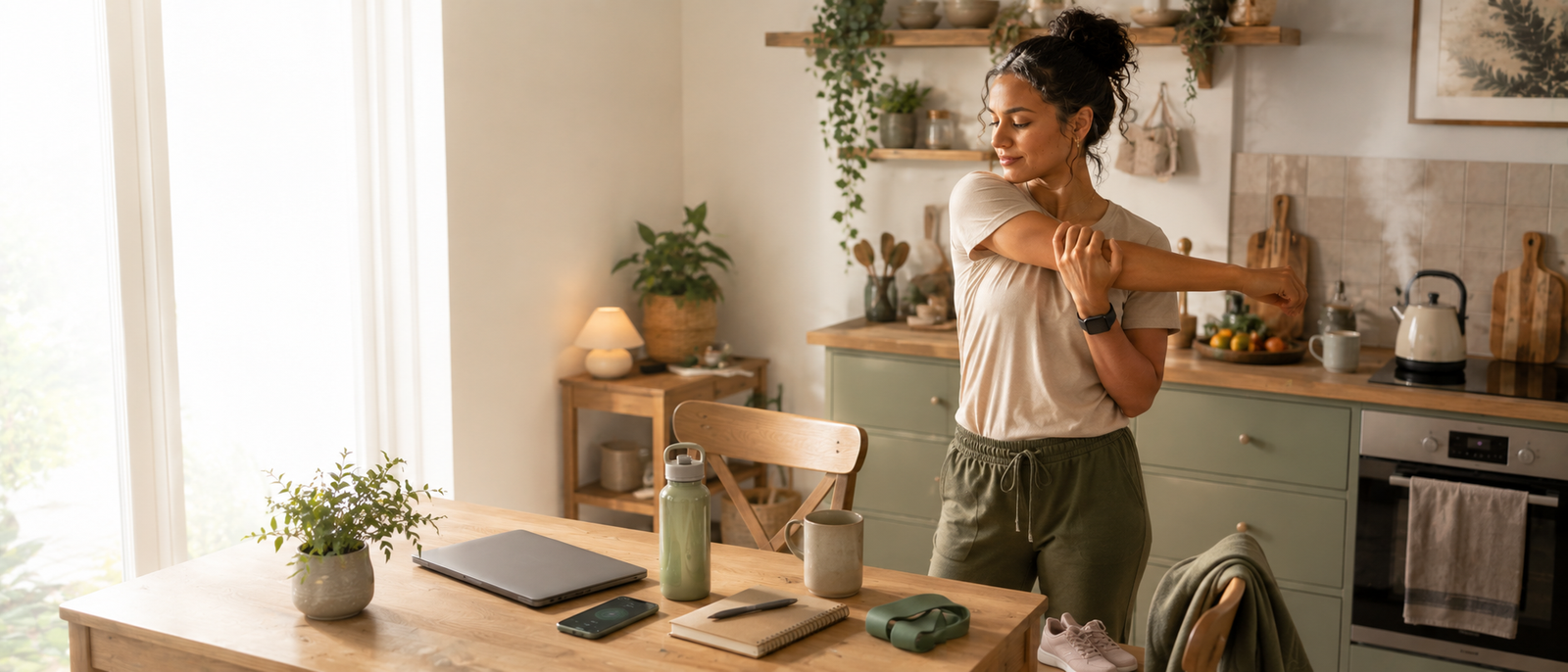
Most Relevant Audience
This guide is for remote workers, home workers, freelancers, bloggers, creators, side hustlers, parents, carers and small business owners who sit for long stretches and dislike fitness pressure.
It is especially useful if you want to move more, but a full home workout routine feels unrealistic right now. You do not need an intense plan. You need small physical resets that are easy enough to repeat during a normal workday.
What Counts As A Mini Movement Break?
Standing up and resetting
Standing up counts. It sounds almost too simple, but for desk workers who stay in one position for hours, changing position matters.
Stand, roll your shoulders, breathe, reset your posture and sit back down if needed. This interrupts the sitting block without turning the moment into a workout.
Walking for two minutes
A two-minute walk around the room, hallway, garden or kitchen counts. You do not need a step-count mission.
Use it between calls, before lunch or when your focus starts to flatten. The shortness is the benefit. It removes the pressure to make the break impressive.
Stretching one tight area
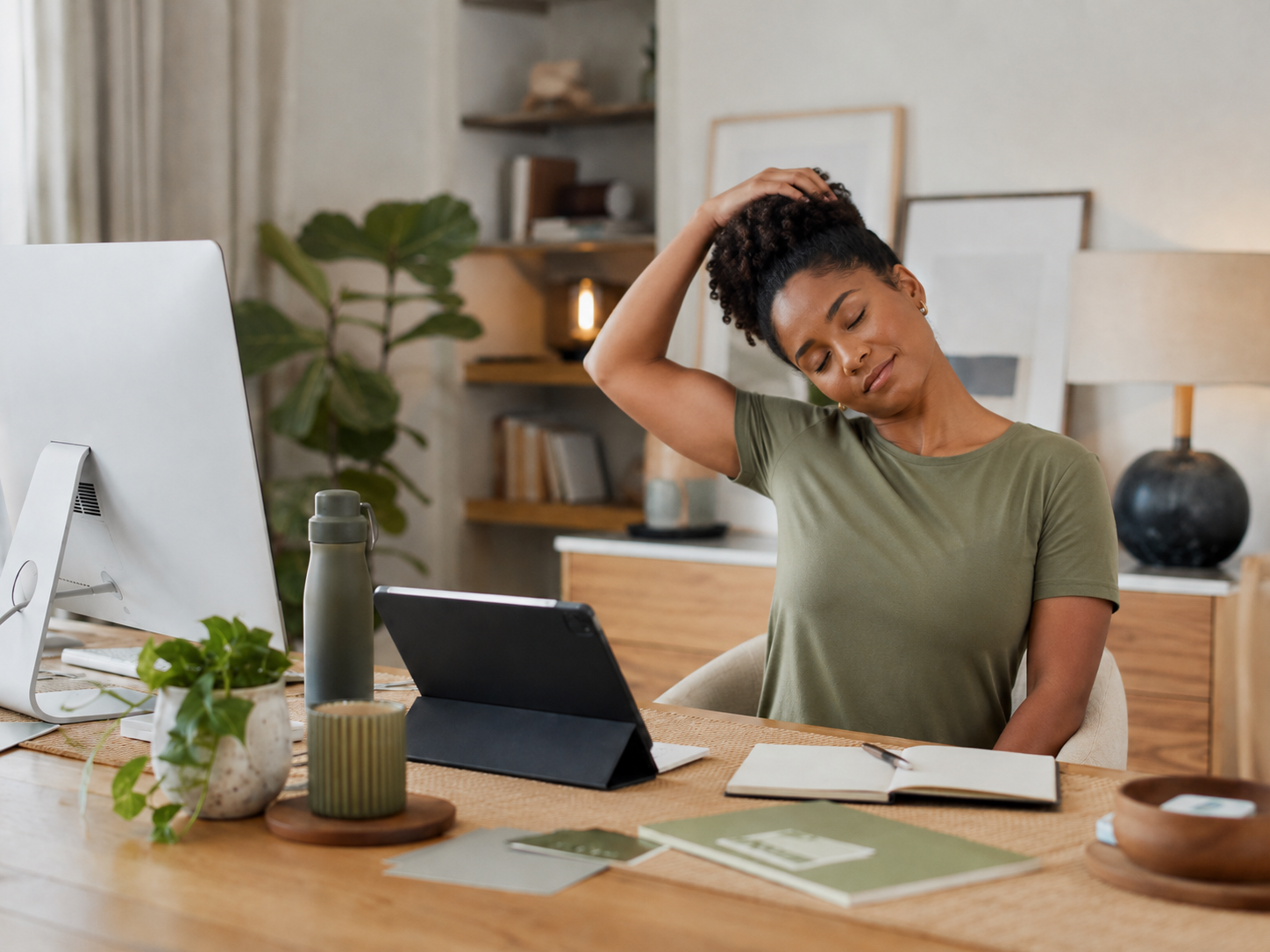
A mini break can focus on one area: neck, shoulders, wrists, hips, calves or back.
Choose the area that complains most often. Roll shoulders, stretch calves, open the chest or turn the neck gently. Keep it comfortable and controlled.
Refilling water
Walking to refill water is a simple break with a useful reason attached. It gets you away from the desk and supports hydration at the same time.
This works because it does not feel like exercise. It feels like taking care of a basic need before the day fills up again.
Changing rooms briefly
Moving to another room for a minute can help break desk autopilot. Walk to the window, step outside, tidy one small surface or reset your lunch area.
The activity does not need to be impressive. It just needs to interrupt the pattern of staying fixed in one chair.

Mini breaks should feel small enough that you do not have to negotiate with yourself. If the reset needs gym clothes, a mat, a playlist and extra motivation, it may not happen. Keep the first version almost too easy.
Mini Movement Break Ideas To Try
The Two-Minute Reset
Set a timer for two minutes. Stand up, walk slowly, roll your shoulders or stretch your calves.
This is useful after long sitting, screen-heavy work or back-to-back calls. The aim is simple: help your body leave one fixed position before stiffness builds.
Chair-Friendly Movement Ideas
Chair-friendly resets work when you cannot fully step away. Try ankle circles, seated marches, gentle spinal twists, shoulder rolls or wrist stretches.
These are useful during reading, quiet thinking or short gaps between tasks. If your chair rolls, make sure you are stable before moving your legs.
Standing Movement Without A Workout
Standing movement can be as simple as calf raises, gentle side steps, reaching overhead, wall push-ups or slow hip circles.
These work well before lunch, after a meeting or when you feel physically stale. You do not need a named routine. You need a short reset your body recognises.
Walking Breaks That Do Not Feel Like Exercise
Walk to the window, around the kitchen, down the hallway, outside for a few minutes or around the block if time allows.
Walking pauses need no equipment and can create a helpful transition between work blocks. They also get you away from the screen, which is useful on heavy desk days.

Helpful Tools For Remembering To Move
Desk Stretch Routines
Desk stretch routines are useful when you want a few guided moves without thinking too much. Choose short routines focused on shoulders, neck, hips or back.
Avoid anything too long or intense at first. The best desk stretch is the one you will actually do between tasks.
Best Mini Movement Breaks For Real Workdays
Best between calls
Stand up, walk around the room, stretch your calves or refill water. Keep it simple.
This creates a physical boundary between conversations. Even one or two minutes can stop the day feeling like one long seated meeting.
Best during screen-heavy afternoons
Try shoulder rolls, a short walk, standing stretches or looking away from the screen while you move gently.
Screen-heavy afternoons can make the body feel still and the brain feel crowded. A small reset gives both a different signal.
Best when you feel stiff
Choose the tightest area and move gently. Neck turns, shoulder rolls, wrist stretches, hip circles or calf raises can all help.
Do not try to fix everything in one break. One useful reset done often is better than an ambitious routine you avoid.
Best when you hate exercise
Choose activity that does not feel like exercise. Walk to the kitchen, stand during a call, tidy one small area, refill water or stretch while waiting for the kettle.
Removing the fitness label can help. You are not starting a workout. You are interrupting sitting.
Best when you forget completely
Use a timer, watch reminder, calendar prompt or task transition. Attach the break to something that already happens: after calls, before lunch or before reopening the laptop.
Memory alone is not the plan. Build prompts into the day so movement does not rely on motivation.

Common Mistakes That Make Movement Feel Harder
Making the break too big
If the break feels like a workout, you may avoid it. Start smaller than you think you need.
Two minutes is enough to begin. Once the habit feels easy, you can add longer walks, resistance bands or short routines if they help.
Waiting for the perfect time
A perfect break window may not appear. Busy workdays often move from one task to the next without a clean pause.
Use imperfect gaps. After a call, before coffee, while something loads or before lunch. A small break now is better than a perfect one that never happens.
Turning movement into punishment
Movement should not feel like repayment for sitting, eating or being busy. That mindset makes it harder to repeat.
Use it as care, not correction. Your body has been still for a while, so you give it a small change.
Ignoring discomfort
Mini movement should feel comfortable and controlled. Sharp pain, dizziness or worsening discomfort is a sign to stop and reassess.
Keep movements gentle, especially if you have existing pain, injury or health concerns. Seek appropriate advice if something does not feel right.
Using reminders that annoy you
A reminder only helps if you respond to it. If alerts interrupt deep work too often, you may start ignoring them.
Adjust the timing, frequency or wording. Prompts should fit your day, not constantly pull you out of useful focus.
FAQ
What are mini movement breaks?
Mini movement breaks are short moments of activity during the day. They can include standing, walking, stretching, shoulder rolls, calf raises, water refills or simple desk-friendly resets.
They are not full workouts. Their job is to interrupt long sitting and help your body feel less stuck.
Can short movement breaks help if I sit all day?
Short breaks can help some desk workers reduce long periods of stillness and feel more comfortable during the day.
They work best when repeated regularly. One short break will not fix the whole routine, but several small resets can make the workday feel less physically stale.
How do I move more if I hate exercise?
Start with activity that does not feel like exercise. Stand up, walk to another room, stretch one area, refill water or take a two-minute loop around your home.
Avoid big routines at first. The goal is to make movement easy enough that you stop avoiding it.
What are easy desk-friendly movement ideas?
Easy desk-friendly ideas include shoulder rolls, wrist stretches, ankle circles, seated marches, calf raises, standing hip circles, wall push-ups and short walks.
Choose one or two that feel comfortable and repeat them during natural breaks in your day.
Are walking breaks enough?
Walking breaks can be enough to start, especially if your main issue is long sitting. A few short walks across the day can make movement feel more realistic.
You can add stretching, resistance bands or longer walks later if you want more variety.
How often should desk workers take movement breaks?
A useful starting point is to move briefly every hour or between work blocks. The exact timing depends on your body, schedule and work demands.
Keep it realistic. A plan that fits your day is better than an ideal schedule you abandon.
Final Verdict
Mini movement breaks for people who hate exercise work because they lower the barrier. You do not need a workout identity to stand up, walk for two minutes, stretch your shoulders, refill water or use a resistance band between tasks.
The best break is small, repeatable and easy to begin. If it helps your body feel less stuck and interrupts long sitting, it counts. The goal is not to become a different person. It is to stop letting the desk win all day.


