



Host a Virtual Halloween Party: Audio,…

The Calm Autumn Reset: 10 Small…

Can Free Affinity Help You Build…

The Best Lighting for Darker Autumn…

Can Hostinger AI Builder Launch a…

Create an Autumn Wind-Down Routine That…

Plug-In Solar Panels UK: Are They…

Heated Throw vs Heated Blanket vs…

Meta One Explained: Is the Subscription…

Autumn Sleep Reset: Light, Temperature and…

Plaud One Explained: Can AI Earbuds…

The Best Ways to Dry Washing…

Namecheap vs Dynadot

Dehumidifiers Explained: When Are They Actually…

Convertkit Vs Beehiiv

Autumn Social Reset: Small Plans for…

Bluehost vs Siteground

Sekonda Smart Ring vs Oura Ring…

Namecheap review

Make Your Home Cosier Without Turning…
The clocks go back on Sunday 25 October 2026, just as the evenings darken and the weather turns. This guide builds a small walking routine for desk days that still happens when it is wet, dark or busy.
It uses NHS guidance as a direction of travel, not a pass mark, and it is general information rather than personal advice.
Quick Overview
- The NHS general guidance is 150 minutes of moderate activity a week, something to build towards rather than tick off.
- Brisk means you can still talk but could not sing, according to the NHS.
- Clocks go back on 25 October 2026, so morning and lunchtime slots become the dependable ones.
- Short walks and 1 to 2 minute movement breaks fit around desk work.
- Have an indoor wet-day plan B, and think about being seen if a walk ends after dark.
- Expect missed days, and keep any tracking light and optional.
What the NHS guidance actually asks of you
The baseline, in plain English
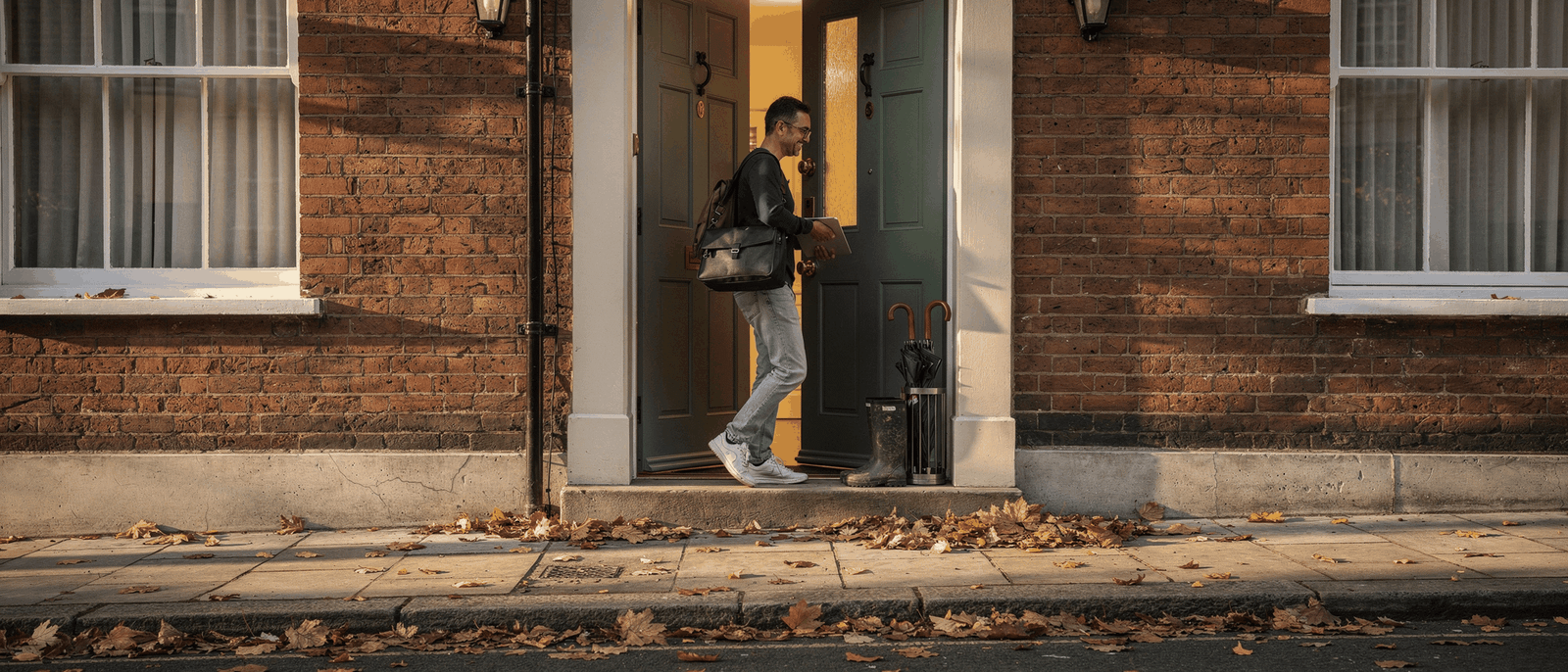
The NHS advises adults aged 19 to 64 to do at least 150 minutes of moderate intensity activity a week, or 75 minutes of vigorous activity, spread over 4 to 5 days a week or every day (NHS page checked on 18 October 2026). Treat that as general guidance to build towards, not a pass or fail mark.
The same guidance recommends strengthening activities on at least 2 days a week, in addition to the aerobic minutes. So walking is useful, but it is not the whole picture.
What brisk actually means
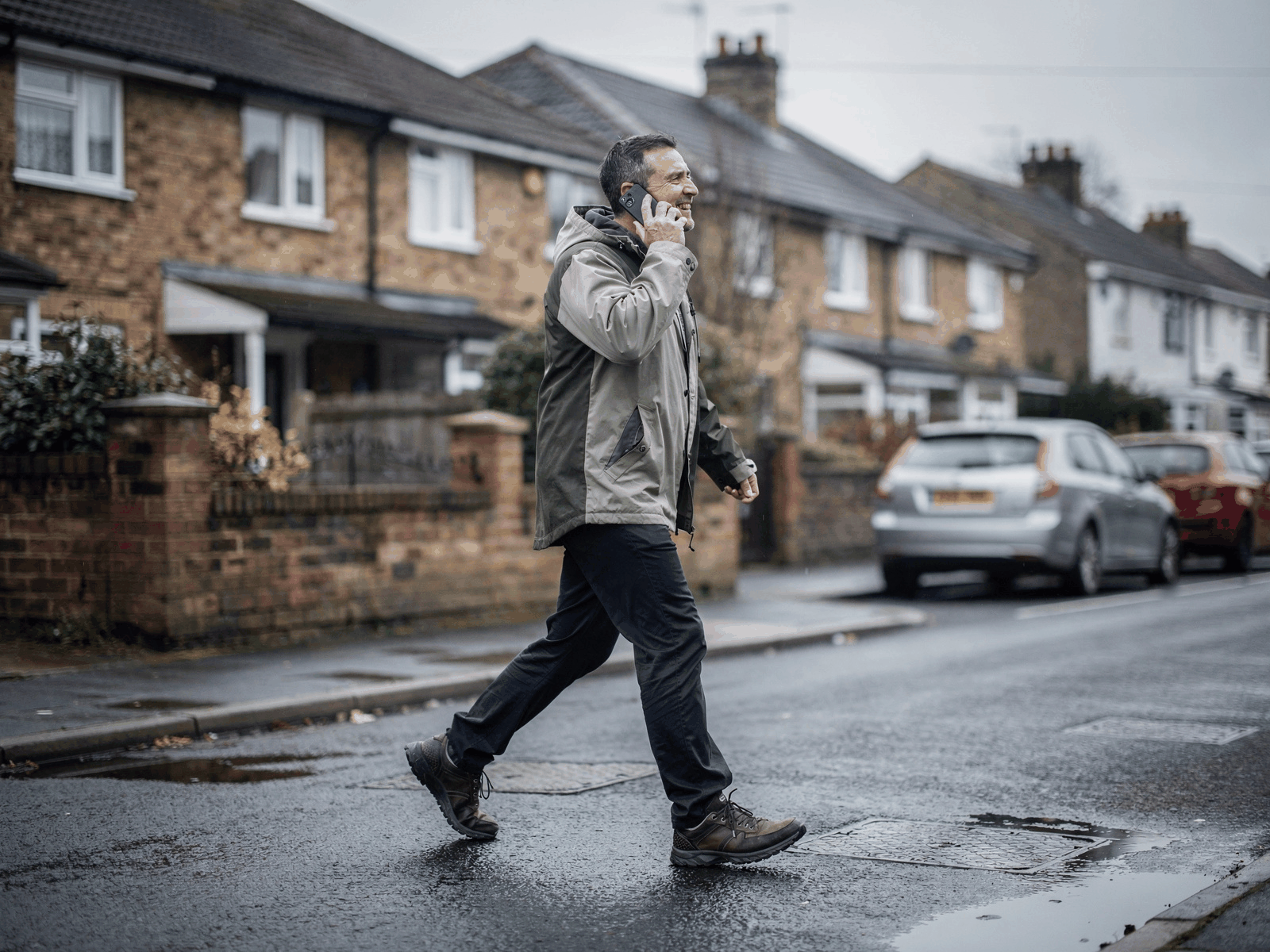
The NHS describes moderate intensity activity as raising your heart rate, making you breathe faster and feeling warmer. Its rough test is that you can still talk but not sing, and walking for health is listed as an example.
That page is written for older adults, so treat the test as a rule of thumb rather than advice for any one person.
Start small, and check first
A Kent Community Health NHS Foundation Trust leaflet for patients suggests that if you cannot manage 30 minutes at a brisk pace to begin with, you can walk briskly for as long as is comfortable, for example three minutes after a warm-up, and build up. It is aimed at patients, so take it as an example of starting small, not a plan to copy.
If you have a health condition, or have been inactive for a while, speak to a GP before changing how much you do. Then pick your walk:
- Pick the smallest walk you would still do on your worst, wettest, darkest day.
- Check it passes the talk-but-not-sing test.
- Give it a fixed slot tied to something you already do.
Breaking up the desk day, without the panic
What the guidance says
The NHS says the UK Chief Medical Officers' guidelines recommend breaking up long periods of sitting with at least light activity. There is not enough evidence to set a time limit on daily sitting.
The NHS also says many adults spend more than 7 hours a day sitting. That figure covers all adults and settings, not only desk workers.
What the evidence cannot say
The NHS notes that most evidence on sitting and ill health comes from observational studies, which show an association but not a direct cause. That is a reason to stay measured, not alarmed.
The NHS also says physical activity can be associated with better mood, sleep quality and energy. A short walk is a sensible habit worth trying, not a fix.
What the clocks going back changes
Why evening walks get harder
GOV.UK says the clocks go back one hour at 2am on Sunday 25 October 2026, returning the UK to Greenwich Mean Time. During British Summer Time there is more daylight in the evenings and less in the mornings, so after the change the balance flips.
An after-work walk that felt easy in light evenings may now start in the dark. A morning or lunchtime slot may suit better.
A worked example
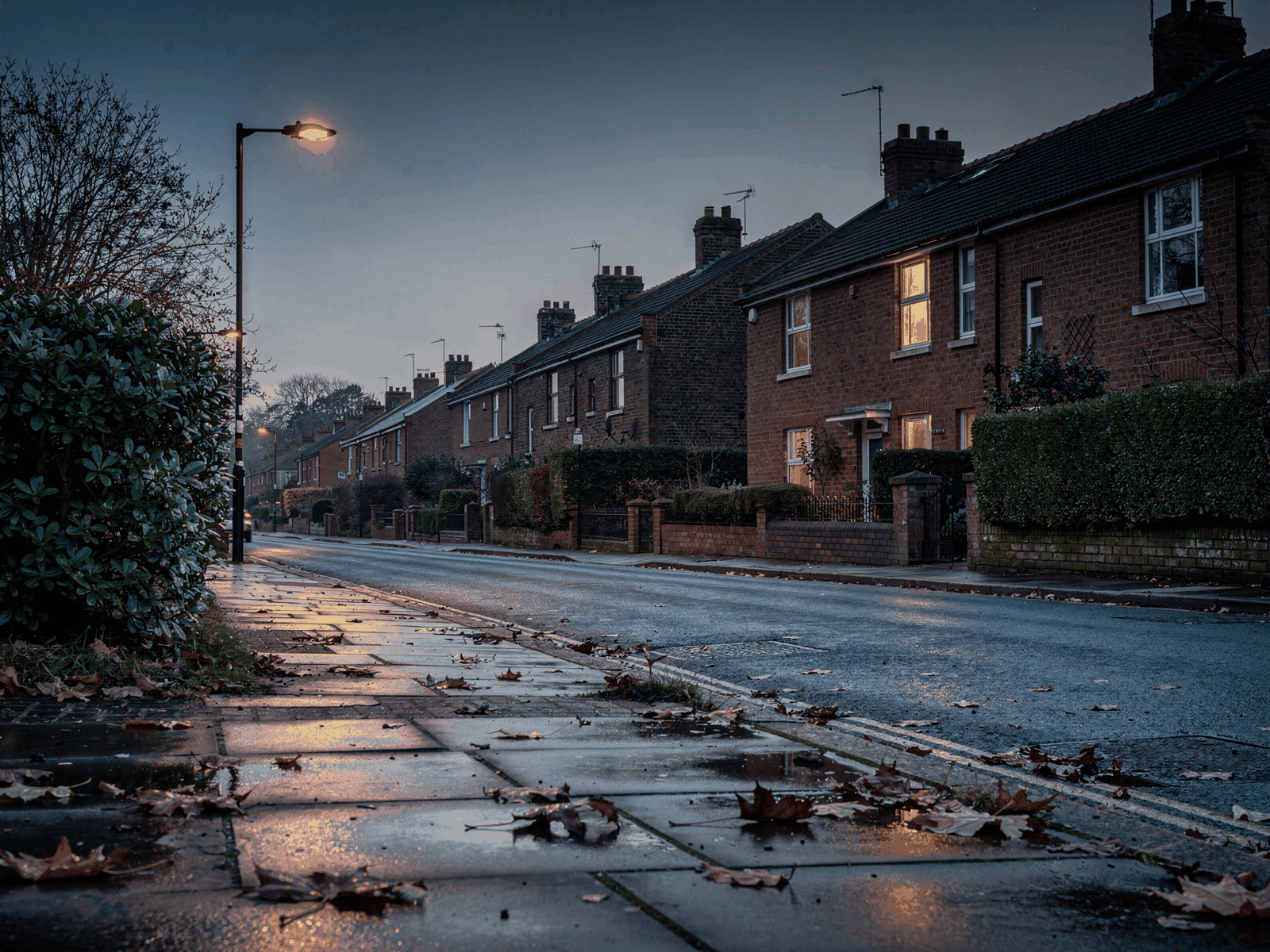
Last year, on Sunday 26 October 2025, sunset in London was given as 4.44pm by Time Out UK, so around a quarter to five. Those are 2025 figures, used here as an illustration only.
Say you finish work at 5pm (a hypothetical example). A walk starting then begins after sunset. A lunchtime loop would still be in daylight. Check your own postcode's sunset time before choosing slots.
A simple weekly routine for a desk-based day
Slot 1: before or at the start of work
A short walk before you sit down uses daylight and gets done before the day fills up. In the sample week this is Monday, Wednesday and Friday. Editorial starting length: about 5 minutes, brisk where comfortable. That echoes the Kent trust leaflet idea of a few comfortable brisk minutes after a warm-up, then building up.
The lengths in this routine are editorial suggestions, not guideline figures, and the week is a starting point to build from. Tie the walk to something fixed, such as leaving the house before your first meeting.
Slot 2: the lunchtime loop
Choose one short route you do not have to think about, so there is no decision to make at 1pm. In the sample week this is Tuesday and Thursday. Editorial starting length: about 10 minutes.
With Slot 1, that gives five walking days. The NHS pattern is 4 to 5 days or every day, but treat it as a pattern, not a quota.
Slot 3: a 1 to 2 minute break between tasks
This is an editorial suggestion, not a guideline figure. Between tasks, stand up and walk to the end of the hall, refill a glass, or step outside. It fits the NHS advice to break up long sitting with at least light activity, and it works on any desk day.
It also keeps a bad-weather day from being a zero day.
Slot 4: optional, after work
Only use this slot if there is daylight left or you have a lit route you know well. Editorial starting length: about 10 minutes. Otherwise skip it without guilt, because the other slots do the work.
In the sample week, Saturday is a free choice and Sunday is empty on purpose. An empty day is part of the plan, not a lapse.
Walks that finish after dark
Check the forecast first
Met Office guidance on walking routes, published via Ordnance Survey's Get Outside site, reminds walkers to check the forecast before setting off. For an everyday local walk, that means a glance at the forecast before you choose between the outdoor walk and plan B.
Common winter tips
The Ramblers' winter walking tips, reported by The Scotsman in an older article from around December 2021, are common-sense options for a walk that finishes after dark:
- A head torch with spare batteries.
- Reflective clothing.
- Light layers you can add or remove.
Choose a route you know
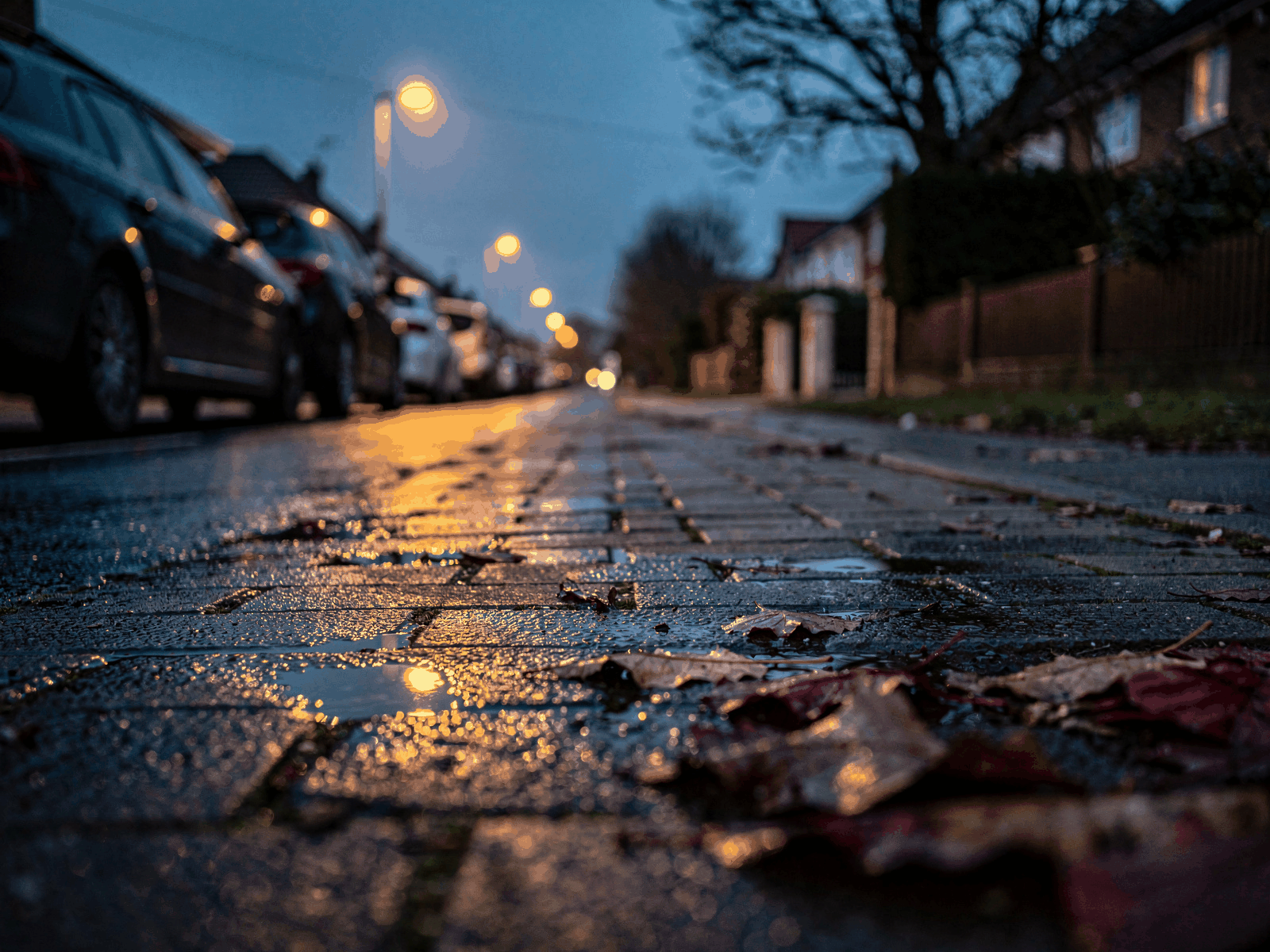
Prefer familiar, lit local routes after dark. This is general practice, not a safety guarantee. This article covers everyday local walks only and gives no advice on hills, mountains or remote routes.
Reflective wear, as a type of item
Reflective wear is one option for being seen on a walk that ends after dark. It is not essential, and a coat with reflective trim you already own may do the job.
Wet-day plan B, indoors
Free first: walk indoors
The Met Office outlook for October to December, as reported by LBC, gave double the normal chance of a wet period overall, with windy and mild weather also more likely. That is a shift in the odds, not a forecast, but it is a fair reason to have a plan B.
A few minutes walking round the home, up and down the stairs, or a short movement break all work. Plan B counts as a done day.
Optional: a walking pad
A walking pad is a compact treadmill that sits beside or under a desk. Before considering one, think about floor space, noise for the people around you, and whether you could do your actual tasks while walking.
It is an optional route, not a requirement, and MyHotips has not tested one. If you are weighing it up, the comparison below goes further.
Optional kit, briefly
Shoes you already own
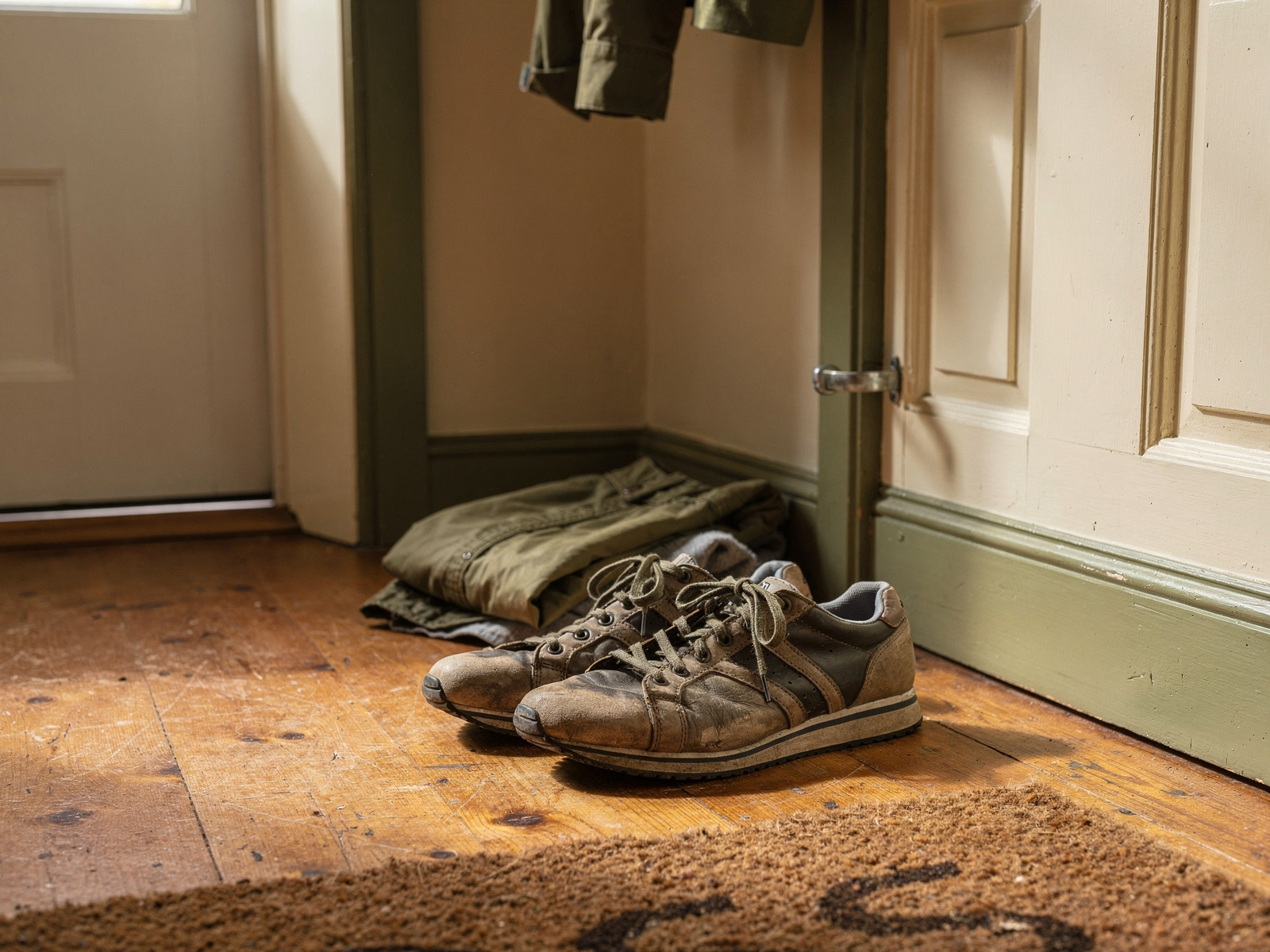
Nothing here is essential. Comfortable shoes you already own will do for a short loop, and a head torch or reflective trim only matters if a walk ends after dark. MyHotips has not tested any kit mentioned here.
Keeping it going without pressure
An if-then template
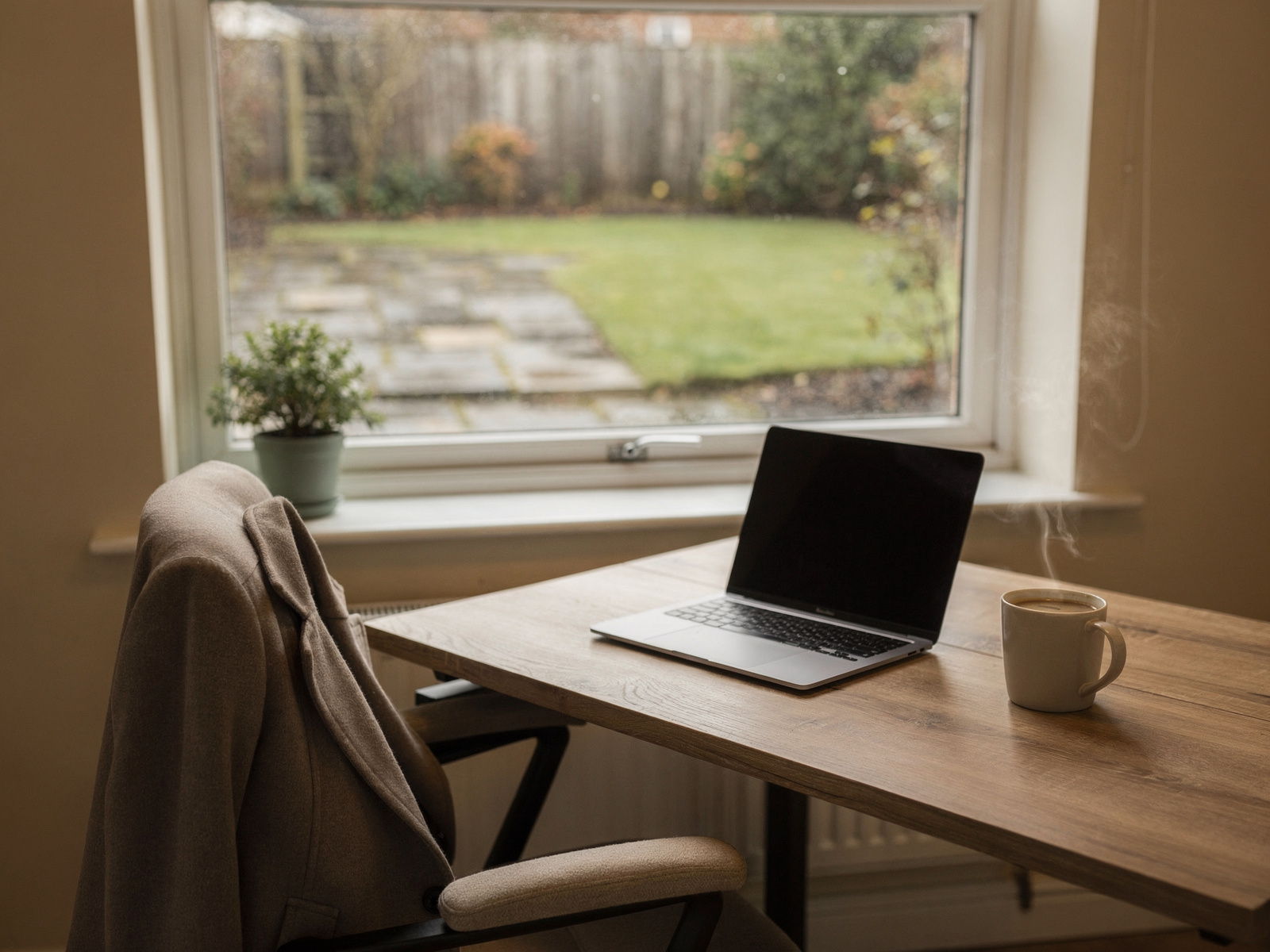
Missed days are normal. There are no streaks and no step targets here. Instead, write your plan as three if-then lines and stick them somewhere you will see them:
- After my first coffee, I walk.
- If it is raining or dark, I do plan B.
- If I miss a day, I carry on tomorrow and do not make it up.
Keep any tracking light
The free NHS Active 10 app is one option. A published evaluation in npj Digital Medicine (2025) looked at 201,688 users and found an initial increase of about 9 minutes a day of brisk walking after download. For users who kept using it, brisk walking was still about 4.5 minutes a day above baseline 30 months later.
This is an observational finding about walking behaviour only, not health outcomes, and the app is not essential.
A screen-free tracker, if you like one
A screen-free tracker is an optional type of item for people who dislike apps. It is never a necessity, and the if-then lines above work without it.
Frequently asked questions
Do short walks count?
A short walk is a reasonable way to begin. A patient leaflet from Kent Community Health NHS Foundation Trust suggests a few comfortable brisk minutes after a warm-up, then building up. It is aimed at patients, so treat it as an example of starting small.
If you have a health condition or have been inactive for a while, speak to a GP before changing how much activity you do.
What if the weather is bad?
The Met Office outlook for October to December, as reported by LBC, gave double the normal chance of a wet period overall. That is a shift in the odds, not a forecast, so keep an indoor plan B. A few minutes walking round the home or up and down the stairs counts as a done day.
Do I need any kit?
No. Comfortable shoes you already own are enough. The free NHS Active 10 app is one optional way to keep a light eye on your walking, and the published evidence on it is observational and about walking behaviour only.
Final verdict
Start with the smallest walk you would still do on a wet, dark day, give it a fixed slot, and keep an indoor plan B. Build towards the NHS general guidance of 150 minutes a week at your own pace.
The biggest reservation is that this is general guidance, not personal advice, and no outcome is promised. Speak to a GP if you have a health concern. Next step: choose your Monday slot and write down your plan B today.


