




Host a Virtual Halloween Party: Audio,…

The Calm Autumn Reset: 10 Small…

Can Free Affinity Help You Build…

The Best Lighting for Darker Autumn…

Can Hostinger AI Builder Launch a…

Create an Autumn Wind-Down Routine That…

Plug-In Solar Panels UK: Are They…

Heated Throw vs Heated Blanket vs…

Meta One Explained: Is the Subscription…

Autumn Sleep Reset: Light, Temperature and…

Plaud One Explained: Can AI Earbuds…

The Best Ways to Dry Washing…

Namecheap vs Dynadot

A Realistic Autumn Walking Routine for…

Convertkit Vs Beehiiv

Autumn Social Reset: Small Plans for…

Bluehost vs Siteground

Sekonda Smart Ring vs Oura Ring…

Namecheap review

Make Your Home Cosier Without Turning…
Streaming windows, a musty box room or an airer parked next to your desk all raise the same question: is a dehumidifier worth running? This article helps you decide.
A dehumidifier is one tool among several and does not fix damp. MyHotips has not tested any dehumidifier, so there are no model picks here, just a way to measure, choose a type and work out the cost.
Quick Overview
- Measure humidity with a cheap hygrometer before you buy anything.
- Dorset Council's guide figure to watch is humidity regularly above 60%.
- Leaks, rising damp and mould that keeps returning need the cause fixed.
- Meaco's rule of thumb favours desiccant below around 10°C.
- Running cost is watts divided by 1,000, times hours, times your unit rate.
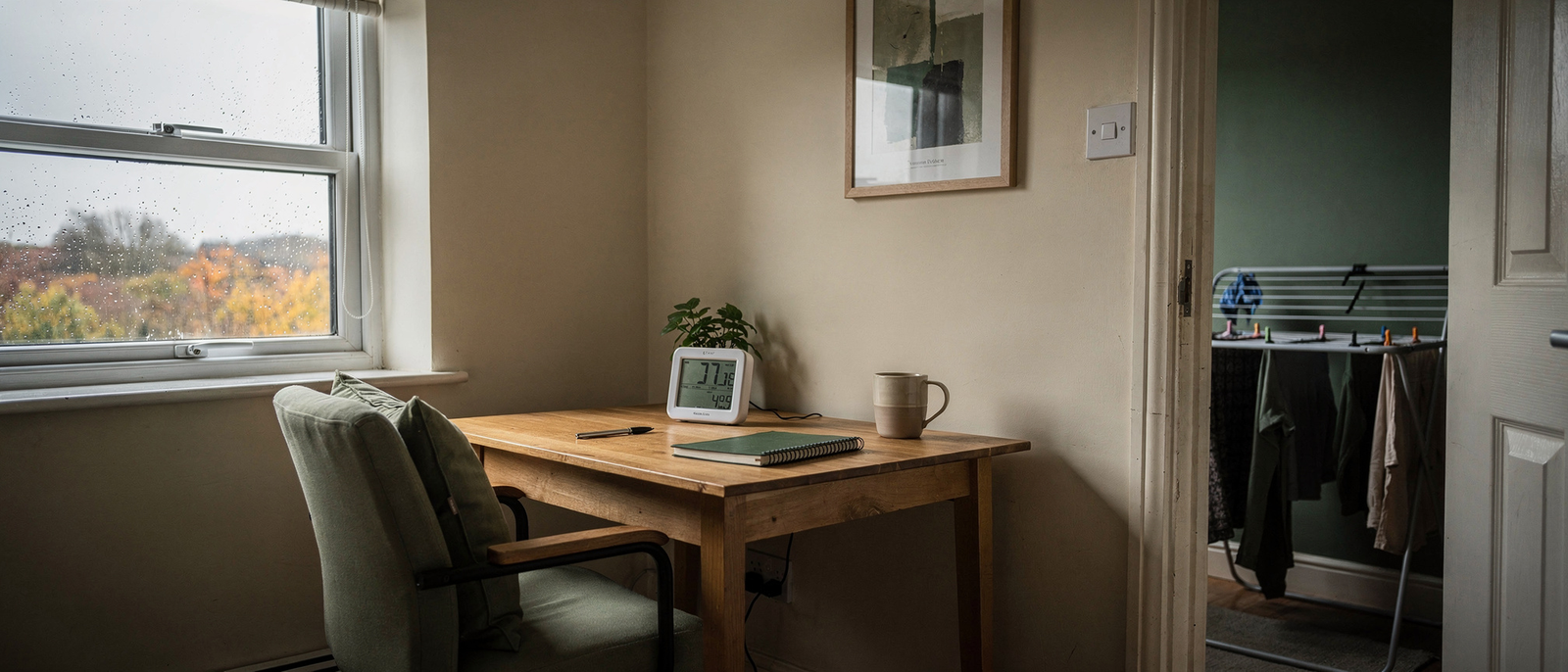
Measure first: what a hygrometer tells you
What relative humidity means
Relative humidity is how much moisture the air holds compared with the most it could hold at that temperature. A hygrometer is a small meter that shows the humidity reading, and it turns a feeling into a number.
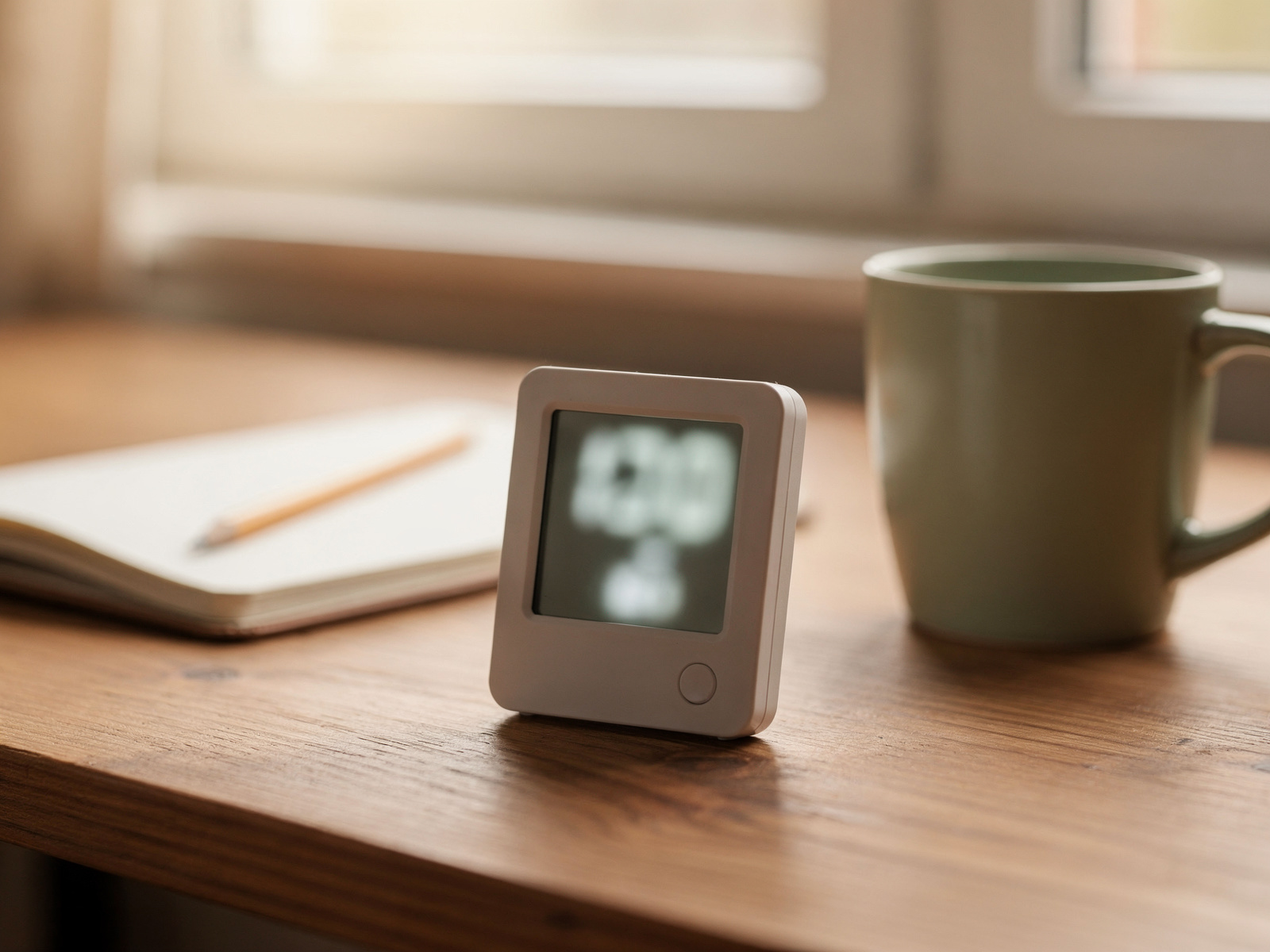
The 60% guide figure
Dorset Council's guide says homes with relative humidity regularly above 60% are at higher risk of condensation and mould problems. Treat that as a guide figure, not a rule, and notice the word regularly. A brief spike after a shower or a boiled kettle is not the same as a reading that sits high through the working day.
Borrow the landlord checklist
GOV.UK's checklist for damp and mould, written for rented housing providers, includes consistently high relative humidity, visible condensation and blocked or switched-off extractor fans. You are not a landlord, but the ideas transfer neatly to your own room.
The Energy Saving Trust adds that if there are no leaks or rising damp issues, the problem is almost certainly condensation. Work out the cause before you spend money on a machine.
A one-week checklist
A week of readings gives you something firm to act on:
- Put the meter at desk height, away from the window and any heater.
- Read it morning and afternoon for a week and jot the numbers down.
- Note any day the windows are steamed up or the room smells musty.
- Check whether the readings sit above about 60% regularly or only spike now and then.
When a dehumidifier is not the answer
Where a machine can sit alongside other steps
The Energy Saving Trust lists buying a dehumidifier as one way to deal with excessive moisture or to help dry washing indoors. It sits alongside lids on pans, wiping down windows and improving ventilation. So when the cause is everyday condensation, a machine is one option among several, usually after the free steps.
Decision rule: if you can name the moisture source as cooking, washing, drying clothes or breathing in a small room, a dehumidifier may be worth weighing up.
Where you need a repair instead
A dehumidifier does not fix leaks, rising damp or building faults. GOV.UK guidance for landlords says simply removing surface mould will not stop it reappearing, and the underlying causes, such as building deficiencies, inadequate ventilation and condensation, need tackling.
Decision rule: if you can see a leak, a tide mark or damp that keeps coming back, fix the cause first. In a rented home, raise persistent damp or mould with your landlord.
Why it matters, and what this article does not claim
NHS Inform (Scotland) says people with damp and mould in their home are more likely to have respiratory problems, respiratory infections, allergies and asthma. It lists babies, children, older people and people with asthma or eczema as more sensitive.
This article does not claim a dehumidifier prevents, treats or cures any of that. If you have symptoms, speak to a GP.
Free and low-cost steps before you plug anything in
Start with everyday habits
The Energy Saving Trust's list starts with simple habits: put lids on pans, wipe down windows and improve ventilation. In a work room that means keeping kettles and drying clothes out of it where you can, and not leaving condensation to sit on the glass all morning.
A cloth or squeegee does the job on the windows, but it deals with the symptom, not what causes the condensation.

Ventilate briefly
Open a window for a short spell, use extractor fans where you have them and do not block vents. This is ordinary ventilation, nothing more elaborate, and it costs nothing.
Check the extractor fan
Blocked or switched-off extractor fans appear on GOV.UK's landlord checklist for a reason. If the fan in your kitchen or bathroom is off, clogged or never used, that is a free fix to try before buying anything.
Compressor or desiccant: pick by room temperature
Milder rooms: compressor
Compressor models, called refrigerant in Which?'s guide, need the inside of the machine to be colder than the room air, according to Meaco, a dehumidifier manufacturer. That is why they suit rooms that are not cold: the colder the room, the harder the unit works.
Homebuilding & Renovating describes desiccant models as usually costing more to run than compressor ones. That is a general pattern, not a promise for every model.
Cold rooms: desiccant
Desiccant models suit a room that is properly cold. Meaco recommends desiccant if the room temperature is below around 10°C, which is a manufacturer's rule of thumb, not independent testing.
Homebuilding & Renovating says a compressor unit in a cold room can have its coils freeze, stop collecting water or shut off. For an unheated box room in midwinter, that is the situation to avoid.
Check the manual, and see Which? for tested rankings
Which? says it has tested 95 dehumidifiers and explains the two types in its buying guide, so that is the place to look for tested rankings, which are partly paywalled. Whichever model you consider, read the manual for its stated operating temperature.
Cold spare room, box room or garden office: what to check
Cold spare room or box room
If you work in a room that is unheated for much of the day, read both temperature and humidity on the hygrometer. If the room sits near or below around 10°C, that points towards desiccant on Meaco's rule of thumb. Above that, check the model's manual for its stated operating range.
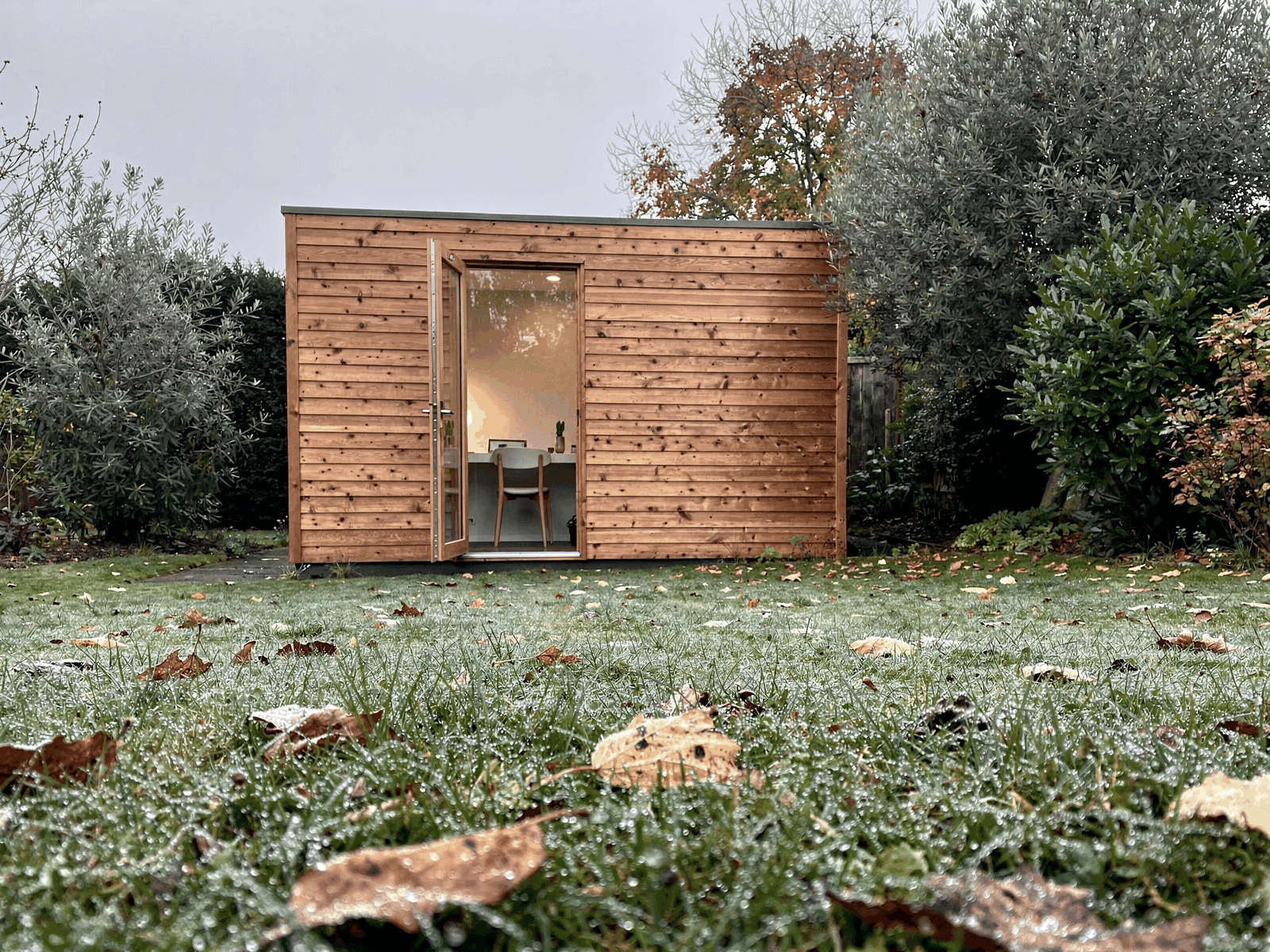
Garden office
Take the same two readings, and keep any wall or roof leak separate from condensation. A leak means repair, not a machine. If the readings are high and you cannot find a leak, condensation is the more likely explanation, per the Energy Saving Trust, though this is not a diagnosis of your building.
The one-minute rule
Humidity regularly above about 60%, no leaks or rising damp, and free steps not enough: consider a unit, then choose the type by temperature. If the room is warm enough and only occasionally steamy, ventilation and wiping may be all you need.
Laundry near your desk: where a dehumidifier fits
Drying washing indoors
The Energy Saving Trust lists a dehumidifier as one way to help dry washing indoors. Wet washing puts moisture into or near the room you work in.
Our heated airer vs dehumidifier article looks at the same laundry question from the other side.
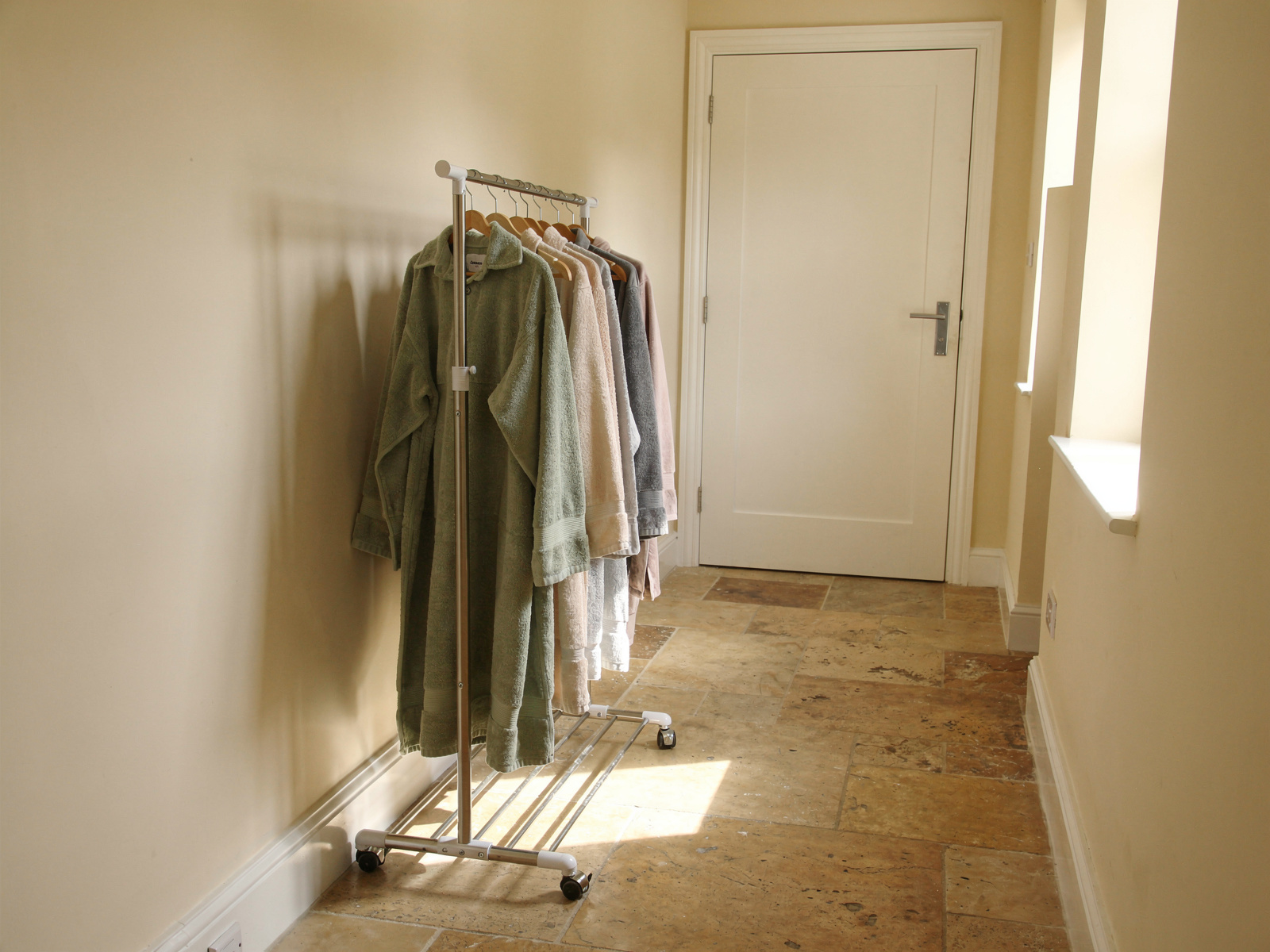
Keep the airer out of the desk room
If you can, dry washing in another room and shut the door. Open a window briefly once it is dry so the moisture does not linger where you work.
More ways to dry indoors
Our guide to drying washing indoors covers the other options, so this article does not repeat them.
What does it cost to run? A worked example
The sum and the rate
The sum is watts divided by 1,000, multiplied by hours, multiplied by your unit rate in pence. This uses 26.32p per kWh, checked on 18 October 2026: the Ofgem price-cap electricity unit rate for 1 October to 31 December 2026, as reported by MoneySavingExpert.
It is a Great Britain average for default tariffs, and prices can change every three months when the cap is reviewed. On a fixed tariff or Economy 7, use your own rate from your bill. Standing charges are left out.
Two worked examples
For a 200W dehumidifier: 200 ÷ 1,000 = 0.2 kWh. Then 0.2 kWh × 26.32p = about 5.3p an hour. Over eight hours at full power, that is roughly 42p. Household Money Saving's figures give the same result.
A 300W unit costs about 7.9p an hour at that rate, roughly 63p for eight hours at full power.
To redo it, find the watts on your model's label or manual, divide by 1,000, then multiply by your hours and rate. These are illustrations, not a quote. Real running depends on the model, the room and the settings.
Worth it if / probably not if
Worth considering if
Most of these should be true before you buy:
- Humidity is regularly above about 60%, not just after a shower.
- There are no leaks or rising damp.
- Free steps like ventilation and wiping have not been enough.
- You can run it in the room where it matters, with the type chosen by room temperature.
Probably not if
Any of these is a reason to hold off:
- Your readings are fine most of the time.
- The problem looks like a leak, rising damp or mould that keeps returning, so fix the cause or raise it with your landlord.
- You only want it for one brief steamy moment.
- You have not yet checked the wattage and your own unit rate.
FAQs
What humidity level should I aim for?
Dorset Council's guide figure is to watch for humidity regularly above 60%, when the risk of condensation and mould is higher. It is a guide, not a rule, and a brief spike after a shower does not count.
Will a dehumidifier get rid of mould?
It will not fix the cause. GOV.UK guidance for landlords says removing surface mould alone will not stop it returning, and the underlying causes need tackling. Mould that keeps coming back needs investigating or raising with your landlord.
Is a dehumidifier safe for asthma or allergies?
This article makes no health claims for dehumidifiers. NHS Inform (Scotland) says damp and mould are associated with people being more likely to have asthma, allergies and respiratory problems. Speak to a GP about symptoms.
Compressor or desiccant for a garden office?
Meaco's rule of thumb is desiccant below around 10°C. Read the temperature in your office on the hygrometer, then check the operating range in any model's manual before choosing.
How much does it cost per hour?
At 26.32p/kWh, checked on 18 October 2026, roughly 5.3p an hour for a 200W unit and 7.9p for a 300W unit at full power, excluding standing charges. Rates change quarterly, so use your own.
Verdict: worth it when the numbers and the room agree
A dehumidifier is worth running when humidity is regularly above about 60%, the cause looks like condensation rather than a leak, and free steps have not been enough. The biggest reservation is that it does not fix leaks, rising damp or building faults, so repair comes first.
Next step: buy a cheap hygrometer, log a week of readings, then redo the cost sum with your own model's wattage and unit rate. MyHotips has not tested any dehumidifier.
Once the humidity question is settled, our autumn reset covers other small seasonal changes to your home.


