


Host a Virtual Halloween Party: Audio,…

20 Minimalist Halloween Nail Ideas for…

Can Free Affinity Help You Build…

12 Lower-Sugar Halloween Treat Swaps Worth…

Can Hostinger AI Builder Launch a…

A 5-Step Screen-Free Autumn Reading Ritual…

Plug-In Solar Panels UK: Are They…

15 Last-Minute Zoom Halloween Costumes for…

Meta One Explained: Is the Subscription…

10 Low-Fuss Dog Halloween Ideas: Comfort…

Plaud One Explained: Can AI Earbuds…

9 Gothic Dinner Table Ideas for…

Namecheap vs Dynadot

7 UK Ghost Tours and How…

Convertkit Vs Beehiiv

Do You Really Need a £420…

Bluehost vs Siteground

15 Gentle Spooky Autumn Books to…

Namecheap review

How to Remove Halloween Face Paint…
A low-stress start to your workday does not need candles, sunrise yoga, journaling or a personality transplant. Most people just need fewer immediate inputs, one clear first task and a short pause before the inbox starts throwing digital furniture around. The goal is not to create a perfect morning. It is to stop the first 20 minutes from deciding the emotional weather for the whole day.
Start with fewer inputs.
Avoid checking everything first.
Choose one real first task.
Reduce morning decision fatigue.
Keep notifications quiet early.
Reset the workspace before diving in.
Build a softer landing into work.

Most Relevant Audience
This article is for remote workers, home workers, freelancers, creators, bloggers, side hustlers and small business owners who often start the day already feeling behind, distracted or mentally crowded. It is especially useful if your workday begins with too many tabs, too many checks and not enough clarity.
How to create a low-stress start to your workday
Why the day feels stressful before it begins
Many workdays feel stressful before they start because your brain meets too much at once. Emails, messages, notifications, tabs, dashboards, reminders and yesterday’s unfinished tasks all arrive together. Before you have done anything meaningful, you are already sorting other people’s priorities. That is not a calm start. That is being handed a mental laundry basket at the door.
The problem with checking everything first
Checking everything first feels responsible, but it often hands your best attention to noise. You open email, glance at messages, check a dashboard, notice a reminder and suddenly the day belongs to whatever shouted first. Some checks matter, but they do not all need to happen before your brain has properly arrived.
A calmer first 15 minutes
The first 15 minutes should help you land, not launch you straight into digital traffic. Open your workspace, check your plan, choose the first task and remove obvious distractions. Keep it simple. The aim is to create enough calm that you can begin work deliberately instead of reacting to every app with a tiny flag.
Choosing your first real task
Your first task should be clear, useful and specific. “Work on business” is too vague. “Edit the intro”, “reply to one client”, “outline the article” or “review today’s orders” is better. A clear first task reduces decision fatigue because the day starts with action, not a foggy debate with your own to-do list.
The first minutes matter
The start of the workday does not have to be magical. It just needs to be less chaotic. If the first thing you do is open every digital doorway at once, your attention gets scattered before it has a chance to settle. A calmer start gives the day a better shape.
What to avoid first thing
Avoid opening the inbox automatically
Email is useful, but it is rarely neutral. The moment you open it, other people’s needs enter the room. If your work allows it, delay email until after your first focused task or a short planning check. Even 20 minutes of protected attention can change the tone of the morning.
Avoid checking dashboards too early
Analytics, sales dashboards, comments, traffic reports and platform stats can feel important, but they are not always helpful first thing. They can create excitement, worry or unnecessary comparison before you have done any real work. Check them during a planned window, not as your emotional breakfast.
Avoid starting with tiny tasks only
Small tasks feel safe because they are easy to complete. The problem is that they can eat the whole morning. A few quick replies become admin wandering. Start with one real task before clearing tiny bits. Otherwise your day becomes a polite queue of things that were never the main priority.
Avoid letting yesterday spill everywhere
Yesterday’s unfinished work can make the morning feel heavy. Do a quick reset: write what still matters, drop what no longer does and choose the next action. Carrying every loose end into the new day creates mental clutter. Not every leftover task deserves a front-row seat.

The morning filter
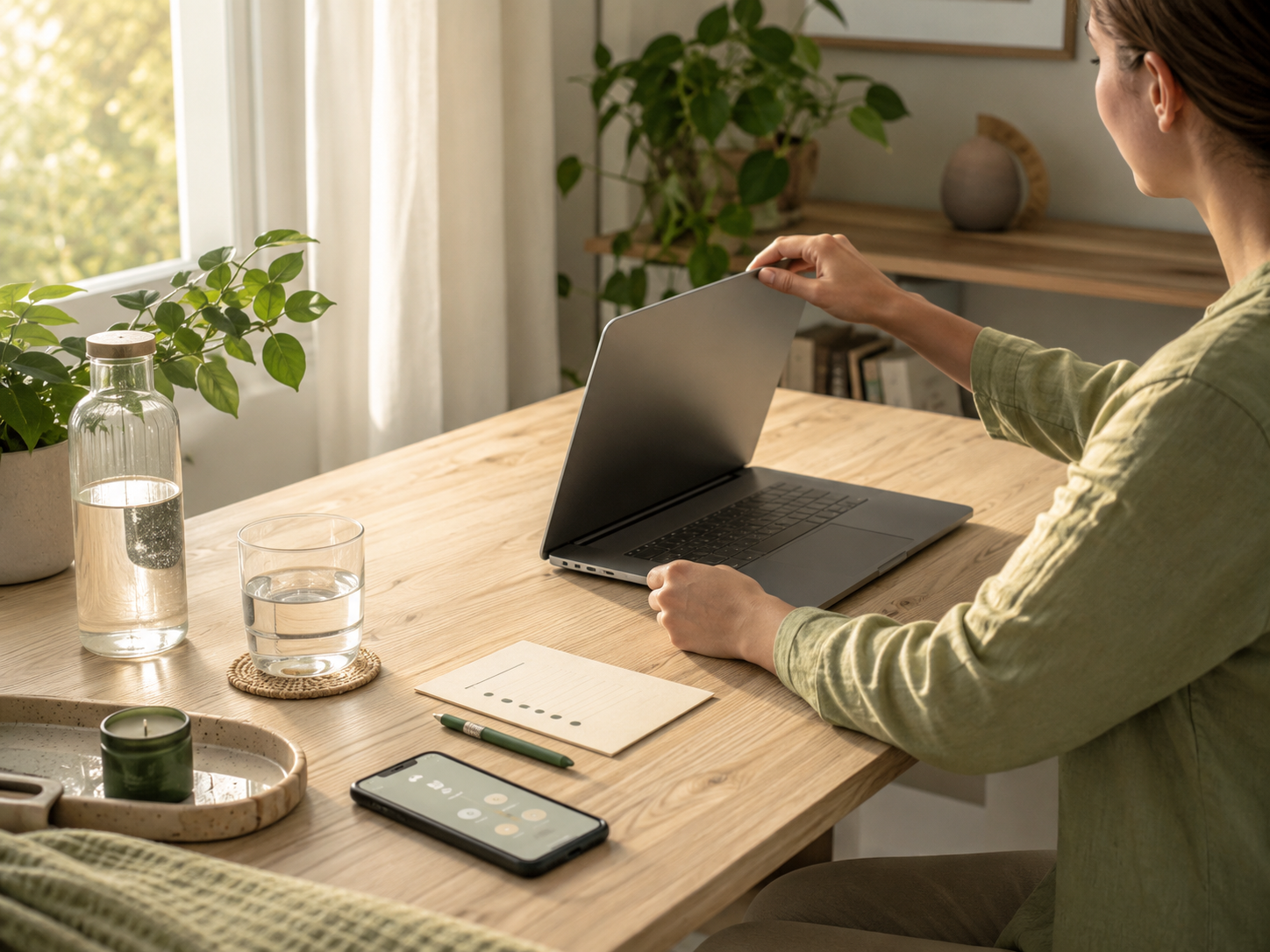
A better morning starts by asking what deserves access to your attention first. Not every email, alert, idea or dashboard gets an early pass. Protecting the first part of the day is not avoidance. It is a way of giving your best focus to the work that actually moves things forward.
A calmer routine for home workers
Start with a short landing routine
A landing routine helps your brain enter work mode without panic. Sit down, open only what you need, check today’s top priority and take one minute to remove obvious clutter. This is not a full morning ritual. It is a simple transition between home mode and work mode.
Pick one priority before messages
Choose the first meaningful task before opening messages. That way, email and chat do not decide the day for you. The task can be small, but it should matter. Drafting, editing, planning, reviewing or sending one important reply beats drifting through notifications while pretending it counts as strategy.
Reduce morning decisions
Morning decision fatigue builds quickly when everything is undecided. Decide your first task the night before if possible. Keep a simple daily list. Use the same opening routine most days. Fewer choices at the start means more energy for the work itself, which is the bit your business actually needs.
Make your workspace easier to enter
Your workspace affects how the day begins. A messy desk, open laptop, tangled cables and yesterday’s mug can make work feel heavier immediately. Clear one surface at the end of the day or before starting. The goal is not perfection. It is removing the first layer of visual stress.
Keep notifications quiet early
Give yourself a short notification-free opening block. Turn off non-essential alerts, use focus mode or keep the phone away while you begin. This protects the part of the morning when your attention is most easily claimed. The world can usually survive without your instant reaction to a badge.
Make the start boring and repeatable
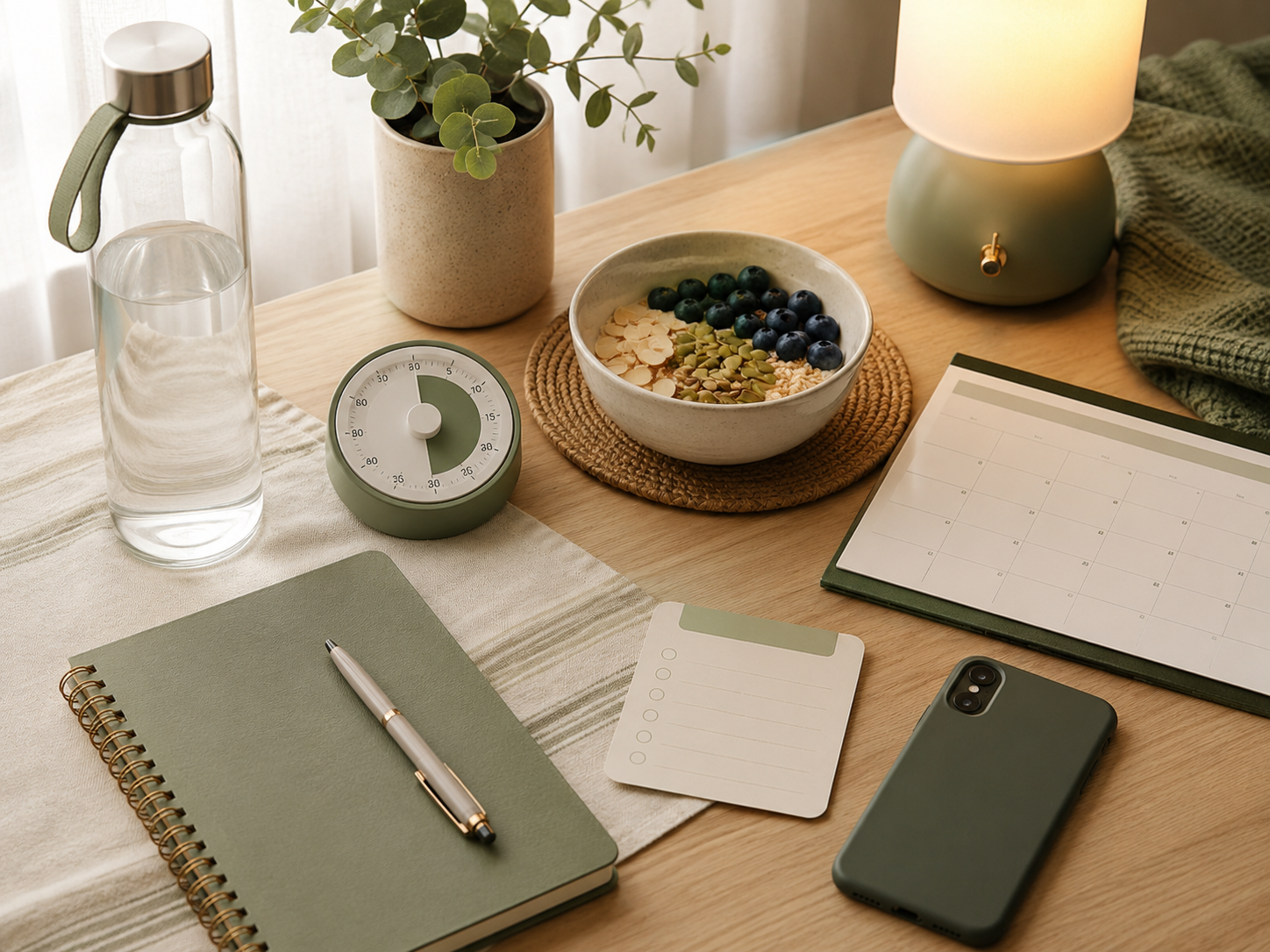
A low-stress start works best when it is almost boring. Same small reset, same first-task check, same delayed inbox and same quiet notifications. That repetition is useful because it removes unnecessary decisions. The less dramatic the routine feels, the more likely it is to survive a normal busy morning.
Common morning routine mistakes
Building a routine that needs perfect conditions
Some morning routines only work with perfect sleep, unlimited time and a kitchen that has never seen a rushed breakfast. Real home workers need something more forgiving. Keep the routine short enough to use on messy days. A five-minute reset you actually do is better than a beautiful routine you keep abandoning.
Confusing planning with procrastination
Planning helps when it leads to action. It becomes avoidance when you keep rewriting lists instead of starting. Give yourself a small planning window, then choose the first task. Your plan does not need to be elegant. It needs to make the next step obvious enough to begin.
Letting the phone set the mood
Checking your phone first can hand the morning to messages, news, comments and notifications before you have even started work. That can make the day feel urgent immediately. Try delaying the phone until after your landing routine or first task. Your attention deserves a gentler start than a lock screen ambush.
Trying to fix the whole day at once
A low-stress start will not solve every workload problem. It simply gives you a better entry point. Do not expect one routine to fix a packed calendar, weak boundaries or too many projects. Start with the first 15 minutes. Then improve the rest of the day one friction point at a time.
Related money note
If your mornings feel crowded by repeated follow-ups, reminders, subscriber tasks or client nudges, automation can reduce the manual pressure. The point is not to make your business colder. It is to stop every tiny recurring task from waiting for you at breakfast.
Related guides to read next
Notification Burnout And How To Take Back Your Focus
Notification Burnout And How To Take Back Your Focus is the best next read if alerts keep hijacking your morning. A calmer start is much easier when fewer apps are allowed to interrupt before your first real task has even begun.
Digital Clutter And Mental Load When Working From Home
Digital Clutter And Mental Load When Working From Home is useful if your laptop feels overwhelming the moment you open it. Messy files, tabs, dashboards and notifications can make the day feel mentally crowded before work properly starts.
Work From Home Boundaries That Actually Stick
Work From Home Boundaries That Actually Stick can help if mornings feel stressful because the previous workday never really ended. Better boundaries protect the start of the next day by giving yesterday a proper stopping point.
How To Build A Healthier Work-From-Home Routine
How To Build A Healthier Work-From-Home Routine is the broader follow-up if your morning routine needs support from better movement, food, screen breaks, workspace habits and shutdown routines across the whole day.
FAQ
How do I start my workday with less stress?
Start your workday with less stress by reducing immediate inputs, choosing one clear first task and delaying non-essential checks. Keep the first 15 minutes simple: open only what you need, review your priority and begin before the inbox or notifications take over.
Why do I feel overwhelmed before work starts?
You may feel overwhelmed before work starts because your brain is meeting too many open loops at once. Emails, messages, tabs, unfinished tasks, reminders and messy digital spaces all create mental load. A calmer opening routine reduces that pressure before the day gets louder.
Mental Load And Burnout When Work And Home Blur Together
Should I check email first thing in the morning?
Checking email first thing can be useful for some roles, but it often gives your best attention to other people’s priorities. If possible, choose your first task before opening email. Even a short delay can help you start the day with more control.
What is a good morning routine for remote workers?
A good morning routine for remote workers is short, repeatable and realistic. Clear your workspace, check the day’s priority, choose one first task and keep notifications quiet for a short block. The best routine is not elaborate. It is the one you can use on a normal busy day.
How can I make working from home feel calmer?
Make working from home feel calmer by creating clearer starts and stops. Reduce notifications, keep your workspace easier to enter, choose one priority at a time and avoid opening every app first thing. Small boundaries help the workday feel less like it is rushing at you.
Final verdict
A low-stress start to your workday is not about creating a perfect morning. It is about giving yourself a softer landing into work: fewer immediate distractions, one clear first task, a calmer workspace and a short pause before the inbox starts making demands.
Start with the first 15 minutes. Delay unnecessary checks, choose the next useful action and keep notifications quiet long enough to begin properly. You do not need an elaborate system. You need a clearer first step and a morning that does not arrive already shouting.
Article: How to Create a Low-Stress Start to Your Workday


