Put this into practice

Funnels & Automation · Toolkit guide
Creating a Sales Funnel for Your Blog (Beginner Guide)
Read guideMany online businesses start simply: you publish content, reply to emails, promote offers and help customers one by one. That works for a while, but it can become hard to manage as more people find you. Funnels give visitors a clearer path from discovering your content to becoming subscribers or customers. Automation keeps routine emails and tasks moving without you doing everything manually.
This cornerstone guide introduces the key ideas behind funnels and automation and highlights the main tools and strategies explored in the detailed articles within this section.
Related guide: Sales funnel for your blog
Quick Overview
In this section you will discover:
This page introduces the fundamentals of funnels and automation. Each topic linked here is explored more deeply in the articles within this category.

What Is a Marketing Funnel
The Awareness Stage
The funnel begins when someone discovers your content.
This may happen through:
At this stage, visitors are learning about your work and deciding whether your content is helpful.

The Subscriber Stage
Once someone finds value in your content, they may join your email list or follow your platform.
This stage is where businesses begin building a relationship with their audience.
Related guide: Email growth

The Nurture Stage
After joining your audience, automated emails and content help build trust.
Subscribers learn more about your expertise, products, or services.
Automation allows this nurturing process to happen consistently.
Related guide: Email marketing automation explained

The Conversion Stage
Eventually some subscribers become customers.
At this point they may purchase products, join programs, or subscribe to services.
Funnels help guide people naturally toward these decisions.

Tools Used to Build Funnels
Systeme.io
Systeme.io provides an all‑in‑one platform for building funnels, managing email automation, and selling digital products.
This combination makes it popular among entrepreneurs building online businesses.
Full review: Systeme.io review
ClickFunnels
ClickFunnels is one of the most well‑known funnel builders.
It focuses heavily on designing structured marketing funnels that guide visitors toward purchases.
Full review: ClickFunnels review
GoHighLevel
GoHighLevel combines marketing automation, CRM systems, and funnel building in one platform.
It is particularly popular among agencies and marketing professionals.
Full review: GoHighLevel review
Unbounce
Unbounce focuses on landing page creation and conversion optimization.
Businesses often use it to improve funnel performance and increase conversions.
Full review: Unbounce review
Why Automation Matters
Automated Communication
Automation systems allow businesses to send messages without manual effort.
Examples include welcome emails, onboarding messages, and follow‑up sequences.
Related guide: Email funnel with GetResponse
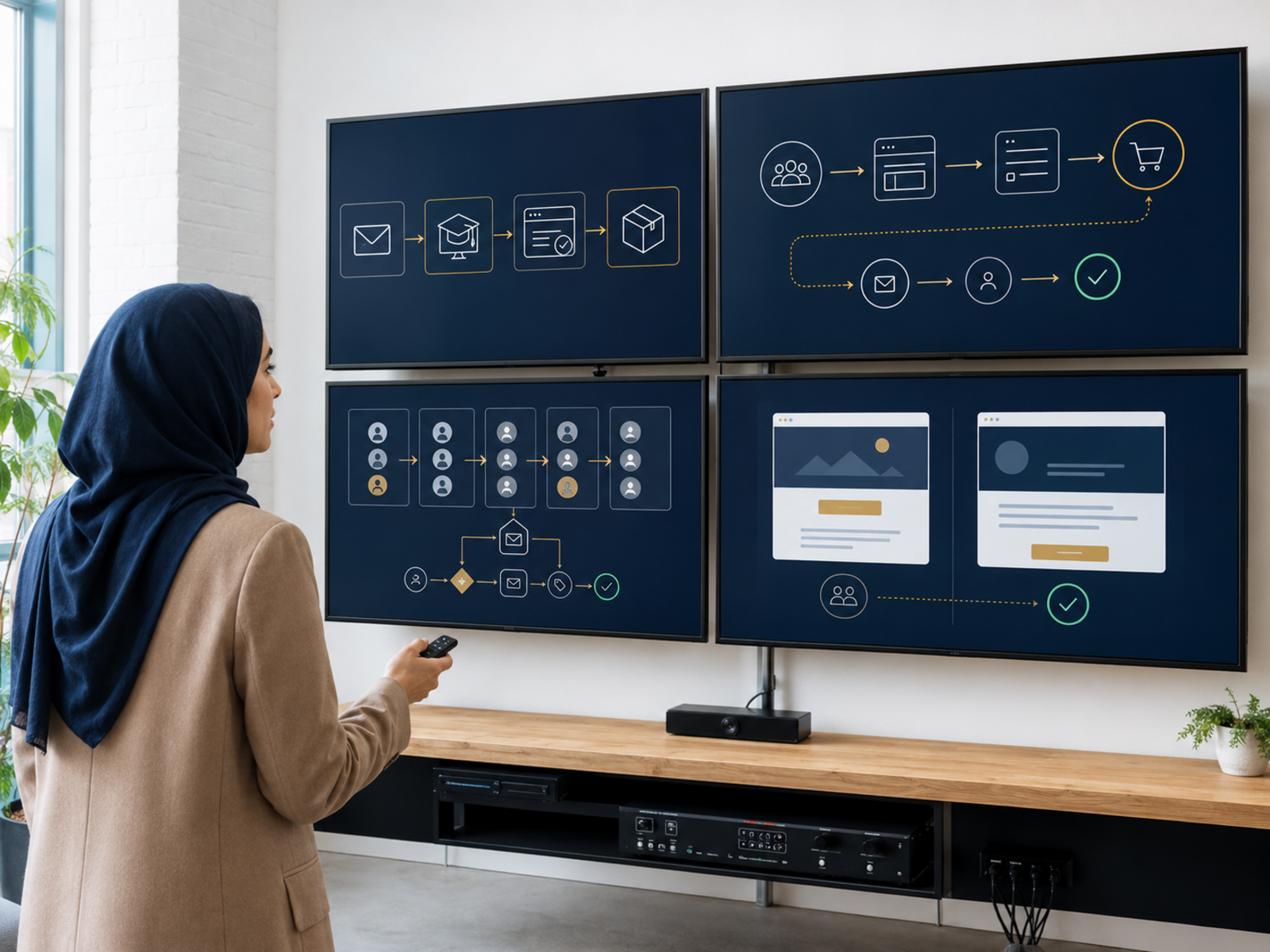
Lead Tracking
Automation tools track how visitors interact with your content.
This data helps businesses understand which marketing activities produce results.

Scalable Growth
Without automation, businesses must handle every communication manually.
Automation systems allow the same process to support hundreds or thousands of customers.

Time Freedom
Automation frees time for strategic work such as creating products, writing content, and improving services.
Related guide: Best marketing automation platforms

Final Thoughts
Funnels and automation are the systems that allow online businesses to grow without overwhelming manual workloads.
While content and marketing attract visitors, funnels guide those visitors toward meaningful engagement and purchases.
Automation ensures that communication, onboarding, and marketing processes continue running consistently.
This cornerstone guide introduces the key concepts behind funnels and automation. The detailed articles in this section explore the platforms, comparisons, and strategies used to build effective automated business systems.
FAQ
What is a marketing funnel?
A marketing funnel is a structured process that guides visitors from discovery to becoming customers.
Why is automation important for funnels?
Automation handles communication and follow‑ups so businesses can scale without constant manual work.
Do beginners need funnels?
Many businesses begin without funnels, but adding them often improves conversions and efficiency.
What tools are commonly used for funnels?
Platforms such as Systeme.io, ClickFunnels, and GoHighLevel are widely used to build marketing funnels.







