



Host a Virtual Halloween Party: Audio,…

20 Minimalist Halloween Nail Ideas for…

Can Free Affinity Help You Build…

12 Lower-Sugar Halloween Treat Swaps Worth…

Can Hostinger AI Builder Launch a…

A 5-Step Screen-Free Autumn Reading Ritual…

Plug-In Solar Panels UK: Are They…

15 Last-Minute Zoom Halloween Costumes for…

Meta One Explained: Is the Subscription…

10 Low-Fuss Dog Halloween Ideas: Comfort…

Plaud One Explained: Can AI Earbuds…

9 Gothic Dinner Table Ideas for…

Namecheap vs Dynadot

7 UK Ghost Tours and How…

Convertkit Vs Beehiiv

Do You Really Need a £420…

Bluehost vs Siteground

15 Gentle Spooky Autumn Books to…

Namecheap review

How to Remove Halloween Face Paint…
A blog without a sales funnel is like collecting rainwater in a bucket full of holes. Visitors arrive, read, enjoy the content, then disappear forever because nothing invites them to stay connected. This is rarely a traffic problem. It is a follow-up problem. A blog sales funnel gives readers a clear next step after the article, helping turn one-time visitors into subscribers, repeat readers, customers, and affiliate buyers over time.
Quick Overview
In this guide you will learn:
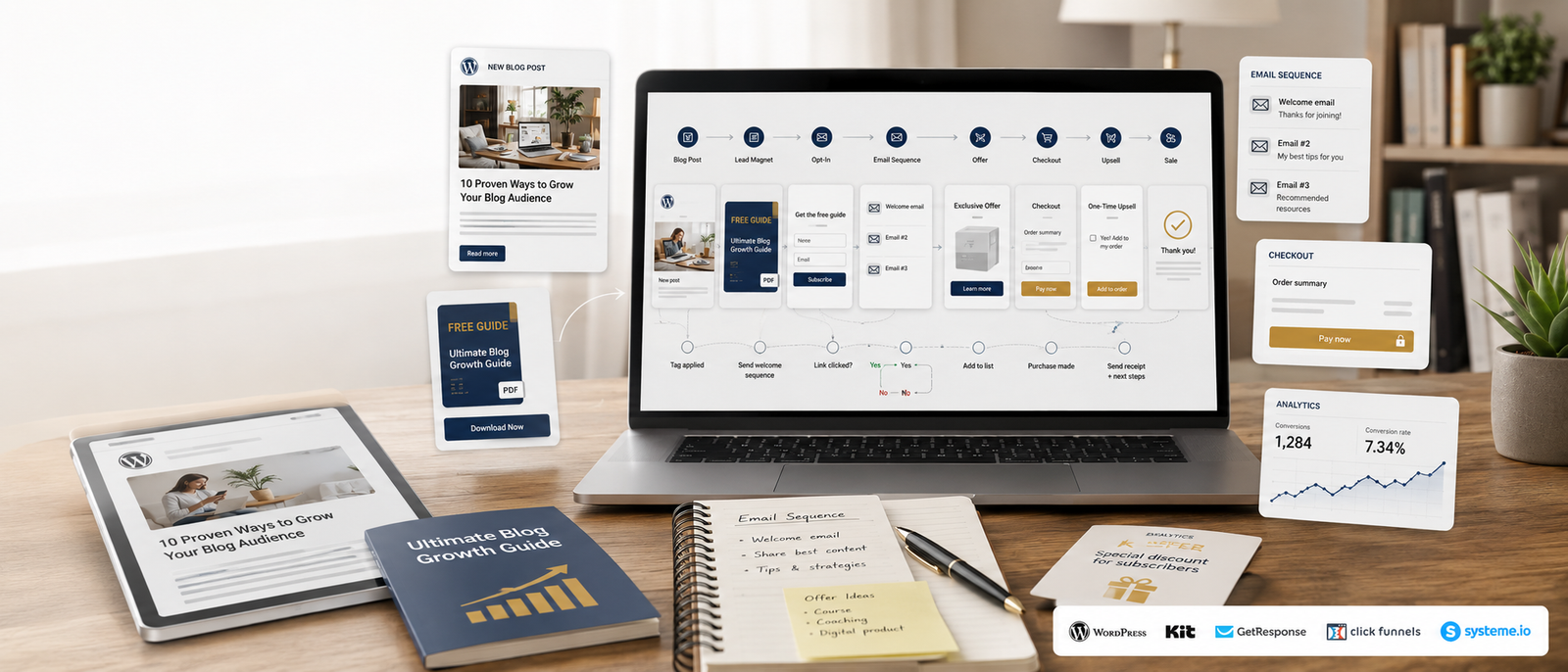
Website growth system supporting subscriber and customer conversion.
Helpful next reads: Email marketing automation explained
What Is A Sales Funnel For A Blog?
It Guides Readers Beyond One Article
A blog sales funnel is a structured journey that moves visitors from discovering an article to taking a more valuable action, such as joining an email list, downloading a resource, booking a call, reading additional content, or purchasing a product.

It Matches Reader Intent
The strongest funnels feel relevant to the article being read. Someone researching email marketing expects email-related help. Someone researching blogging expects blogging-related resources.
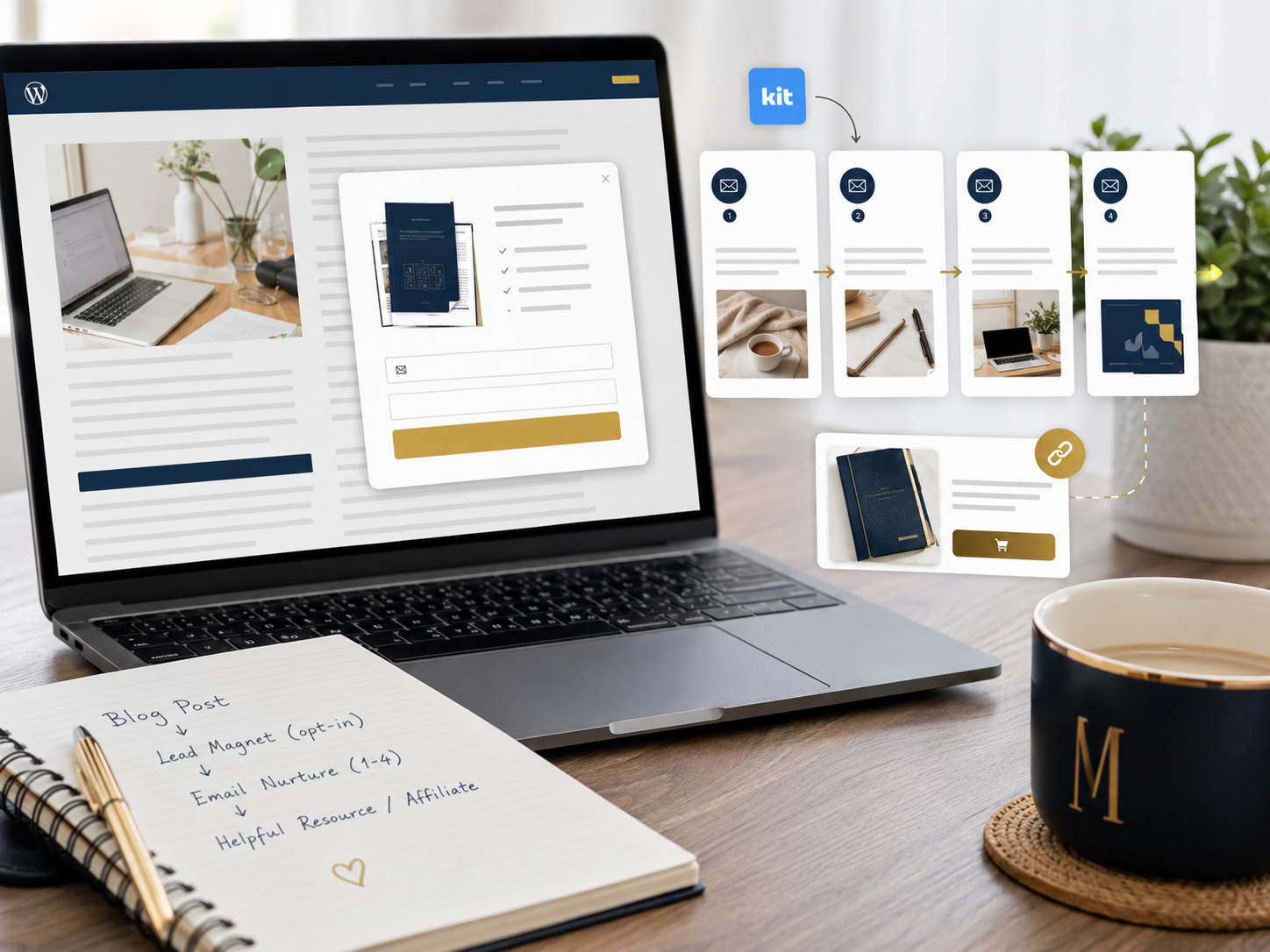
It Builds Trust Over Time
Most visitors are not ready to buy immediately. Funnels create multiple opportunities to educate, help, and build familiarity before recommendations appear.
It Creates Repeatable Growth
Instead of depending entirely on new traffic every month, funnels help turn existing visitors into audience assets that can be reached again later.
Why Blogs Need Sales Funnels
Many blogs quietly lose over 95% of visitors without capturing an email address, creating a follow-up opportunity, or providing a clear next step. A reader may enjoy an article, close the browser, and completely forget the site existed by next week. Funnels solve this retention problem by creating a bridge between today's visit and future engagement. Without one, even excellent content often generates less long-term value than it should.
Explore more insights: Freelancing guide
How A Blog Sales Funnel Works
Step One: Traffic Arrives
Visitors discover content through Google, Pinterest, social media, YouTube, referrals, newsletters, or other marketing channels.
Step Two: Content Solves A Problem
The article delivers the answer promised by the headline and demonstrates expertise, usefulness, and trustworthiness.
Step Three: A Lead Magnet Captures Interest
The visitor receives an offer closely related to the article topic, giving them a reason to exchange an email address.
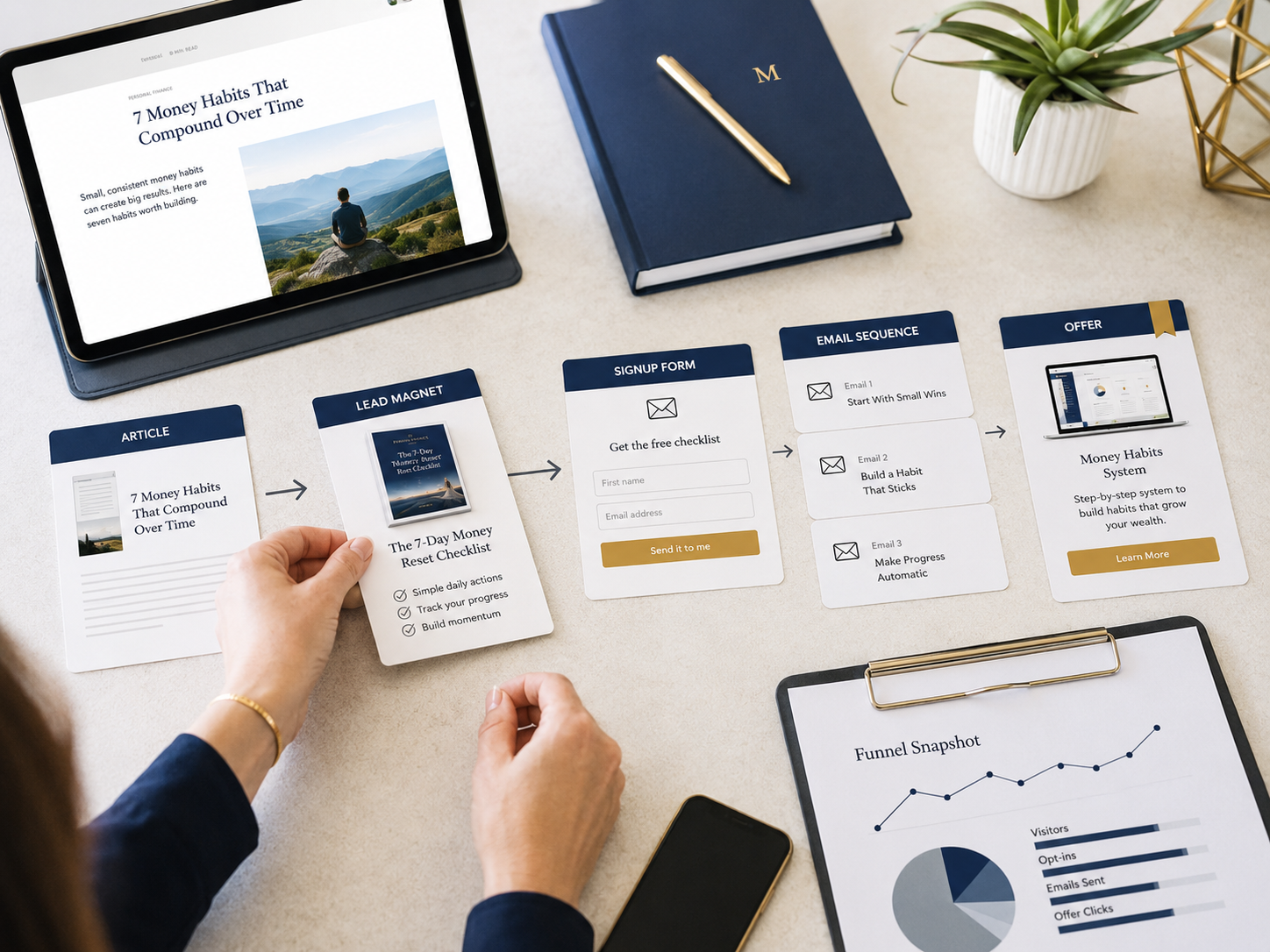
Step Four: Follow-Up Continues
Email automation, educational content, and useful recommendations keep the relationship alive long after the original visit ends.
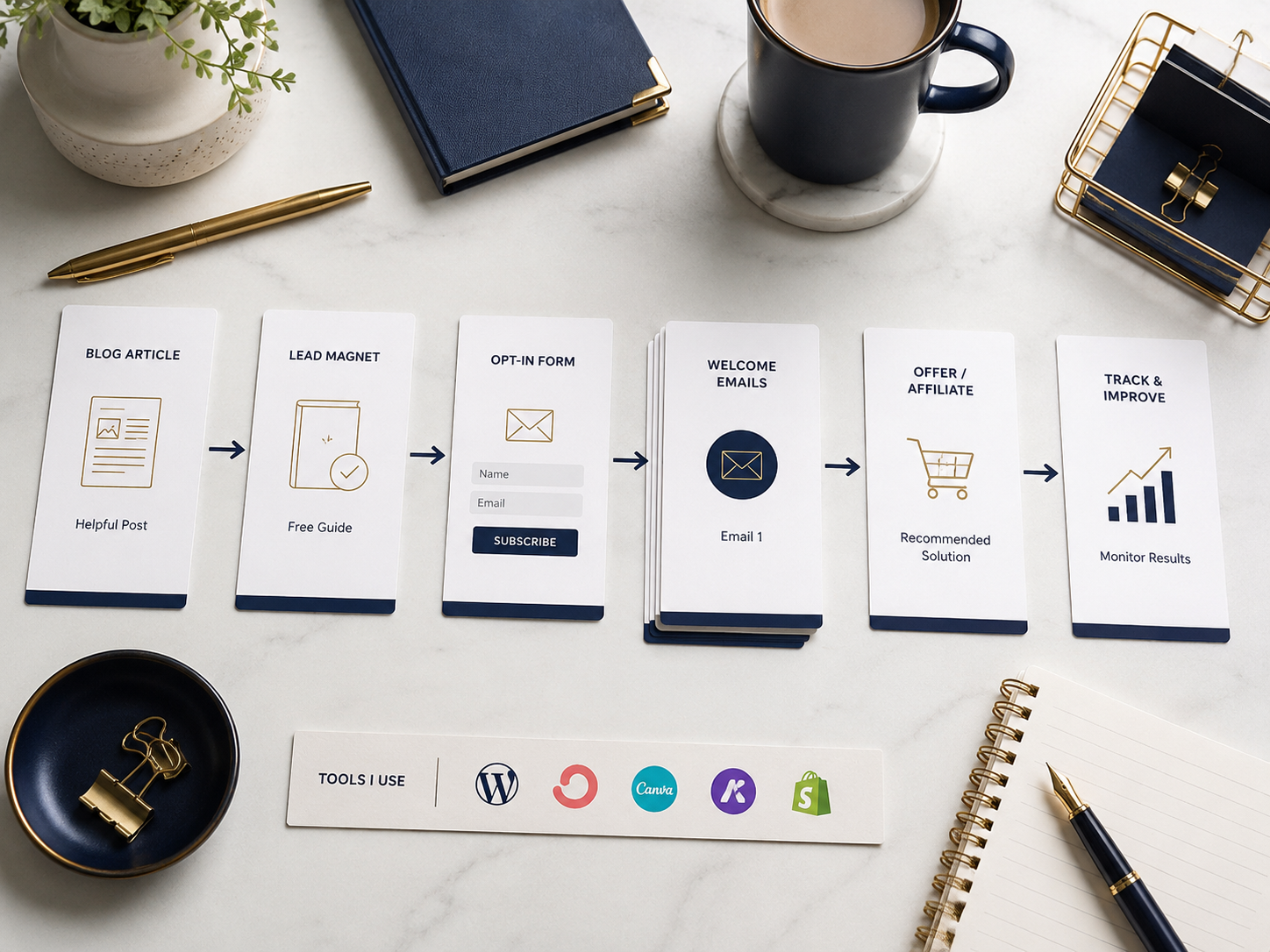
Turning Visitors Into Email Subscribers
Relevance Increases Conversions
A content upgrade directly related to the article usually converts better than a generic newsletter invitation because readers immediately understand the benefit.
Timing Matters
Signup requests often perform best after useful information has already been delivered rather than appearing before the reader has received any value.
One Clear Offer Usually Wins
Too many signup options create confusion. One strong offer frequently outperforms several competing offers on the same page.
Simplicity Reduces Friction
Requesting only a name and email address often produces more subscribers than longer forms requiring unnecessary information.
Creating A Lead Magnet
The best lead magnets solve a small but meaningful problem quickly. Checklists, templates, swipe files, calculators, planning sheets, comparison guides, and worksheets often outperform lengthy ebooks because the value feels immediate. A blogging checklist can save somebody an hour today. A funnel template can eliminate guesswork immediately. Readers subscribe when the benefit feels practical rather than theoretical.
Frequently read together: Affiliate email funnel blueprint
Email Nurture Sequences
Welcome Emails Create Familiarity
The first few emails help subscribers remember who you are, why they joined, and what type of help they can expect moving forward.
Educational Emails Build Trust
Helpful advice, practical examples, and useful resources generally outperform constant promotion because they strengthen credibility.
Product Recommendations Need Context
Readers are more likely to act when they understand what a product does, who it helps, and why it solves the problem they are facing.
Consistency Keeps Readers Engaged
A regular email schedule prevents subscribers forgetting about the blog between visits without overwhelming their inbox.
Affiliate Marketing Funnels
Trust Improves Conversions
Subscribers who have received useful guidance over several weeks are often more receptive to relevant recommendations than first-time visitors.
Recommendations Must Solve Real Problems
Products should be introduced because they genuinely help readers achieve their goals rather than because they happen to pay commissions.
Education Supports Better Decisions
Explaining benefits, limitations, alternatives, and trade-offs usually produces stronger long-term results than pushing affiliate links aggressively.
Long-Term Relationships Matter Most
A single commission is rarely worth damaging reader trust. Strong affiliate funnels focus on helping first and monetising second.
Best Funnel Software
Systeme.io
Systeme.io includes funnels, email marketing, automation, affiliate management, course hosting, blogging tools, and digital product sales from a single dashboard. Paid plans start at a fraction of the cost of most business-focused competitors, making it attractive for bloggers building their first funnel.
Best For
Bloggers wanting funnels, email marketing, and product sales without paying for multiple subscriptions.
Limitation
Design flexibility and advanced reporting are less sophisticated than higher-priced platforms.
Funnel and automation platform supporting blog monetisation.
Kit
Kit focuses on creators and email-driven businesses. It includes visual automation, subscriber tagging, landing pages, forms, email broadcasts, and audience segmentation. The platform supports thousands of subscribers while remaining easier to learn than enterprise marketing systems.
Best For
Bloggers prioritising newsletter growth, lead magnets, and subscriber engagement.
Limitation
It lacks the deeper CRM, sales tracking, and business-management capabilities found in larger platforms.
Creator-focused platform supporting subscriber growth and automation.
HubSpot
HubSpot combines CRM, marketing automation, forms, landing pages, lead tracking, reporting, and sales management in one ecosystem. Its free CRM supports contact management from day one, while advanced plans add increasingly sophisticated automation and customer-journey reporting.
Best For
Businesses using content marketing to generate leads and needing visibility across marketing and sales activity.
Limitation
Costs can increase significantly as contact volumes, users, and advanced features expand.
Marketing platform supporting lead management and customer journeys.
GoHighLevel
GoHighLevel combines funnels, CRM, email automation, SMS marketing, appointment booking, reputation management, and client-account administration. One account can manage multiple businesses, making it particularly attractive for agencies serving several clients simultaneously.
Best For
Agencies, consultants, and service providers generating leads through content.
Limitation
The broader feature set creates a steeper learning curve than creator-focused email platforms.
Agency marketing platform supporting automated lead generation.
Simple Blog Funnel Example
A reader searches for "best marketing automation platforms" and finds your article. The article offers a free software comparison checklist. The visitor subscribes to download it. A welcome sequence delivers extra guidance, explains common mistakes, and introduces relevant tools. Weeks later, the subscriber purchases software through one of your recommendations. The funnel did not create demand. It simply ensured the relationship continued after the first visit.
Readers also enjoyed: Best marketing automation platforms
Pros And Cons Of Blog Sales Funnels
Pros
Cons
FAQs
What is a sales funnel for a blog?
A blog sales funnel guides visitors from discovering content to becoming subscribers, repeat readers, customers, or affiliate buyers through structured follow-up.
Do bloggers need a sales funnel?
Any blogger wanting to grow an audience, build an email list, or generate income benefits from having a funnel.
How do I turn blog visitors into email subscribers?
Offer a relevant lead magnet, provide useful content first, and give readers a clear reason to subscribe.
What is the best sales funnel software for bloggers?
Systeme.io is best for affordability, Kit is best for creator-focused email growth, HubSpot is best for growing businesses, and GoHighLevel is best for agencies and consultants.
Can affiliate marketing work with a blog sales funnel?
Yes. Funnels often improve affiliate conversions because trust and education are established before recommendations appear.
Final Verdict
A blog sales funnel transforms traffic into something more valuable than page views alone. Instead of losing readers after a single visit, blogs gain opportunities to build relationships, grow subscriber lists, nurture trust, and generate revenue over time. For most bloggers, the highest return does not come from chasing more traffic immediately. It comes from keeping more of the traffic they already have.


