



Host a Virtual Halloween Party: Audio,…

20 Minimalist Halloween Nail Ideas for…

Can Free Affinity Help You Build…

12 Lower-Sugar Halloween Treat Swaps Worth…

Can Hostinger AI Builder Launch a…

A 5-Step Screen-Free Autumn Reading Ritual…

Plug-In Solar Panels UK: Are They…

15 Last-Minute Zoom Halloween Costumes for…

Meta One Explained: Is the Subscription…

10 Low-Fuss Dog Halloween Ideas: Comfort…

Plaud One Explained: Can AI Earbuds…

9 Gothic Dinner Table Ideas for…

Namecheap vs Dynadot

7 UK Ghost Tours and How…

Convertkit Vs Beehiiv

Do You Really Need a £420…

Bluehost vs Siteground

15 Gentle Spooky Autumn Books to…

Namecheap review

How to Remove Halloween Face Paint…
Many people start online stores before understanding what ecommerce platforms actually control. A new store owner may focus on products, logos, colours, and social media, then suddenly face payment issues, messy inventory, expensive apps, broken layouts, and confusing customer emails. The stress rarely comes from the product idea alone. It usually comes from choosing a system that does not match how the store needs to run.
Quick Overview
In this guide you will learn:

Online store setup supporting products payments and customer management.
Helpful next reads: Systeme.io review
What Ecommerce Platforms Actually Do
They Manage Products And Storefronts
Ecommerce platforms organise product listings, prices, images, descriptions, categories, collections, stock levels, and customer-facing pages. That sounds simple at first, but poor organisation becomes painful once the catalogue grows.
They Handle Payments And Checkout
The platform controls payment gateways, checkout pages, tax settings, shipping rules, order confirmations, and transaction details. A smooth checkout reduces hesitation. A confusing one quietly loses sales.
They Connect Marketing And Customer Communication
Some platforms connect discounts, email marketing, product promotions, abandoned-cart reminders, and customer updates inside one environment. That becomes useful once visitors leave without buying.

They Shape Daily Store Stress
Ecommerce platforms explained properly means looking beyond the design. The software affects admin pressure, app management, order handling, customer experience, updates, and how easy the store feels to maintain after launch.
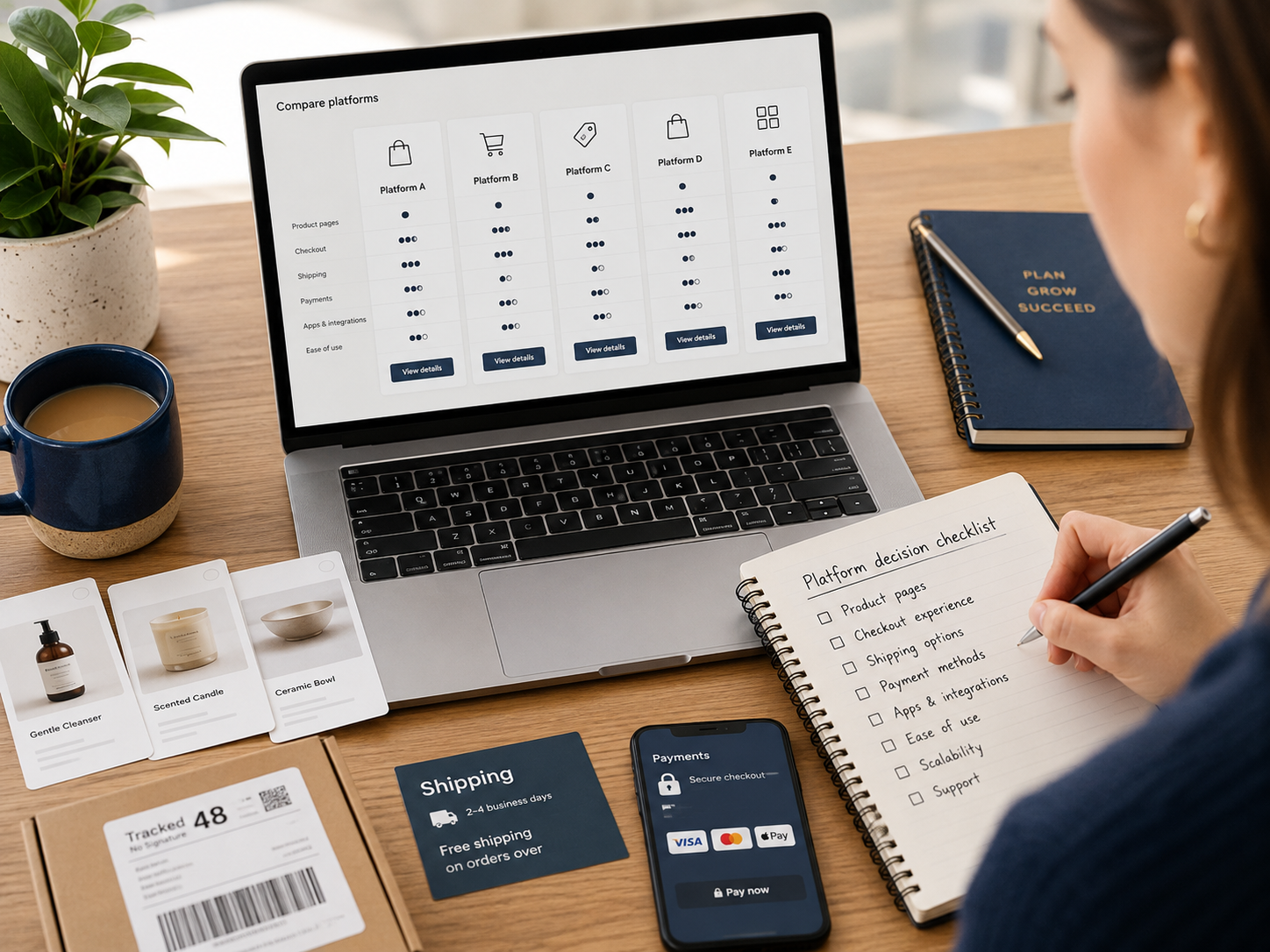
Ecommerce management system supporting customer sales and operations.
Overbuilt Stores Become Exhausting Fast
A beginner may install popups, premium themes, discount apps, analytics dashboards, upsell tools, and automation plugins before making steady sales. The store then looks impressive but becomes annoying to manage. Clear product pages, reliable checkout, simple shipping information, and easy customer communication usually matter more at the start than a stack of features nobody has time to maintain.
Explore more insights: Email marketing automation explained
Popular Ecommerce Platforms Explained
Shopify
Shopify became popular because it makes launching and managing an online store feel relatively straightforward. It handles storefronts, payments, inventory, apps, themes, and sales channels in one hosted environment.
Shopify usually suits product-based businesses wanting fewer technical headaches and a cleaner path from setup to selling.
Ecommerce platform supporting product sales and online store management.
WooCommerce
WooCommerce appeals to WordPress users wanting more control, plugin flexibility, ownership, and customisation. It can be powerful, but it often requires more comfort with hosting, updates, extensions, and technical maintenance.
It suits store owners who value flexibility more than hands-off simplicity.
WordPress ecommerce setup supporting product sales and customisation.
Check out WooCommerce
Systeme.io
Systeme.io works well for creators selling digital products, courses, simple offers, or funnel-based products. It combines email marketing, funnels, automation, course delivery, affiliate tools, and selling features in one environment.
It is not the best fit for large physical catalogues, but it can reduce software sprawl for solo operators.
Funnel and ecommerce platform supporting online business growth.
BigCommerce
BigCommerce suits larger stores needing stronger scalability, broader catalogue management, and more serious ecommerce infrastructure. It can be attractive for brands planning significant growth from the beginning.
The trade-off is simple: it may feel heavier than necessary for a small shop testing its first offers.
Ecommerce business platform supporting scalable online operations.
Wix Ecommerce
Wix appeals to beginners wanting a visual website builder with store functionality included. It can work well for small shops, service businesses, simple product collections, and local brands wanting an easier starting point.
The main limitation appears once the store needs deeper ecommerce features.
Beginner ecommerce platform supporting easier store creation.
Squarespace Commerce
Squarespace often attracts visually driven brands selling products, templates, art, services, or small curated collections. The design experience feels polished, which helps when presentation matters heavily.
It suits clean storefronts more than complicated selling operations.
Design-focused ecommerce platform supporting online product businesses.
Check out Squarespace
What Actually Matters Before Choosing A Platform?
Simple Management Usually Beats Feature Quantity
A long feature list sounds attractive before launch. After launch, store owners usually care more about updating products, checking orders, fixing pages, and answering customers without feeling lost.
Pricing Goes Beyond The Monthly Plan
The real cost may include apps, premium themes, payment fees, email tools, automation software, shipping add-ons, and developer help. A cheap plan can become expensive once essential extras stack up.
Customer Experience Affects Sales Quietly
Customers care about clear product pages, easy checkout, accurate delivery information, secure payment, and quick confirmation emails. A platform that makes those basics easier can protect sales better than flashy design alone.

Scalability Should Match Realistic Growth
A tiny shop does not need enterprise systems immediately. Still, the setup should not become stressful or technically fragile once orders, product lines, and customer questions start increasing.

Online business system supporting scalable ecommerce operations.
Operations Often Decide Whether Stores Survive
Products and advertising matter, but daily store work decides whether the business remains manageable. Inventory, fulfilment, refunds, customer emails, product updates, promotions, and content all compete for attention. When the platform feels confusing, owners delay simple tasks. A store that is easier to maintain usually has a better chance of staying active after launch excitement fades.
Frequently read together: Best email marketing platforms
Which Platform Fits Different Store Types?
Physical Product Stores
Shopify and BigCommerce usually suit businesses selling physical products because inventory, shipping, payments, and product management feel more naturally supported.
WordPress-Based Businesses
WooCommerce fits store owners already comfortable with WordPress who want deeper control over hosting, plugins, SEO structure, and customisation.
Digital Product Sellers
Systeme.io can suit creators selling courses, templates, memberships, downloads, or funnel-based offers because marketing and delivery tools stay connected.
Visual Brands And Small Shops
Squarespace and Wix can work well for smaller stores where design, simplicity, and easier setup matter more than advanced ecommerce infrastructure.
Pros And Cons Of Ecommerce Platforms
Pros
Cons
FAQs
Which ecommerce platform suits beginners best?
Shopify and Wix often suit beginners because both make store setup feel easier than more technical options.
Why do businesses choose WooCommerce?
WooCommerce appeals to businesses wanting WordPress flexibility, deeper customisation, plugin control, and more ownership over the store environment.
Is Shopify worth the monthly cost?
For many stores, yes. Shopify can reduce technical stress and simplify payments, orders, themes, apps, and daily store management.
Do businesses need advanced ecommerce systems immediately?
Not usually. A simpler store that is easy to maintain often performs better than a complex setup the owner avoids updating.
What matters most when choosing an ecommerce platform?
Management simplicity, checkout reliability, scalability, pricing, customer experience, and maintenance effort matter more than feature quantity alone.
Final Verdict
Ecommerce platforms quietly shape almost every part of an online store once real operations begin. The platform affects checkout, customer experience, product management, admin pressure, marketing, fulfilment, and how sustainable the business feels after launch.
Shopify suits stores wanting easier management. WooCommerce works for businesses prioritising flexibility and control. Systeme.io can help creators combining funnels, courses, and simple selling. Wix and Squarespace suit visual stores wanting easier setup. BigCommerce fits larger operations needing stronger ecommerce infrastructure.
The smartest platform is rarely the most powerful one on paper. It is usually the one the business can maintain consistently without store management taking over daily work.


