


Vinted vs eBay in 2026: Fees,…

Tailwind SmartPin and Pinterest Traffic: What…

Make Review: Can It Take the…

MoneyHQ Review: Can It Make Comparing…

TikTok Shop Affiliate in the UK:…

Eden Creator Store Explained: Can One…

Domain vs Web Hosting: What Is…

Redbubble vs Printify: Which Print-on-Demand Platform…

Can Free Affinity Help You Build…

Can Hostinger AI Builder Launch a…

Plug-In Solar Panels UK: Are They…

Meta One Explained: Is the Subscription…
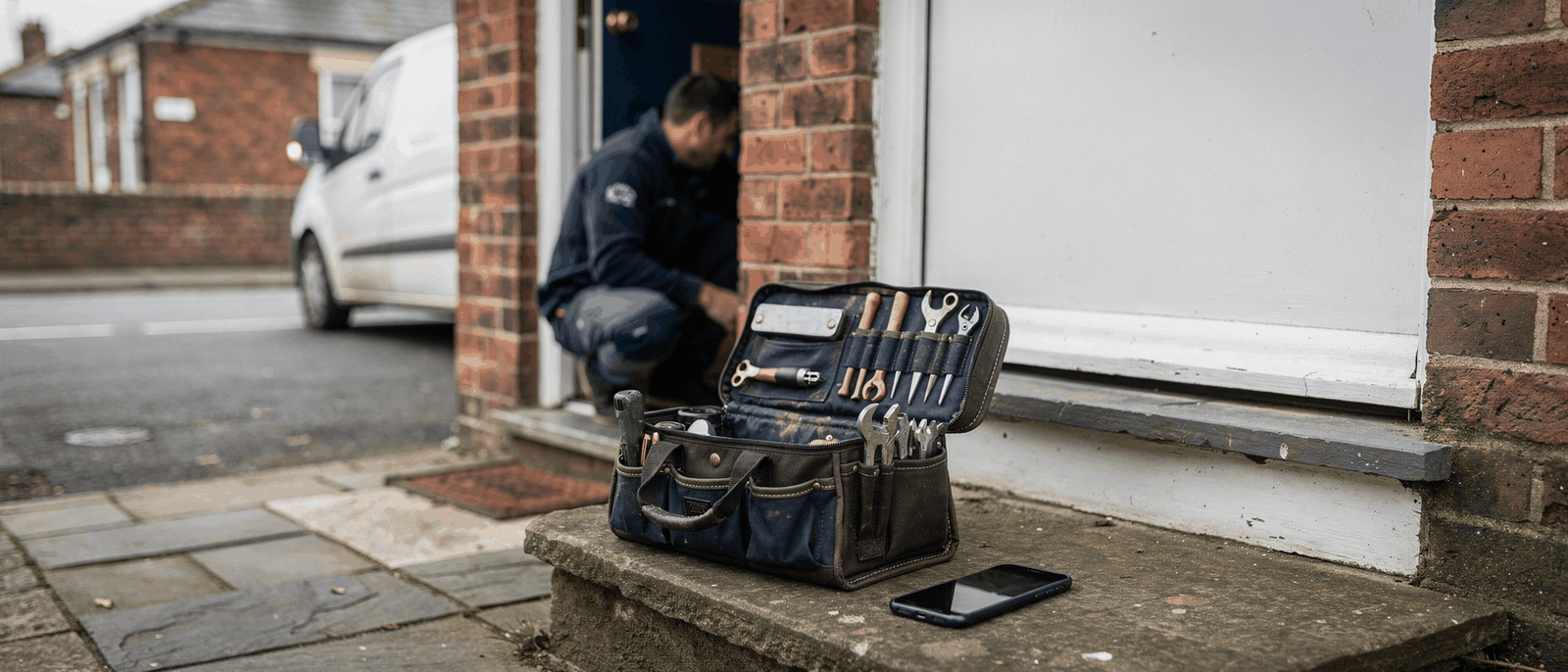
If you miss calls because you are on a job or another call, is an AI phone answerer worth paying for? BT launched an AI Receptionist on 1 October 2026, so the question is arriving in a lot of inboxes.
This article covers what the evidence shows, how providers charge and what to try first. It is based on published information only.
Quick Overview
- BT's big missed-call figures are survey estimates, not measured losses for your business.
- Providers say an AI receptionist answers, takes details, books appointments and sends summaries; none of it is tested here.
- At 100 calls, IONOS's £39 plan costs more than its £69 plan (ex VAT, checked 18 October 2026).
- Check what is recorded and how long it is kept, and tell callers an automated assistant is answering.
- Try a clearer voicemail greeting, a booking link or a text-back message before paying for anything.
- Everything here comes from published information.
What the missed-call numbers do and do not show
What the figures say
BT says UK small businesses lose £3.7bn a year through missed calls, and that 67% miss at least one potentially valuable call on an average day. BT's research also says 75% of potential customers give three attempts and 58% would tell friends to avoid a business that failed to pick up.
A YouGov survey for the answering service Answer4u, as reported by a third party, found 6% would leave a voicemail and 37% would wait no more than 60 seconds before contacting a competitor. We have not checked the original.
What they cannot tell you
BT reached £3.7bn by extrapolating survey responses across the UK business population, and the 67% comes from BT-commissioned research. The caller figures describe what respondents said they would do, not what callers actually did.
None of this shows your own losses, or whether any tool wins sales. BT's claim that 58% of firms spend 30 minutes to 2 hours a day on calls, and 85% find it interrupts other work, describes workload, not results.
What an AI receptionist does, and how it differs from voicemail and a human service
Voicemail
The caller leaves a message or hangs up. It cannot ask questions or book a slot. It costs little or nothing, and some callers simply ring the next firm instead.
AI receptionist (BT's stated features)
BT says its service answers calls 24/7, handles routine enquiries, books through Outlook and Google Calendar, and transcribes conversations. It says it works on any UK network and does not train AI models on customer data.
Human or hybrid service
Moneypenny's page describes an AI Receptionist that answers inbound calls, qualifies leads, routes enquiries and hands off to a human when needed. Moneypenny's own description, not something we have checked.
BT's launch announcement did not include a price, according to Mobile News, so none is quoted here. The next section covers the two providers that do publish figures.
How UK providers charge, and why starting prices mislead
IONOS
IONOS's UK page, seen on 18 October 2026, lists three monthly plans, all excluding 20% VAT. £39 covers 30 calls, then £0.49 a call. £69 covers 100 calls, then £0.39 a call, with calendar appointment scheduling. £99 covers unlimited calls. Each comes with a 1-month free trial.
Prices can change, so check the live page.
Moneypenny and the wider picture
Moneypenny's UK page, also seen on 18 October 2026, says 'get started from £49 a month', with pricing built around your needs and agreed by talking to them. Check whether VAT is included.
Charging runs from per call or per minute to flat fees with an allowance, or a quote. Starting prices differ between sources, and vendors who write comparison guides sell their own products, so treat their claims as opinion.
Worked example: when the cheaper plan costs more
At 20 calls a month
The call volumes here are hypothetical; the rates are from IONOS's page on 18 October 2026, ex VAT. Prices can change.
Say you answer 20 calls in a month. That sits inside the 30-call allowance, so the £39 plan costs £39. At this volume the cheapest plan is the cheapest bill.

At 100 calls a month
Now say you answer 100 calls. On the 30-call plan you pay £39, plus 70 extra calls at £0.49 each, which is £73.30. The 100-call plan costs £69 flat. The plan with the lower headline price gives the larger bill.
One comparison site, Sayora, reached the same £73.30 figure. It sells a competing product, so treat that as an illustration, not a ranking.
At 150 calls, and what to check
At 150 calls the 30-call plan comes to £39 plus 120 calls at £0.49, which is £97.80. The 100-call plan comes to £69 plus 50 calls at £0.39, which is £88.50. Unlimited is £99.
Before relying on any of this, check what counts as a call, and diarise the end of any free trial. Add 20% VAT if you cannot reclaim it.
Four checks before you switch one on
1. Tell callers up front
Say at the start of the call that an automated assistant is answering and may record. The ICO says personal data must be used fairly, meaning not in a way that is unexpected or misleading, and that organisations should be clear, open and honest from the start. That makes an opening line sensible good practice. We found no specific AI disclosure rule in the ICO sources.
2. Check what is recorded and kept
The ICO says privacy information must be given when you collect personal data, in clear and plain language, covering purposes, retention periods and who it is shared with. Apply that to recordings and transcripts: ask the provider what is recorded, how long it is kept and who sees it, then update your own privacy notice to match. This is not legal advice.
3. Test it with your own calls
Ring it yourself, and get a friend to do the same. Try a noisy line, an awkward question and a booking from start to finish. Read the summary it sends you afterwards. If it mishears your trade's terms or your area's place names, you want to know before a customer finds out.

4. Set a human fallback
Decide what happens when a caller is urgent, upset or confused. That might be a number to ring, an option to press, or a promise to call back within a set time. Put it in the greeting and make sure you can act on it.
Rules are still evolving. The Data & Marketing Association says the ICO has a call for evidence on agentic AI open until 20 November 2026, which will help shape its guidance. We do not predict the outcome. Treat any provider's compliance statements as its own claims, and check with the provider and the ICO.
Lighter fixes to try first
A clearer voicemail greeting
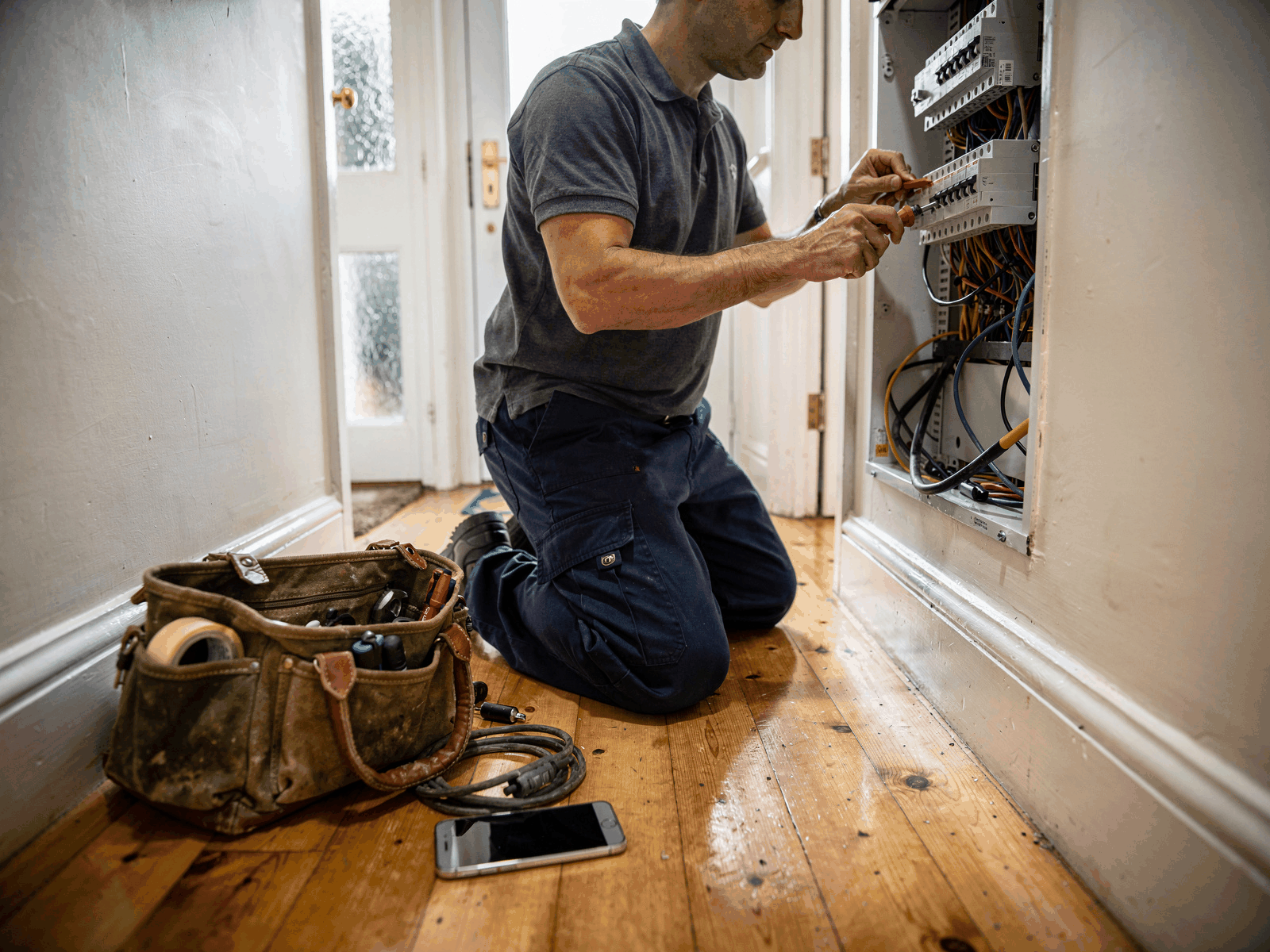
Most greetings say 'leave a message' and nothing more. Say when you will call back and how else to reach you. Here is sample wording: 'Hello, you've reached Ash Electrical. I'm on a job and can't pick up. I'll ring back by 5pm today. To book a visit now, use the link in the text I'm sending you, or leave your name, number and what you need.'
A text-back message
If your phone or phone provider offers an automatic reply to missed calls, set one up. Otherwise send one by hand when you surface. Keep it short: 'Sorry I missed your call, I'm on a job. I'll ring you by 5pm, or you can book a time here.' The caller gets an answer and a next step within seconds.
A booking link, and a rule for choosing
Put a booking link in the greeting and the text-back so callers can pick a slot without waiting for you. Rule: if you miss only a few enquiry calls and most callers accept a link or text, start here. If callers need an immediate answer and you are losing them, consider a paid answerer.
Whatever answers, the details still need following up
Capture the same details every time
A captured call only helps if someone acts on it. Whether a person, a tool or voicemail takes the call, aim to record the same things, and send a quick reply or confirmation email the same day:
- Name and phone number
- What the job or enquiry is
- How urgent it is
- Preferred day and time

Where the details land
A shared spreadsheet is enough to start. A simple CRM suits you once enquiries pile up, and an automation can copy call summaries into the tools you already use.
Who it suits and who can skip it
May suit
Trades, consultants and local services who cannot answer while working, get calls from new customers and already have a booking process. If you lose enquiries after trying the lighter fixes, a paid answerer is worth pricing up.
Can probably skip
Owners with few missed calls, mostly existing customers, or enquiries that arrive by email and direct message. Also skip it for sensitive calls that need a human, and for shops or clinics that already have receptionists.
The one-minute rule
Count your missed enquiry calls for a few weeks. If they are few, try the lighter fixes. If you still lose enquiries, do the plan arithmetic for your own call volume, then test with your own calls before committing.
FAQ
Will an AI receptionist win back lost sales?
We found no evidence of that in the sources behind this article. BT's figures are survey estimates of missed calls, not measurements of sales recovered.
Do I have to tell callers it is AI?
We found no specific rule in the ICO sources we checked. Telling callers is sensible good practice under the ICO's fairness principle. Check with your provider and the ICO; this is not legal advice.
Is BT's AI Receptionist the same as IONOS or Moneypenny?
No. BT says its service answers 24/7, books through Outlook and Google Calendar and transcribes calls. Moneypenny describes qualifying leads and handing off to a human. IONOS lists plans built on call allowances. Read each provider's page.
How much does it cost?
On 18 October 2026, IONOS listed £39, £69 and £99 a month ex VAT, and Moneypenny said from £49 a month with pricing by quote. BT's launch announcement included no price. Starting prices are not final bills, and prices can change.
Is voicemail enough?
Possibly, if you miss few enquiry calls and callers accept a call-back or a booking link. A clear greeting costs nothing to try. If you keep losing callers who need an instant answer, look at a paid service.
Verdict
Consider a paid AI receptionist only if you still lose real enquiries after trying a clear greeting, a booking link or a text-back. The biggest reservation is the evidence: the headline figures are BT-commissioned survey estimates. Next step: count your missed enquiry calls for a few weeks, do the plan arithmetic for your own volume, then run a free trial with your own calls and read the privacy terms.