



Tailwind SmartPin and Pinterest Traffic: What…

Make Review: Can It Take the…

MoneyHQ Review: Can It Make Comparing…

AI Receptionists for UK Small Businesses:…

TikTok Shop Affiliate in the UK:…

Eden Creator Store Explained: Can One…

Domain vs Web Hosting: What Is…

Redbubble vs Printify: Which Print-on-Demand Platform…

Can Free Affinity Help You Build…

Can Hostinger AI Builder Launch a…

Plug-In Solar Panels UK: Are They…

Meta One Explained: Is the Subscription…
Clearing out before Christmas, you need to know who pays what on Vinted and eBay in the UK. Two things have changed lately: Vinted updated its UK terms on 8 October 2026, and eBay raises one currency-conversion charge on 1 December 2026.
Figures here come from published pages, checked on 1 November 2026. This is information only, with no promise of income.
Quick Overview
- UK private sellers pay no selling fee on either app, according to each platform's own page.
- Buyers pay the protection or platform fee on both, so it shows up in what they pay.
- eBay gives private sellers 300 free listings a month, then charges 35p each (checked on 1 November 2026).
- eBay's rise to a 2.75% currency-conversion charge only applies when funds are converted for another eBay site.
- Trading as a business changes eBay's fee picture far more than occasional decluttering does.
- Platforms report sellers at roughly 30 sales or £1,700 a year, which is information rather than tax advice.

Who pays what: Vinted and eBay side by side
Vinted: the buyer pays at checkout
Vinted's UK help page says there are no fees for uploading or selling items, and sellers receive the full payment for the item in their Vinted Balance once the sale completes. The buyer pays a fee at checkout instead. Optional extras, such as Bumps, cost extra.
One independent guide reports the UK buyer fee at roughly 3% to 8% plus £0.30 to £0.80, varying with item price. Vinted shows the exact figure at checkout, so treat that range as a rough guide, not Vinted's price list.
eBay: free for private sellers, buyer fee in the price
eBay says it is free for UK private sellers to sell, excluding cars, motorcycles and vehicles, with no final value fees or regulatory operating fees when items sell. The buyer pays a Buyer Protection fee to eBay, included in the item price.
A third-party calculator reports approximately 10p plus 7% of the first £20, 4% from £20 to £300 and 2% from £300 to £4,000. All of this was checked on 1 November 2026; prices can change, so confirm on each platform's page before listing.
eBay's listing allowance, extras and the 1 December change
300 free listings
eBay says UK private sellers get 300 free listings a month, or 400 with an eBay Shop subscription. After that, it charges 35p for each additional listing that month. Checked on 1 November 2026.
Extras and overseas
Optional upgrades can carry fees. For overseas delivery, eBay says fees apply, and an independent guide from Seller Success puts it at about 3%, so check eBay's page. Most clear-out sellers will post within the UK.
The 1 December rise
According to eBay's UK business-seller fees page, checked on 1 November 2026, the seller currency-conversion charge for UK-registered sellers rises from 2.5% to 2.75% from 1 December 2026, a 0.25 percentage point rise. It applies only when eBay converts funds for an item on another eBay site, not to ordinary UK-to-UK sales.
Rule: count before you list
Add up the items you plan to list in a month and compare the total with 300. Below it, eBay's published terms charge nothing extra per listing. Above it, or if you want paid upgrades, read eBay's fee page first.

Decluttering or trading: when the fee picture changes
Decluttering: usually not trading
The Low Incomes Tax Reform Group (LITRG) says selling unwanted personal possessions, such as old clothes or toys, would not usually be classed as trading, and there is usually no tax to pay. That is the situation this article assumes.
Buying items specifically to resell is a different situation, so read GOV.UK before you start. If resale grows into a regular habit, pacing it matters too.
Trading: eBay's business fees
A third-party UK fee calculator, DashVue, reports from eBay's pages on 17 October 2026 that business sellers pay a final value fee of about 9.9% to 12.9% in most categories, plus a per-order fee, a 0.35% regulatory fee and 20% VAT on fees.
Treat that as an approximate range showing why trading changes the sums, not as a reason to pick a platform. Prices can change, so check eBay's business-fee page for your category.
Vinted's rules to know before you list
The 8 October terms and the fee wording
Vinted's UK help page is undated and still uses the older Buyer Protection wording for the fee the buyer pays at checkout. Some independent or trade-press comparisons of the old and new terms describe the 8 October 2026 change as a rename rather than a price rise. That description is not taken from Vinted's own terms page, so check Vinted's current terms before listing.
Counterfeit flags and Item Verification
According to independent summaries of the new terms, such as the Sad Vinted Faces guide published on 10 October 2026, the UK terms let Vinted dispose of, recycle or destroy an item after six weeks if a counterfeit flag has not been successfully challenged. That is a secondary source, not Vinted's own wording, and not legal advice.
Item Verification is an optional authenticity check on eligible UK designer listings of £85 or more. ResellVault reports it costs the buyer £10 per item and is free for the seller. It is a check, not a guarantee.

Checklist for branded items
Before listing anything branded, work through this:
- Keep proof of purchase, such as a receipt or order email. This is general good practice, not a Vinted requirement.
- Photograph labels, tags and fine details in daylight.
- Describe the item honestly, including any wear.
- Read Vinted's current terms before you list.
The platform-reporting threshold, in plain terms
What platforms report
LITRG says the digital platform reporting rules apply to goods sellers on platforms such as eBay and Vinted. Platforms report sellers who make about €2,000 (roughly £1,700) or more, or complete 30 or more transactions, in a calendar year.
Being reported does not by itself mean tax is due. This is information, not tax advice, so use GOV.UK and HMRC's online checker for your own position.

Which suits what you are selling
Everyday clothes and occasional clear-outs
Neither app charges a UK private seller a selling fee on its published terms, so for a bag of last season's children's clothes the seller fee will not decide it. Choose on how you want to post and which app you already use.
Buyer fees affect what buyers pay, not what you receive. On low-priced items, reported figures put Vinted's buyer fee at roughly 3% to 8% plus £0.30 to £0.80, and eBay's at 10p plus 7% of the first £20. Both are third-party illustrations, not official prices.
Higher-value, tech or branded items, and regular sellers
For pricier items, the reported eBay buyer-fee tiers fall to 4% between £20 and £300 and 2% from £300 to £4,000, while the reported Vinted range varies with item price. These are third-party illustrations and also affect what buyers pay, not what you receive, so compare the total a buyer sees on each app. Neither figure shows that one app is cheaper overall.
If you might list more than eBay's 300 free monthly listings, work out where its 35p extra-listing charge would start. For branded items, Vinted's Item Verification is reported to be available on eligible designer listings. It is an optional check, not a guarantee. If sales are building up, see the reporting section above.
A calm clear-out checklist
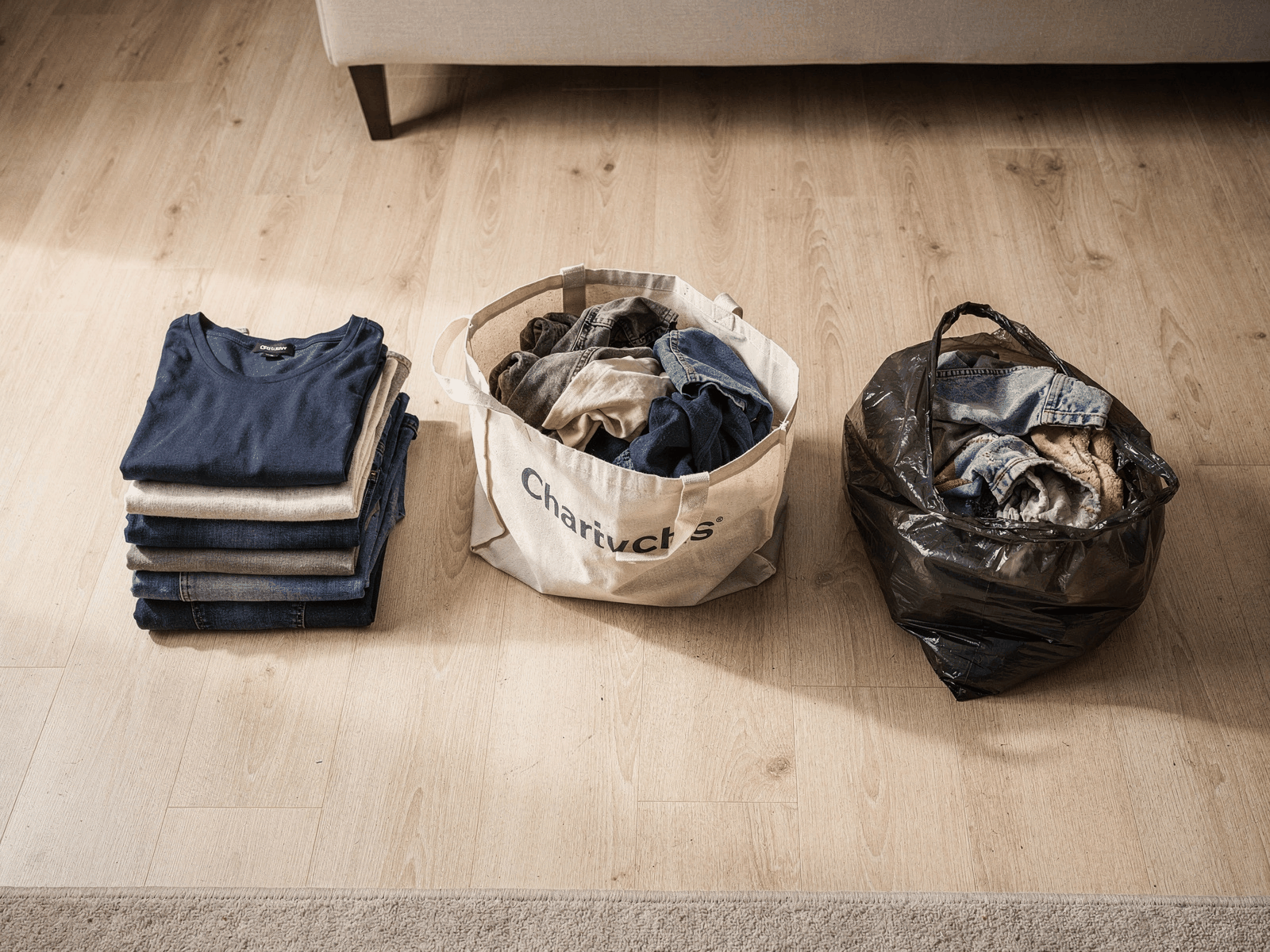
Sort first
Sort items into sell, donate or bin. Check each item's condition: wash clothes, check that chargers work and note any marks or missing parts. Anything you would not buy yourself in that state is better donated or binned.
Photograph and describe
Photograph in daylight against a plain background, show labels and flaws, and write an honest description. Then open each platform's fee page and confirm the figures before you list.
Weigh, measure and pack
Weigh and measure each parcel before listing, because postage options usually depend on size and weight. Choose packaging to suit the item, such as mailing bags for clothes and a box for anything fragile, and have labels ready.
Keep a simple record
Note what you sold, when, and for how much. A notebook or spreadsheet is enough, and it makes any later question about your sales easy to answer.
Pros and cons: Vinted vs eBay for UK sellers
Pros
- No selling fee for UK private sellers on either app, per each platform's page
- eBay's 300 free monthly listings leave room for a bigger clear-out
- Vinted sellers receive the full item payment in their Vinted Balance
- Optional Item Verification on eligible designer listings, reported to be free for the seller
Cons
- eBay charges 35p for listings beyond the allowance, and optional extras cost more
- Vinted's six-week counterfeit disposal rule, according to independent summaries of the new terms
- eBay business fees apply once you are trading
FAQ
Is it free to sell on Vinted and eBay in the UK?
For private sellers, both platforms say so on their own pages. eBay excludes vehicles and charges for listings beyond 300 a month, optional upgrades and overseas delivery. On Vinted, extras such as Bumps cost extra.
Does eBay's 2.75% currency charge affect my UK sales?
Not ordinary UK-to-UK sales: it applies only when eBay converts funds for an item on another eBay site, such as eBay.de. See the 1 December section above for the detail.
Who pays the buyer fee?
The buyer. eBay's Buyer Protection fee is included in the item price, and Vinted's help page says the buyer pays at checkout. Amounts differ by source.
Are clear-out sales usually treated as trading?
LITRG says selling unwanted personal possessions, such as old clothes or toys, would not usually be classed as trading, and there is usually no tax to pay. Buying items in order to resell them is different. This is not tax advice, so use GOV.UK and HMRC's online checker for your own position.
Is Item Verification a guarantee?
No. It is an optional authenticity check on eligible designer listings, and ResellVault reports the buyer pays £10 per item. Treat it as one extra check rather than protection against every problem.
Verdict
For an occasional clear-out the seller fee will not decide it: neither app charges a UK private seller one, so choose by item type and how you want to post. The biggest reservation is that several fee figures come from third-party sources and can move, and trading changes the rules. Next step: confirm fees on each platform's own page, and check GOV.UK if your sales grow.
Planning the rest of the season
If the clear-out is part of getting ready for Christmas, it helps to plan gift spending at the same time.