


Can Hostinger AI Builder Launch a…

Christmas Gifts for Home Workers That…

Plug-In Solar Panels UK: Are They…

Halloween Decorations Worth Buying — and…

Meta One Explained: Is the Subscription…

Anti-Optimisation Wellness: Can a Sunrise Lamp…

Plaud One Explained: Can AI Earbuds…

Sunrise Lamps Explained: What They Actually…

Namecheap vs Dynadot

Lifesum Review UK: Is Premium Worth…

Convertkit Vs Beehiiv

Garmin CIRQA Review: Screen-Free Tracking Without…

Bluehost vs Siteground

Garden Gatherings – Summer Is The…

Namecheap review

Portable Outdoor Speakers for Garden Offices

Cloudways Vs WP Engine

Outdoor WiFi Extenders For Garden Offices

Dropshipping Explained

Portable Pools For Home Workers This…
Most fitness tracker advice focuses on workouts, running stats and watches that seem personally offended if you do not train for something. Desk workers usually need a simpler buying decision. The best fitness trackers for desk workers should be comfortable, easy to understand, simple to charge and useful enough to remind you when the laptop has quietly erased your body from the workday.
Choose comfort before advanced workout features.
Decide whether you need a tracker or smartwatch.
Check battery life and charging effort.
Pick an app you can understand quickly.
Use reminders without adding another inbox.
Avoid overbuying for workouts you do not do.
Most Relevant Audience
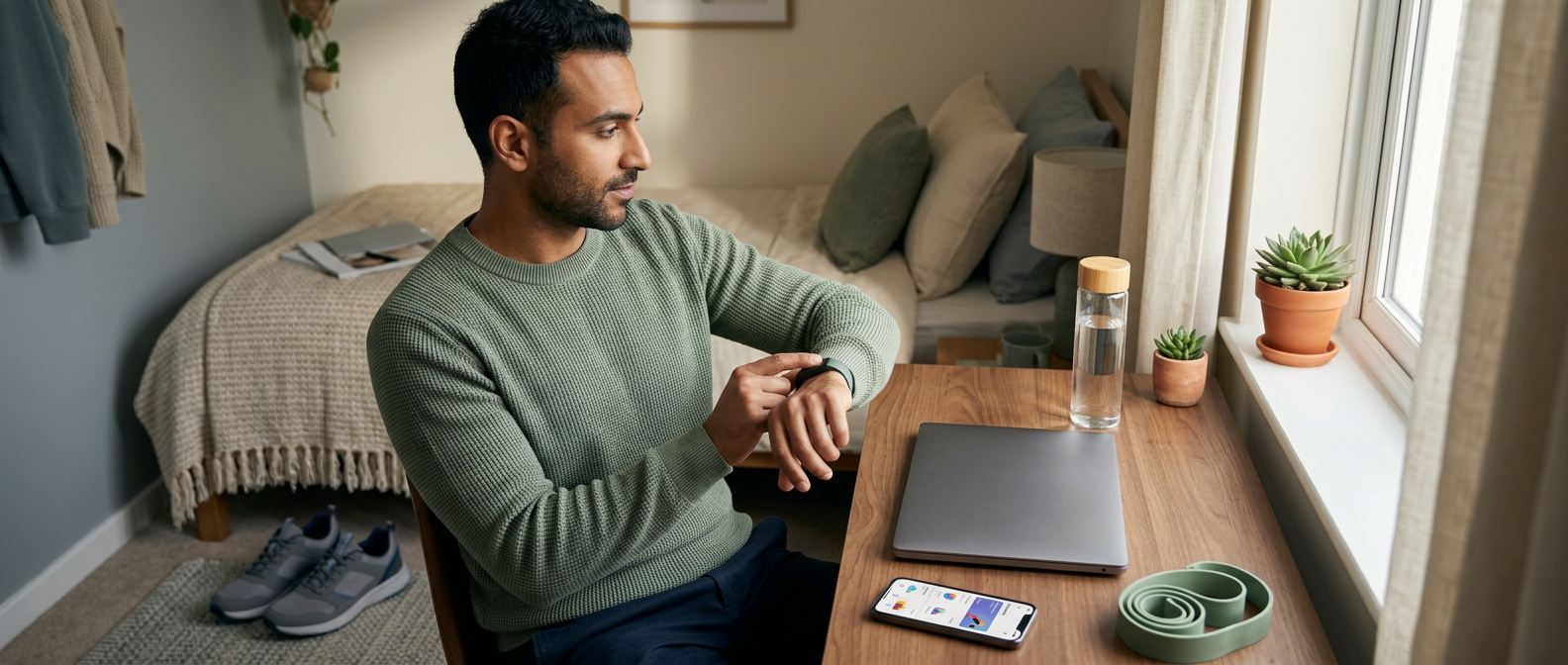
This article is for desk workers, remote workers, home workers, freelancers, bloggers, creators, side hustlers, parents, carers and small business owners who sit for long periods and want practical wearable support. It is especially useful if you need movement reminders, step awareness, sleep clues and recovery cues, but do not want another device bossing you around between calls, school runs, errands and client work.
What Desk Workers Actually Need From A Fitness Tracker
Comfort you will tolerate all day
A fitness tracker only helps if you wear it. For desk workers, comfort matters more than dramatic feature lists. Look for a light strap, readable screen and shape that does not annoy you while typing, cooking, carrying bags, dealing with children or doing the usual home-worker shuffle between laptop and life.
Battery life that does not become admin
Charging is part of the buying decision. If a tracker needs too much attention, it may become another small household object asking for care. Simple bands often last longer than full smartwatches. That can suit busy home workers who do not want one more thing flashing sadly on the bedside table.
An app that makes sense quickly
The companion app matters. If it takes too long to find steps, sleep, reminders or basic trends, you may stop opening it. Desk workers need a tracker app that explains the useful information clearly. You should not need a second coffee and a small training course to understand your own step count.
Reminders that interrupt sitting, not life
Movement prompts are useful when they fit the workday. They should help you stand, stretch, refill water or walk after a long sitting block. They should not interrupt every call, school form, client message or rare moment of silence. A good tracker nudges without becoming needy.
The Real Buying Question
Do not start with the most advanced wearable. Start with the problem you need solved. Are you forgetting to move? Choose strong reminders. Do you hate charging things? Prioritise battery life. Do you get overwhelmed by apps? Choose simplicity. The best tracker is the one that fits your actual desk-heavy day.
Fitness Tracker vs Smartwatch
Choose a fitness tracker for simplicity
A fitness tracker usually suits desk workers who want steps, movement reminders, sleep basics and light health insights without too many distractions. It can be cheaper, lighter and easier to wear. Choose this route if you want fewer features and clearer daily movement support.
Choose a smartwatch for wider tools
A smartwatch makes sense if you want movement reminders plus apps, calls, messages, payments, workouts and a bigger screen. It can be helpful, but it can also become noisy. If your phone already drains your attention, a smartwatch needs strict notification control.
Check screen size against distraction
A larger screen is easier to read, but it can also invite more checking. A smaller band may suit you if you only want steps, reminders and sleep basics. A larger smartwatch may suit you if you want richer detail and do not mind the extra attention it asks for.
Check subscriptions before committing
Some trackers work best when paired with paid memberships or premium insights. That may be worth it if you use the extra guidance. It may be wasteful if you only want basic steps and reminders. Check ongoing costs before buying the wearable, not after the box arrives.
Simpler May Be The Better Upgrade
Desk workers often do not need the most powerful wearable. They need the one that solves the current friction. A comfortable band with clear reminders may beat a feature-packed smartwatch if the smartwatch becomes another inbox, charger demand and dashboard to manage.
Best Fitness Trackers for Desk Workers
Best overall fitness tracker: Fitbit Charge 6
Fitbit Charge 6 is a slim fitness and wellness tracker that can monitor steps, activity, sleep and everyday health habits. It is a strong overall option for desk workers because it keeps movement awareness simple without feeling like a full smartwatch. Choose it if you want step motivation, reminders and easy health context in a light wearable.
Choose By What You Need Most
For simple step nudges, Fitbit Charge 6 is the strongest starting point. For a lower-friction budget band, compare Fitbit Inspire 3 and Samsung Galaxy Fit3. For slim Garmin health tracking, consider Garmin vívosmart 5. For broader wellness context, Garmin Venu 3 fits better. For Apple smartwatch features, Apple Watch Series 9 is the clearer choice.
Step Goals, Stand Reminders And Movement Nudges
Use prompts as simple interruptions
A reminder is useful when it interrupts a long sitting block. Stand, stretch, refill water, walk to another room or reset your shoulders. The prompt does not need to become a workout. It just needs to stop the workday from turning into one long seated block.
Choose reminders you can control
Look for reminder settings you can adjust. You may not want buzzes during client calls, school pick-up windows, recording sessions or deep focus blocks. A tracker that lets you control when and how it nudges you is easier to live with than one that behaves like a tiny supervisor.
Build movement into existing moments
Use calls, lunch breaks, kettle moments, laundry trips, errands and task transitions. A few short walks can add up without needing a formal workout. This matters when your day is packed and the only “free time” is a suspicious five minutes before something else starts.
Keep goals boring enough to repeat
A useful tracker helps you build repeatable movement, not perform for a perfect number. Start from your normal workday and build gently. This article is about choosing the wearable; your step goal should still feel boring enough that you can actually keep doing it.
The Tracker Should Reduce Effort
A good desk-worker tracker should make the next healthy action easier to notice. Stand now. Walk after lunch. Stretch between calls. Charge it once and forget it for a while. Check the app quickly. If the device adds more decisions than it removes, it may be too much wearable for the job.
Sleep, Recovery And Stress Tracking
Sleep tracking can explain flat workdays
If you feel tired at the desk, sleep tracking may help you spot patterns. Late nights, restless sleep and inconsistent routines can all affect focus and energy. This can be useful for parents, carers and small business owners whose tiredness is not always solved by another coffee.
Recovery cues can guide intensity
Some trackers and smartwatches give recovery, stress or readiness-style feedback. This can help if you tend to ignore tiredness until your body objects. Gentle walking, stretching or a lighter day may be more useful than forcing intensity when recovery looks low.
Stress features should lead to action
Stress tracking is useful only if it helps you do something practical, such as breathe, pause, walk, stretch or step away from the screen. It is less helpful if it becomes another number you monitor while feeling tense about being tense. That is wellness admin in disguise.
Pick the depth you will use
Some people want basic sleep and steps. Others like deeper recovery trends. Neither is wrong. The mistake is buying advanced data because it sounds impressive, then never checking it. Choose the level of insight you can use on a normal Tuesday.
Why This Matters If You Work From Home
If your main struggle is staying motivated after buying a tracker, step goals need to feel realistic rather than punishing. A wearable works best when its reminders turn into tiny movement habits between calls, lunch breaks, kettle moments and household tasks, which connects naturally with Smart Watches Step Goals And Desk Worker Motivation and How To Build Movement Into A Packed Work From Home Day.
Common Fitness Tracker Buying Mistakes
Buying for workouts you do not do
Do not buy a tracker mainly for activities you rarely do. Elite sport modes, running metrics and advanced training tools may be impressive, but they are not essential if your main issue is sitting too long, forgetting to move and ending the day stiff.
Choosing the biggest screen automatically
A bigger screen can be useful, but it can also mean more bulk, more distractions and shorter battery life. Desk workers often do well with lighter bands if they mainly want steps, reminders and sleep tracking. Bigger is not always better. Sometimes it is just bigger.
Ignoring the app experience
The tracker is only part of the system. The app matters too. If the companion app is confusing, cluttered or full of features you do not care about, you may stop checking it. Choose something you can understand quickly on a busy day.
Forgetting charging habits
A tracker with excellent features is not useful if it is always flat. Think honestly about charging. Will you remember nightly charging? Would a longer-lasting band suit you better? Busy home workers do not need another device quietly dying when it is supposed to help.
FAQ
What is the best fitness tracker for desk workers?
The best fitness tracker for desk workers is usually one that offers simple step tracking, movement reminders, sleep awareness, comfortable daily wear and an app that is easy to understand. Fitbit Charge 6 is a strong overall option, while Fitbit Inspire 3, Garmin vívosmart 5 and Samsung Galaxy Fit3 are also worth comparing.
Do fitness trackers help desk workers move more?
Fitness trackers can help desk workers move more by making long sitting blocks easier to notice. Step goals, stand reminders and activity prompts can encourage small movement breaks during calls, task changes, lunch breaks and home-working transitions.
Is Fitbit Charge 6 good for desk workers?
Fitbit Charge 6 can be good for desk workers because it offers activity tracking, step goals, sleep awareness and simple wellness features in a slim tracker. It suits people who want movement motivation without wearing a full smartwatch.
Is Garmin better than Fitbit for wellness tracking?
Garmin may suit people who want broader wellness, recovery or stress context, while Fitbit may suit people who prefer simple activity and sleep tracking. The better choice depends on whether you want deeper health insights or easier everyday movement motivation.
What is the best budget fitness tracker?
Fitbit Inspire 3 and Samsung Galaxy Fit3 are both worth comparing as budget fitness trackers. Fitbit Inspire 3 suits people who want a simple Fitbit experience, while Samsung Galaxy Fit3 may appeal to Android and Samsung users looking for value.
Should desk workers buy a fitness tracker or smartwatch?
Desk workers should choose a fitness tracker if they mainly want steps, reminders, sleep tracking and simplicity. A smartwatch may be better if they also want apps, calls, messages, payments and a larger screen. The best option is the one they will actually wear and respond to.
Final Verdict
The best fitness trackers for desk workers are not always the most advanced. They are the ones that feel comfortable, make sense quickly, fit your charging habits and remind you to move without becoming another device that demands attention.
You do not need a wearable that turns every Tuesday into a triathlon. Choose by comfort, battery life, app simplicity, notification control and the kind of movement support your desk-heavy day actually needs. The right tracker should help your body stay included in the workday, quietly and usefully.






