


Vinted vs eBay in 2026: Fees,…

Tailwind SmartPin and Pinterest Traffic: What…

Make Review: Can It Take the…

MoneyHQ Review: Can It Make Comparing…

AI Receptionists for UK Small Businesses:…

TikTok Shop Affiliate in the UK:…

Eden Creator Store Explained: Can One…

Domain vs Web Hosting: What Is…

Redbubble vs Printify: Which Print-on-Demand Platform…

Can Free Affinity Help You Build…

Can Hostinger AI Builder Launch a…

Plug-In Solar Panels UK: Are They…
A funnel builder helps you create a clearer journey from “someone has found you” to “someone has taken the next useful step.” That step might be joining your email list, buying a digital product, booking a call, registering for a webinar, starting a trial or clicking through to a recommended tool.
The useful bit is not the word “funnel.” That can sound more dramatic than it needs to. The useful bit is the structure. Instead of sending people to a busy homepage and hoping they work out what to do, you give them a focused path with fewer distractions.
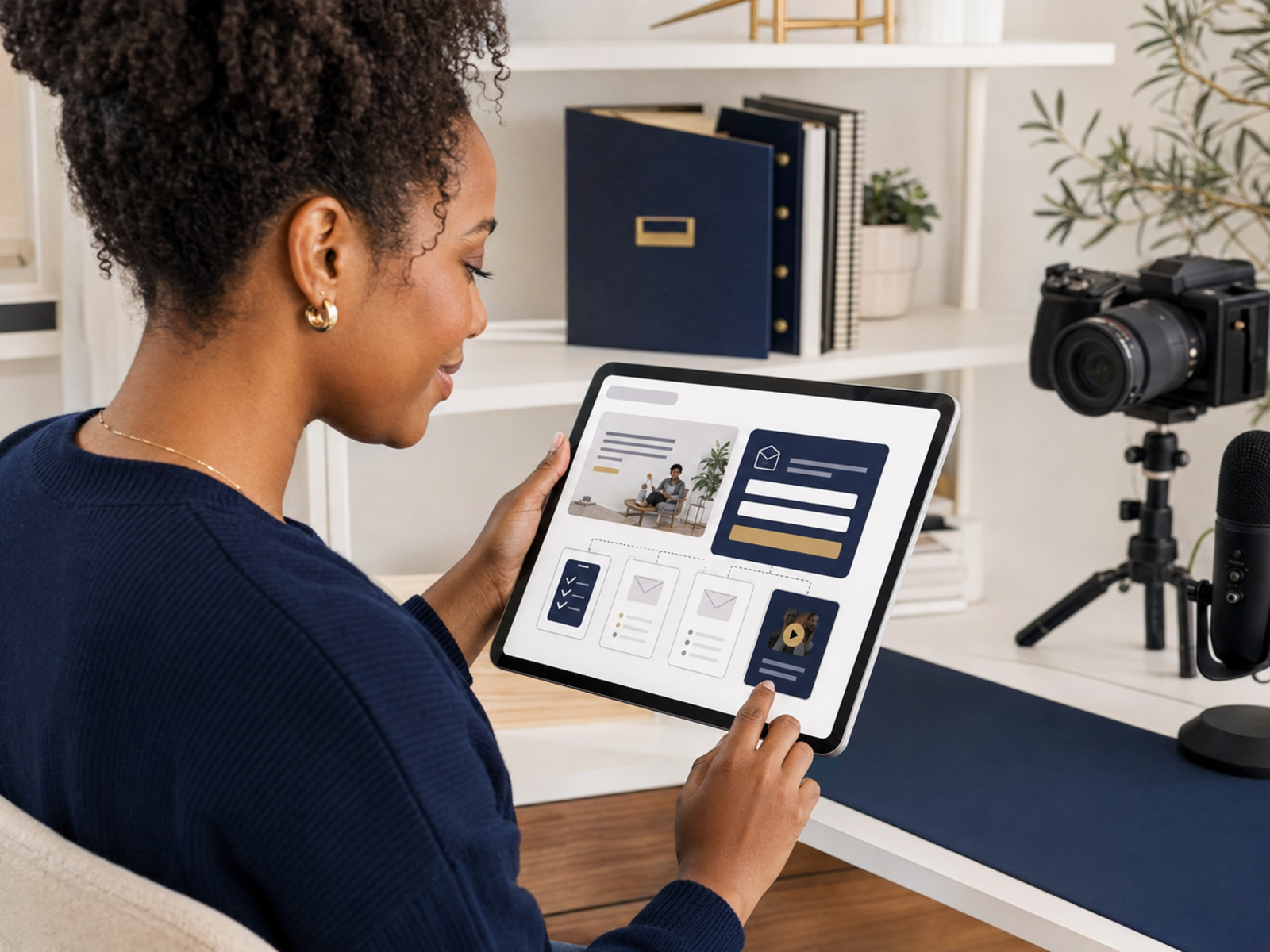
For beginners, a funnel should not feel like a giant marketing machine. A simple funnel can be one page, one opt-in, one thank-you page and a short follow-up sequence. That is enough to test whether people understand the offer and want the next step.
A good beginner funnel has a clear purpose, a simple route and a follow-up plan that does not feel like a spam cannon. It should help the reader understand what to do next, not trap them in a maze of pop-ups, countdown timers and “last chance” nonsense.
The best setup depends on what you are trying to do. Some people need landing pages and checkout. Some need email follow-up. Some need a way to organise leads. Others only need a cleaner route from a blog post to a useful recommendation.
The main thing is to start small. Build the shortest version that makes sense, watch where people drop off, then improve the weak step.
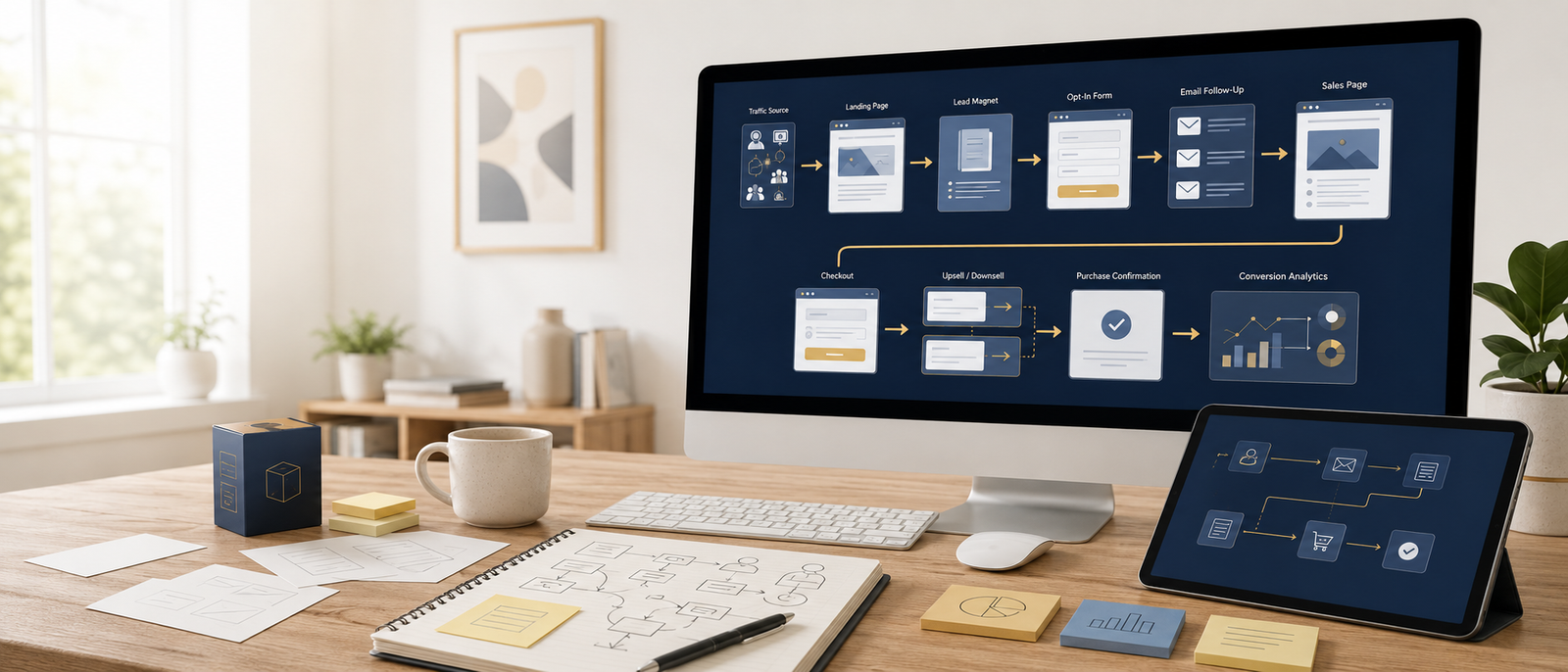
The moving parts of a simple funnel
Traffic
Traffic is where people come from. It could be Google, Pinterest, YouTube, TikTok, a newsletter, a blog post, an advert, a referral or an existing audience. The source matters because it affects how much the person already understands.
Cold traffic usually needs more explanation. Warm traffic may only need a focused page and a clear call to action. A funnel that works for one source can feel completely wrong for another, so do not copy someone else’s setup without thinking about where your visitors are coming from.
Opt-in
The opt-in is the first small commitment. It might be a checklist, guide, free class, quiz, discount, template or waiting list. The job is to make the next step feel useful enough that someone is happy to share their email address or take action.
Weak opt-ins are usually too vague. “Join my newsletter” is not always enough. “Get the five-step setup checklist” gives the reader a clearer reason to act.
Nurture
Nurture is the follow-up layer. This is usually email, but it can also include retargeting, content recommendations, product education or a simple reminder sequence. The aim is not to nag people. The aim is to help them understand the problem, the options and the offer.
A short sequence is often better than a long one. Three useful emails can beat ten thin ones. If every message has a job, the funnel feels helpful instead of noisy.
Conversion
Conversion is the main action. That might be a sale, a booking, a trial, an affiliate click, a quote request or a signup. This is where the funnel needs to remove confusion. The reader should know what they are getting, what happens next, and why the step makes sense.
The checkout, booking page or final call-to-action does not need to be flashy. It needs to be clear, trustworthy and aligned with the promise made earlier in the funnel.
Funnel builder platforms worth comparing
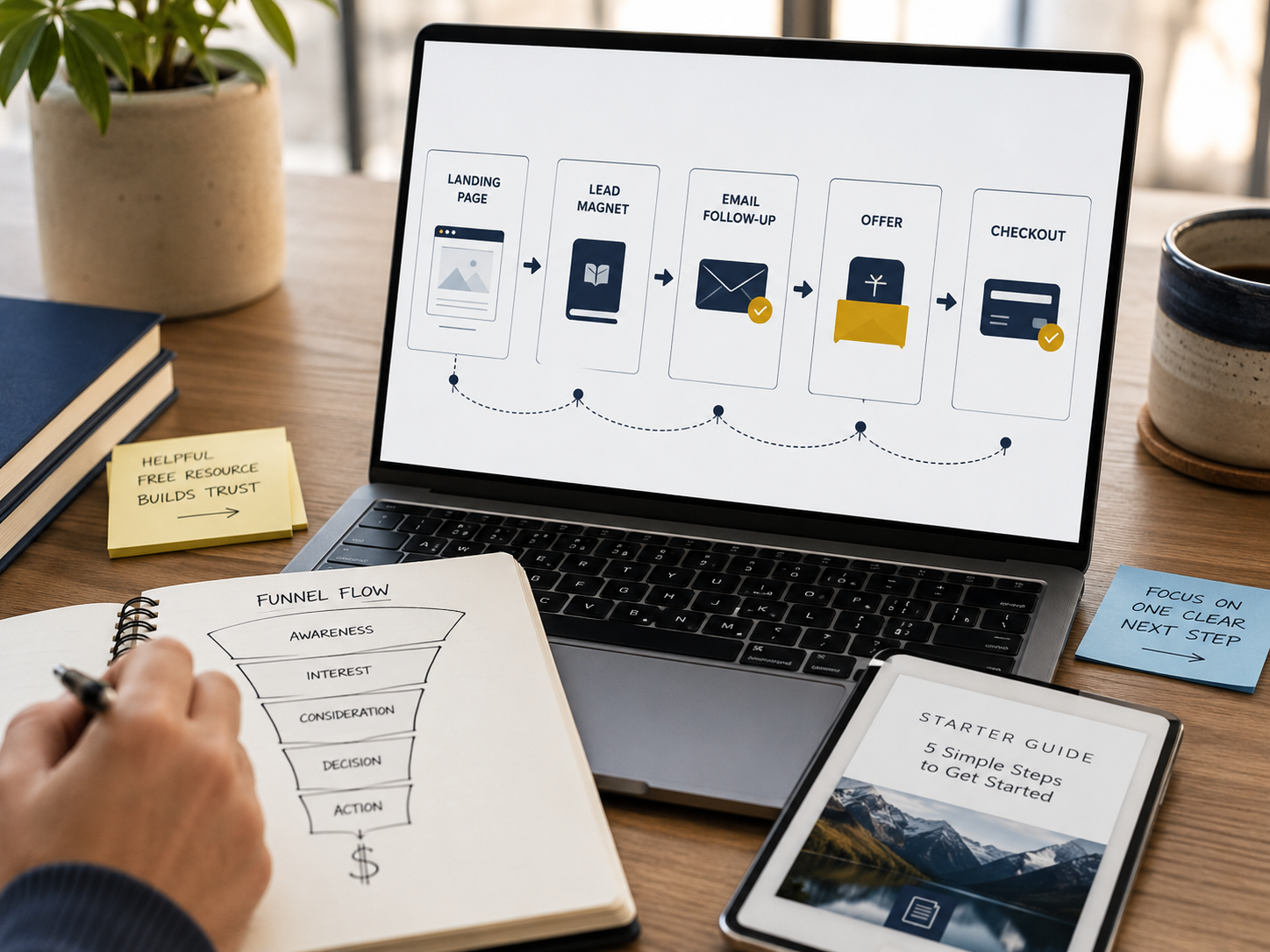
How to compare funnel builders without getting overwhelmed
Website pages vs funnel pages
A normal website page gives people options. A funnel page usually removes options. That is useful when the goal is specific, such as downloading a lead magnet, booking a call or buying one product.
Before choosing software, decide whether you really need funnel pages or whether a normal WordPress page, landing-page builder or ecommerce page would do the job.
Email automation
Email automation is where many funnels either become useful or fall apart. A good page is not enough if nobody hears from you afterwards. The follow-up should continue the promise made on the opt-in page.
Look at how easy it is to build a short sequence, tag people properly and send different messages based on what they did.
Checkout and payments
If you are selling directly, checkout matters. Some tools include checkout, upsells, order bumps and digital product delivery. Others expect you to connect a separate cart, ecommerce platform or payment system.
Do not pay for a heavy sales-funnel setup if your current goal is only to collect leads. Equally, do not choose a basic email tool if you need a proper checkout path now.
Reporting and testing
Reporting does not need to be intimidating. At beginner level, you mostly need to know how many people visited, how many opted in, how many clicked, and where the drop-off happened.
A/B testing can help later, but it should not distract from the basics. If the offer is unclear, testing button colours will not save it. Sadly, no shade of orange has magical powers.
Who funnel builders are best for
Bloggers and creators
Bloggers and creators can use funnels to move readers from helpful content into a newsletter, resource, product recommendation or digital product. This works best when the funnel continues the topic the reader already cared about.
For example, a blog post about starting an email list could lead to a checklist, then a short email sequence, then a comparison of email tools.
Service businesses
Service businesses may use funnels to collect enquiries, qualify leads, book calls and follow up automatically. The funnel does not need to be aggressive. It can simply help the right person understand whether the service fits.
This is where CRM features and pipeline tracking can matter more than fancy page templates.

Course sellers
Course sellers often need a clearer path from interest to trust. A funnel can introduce the problem, share a useful resource, explain the course, answer objections and guide people to checkout or a launch list.
The danger is overbuilding. A course funnel should make the offer easier to understand, not bury it under twelve steps and a “secret framework” with a dramatic name.
Affiliate marketers
Affiliate marketers can use funnels carefully when they want to educate readers before recommending a platform or product. The funnel should help the reader choose well, not just push them toward the highest commission.
This is where comparison content, email follow-up and honest trade-offs are useful. Trust is the asset. Do not spend it like loose change.
Common funnel builder mistakes
Starting with software instead of the journey
Many people choose the tool first and plan the funnel later. That usually leads to wasted time. Write the journey on paper first: source, page, opt-in, follow-up, conversion and next step.
Once the journey is clear, the software decision becomes much easier.
Making the funnel too long
A funnel does not get better just because it has more steps. Every page and email should earn its place. If a step does not clarify, reassure or move the reader forward, it may be friction.
Beginners should usually start with the shortest useful version.
Ignoring the thank-you page
The thank-you page is often wasted. It can confirm what happens next, point to a useful article, invite the reader to check their inbox or suggest a sensible next action.
Do not leave people at a dead end after they have just trusted you enough to opt in.
Forgetting real-life maintenance
A funnel is not finished when it is published. Links break, offers change, email sequences age and pricing pages move. Choose a setup you can actually maintain.
A simple funnel you update is better than an impressive funnel you are scared to touch.
Alternatives to a full funnel builder
Email marketing platform
If your main goal is list-building and follow-up, an email marketing platform may be enough. You can pair a simple landing page with a short sequence and avoid paying for a bigger funnel tool too early.

WordPress landing pages
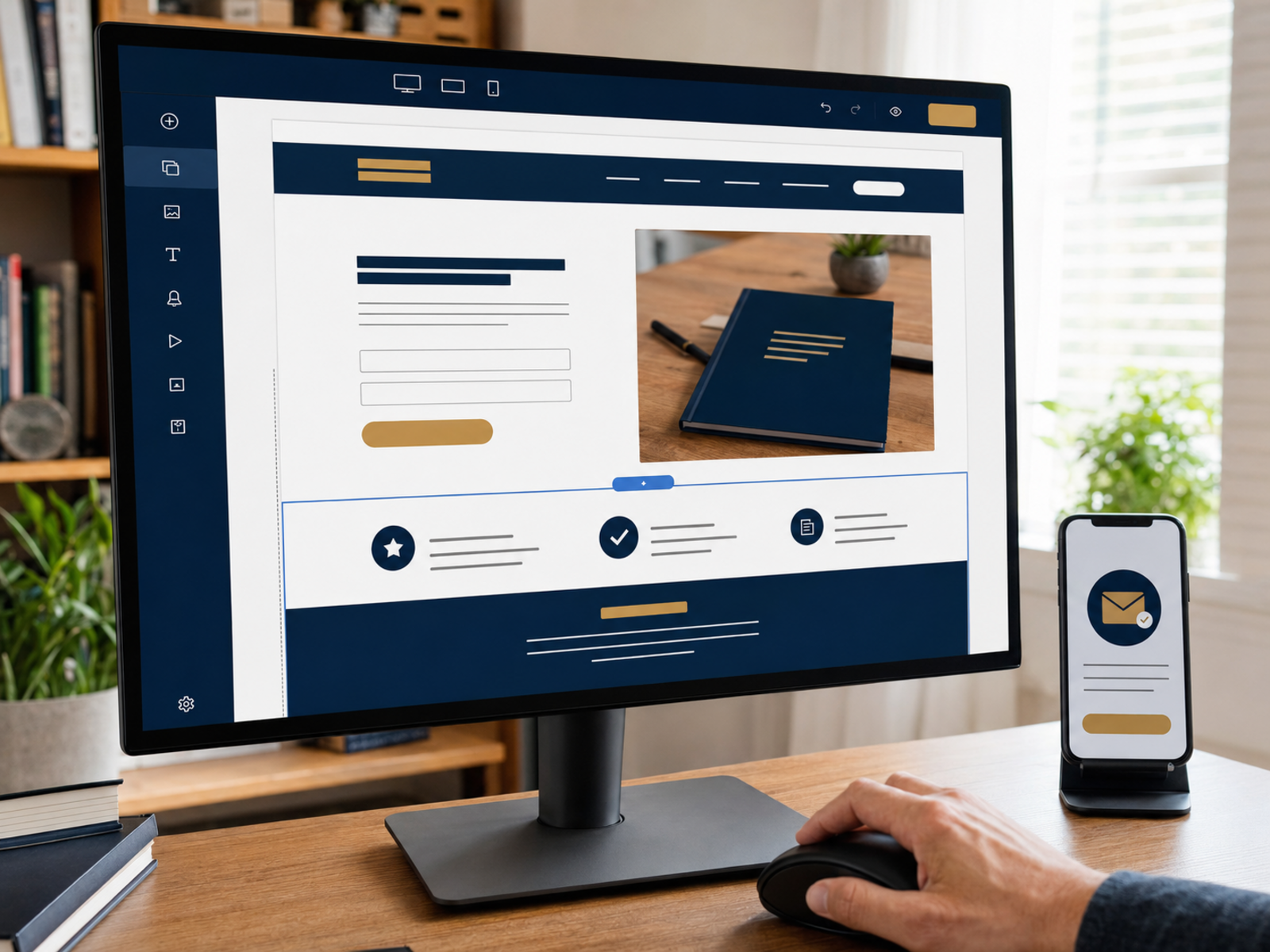
If you already use WordPress, you may be able to build a focused landing page inside your site and connect it to your email platform. This can be cheaper and easier to control, especially for content-led businesses.
Ecommerce platform
If you are selling physical products, an ecommerce platform may matter more than a classic funnel builder. Product pages, checkout, shipping, fulfilment and customer emails can be the real conversion path.
Simple checkout and email stack
Sometimes the best beginner stack is just a landing page, checkout link and email sequence. It may not sound exciting, but exciting is not the goal. Working is the goal.
Funnel builder FAQs
Do beginners really need a funnel builder?
Not always. Beginners need a clear journey first. A funnel builder is useful when it makes that journey easier to build, test and maintain. If your setup is still tiny, a landing page and email tool may be enough.
What is the difference between a funnel builder and an email platform?
A funnel builder usually focuses on pages, steps and conversion flow. An email platform focuses on subscribers, broadcasts, sequences and automation. Some tools overlap, which is why the right choice depends on the journey you are building.
Is ClickFunnels the best funnel builder?
It depends on what you need. ClickFunnels is a strong dedicated funnel option, but it may be more than some beginners need. It is worth comparing with tools like Systeme.io, GoHighLevel and email-led platforms before deciding.
Can I build a funnel without paying for a full platform?
Yes. You can often start with a normal landing page, email form, thank-you page and short email sequence. A full funnel platform becomes more useful when you need checkout flows, testing, templates, CRM features or more connected automation.
Final verdict
Funnel builders are useful when they help you create a clear path from attention to action. They are less useful when they become another complicated system you have to babysit.
For beginners, the best approach is to plan the journey before choosing the tool. Know where people come from, what first step you want them to take, what follow-up they need, and what conversion actually matters.
Once that is clear, comparing platforms becomes much easier. Choose the simplest setup that supports the funnel you are genuinely ready to build. You can always add cleverer automation later. Future you will probably thank you for not building a monster on day one.