




Host a Virtual Halloween Party: Audio,…

The Calm Autumn Reset: 10 Small…

Can Free Affinity Help You Build…

The Best Lighting for Darker Autumn…

Can Hostinger AI Builder Launch a…

Create an Autumn Wind-Down Routine That…

Plug-In Solar Panels UK: Are They…

Heated Throw vs Heated Blanket vs…

Meta One Explained: Is the Subscription…

The Best Ways to Dry Washing…

Plaud One Explained: Can AI Earbuds…

Dehumidifiers Explained: When Are They Actually…

Namecheap vs Dynadot

A Realistic Autumn Walking Routine for…

Convertkit Vs Beehiiv

Autumn Social Reset: Small Plans for…

Bluehost vs Siteground

Sekonda Smart Ring vs Oura Ring…

Namecheap review

Make Your Home Cosier Without Turning…
The clocks go back one hour at 2am on Sunday 25 October 2026, which brings an extra hour in bed and darker evenings. If you work at home, close to where you sleep, this guide gives you a week of small changes to light, bedroom temperature and evening habits.
It is not an insomnia fix or medical advice, and MyHotips has not tested any product mentioned.
Quick Overview
- The clocks go back on 25 October 2026, and some people notice unsettled sleep afterwards.
- Get daylight early in the day, then lower the lights once work stops.
- Aim for a bedroom a little cooler than the room where you work.
- Keep one wake time and try an hour away from screens before bed.
- Write tomorrow's list and shut work down so it stays out of the bedroom.
- Lamps, bulbs and gadgets are optional, and we have not tested any of them.
- If habit changes have not worked or problems last for months, speak to a GP.
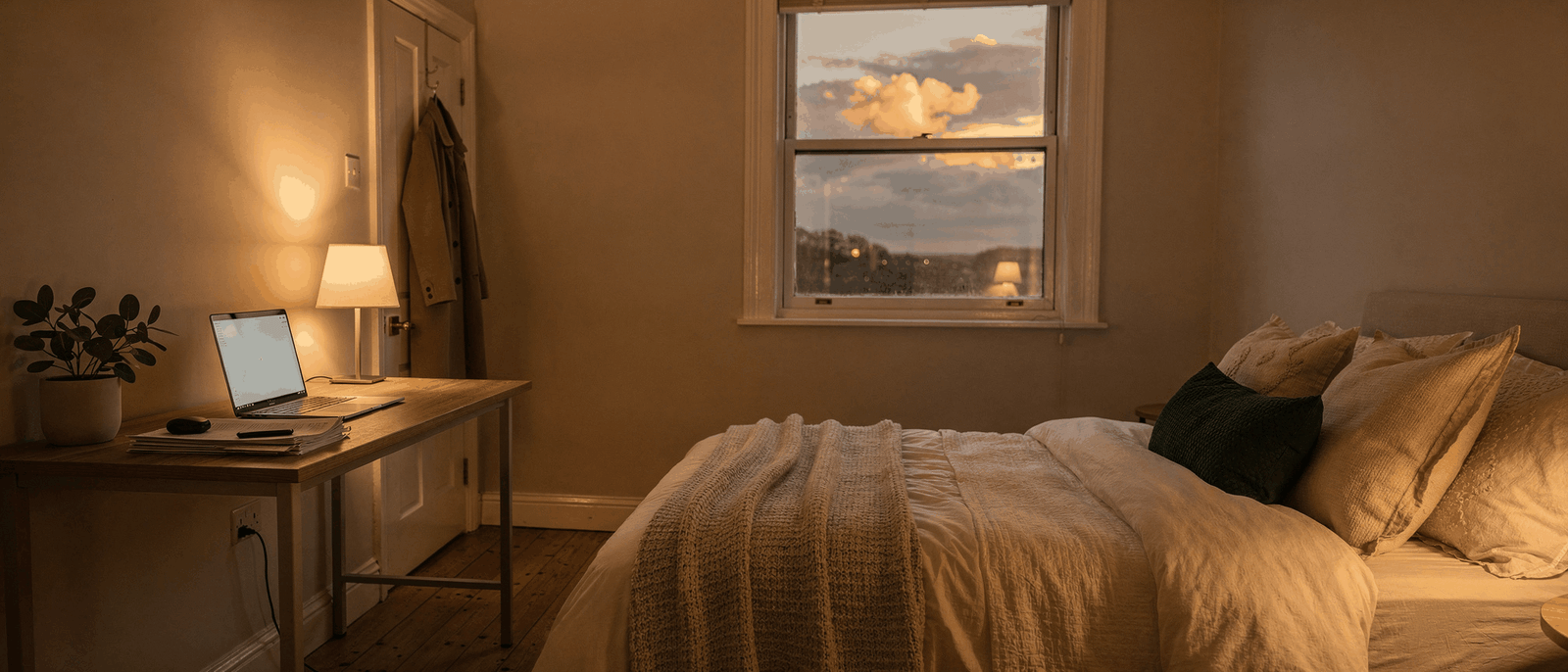
What the clock change may do to your body clock
What The Sleep Charity says
The Sleep Charity says the October clock change can disrupt the body clock and affect sleep in the following days and weeks. It compares a one-hour shift to temporary, mild jet lag, and says shorter autumn days can affect mood, energy and sleep patterns.
That describes some people, not everyone, and plenty of us simply enjoy the extra hour in bed. It is a reason to be a little deliberate this week, not a reason to worry.
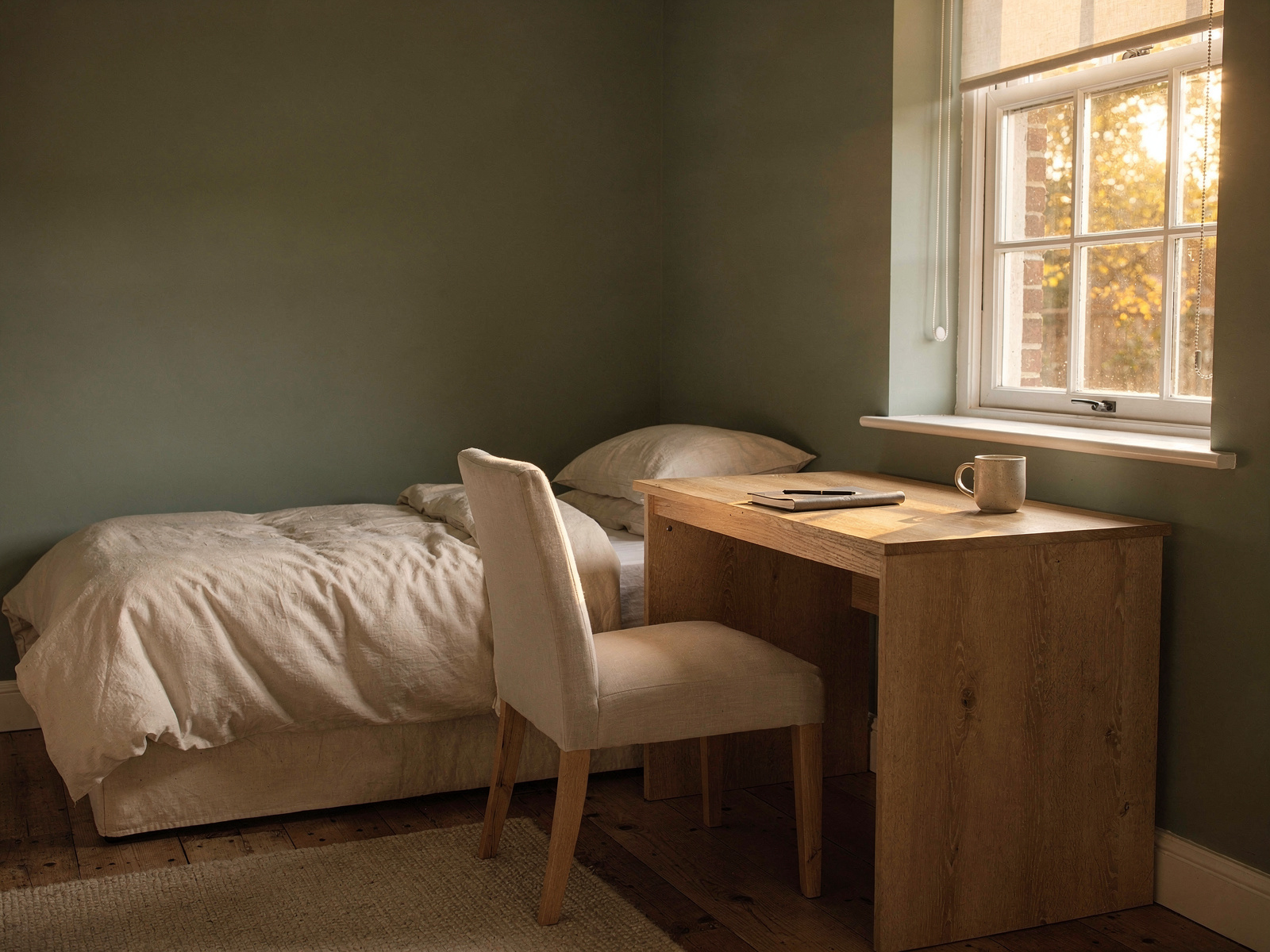
Gradual shift or one steady wake time?
The Sleep Charity suggests that in the week before the clocks go back, you could try moving bedtime and wake time by 10-15 minutes each day. Neither this nor anything below promises results.
Here is a rule you can apply in a minute. If your day is flexible, try the gradual shift. If school runs, shifts or fixed meetings set your hours, skip it and hold one wake time from Monday 26 October instead. The NHS lists waking at the same time every day among its habit changes for sleep.
Light, part one: daylight early and bright afternoons
Why daylight matters in autumn
The NHS says seasonal affective disorder (SAD) is thought to be linked to reduced daylight in winter, and its self-care advice includes getting as much natural daylight as you can and going outside in the daytime every day.
We are not suggesting you have SAD; plenty of people simply find short days flat. If low mood is affecting your daily life, speak to a GP.
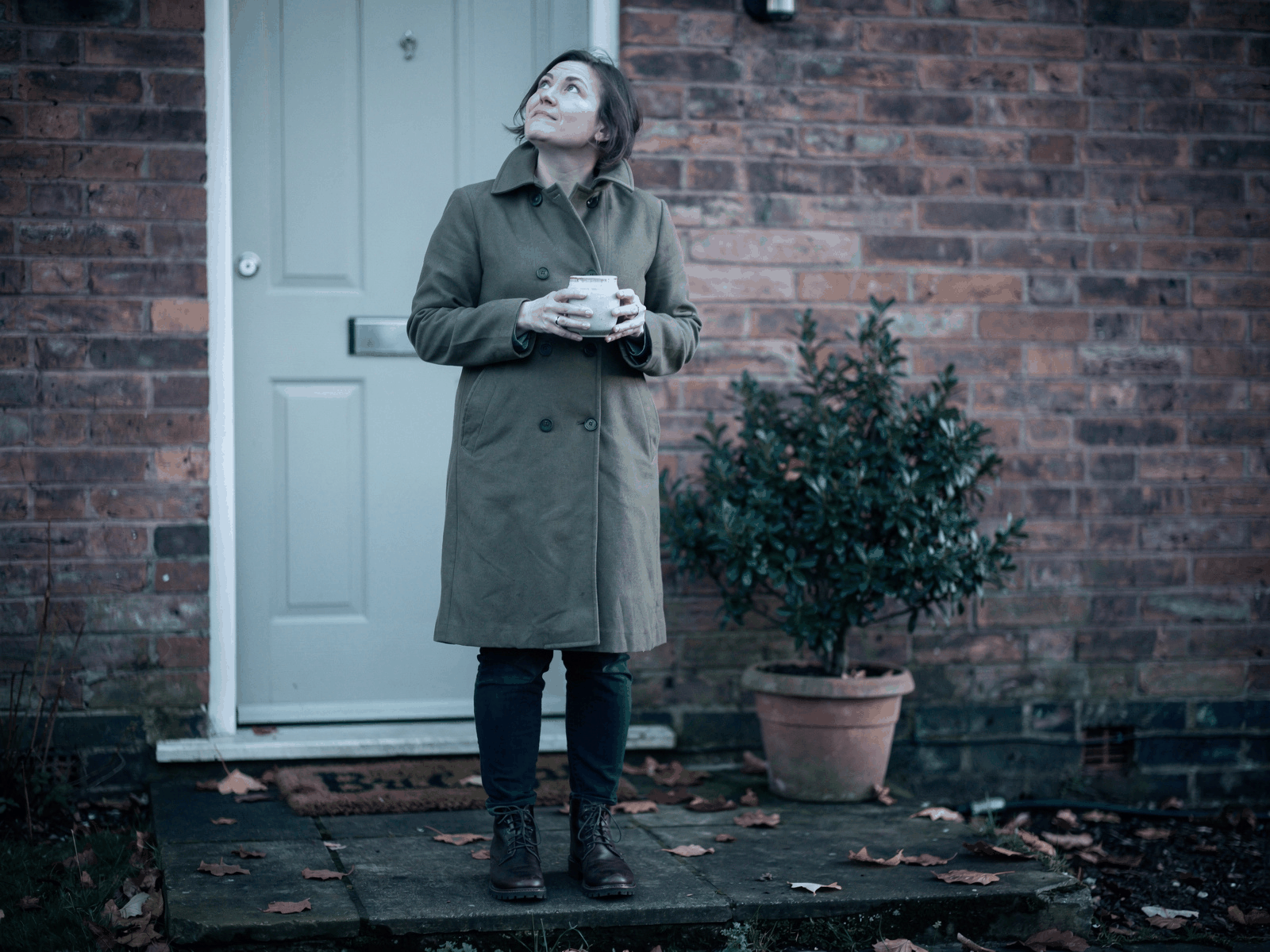
A daylight checklist for home workers
If you can barely tell what the weather is doing, these steps cost nothing:
- Step outside early, even for five minutes before you open the laptop.
- Walk, or take a call outside, rather than sitting through it.
- Work near a window if you can.
- Switch lights on as the afternoon darkens, so you are not squinting at the screen.
An optional desk lamp
If your desk is far from a window, a desk lamp can make dark afternoons more comfortable and easier on the eyes. That is a comfort choice, not a sleep one: we are not claiming a lamp changes how you sleep, and we have not tested any. A lamp you already own does the same job.
Light, part two: dim and warm the evening
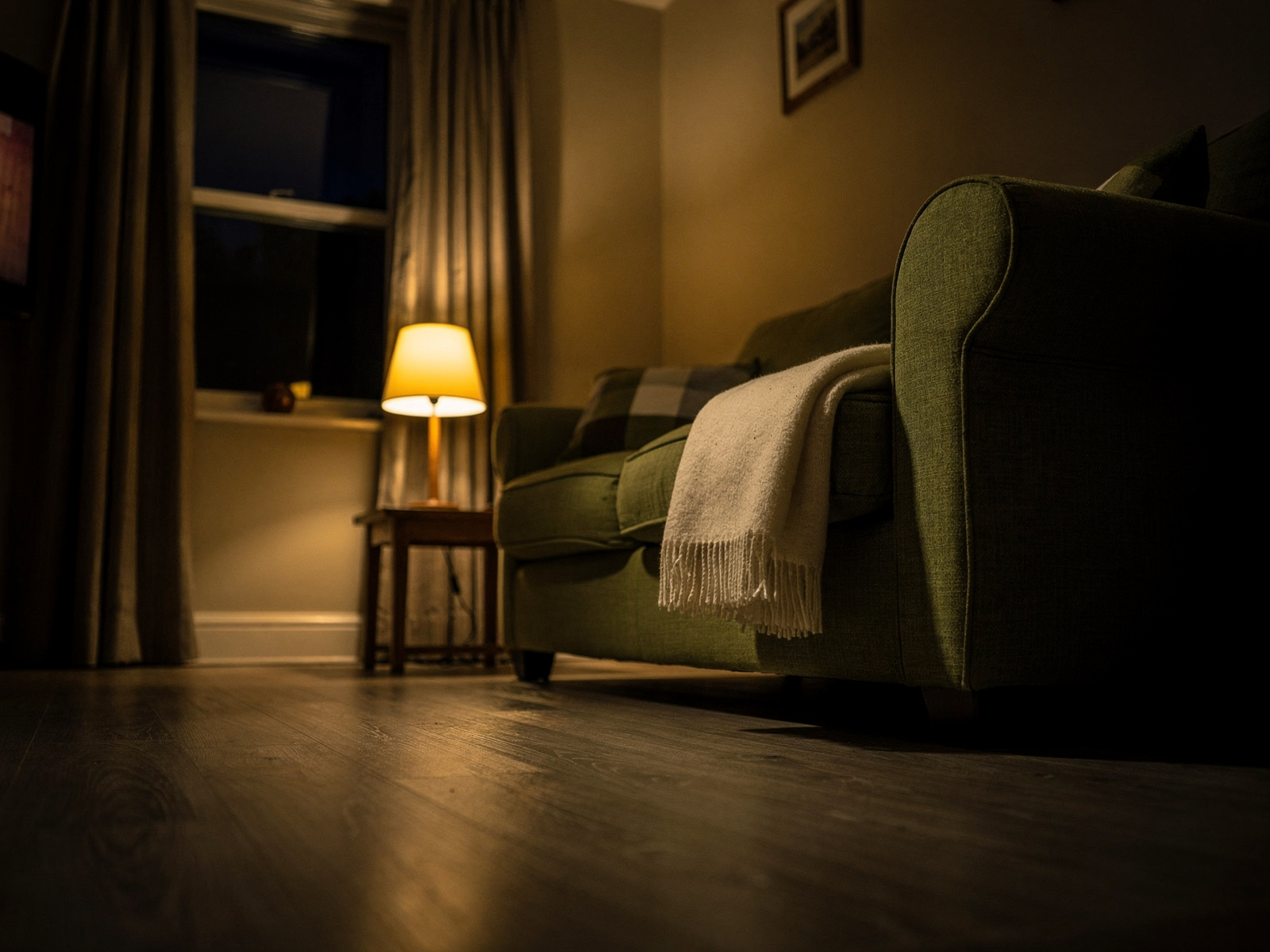
Lower the lights without spending anything
After dinner, switch off the overhead light and use one or two low side lamps instead. If a room only has a ceiling light, turn off every other light you do not need and move your seat toward the lamp you do. The aim is a visible change between working hours and evening, so your home stops feeling like one long afternoon.
A three-part rule
Bright where you work by day, lower once work stops, dark when you sleep. NHS Every Mind Matters says you may find it easier to sleep in a room that is quiet, dark and cool, and suggests closing curtains fully and keeping clocks out of view. Turning a bright clock face to the wall costs nothing.
Dimmable warm-white bulbs
If your lamps are harsh, a dimmable warm-white bulb makes a low setting easy to reach. It is optional, we have not tested any, and we make no claim that bulb colour or dimming changes sleep. Check the fitting and dimmer compatibility before buying.
Sunrise and sunset lights: one optional tool among several
Might suit you
The NHS says light therapy lamps are not usually available on the NHS because there is not enough evidence on whether they work, though many people find them helpful. Sunrise and sunset lights are a different product, but the sensible reading is similar: evidence that light devices improve sleep is limited. One might suit you if:
- Your bedroom is very dark in the morning.
- You like the idea of a gentler start to the day.
- Your free routine is already in place.
Probably skip it
Skip it for now if the money is better kept elsewhere, since we have not tested any of these lights and cannot say one will help you. You can also leave it out if:
- Your wake time is not steady yet.
- You already get daylight early in the day.
- You would rather fix the basics first.
Temperature: a cooler bedroom, a comfortable working room
The bedroom
NHS Every Mind Matters says you may find it easier to sleep in a room that is quiet, dark and cool, and NHS inform in Scotland says to keep the bedroom slightly cooler than your living area. Neither gives a number.
British Gas, citing The Sleep Charity, gives 16-18°C as the ideal for adults sleeping, so treat that as a rough guide. Preferences vary, and some people, such as older adults, may want it warmer. For a home worker the practical point is the gap: a bedroom a little cooler than your desk room.
The room where you work
The Energy Saving Trust says most people should set their thermostat to the lowest comfortable temperature, usually 18-21°C. Smart Energy GB reports the NHS advises at least 18°C in the rooms you use most, and adds that this may be too low for some people, including older adults and those with certain health conditions.
These are comfort guides, not personal heating advice. A cheap room thermometer is an optional way to see what each room is doing; we have not tested any.
Evening habits that keep work out of the bedroom
A fixed wake time
The NHS says insomnia usually gets better by changing sleeping habits, and lists waking at the same time every day among them. Choose a time you can keep every day, and start it on Monday 26 October.
A screen-free hour
NHS Every Mind Matters advises trying not to use phones, tablets or computers for an hour before bed. For a home worker, the work laptop closes first. Charging your phone outside the bedroom makes this easier.
Caffeine and alcohol
Keep tea, coffee and alcohol modest late in the day. We give no cut-off times because people differ. Notice what your own evenings look like and adjust from there.
Big late meals
Try to finish eating a while before bed rather than going to bed straight after a large meal. If you need something late, a small snack is a sensible compromise.
A work shutdown ritual and tomorrow's list
Why a written list helps
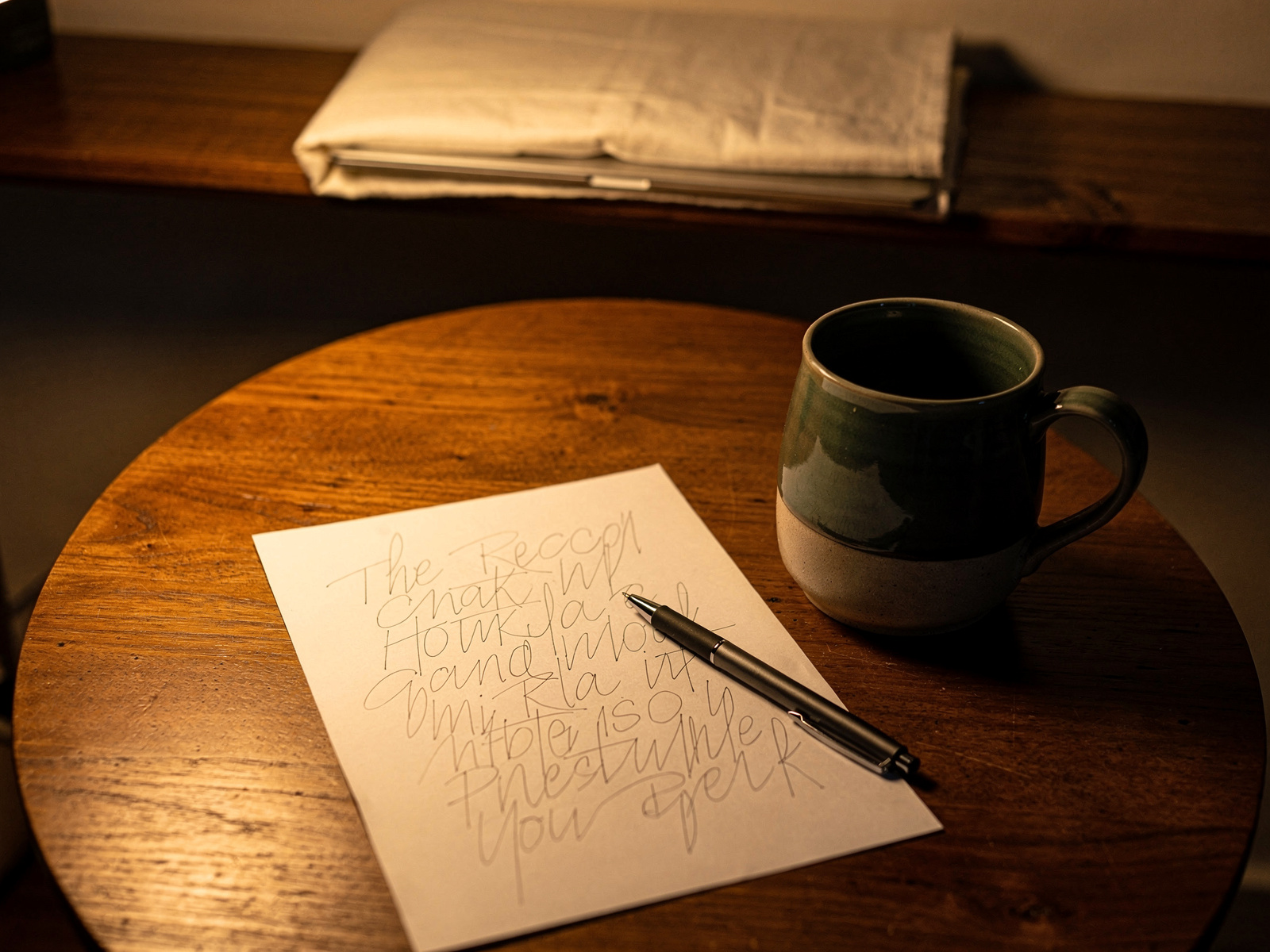
NHS Every Mind Matters suggests that if you worry in bed, you try writing a list of things you need to do the next day before you go to sleep. For someone whose desk is a few steps from the pillow, that list may help tell your brain the job is parked, not forgotten.
A shutdown script you can copy
Do these four things at the same time each evening:
- Close the browser tabs, email and chat, and save anything half-finished.
- Write three things for tomorrow on paper, most important first.
- Put the laptop out of the bedroom, or cover it with a cloth if your desk shares the room.
- Say a closing phrase aloud, such as: 'Done for today, tomorrow's list is written.'
Any paper will do
A notebook is optional. The back of an envelope works as well, as long as the list leaves your head and stays within reach of the desk, not the bed.
Your 7-day reset checklist
Day 1: choose a wake time
Pick one wake time you can keep, and set the alarm for it every day.
Day 2: get daylight
Go outside before or during work, even briefly, and sit near a window.
Day 3: dim the evening
Switch off overhead lights after dinner and use low side lamps.
Day 4: check the bedroom
Make sure it is dark and a little cooler than the room where you work.
Day 5: screen-free hour
Put phone, tablet and computer away for the hour before bed.
Day 6: shutdown ritual
Run the shutdown script and write tomorrow's list.
Day 7: keep what helped
Keep only the steps that helped. Consider a lamp or bulb only if a gap remains. A week may not settle things, and this is not a cure.
Frequently asked questions
When do the clocks go back in 2026?
At 2am on Sunday 25 October 2026 the UK clocks go back one hour, ending British Summer Time and returning to GMT, according to Royal Museums Greenwich (checked on 18 October 2026). It brings an extra hour in bed and darker evenings.
Will the clock change affect my sleep?
The Sleep Charity says it can disrupt the body clock for some people, comparing the shift to temporary, mild jet lag in the following days and weeks. Not everyone notices it, and no step here promises to prevent it.
What temperature should my bedroom be?
There is no single right number. NHS inform in Scotland says slightly cooler than your living area, and the 16-18°C quoted via British Gas and The Sleep Charity is only a rough guide. Choose what feels comfortable and safe for you.
Do I need a sunrise lamp or special bulbs?
No. Start with the free steps, since evidence that light devices improve sleep is limited. Add one only if a gap remains after a week and you want it for comfort. We have not tested any.
When should I see a GP?
The NHS advises seeing a GP if habit changes have not worked or sleep problems have lasted for months. Speak to one as well if low mood is affecting your daily life.
Verdict
Start with the free steps: one wake time, daylight early, a dimmer evening, a bedroom a little cooler than your desk room and a written shutdown list. Add a lamp or bulb only if a gap remains, as evidence that light devices improve sleep is limited. The main reservation is that a week of changes is not a fix. If habit changes have not worked or problems have lasted for months, speak to a GP. Next step: choose Monday's wake time tonight.


