



Host a Virtual Halloween Party: Audio,…

20 Minimalist Halloween Nail Ideas for…

Can Free Affinity Help You Build…

12 Lower-Sugar Halloween Treat Swaps Worth…

Can Hostinger AI Builder Launch a…

A 5-Step Screen-Free Autumn Reading Ritual…

Plug-In Solar Panels UK: Are They…

15 Last-Minute Zoom Halloween Costumes for…

Meta One Explained: Is the Subscription…

10 Low-Fuss Dog Halloween Ideas: Comfort…

Plaud One Explained: Can AI Earbuds…

9 Gothic Dinner Table Ideas for…

Namecheap vs Dynadot

7 UK Ghost Tours and How…

Convertkit Vs Beehiiv

Do You Really Need a £420…

Bluehost vs Siteground

15 Gentle Spooky Autumn Books to…

Namecheap review

How to Remove Halloween Face Paint…
GetResponse and ActiveCampaign both go beyond basic newsletters, but they solve different problems. GetResponse feels like a broad marketing toolkit with webinars, funnels, ecommerce features, and email campaigns in one place. ActiveCampaign feels more like a serious automation engine built around CRM pipelines, behaviour tracking, segmentation, and customer journeys. The better choice depends on how complicated your marketing actually needs to be.
Quick Overview
In this comparison you will learn:
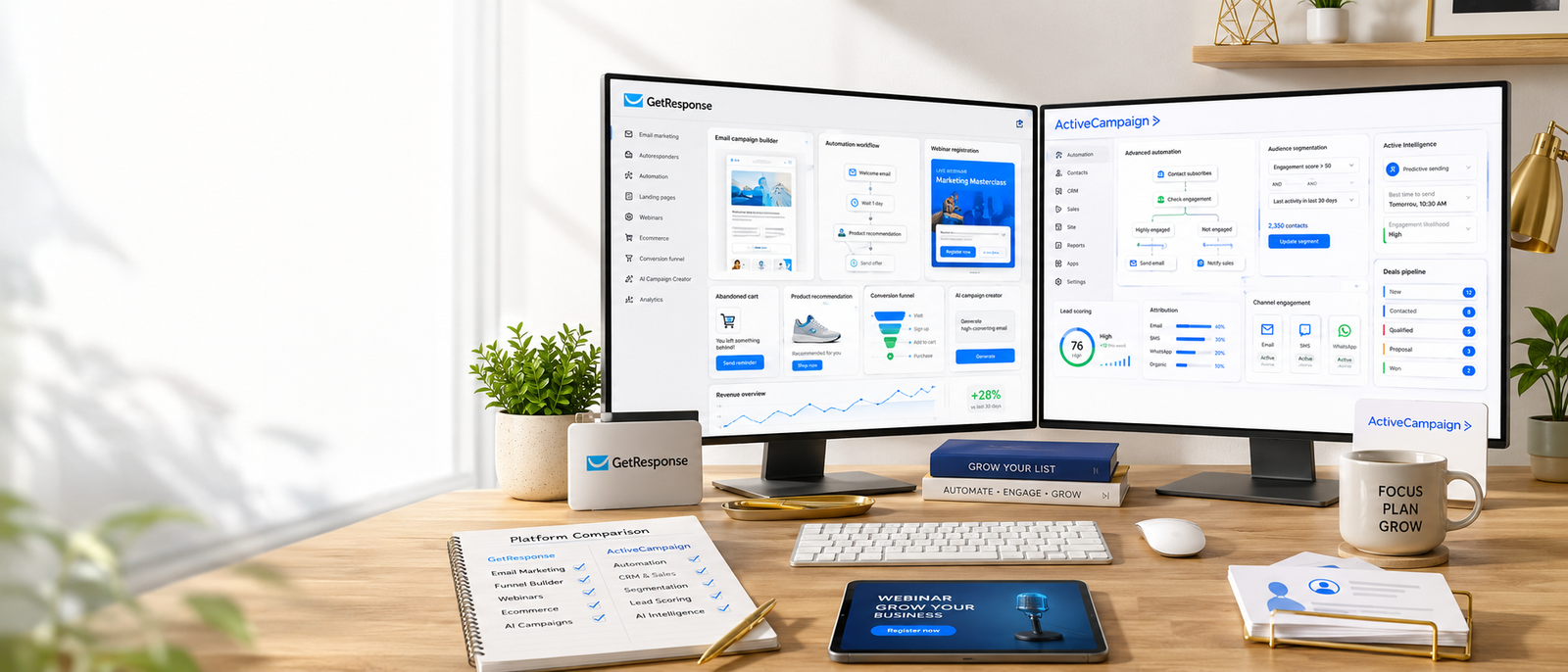
Marketing automation platforms supporting business growth workflows.
Helpful next reads: GetResponse review
The Biggest Difference Between GetResponse And ActiveCampaign
GetResponse Works Like A Marketing Toolkit
GetResponse brings email campaigns, webinars, funnels, landing pages, ecommerce tools, and automation into one platform. That makes it useful for teams that want several marketing jobs handled without stitching together too many separate subscriptions.
ActiveCampaign Goes Deeper On Automation
ActiveCampaign focuses heavily on behaviour triggers, CRM pipelines, advanced segmentation, lead scoring, and customer journeys. That depth suits companies that need highly targeted follow-up instead of simple email sequences.
GetResponse Usually Feels Easier To Understand
GetResponse can still feel busy, but its main tools are easier to grasp quickly. A webinar funnel, product campaign, or lead magnet sequence usually feels more visible and practical from the start.

ActiveCampaign Requires More Careful Setup
ActiveCampaign gives marketers more control, but that control comes with extra setup decisions. Poorly planned tags, automations, and CRM stages can become messy fast.
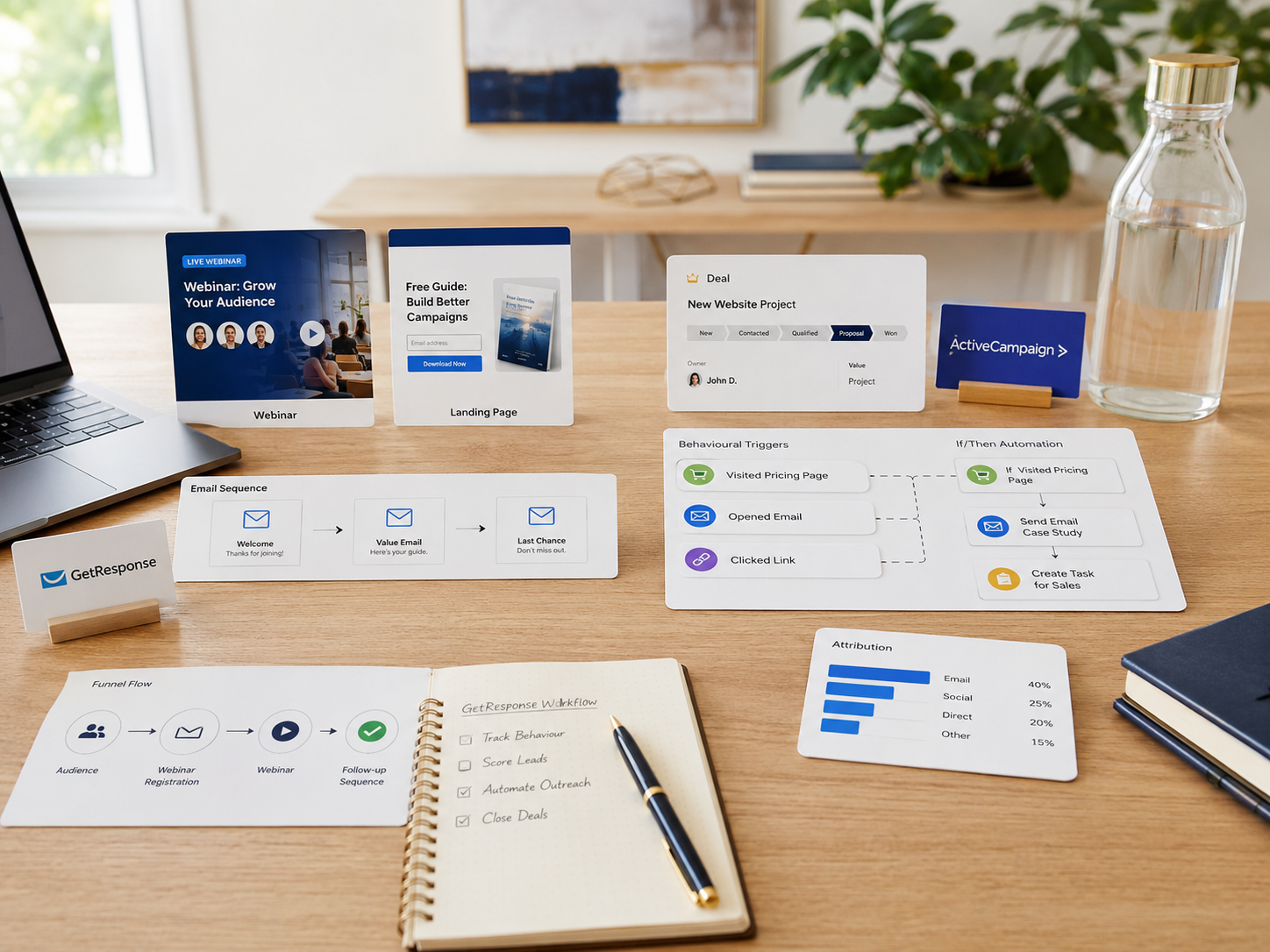
Bigger Marketing Systems Can Quietly Become A Second Job
A founder watches tutorials about advanced automation, builds complex customer journeys, adds behaviour tracking everywhere, and then spends afternoons fixing rules instead of improving offers. That hidden maintenance rarely appears in polished software demos. Most online businesses first need clear onboarding, reliable campaigns, stronger lead capture, and simple follow-up before they need deep technical infrastructure.
Explore more insights: Email marketing automation explained
GetResponse Features
Webinar Tools Create Practical Value
GetResponse stands out because webinar hosting sits inside the same platform as emails, landing pages, reminders, and follow-up campaigns. Coaches, educators, consultants, and product sellers can run teaching-based sales funnels without paying for separate webinar software.
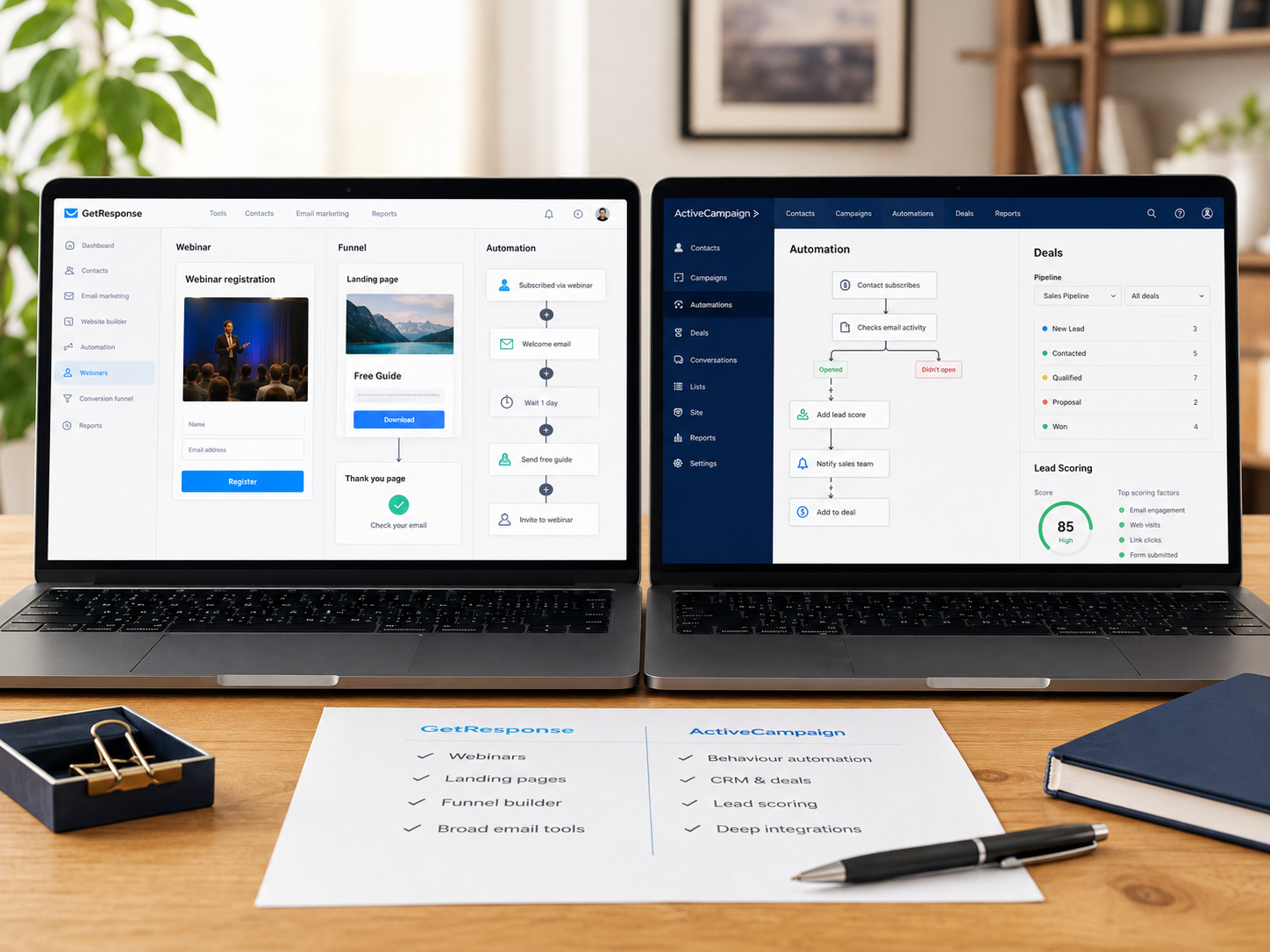
Funnels And Ecommerce Tools Stay Connected
A business launching a webinar funnel can keep registration pages, reminder emails, product promotions, and follow-up campaigns together. That connection reduces the usual headache of moving leads between disconnected tools.

Automation Feels Strong But Not Extreme
GetResponse offers enough automation for lead magnets, abandoned carts, product launches, onboarding, and customer follow-up. It gives useful control without feeling as technical as heavier CRM-first platforms.
Campaign Building Feels Marketing-Focused
GetResponse works well when the goal is building campaigns rather than managing detailed sales pipelines. The platform feels strongest when email, webinars, funnels, and ecommerce all support the same offer.
ActiveCampaign Features
Behaviour Tracking Goes Much Deeper
ActiveCampaign can respond to user actions such as email clicks, page visits, purchases, form submissions, and sales activity. That makes it powerful for companies that need highly personalised follow-up.

CRM Tools Improve Sales Visibility
Sales teams can track leads, manage pipelines, prioritise warm prospects, and connect email activity with customer history. This matters when marketing and sales need to work from the same information.

Segmentation Feels More Precise
ActiveCampaign lets teams separate contacts by behaviour, interest, purchase history, engagement level, and pipeline stage. That precision helps larger lists feel more personal instead of sending the same message to everyone.

The Dashboard Takes More Discipline
The same power that makes ActiveCampaign attractive can also slow people down. Automation maps, CRM stages, tags, and reports need regular cleanup or the account becomes harder to manage.

Pricing Feels Different After The First Month
GetResponse often feels easier to justify when webinars, funnels, ecommerce emails, and landing pages are used together. ActiveCampaign makes more sense when a company depends on CRM workflows, lead scoring, behaviour tracking, and advanced segmentation. Without those needs, ActiveCampaign can feel expensive because the best features require planning, testing, and regular upkeep.
Frequently read together: ActiveCampaign review
Which Platform Fits Different Businesses Best?
Webinar And Funnel Businesses
GetResponse fits coaches, educators, consultants, and product sellers who rely on webinars, landing pages, email reminders, checkout paths, and follow-up campaigns working together.
Sales Teams And CRM-Heavy Companies
ActiveCampaign fits teams managing leads, sales stages, behaviour-based follow-up, detailed segmentation, and long customer journeys.
Businesses Wanting Easier Management
GetResponse is usually the calmer choice when a company wants broad marketing tools without building a complicated CRM machine behind every campaign.

Businesses Wanting Deeper Targeting
ActiveCampaign works better when the list is large, customer behaviour matters, and the business has enough time to maintain detailed automations properly.

Pros And Cons Of GetResponse And ActiveCampaign
GetResponse Pros
GetResponse Cons
ActiveCampaign Pros
ActiveCampaign Cons
FAQs
Which platform suits webinar businesses better?
GetResponse usually suits webinar-focused businesses better because webinar hosting, registration pages, reminders, and follow-up emails can stay inside one platform.
Why do businesses choose ActiveCampaign?
Businesses often choose ActiveCampaign for deeper automation, CRM pipelines, behaviour tracking, lead scoring, and advanced segmentation.
Is GetResponse easier using daily?
For many teams, yes. GetResponse usually feels easier to understand because the main tools are built around visible campaigns, webinars, funnels, and email marketing.
Which platform has stronger automation?
ActiveCampaign has stronger automation overall, especially for behaviour-based triggers, CRM-connected journeys, and detailed segmentation.
Which platform creates less maintenance work?
GetResponse usually creates less maintenance work for broad marketing campaigns. ActiveCampaign needs more upkeep because its automation and CRM features go deeper.
Final Verdict
GetResponse vs ActiveCampaign comparisons become easier once businesses stop chasing the longest feature list and look at how they actually sell. GetResponse usually works better for companies wanting webinars, funnels, ecommerce emails, landing pages, and campaign tools in one place without getting buried under heavy CRM setup.
ActiveCampaign works better for teams that truly need behaviour tracking, CRM pipelines, lead scoring, advanced segmentation, and detailed customer journeys.
Neither platform is automatically better. GetResponse is the broader marketing toolkit. ActiveCampaign is the deeper automation engine. The smarter choice depends on whether the business needs easier campaign building or serious customer journey control.


