



Host a Virtual Halloween Party: Audio,…

20 Minimalist Halloween Nail Ideas for…

Can Free Affinity Help You Build…

12 Lower-Sugar Halloween Treat Swaps Worth…

Can Hostinger AI Builder Launch a…

A 5-Step Screen-Free Autumn Reading Ritual…

Plug-In Solar Panels UK: Are They…

15 Last-Minute Zoom Halloween Costumes for…

Meta One Explained: Is the Subscription…

10 Low-Fuss Dog Halloween Ideas: Comfort…

Plaud One Explained: Can AI Earbuds…

9 Gothic Dinner Table Ideas for…

Namecheap vs Dynadot

7 UK Ghost Tours and How…

Convertkit Vs Beehiiv

Do You Really Need a £420…

Bluehost vs Siteground

15 Gentle Spooky Autumn Books to…

Namecheap review

How to Remove Halloween Face Paint…
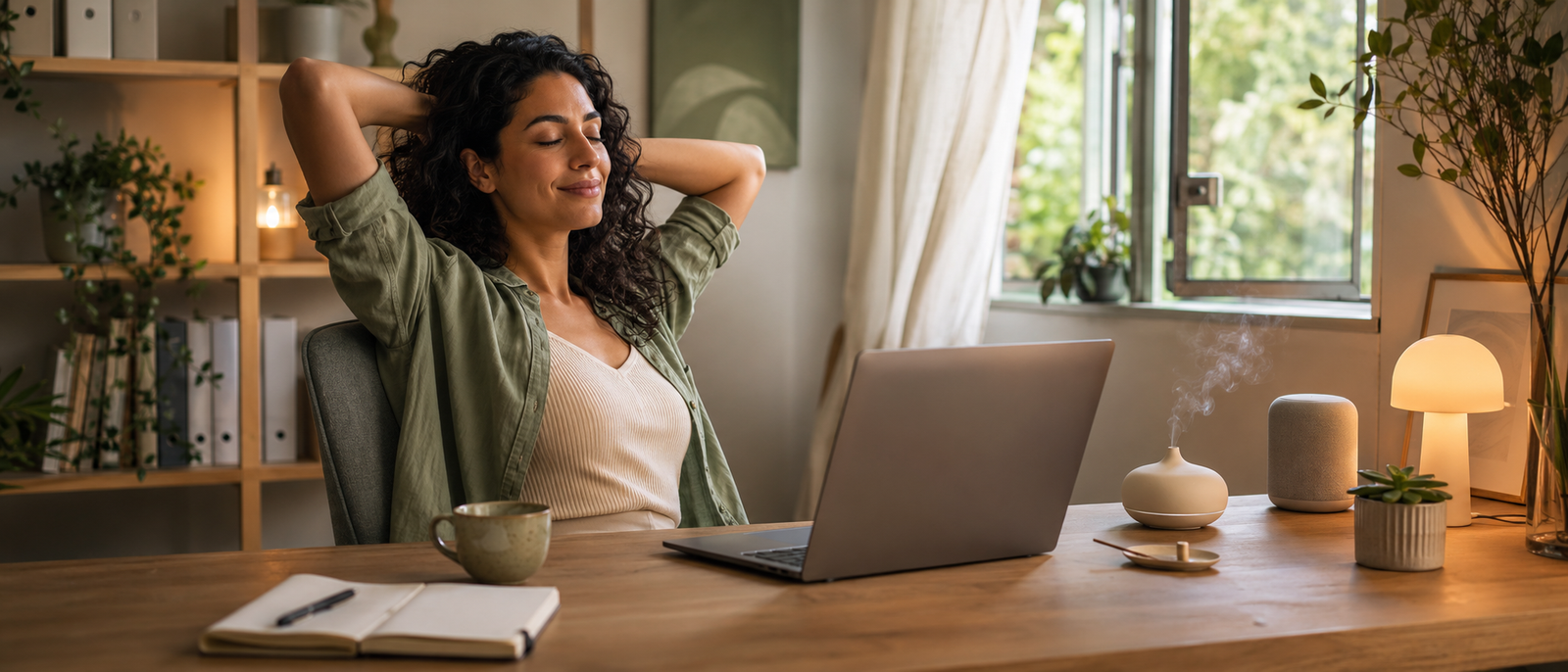
Your tiny work window should not feel like another sensory demand. If the house has already been loud, messy, snack-heavy or full of questions, the last thing you need is a workspace that feels sharp before you even begin. Scents, sound and light for a calmer workday are not about creating a spa office. They are about making your work corner stop adding to the chaos.
You probably have one of these atmosphere problems
Start here: the 10-minute calmer atmosphere reset
Atmosphere ideas for real workdays
Scents, sound and light fixes
FAQ
Final verdict
Most Relevant Audience
This article is for remote workers, home workers, freelancers, bloggers, creators, side hustlers, small business owners and busy parents working in short, interrupted pockets of time. It is especially useful if your workspace technically functions, but still feels harsh, distracting, stale, noisy, flat or mentally tiring before the actual work starts.
You probably have one of these atmosphere problems
The room feels too sharp
Some workspaces feel stressful even when they are not obviously messy. The ceiling light is harsh, the screen is bright, the air feels still and every little sound seems to arrive wearing boots. That kind of room makes your brain work harder before the first email, draft or client task even begins.
Silence feels too loud
Silence sounds peaceful until every tiny noise becomes the main event. Fridge hum, footsteps, traffic, pipes, messages, pets and neighbours can all feel louder when the room has no gentle sound layer. Soft background noise can make the space feel less exposed without turning your desk into a festival.
The room smells like life happened
Home offices are still homes. Yesterday’s coffee, lunch, laundry, pets, bins, closed windows and laptop heat can all make a work corner feel stale. Scent can help, but only after the obvious offenders leave the room. Lavender on top of life admin is not the dream blend.
Work never feels finished
When one room handles emails, content, homework, dinner and rest, your brain needs cues. Without them, the laptop stays mentally open after it closes. Light, sound and scent can help separate focus time from shutdown time, especially when the dining table becomes an office and then has to become dinner again.
Start here: the 10-minute calmer atmosphere reset
Open a window for a few minutes if you can. Remove mugs, wrappers and anything causing stale smells. Turn off harsh overhead light and use one softer light near the desk. Choose either quiet on purpose or one gentle background sound. If you use scent, keep it light. The aim is not a full ritual. It is making the room less irritating before your brain has to perform.
Atmosphere ideas for real workdays
If you work between school runs
Keep the setup fast. Open the window, switch on one reliable light and choose one sound cue before you start. You do not have time to curate a sensory retreat. You need the room to feel workable quickly before the next interruption arrives wearing school shoes.
If you work from a dining table
Use atmosphere cues that can disappear. A compact light, small speaker and subtle scent habit can help the table become a work zone, then return to home later. At shutdown, clear the table and change the light so dinner does not feel like it is being served beside unfinished invoices.
If your day already feels overstimulating
When your day is full of noise, questions, mess, notifications and small decisions, your workspace should not add another layer. Choose one calming cue, not five. Softer light may be enough. Gentle background sound may be enough. Sometimes the most calming thing is removing one irritation rather than adding a new routine.
If your room feels stale by afternoon
Refresh the room before adding atmosphere. Open a window, run a fan, remove mugs, clear the desk surface and move air through the space. Then add soft light or gentle sound if needed. A stale room does not need more mood first. It needs the workday leftovers cleared out.
Scents, sound and light fixes
Scent for focus and shutdown
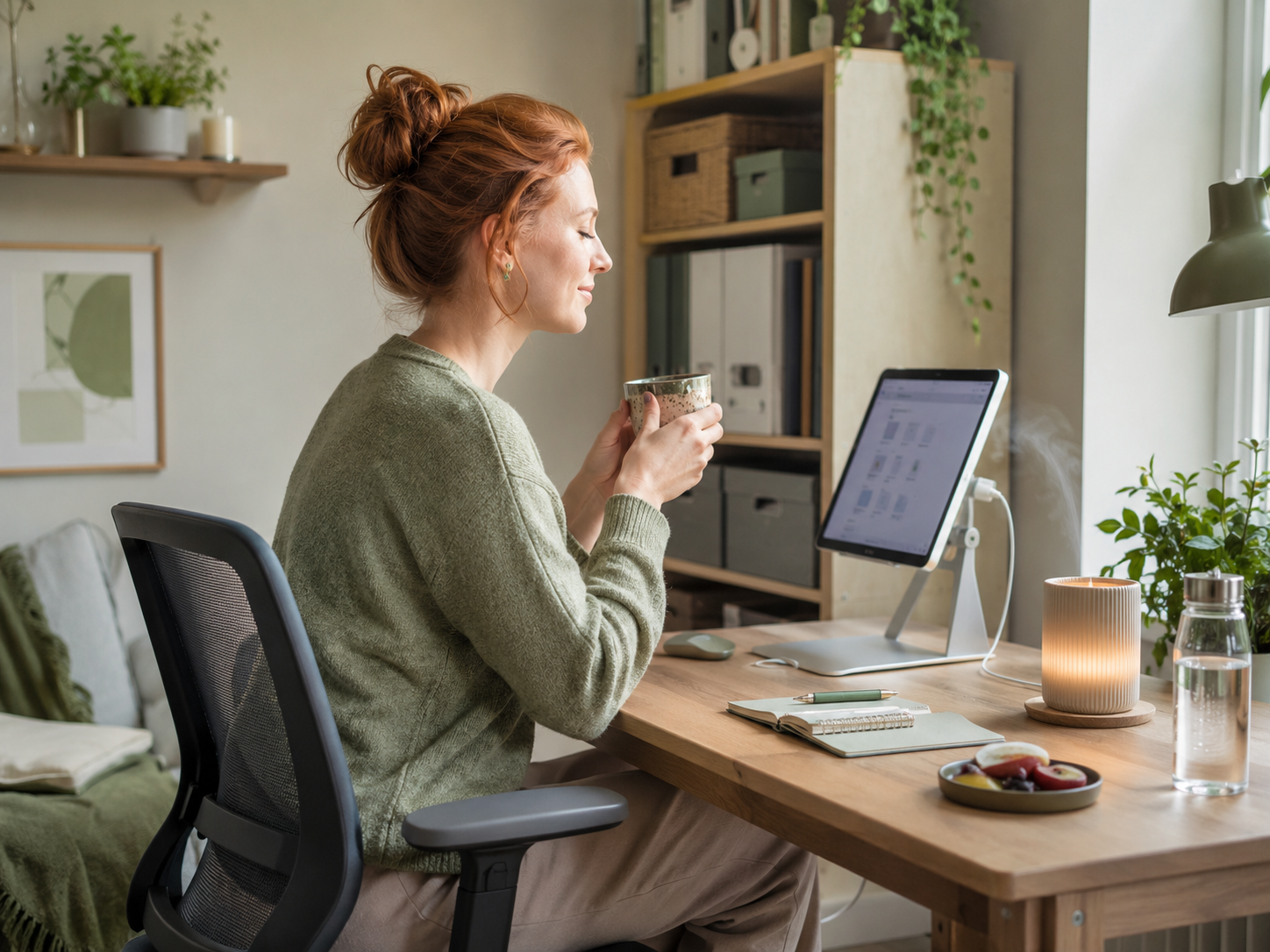
Scent works best as a light signal. A fresh scent can mark the start of work, while a softer scent can help the room slow down later. Choose gentle options such as citrus, mint, rosemary, lavender, eucalyptus or clean linen-style scents. Avoid anything strong enough to announce itself from the hallway.
Sound for less mental noise
Sound should reduce friction, not steal attention. Soft instrumental music, rain sounds, brown noise, nature sounds or low background audio can help some people settle. Writing and planning often need simpler sound than admin or tidying. If the sound keeps pulling your brain away, it is not helping.
Light for softer work sessions
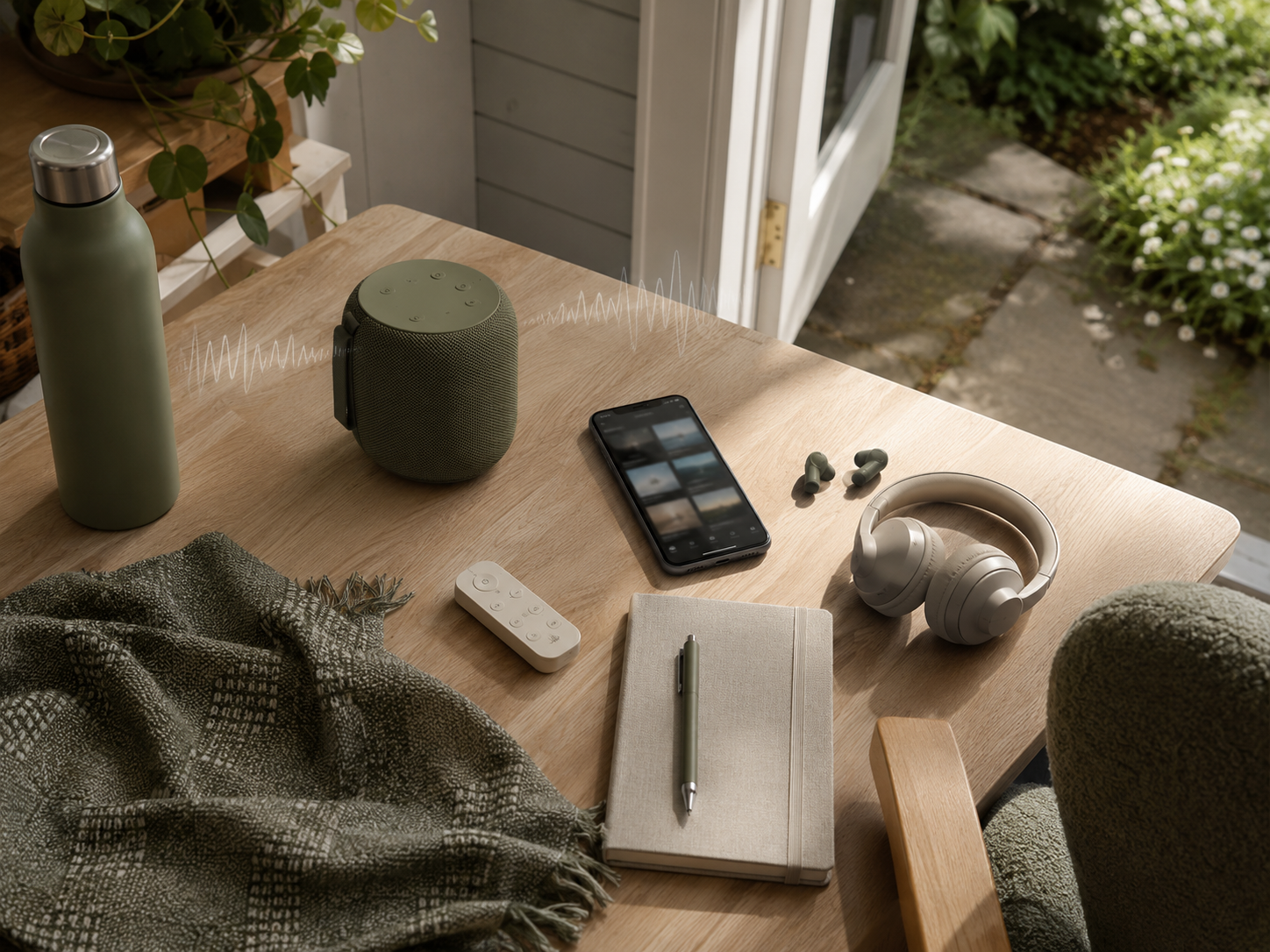
Lighting changes the whole emotional feel of the room. Harsh overhead light can make a workspace feel tense, while dim corners make screens feel too aggressive. Use clearer light when you need focus and warmer light later when the room needs to stop acting like the workday is still happening.
Combining cues without clutter
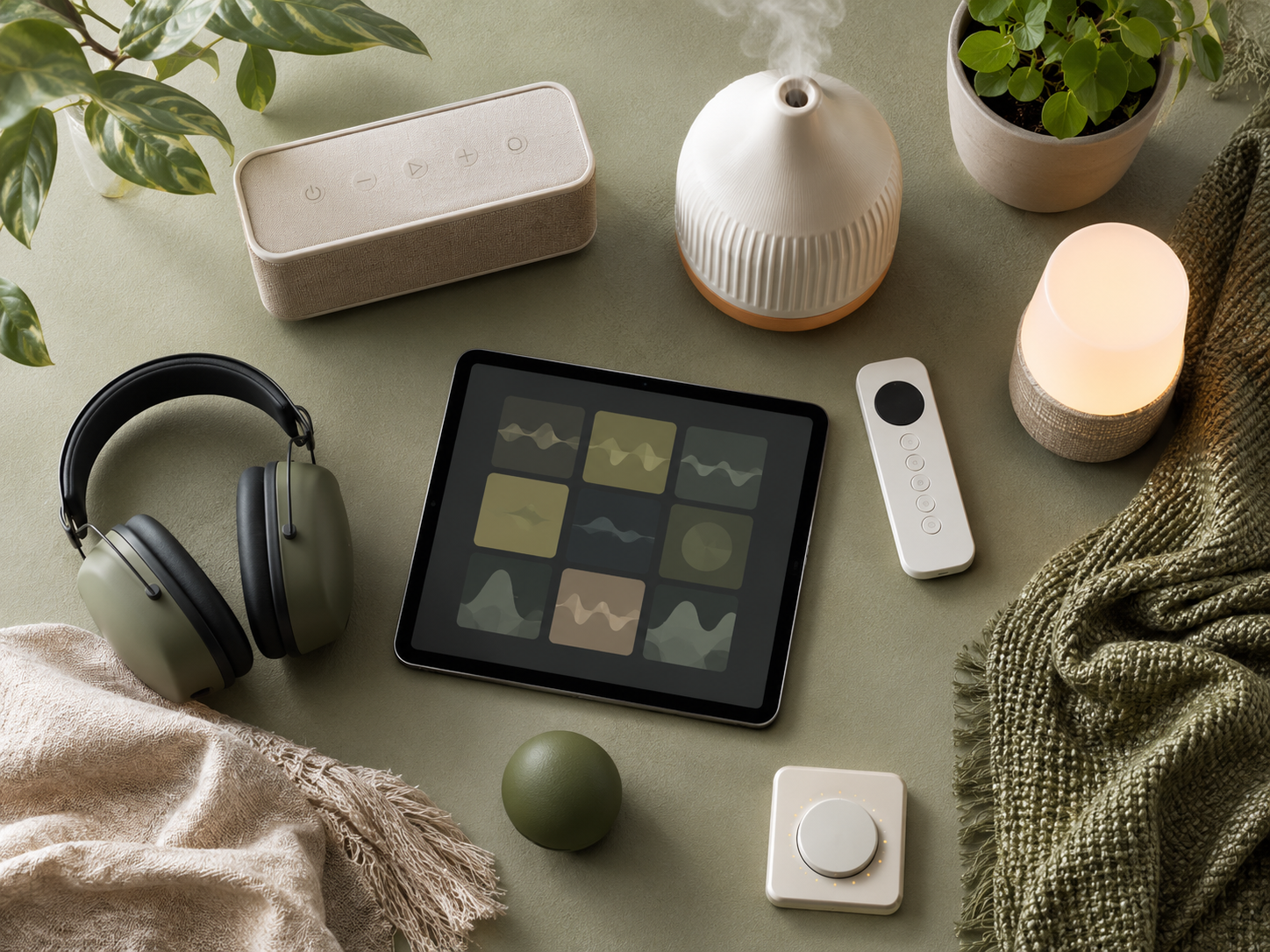
Do not add scent, sound, lights, speakers and mood settings all at once. That can become sensory clutter with better branding. Pick the cue that solves the biggest problem first. If the room is harsh, start with light. When it feels stale, start with air. If silence feels too loud, start with sound.
Buy for the atmosphere problem, not the lifestyle photo
Before buying anything, name the problem. Is the room too dark, too sharp, too silent, too noisy, too stale or too hard to switch off from? Choose one product that solves that issue. Otherwise, you risk buying calm-looking objects that quietly become more clutter.
Atmosphere products worth considering
Why this matters if you are working from home
If you are building a blog, managing clients, recording content, learning a skill or growing a small business from home, your work windows may already be limited. A harsh room will not ruin your plans, but it can make every small session feel heavier. Better atmosphere helps your focus meet less resistance.
Common calm workspace mistakes
Using scent to cover clutter
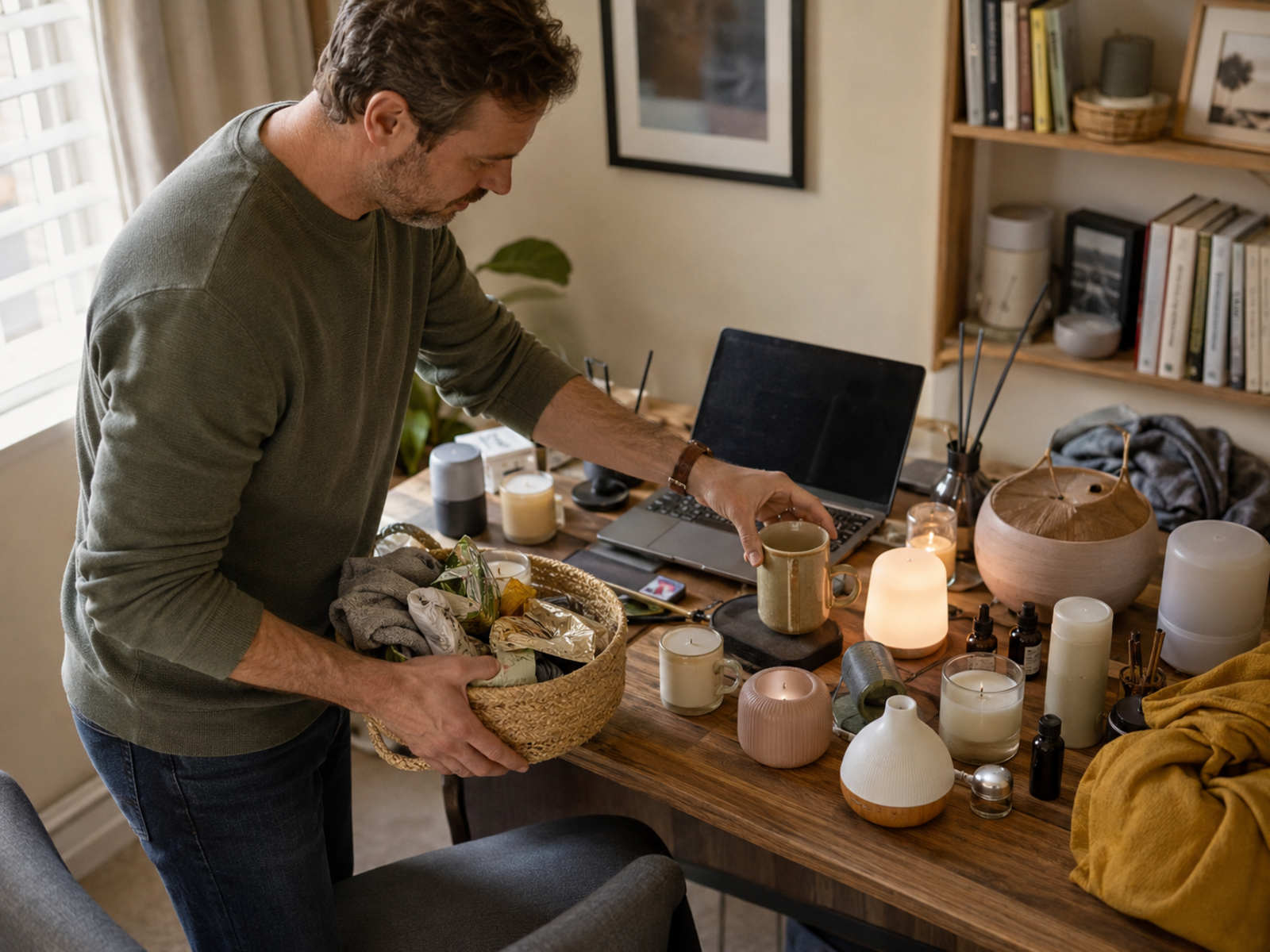
Scent should not be asked to do cleaning’s job. Remove old mugs, wrappers, laundry piles or bins first. Then use scent lightly. Otherwise, you are just adding fragrance to chaos, which is still chaos with better branding.
Making sound too interesting
Music can help, but anything too loud, lyrical or dramatic may pull attention away from work. Choose sound based on the task. Deep work usually needs simpler audio than admin, tidying or routine jobs.
Keeping harsh light on all day
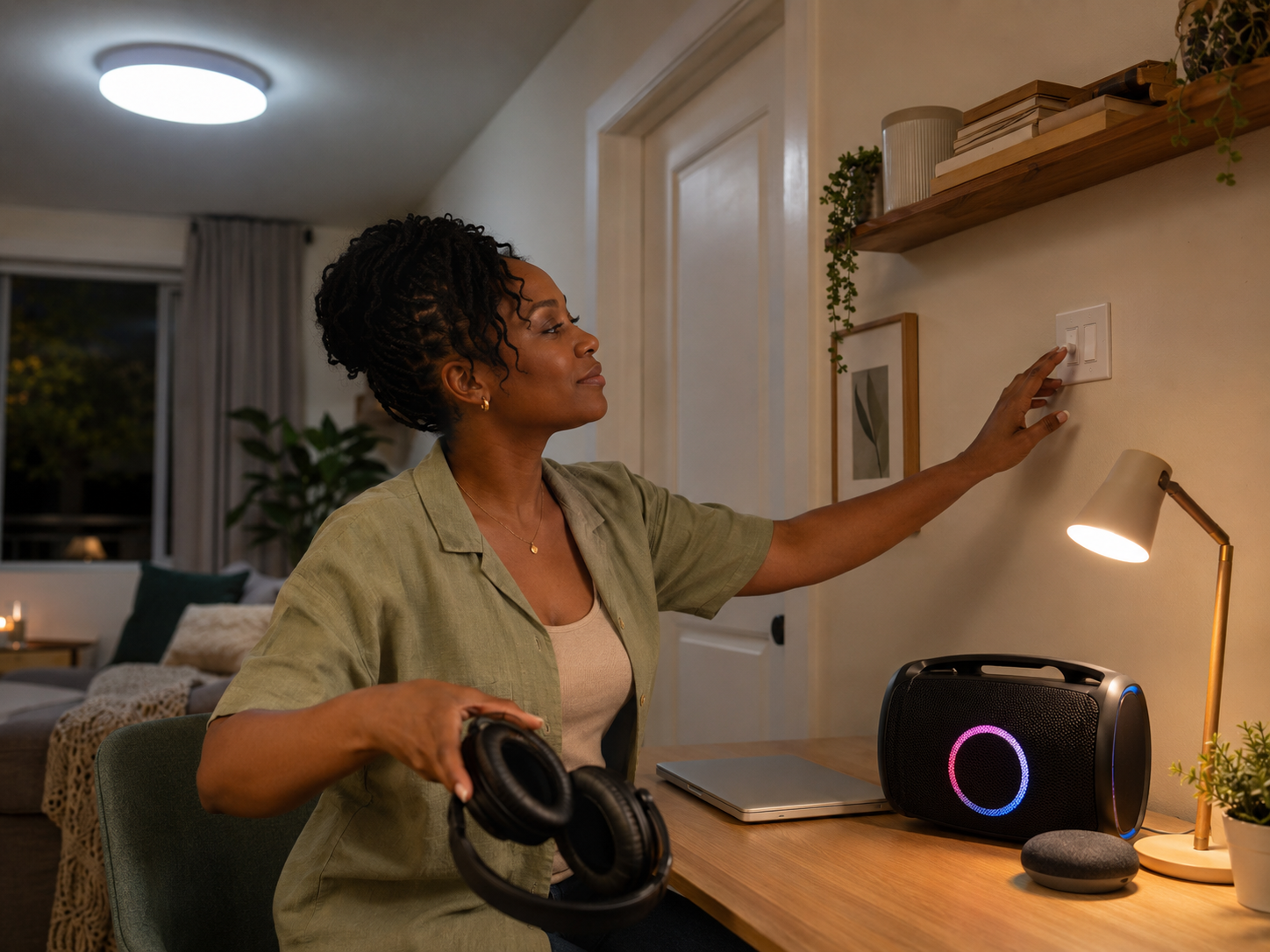
The same bright light all day can make a room feel tense. Adjust light as the day changes. Clearer light can support focus, while warmer light can help the room slow down later. Your workspace does not need to stay in productivity mode forever.
Adding too many calm tools
Too many atmosphere tools can become another form of clutter. One light, one sound source and one subtle scent cue may be enough. If your desk starts looking like a relaxation aisle collided with a laptop, simplify.
FAQ
How can scents, sound and light make work calmer?
Scents, sound and light can make work calmer by giving your brain clearer atmosphere cues. Gentle scent can signal focus or shutdown, soft sound can reduce distracting noise, and better lighting can make the room feel less harsh.
What scents are best for a home office?
The best home office scents are light, clean and subtle. Citrus, mint, rosemary, lavender, eucalyptus or fresh linen-style scents can work well. Avoid overpowering scents, especially in small rooms or shared spaces.
What sounds help focus while working from home?
Soft instrumental music, nature sounds, brown noise, rain sounds or quiet background audio can help some people focus. The best sound depends on the task. If it keeps stealing your attention, it is not helping.
What lighting is best for a calmer workday?
Soft, layered lighting is best for a calmer workday. Use natural light where possible, add task lighting for work and switch to warmer light later in the day. Avoid harsh overhead lighting and strong screen glare.
How do I make my workspace feel less stressful?
Make your workspace feel less stressful by reducing visual clutter, improving airflow, softening harsh light and choosing background sound intentionally. Use scent lightly and create a shutdown cue so the room stops feeling like work when the day ends.
Final verdict
Scents, sound and light for a calmer workday are really about sensory relief. Your workspace should not be another thing your brain has to survive when your day is already full of noise, interruptions and unfinished tasks.
Start with the atmosphere problem you feel first: stale air, sharp light, distracting silence, noisy background or a room that never switches off. Then choose one simple cue that makes your small work window easier to use. Calm should support the workday, not become another routine to maintain.


