



Host a Virtual Halloween Party: Audio,…

20 Minimalist Halloween Nail Ideas for…

Can Free Affinity Help You Build…

12 Lower-Sugar Halloween Treat Swaps Worth…

Can Hostinger AI Builder Launch a…

A 5-Step Screen-Free Autumn Reading Ritual…

Plug-In Solar Panels UK: Are They…

15 Last-Minute Zoom Halloween Costumes for…

Meta One Explained: Is the Subscription…

10 Low-Fuss Dog Halloween Ideas: Comfort…

Plaud One Explained: Can AI Earbuds…

9 Gothic Dinner Table Ideas for…

Namecheap vs Dynadot

7 UK Ghost Tours and How…

Convertkit Vs Beehiiv

Do You Really Need a £420…

Bluehost vs Siteground

15 Gentle Spooky Autumn Books to…

Namecheap review

How to Remove Halloween Face Paint…
You do not need to become crafty to use crafting breaks for stress relief. No labelled drawers, glitter confidence or twelve kinds of scissors are required. For busy home workers, the point is simpler: give your hands one tiny, low-mess task so your brain can stop gripping the last work block. Five minutes of colouring, doodling, stitching, folding or shaping can help you move into the next task without carrying the previous one in your jaw.
Use craft breaks as task transitions.
Keep supplies adult, tiny and low-mess.
Stop after one small action.
Choose crafts that survive interruption.
Avoid paint, glue and complicated cleanup.
Use creativity for decompression, not output.
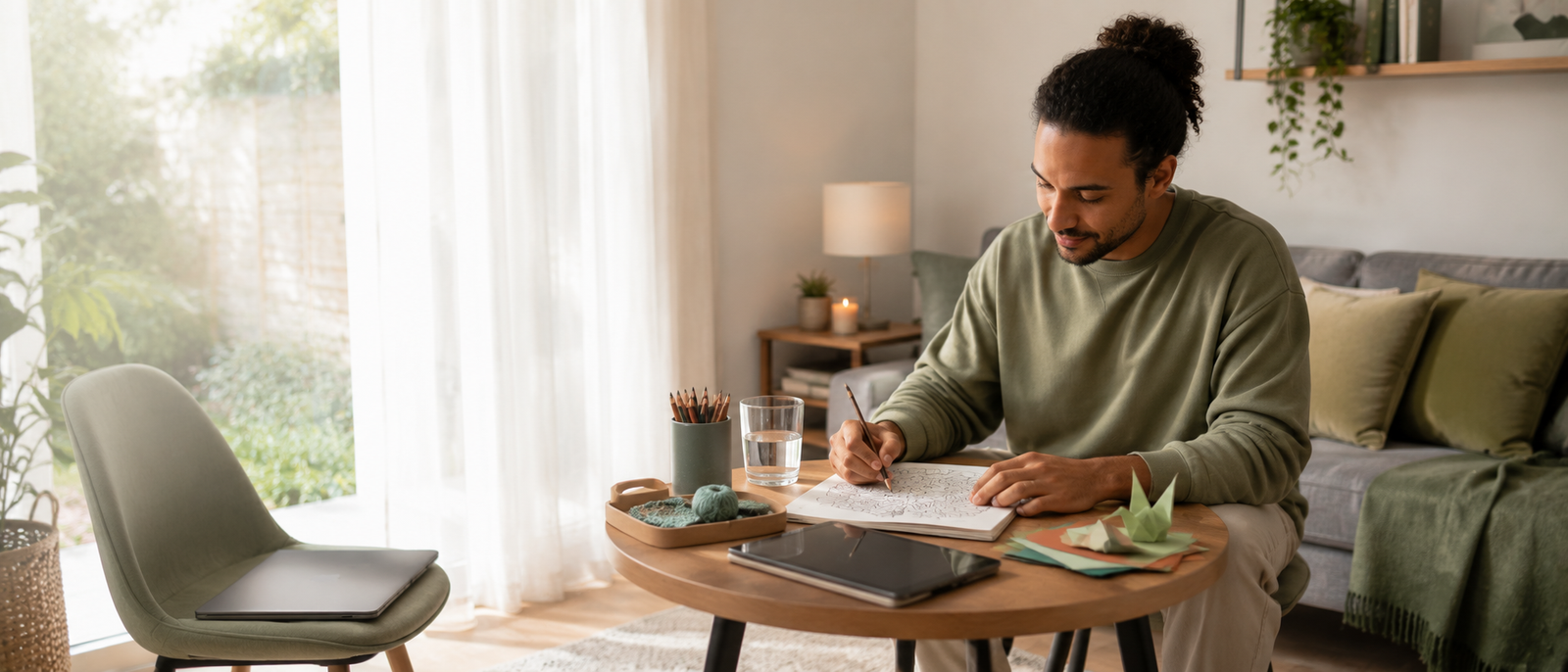
Most Relevant Audience
This article is for remote workers, home workers, desk workers, freelancers, bloggers, creators, side hustlers, parents, carers and busy people who need small stress-relief breaks between tasks. It is especially useful if your day moves from emails to calls to school forms to client work to dinner thinking, and your brain never quite gets the memo that the last task has ended.
Why Crafting Helps Stressed Desk Workers
It gives your brain a clean handover
A craft break gives your brain a small handover between tasks. After a call, tense message or screen-heavy work block, your mind may still be replaying the last thing. Colouring one shape or doodling one pattern gives that stress somewhere softer to land before the next task begins.
It uses your hands, not another screen
Scrolling feels like a break, but it often keeps your brain in the same stream of input, comparison and noise. Crafting uses your hands in a simple physical way. No inbox, dashboard or tiny red notification badge acting like it has urgent emotional needs.
It lowers the stakes
The craft does not need to be good, useful, finished or shown to anyone. That is the relief. A tiny creative pause works because it is not asking you to perform. If your doodle looks like a tired potato, excellent. The potato has done its job.
It can survive interruption
A useful craft break must handle real life. Children walk in. The kettle boils. A message lands. Choose activities you can stop instantly without ruining anything. If a break collapses the second life interrupts, it is too fragile for a normal home-working day.
This Is Not Kids’ Craft Chaos
This is not the family craft box. You are not getting out glitter, glue sticks, sequins and one suspicious tub of dried-out markers. A workday craft break needs one tiny adult reset kit that stays simple, contained and easy to put away before it becomes another household mess with feelings.
Craft Breaks vs A New Hobby
A craft break has a stopping point
A craft break should fit between tasks, not swallow the afternoon. Stop after five minutes, one coloured section, one doodle, one folded shape, one row or one decorated sentence. The aim is to reset, not accidentally become unavailable because you are emotionally committed to shading a leaf.

A hobby can be bigger
A hobby can involve learning, improving, finishing projects and buying supplies. That is lovely, but it is different from a workday reset. Keep the craft break deliberately smaller. It should leave you calmer, not with seven tutorials open and a basket problem.
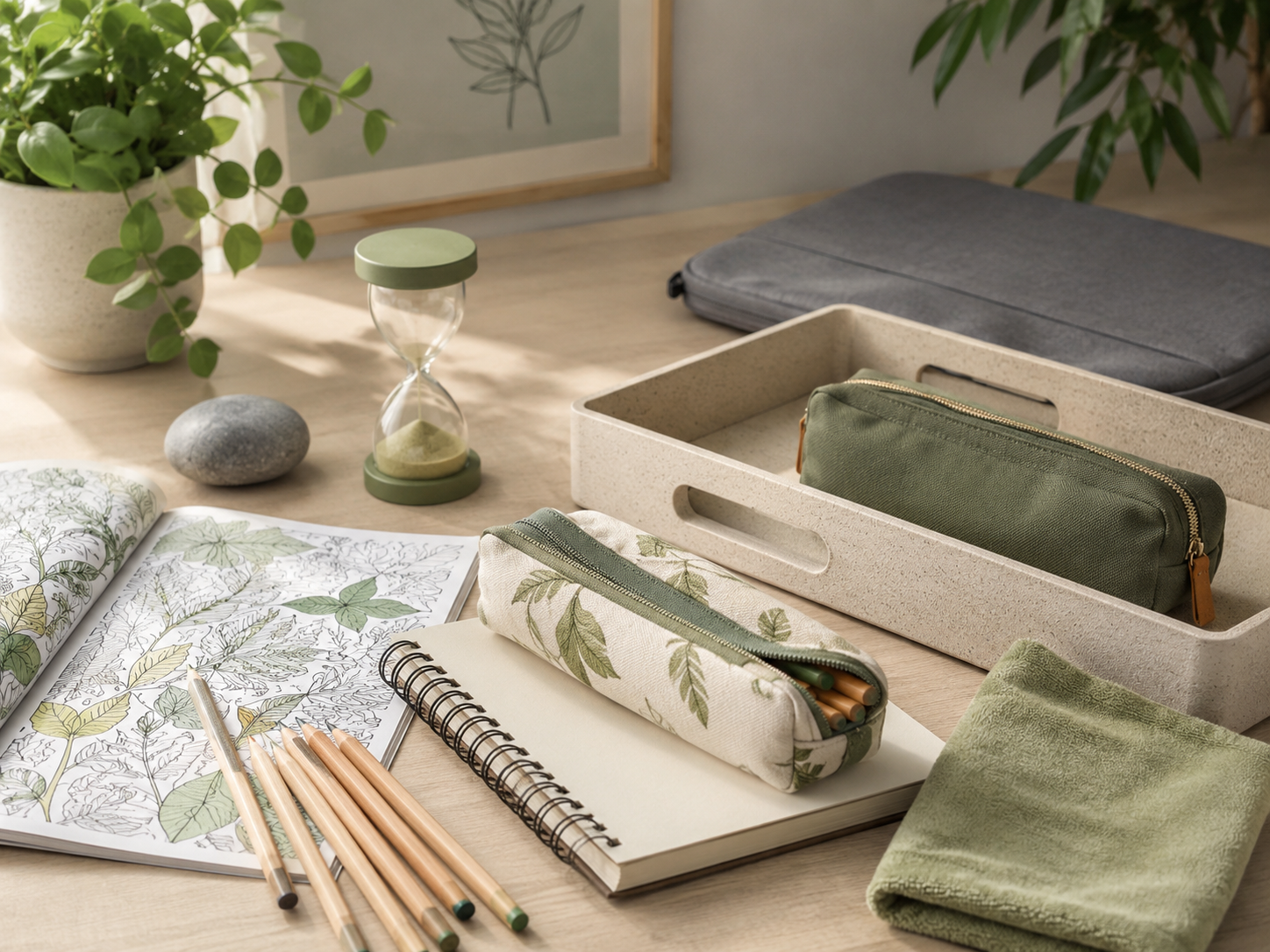
A craft break should be low-mess
Avoid anything that needs drying time, sharp tools, lots of pieces, water, table covering or cleanup during work hours. Paint, glue and beads may be brilliant on the right day, but not between a client call and school pick-up unless you enjoy finding tiny objects in the carpet.
A craft break should not need a mood
You should not need candles, music, a cleared table and a better personality to begin. Keep supplies nearby and simple. If the break needs too much preparation, your tired brain will choose scrolling because scrolling is always dressed and ready.
Keep The Break Small Enough To Use
The best crafting breaks for stress relief are boringly easy to start. Start with one pen, one page, one folded shape, one sticker, one ball of yarn or one small clay piece. If the activity needs a full setup, it belongs to a slower weekend, not the five-minute gap between invoices and a video call.
Low-Mess Craft Break Ideas
Paper folding
Paper folding is quiet, cheap and easy to contain. Fold a small shape, envelope, bookmark or basic origami form. One sheet of paper can become a clear stopping point. There is no drying, washing or glitter treaty with the dining table.
Choose The Craft That Matches The Stress
If your brain feels crowded, try colouring or doodling. Noisy thoughts may respond better to decorated journaling. Physical tension may suit clay, stitching, knitting or crochet. When decisions are the problem, choose a ready-made mini kit. The craft is not the point. The decompression is the point.
One Tiny Craft Kit To Keep Near Your Desk
Colouring pad and pencils
A small adult colouring pad and a few coloured pencils make an easy starter kit. Choose a compact pad rather than a huge book if your desk is small. Pencils are usually lower mess than markers, and they are easy to stop using when work or family life interrupts.
Pocket sketchbook and fineliner
A pocket sketchbook and one fineliner pen are enough for doodling, shapes, borders, little patterns or messy visual thinking. This is a good option if you want the simplest possible desk kit. One notebook, one pen, no dramatic craft identity required.
Mini embroidery or stitching kit
A mini embroidery kit or tiny stitching project can work if repetitive hand movement calms you. Choose a beginner-friendly kit with few colours, clear instructions and no complicated setup. After a few stitches, you should be able to pause without leaving the room looking like a haberdashery incident.
Origami paper or air-dry clay
Origami paper is clean, cheap and easy to store. Air-dry clay is more tactile but needs a little more care, so keep it tiny and contained. Pick these if stress feels physical and you want your hands to press, fold, smooth or shape something instead of reaching for your phone.
Do Not Build A Craft Shop Beside Your Laptop
A craft break kit should be small enough to fit in a pouch, drawer or pencil case. Too many supplies turn the kit into visual clutter and another decision point. Start with one activity. Let it prove itself before adding storage boxes, specialty pens or a personality based around washi tape.
Five-Minute Creative Breaks
After a difficult email
After writing or reading a difficult email, use a craft break before moving on. Colour one small section, doodle shapes or decorate one sentence in a notebook. This creates a pause between the emotional task and whatever needs your attention next.
Between calls
Calls can leave your shoulders high and your brain full. A quick sketch, stitch or folded shape can help you reset before the next task. Keep it simple enough that you can stop when the next call begins without feeling robbed of your grand creative destiny.
Before school pick-up
If you work in short school-hour blocks, a five-minute craft pause before pick-up can help you shift gears. You are not trying to finish a project. Let your brain leave work mode before entering shoes, snacks, bags and everyone’s urgent feelings.
While waiting for the kettle
A kettle break is long enough for a tiny reset if the supplies are ready. Doodle one border, colour one small patch, fold one paper shape or write one decorated line. That is better than opening your phone and accidentally inviting the internet into your nervous system.
Crafting Instead Of Scrolling
Scrolling is easy, but it often keeps your brain in comparison, input and noise. A small craft gives you output without pressure. You make a line, shape, colour, stitch or fold. Nothing refreshes. Nobody comments. No algorithm arrives to ask whether you would like forty more opinions.
Tactile Crafts For Stress Relief
Knitting or crochet
Knitting or crochet can work well because the hand movement is repetitive and calming. You do not need a complicated pattern. One simple row can be enough. This suits evening resets, sofa breaks or moments when you want your hands busy but your brain less involved.
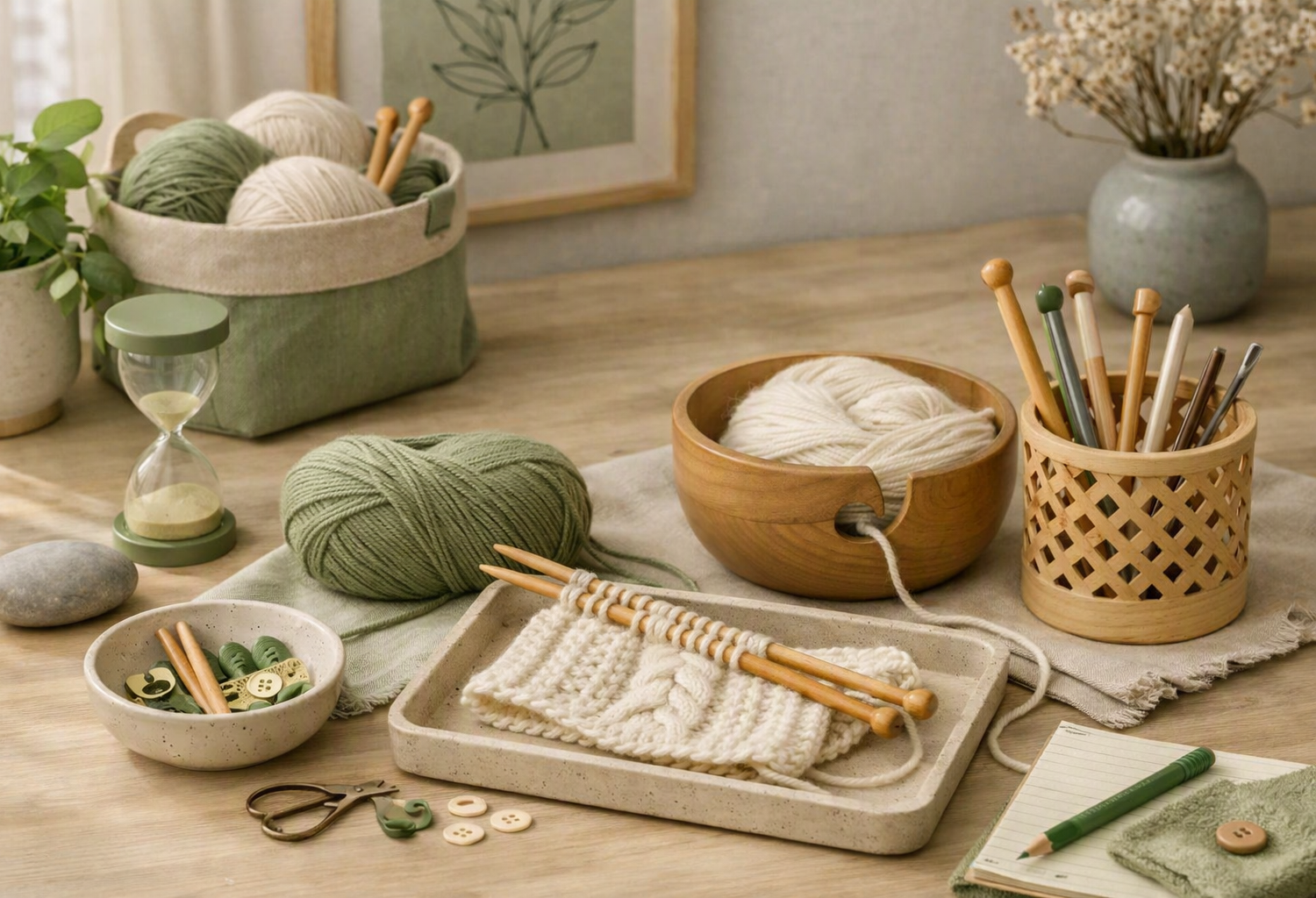
Air-dry clay or modelling
Air-dry clay or simple modelling can help when stress feels physical. Rolling, pressing and shaping gives your hands something tactile to do. Keep it small and low-mess. A tiny shape is enough. You are not opening a ceramics studio between client tasks.
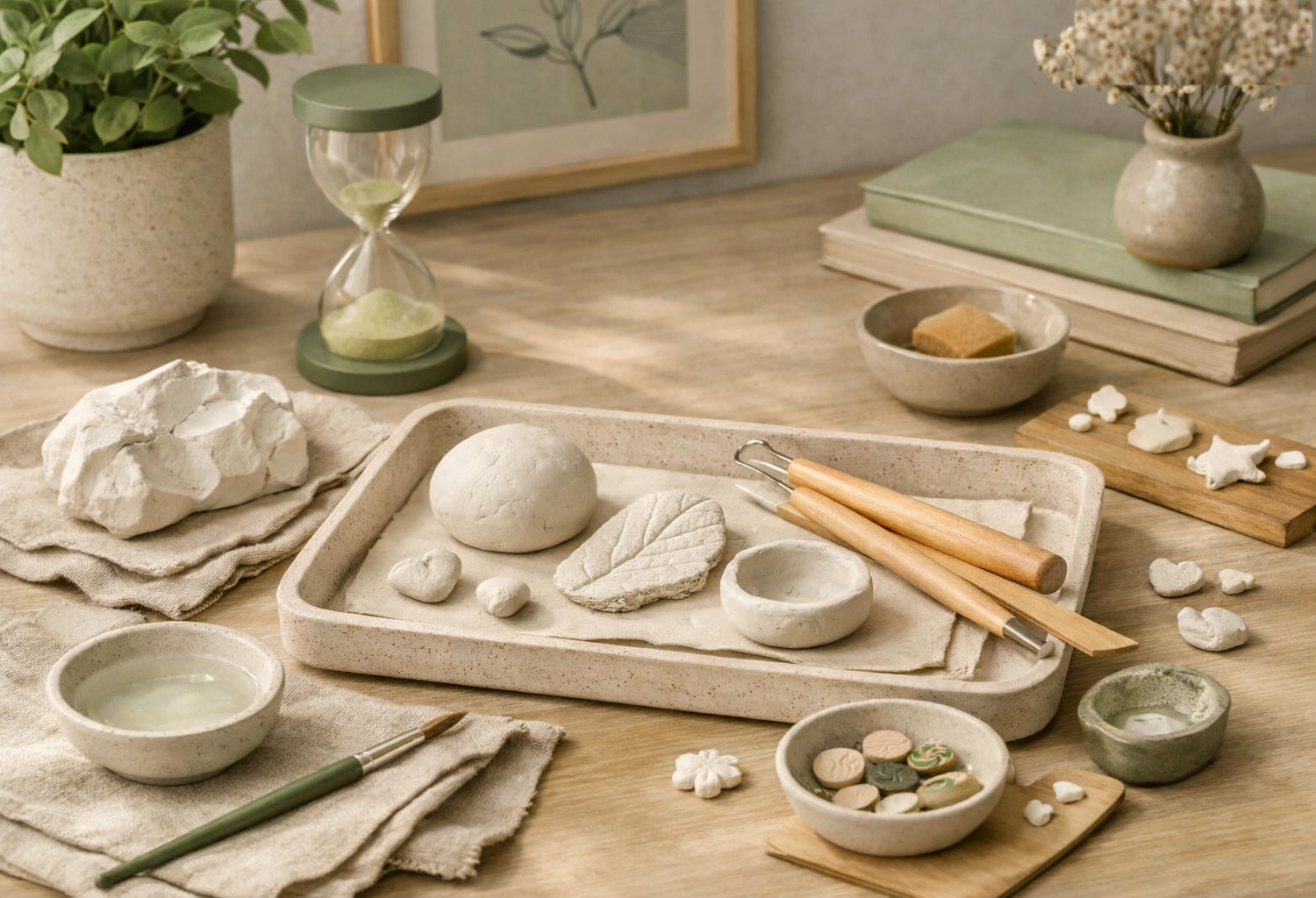
Simple stitching
Simple stitching, embroidery practice or mending can be calming if you enjoy repetitive hand work. Keep the project tiny and easy to pause. A few stitches can help you slow down after fast digital work, especially when the day has been all typing, clicking and mental noise.
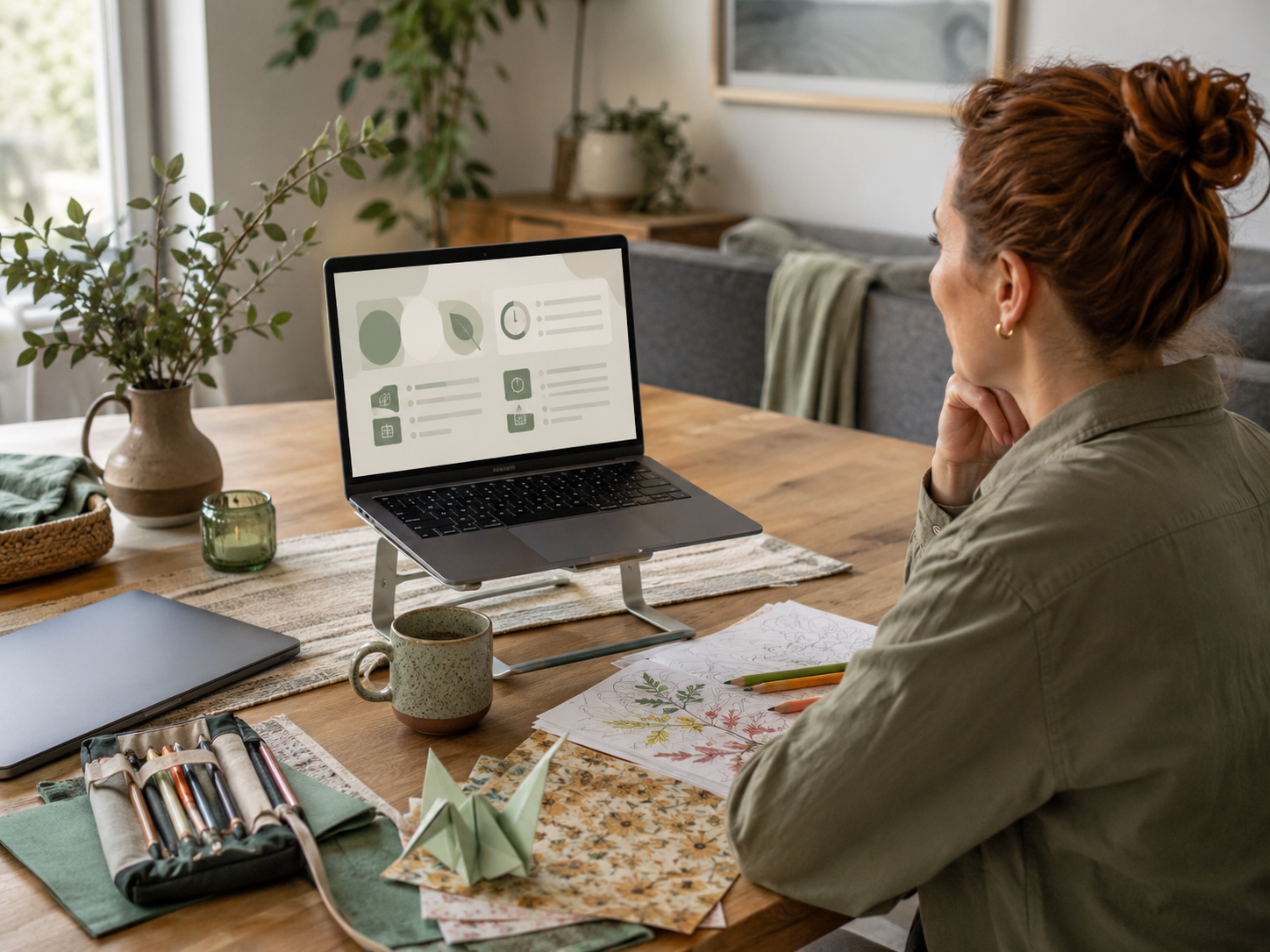
Decorating one journal note
A decorated journal note can help when the stress is mental rather than physical. Write one short brain-dump sentence, then add a border, underline, colour block or sticker. This gives the thought somewhere to go without turning journaling into another full routine.

Why This Matters If You Work From Home
If screen-heavy days leave your brain buzzing, small creative breaks can help create a cleaner ending between tasks. They also fit naturally with evening resets, digital clutter boundaries and rest without guilt, because the aim is not productivity. It is giving your mind a softer exit from the last thing it had to carry.
Common Craft Break Mistakes
Turning it into a performance
The fastest way to ruin a craft break is to demand a good result. This is not content. It is not a portfolio. It is not proof that you are a balanced person. Let it be scruffy, odd or unfinished. Relief matters more than the final object.
Buying too many supplies
Craft supplies can become their own form of clutter. Start with one small activity before buying more. A notebook and pen, colouring page, yarn project or mini kit is enough. Do not turn stress relief into a shopping basket with glitter attached.
Choosing messy activities for tiny breaks
Paint, glue, beads and complicated materials can be lovely, but they may not suit short work breaks. If cleanup takes longer than the break, choose something simpler. Low-mess crafts are easier to use during real workdays, especially when the dining table is already under negotiation.
Forgetting to return to work
A craft break should help you return calmer, not disappear completely. Use a timer or natural stopping point. Finish one section, one row, one shape or one sentence. Stopping is part of the habit. Otherwise “just five minutes” becomes an accidental craft sabbatical.
FAQ
Can crafting help reduce work stress?
Crafting can help reduce work stress by giving your hands a simple, physical activity and your brain a break from screens, messages and decisions. It works best as a short, low-pressure reset rather than a complicated project.
What are easy craft breaks for desk workers?
Easy craft breaks for desk workers include adult colouring, doodling, simple sketching, decorated journaling, paper folding, basic stitching, knitting, crochet and small air-dry clay activities. Choose low-mess options that can start and stop quickly.
How long should a crafting break be?
A crafting break can be five to ten minutes. The goal is to create a pause between tasks, not finish a full project. Use a timer or tiny stopping point, such as one coloured section, one row, one doodle or one journal note.
Is colouring good for stress relief?
Colouring can be good for stress relief because it is simple, repetitive and low-pressure. It gives your mind something gentle to focus on without needing much planning, skill or decision-making. That makes it useful between screen-heavy work tasks.
What craft can I do between work tasks?
Good crafts between work tasks include colouring, doodling, paper folding, simple stitching, knitting one row, shaping a small piece of clay or decorating a journal note. Pick something low-mess and easy to stop when work needs you again.
How do I take creative breaks without losing focus?
Take creative breaks without losing focus by keeping them short, using simple supplies and choosing a clear stopping point. Avoid messy or complicated projects during work hours. The break should help you reset, not pull you into a whole new project.
Final Verdict
Crafting breaks for stress relief are not about becoming crafty. They are tiny creative handovers between tasks. You give your hands one simple thing to do so your brain can release the last email, call, admin job or screen-heavy work block.
A full hobby setup is not required. You need one small, low-mess creative break that survives interruption and helps your brain unclench. Colour one section, draw one line, stitch one row, fold one shape, decorate one sentence, then return to the day carrying slightly less of the last task.


