



Host a Virtual Halloween Party: Audio,…

20 Minimalist Halloween Nail Ideas for…

Can Free Affinity Help You Build…

12 Lower-Sugar Halloween Treat Swaps Worth…

Can Hostinger AI Builder Launch a…

A 5-Step Screen-Free Autumn Reading Ritual…

Plug-In Solar Panels UK: Are They…

15 Last-Minute Zoom Halloween Costumes for…

Meta One Explained: Is the Subscription…

10 Low-Fuss Dog Halloween Ideas: Comfort…

Plaud One Explained: Can AI Earbuds…

9 Gothic Dinner Table Ideas for…

Namecheap vs Dynadot

7 UK Ghost Tours and How…

Convertkit Vs Beehiiv

Do You Really Need a £420…

Bluehost vs Siteground

15 Gentle Spooky Autumn Books to…

Namecheap review

How to Remove Halloween Face Paint…
Learning how to make your workspace feel more human is not about creating a perfect home office. It is about making the place you work feel warmer, calmer and more like it belongs to a real person, not just a laptop, charger and list of unfinished tasks. A few small changes can soften the room, reduce the sterile feeling and remind you that your workspace should support you, not quietly take over your home.
Start with what you see first
Light changes the whole mood
Plants soften hard desk edges
Meaningful objects beat random decor
Comfort should be easy to reach
Clutter control should not feel sterile
End-of-day resets protect home energy
Most Relevant Audience
This guide is for remote workers, home workers, freelancers, bloggers, creators, side hustlers, parents, carers and small business owners who spend a lot of time working from home.
It is especially useful if your desk is functional but cold, your workspace has started blending into the rest of your home or the room feels more like a small branch office than somewhere a person can think, pause and breathe.
Why Home Workspaces Can Start Feeling Cold
The laptop becomes the room’s centre
When work happens at home, the laptop can slowly become the most important object in the room.
Everything starts arranging itself around tasks, cables, chargers, notebooks and deadlines. That may be practical, but it can make the space feel like work has claimed the room instead of simply using part of it.
Function replaces feeling
A chair, desk, monitor and lamp can create a working setup, but not always a welcoming one.
A workspace can be technically useful and still feel cold. Humanising it means asking how the space feels during a normal Tuesday, not just whether it fits the equipment.
Clutter and emptiness can both drain you
Too much clutter makes a workspace feel noisy. Too little personality can make it feel sterile.
The goal is not a showroom desk or a pile of personal objects. It is enough warmth, texture and order that the room feels usable without becoming flat.
The workday never fully leaves
A home workspace can feel draining when it stays visually “on” all evening. Open notebooks, cables, mugs and screens keep the workday present.
A few boundaries and shutdown habits can help the room become part of your home again, even if the desk has to stay in the same corner.
The space stops reflecting you
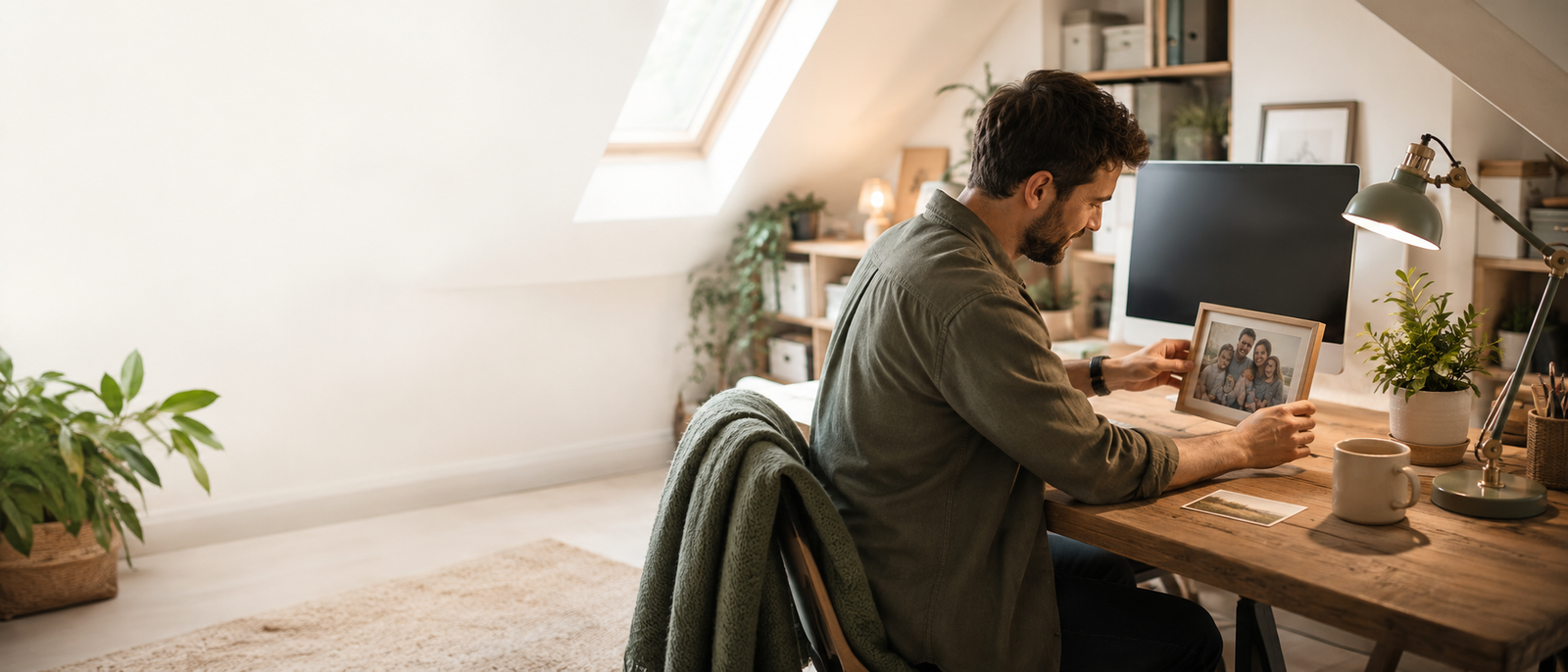
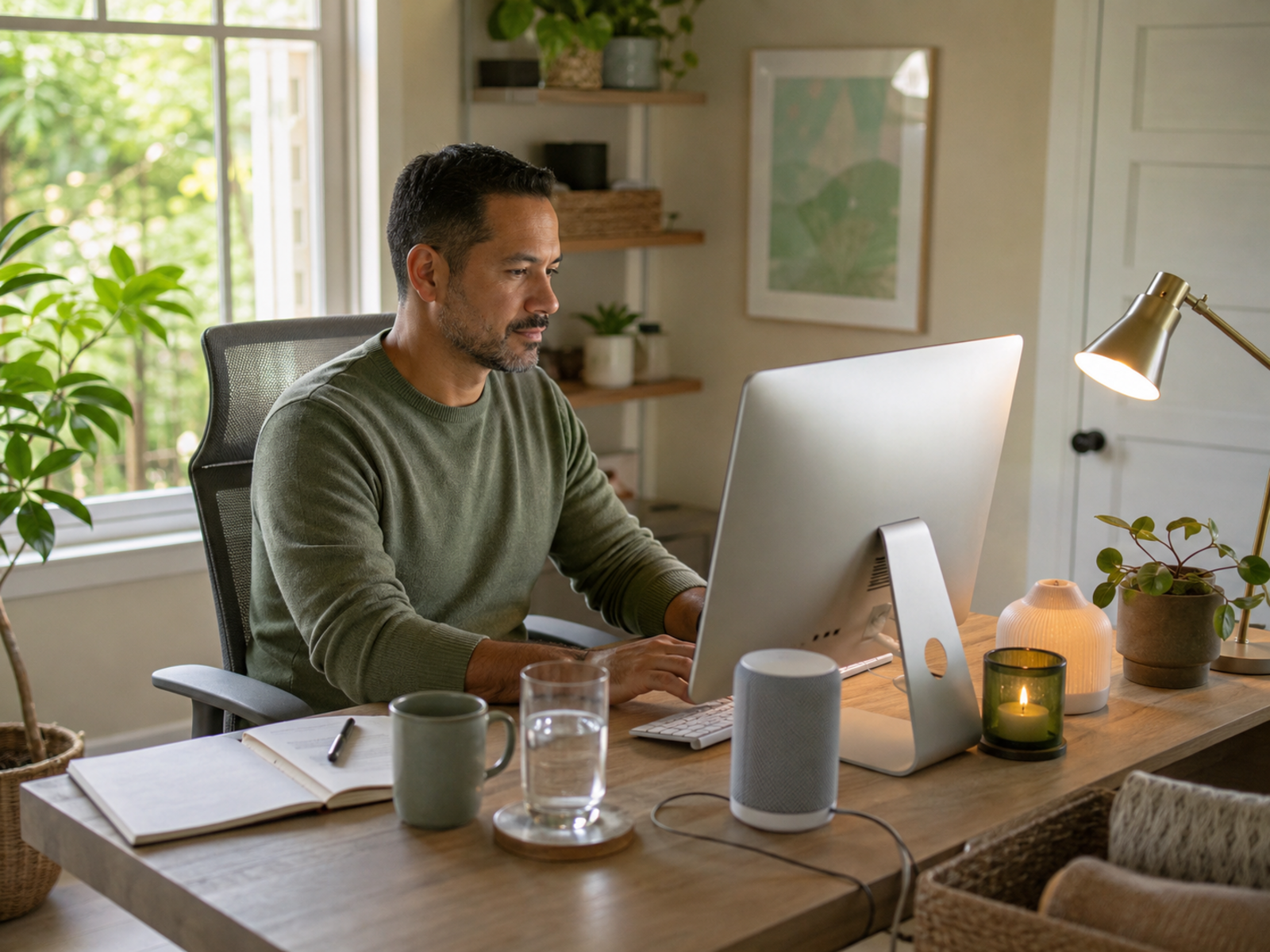
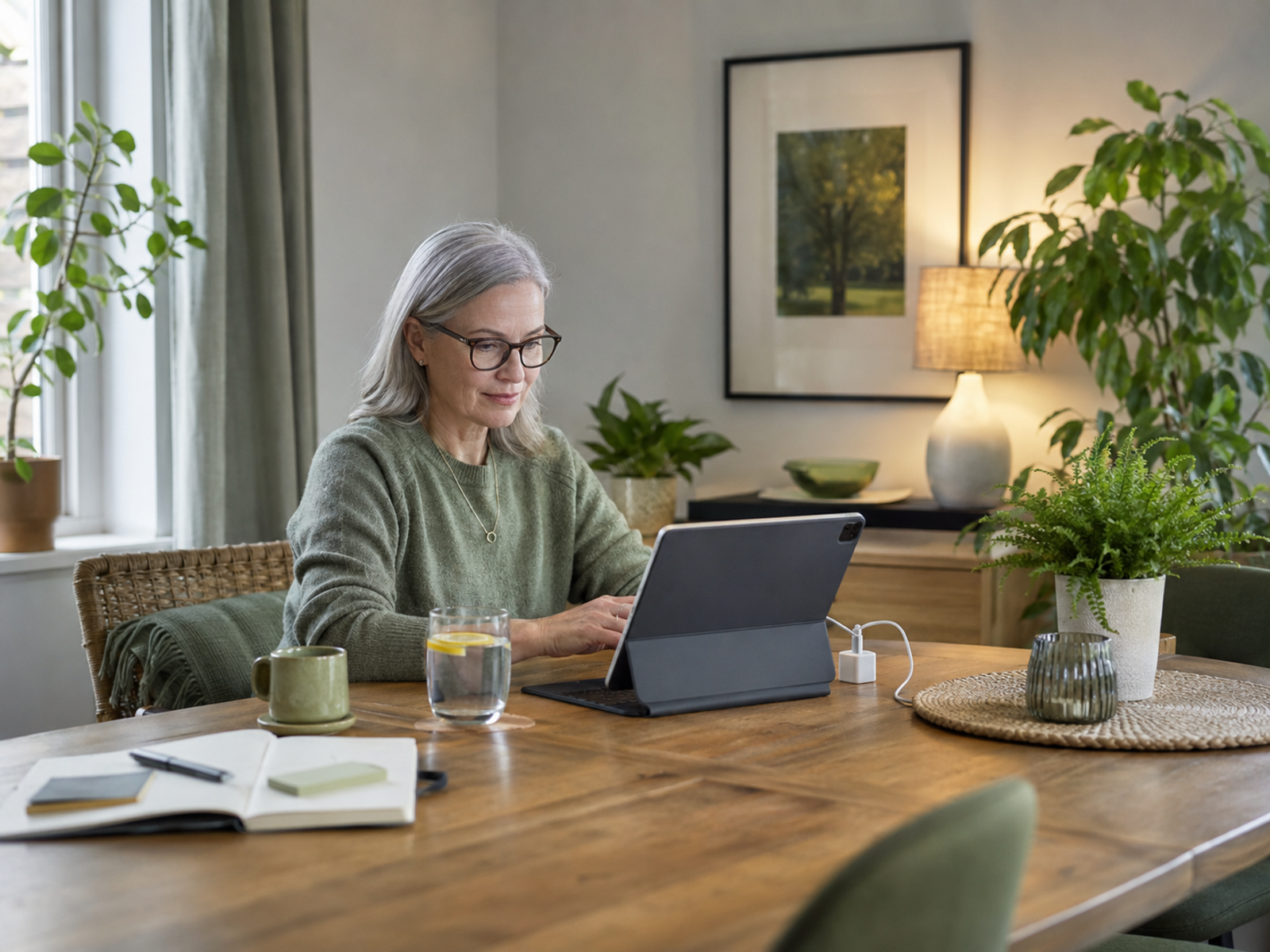
A human workspace should show small signs that a person works there: light you like, a plant, a photo, a comfortable mug, softer textures or a calmer arrangement.
These touches are not frivolous. They help the space feel less temporary, less harsh and less dominated by work.

The useful starting point is not “how can this desk look more professional?” It is “does this space remind me that a real person works here?” A human workspace can still be tidy, focused and practical. It just needs warmth, comfort and boundaries alongside the laptop.
Small Changes That Make A Workspace Feel More Human
Start With What You See First
Look at what you see when you sit down. Is it a wall, a mess, a pile of cables, a harsh light or something that makes the day feel heavier?
Change one visible thing first. Move clutter, angle the desk, add a small object, place a plant nearby or soften the view behind the screen.
Add Natural Light, Warm Light And Softer Edges
Light changes how a workspace feels. Natural light can help the room feel more awake, while warm desk lighting can soften evenings and grey afternoons.
Avoid relying only on harsh overhead lighting where possible. A small warm lamp, better bulb choice or softer light source can make the desk feel less clinical.
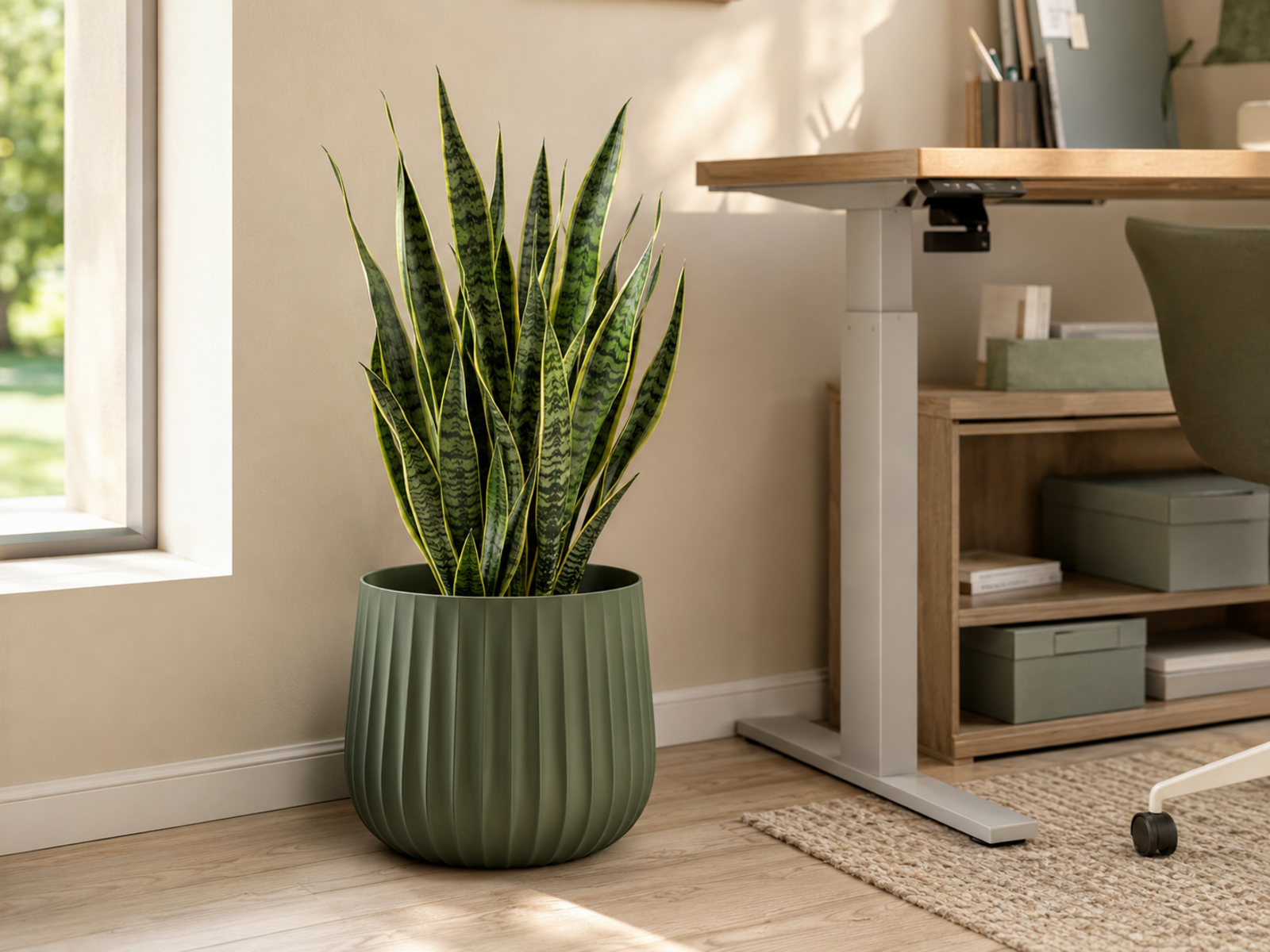
Use Plants Without Creating Plant Admin
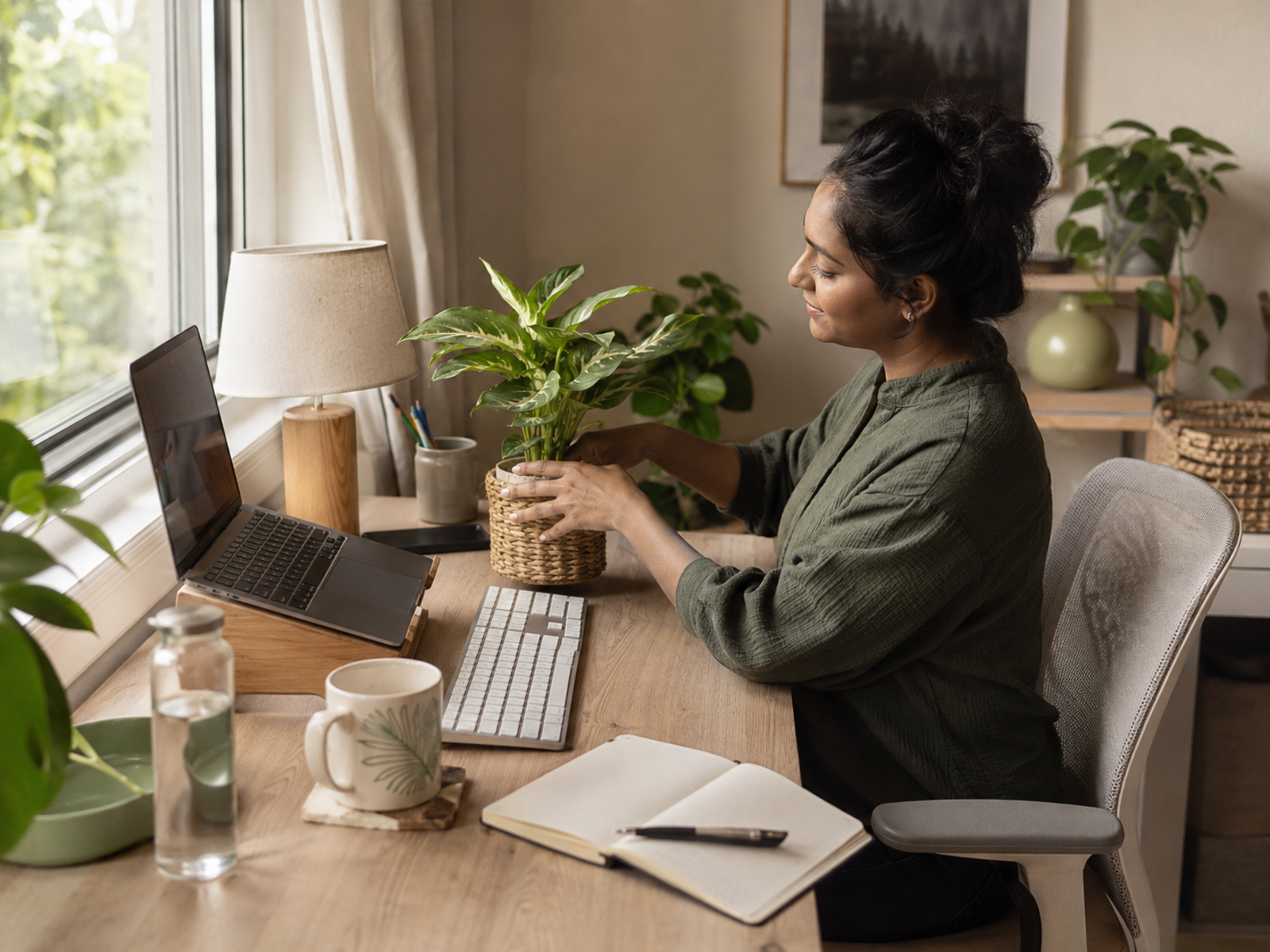
Desk plants can make a workspace feel calmer and less hard-edged, but they should not become another maintenance project.
Choose low-effort plants that suit the light in your room. One healthy plant is better than five struggling ones creating guilt beside your keyboard.
Add Personal Objects That Actually Mean Something
Personal objects work best when they are genuinely grounding: a photo, postcard, small print, meaningful mug, handmade object or reminder of life outside the inbox.
Avoid adding random decor just to fill space. The goal is not decoration for decoration’s sake. It is a small emotional anchor.
Make Comfort Visible, Not Hidden Away
Comfort matters during home working. A blanket, cushion, footrest, softer mug, hand cream or warmer socks nearby can make the day feel less harsh.
Keep useful comfort items visible enough to use. If comfort is hidden away, you may forget it exists until the workday has already made itself uncomfortable.

Helpful Workspace Softening Ideas
Desk Plants
Desk plants are one of the easiest ways to make a workspace feel less sterile.
Best for: softening hard surfaces and adding a natural visual break. Skip if: plant care becomes stress. Choose low-maintenance options that suit your light, space and attention level.
Warm Desk Lighting
Warm desk lighting can make the workspace feel calmer, especially on dark mornings or late afternoons.
Best for: softer atmosphere and less harsh desk energy. Skip if: you already have balanced lighting. Look for adjustable brightness, a warm tone and a size that does not crowd the desk.
Personal Photos Or Meaningful Objects
A photo, print, postcard or small object can make the space feel more like yours.
Best for: emotional grounding. Skip if: too many items make the desk feel cluttered. Choose one or two things that actually mean something rather than filling the desk with generic decor.
Comfortable Desk Accessories
Comfortable desk accessories can make long work blocks feel less draining.
Best for: small daily comfort improvements. Think wrist support, a better mug, soft foot support, a cushion or a warmer layer nearby. Skip anything that looks useful but adds clutter or gets ignored.
Storage Baskets Or Desk Organisers
Storage baskets and desk organisers can calm visual clutter without making the room feel sterile.
Best for: cables, notebooks, chargers and loose items. Skip if: buying storage becomes a way to avoid sorting. Choose simple containers that match the way you actually use the space.
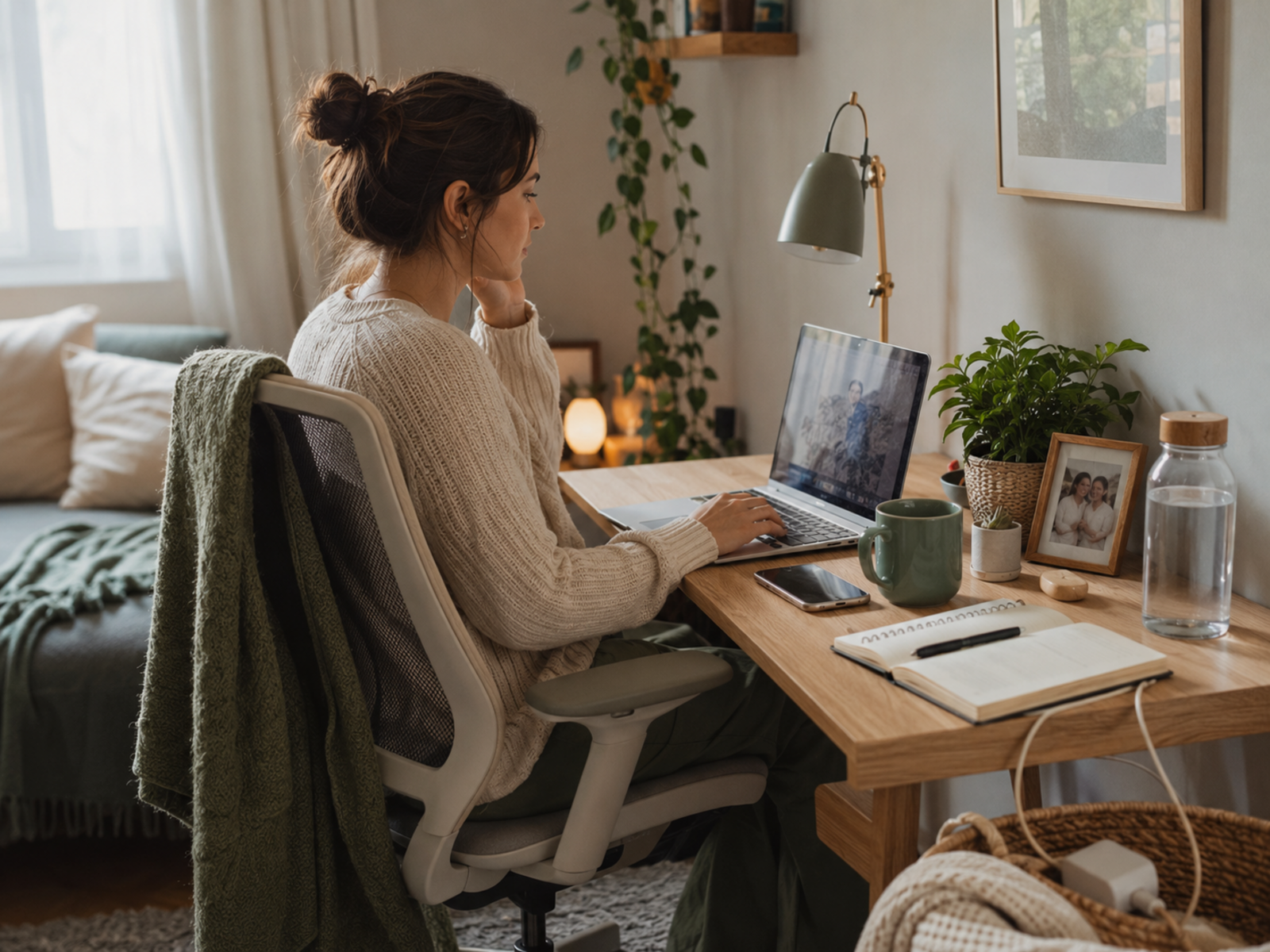
A more human workspace does not need to look styled, expensive or full of matching accessories. It needs to feel easier to sit in, easier to leave and easier to return to. One better lamp, one plant, one meaningful object or one small basket can be enough to change the tone of the space.
How To Make Different Workspaces Feel Better
If your desk feels too sterile
Add warmth before adding more items. Try a warmer lamp, a plant, a framed photo or a softer texture.
Sterile spaces often need one personal signal, not a full redesign. Choose something that gently changes the mood without making the desk busier.
If your workspace feels cluttered
Start by removing visible friction: old mugs, spare cables, loose papers and objects that do not belong to the workday.
Then add one container for the things that always return. A basket or organiser works best when it supports a habit, not when it becomes another hiding place.
If your workspace is in a shared room
Use small boundaries. A tray, basket, folding screen, lamp or end-of-day shutdown habit can help work feel contained.
The goal is not to pretend the room is only an office. It is to stop work from visually spreading into every corner of home life.
If your workspace feels emotionally flat
Add something that reminds you of life beyond tasks: a family photo, art print, travel card, small keepsake or object with a real story.
Keep it simple. The best personal touch is the one that makes you feel slightly more present when you notice it.
If your workspace feels too intense
Soften the sensory load. Reduce harsh light, hide unnecessary cables, lower visual clutter and add a calmer object or texture.
Intensity often comes from too many signals competing at once. A workspace can feel more human when there is less to process.
Tiny End-Of-Day Reset Habits
Close the laptop properly
Closing the laptop is a small physical signal that work is ending.
If you use a monitor, turn it off too. The point is to stop the screen from silently keeping the workday alive after you are supposed to be done.
Clear one surface
You do not need a full tidy-up every evening. Clear one visible surface: the desk centre, the keyboard area or the notebook space.
This gives tomorrow a calmer start without turning the end of the day into a cleaning routine.
Put work items in one place
Use one basket, drawer, tray or shelf for notebooks, chargers, headphones and loose work items.
This helps the room shift back into home mode. It also reduces the morning search for the thing you definitely put somewhere sensible.
Add a closing cue
A closing cue can be simple: turn on a softer lamp, light a candle safely, put on music, make tea or move your chair back.
The cue tells your brain that the desk is no longer asking for more. That matters when your office is also your home.
Reset the chair
Push the chair in, fold the blanket, move the mug or straighten the desk mat.
Small resets sound minor, but they change how the space greets you tomorrow. A workspace feels more human when it has a beginning and an ending.
Common Workspace Mistakes That Make Rooms Feel Worse
Decorating before removing friction
Buying decor will not help much if the desk still feels irritating to use.
Fix the friction first: lighting, cables, clutter, chair comfort, screen position and the things you reach for every day. Then add warmth.
Making the room too polished
A workspace can look neat and still feel lifeless.
Do not remove every sign of personality in the name of focus. A human workspace needs some softness, memory or texture. Professional does not have to mean blank.
Adding too many “calm” items
Too many calming objects can become visual clutter.
Choose fewer things with more purpose. A plant, lamp, photo and small organiser may do more than a crowded collection of wellness-looking objects.
Ignoring the end of the day
If the desk stays open, bright and messy all evening, work keeps taking up emotional space.
A small shutdown habit can change that. You are not only resetting the desk. You are helping home feel like home again.
Copying someone else’s workspace
A beautiful setup online may not suit your room, budget, light, storage or daily routine.
Use other people’s spaces for ideas, not instructions. Your workspace should fit your life, not a photo that never has laundry just out of frame.
FAQ
How do I make my workspace feel more human?
Start with small changes that affect how the space feels: warmer lighting, one plant, a meaningful object, better comfort and less visible clutter.
You do not need a full redesign. Make the desk feel like it belongs to a person, not just to work.
How can I make my home office feel calmer?
Reduce visual noise, soften harsh lighting and keep the most-used items easy to reach.
A calmer home office often comes from fewer irritations, not more decor. Start with cables, clutter, lighting and what you see first when you sit down.
What should I add to a work-from-home desk?
Useful additions include a plant, warm lamp, personal photo, comfortable mug, small organiser, soft support item or one object that feels meaningful.
Avoid adding too much at once. A few thoughtful items usually work better than a crowded desk.
Can plants make a workspace feel better?
Plants can make a workspace feel softer, more natural and less sterile.
Choose plants that suit your light and care habits. If plant care becomes another source of stress, use one low-maintenance plant or a natural material instead.
How do I make a small workspace feel less overwhelming?
For a small workspace, reduce visible clutter and choose items with a clear job.
Use vertical storage, one basket for loose work items, softer lighting and only one or two personal touches. Small spaces feel better when every object earns its place.
How To Create A Small Home Office That Feels Calm
How do I stop my workspace taking over my home?
Create simple boundaries: close the laptop, clear one surface, store work items in one place and use a small end-of-day cue.
You may not be able to remove the desk, but you can stop it from visually running the whole room after work.
Final Verdict
To make your workspace feel more human, focus on warmth, comfort, meaning and boundaries. Start with what you see first, soften the light, add one natural element, choose a personal object that matters and reduce clutter without stripping the room of personality.
Your workspace does not need to look perfect. It needs to feel like a place where a real person can work, pause and leave at the end of the day without disappearing into the desk.


