



Host a Virtual Halloween Party: Audio,…

20 Minimalist Halloween Nail Ideas for…

Can Free Affinity Help You Build…

12 Lower-Sugar Halloween Treat Swaps Worth…

Can Hostinger AI Builder Launch a…

A 5-Step Screen-Free Autumn Reading Ritual…

Plug-In Solar Panels UK: Are They…

15 Last-Minute Zoom Halloween Costumes for…

Meta One Explained: Is the Subscription…

10 Low-Fuss Dog Halloween Ideas: Comfort…

Plaud One Explained: Can AI Earbuds…

9 Gothic Dinner Table Ideas for…

Namecheap vs Dynadot

7 UK Ghost Tours and How…

Convertkit Vs Beehiiv

Do You Really Need a £420…

Bluehost vs Siteground

15 Gentle Spooky Autumn Books to…

Namecheap review

How to Remove Halloween Face Paint…
Most step goal advice acts like every desk worker can casually stroll through the day collecting 10,000 steps like a wellness squirrel. Charming. Not always realistic when your day is calls, tabs, deadlines, invoices, school messages and sitting so long your chair starts asking about commitment. Smart watches step goals can help desk workers move more, but only when they feel realistic, kind and useful enough to pull you out of chair mode.
Use step goals without the guilt trip.
Check your real baseline first.
Add small steps, not heroic targets.
Walk during calls and daily transitions.
Use reminders as cues, not judgement.
Lower the goal if it creates stress.
Most Relevant Audience
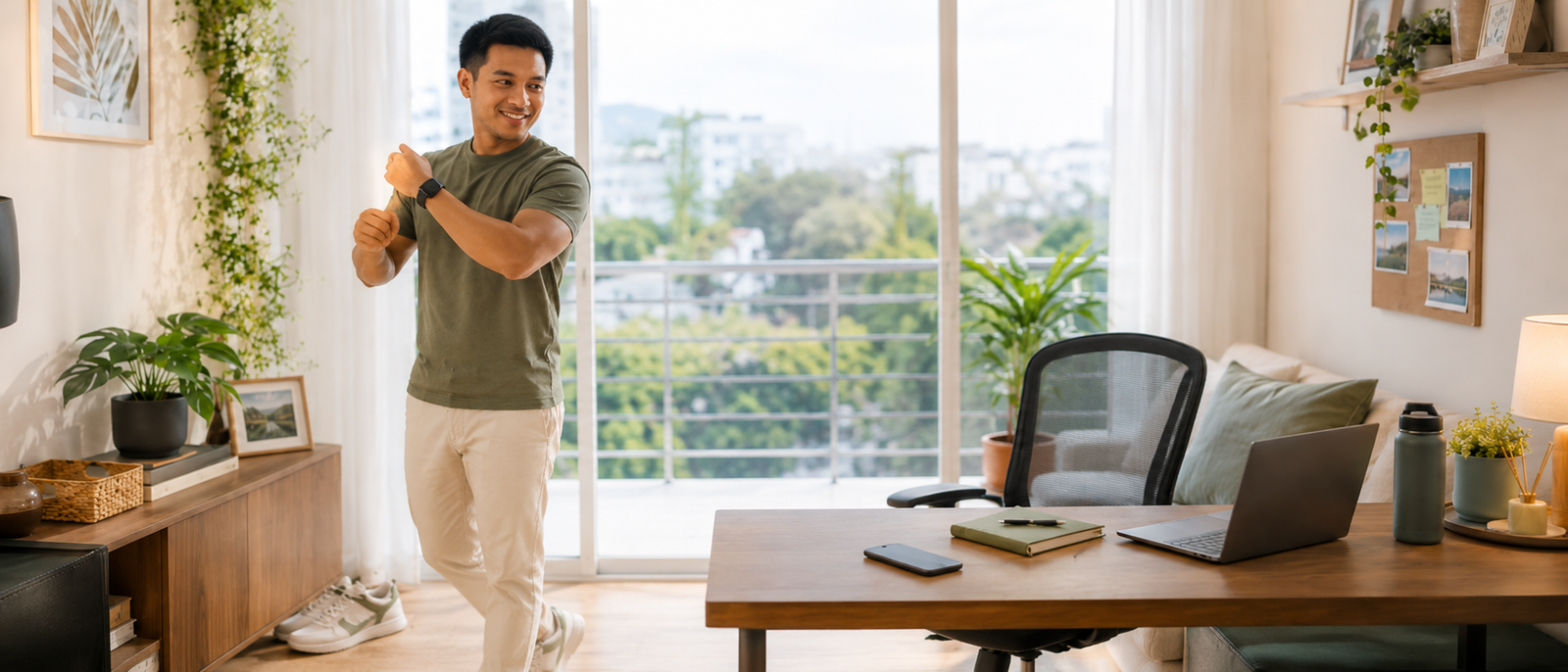
This article is for desk workers, remote workers, home workers, freelancers, bloggers, creators, side hustlers and small business owners who sit for long periods and need gentle motivation to move more. It is especially useful if smart watches step goals have ever made you feel motivated on Monday, mildly judged by Thursday and completely ignored by Friday afternoon.
Why Desk Workers Need Movement Prompts
Sitting hides inside productivity
Desk work can make sitting feel responsible. You are answering messages, editing pages, writing content, managing clients or building a business, so the stillness feels productive. The problem is that your body does not know the difference between focused work and being abandoned beside a laptop for six hours.
Home working removes natural steps
Working from home can quietly delete movement. No commute. No walk to another office. No stairs to meeting rooms. No coffee run across the building. Suddenly your step count depends on the kettle, the bathroom, school pick-up and whether you dramatically search the house for a charger.
Busy days swallow movement first
Most desk workers do not forget movement because they are lazy. They forget because the day fills up. Calls run over, tasks multiply, lunch moves later and home life keeps interrupting. Movement becomes something you will do after “one more thing,” which is how the chair wins.
Small prompts can interrupt chair mode
A gentle stand reminder, step nudge or activity alert can help because it arrives before the body starts complaining loudly. You do not need every prompt to become a workout. Sometimes the win is standing up, walking to another room or stretching before stiffness becomes your afternoon personality.
Try This Today
Check your normal step count first. Add 500 steps, not 5,000. Walk during one suitable call. Take one short loop after lunch. Use one reminder as a stretch cue. Lower the goal if it creates guilt. Smart watches step goals work best when they start from your real day, not a fantasy routine.
Step Goals Without The Guilt Trip
The 10,000-step target is not sacred
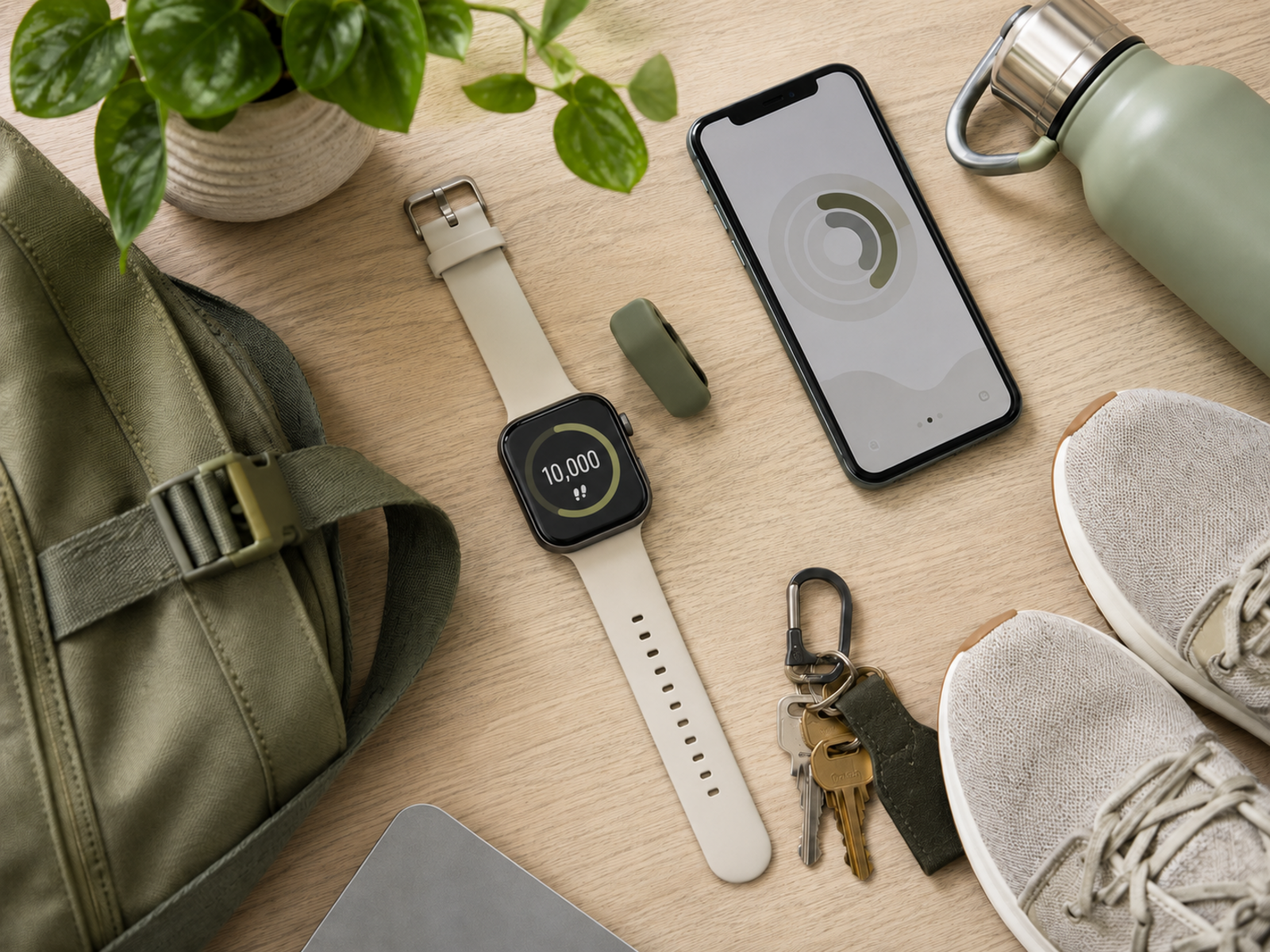
A 10,000-step goal can be motivating for some people, but it is not the only valid target. Desk workers with packed days may need a smaller starting point. If your current average is low, adding a few hundred or a couple of thousand steps can still be meaningful.
Your baseline matters more than the internet’s number
Before setting a goal, check what you already do on normal workdays. If you average 3,000 steps, jumping straight to 10,000 may feel punishing. A more realistic goal might be 4,000, then 5,000, then gradually more. Progress is easier to repeat when it starts from reality.
Low-step days are information
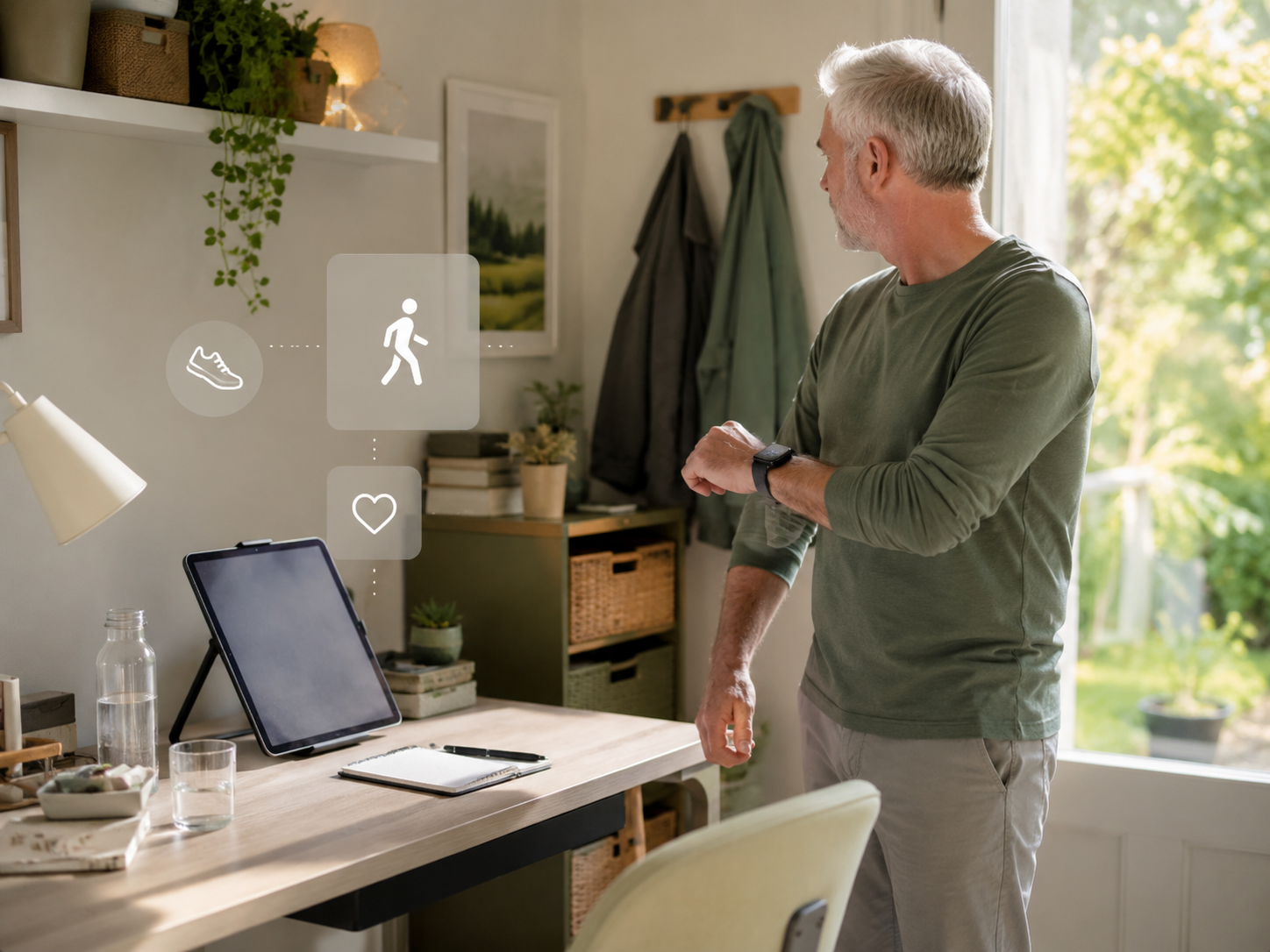
A low-step day does not mean you failed at being well. It may mean you had back-to-back calls, childcare chaos, deadlines, house jobs or a day that swallowed every break. Use the data as a clue, not a verdict. Ask what blocked movement, then add one easier cue tomorrow.
Step goals should support energy
The point of smart watches step goals is not collecting numbers for their own sake. It is breaking up long sitting, improving energy, clearing the head and giving your body chances to move. If the target motivates you kindly, keep it. If it creates stress, adjust it.
Make The Goal Smaller Than Your Ego Wants
A realistic step goal may look unimpressive, especially if you compare it to fitness people who appear to live permanently on scenic paths. Ignore them. Your target needs to fit your workday, not someone else’s highlight reel. A goal you repeat beats a heroic target you resent.
Smartwatches, Trackers And Movement Tools Worth Considering
Choose The Tool By The Support You Need
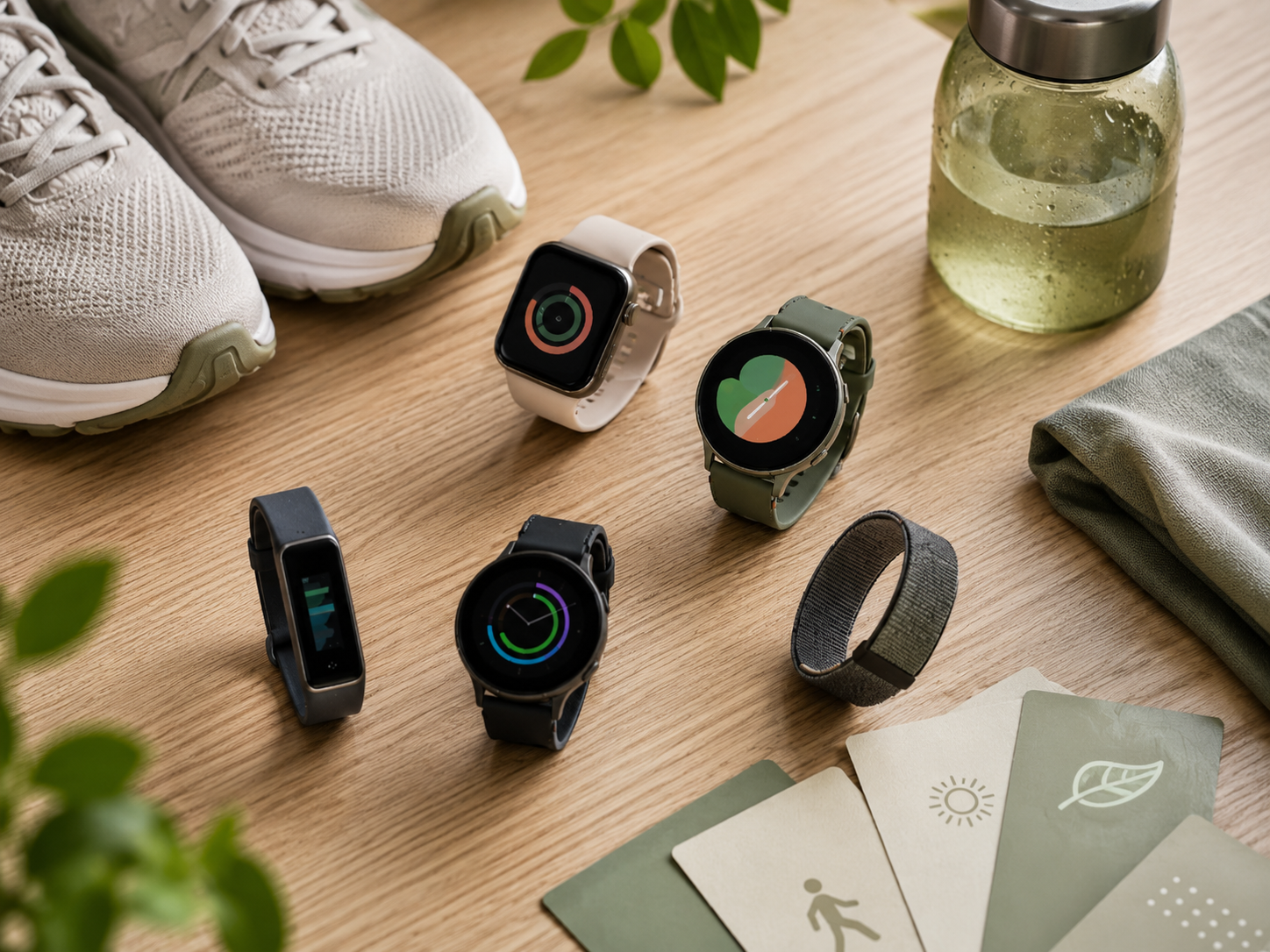
Do not choose a wearable because it looks impressive. Choose it by the support you need. If you want simple steps, Fitbit may be enough. If you use Apple or Android heavily, a smartwatch may fit better. If recovery is the concern, Garmin or WHOOP 5.0 may suit you. The best tracker is the one that nudges you kindly and gets ignored the least.
How To Set Realistic Step Goals
Start with your normal workday average
Wear the tracker for a few normal days without changing anything. This gives you a baseline. Then set a goal slightly above that. If your normal day is 3,500 steps, start with 4,000 or 4,500. That is less glamorous than 10,000, but more likely to survive Tuesday.
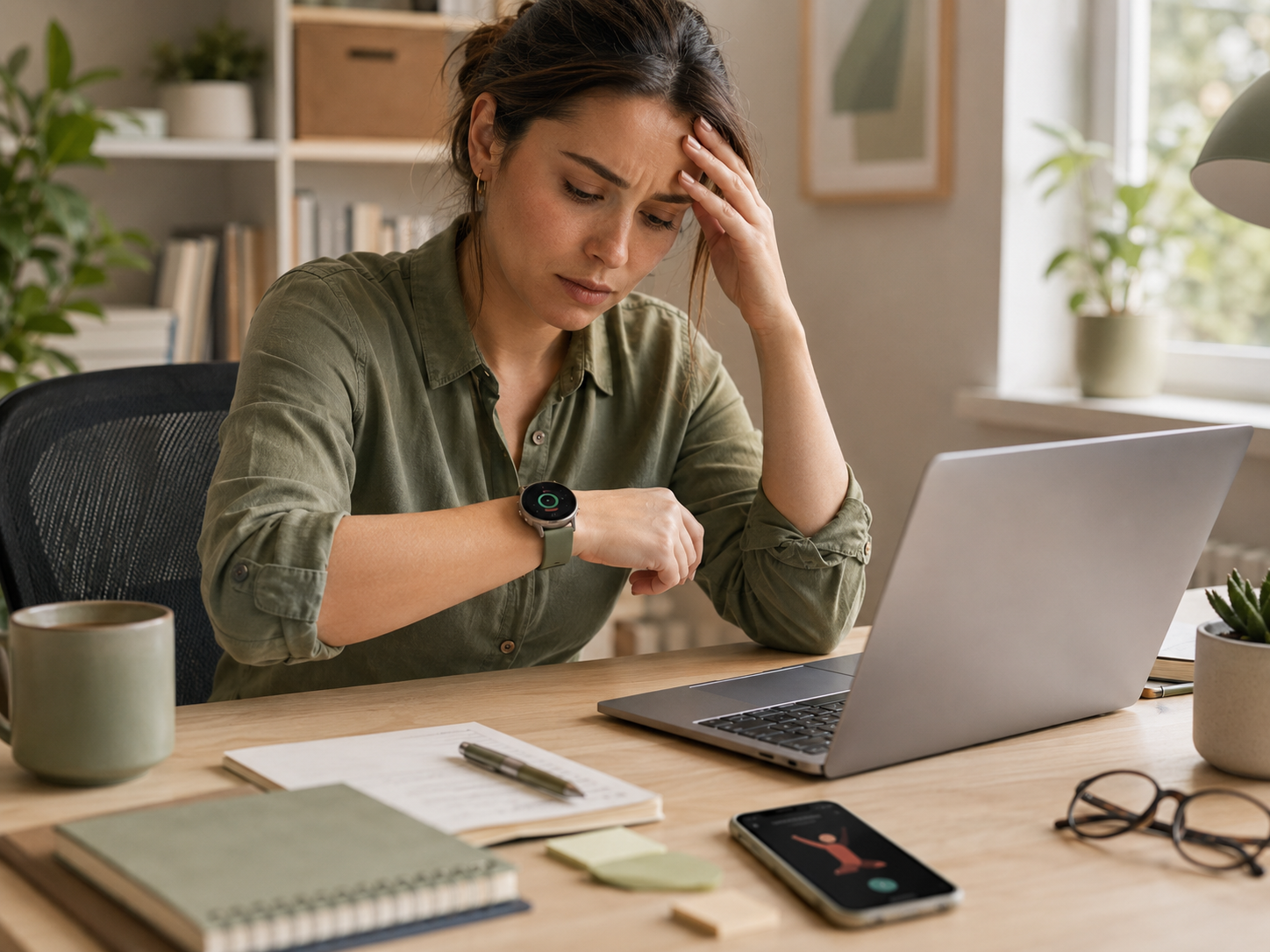
Add steps in small pieces
Break the goal into smaller pieces. A short loop after school drop-off. A post-lunch reset. A few steps after calls. A quick walk before school pick-up. Smart watches step goals feel easier when they are built from small pieces instead of one giant evening panic walk.
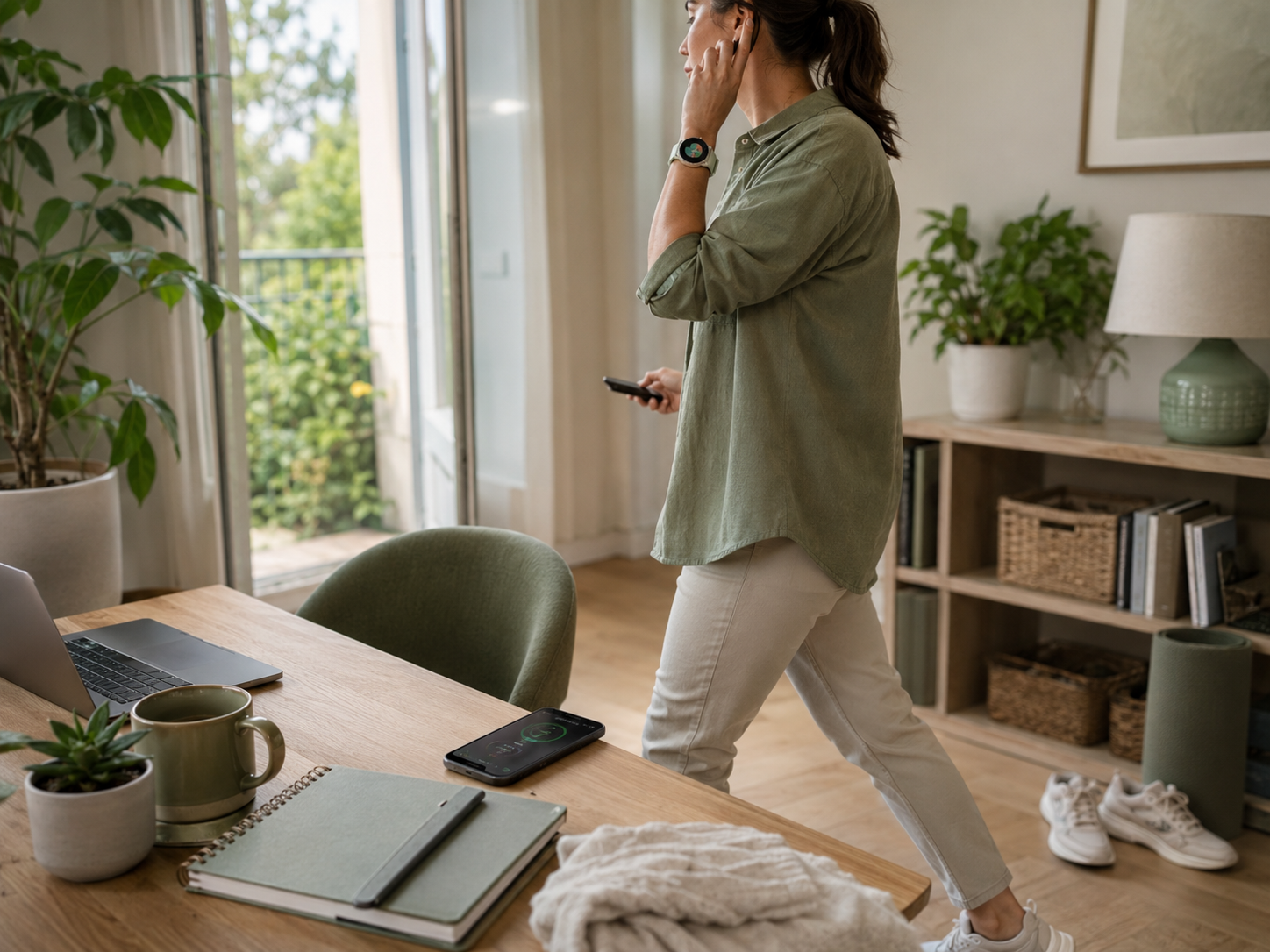
Walk during suitable calls
Some calls require notes, slides or screen sharing. Others do not. Use lighter calls, thinking tasks or voice notes for slow walking. You do not need to pace like a courtroom lawyer. Just let the call become a chance to leave chair mode.
Use one daily anchor walk
Pick one reliable movement anchor. After lunch. Before school pick-up. After the first call. While waiting for the washing machine, kettle or dinner timer. A single repeated walk is easier than trying to sprinkle motivation across the whole day like wellness confetti.
Movement Should Fit The Day You Actually Have
If your day is packed, movement needs to attach itself to existing moments. After the kettle. After a call. Before lunch. Before the school run. Before the sofa claims you. You are not trying to become a step-count hero. You are trying to stop long sitting from quietly taking over the whole day.
Pairing Wearables With Small Movement Habits
Use stand reminders as a reset cue
When the reminder appears, do something tiny. Stand, stretch, walk to another room, roll your shoulders or refill water. The reminder does not need to become a full break. It just needs to interrupt the seated spell before your body starts sending strongly worded messages.
Turn missed prompts into clues
If you ignore every reminder during deadline days, that tells you something. Maybe the alert timing is wrong. Maybe your calls are too packed. Maybe you need a movement cue before meetings instead of during them. Adjust the system instead of assuming you are the problem.
Pair steps with boring tasks
Walking works well with voice notes, thinking, planning, low-stakes calls and quick household jobs. Take the scenic route to the kettle. Walk while waiting for lunch. Do a lap before replying to messages. Boring tasks are excellent hiding places for movement.
Do not punish low-step family days
Some days are childcare-heavy, errand-heavy or interruption-heavy without producing neat step totals. That does not mean you failed. A low-step day can still contain care, work, emotional effort and domestic chaos. Use the tracker as feedback, not as proof that the day was wasted.
Why This Matters If You Work From Home
If your biggest struggle is finding time to move, How To Build Movement Into A Packed Work From Home Day is the natural next step because it shows how to build tiny cues around calls, lunch breaks, kettle moments and task transitions. Sitting Too Long? What It’s Really Doing To Your Body also helps explain why small movement matters.
Common Smartwatch Motivation Mistakes
Treating the watch like a judge
A watch should support you, not silently prosecute you. If your step goal makes you feel guilty every evening, lower it or change the cue. Motivation works better when it feels possible. Shame usually just makes people avoid the data.
Setting the goal too high too soon
A big step goal can feel exciting on Sunday and ridiculous by Wednesday. Start with your real baseline and build slowly. A smaller target that gets you moving daily is more useful than a perfect number that only works during imaginary calm weeks.
Chasing steps at the expense of recovery
If you are exhausted, stressed or short on sleep, forcing steps may not be the best move. Gentle walking can help, but your body also needs recovery. Use trackers to understand your patterns, not to bully yourself through every low-energy day.
Ignoring the reminder every time
If you ignore the same reminder daily, change it. Adjust the time, reduce the goal, choose a different cue or attach movement to something you already do. A reminder you always dismiss is not motivation. It is wallpaper with vibration.
FAQ
Do smart watches help desk workers move more?
Smart watches can help desk workers move more by giving reminders, tracking steps and making long sitting easier to notice. They work best when prompts are realistic, kind and connected to small movement habits rather than treated as strict performance targets.
How many steps should desk workers aim for?
Desk workers should start with their current average and build gradually. Some people may aim for 10,000 steps, but others may benefit from smaller goals first. A realistic goal you repeat is better than a high target that creates guilt.
Are smart watches step goals useful when working from home?
Smart watches step goals can be useful when working from home because natural movement often disappears. A step goal can remind you to walk between tasks, take a lunch break, move during calls or stop sitting for long unbroken blocks.
What is the best smartwatch for movement reminders?
The best smartwatch for movement reminders depends on your devices and preferences. Apple Watch Series 9 suits Apple users. Samsung Galaxy Watch7 suits many Android users. Garmin Venu 3 offers wellness context, while Fitbit Charge 6 is a simpler activity tracker.
How do I stay motivated to move during desk work?
Stay motivated by setting realistic step goals, using movement reminders, walking during suitable calls and attaching movement to existing cues like lunch, kettle breaks or meeting endings. Keep movement small enough that it fits real workdays.
Can fitness trackers make wellness feel stressful?
Fitness trackers can make wellness stressful if you treat every score as judgement. Use step counts, reminders and recovery data as feedback, not proof of your worth. If tracking creates anxiety, lower the goal, simplify the data or take a break from checking.
Final Verdict
Smart watches step goals can help desk workers move more, but only when the goal feels realistic enough to repeat. The aim is not to hit a perfect number every day. It is to interrupt long sitting blocks before your back, brain and mood all start complaining at once.
You do not need to hit 10,000 steps like a wellness squirrel. You need a realistic goal and a few kind reminders that get you out of chair mode. Choose a wearable that nudges without shaming, start from your baseline and let small movement count.


