



Can Hostinger AI Builder Launch a…

Christmas Gifts for Home Workers That…

Plug-In Solar Panels UK: Are They…

Halloween Decorations Worth Buying — and…

Meta One Explained: Is the Subscription…

Anti-Optimisation Wellness: Can a Sunrise Lamp…

Plaud One Explained: Can AI Earbuds…

Sunrise Lamps Explained: What They Actually…

Namecheap vs Dynadot

Lifesum Review UK: Is Premium Worth…

Convertkit Vs Beehiiv

Garmin CIRQA Review: Screen-Free Tracking Without…

Bluehost vs Siteground

Garden Gatherings – Summer Is The…

Namecheap review

Portable Outdoor Speakers for Garden Offices

Cloudways Vs WP Engine

Outdoor WiFi Extenders For Garden Offices

Dropshipping Explained

Portable Pools For Home Workers This…
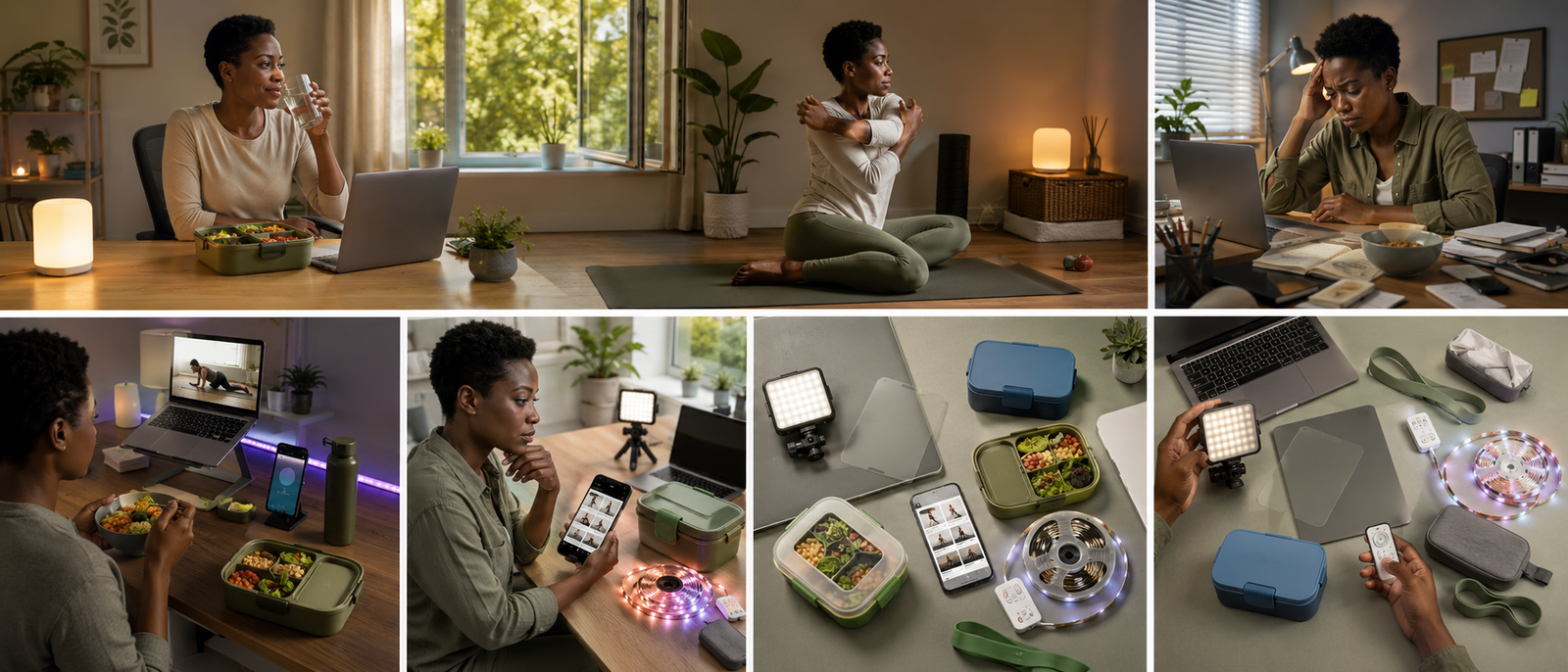
Most self-care product advice quietly becomes a shopping list with candles. Lovely, but your desk-worker body may have more urgent concerns, like shoulders that have moved into your ears, tired eyes, skipped food and a workday that somehow ends with your body feeling like it has been stored incorrectly. Self care products for desk workers should solve real discomfort. They should not create more clutter, guilt or unused good intentions.
Stop buying self-care clutter.
Choose products for real discomfort.
Help tired eyes, stiff shoulders and skipped breaks.
Use tiny cues, not perfect routines.
Pick one product by problem
Avoid wellness guilt objects.
Most Relevant Audience
This article is for desk workers, remote workers, home workers, freelancers, bloggers, creators, side hustlers and busy parents who want practical self-care products that fit a normal workday. It is especially useful if your breaks become laundry, your lunch becomes whatever is nearest, and your body starts complaining before your task list is finished.
Stop Buying Self-Care Guilt Objects
Your real day is not a quiet retreat
A lot of self-care advice seems built for someone with a silent house, a spare hour and no emails arriving with the emotional tone of a small emergency. Real workdays are different. You may be answering clients, checking school messages, clearing plates and trying to stretch before someone needs something.
Products should reduce guilt, not create it
Self-care should not become another thing you feel bad about not doing. If a product sits unused on the desk, it does not help your wellbeing. It becomes a small branded reminder that you apparently failed to relax properly, which is not exactly the dream.
Comfort needs to fit short gaps
Desk workers often need support in tiny windows: between calls, after school drop-off, before dinner, while the kettle boils or after one task somehow becomes twelve. The best products work in those messy gaps. They do not require a perfect mood, perfect timing or perfect silence.
Clutter can wear good intentions
The wrong products start with hope and end as desk ornaments. A massager you never plug in, an app you forget, a band buried under notebooks and a cushion that never felt right are not self-care. They are clutter wearing good intentions.
The Real Test
A self-care product is worth your attention if it solves a problem your real workday keeps creating. Not your imaginary workday with quiet breaks and perfect posture. Your actual day: sitting too long, staring too much, eating late, forgetting to move and closing the laptop while your brain is still sprinting.
Self Care Products For Desk Workers Worth Reviewing
They solve one repeated discomfort
Useful products have a clear job. They help with neck tension, tired eyes, low movement, stale air, poor lighting, skipped food or mental overload. If a product vaguely promises a better life but does not solve a specific irritation, it may become another nice-looking object you ignore.
They are easy to reach when tired
A good self-care product should still feel usable at 3pm, when the house is noisy, your tabs are multiplying and your brain has started buffering. If something only works when you feel organised, it may not survive real life.
They do not need a full routine
The best desk-worker support often works as a tiny cue. A light change. A two-minute stretch. A short breathing session. A prepared snack. A fan that makes the room feel less heavy. You do not need a wellness cupboard. You need relief that fits the chaos.
They help you finish less wrecked
Self-care products should help you leave the workday with less strain, not more admin. If something helps you move, soften tension, reduce sensory stress, eat better, breathe or switch off, it has a real purpose. If it only looks calming online, be suspicious.
Buy For The Discomfort, Not The Product Promise
Before buying anything, name the problem. Is it neck tension, stiff hips, tired eyes, stale air, poor lighting, skipped food or mental overload? Start there. The right product should remove one daily irritation. If it only makes your desk look more self-care shaped, it has not earned its space yet.
Choose The Product By The Problem It Solves

Choose Only The Product That Solves Your Problem
You do not need every self-care product on the internet. If your shoulders ache, start with tension relief. If your body feels stiff, start with movement. If your eyes feel tired, fix lighting. If your day feels mentally overloaded, choose a cue that helps you slow down. Real self-care is targeted, not decorative.
How To Choose Self-Care Products You Will Actually Use
Choose the product you can use tired
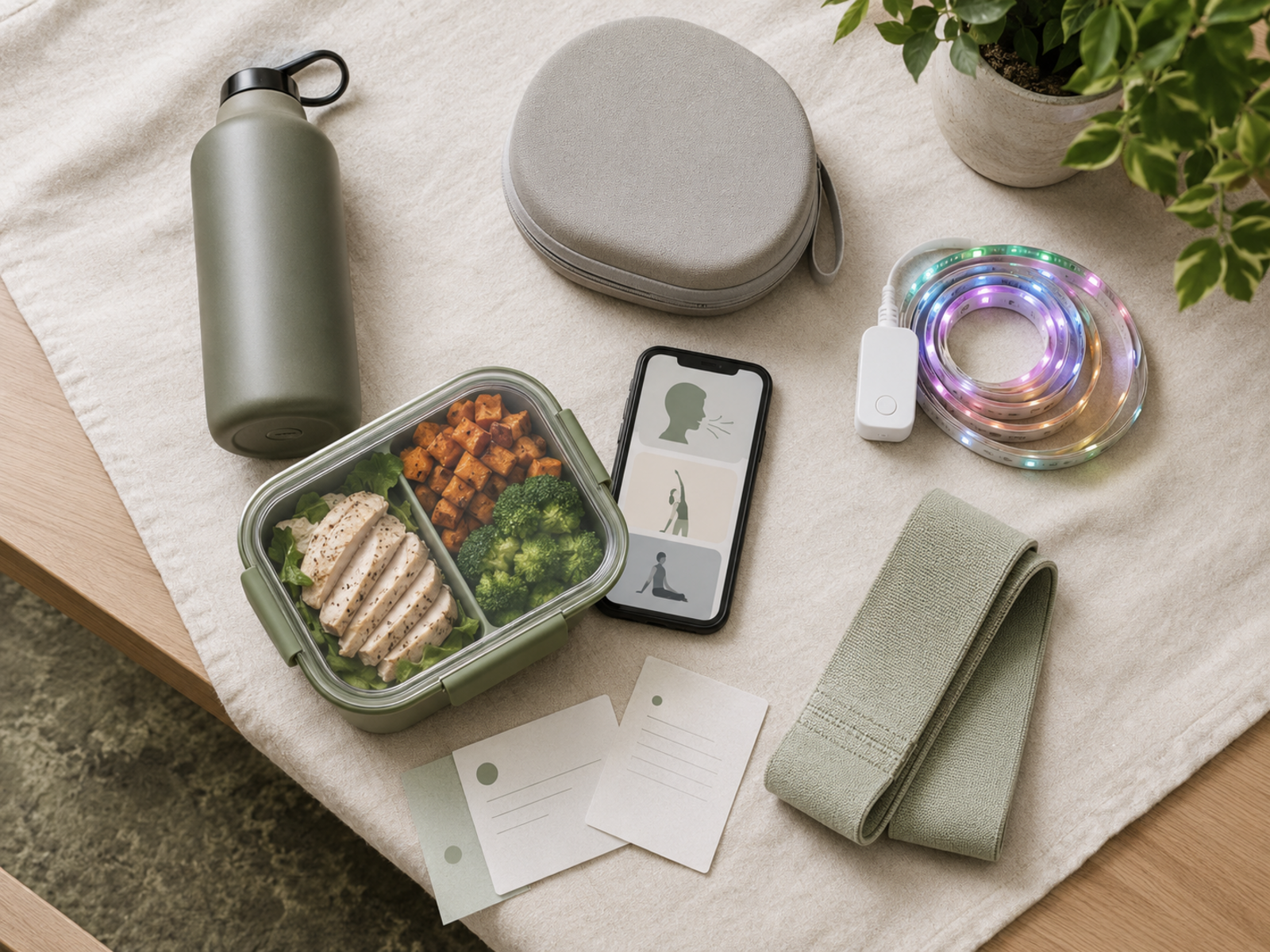
A useful product still works when you are not at your best. Choose items that feel easy after a long day: a simple light, ready snack container, visible stretch band or short app session. Anything that needs ceremony may quietly lose to the sofa.
Keep products near the moment of need
A resistance band in a drawer will not remind you to stretch. A food container you never prep will not help lunch. Put products where the problem happens, but keep the area clear enough to work. Useful visibility is different from clutter.
Review the product by use, not hope
After a week, ask the boring question: did I use it? If yes, did it help? That matters more than how promising it looked online. A product used three times a week beats one that photographs beautifully and retires into a cupboard.
Avoid building a wellness cupboard
Buying too many products at once makes it harder to know what helps. Start with one or two. If they earn their place, keep them. If not, learn from it. The goal is not owning self-care products. The goal is feeling less wrecked by desk work.
Why This Matters If You Work From Home
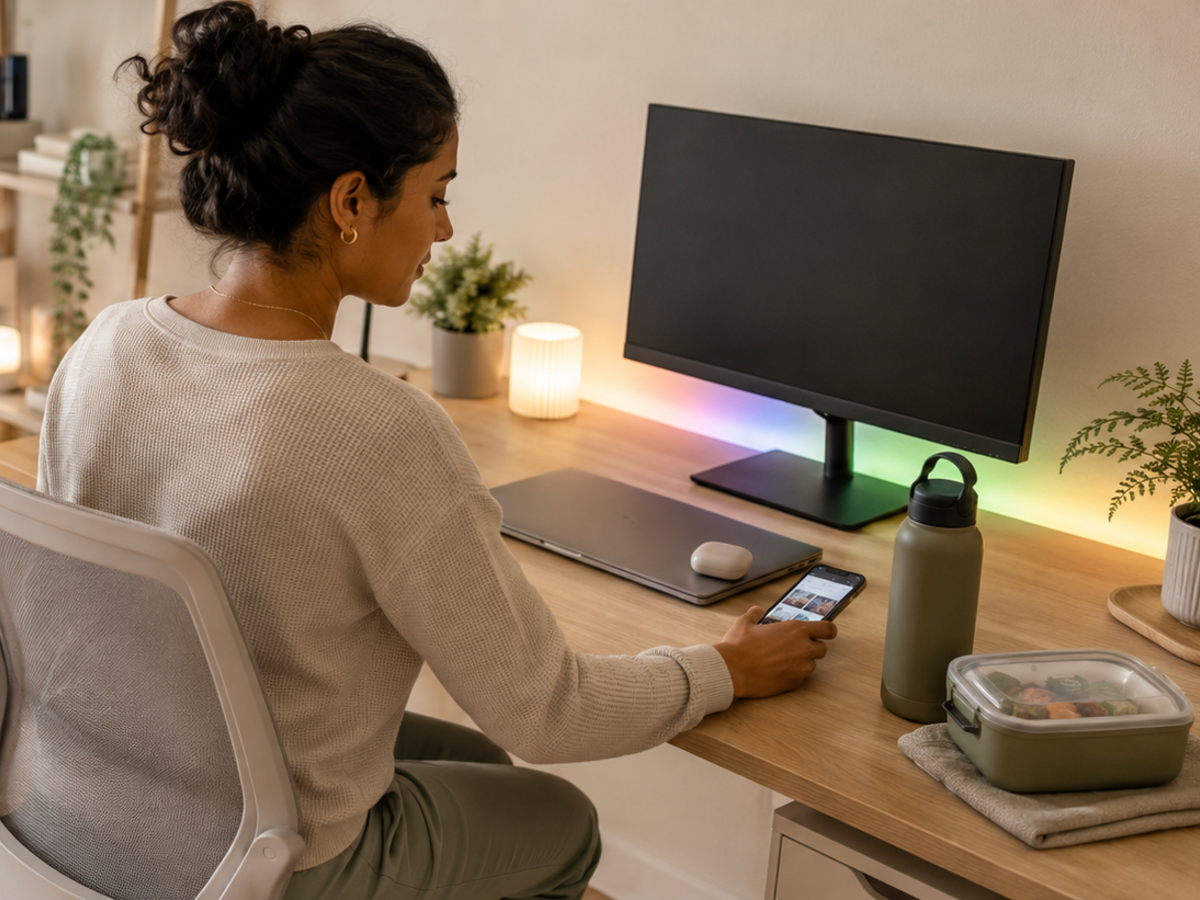
If you are building a blog, managing clients, creating content or growing a side hustle from home, your body and brain are part of the system. Wellness Products That Actually Fit A Real Workday connects naturally here because useful products should survive ordinary life. The Cosy Desk Worker Reset Kit also fits because recovery matters after the laptop closes.
Common Self-Care Product Mistakes
Buying products that need fantasy routines
Do not buy for the version of yourself who takes long peaceful breaks, stretches calmly and never eats lunch at the desk. Buy for the person who has deadlines, interruptions, noise and a body that needs help before it files a complaint.
Treating comfort as a shopping list
Self-care is not improved by buying everything at once. Too many products can create clutter and guilt. Choose the product that addresses your most repeated discomfort first. If it helps, great. If not, do not reward it with friends.
Ignoring boring basics
Lighting, food, hydration, airflow and movement may sound basic, but they are often the things desk workers neglect most. A fancy recovery tool will not fix a day built on stale air, poor light, no water and sitting like a question mark.
Keeping unused products visible
Unused self-care products can become visual pressure. If something does not help, move it, return it, donate it or stop pretending it is part of the routine. Your desk does not need more objects silently asking why you have not become your best self.
FAQ
What are the best self care products for desk workers?
The best self care products for desk workers solve common desk problems such as stiff shoulders, tired eyes, poor lighting, low movement, stale air, skipped food and mental overload. Useful options may include soft desk lighting, resistance bands, massage tools, airflow support and simple meal-prep helpers.
Are heated neck and shoulder massagers worth it?
Heated neck and shoulder massagers can be worth it if you regularly finish desk work with tight shoulders or neck tension. They are most useful when paired with movement, breaks and better posture habits rather than used as the only fix.
Do resistance bands help desk workers move more?
Resistance bands can help desk workers move more because they are compact, simple and easy to keep near the desk. They work best as a visible cue for short movement breaks, shoulder work, hip mobility and gentle stretching.
Are ergonomic footrests and seat cushions useful?
Ergonomic footrests and seat cushions can be useful if your chair, desk height or sitting position feels awkward. Choose stable, comfortable products that fit your body and workspace. They should support comfort, not compensate for a completely unsuitable setup.
What products help desk workers relax after work?
Products that help desk workers relax after work may include softer lighting, massage tools, calming atmosphere cues, breathing apps, stretch tools and airflow support. The best option depends on whether your main issue is tension, mental overload, tired eyes or difficulty switching off.
How do I choose self care products I will actually use?
Choose self care products by identifying your most repeated discomfort first. Then pick something easy to reach, easy to use and realistic for your schedule. Avoid products that need perfect timing, long routines or a level of motivation you rarely have after a full desk day.
Final Verdict
Self care products for desk workers are worth reviewing when they solve discomfort your actual workday keeps creating. Stiff shoulders, tired eyes, stale air, skipped food, low movement and mental overload are real problems. You do not need a wellness cupboard to deal with them.
Start with the discomfort you feel most often, then choose one product that makes that moment easier. Good self-care should reduce guilt, not create it. It should help the real version of you, not the imaginary one with quiet mornings, perfect routines and a desk full of unused good intentions.






