



Paper Planner vs Task App: Which…

Sleep Earplugs: Simpler Sleep, Chosen and…

VYVE Health Explained: Can One £16.99…

Too Good To Go M&S Bakery…

Sunrise Alarm Clocks Compared: Are They…

Fitbit Edge vs Fitbit Air vs…

Autumn Comfort Food: How to Eat…

Soup Maker vs Saucepan: Which Suits…

The Best Lighting for Darker Autumn…

Create an Autumn Wind-Down Routine That…

Heated Throw vs Heated Blanket vs…

Autumn Sleep Reset: Light, Temperature and…
Your work wraps up late in December, and then the room you work in becomes the dining room. This guide takes you through three parts: planning from your last working day, a calmer kitchen, and keeping some recovery time for yourself. It draws on published NHS, Mind, Food Standards Agency (FSA) and Food Standards Scotland guidance, and it assumes an imperfect Christmas is perfectly fine.
Quick Overview
- Plan from your last working day, because that is when the real hosting load begins.
- Put the turkey defrost date in your diary, and follow the packaging instructions first.
- Ask guests about allergies when you send the invitation, then check labels on pre-packed food.
- Cool leftovers quickly, then eat them within 48 hours or freeze them, as the FSA advises.
- Choose a start and finish time for Christmas, plus a firm stop time for the desk.
- Plan something nice for after Christmas, and know when to ask the NHS for help.
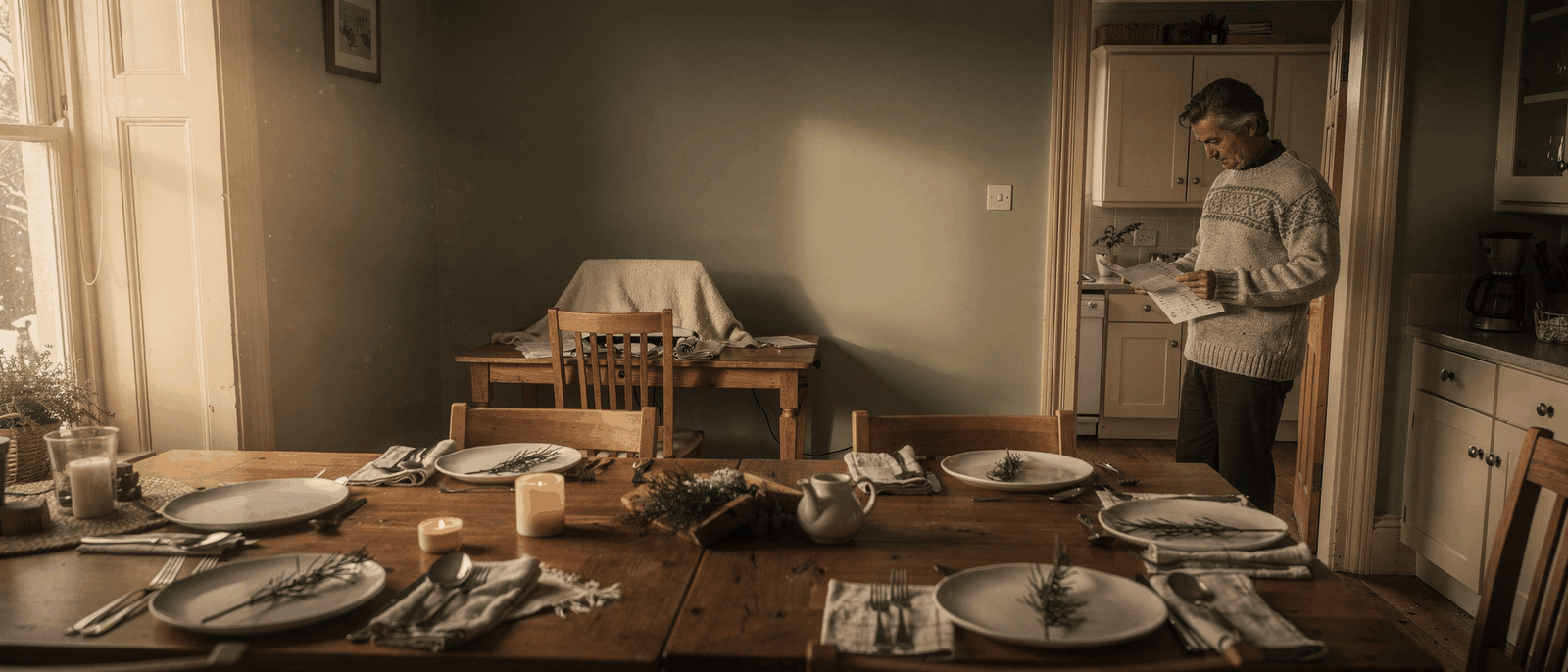
Plan ahead: a countdown from your last working day
Before your last working day
The NHS suggests that planning ahead for stressful events, such as making a to-do list, can help with stress. So write the list while work is still busy, and keep it short. Then choose a start and finish time for hosting. Say, as a simple example, you pick midday to early evening: that is a boundary you can actually tell people about. Finally, decide which extras you will say no to this year.
On your last working day
Pack the desk away so it is out of sight: laptop in its bag, papers in a drawer, charger with them. Then right-size the food. Love Food Hate Waste says most of us massively overestimate how much Christmas food we need, and its website offers a portion calculator. Cooking a little less is one of the simplest ways to shrink the workload.
Defrost day
Treat the defrost date as the one dated kitchen task. The FSA says a typical large turkey weighing 6-7kg could take as much as 4 days to defrost fully in the fridge, and to allow around 10-12 hours per kg if there are no instructions. Packaging instructions come first. The FSA also says not to defrost turkey at room temperature. Put the date in your diary with an alarm while you are still at your desk.
Christmas Eve
Set out the serving dishes, agree who is clearing up, and send any last emails before the evening rather than after the first guest arrives. Put the clearing-up plan on paper too, with a name against each job, so nobody has to ask you. A calm Christmas Day owes more to decisions already made than to energy on the day, and this guide stays on safety and calm rather than cost.
A calmer kitchen: defrost, hands and cooking
Hands, not water
The FSA advises not to wash raw turkey before cooking, which surprises people who were taught otherwise. It also advises washing your hands thoroughly with soap and warm water after handling raw turkey. Tell anyone helping about both, because helpers often arrive from the sofa and head straight for the tap and the tea towel. A few steps like these are easier to follow than a long list.
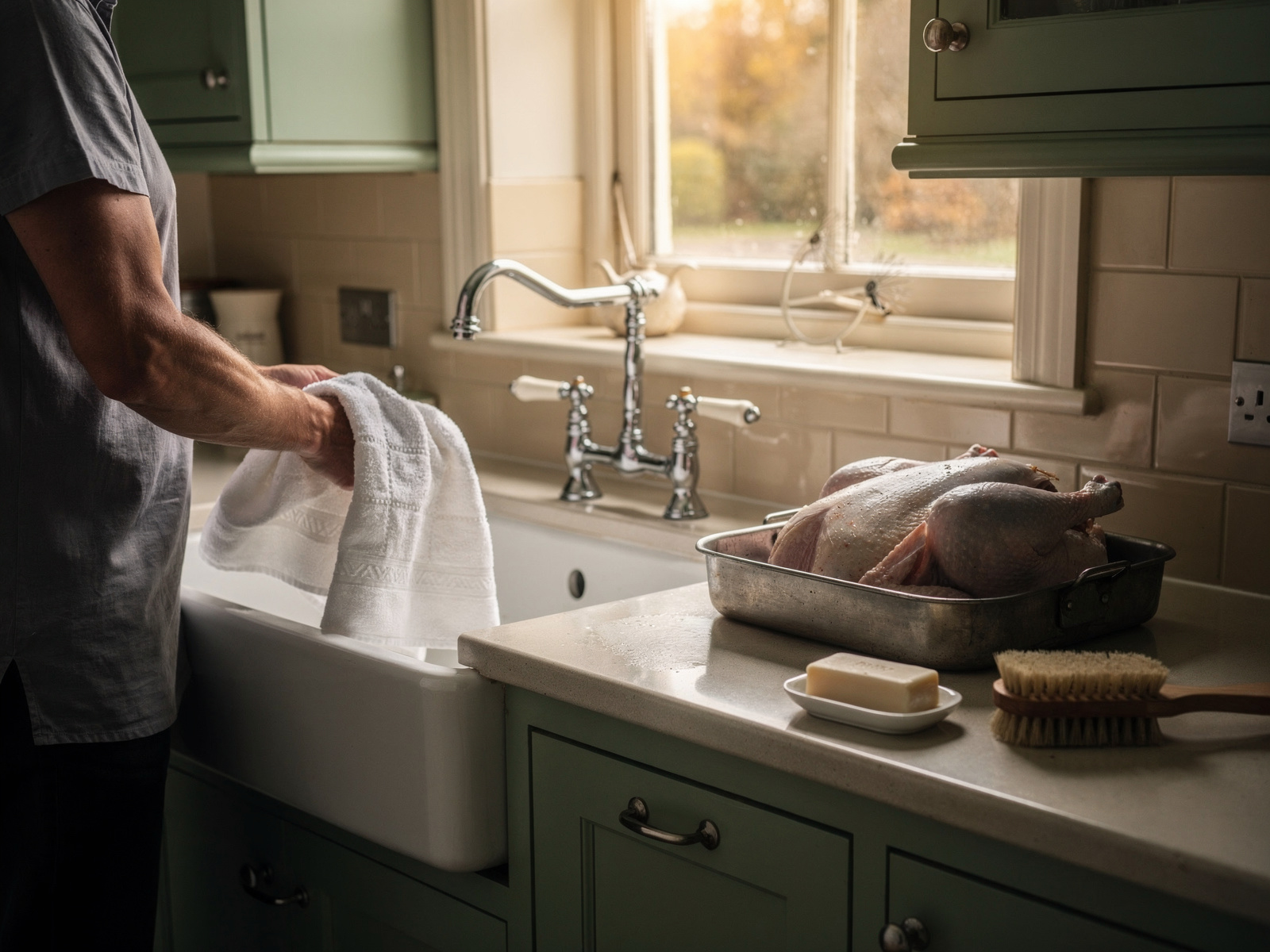
Stuffing in its own tin
The FSA advises cooking stuffing in a separate roasting tin rather than inside the bird. Put it on your checklist now, so on the day it is a decision already made rather than one more thing to remember while your phone keeps buzzing. Nothing here is a guarantee against illness; it is simply what the FSA advises.
If the packaging has no cooking instructions
The FSA says turkey should be steaming hot all the way through. Retailer packaging instructions come first. If there are none, the FSA's fallback guide times, in an oven preheated to 180°C (160°C fan), are:
- Under 4.5kg: 45 minutes per kg, plus 20 minutes
- 4.5kg to 6.5kg: 40 minutes per kg
- Over 6.5kg: 35 minutes per kg
Asking guests about allergies, without the awkwardness
What Food Standards Scotland says
Food Standards Scotland says that when you cook for someone with food allergies, you should ask the guest what they can and cannot eat, keep allergens separate from other foods, and check the ingredients on pre-packed foods such as sauces. It also says allergens cannot be removed by cooking, so a dish cannot be fixed afterwards. That is why asking early matters: it is settled before the roast is in.

A two-line message
Send it with the invitation, so it is done before your last working day. Something like: 'Looking forward to Christmas at ours. Could you let me know what you can and cannot eat, including any allergies?'
Then a second line: 'I will check the labels on anything pre-packed, such as sauces, and come back to you if I have a question.'
Leftovers: two routes after the meal
Fridge route
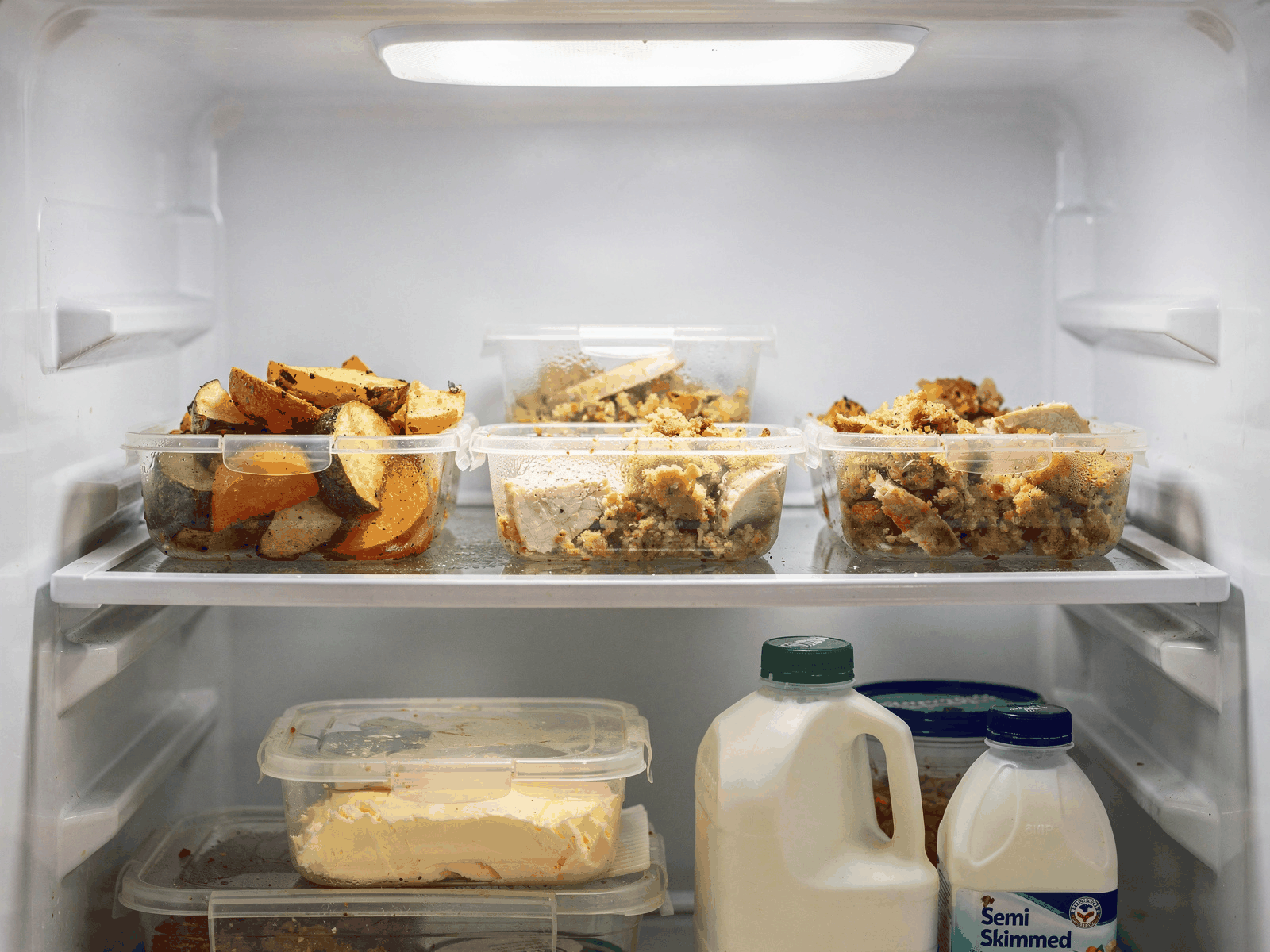
The FSA advises cooling cooked food quickly at room temperature, then refrigerating it within one to two hours, and says splitting leftovers into smaller portions helps them cool quicker. It also says not to put hot or warm food straight into the fridge. Then eat leftovers within 48 hours. Do this before you sit back for the evening or glance at the inbox; it takes minutes but is easy to forget when you are tired.
Freezer route
If you think eating everything within 48 hours will not be possible, the FSA says to freeze it instead, and the same one to two hour window applies to freezing cooked food. Once food is defrosted, the FSA says it should be eaten within 24 hours and not refrozen. So freeze in portions you will actually use, and put the date on a strip of tape.
Storage and food thermometers: what actually helps
Free first
Start with what you already own. The FSA suggests splitting leftovers into smaller portions so they cool quicker, and any clean container with a lid will do that. Stackable containers are a convenience for portioning and for fitting a full fridge; they do not make food safe, and the FSA's 48 hours still applies.
A fridge-freezer thermometer
A fridge-freezer thermometer is one way to see what your fridge is doing when the door is opening all day. This guide gives no temperatures, because the FSA's page on how to chill, freeze and defrost food safely is the place for its current guidance. It is entirely optional.
A probe thermometer
A kitchen probe thermometer is a tool some cooks use. Follow the instructions from the retailer and the thermometer maker, and keep the FSA's wording in mind: turkey should be steaming hot all the way through. Neither tool is needed to host well, and an imperfect kitchen is fine.
Hosting without losing your recovery time: desk boundary and stop time
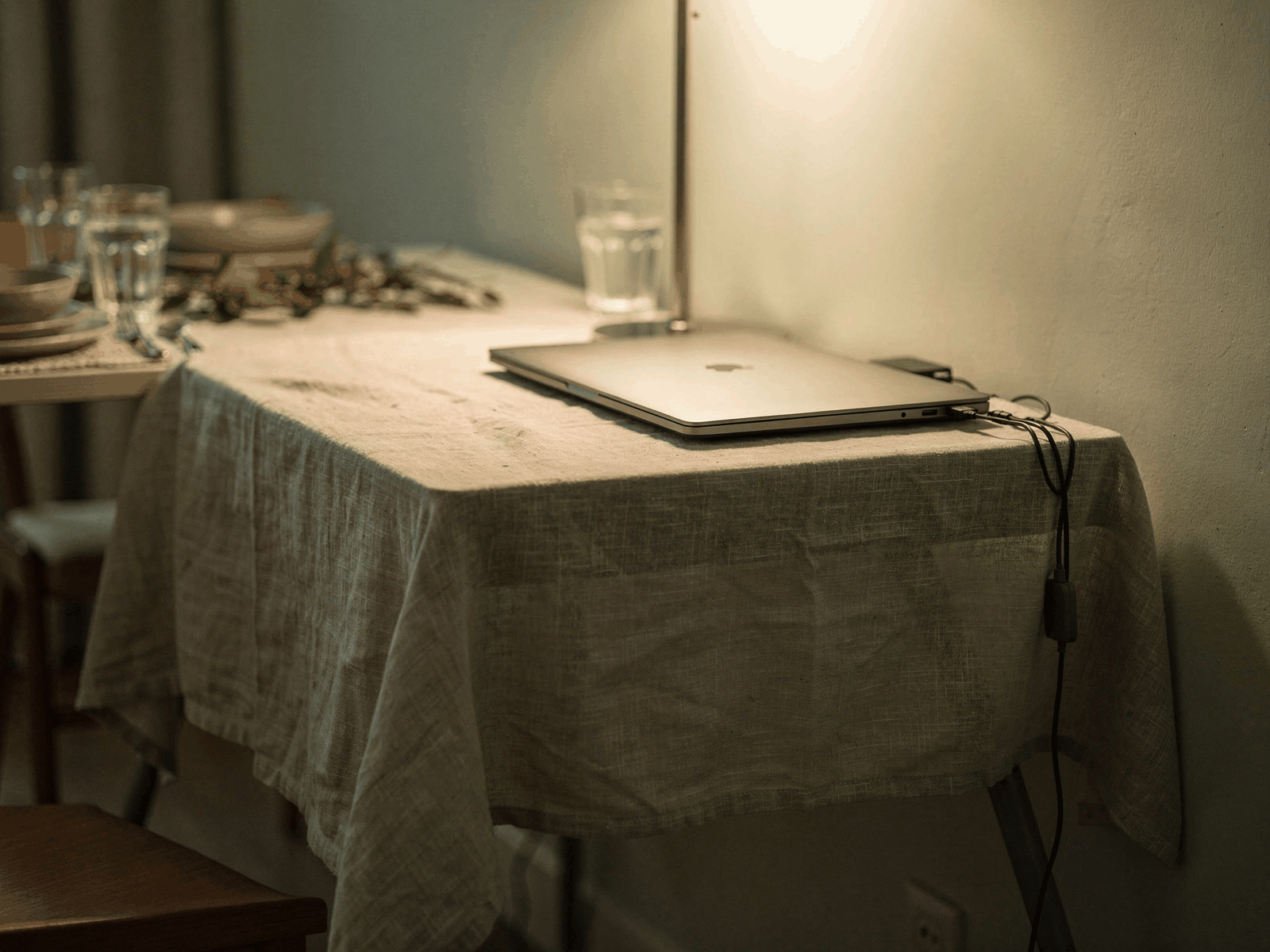
A start and finish time
Mind's Christmas coping tips suggest setting a start and a finish time for what you count as Christmas, an idea some people find helpful. For a home worker, the finish time doubles as a stop time for work. Make it concrete:
- Pick a stop time for work messages and put it in your calendar
- Close the laptop or cover the desk with a cloth
- Turn work notifications off on your phone
Words you can reuse
Two short messages do most of the work. For email, an out-of-office line: 'Thanks for your message. I am offline over Christmas and will reply when I am back at my desk.'
For family or guests, a note: 'Work stops at the time we agreed on Christmas Eve, and the desk stays covered until after Christmas.' Say it once, in advance, rather than defending it on the day.
Skip the comparison
Mind also suggests avoiding comparisons with the Christmas shown in adverts and social media. Your dining room may also be your office, and a spare room with cables in it will not look like the pictures. That is fine. The festive stop time is all this guide covers; for the longer routine, the work boundaries guide goes further.
Plan the wind-down, and know when to ask for help
Pick something for afterwards
Mind's Christmas coping tips suggest planning something nice to do after Christmas. Choose it before the day, while you still have the energy to decide. It can be small: a walk, lunch with a friend, a quiet morning with nothing in the diary. The point is that the hosting has somewhere to land, rather than running straight into the first email.
Make the evening soft
Soft lighting and a warm throw are comfort ideas, not treatments, and nothing here is a fix for stress. If you can, keep the first hour after the guests leave screen-free. A film night is also a perfectly good choice, and the movie night guide covers the setup.

A one-minute rule
If you are busy and tired, which is normal in December, use your stop time and rest. If stress is affecting your daily life, the NHS says you can contact NHS 111 or talk to a GP.
The one-page Christmas hosting checklist
Before your last working day
Done while work is still busy:
- Write the to-do list
- Set start and finish times for hosting
- Send the allergy message with the invitation
- Put the defrost date in the diary
On the day
In the kitchen:
- Do not wash raw turkey
- Wash hands with soap and warm water after handling it
- Cook stuffing in a separate tin
- Cool leftovers, then fridge or freeze within one to two hours
After the meal
For the leftovers:
- Eat within 48 hours, or freeze
- Eat defrosted food within 24 hours
- Do not refreeze defrosted food
- Packaging instructions come first
For you
To protect your recovery:
- Desk covered, notifications off
- Keep to your stop time
- Plan something nice for afterwards
- NHS 111 or a GP if stress affects daily life
Before you add anything else
Ask three questions before taking on any Christmas task. Is it on the list? Does it fit between the start and finish times you set? And if it is about food, is it a step the FSA names: a defrost date, no washing raw turkey, cooling and chilling leftovers within one to two hours, and eating within 48 hours or freezing? Keep the task if it passes. Otherwise drop it, shrink it or say no.
Frequently asked questions
Should I wash the turkey before cooking?
No. The FSA advises not to wash raw turkey before cooking. It does advise washing your hands thoroughly with soap and warm water after handling it. Follow the retailer's packaging instructions for everything else.
How long can leftovers stay in the fridge?
The FSA says to eat leftovers within 48 hours, or freeze them if you think that will not be possible. It also says not to put hot or warm food straight into the fridge, so let it cool first.
Can I refreeze defrosted food?
The FSA says that once food is defrosted it should be eaten within 24 hours and not refrozen. So if you take leftovers out of the freezer, plan to eat them within that window.
What should I ask guests about allergies?
Food Standards Scotland says to ask the guest what they can and cannot eat, keep allergens separate from other foods and check the ingredients on pre-packed foods such as sauces. Ask when you send the invitation, so it is settled early.
What if hosting is stressing me out?
Busy and tired is normal at this time of year. The NHS says that if stress is affecting your daily life, you can contact NHS 111 or talk to a GP. It also suggests planning ahead, such as a to-do list, can help with stress.
Verdict: an imperfect Christmas is fine
Plan from your last working day, follow the FSA basics for the turkey and leftovers, and set a stop time that protects your recovery. The biggest reservation is that this is general published guidance, not personal advice, and packaging instructions always come first. Your next step is small: write the list and put the defrost date in the diary today. An imperfect Christmas is still a good one.


