




Host a Virtual Halloween Party: Audio,…

The Calm Autumn Reset: 10 Small…

Can Free Affinity Help You Build…

The Best Lighting for Darker Autumn…

Can Hostinger AI Builder Launch a…

Create an Autumn Wind-Down Routine That…

Plug-In Solar Panels UK: Are They…

Heated Throw vs Heated Blanket vs…

Meta One Explained: Is the Subscription…

Autumn Sleep Reset: Light, Temperature and…

Plaud One Explained: Can AI Earbuds…

The Best Ways to Dry Washing…

Namecheap vs Dynadot

Dehumidifiers Explained: When Are They Actually…

Convertkit Vs Beehiiv

A Realistic Autumn Walking Routine for…

Bluehost vs Siteground

Autumn Social Reset: Small Plans for…

Namecheap review

Sekonda Smart Ring vs Oura Ring…
Cosy is not the same as cold. The NHS in Scotland advises at least 18°C in rooms you use regularly, if you can, so this guide works in three layers: keep heat in, warm yourself, then keep moving.
It is not a way to avoid heating if you need it, and no product was tested for this article.
Quick Overview
- NHS Inform advises at least 18°C in rooms you use regularly, if you can.
- If you are 65 or over or have a health condition, do not cut back on heating.
- Block draughts and close the curtains at dusk before changing anything else.
- Warm yourself with layers, a blanket over your legs and warm feet.
- Try not to sit still for more than an hour or so.
- Any savings are Energy Saving Trust estimates and vary from home to home.
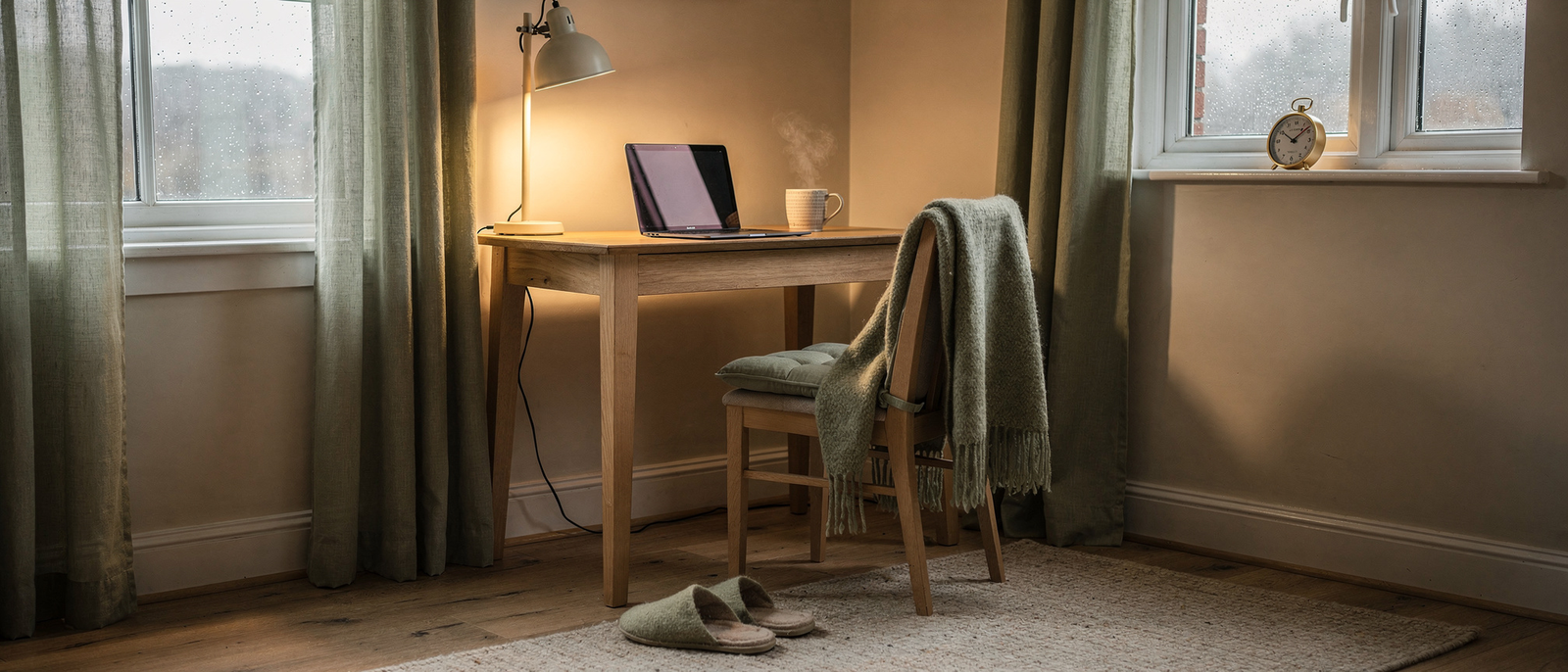
Cosy is not cold: who this is for
If you are 65 or over or have a health condition
NHS Inform, the NHS in Scotland, advises heating your home to a temperature that is comfortable for you and, if you can, at least 18°C in the rooms you use regularly. That is guidance, not a rule. NHS 111 Wales says people who are 65 or over, or who have a health condition such as heart or lung disease, should heat their home to at least 18°C. If that is you, heat the room and treat everything below as an extra, not a substitute.
If you are under 65 and healthy
NHS 111 Wales (the page is undated) adds that if you are under 65, healthy and active, your home can be cooler than 18°C as long as you are comfortable. If that sounds like you, work down the layers in this guide: draughts and curtains, then clothing, legs and feet, then movement. Check the room with a thermometer first, and if you start to feel properly cold or unwell, heat the room instead.
Layer one: stop heat escaping
Draught-proof windows and doors
The Energy Saving Trust says professional draught-proofing of windows and doors could save around £55 a year in Great Britain and costs around £55, and that DIY can be much cheaper. Checked on 18 October 2026; prices can change, and savings depend on your home. Start at your desk by holding the back of your hand near the window frame and the door to find where cold air arrives.
Close the curtains at dusk
NHS 111 Wales advises drawing curtains at dusk and keeping doors closed to block draughts. Groundwork, citing the Energy Saving Trust, says about 18% of heat is lost through windows in an uninsulated house, which is why the window beside your desk matters. The Groundwork page is older than the other sources here, so treat that figure as indicative. Groundwork notes that thermal curtains are one way to reduce that loss.
Radiator reflector panels
The Energy Saving Trust says reflector panels work best on radiators on uninsulated external walls, and that ordinary kitchen foil will not do the job. If your desk radiator sits on an outside wall, they may be worth a look. If you rent, ask your landlord before fitting anything.
Keep a little ventilation
The Energy Saving Trust notes that adding more draught-proofing to a home that is already fairly well sealed may increase the risk of poor air quality. Keep a little ventilation, and never try to seal a room completely.
Quick check for your desk
Look at your desk wall and window. Is there a gap round the frame, an uncovered window after dark, or a radiator on an outside wall? Fix whichever applies first, then move on to layer two.
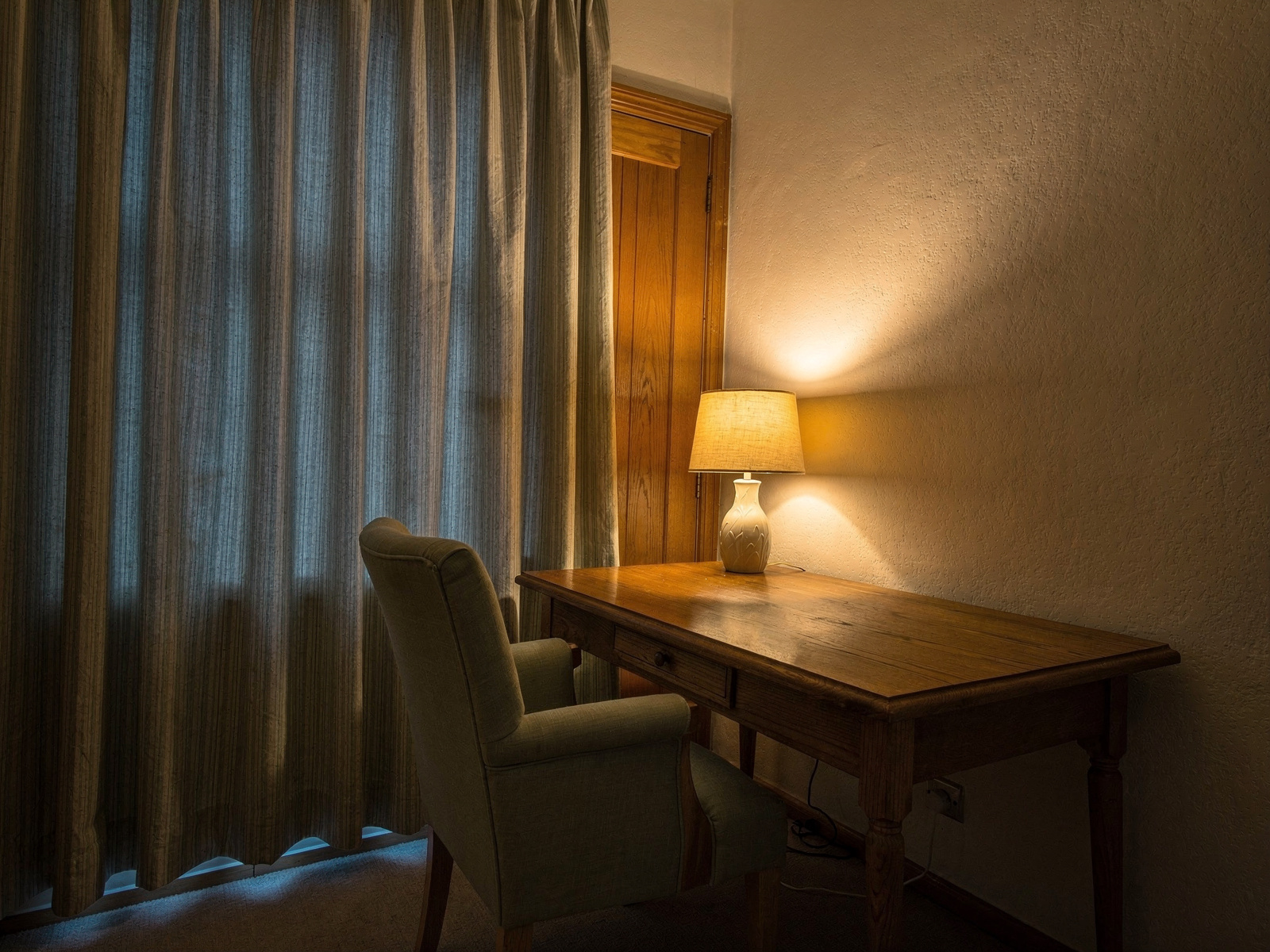
Layer two: warm the person, not the room
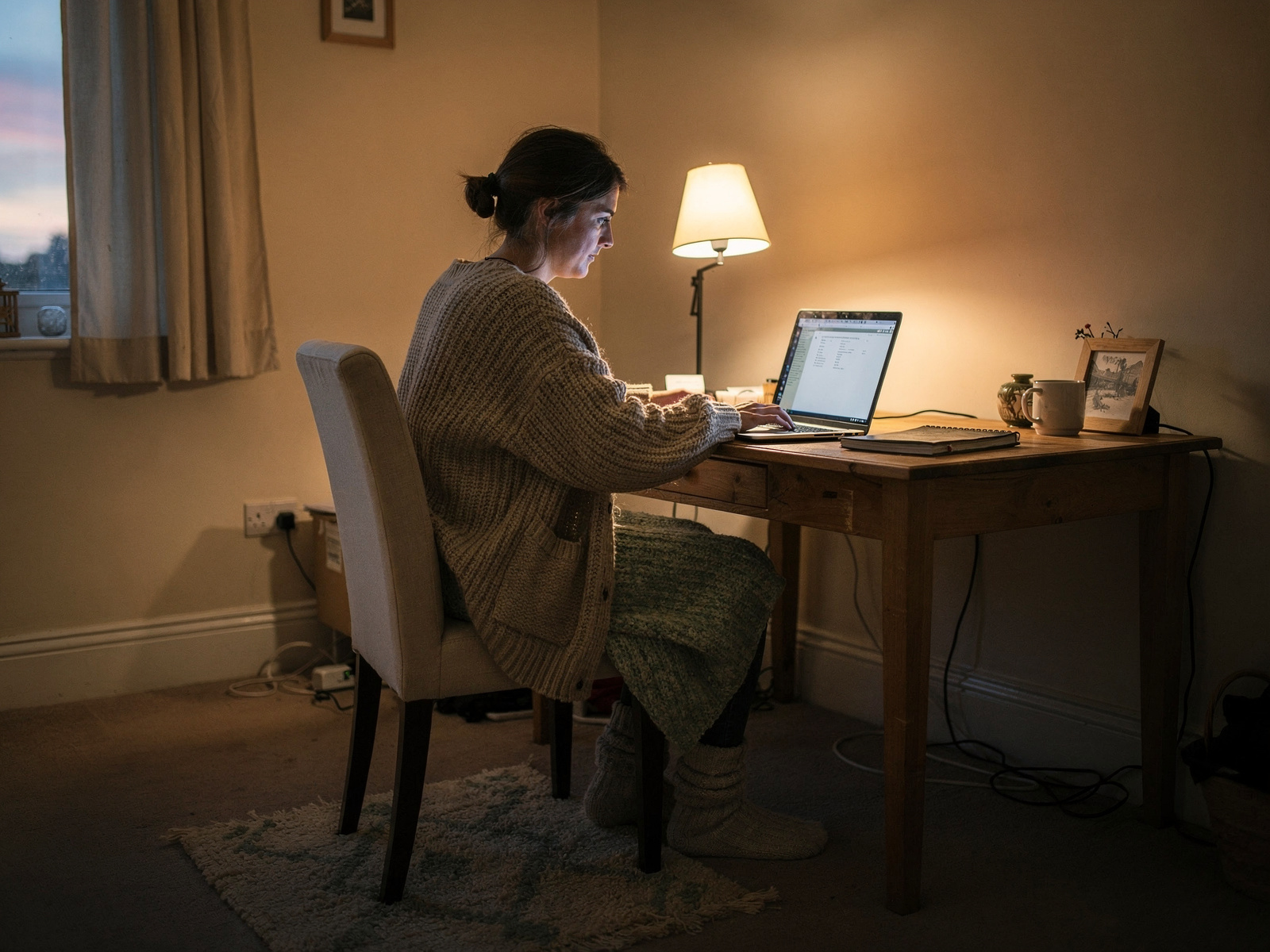
Insulate yourself first
Professor Hugh Montgomery of UCL wrote that several layers of ordinary clothing can insulate as well as thermals, that a blanket over the legs and waist helps when you are sitting, and that heating the person is much cheaper than heating the house. That is expert opinion, not medical advice. When you sit still all day, work through this order:
- Legs and waist: a blanket or extra layer first.
- Feet: warm socks and slippers.
- Hands: covered last, if typing gets stiff.
Hands and feet get cold first
Hands
In a cold room, fingers and toes cool first, and the expert article published by the University of Portsmouth says that cooling can make typing and texting slower, harder and more prone to error. Fingerless gloves leave your fingers free to type. Keep a pair next to the keyboard so they are easy to put on before you reach for the thermostat.
Feet
Prof Montgomery's article also suggests warm socks and slippers, and keeping your feet off draughty floors. A rug or mat under the desk does the same job, as does a footrest that lifts your feet clear of the floor. Foot warmers and desk foot supports also exist in several forms. None were tested for this article, so treat them as optional extras once the basics are in place.
A heated throw or cushion: what to know first
Safety box
A heated throw is an optional extra once the free steps are done. Before buying or using one, Electrical Safety First, a UK charity, advises:
- Buy from a reputable retailer rather than a third-party online seller.
- Look for UKCA or CE marks, but do not rely on them alone.
- Check regularly for scorching or damaged wires.
- If you use an electric blanket, replace it every ten years.
- Follow the manufacturer's instructions.
Portable, but check it
Electrical Safety First says heated throws are more portable than blankets, which suits a desk chair or sofa.
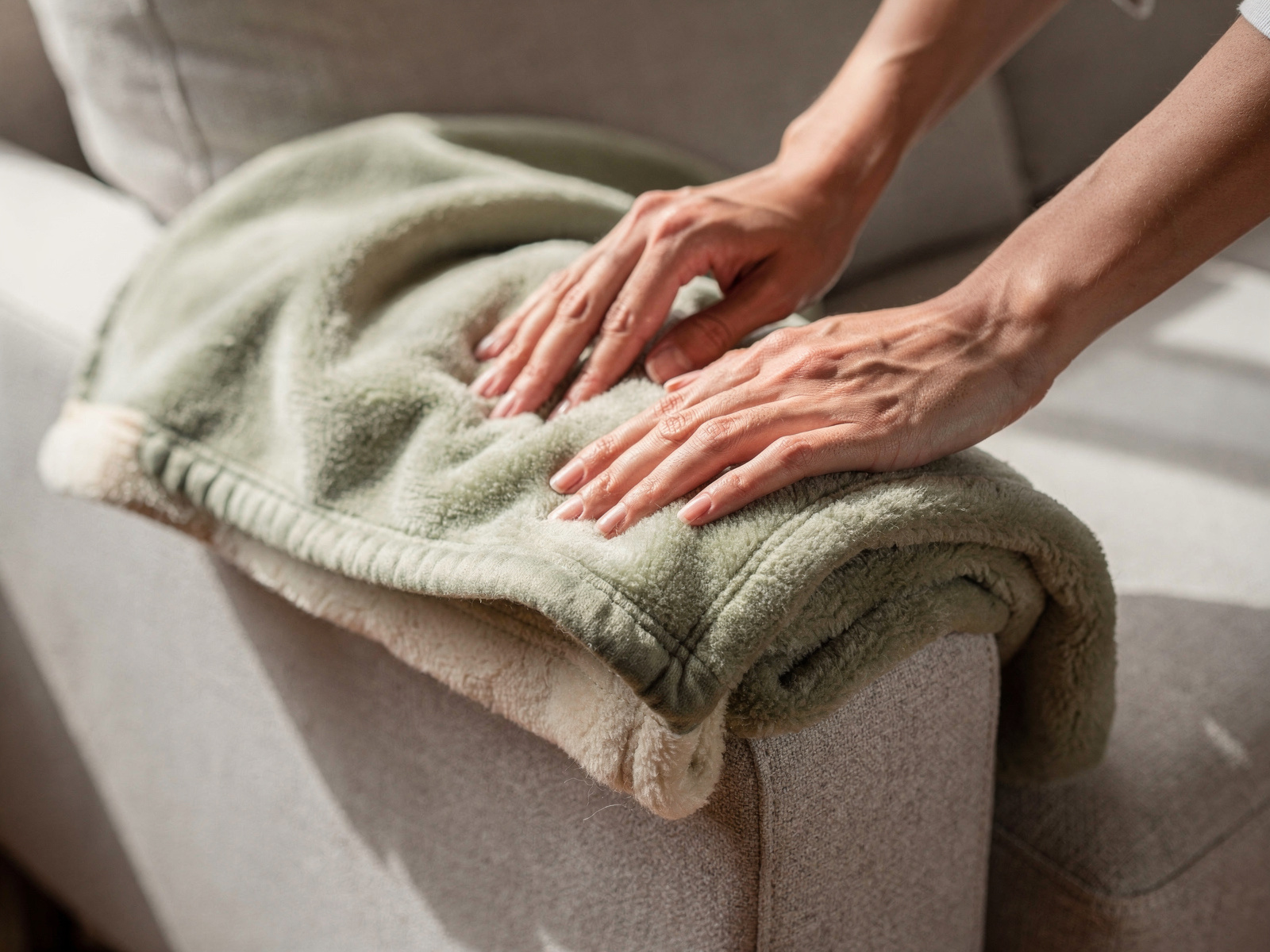
What it costs to run
As an illustration only, Brit Brief reports that Dunelm's £30 Fleece Electric Throw costs around 3p an hour to run, according to Dunelm's own product description. That is one retailer's claim, untested by us, and the real figure depends on wattage, heat setting and tariff. Price checked on 18 October 2026; prices can change. We rank no throws here, so use the safety points above as your guide. If you want to compare options, the heated throw comparison linked above is the place to start.
Layer three: small desk habits
Stand up every hour
Beacon Medical Group, an NHS GP practice, advises that when you are indoors in cold weather you try not to sit still for more than an hour or so. In practice, that means a short stand-up and stretch each hour. Walk to another room and back, roll your shoulders or stand while you read a message. Set a repeating reminder on your phone so it does not depend on remembering.
Measure the room
A basic room thermometer, or a thermometer-hygrometer, shows what your desk room actually is, so you are not guessing against the 18°C guide. The Energy Saving Trust says most people should set the thermostat to the lowest comfortable temperature, usually 18°C to 21°C (checked on 18 October 2026), with comfort and health first. Rule: below 18°C and you are 65 or over or have a health condition, heat the room. Otherwise, layers first.
Being honest about savings
Thermostat
The Energy Saving Trust estimates that turning the thermostat down from 22°C to 21°C could save £120 a year in Great Britain. Its usual range is 18°C to 21°C, and it puts comfort and health first. Every figure in this section is an estimate for Great Britain, checked on 18 October 2026; prices can change and savings depend on the home.
Chimney draught excluder
The Energy Saving Trust says a chimney draught excluder could save around £45 a year in Great Britain. It must be removed before you light a fire. It only applies if you have a chimney you are not using, so skip it otherwise.
Radiator panels
A separate Energy Saving Trust DIY page says reflector panels cost about £25 to install and could lower heating bills by £18 a year in Great Britain. That page is older than the others here, so these figures are not from the same dataset and should not be compared directly with them.
How to read these figures
None of these savings is guaranteed, and this is not personal financial advice. These are estimates that depend on the home, so comfort and the 18°C guide should lead your decision. The free steps (curtains, layers, moving) cost nothing, which is why they come first.
Your cold-morning desk checklist
Check the room
Read the thermometer against 18°C and your own comfort. If you are 65 or over or have a health condition, heat the room.
Close up
Curtains drawn at dusk, doors closed and any draught at the desk blocked. Keep a little ventilation.
Dress the person
Layers on, a blanket over your legs, warm socks and feet off the cold floor, and fingerless gloves if typing feels stiff.
Check the throw
If you use a heated throw, check it for scorching or damaged wires first and follow the manufacturer's instructions.
Set a reminder
Set a stand-up reminder for every hour and take a short stretch each time.
Still cold? Heat the room
Cosy is the aim, not putting up with it. If layers are not enough, heat the room.
FAQs
Is 18°C compulsory?
No, it is guidance. NHS Inform advises heating your home to a temperature that is comfortable for you and, if you can, at least 18°C in the rooms you use regularly.
Can I work in a cooler room?
NHS 111 Wales says healthy, active people under 65 can have a home cooler than 18°C if they are comfortable. If you are 65 or over or have a health condition such as heart or lung disease, do not cut back on heating.
Will draught-proofing save money?
The Energy Saving Trust says professional draught-proofing of windows and doors could save around £55 a year in Great Britain (checked on 18 October 2026). Savings depend on your home, and it is an estimate, not a promise.
Will radiator panels work in any room?
The Energy Saving Trust says they work best on radiators on uninsulated external walls. Ordinary kitchen foil will not do the job. If you rent, ask your landlord before fitting them.
Is a heated throw safe?
Follow Electrical Safety First's advice and the manufacturer's instructions: reputable retailer, UKCA or CE marks, regular checks for damage. We have not tested any product, so we cannot call one safe.
Verdict
Start with the free steps in order: draughts and curtains, then layers and warm feet, then moving every hour. If you are 65 or over or have a health condition, heat the room to at least 18°C instead and treat these tips as extras. The biggest reservation is that savings are modest and vary by home, so comfort comes first. Tomorrow morning, measure the room and run the checklist.
For the wider picture of a workspace that supports your health, the healthy home work hub is the place to go next.


