



Host a Virtual Halloween Party: Audio,…

20 Minimalist Halloween Nail Ideas for…

Can Free Affinity Help You Build…

12 Lower-Sugar Halloween Treat Swaps Worth…

Can Hostinger AI Builder Launch a…

A 5-Step Screen-Free Autumn Reading Ritual…

Plug-In Solar Panels UK: Are They…

15 Last-Minute Zoom Halloween Costumes for…

Meta One Explained: Is the Subscription…

10 Low-Fuss Dog Halloween Ideas: Comfort…

Plaud One Explained: Can AI Earbuds…

9 Gothic Dinner Table Ideas for…

Namecheap vs Dynadot

7 UK Ghost Tours and How…

Convertkit Vs Beehiiv

Do You Really Need a £420…

Bluehost vs Siteground

15 Gentle Spooky Autumn Books to…

Namecheap review

How to Remove Halloween Face Paint…
A small-space desk has to do more than fit into a gap. It needs enough room for your laptop, notes, coffee, elbows and actual work without making the room feel cramped or permanently claimed by your job. This desks for small spaces review compares practical options for bedroom corners, hallway nooks, dining areas and spare walls, so you can create a usable work surface without swallowing the rest of the home.
Wall desks help rooms reset
Corner desks use awkward spaces
Converters need enough depth
Storage desks control visible clutter
Compact desks should not feel cramped
Chair clearance matters early
The room still needs to feel liveable

Most Relevant Audience
This guide is for remote workers, home workers, freelancers, bloggers, creators, side hustlers, parents, carers and small business owners who need a real work surface but do not have a spare room behaving nicely.
It is especially useful if your dining table is shared, your bedroom corner is already doing five jobs, your hallway has become suspiciously tempting, or your “home office” currently involves balancing a laptop near laundry with professional confidence.
Choose This If Your Space Has One Main Problem
Choose wall-mounted if the room must reset
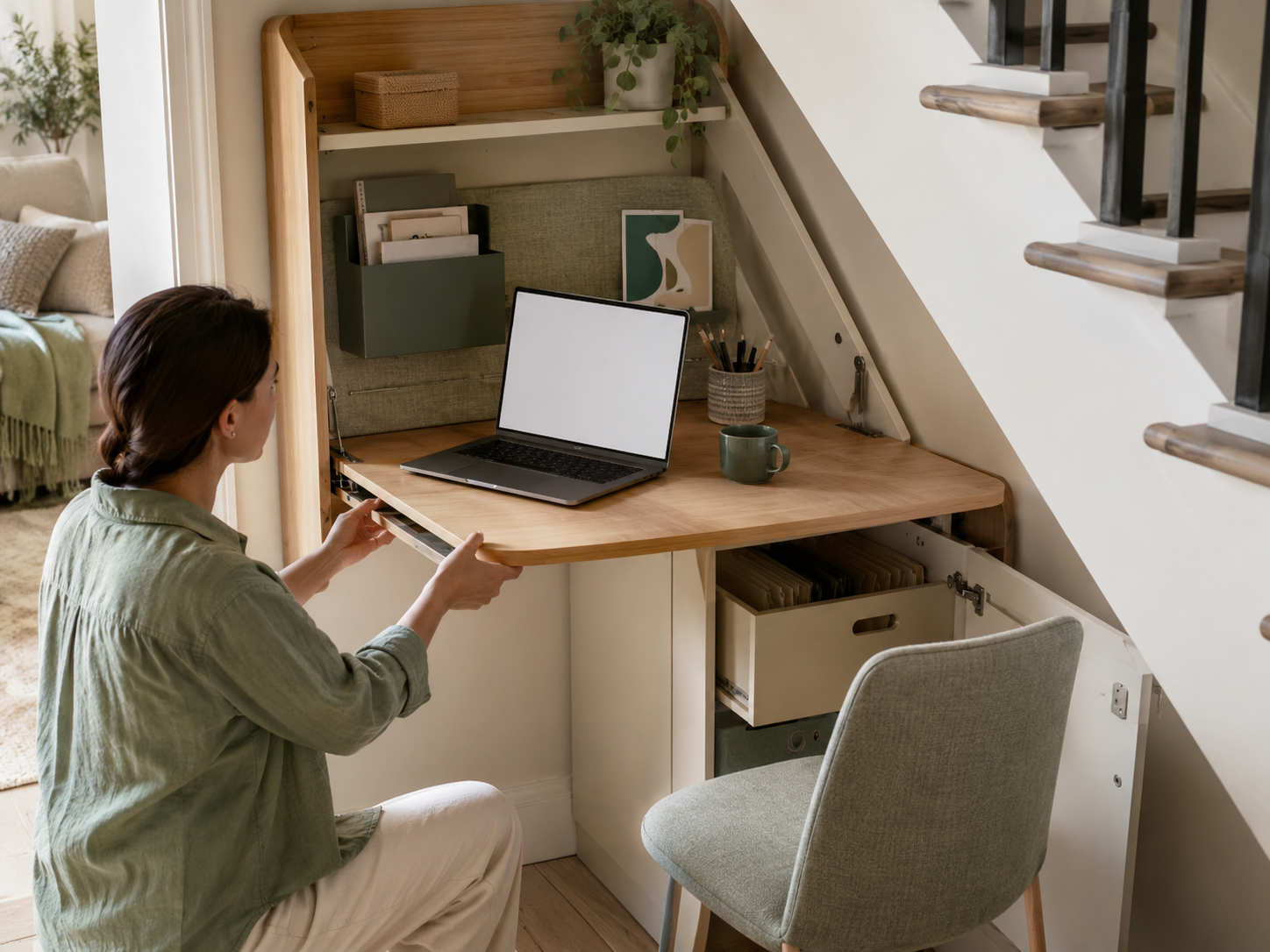
A wall-mounted folding desk makes sense when the room needs to stop looking like work after work. It can create a temporary laptop zone, then fold away when the day ends.
This suits bedrooms, hallways and shared rooms where floor space is precious. Check wall type, fixings, load limit, folded depth and installation confidence before buying. A wall desk should fold away, not test your faith in plasterboard.
Choose corner if the only spare space is awkward
A corner desk is useful when the room has one realistic work spot and it happens to be an awkward corner. It can turn unused space into a more defined work zone.
This suits bedrooms, living rooms and small spare rooms. Check usable depth, chair clearance and whether upper shelves will feel helpful or visually heavy. A corner workstation should create calm, not a tiny office cave.
Choose a converter if you already have a stable surface
A standing desk converter works when your existing table or desk is stable, deep and wide enough, but you want sit-stand flexibility.
This is useful for renters, dining-table workers and temporary setups. The warning is important: converters can make small surfaces worse if they steal too much depth. A converter on a narrow table is not a wellness upgrade. It is furniture suspense.
Choose storage if clutter is the real stress
A compact storage desk makes sense when papers, chargers, notebooks and work bits keep spreading across the room.
Storage can make a small setup feel calmer, but only if it helps the workday. Drawers should hold daily essentials, not become a museum for cables, old receipts and one mysterious adapter nobody dares throw away.
Choose simple compact if flexibility matters
A simple compact desk is best when you need a proper surface that looks calm, moves visually lightly and does not dominate the room.
This suits laptop users, writers, bloggers and admin-heavy workers who need enough space for the basics. The best compact desk is not tiny for cuteness. It is small enough for the room and deep enough for serious work.

A desk can technically fit in a room and still make every workday feel smaller. Before buying, check three things first: usable depth, chair clearance and reset ability. If your laptop, arms, notes and chair cannot work comfortably together, the desk is not compact. It is just underachieving furniture.
Best Desks For Small Spaces Compared

Wall Desk vs Corner Desk vs Converter vs Storage Desk
Wall desks save the most floor space
Wall-mounted folding desks are best when the main problem is lack of floor space. They can disappear after work, which is useful in bedrooms, hallways and shared rooms.
The trade-off is mounting and depth. You need safe installation and a realistic idea of what the desk will hold. They are clever for laptops, not ideal for full office setups.
Corner desks create a clearer zone
Corner desks work well when you need the room to feel like it has a dedicated work corner. They can use awkward space better than a straight desk.
The trade-off is visual weight. A corner workstation with shelves can feel helpful or heavy depending on the room. Measure chair movement before buying, not after the box has entered your life with confidence.
Converters add movement but need space
Standing desk converters help if your current surface is good enough but your posture and movement need more variety.
The trade-off is surface space. A converter can make a small desk feel crowded, especially if you use a separate keyboard, mouse, notebook or monitor. It needs depth, stability and a sensible cable setup.
Storage desks control clutter
Desks with shelves and drawers help when the problem is not just space, but work clutter spreading across the room.
The trade-off is temptation. Built-in storage can hide useful items or quietly collect chaos. Choose storage that matches your actual workday, not the fantasy version where every pen has a purpose and no cable has ever multiplied.
What Makes A Desk Good For Small Spaces
Usable depth
A small desk still needs enough depth for comfortable laptop use, notes, keyboard position and arm space. A desk that is too shallow can make you hunch, crowd your wrists or work too close to the screen.
Check usable depth, not just total dimensions. Small should not mean cramped.
Chair clearance
A desk is only useful if your chair fits. Check legroom, drawer placement, shelf position and whether you can sit close enough without twisting.
Small desks sometimes steal comfort by hiding shelves or supports where your knees expected basic respect. Measure chair space before buying.
Stability
Stability matters more than clever design. If the desk shakes when you type, write or move a cup, it will quickly become annoying.
Wall desks need secure mounting. Converters need a stable base. Compact desks need a frame that does not wobble every time your inbox receives bad news.
Storage that helps
Storage is useful only when it supports the workday. A shelf for notebooks, a drawer for chargers or a small cable space can reduce clutter.
Too much storage can make the desk bulky. Too little can leave everything visible. Choose based on what you actually use, not what looks tidy in a product photo with one decorative pencil.
Reset ability
Small-space desks often live in rooms that also need to be bedrooms, dining areas or family spaces. The best desk makes it easy to close the workday.
That might mean folding the desk away, clearing one compact surface or putting work items into drawers. A small desk should help work end, not hover in the room like a guilty tab.

Best Desk Type For Different Small Spaces
Best for bedroom corners
A simple compact desk or corner desk usually works best in a bedroom. The John Lewis Format Compact Desk suits cleaner, lighter setups, while the IKEA MICKE Corner Workstation works if you need more structure and storage.
Avoid making the bedroom feel like a permanent office. If work is visible from bed, choose storage or a reset routine that helps the room mentally change back.
Best for hallway nooks
A wall-mounted folding desk is the strongest option for hallway nooks and narrow spaces. The HOMCOM wall desk can create a temporary laptop station without leaving furniture in the walkway.
Check door swings, foot traffic, wall strength and whether there is enough room to sit without becoming a human obstacle.
Best for dining-table workers
A standing desk converter can help if the dining table is your main work surface and you want more movement. The Leitz Ergo Cosy converter gives sit-stand flexibility without replacing the table.
Just make sure it can be moved or stored if the table needs to become a table again, which is rude but occasionally necessary.
Best for clutter-prone workers
A compact storage desk like the VASAGLE option suits people whose work bits spread quickly. Shelves and drawers can help keep chargers, notebooks, stationery and paperwork from taking over.
The aim is not perfect minimalism. It is fewer visible work reminders shouting at you after dinner.
Best for laptop-only workers
Laptop-only workers can choose a wall desk, compact desk or small converter depending on space. The key is not overbuying.
You may not need a large workstation if your main tools are a laptop, notebook and coffee. But you do need enough space to sit comfortably without folding yourself into the furniture.

Common Small-Space Desk Mistakes
Buying the smallest desk possible
The smallest desk is not automatically the best desk. If it cannot hold your laptop, notes, arms and basic accessories comfortably, it will make the workday feel cramped.
Buy the smallest desk that still works, not the smallest desk that technically exists.
Ignoring wall and floor reality
Wall desks need secure walls. Corner desks need usable corners. Converters need stable surfaces. Storage desks need room for drawers and chairs.
Measure properly before buying. Product photos are very good at pretending rooms have no doors, radiators, skirting boards, laundry baskets or other evidence of real life.
Forgetting cable management
Small desks can become messy fast when chargers, monitor cables, lamp wires and extension leads start gathering.
Look for cable routes, nearby sockets and storage for chargers. A small desk with wild cables can feel more chaotic than a larger desk with a plan.
Choosing storage that blocks comfort
Drawers and shelves are useful until they steal knee space, chair movement or leg comfort.
Check where the storage sits. If your legs cannot fit naturally, the desk is solving clutter while creating a new ergonomic complaint.
Letting work take over the room
A small desk can still dominate a room mentally if work stays visible all evening. This matters when the office is also a bedroom, dining area or shared living space.
Create a shutdown habit: close the laptop, clear the surface, fold the desk or put work items away. Small spaces need clearer endings.

FAQ
What type of desk is best for a small space?
The best desk for a small space depends on the room. Wall-mounted folding desks save the most floor space, corner desks use awkward corners, standing desk converters add movement, and compact storage desks help control clutter.
The best choice is the one that gives you enough usable work surface without making the room feel smaller.
Are wall-mounted folding desks worth it?
Wall-mounted folding desks can be worth it if you have very limited floor space and mostly use a laptop. They are useful for hallway nooks, bedroom corners and shared rooms.
They are less suitable for heavy equipment, multiple monitors or people who cannot safely mount furniture to the wall.
Is a corner desk good for a small room?
A corner desk can be good for a small room if it uses awkward space well and gives you enough depth to work comfortably.
Check chair clearance, storage height and whether the desk feels visually heavy. A corner desk should make the room more useful, not more crowded.
Can a standing desk converter work in a small home office?
A standing desk converter can work in a small home office if your existing desk or table is stable, deep and wide enough. It can add sit-stand flexibility without buying a full standing desk.
It may not work well on a narrow, wobbly or already crowded surface. Always check footprint, height range, keyboard space and how much depth remains after placing it.
Should I choose a desk with storage?
Choose a desk with storage if clutter is one of your main problems. Shelves and drawers can help keep notebooks, chargers, papers and accessories under control.
Avoid bulky storage if you need legroom, chair movement or a lighter-looking setup. Storage should solve clutter, not create cramped sitting.
How do I make a small desk setup feel less cramped?
Choose a desk with enough usable depth, keep only daily items on the surface, manage cables, use vertical storage carefully and create a shutdown routine.
A laptop stand, separate keyboard and mouse may also help posture, but check that your desk has enough space before adding more equipment.
Final Verdict
The best small-space desk is not the smallest one. It is the one that gives you usable depth, chair clearance, stability and a way to reset the room after work. HOMCOM suits fold-away wall setups, IKEA MICKE uses corners well, Leitz Ergo Cosy adds sit-stand flexibility, VASAGLE helps with storage, and John Lewis Format keeps things simple.
Choose the desk that solves your actual space problem. A good small desk should support serious work without making the room feel like it has been swallowed by your job.


