



Host a Virtual Halloween Party: Audio,…

20 Minimalist Halloween Nail Ideas for…

Can Free Affinity Help You Build…

12 Lower-Sugar Halloween Treat Swaps Worth…

Can Hostinger AI Builder Launch a…

A 5-Step Screen-Free Autumn Reading Ritual…

Plug-In Solar Panels UK: Are They…

15 Last-Minute Zoom Halloween Costumes for…

Meta One Explained: Is the Subscription…

10 Low-Fuss Dog Halloween Ideas: Comfort…

Plaud One Explained: Can AI Earbuds…

9 Gothic Dinner Table Ideas for…

Namecheap vs Dynadot

7 UK Ghost Tours and How…

Convertkit Vs Beehiiv

Do You Really Need a £420…

Bluehost vs Siteground

15 Gentle Spooky Autumn Books to…

Namecheap review

How to Remove Halloween Face Paint…
Most wellness products look wonderful until they meet an ordinary Tuesday. You sit down after school drop-off, realise lunch may become a biscuit, answer emails with the emotional tone of a small emergency, and plan to stretch just as someone needs socks. Wellness products that fit a real workday are not about buying a full lifestyle. They are about small cues that make harsh light, stale air, skipped breaks, stiff bodies and noisy days easier to survive.
Stop buying wellness clutter.
Choose products that survive real life.
Fix harsh light, stale air and skipped breaks.
Make food, water and movement easier.
Build tiny cues, not full routines.
Buy for the problem you actually have.
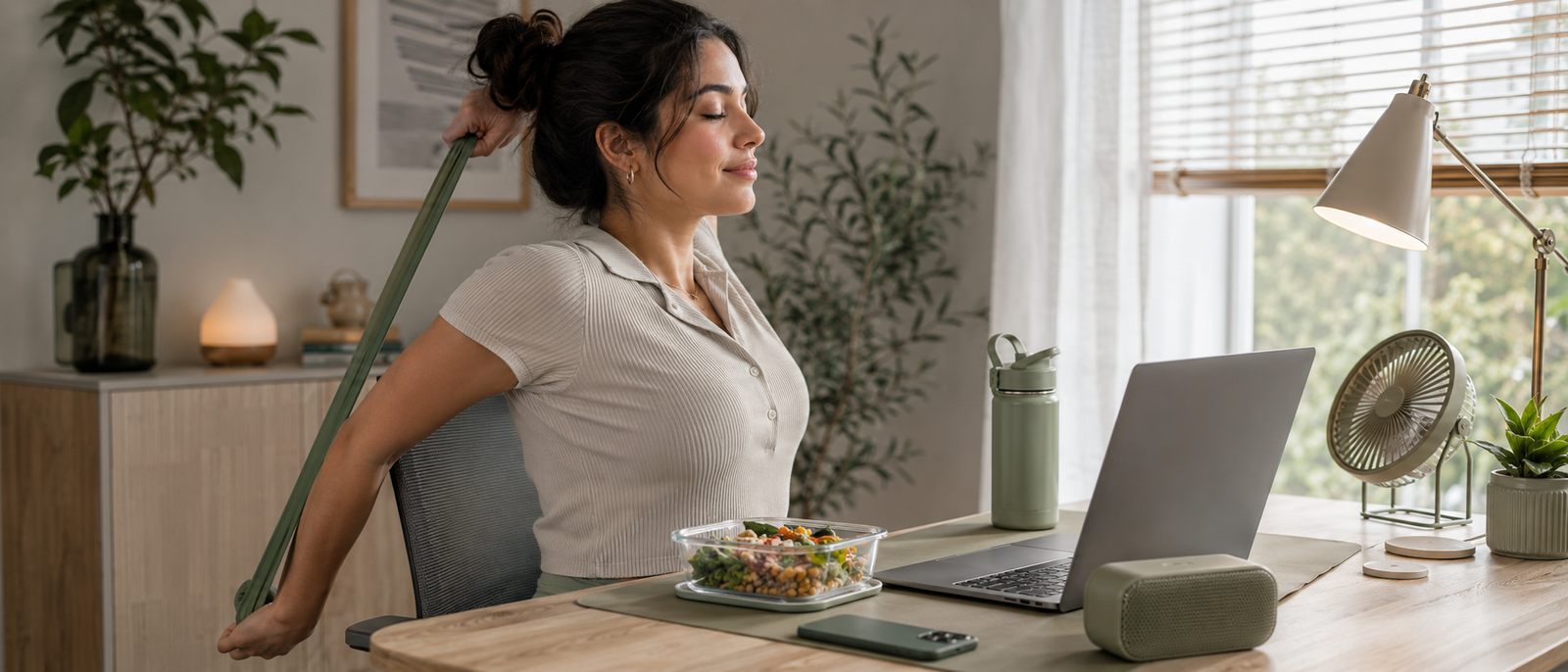
Most Relevant Audience
This article is for remote workers, home workers, freelancers, bloggers, creators, side hustlers, small business owners and busy parents who want wellness support that actually fits normal life. It is especially useful if your workday includes short focus windows, noisy surroundings, skipped meals, screen fatigue, stiff posture, rushed breaks and no spare hour for a perfect wellness routine involving silence, cucumber water and a personality transplant.
Stop buying wellness clutter
Your real day is not a product photo
A lot of wellness advice seems designed for someone with a silent house, a spare hour and no emails arriving sideways. Real workdays are messier. You may be answering clients, clearing plates, checking school messages and trying to remember whether you drank water. Buy for that day, not the fantasy one.

The product has to reduce friction
A useful wellness product makes one annoying thing easier. Softer light helps tired eyes. A fan helps a stale room. A meal-prep container helps you eat before 3pm turns into crumbs and irritation. If the product does not remove friction, it may just become another calm-looking object to dust.
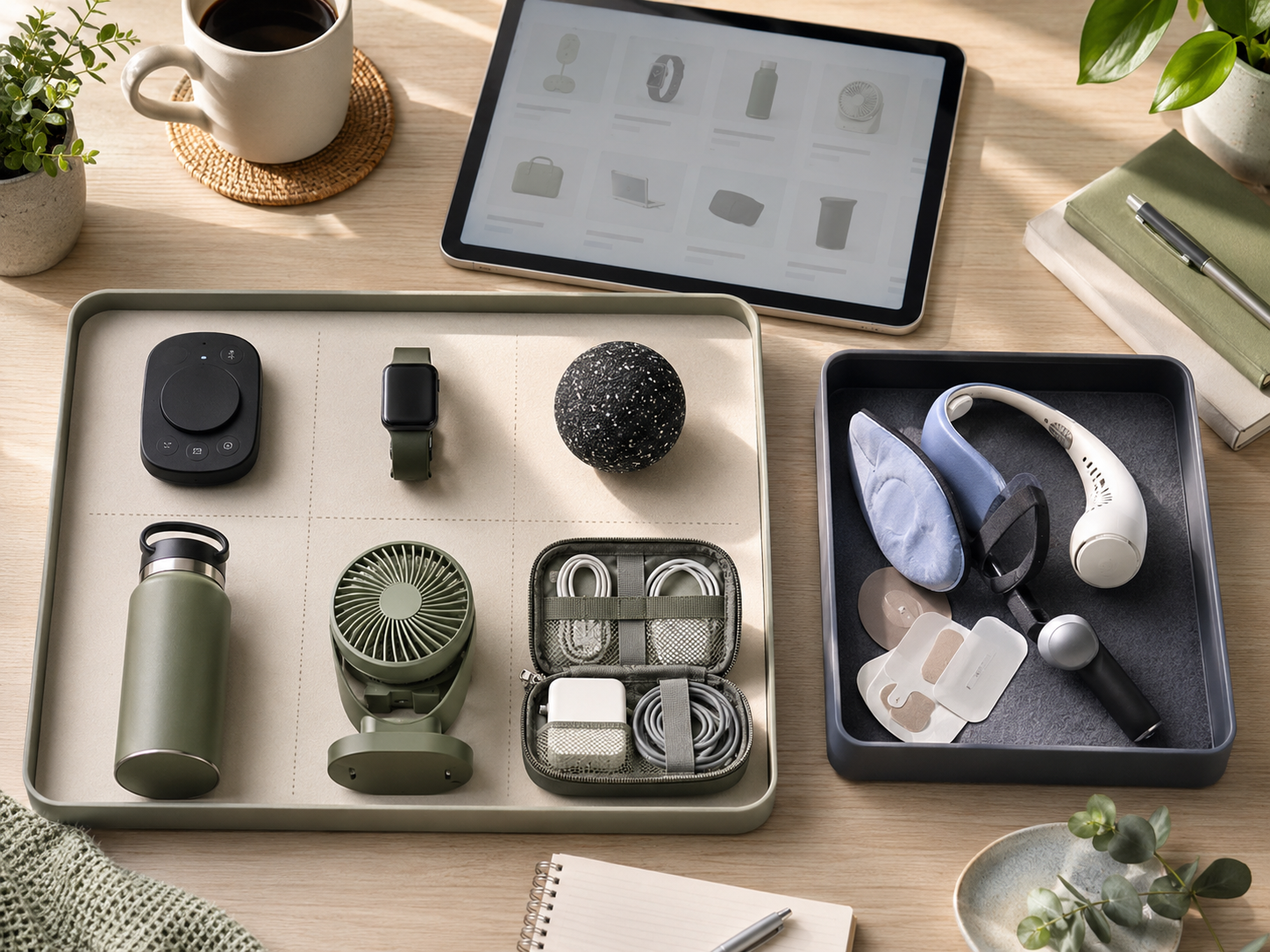
Good intentions can become clutter
The wrong products start with hope and end as desk ornaments. A bottle you never fill, a diffuser you forget, a stretch band you never touch and a speaker you never switch on are not wellness. They are clutter wearing good intentions, quietly judging you from the corner.
Tiny cues beat big promises
Most busy workers do not need a full routine. They need tiny cues that are easy to repeat. A visible water bottle. A softer light. A snack container. A band beside the desk. One cue that works on a normal tired day is better than a perfect system that only works in a motivational video.
Wellness should make your real day easier
Wellness should not give you another routine to fail at. It should make your actual day easier: the loud one, the rushed one, the one where your break becomes laundry, your lunch becomes toast and your shoulders slowly apply for permanent residence near your ears.
Choose products that survive real life
Useful beats aspirational
Aspirational wellness looks good online. Useful wellness survives Tuesday. The best products are easy to reach, easy to understand and easy to use when you are tired. If something needs perfect timing, a silent room or a whole new identity, it may not belong in your real workday.
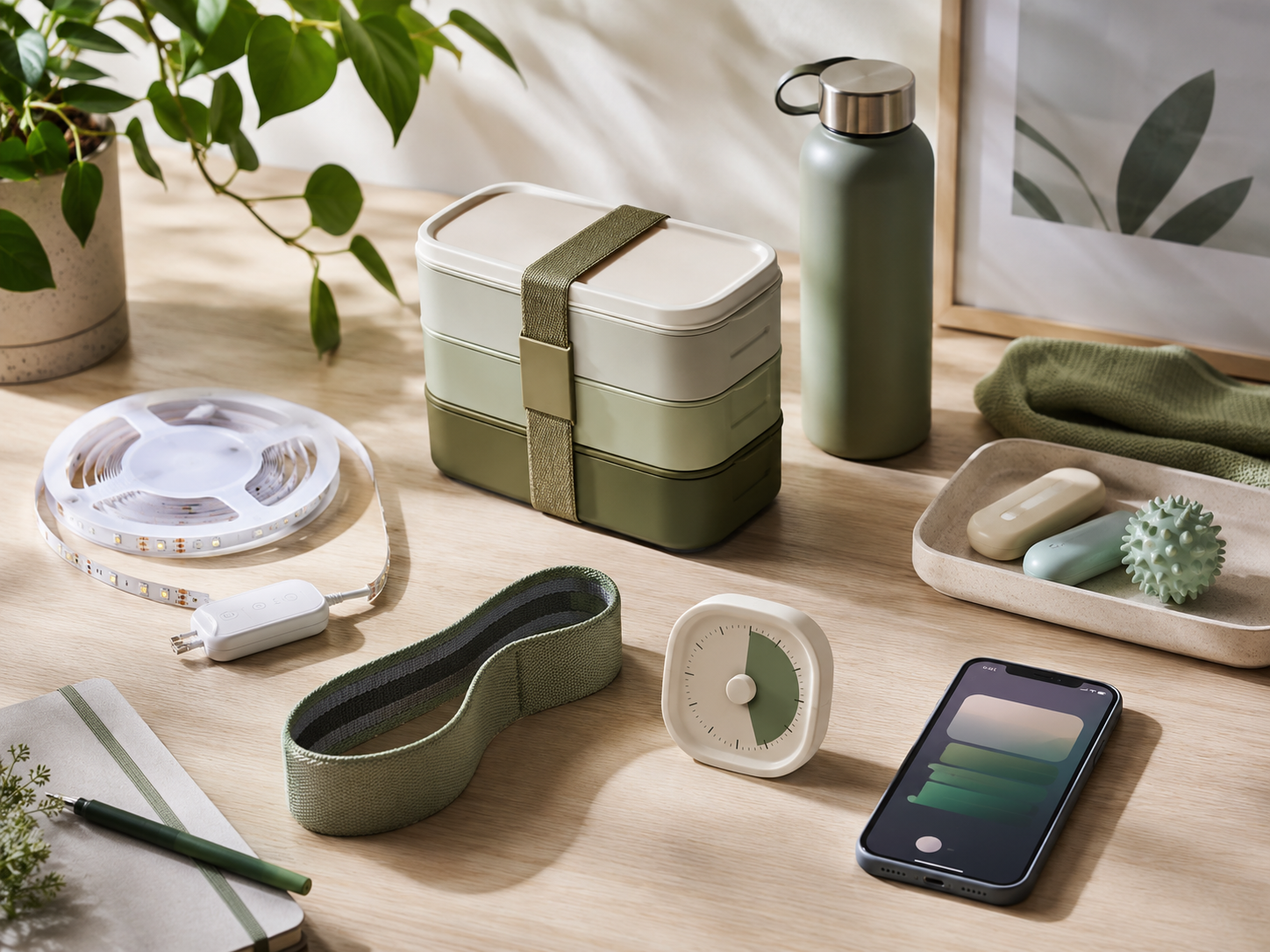
The product should live near the problem
If you want to drink more, the bottle needs to be near your desk. If you want to stretch, the band needs to be visible. If you need calmer sound, the speaker should be easy to start. Useful products work because they appear at the moment you need them.
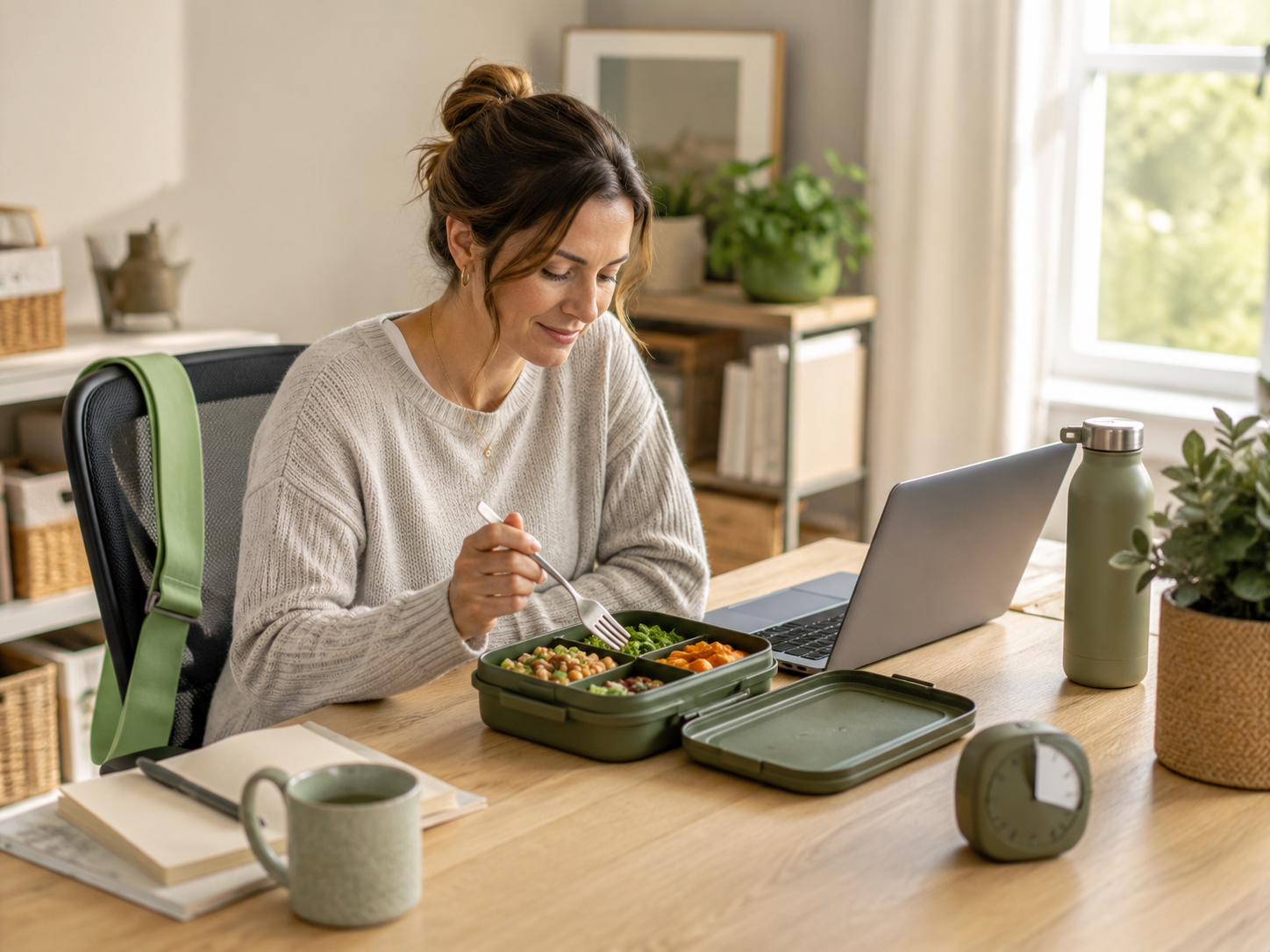
One job is enough
Do not buy vague wellness. Buy a job. This light softens my desk. This fan makes the room less stale. This container helps me eat. This band reminds me to move. When a product has a clear job, it is less likely to become a pretty object with no daily purpose.
Fit matters more than trend
The trendiest product is useless if it does not fit your space, routine or energy level. A small, practical product you use every day is better than an expensive wellness item that requires setup, storage, cleaning and emotional commitment. Real support should feel boringly easy.
Tiny cues, not full wellness routines
The goal is not to build a spa beside the laptop. It is to create small prompts that make working, pausing, eating, focusing and switching off slightly easier. Choose one cue that solves the biggest problem first. Then leave the rest of the wellness aisle alone until it has earned a reason.
Choose your biggest daily friction
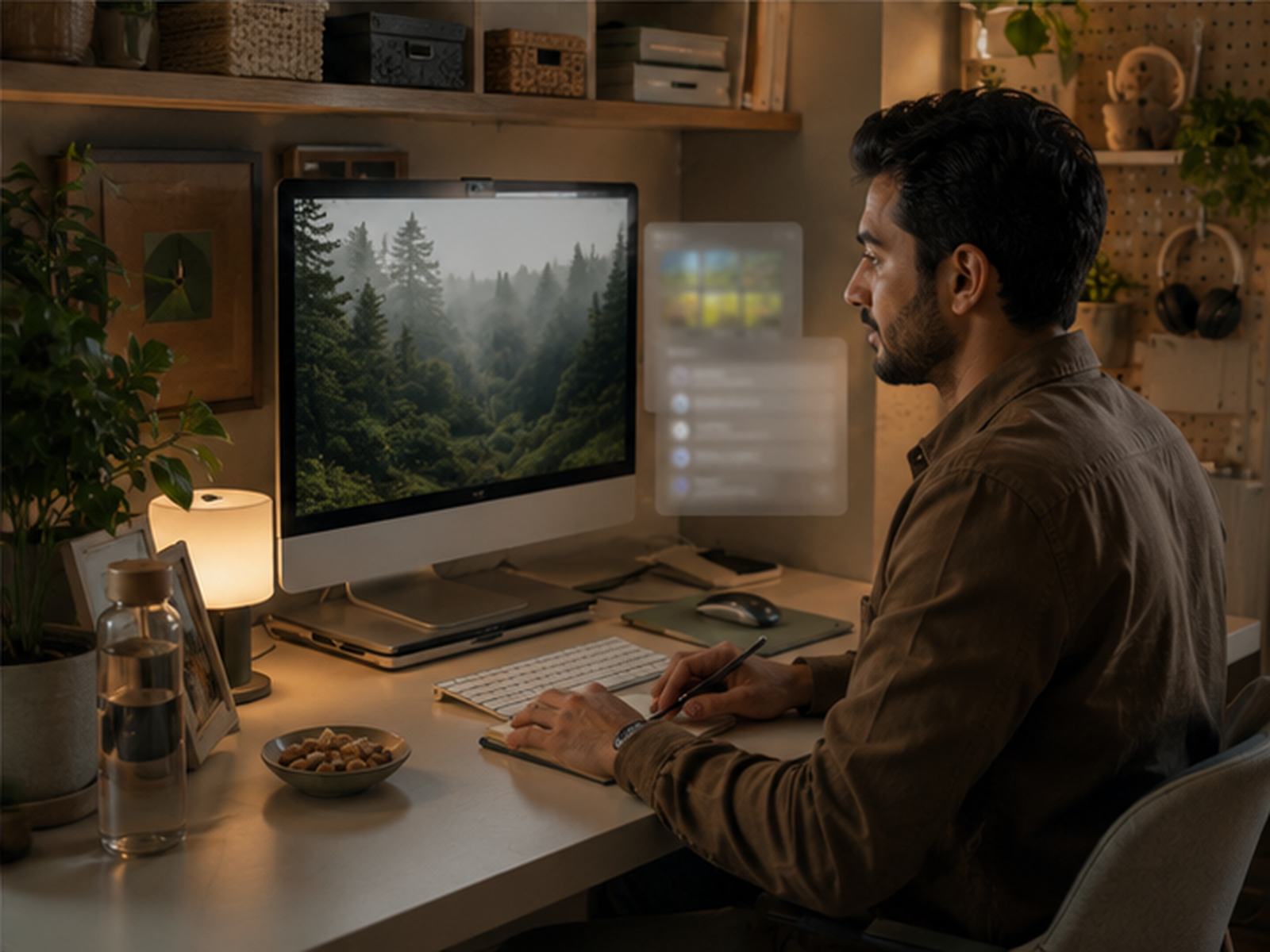
How to choose products you will actually use
Choose the problem you complain about most
Listen to what keeps annoying you. If you always say the room feels stale, start with airflow. If you always end the day stiff, start with movement. If you crash before school pick-up, start with food and water. Your complaints are useful buying data.
Test one product before adding another
Do not buy the whole kit at once. Add one product, use it for a week and see whether your day genuinely feels easier. If it helps, keep it. If not, you have learned something before turning your desk into a wellness product waiting room.
Make the cue visible but not annoying
The product should be easy to see and easy to use, but not in the way. A bottle beside the laptop helps. A stretch band under three notebooks does not. A speaker that starts quickly helps. A setup that needs troubleshooting does not.
Avoid anything that needs a perfect mood
Some wellness products fail because they rely on the version of you who is calm, organised and well-rested. Buy for the tired version too. If the product still feels usable at 3pm, after interruptions, with dishes nearby and your brain buffering, it has a better chance.
Why this matters if you work from home
If you are building a blog, managing clients, recording content, learning a skill or running a small business from home, consistency matters. Budget Wellness Habits That Feel Expensive But Are Not connects naturally here because the best support is often simple. The Busy Worker Guide To Buying Less But Better also fits because useful products should earn their space.
Common wellness product mistakes
Buying for the fantasy routine
Do not buy for the version of yourself who wakes early, stretches calmly, eats perfect meals and works in total silence. Buy for the person who has deadlines, noise, laundry, messages and very little patience for complicated wellness theatre.
Choosing pretty over useful
A product can look calm and still be useless. If it does not solve a real problem, it becomes decor. Pretty is fine, but useful is what survives a real workday. The goal is support, not a desk that looks spiritually moisturised.
Adding too many products at once
Too many wellness products can create more visual noise. Start with one or two. Test whether they genuinely improve the day. If everything arrives at once, you may not know what helped and what is simply taking up valuable desk territory.
Ignoring food, water and movement
Wellness is not only lighting and atmosphere. Desk workers often feel worse because they sit too long, drink too little and skip proper food. Simple support for hydration, meals and movement may do more than another beautiful object beside the laptop.
FAQ
What wellness products are actually useful for remote workers?
Useful wellness products for remote workers solve real workday problems. Good options include soft desk lighting, quiet airflow, practical background sound, a reliable water bottle, simple meal-prep containers and movement tools such as resistance bands.
What should I buy to make my workday feel calmer?
Start with the friction you feel most. If the room feels harsh, try softer lighting. If it feels stale, improve airflow. If noise distracts you, use calmer background sound. If you crash in the afternoon, focus on food and hydration first.
Are wellness products worth it for home workers?
Wellness products can be worth it if they fit your real routine and reduce daily friction. They are less useful when they create more clutter, need too much effort or only work in an imaginary perfect workday.
How do I choose wellness products I will actually use?
Choose wellness products that solve one clear problem, stay easy to access and work during ordinary busy days. Avoid products that need perfect timing, too much setup or a level of motivation you rarely have at 3pm.
What products help desk workers feel better during the day?
Desk workers may benefit from softer lighting, quiet airflow, hydration support, meal-prep containers, simple background sound and movement tools. The best choice depends on whether your biggest issue is stiffness, screen fatigue, skipped meals, stale air or mental noise.
Final verdict
Wellness products that fit a real workday are not about buying a calmer-looking lifestyle. They are about choosing small, practical cues that reduce the friction you actually feel: harsh light, stale air, skipped food, dehydration, stiffness, noise or trouble switching off.
Start with the problem that keeps interrupting your day. Then choose one product that makes that moment easier. Real wellness should not become another thing to maintain, fail at or tidy away. It should help your normal, imperfect workday feel a little less sharp around the edges.


