



Host a Virtual Halloween Party: Audio,…

20 Minimalist Halloween Nail Ideas for…

Can Free Affinity Help You Build…

12 Lower-Sugar Halloween Treat Swaps Worth…

Can Hostinger AI Builder Launch a…

A 5-Step Screen-Free Autumn Reading Ritual…

Plug-In Solar Panels UK: Are They…

15 Last-Minute Zoom Halloween Costumes for…

Meta One Explained: Is the Subscription…

10 Low-Fuss Dog Halloween Ideas: Comfort…

Plaud One Explained: Can AI Earbuds…

9 Gothic Dinner Table Ideas for…

Namecheap vs Dynadot

7 UK Ghost Tours and How…

Convertkit Vs Beehiiv

Do You Really Need a £420…

Bluehost vs Siteground

15 Gentle Spooky Autumn Books to…

Namecheap review

How to Remove Halloween Face Paint…
Budget wellness habits are not sad, discount-bin self-care. They are small routines that make an ordinary workday feel calmer, lighter and more comfortable without turning wellbeing into another shopping category. Better light, a proper drink break, five minutes of movement, a calmer desk and a softer end-of-day reset can all feel surprisingly good. You do not need luxury wellness. You need habits that make daily work feel less harsh on your body, energy, space and mood.
Wellness does not need to be expensive.
Comfort matters more than luxury.
Light can change the morning.
Breaks feel better when intentional.
Movement can be short and useful.
A calmer desk reduces stress.
Rest does not need a product.

Most Relevant Audience
This article is for remote workers, home workers, freelancers, creators, bloggers, side hustlers and small business owners who want to feel better without buying expensive routines, luxury products or another self-care system. It is especially useful if your workday feels uncomfortable, cluttered, screen-heavy or mentally noisy.
Budget wellness habits that feel expensive but are not

Why wellness starts feeling expensive
Wellness starts feeling expensive because so much advice is wrapped in products. Better mornings become special drinks. Rest becomes a subscription. Calm becomes a basket of candles, sprays, journals and apps. Some products help, but many people just need smaller daily improvements: less noise, more light, better breaks, simpler food and a workspace that does not quietly annoy them.
Comfort vs luxury
Comfort and luxury are not the same thing. Luxury often looks impressive. Comfort makes your real day easier. A clear desk, warm drink, open window, softer lighting or proper lunch break may improve the workday more than something expensive you barely use. The best wellness habit is not the fanciest one. It is the one you repeat.
Better light in the morning
Morning light can make the day feel less heavy. Open curtains early, sit closer to natural light or step outside briefly before work begins. This costs nothing, but it changes the atmosphere of the morning. A brighter start helps the laptop feel less like a cave entrance with email attached.

A proper drink break
A proper drink break sounds too simple, which is why people ignore it. Make tea, coffee, water or something cold, then actually pause for a few minutes. Do not drink it while answering messages with one hand and emotionally negotiating with your inbox. The point is not the drink. The pause is the habit.
The real wellness question
Most wellness content quietly suggests that feeling better requires money. A better question is what would make your normal day feel calmer without adding more clutter, subscriptions or pressure. Budget wellness works when it improves the day you actually have, not the perfect lifestyle you are apparently meant to be auditioning for online.
Low-cost habits that feel better than they sound
Five-minute movement
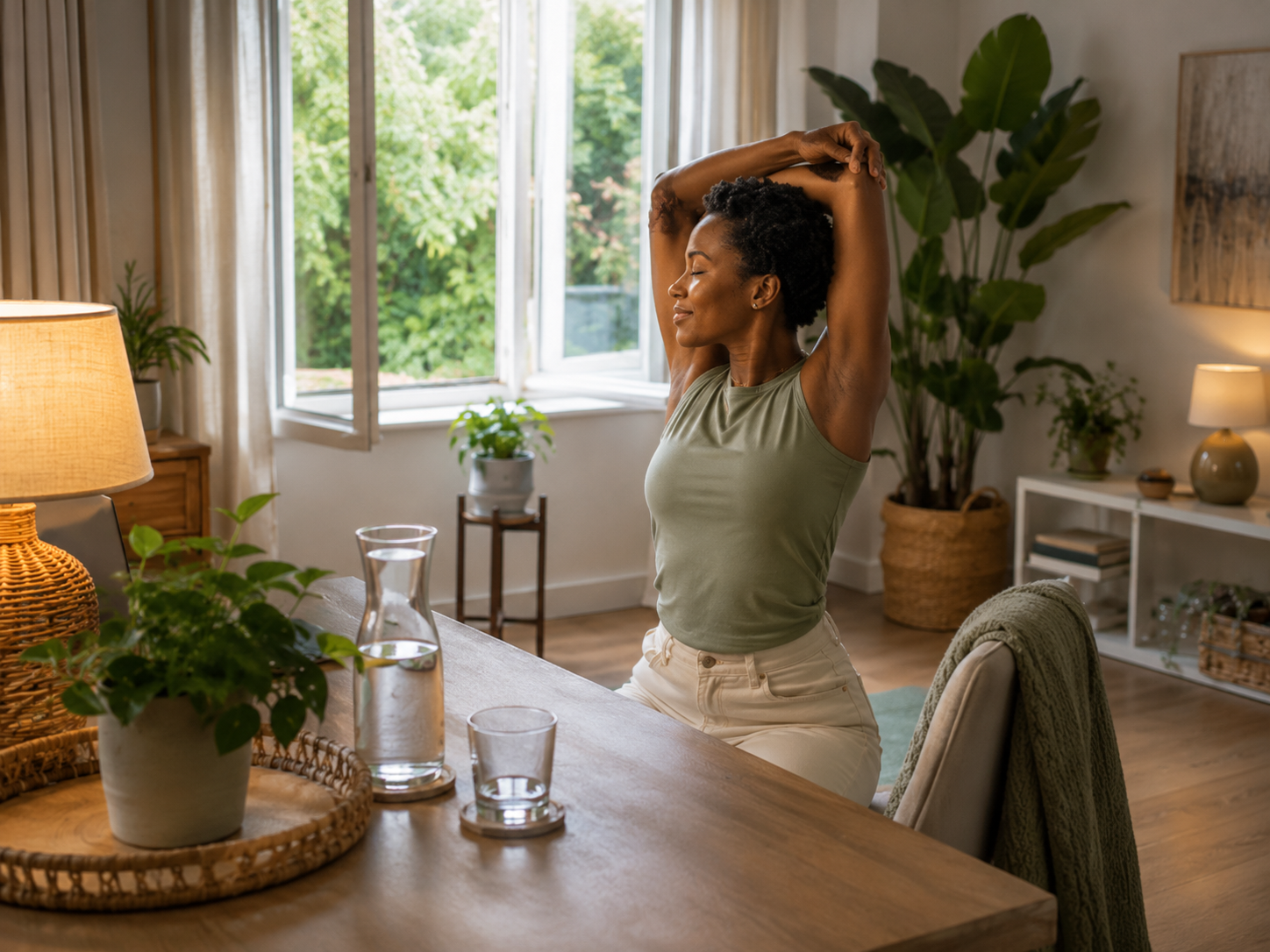
Five minutes of movement can change the day more than another productivity video. Stretch your shoulders, walk around the room, move your hips or step outside. Busy home workers often need movement that fits between tasks, not a full routine that requires a mat, outfit and dramatic personal transformation.
A calmer desk
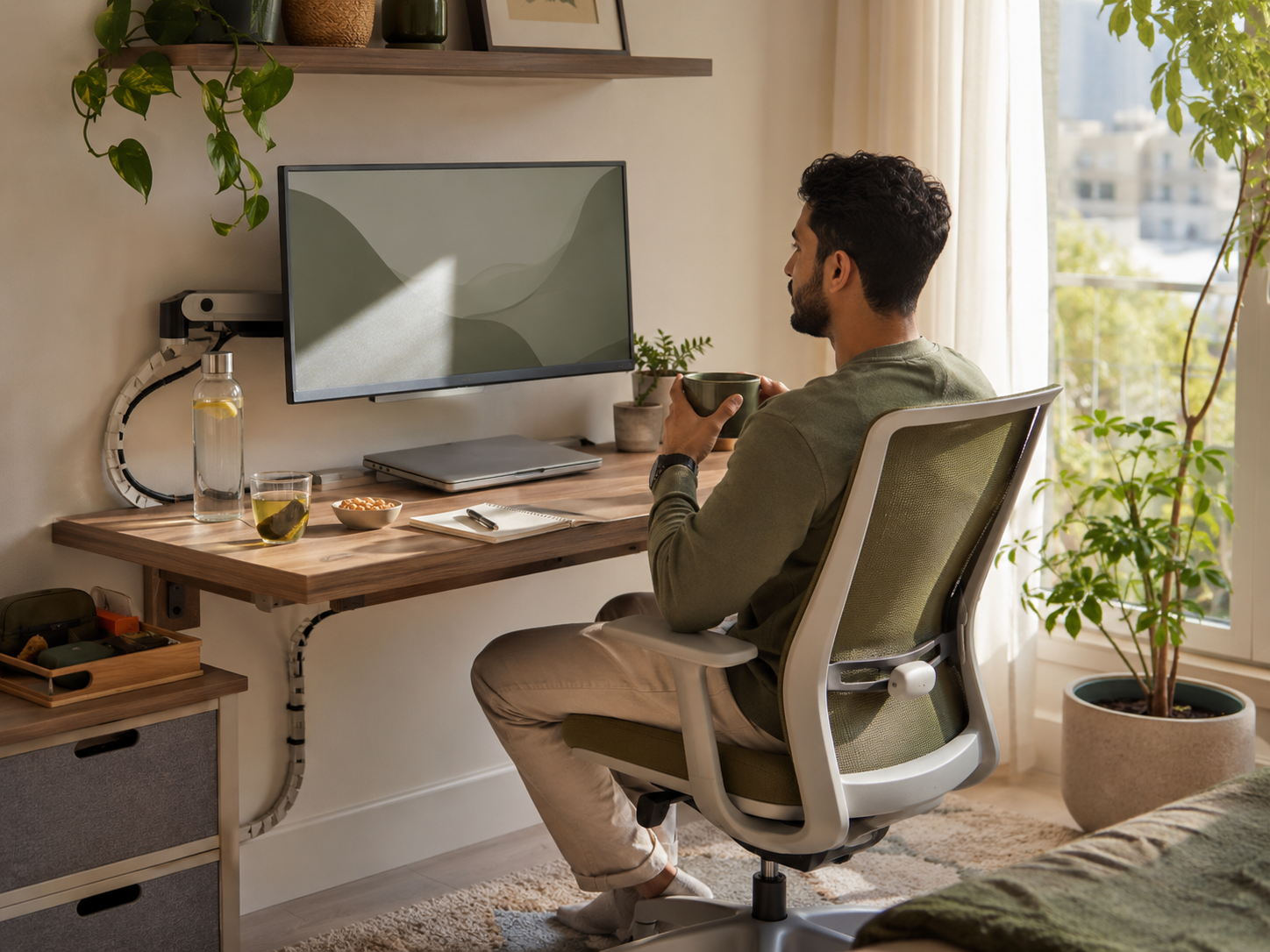
A calmer desk does not need a full makeover. Clear the cups, remove old notes, tidy one cable and keep only the tools you use today. Visual clutter adds quiet pressure. A cleaner surface can make work feel more manageable, even if the rest of the house is still making its own lifestyle choices.
A low-cost end-of-day reset
An end-of-day reset can feel expensive because it gives work a proper finish line. Close tabs, write tomorrow’s first task, clear one surface and move away from the desk. That small routine helps your brain stop carrying unfinished work into the evening. No spa music required, though nobody is stopping you.
Simple food prep
Simple food prep does not need matching containers and a Sunday personality transplant. Keep easy options ready: fruit, toast, soup, leftovers, wraps, yoghurt, eggs or whatever works for your life. The goal is to avoid reaching 2pm powered only by caffeine, crumbs and a vague sense of betrayal.
Small can still feel premium
A habit does not need to cost much to feel good. It only needs to reduce friction. Better light, a cleaner desk, a real break, a simple lunch and a clear shutdown can make the day feel more cared for. That is budget wellness at its best: ordinary, repeatable and quietly effective.
How to make budget wellness work
Start with the roughest part of the day
Pick the part of the day that feels worst. If mornings feel heavy, improve light and reduce early notifications. When afternoons crash, add water, movement and simpler food. If evenings stay wired, create a shutdown routine. Budget wellness works better when it solves real friction, not imaginary lifestyle gaps.
Make one habit feel intentional
A cheap habit can feel better when it has a little intention. Put the drink in a proper glass. Step outside without your phone. Clear the desk before starting. Take lunch away from the laptop. None of this is fancy, but it tells your brain the moment matters.
Remove before buying
Before buying another wellness product, remove one irritation. Cancel an unused app, clear a surface, reduce notifications, move your screen higher or stop working from the worst chair in the house. Removing friction often feels better than adding another object that promises calm while needing storage.
Keep rest product-free
Rest does not need to become another shopping project. A quiet walk, earlier bedtime, screen-free pause, gentle stretch or actual lunch break can help without costing anything. If every recovery idea requires buying something, the habit may be drifting away from wellbeing and into retail therapy wearing soft colours.
Related money note
Budget wellness and smarter buying belong together. You do not need to buy your way out of every uncomfortable workday. Fewer, better choices can protect money, reduce clutter and make your setup support your body, space and focus more effectively.
Common budget wellness mistakes
Assuming cheap means low quality
A low-cost habit can still be high value. Opening a window, stretching for five minutes, preparing a simple lunch or clearing the desk may improve your day more than a product with beautiful packaging. Price and usefulness are not the same thing.
Copying luxury routines
Luxury routines often look lovely and collapse immediately under real life. If a habit needs silent mornings, long baths, expensive products and no interruptions, it may not survive a normal home-working week. Build habits around your actual schedule, not someone else’s sponsored bathroom shelf.
Buying before trying the free version
Many wellness upgrades have a free version. Try walking before buying equipment. Improve light before buying decor. Use existing food before creating a complicated meal system. Test the behaviour first. If the habit helps, then decide whether spending money would genuinely improve it.
Making wellness another task list
Wellness should reduce pressure, not become a performance review. If your budget habits turn into another list to fail at, simplify. Choose one small action that improves the day. Better wellbeing often starts with less effort, not a more impressive routine.
Related guides to read next
The Busy Worker Guide To Buying Less But Better
The Busy Worker Guide To Buying Less But Better helps if you are tempted to solve every discomfort with another tool, gadget or app. It focuses on buying with intention instead of panic.
Working From Home Without Wrecking Your Health
Working From Home Without Wrecking Your Health is useful if you need broader support with posture, movement, screen breaks, hydration and boundaries during remote work.
How To Build A Healthier Work-From-Home Routine
How To Build A Healthier Work-From-Home Routine helps turn small habits into a realistic daily structure that protects energy without pretending every day is perfectly organised.
The Best End-of-Day Reset For Desk Workers
The Best End-of-Day Reset For Desk Workers is the best next read if your evenings feel tense, cluttered or half-attached to the laptop.
FAQ
What are budget wellness habits?
Budget wellness habits are low-cost or free routines that support comfort, calm, energy and wellbeing. They can include movement breaks, better light, proper drink breaks, simple food prep, calmer desk habits and screen-free rest.
How can I improve wellbeing without spending much money?
Improve wellbeing by starting with daily friction. Move more, drink water, get light, clear one surface, reduce notifications and create a simple end-of-day reset. Small repeatable habits often help more than expensive routines you cannot maintain.
What wellness habits feel expensive but are cheap?
Morning light, fresh air, a proper drink break, a tidy desk, simple food prep, five minutes of movement and a quiet shutdown routine can all feel surprisingly good without costing much money.
How can home workers feel better on a budget?
Home workers can feel better on a budget by improving their workspace, taking real breaks, moving regularly, managing digital noise and protecting rest. Start with habits that support the body and reduce clutter before buying more products.
Does wellness have to be expensive?
Wellness does not have to be expensive. Some products help, but many useful habits are free or low cost. Better wellbeing often comes from fewer interruptions, more movement, proper rest and a calmer daily routine.
Final verdict
Budget wellness habits can feel expensive without costing much money. Better light, intentional breaks, simple movement, calmer desk space and a proper shutdown routine can all make daily work feel softer and less draining.
You do not need luxury wellness to feel better. Start with small habits that reduce friction in your real day. The aim is not to recreate a spa at home. It is to protect your body, mood, energy and space without turning wellbeing into another thing to buy.


