



Host a Virtual Halloween Party: Audio,…

20 Minimalist Halloween Nail Ideas for…

Can Free Affinity Help You Build…

12 Lower-Sugar Halloween Treat Swaps Worth…

Can Hostinger AI Builder Launch a…

A 5-Step Screen-Free Autumn Reading Ritual…

Plug-In Solar Panels UK: Are They…

15 Last-Minute Zoom Halloween Costumes for…

Meta One Explained: Is the Subscription…

10 Low-Fuss Dog Halloween Ideas: Comfort…

Plaud One Explained: Can AI Earbuds…

9 Gothic Dinner Table Ideas for…

Namecheap vs Dynadot

7 UK Ghost Tours and How…

Convertkit Vs Beehiiv

Do You Really Need a £420…

Bluehost vs Siteground

15 Gentle Spooky Autumn Books to…

Namecheap review

How to Remove Halloween Face Paint…
Many businesses assume poor email performance automatically means weak copywriting, bad offers, or low audience interest. Sometimes the real problem is much simpler. The emails barely reach inboxes at all. Poor deliverability quietly damages open rates, ecommerce revenue, launches, and subscriber engagement long before businesses fully notice the issue. That is exactly why email deliverability tools became increasingly important for creators, publishers, ecommerce brands, and marketers who depend heavily on email performance.
Quick Overview
In this guide you will learn:
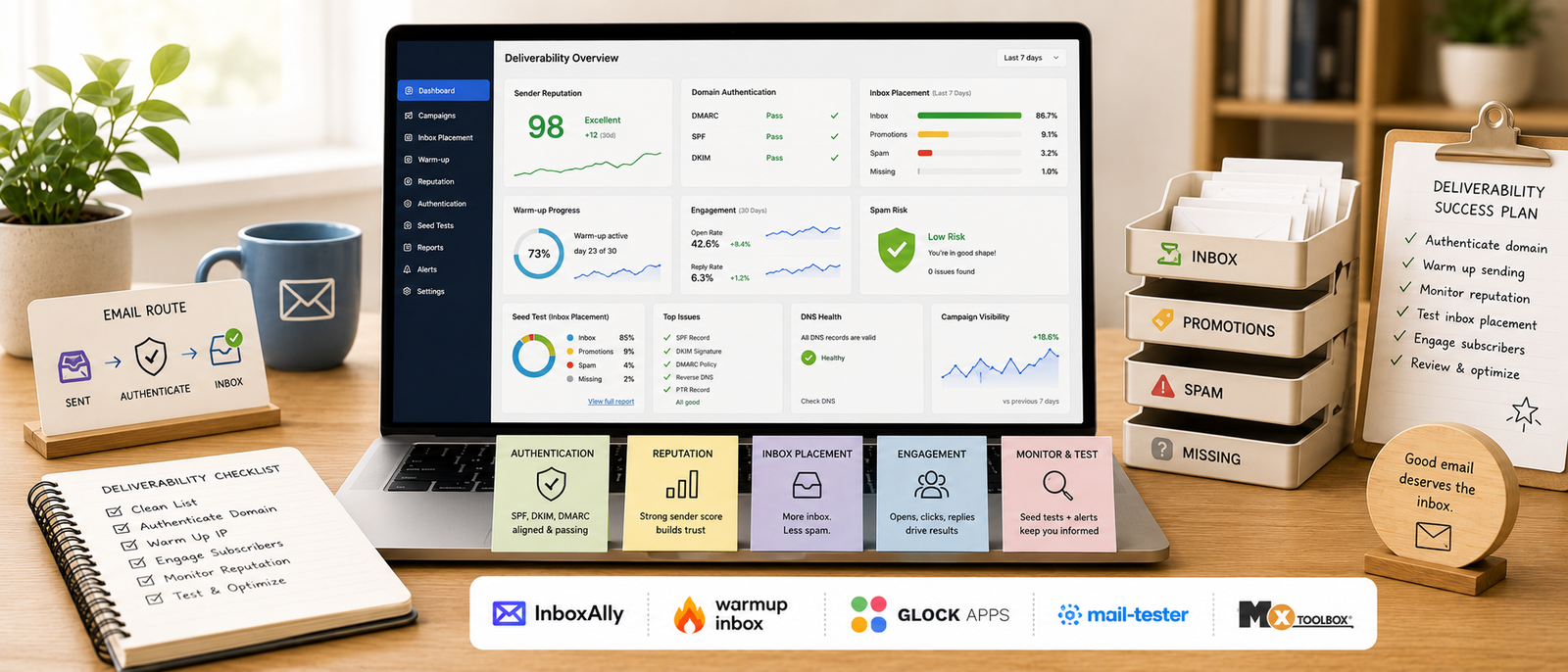
Inbox placement workflow supporting creators and businesses.
Helpful next reads: Email marketing automation explained
Most Businesses Misdiagnose Email Problems
A creator may spend hours rewriting subject lines, sales emails, funnels, and automations while the real problem sits underneath everything: poor inbox placement. If emails land in spam folders or hidden tabs, even strong campaigns struggle to perform. Deliverability problems quietly reduce engagement, weaken customer trust, hurt launches, and damage long-term sender reputation. That is why inbox monitoring and sender reputation tracking became so important for businesses relying on email revenue today.
Related guide: Best email marketing platforms
InboxAlly
Why InboxAlly Became Popular
InboxAlly focuses heavily on improving inbox placement and sender reputation. Businesses use it because deliverability problems quietly damage launches, revenue, customer trust, and long-term email performance without obvious warning signs.
The platform helps strengthen engagement signals so inbox providers gradually recognise campaigns as healthier and more trustworthy over time.

Inbox placement workflow supporting healthier sender reputation.
Where InboxAlly Feels Most Valuable
InboxAlly becomes especially useful for ecommerce campaigns, launches, large newsletters, automated funnels, and businesses heavily dependent on email-driven revenue. Many creators appreciate finally understanding whether poor deliverability itself is quietly hurting campaign performance.
Related review: InboxAlly review
Warmup Inbox
Why Warmup Tools Became Important
Many businesses struggle with deliverability after switching domains, increasing sending volume, launching new systems, or scaling outreach campaigns. Warmup Inbox helps businesses gradually build sender trust by improving engagement behaviour and warming domains over time.

Email reputation system supporting inbox placement improvement.
Why Domain Warming Quietly Matters
Inbox providers often become suspicious when businesses suddenly begin sending large email volumes. Domain age, engagement quality, sending consistency, and subscriber behaviour all affect long-term sender reputation. Warmup systems help businesses establish healthier patterns before larger campaigns begin.
GlockApps
Why Businesses Use GlockApps
GlockApps strongly focuses on inbox placement testing and deliverability monitoring. Businesses use it to check whether campaigns land in primary inboxes, promotions tabs, or spam folders before important campaigns go live.

Email deliverability workflow supporting inbox placement monitoring.
Where GlockApps Feels Most Useful
GlockApps becomes especially valuable before product launches, ecommerce promotions, affiliate campaigns, newsletter broadcasts, and automated email sequences. Once lists become larger, inbox placement problems can directly affect revenue and customer engagement.
ZeroBounce
Why Email Verification Matters
Many businesses quietly damage deliverability by emailing invalid addresses, spam traps, fake signups, or inactive subscribers. ZeroBounce focuses on email verification and list cleaning to help businesses protect sender reputation long term.

Subscriber cleaning system supporting stronger deliverability.
Cleaner Lists Usually Improve Results Faster
A healthier subscriber list often improves inbox placement faster than endlessly rewriting campaigns. Removing low-quality contacts reduces bounce rates, spam complaints, and sender reputation damage while improving overall campaign consistency.
Related comparison: ConvertKit vs Mailchimp
Mailgun
Why Developers And SaaS Businesses Prefer Mailgun
Mailgun became popular because it strongly supports transactional email infrastructure and scalable email delivery. Businesses commonly use it for verification emails, login alerts, ecommerce notifications, automated messaging, and account emails.

Transactional email workflow supporting deliverability and reliability.
Where Mailgun Feels Less Beginner-Friendly
Mailgun targets developers, SaaS platforms, and technically advanced workflows more than beginner creators. Smaller businesses often prefer simpler email marketing systems with deliverability tools already built into easier dashboards.
Related review: GetResponse review
Postmark
Why Transactional Deliverability Matters
Transactional emails include password resets, order confirmations, billing alerts, account verification, and customer notifications. Postmark focuses heavily on delivering these messages quickly and reliably because delayed system emails create customer frustration and support problems.

Reliable business email workflow supporting customer communication.
Smart Businesses Separate Marketing And Transactional Emails
Many businesses separate promotional campaigns from transactional infrastructure to protect sender reputation and improve reliability for important customer-facing emails. That separation becomes increasingly valuable as email volume grows.
Litmus
Why Email Testing Still Matters
Emails may appear perfect in one inbox while breaking badly inside Gmail, Outlook, Apple Mail, mobile devices, or dark mode. Litmus helps businesses preview and test campaigns across multiple inbox environments before emails reach subscribers.

Inbox preview system supporting email campaign quality control.
Broken Emails Quietly Damage Trust
Poor formatting damages professionalism, click rates, user experience, and customer trust. Testing becomes especially important for ecommerce campaigns, mobile-heavy newsletters, and design-focused promotional emails where presentation strongly affects engagement.
Related guide: Email funnel with GetResponse
Deliverability Problems Usually Come From Behaviour
Even strong software cannot fully protect a sender with unhealthy email habits. Purchased lists, inconsistent sending, weak engagement, spam-heavy subject lines, and aggressive promotions quietly damage sender reputation over time. Businesses usually improve deliverability faster by cleaning lists regularly, removing inactive subscribers, authenticating domains properly, and sending consistently. Inbox trust builds gradually, much like SEO authority.
Frequently read together: Email subject lines that increase open rates
Why Businesses Eventually Take Deliverability Seriously
Most businesses ignore deliverability until painful problems begin appearing. Open rates decline, promotions placement increases, ecommerce campaigns weaken, and subscriber engagement drops without obvious explanation. Many ecommerce brands eventually realise even small improvements in inbox placement can dramatically affect launches, cart recovery emails, newsletters, and customer retention. That is why larger businesses increasingly invest in deliverability infrastructure instead of relying only on stronger copywriting or more aggressive campaigns.
Pros And Cons Of Deliverability Tools
Deliverability Tool Pros
Deliverability Tool Cons
Workflow Pros
Workflow Cons
FAQs
What is email deliverability?
Email deliverability refers to how reliably emails reach inboxes instead of spam folders or blocked systems.
Why do emails go to spam folders?
Spam placement often happens because of poor sender reputation, unhealthy subscriber lists, weak engagement, spam-heavy wording, or inconsistent sending behaviour.
Which deliverability tool suits beginners best?
GlockApps, Warmup Inbox, and ZeroBounce are usually easier starting points because the workflows feel simpler to understand.
Why is email verification important?
Email verification removes invalid addresses, spam traps, fake signups, and unhealthy contacts that damage sender reputation.
What does InboxAlly actually do?
InboxAlly focuses on improving inbox placement and sender reputation through engagement-focused deliverability workflows.
Why does domain warming matter?
Domain warming helps businesses gradually build sender trust before increasing sending volume aggressively.
Final Verdict
Strong email marketing means very little if emails never reliably reach inboxes. That is why email deliverability tools became essential for businesses depending heavily on launches, ecommerce campaigns, newsletters, automations, and customer communication.
InboxAlly helps businesses improve sender reputation and inbox placement. Warmup Inbox supports healthier domain warming and trust-building. GlockApps gives businesses clearer visibility into inbox placement problems before campaigns go live. ZeroBounce protects sender reputation through cleaner subscriber lists, while Mailgun and Postmark support reliable transactional email infrastructure. Litmus helps businesses catch rendering issues before damaged layouts hurt trust and engagement.
The biggest lesson most businesses eventually learn is that deliverability is not solved by software alone. Cleaner subscriber management, healthier sending habits, stronger engagement, and consistent email practices usually matter just as much as the tools themselves. Businesses combining both tend to build the strongest long-term inbox performance.


