



Host a Virtual Halloween Party: Audio,…

20 Minimalist Halloween Nail Ideas for…

Can Free Affinity Help You Build…

12 Lower-Sugar Halloween Treat Swaps Worth…

Can Hostinger AI Builder Launch a…

A 5-Step Screen-Free Autumn Reading Ritual…

Plug-In Solar Panels UK: Are They…

15 Last-Minute Zoom Halloween Costumes for…

Meta One Explained: Is the Subscription…

10 Low-Fuss Dog Halloween Ideas: Comfort…

Plaud One Explained: Can AI Earbuds…

9 Gothic Dinner Table Ideas for…

Namecheap vs Dynadot

7 UK Ghost Tours and How…

Convertkit Vs Beehiiv

Do You Really Need a £420…

Bluehost vs Siteground

15 Gentle Spooky Autumn Books to…

Namecheap review

How to Remove Halloween Face Paint…
ConvertKit and Mailchimp both help people grow email lists and stay connected with subscribers, but the experience feels very different once real publishing routines begin. ConvertKit leans toward writers, bloggers, and creators wanting cleaner newsletters with less friction. Mailchimp aims broader, combining ecommerce campaigns, customer journeys, analytics, automations, and heavier marketing tools inside one larger environment built for scaling campaigns and online sales.
Quick Overview
In this comparison you will learn:

Email marketing platforms supporting creators and online businesses.
Helpful next reads: ConvertKit review
The Biggest Difference Between ConvertKit And Mailchimp
ConvertKit Keeps Things Creator-Friendly
ConvertKit focuses heavily on newsletters, audience growth, subscriber tagging, monetisation, and lightweight automations that feel approachable even for smaller publishers.
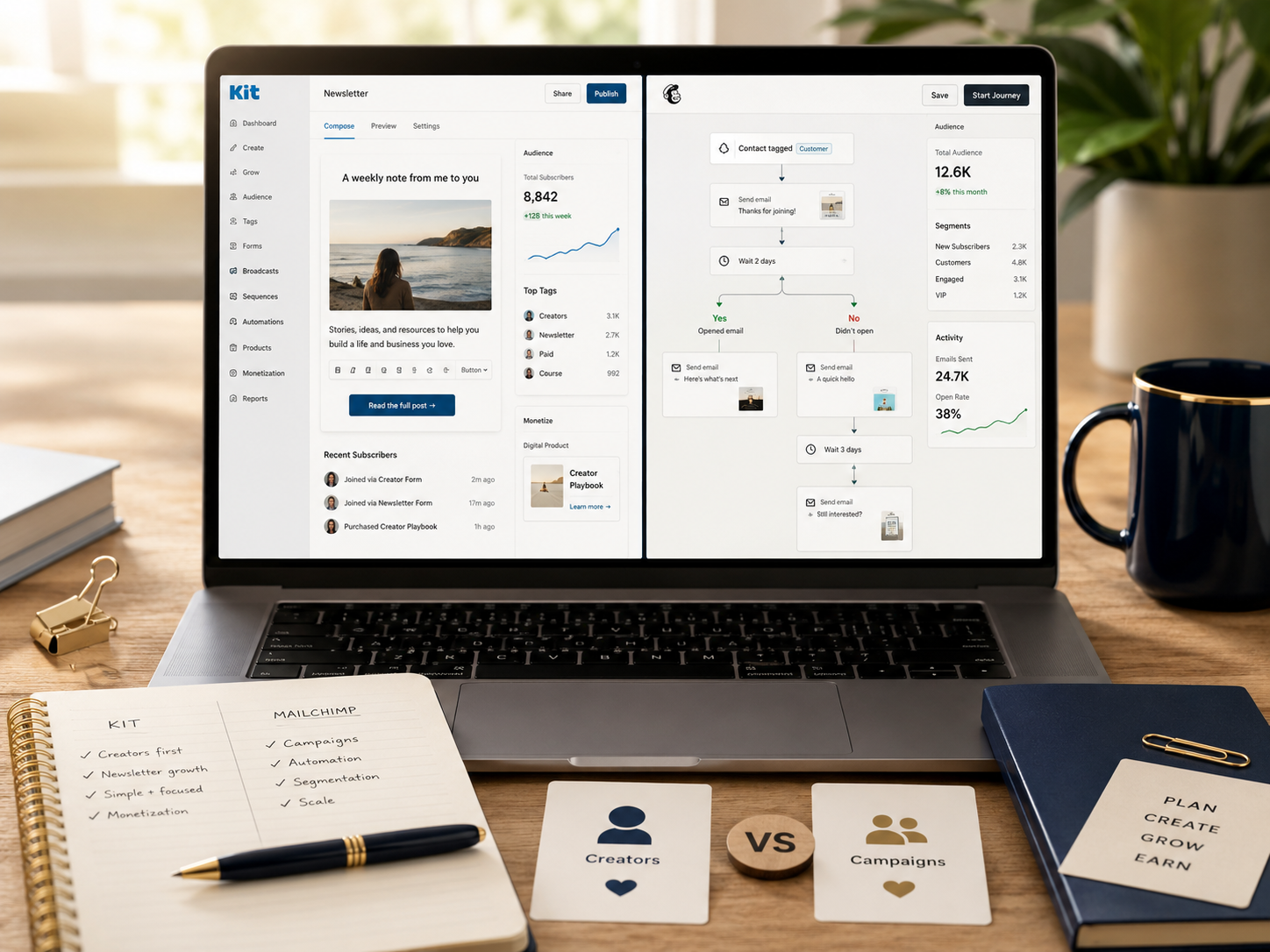
Mailchimp Feels More Like A Marketing Hub
Mailchimp combines ecommerce promotions, segmentation, analytics, customer journeys, and campaign management inside one broader ecosystem designed for layered marketing activity.

The Overall Experience Feels Completely Different
Some users describe ConvertKit as calmer and easier understanding quickly. Mailchimp often feels busier because more menus, reports, settings, and campaign features compete for attention constantly.
Bigger Toolkits Usually Require More Energy
Mailchimp offers broader functionality overall, although smaller publishers sometimes feel drained managing features they barely touch.
Some People Quietly Publish Less Once Software Starts Feeling Heavy
This happens surprisingly often.
A newsletter owner may technically gain access to deeper analytics and stronger automation while simultaneously writing less because the dashboard itself becomes mentally tiring. More features do not automatically improve communication.
Most smaller publishers mainly need:
Explore more insights: Email marketing automation explained
ConvertKit Features
Newsletter Publishing Feels Cleaner
ConvertKit supports broadcasts, tagging, audience organisation, creator automations, and digital product sales without making everything feel overly corporate.

Navigation Feels Less Cluttered
Some writers appreciate how quickly they can move through ConvertKit compared to larger email suites packed with menus and layered reporting sections.
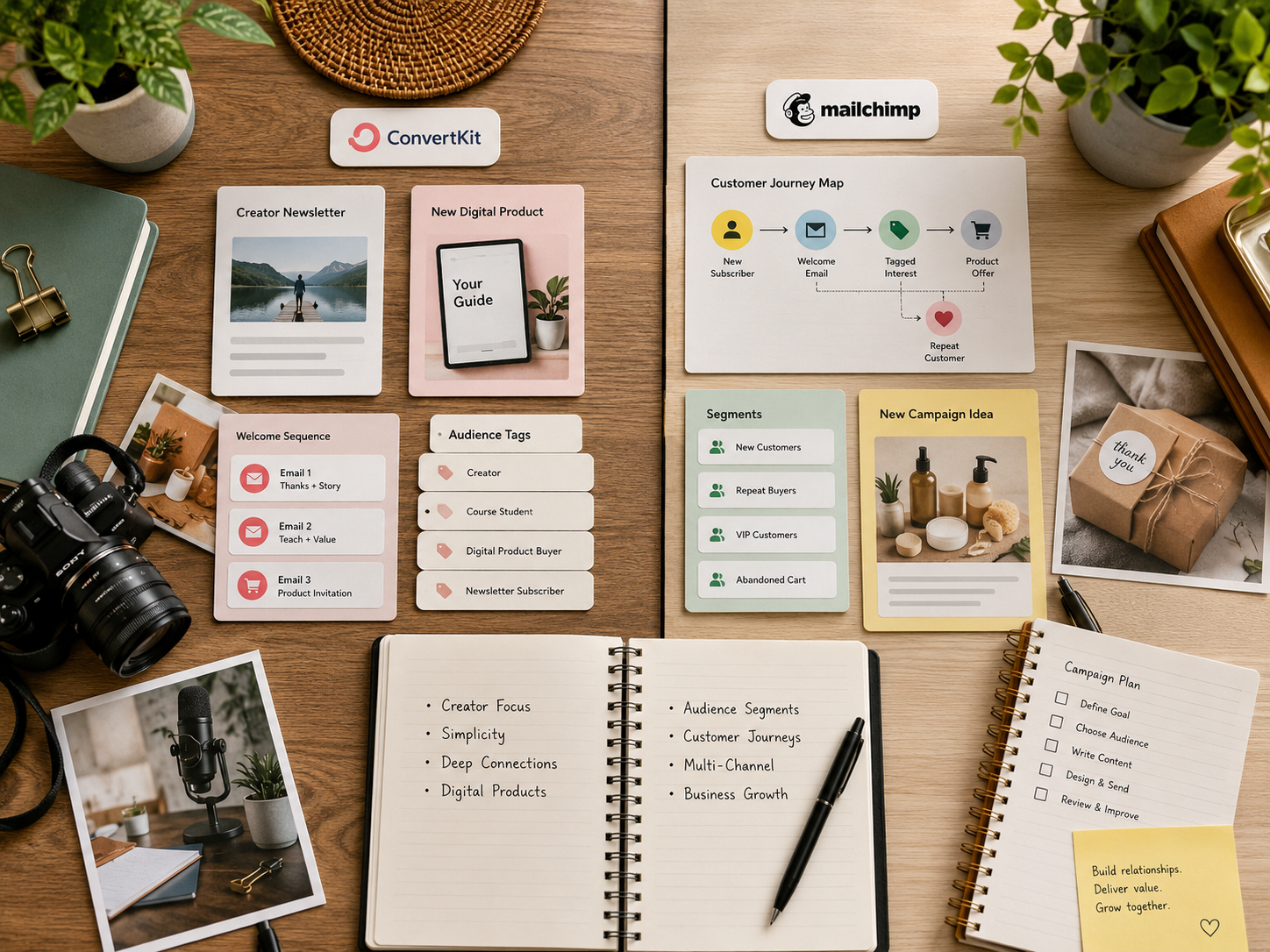
Monetisation Fits Creator Businesses Better
ConvertKit strongly targets bloggers, educators, YouTubers, podcasters, and writers wanting subscriber growth connected directly into paid products or memberships.
Simpler Tools Often Improve Consistency
ConvertKit vs Mailchimp comparisons become clearer once people realise smoother publishing routines often matter more than endless marketing options.
Mailchimp Features
Ecommerce Marketing Feels Much Stronger
Mailchimp supports product promotions, abandoned-cart reminders, customer journeys, purchase segmentation, and online-store campaigns helping brands manage larger sales activity.

Reporting Gives More Campaign Visibility
Some teams appreciate the detailed analytics because it becomes easier spotting weak emails, subscriber trends, and customer behaviour patterns.

Automation Options Feel Broader
Mailchimp allows brands to build more layered email journeys compared to ConvertKit’s lighter creator-focused structure.
The Interface Feels Heavier Over Time
Some users eventually realise broader functionality also creates more maintenance, more dashboard noise, and more campaign management pressure.
Pricing Feels Very Different Once Lists Start Growing
ConvertKit pricing often feels easier emotionally because the experience stays focused around publishing and audience communication. Mailchimp creates stronger value once companies actively use ecommerce campaigns, customer journeys, segmentation, analytics, and advanced promotional activity together.
People barely touching those features sometimes realise they are paying for depth they never truly needed.
Frequently read together: Mailchimp review
Which Option Fits Different Needs Best?
Bloggers And Newsletter Publishers
ConvertKit strongly suits people wanting smoother writing routines, easier subscriber organisation, and lower mental friction.
Ecommerce Brands
Mailchimp works especially well for stores heavily using product campaigns, purchase tracking, customer journeys, and promotional automation.
People Wanting Simplicity
Some publishers consistently send more emails once their setup feels lighter and easier maintaining.

Companies Wanting Larger Marketing Infrastructure
ConvertKit vs Mailchimp comparisons become clearer once people decide whether they value simplicity or broader campaign depth more heavily long term.

Pros And Cons Of ConvertKit And Mailchimp
ConvertKit Pros
ConvertKit Cons
Mailchimp Pros
Mailchimp Cons
FAQs
Which option suits creators better?
ConvertKit usually fits creators better because the interface feels calmer, cleaner, and easier maintaining consistently.
Why do ecommerce brands choose Mailchimp?
Some ecommerce companies appreciate the stronger customer journeys, purchase tracking, analytics, and broader promotional infrastructure.
Is ConvertKit easier using daily?
Yes. Some people specifically prefer ConvertKit because the interface feels lighter and less crowded.
Which option has stronger ecommerce tools?
Mailchimp generally offers broader ecommerce functionality and deeper customer campaign management overall.
Which one creates less mental fatigue?
ConvertKit frequently feels less draining because it prioritises straightforward communication instead of layered marketing complexity.
Final Verdict
ConvertKit vs Mailchimp comparisons become much easier once people stop comparing raw feature counts and start evaluating how they actually work day to day.
ConvertKit usually fits publishers wanting calmer routines, easier newsletters, cleaner audience management, and lower friction long term.
Mailchimp works better for brands actively using ecommerce campaigns, segmentation, customer journeys, analytics, and broader promotional infrastructure together.
Some people do not actually need “more powerful” software. They simply need software they will consistently enjoy using.


