



Host a Virtual Halloween Party: Audio,…

20 Minimalist Halloween Nail Ideas for…

Can Free Affinity Help You Build…

12 Lower-Sugar Halloween Treat Swaps Worth…

Can Hostinger AI Builder Launch a…

A 5-Step Screen-Free Autumn Reading Ritual…

Plug-In Solar Panels UK: Are They…

15 Last-Minute Zoom Halloween Costumes for…

Meta One Explained: Is the Subscription…

10 Low-Fuss Dog Halloween Ideas: Comfort…

Plaud One Explained: Can AI Earbuds…

9 Gothic Dinner Table Ideas for…

Namecheap vs Dynadot

7 UK Ghost Tours and How…

Convertkit Vs Beehiiv

Do You Really Need a £420…

Bluehost vs Siteground

15 Gentle Spooky Autumn Books to…

Namecheap review

How to Remove Halloween Face Paint…
Most email campaigns fail before the email is even opened. The subject line is not a summary of the email. It is an advertisement for opening it. If the subject line does not communicate relevance or value within seconds, the rest of the message becomes invisible. Improving open rates requires understanding psychology, applying proven frameworks, and testing consistently rather than relying on creativity alone.
Quick Overview
In this guide you will learn:

The subject line determines whether your email gets attention or ignored.
Most related guide: Best Email Marketing Platforms
What Makes People Open Emails?
Relevance To Current Intent
Subscribers open emails that align with what they are actively trying to solve. A subject line about improving conversions performs better with marketers focused on growth than a generic weekly update. Relevance reduces effort because the reader immediately recognises usefulness.

Curiosity With Context
Curiosity works when it creates an information gap without becoming misleading. “I Didn't Expect This Result” suggests insight or unexpected information. Curiosity performs best when the sender already has trust and credibility.

Clear And Specific Benefit
Subject lines promising a defined outcome often outperform abstract statements. “Three Ways To Save Time This Week” communicates both quantity and benefit immediately. Specificity lowers uncertainty and increases confidence.

Timing And Urgency
Urgency increases open rates when deadlines are genuine. “Registration Closes Tonight” performs well when the deadline actually exists. Repeated fake urgency damages trust and weakens future campaign performance.

Newsletter Subject Line Examples
Newsletter subject lines focus on long-term engagement rather than immediate sales. Their purpose is to build habit and reinforce value over time. Curiosity-driven examples such as “Something Surprised Me Today” work well when audiences expect commentary and insights. Benefit-focused examples such as “Three Ways To Save Time This Week” consistently perform well because they promise practical outcomes. Question-based subject lines encourage self-evaluation, but they should always lead to useful answers inside the email itself. The strongest newsletters become predictable in a positive way because subscribers learn that opening them usually feels worthwhile.
Email strategy guide: Email Marketing Automation Explained
Promotional Subject Line Examples
Urgency Examples
Examples include “Last Chance To Download This Guide” and “Registration Closes Tonight.” These perform best when scarcity or deadlines are genuine rather than manufactured.
Specific Metric Examples
Examples include “How I Added 500 Subscribers In 30 Days” and “The Framework That Doubled My Open Rates.” Numbers suggest measurable outcomes and attract attention.
Direct Offer Examples
Examples include “Early Access Starts Now” and “New Workshop Is Live.” Direct clarity often outperforms clever wording when audiences expect offers.

Problem Awareness Examples
Examples include “The Email Mistake Costing You Subscribers” and “Why Your Open Rates Dropped This Month.” These combine relevance with tension and work well for educational campaigns.
Subject Line Formulas
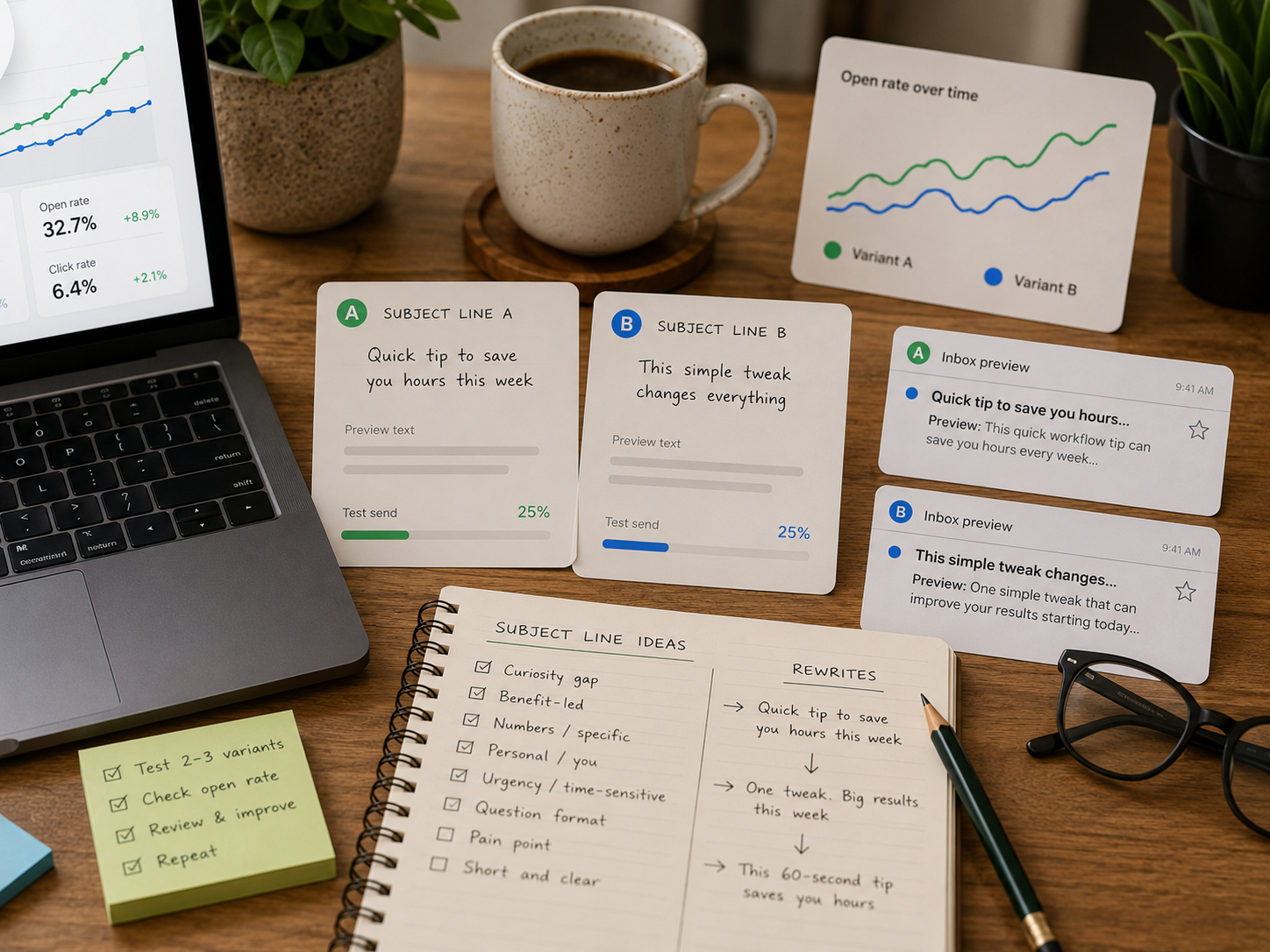
Using formulas creates structure and makes optimisation easier. Curiosity formulas such as “I Didn't Expect This Result” suit story-driven content. Benefit-plus-number formulas such as “Three Ways To Save Time This Week” work well for educational campaigns. Problem-plus-question formulas such as “Are You Making This Common Email Mistake?” encourage self-assessment. Specific metric formulas such as “How I Increased Open Rates By 22%” work best when supported by genuine results. Formula-driven testing provides more useful data than creating completely different subject lines every time.
Platform review: ConvertKit Review
Personalisation Strategies
First Name Personalisation
Using a subscriber's first name can attract attention, but the impact often declines as audiences become familiar with automation patterns. Personalisation alone rarely drives long-term improvements.

Behaviour-Based Personalisation
Subject lines based on subscriber actions often perform better. “Your Webinar Replay Expires Tonight” feels relevant because it references real behaviour rather than generic assumptions.

Segment-Based Personalisation
Segmenting subscribers by interests allows subject lines to become more relevant. “Advanced Automation Tips For Course Creators” usually performs better than sending the same message to everyone.
Common Personalisation Mistakes
Incorrect merge tags, referencing actions subscribers never took, and excessive segmentation can damage trust. Personalisation should improve usefulness rather than create confusion.
Spam Trigger Patterns
Spam filters analyse reputation, engagement history, formatting, and language patterns. Subject lines containing excessive punctuation, exaggerated claims, or repeated all-caps wording increase risk when combined with weak sender practices. Instead of writing “FREE!!! ACT NOW!!!”, focus on clarity and specificity. Measurable benefits generally outperform hype while also improving deliverability. Good subject lines help readers understand value quickly without creating suspicion.
Deliverability guide: Email Deliverability Tools

A/B Testing Subject Lines
Test One Variable
Change only one element at a time. Testing curiosity against clarity is useful. Testing five differences simultaneously is not.

Keep Timing Consistent
Subject lines should be tested under similar conditions. Different send times can distort results and make comparisons unreliable.

Track More Than Opens
Open rates matter, but click-through rates and conversions often reveal whether the right subscribers were attracted in the first place.
Build A Testing Library
Document winning patterns and failed experiments. Over time this creates audience-specific knowledge that is more valuable than generic advice.
Workflow And Creative Fatigue
Creating subject lines from scratch every time increases mental load. A repeatable process reduces decision fatigue and improves consistency. Many marketers benefit from maintaining a shortlist of proven formulas, writing several options before selecting one, and reviewing results monthly. The goal is not becoming obsessed with open rates. The goal is creating a reliable system that improves performance without consuming unnecessary attention.
Wellness perspective: Email Overload And Why It Drains Your Energy

Pros And Cons Of Subject Line Optimisation
Pros
Cons
FAQs
What makes a good email subject line?
A good subject line is relevant, specific, clear, and aligned with subscriber interests. Readers should immediately understand why the email deserves attention.
How long should an email subject line be?
There is no perfect length, but shorter subject lines often display more effectively on mobile devices. Important words should appear early.
Do personalised subject lines improve open rates?
Sometimes. Behaviour-based and segment-based personalisation generally performs better than simply inserting a subscriber's first name.
What subject lines should I avoid?
Avoid misleading curiosity, excessive punctuation, all-caps wording, fake urgency, and exaggerated claims that the email cannot support.
How often should I A/B test subject lines?
Whenever audience size allows meaningful testing. Consistent testing over time usually produces more reliable improvements than occasional experiments.
Final Verdict
Email subject lines act as gatekeepers. They determine whether your message competes successfully in crowded inboxes or disappears unnoticed. The strongest subject lines align with subscriber intent, communicate specific value, use proven formulas, avoid spam-trigger patterns, and improve through structured testing. By combining behavioural relevance with consistent experimentation, open rates can improve steadily without increasing email frequency, making subject line optimisation one of the highest-leverage improvements available to email marketers.


