

Winter Wellness for Busy Days: Small…

Cosy Christmas Movie Night Essentials for…

Christmas Gifts for Home Workers That…
Once the clocks have gone back, a full home-working day can start and end in the dark, with a cold room and back-to-back screens in between. This guide gives six small winter habits, each tied to a named NHS or HSE source, plus a minimum winter day checklist for when everything collapses.
The figures quoted are general guides for healthy adults, not personal advice.
Quick Overview
- Go outside in daylight once a day, which the NHS lists among its winter self-care points.
- Pin a stand-up break to something you already do, such as the end of a call.
- Aim for a room that feels comfortable and, if you can, is at least 18°C.
- Keep a drink within reach, because tea and coffee both count towards the NHS fluid guide.
- Close the day with one small shutdown step instead of drifting out of work.
- At lunch, pour a drink, take a daylight walk at a talk-but-not-sing pace, and use a few minutes at a window as the minimum version.
- Keep the checklist for days that fall apart, and mention lasting low mood to a GP.
Habit 1: Get outside in daylight and walk
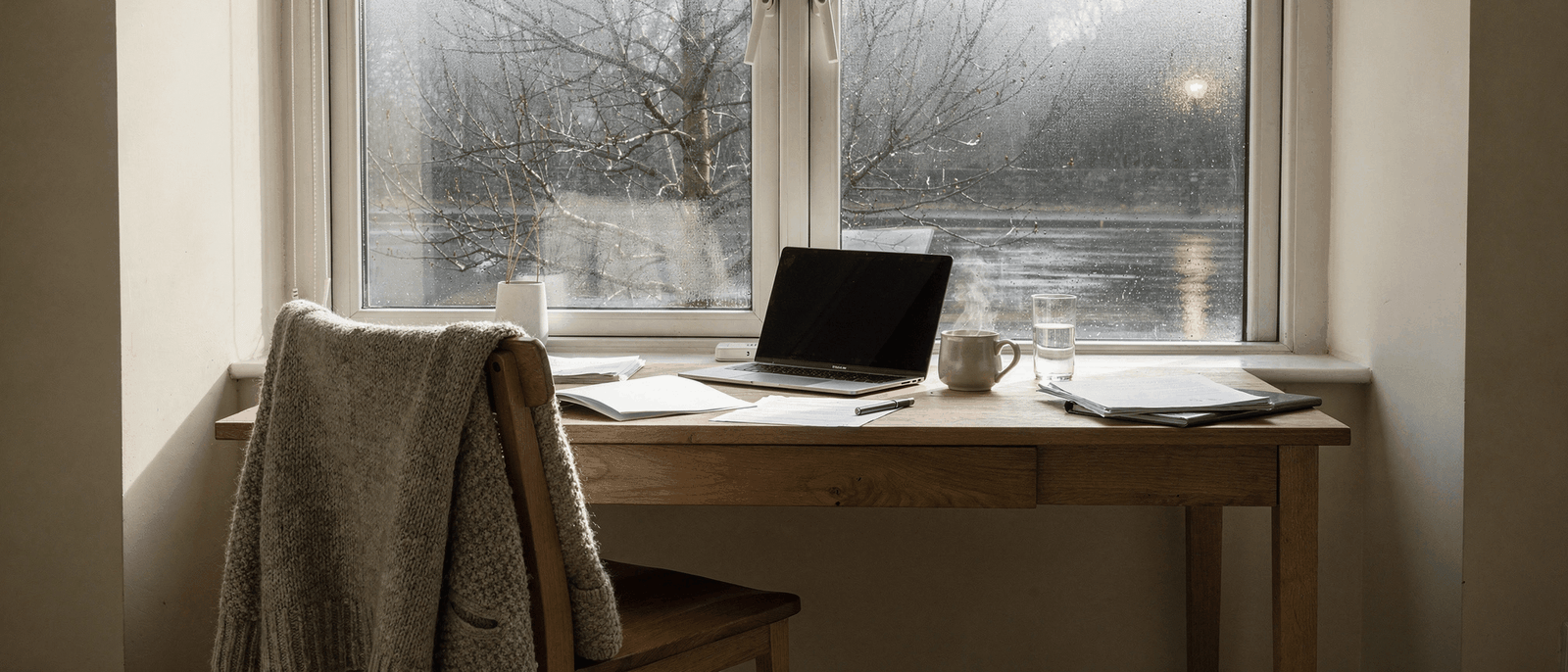
Daylight once a day
The NHS describes seasonal affective disorder (SAD) as thought to be linked to reduced daylight in winter, and its self-care points include going outside in the daytime every day. NHS England South West also lists walking outside among its winter-blues tips. This is general self-care, not a fix.
What to try on a busy day: take one call or one tea outdoors in daylight, even if you only reach the front step.
How brisk is brisk enough
The NHS guideline for adults aged 19 to 64 is at least 150 minutes of moderate activity a week, offered as a general guide for healthy adults rather than a target. Its plain-words check for moderate is that your heart rate rises, you breathe faster and feel warmer, and you can still talk but not sing. Brisk walking is one of its examples.
Rule of thumb: the talk-but-not-sing check relates to the NHS moderate-activity guide. The daylight habit is separate and lighter, as the NHS self-care point is simply to go outside in the daytime.
Plan B for dark or wet days
If it is dark or pouring, stand at the brightest window for a few minutes with your drink, then try again tomorrow.

Habit 2: Break up long stretches of sitting
What the sources say
The NHS says sitting too much can be a risk to health, unless you are a wheelchair user. It notes that the UK Chief Medical Officers recommend breaking up long periods of sitting with at least light activity, and it suggests setting a reminder to get up every 30 minutes and taking a walk break with each tea or coffee.
NHS North West London's Keeping Well service adds a winter angle: when you are indoors, try not to sit still for more than an hour. It says staying active generates heat, and that chair-based movement is an option if standing is awkward.
Pick one trigger
Decision rule: choose one trigger you already have, such as a call ending, the kettle going on or a calendar ping, and stand up whenever it fires. One reliable trigger beats a five-point plan you abandon by Wednesday.
What to try on a busy day: stand for your next call, or do some chair-based movement while it runs.
A note on HSE guidance
As background, HSE guidance expects breaks or changes of activity to be planned into screen work, and these are duties on employers towards their employees. HSE's L26 guidance says short, frequent breaks are more satisfactory than occasional longer ones, and that breaks should let you vary your posture. It sets no fixed break length, and this is not legal advice.
Habit 3: Keep your workspace warm and bright enough
Warmth first, kit second
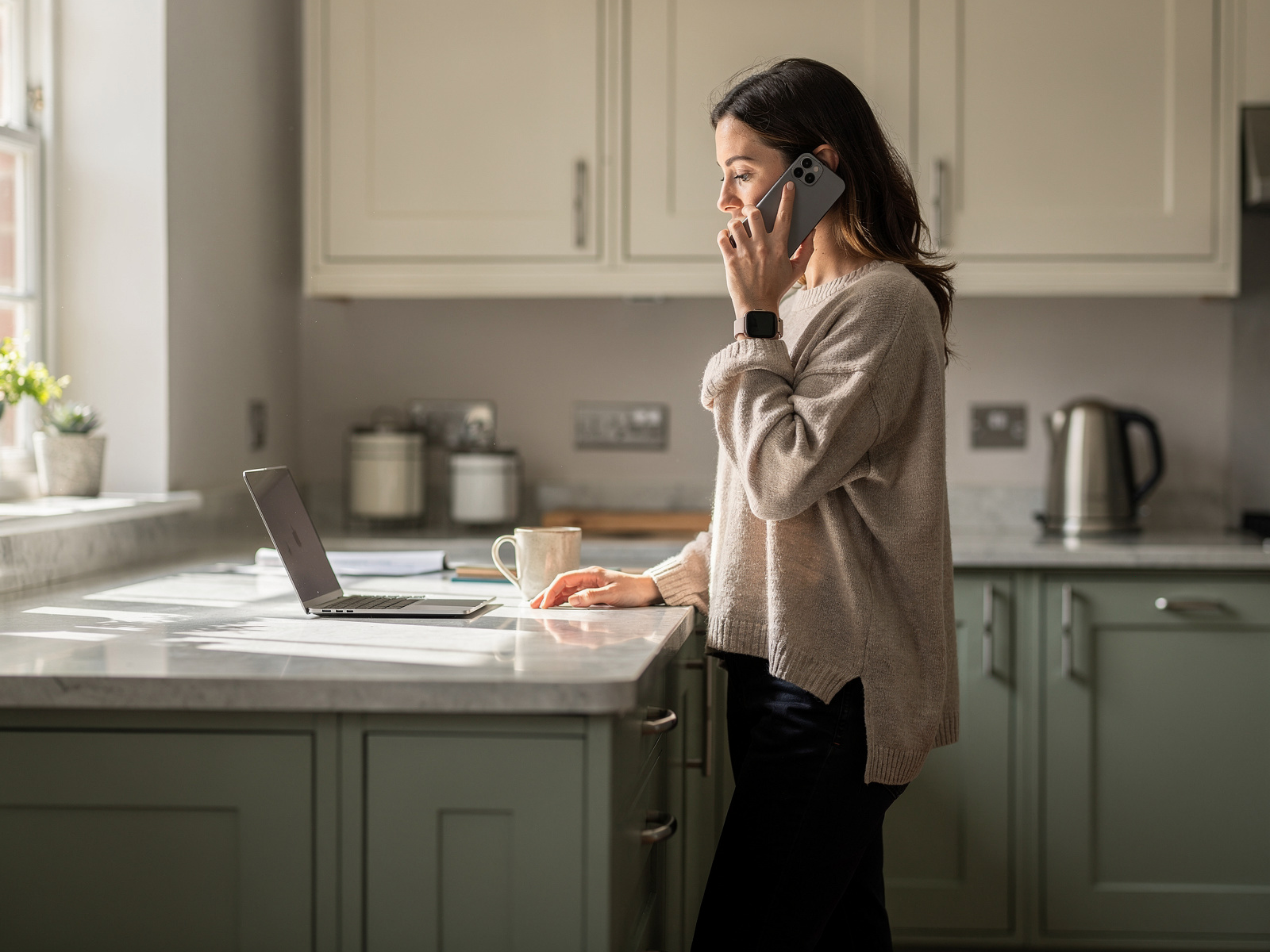
The NHS advises heating your home to a temperature that is comfortable for you and, if you can, at least 18°C in the rooms you regularly use. Free steps come first: add a layer, have a warm drink, and move, since staying active generates heat. If you want extras, a heated cushion or foot warmer is comfort only.
What to try on a busy day: add a layer and move before reaching for the heating.
Light for dark afternoons
When the afternoon light fades, a desk light is an optional personal comfort. It is a comfort, nothing more.
Habit 4: Keep drinks within reach
The guide figure
In the Eatwell Guide, the government recommends aiming for 6 to 8 cups or glasses of fluid a day. The NHS says this is just a guide, and that water, lower-fat milk and lower-sugar drinks, including tea and coffee, all count. NHS England South West's winter tips add that caffeine should stay within recommended limits.
Pair a drink with each break
Decision rule: attach a drink to every break trigger from Habit 2. Pour it before the call starts, and finish it when the call ends and you stand up. That way the break and the drink happen together, with no extra reminders.
What to try on a busy day: fill a glass or mug before your first meeting and top it up at each stand-up.
Bottles and mugs
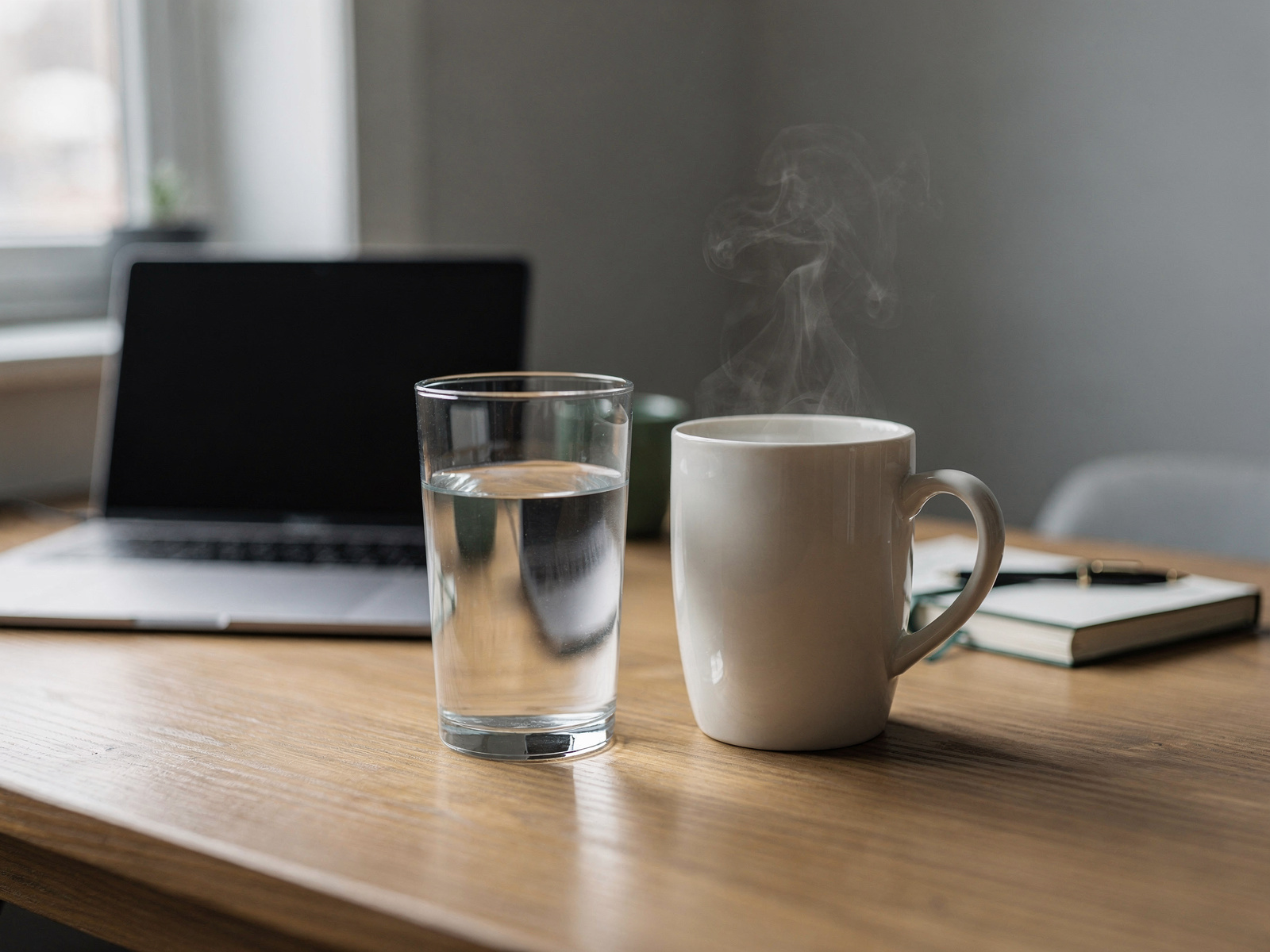
Drinkware is convenience only. A bottle or an insulated mug keeps a drink within reach through back-to-back calls. Neither is needed to follow the NHS guide, and the 6 to 8 figure stays a guide whichever you choose.
Habit 5: Close the working day on purpose
At the desk
A short shutdown routine is a simple practical suggestion for ending the working day. Try these steps, in any order:
- Write tomorrow's first task on a sticky note.
- Close tabs and shut the laptop.
- Step away from the screen, and switch off the desk light.
In the bedroom
NHS Every Mind Matters says a regular sleep routine can make it easier to fall asleep, and that you may find it easier in a room that is quiet, dark and cool. Some people find exercising close to bedtime affects their sleep, so if that sounds familiar, move your walk earlier. If sleep problems continue, speak to a GP or see the NHS insomnia pages.
What to try on a busy day: one shutdown step only.
Habit 6: A light-touch lunch-break plan
A lunch break that works
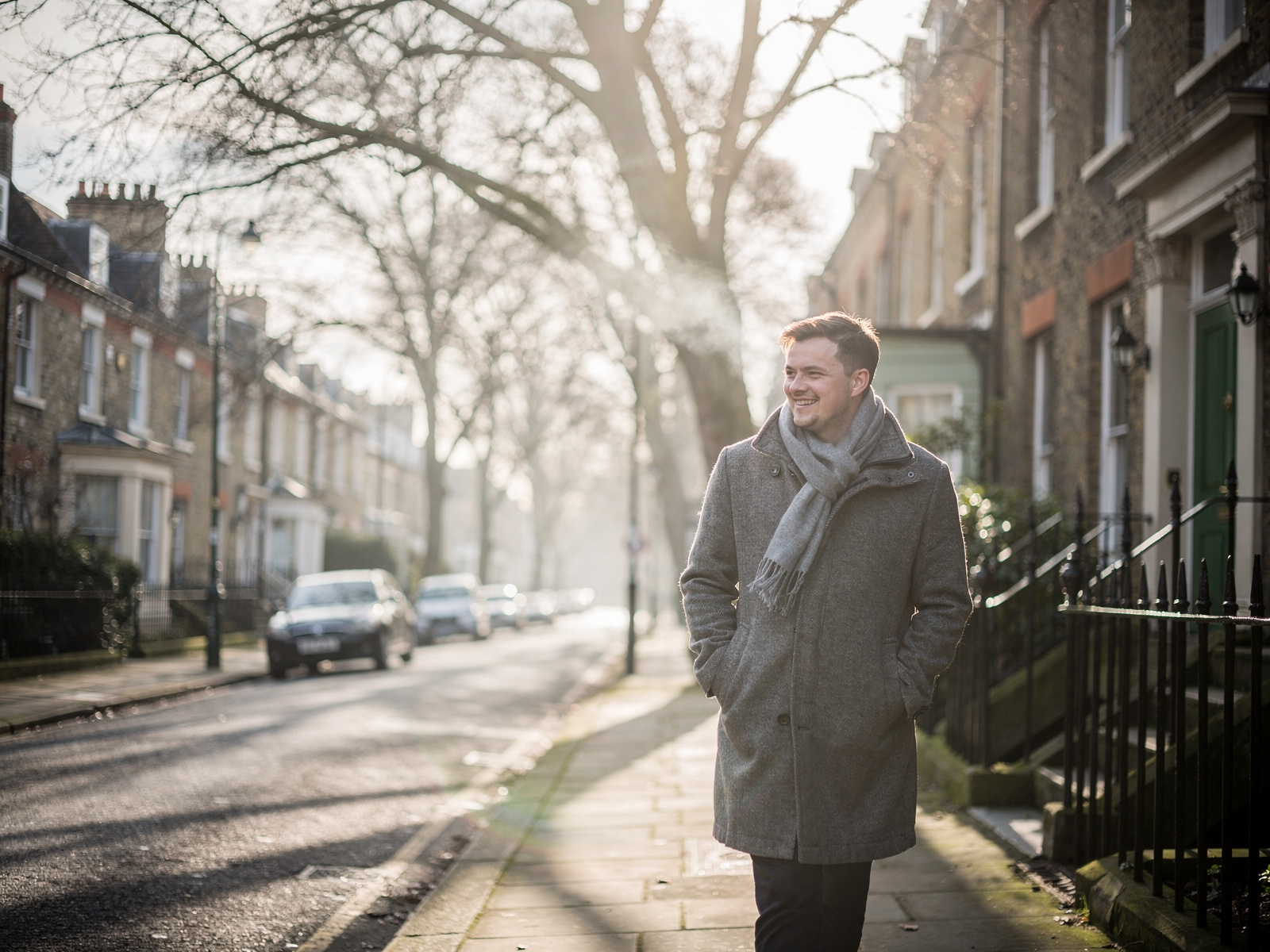
Say your lunch break falls between two calls. Pour a drink first, so it is waiting when you return. Then walk outdoors in daylight if you can, at a pace where you can talk but not sing, which is the NHS check for moderate activity.
The minimum version
No time? Step outside, or to a window, for a few minutes with the drink in your hand. That covers daylight and a drink.
Where food fits
For ideas on what to eat, see the lunch read below.
When low mood is worth mentioning to a GP
The NHS says seasonal affective disorder is thought to be linked to reduced daylight in winter. The habits in this guide are general self-care and not a substitute for advice. If low mood lasts or starts to affect daily life, a GP can help, and your practice or NHS services are the place for personal advice.
Your minimum winter day checklist
Daylight
Go outside in daylight once, even if it is only for one call or one tea.
Up from the chair
Get up at least once an hour. Chair-based movement counts, according to NHS North West London.
A drink with each break
Tea and coffee count towards the NHS fluid guide, so use whichever is nearest.
A comfortable room
Aim for comfortable and, if you can, at least 18°C in the rooms you regularly use, as the NHS advises.
One shutdown step
Write tomorrow's first task, or close the tabs and step away from the screen.
Keep it flexible
The NHS figures behind these lines are general guides, so a missed tick is not a failure.
Frequently asked questions
Do I need to hit 150 minutes a week?
No. The NHS guideline for adults aged 19 to 64 is at least 150 minutes of moderate activity a week, or 75 minutes of vigorous activity. It is a general guide for healthy adults, not a target you must reach. A brisk lunchtime walk is one example.
Do tea and coffee count towards fluids?
Yes. The NHS says water, lower-fat milk and lower-sugar drinks, including tea and coffee, all count towards the guide of 6 to 8 cups or glasses a day. NHS England South West adds that caffeine should stay within recommended limits.
How often should I get up from my desk?
The NHS suggests a reminder every 30 minutes, and NHS North West London says to try not to sit still for more than an hour indoors. Pick the interval you can actually keep. Chair-based movement counts on days when standing is awkward.
How long should a screen break be?
HSE guidance sets no fixed length. It says short, frequent breaks are more satisfactory than occasional longer ones, and that breaks should let you vary your posture. That guidance is background for employers and not legal advice.
What temperature should my workspace be?
The NHS advises heating your home to a temperature that is comfortable for you and, if you can, at least 18°C in the rooms you regularly use. It does not give a separate figure for a home office.
Verdict
Start with the one habit that hangs off something you already do, most likely a stand-up at the end of a call or a drink with each break. Add another only when the first has stuck. The main reservation is that every figure here is a general guide from published sources, not personal advice, and a GP is the right contact if low mood lasts. Next step: save the minimum winter day checklist.