



Host a Virtual Halloween Party: Audio,…

20 Minimalist Halloween Nail Ideas for…

Can Free Affinity Help You Build…

12 Lower-Sugar Halloween Treat Swaps Worth…

Can Hostinger AI Builder Launch a…

A 5-Step Screen-Free Autumn Reading Ritual…

Plug-In Solar Panels UK: Are They…

15 Last-Minute Zoom Halloween Costumes for…

Meta One Explained: Is the Subscription…

10 Low-Fuss Dog Halloween Ideas: Comfort…

Plaud One Explained: Can AI Earbuds…

9 Gothic Dinner Table Ideas for…

Namecheap vs Dynadot

7 UK Ghost Tours and How…

Convertkit Vs Beehiiv

Do You Really Need a £420…

Bluehost vs Siteground

15 Gentle Spooky Autumn Books to…

Namecheap review

How to Remove Halloween Face Paint…
Growing a YouTube channel often feels strangely frustrating at first.
A video can take hours to plan, film, edit, upload, and design, only to disappear into the algorithm with barely any views afterward. That experience confuses a lot of beginners because the content itself may not even be the real problem. Weak titles, unclear thumbnails, poor keyword targeting, or inconsistent optimisation quietly damage visibility underneath the surface.
TubeBuddy became popular because it helps simplify parts of YouTube growth that normally feel repetitive, confusing, and mentally draining for smaller channels. Instead of forcing creators to constantly guess what the algorithm wants, the platform provides guidance directly inside the publishing workflow.
Quick Overview
In this review you will learn:

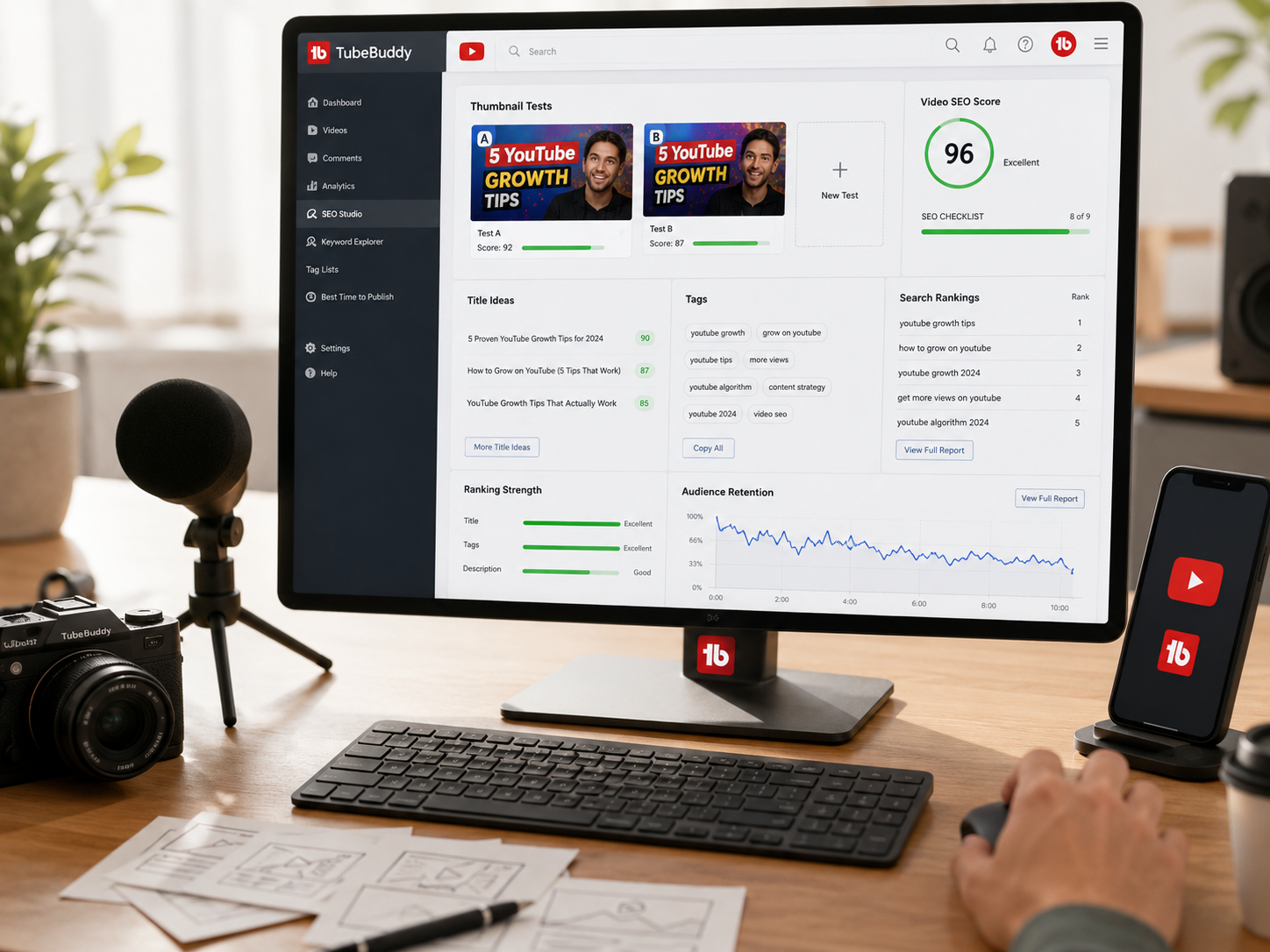
A YouTube optimisation setup supporting channel growth and publishing.
Helpful next reads: Best webcams for bloggers and course creators
Why YouTube Growth Feels So Difficult Initially
Good Videos Still Get Ignored
Uploading consistently is not always enough.
Weak titles, cluttered thumbnails, poor search targeting, and weak retention quietly hurt visibility even when the actual video itself is genuinely useful. A beginner may spend an entire weekend editing only to watch the upload disappear after a few hours because viewers never clicked in the first place.
Many creators assume YouTube rewards effort automatically. In reality, the platform responds far more heavily to viewer behaviour signals than upload effort alone.
YouTube Analytics Feel Overwhelming Fast
New channel owners suddenly face:
That information overload becomes mentally exhausting surprisingly quickly. Many smaller publishers spend more time refreshing analytics dashboards than calmly improving the next upload.
Instead of helping creators feel informed, the constant flood of metrics often creates uncertainty around what actually matters most.
Search Traffic Still Matters Heavily
A large percentage of YouTube traffic still comes through:
Optimisation affects visibility far more than beginners usually expect. A useful tutorial with weak metadata often struggles against average videos packaged more clearly.
That disconnect frustrates creators because the better video does not always receive better exposure immediately.
Manual Channel Tasks Become Repetitive
Updating:
Across dozens of uploads eventually becomes tedious manually. That repetitive admin work slowly drains enthusiasm once upload libraries start growing.
Creators often underestimate how much maintenance work accumulates after publishing consistently for months.

A video publishing setup supporting channel management and visibility.
Most New YouTubers Spend Too Much Time Guessing
That guessing quietly slows channel growth.
A channel owner uploads regularly but still has no idea:
Eventually the workload starts feeling emotionally draining because effort and results stop matching properly. Somebody can spend weeks improving editing quality while completely missing the fact their titles never match real search intent.
TubeBuddy became attractive because it reduces some of the guesswork surrounding YouTube optimisation without requiring advanced marketing knowledge or expensive coaching programs. The browser extension places practical guidance directly inside the publishing process rather than forcing people into separate complicated dashboards.
The clarity alone can reduce a surprising amount of stress. Instead of endlessly wondering whether a topic deserves attention, channel owners gain stronger signals around search demand, discoverability, and packaging decisions.
Smaller creators especially benefit because they rarely have access to full marketing teams, dedicated strategists, or expensive consultancy support. Simple optimisation guidance can make the publishing process feel far more manageable.
Explore more insights: Video content setup for small business owners
TubeBuddy Features
Keyword Research Tools
TubeBuddy helps users explore:
That research helps channels target search demand more strategically instead of uploading blindly. Smaller publishers especially benefit because broad keywords are often dominated by larger established channels already controlling massive audience attention.
A new creator targeting highly competitive phrases immediately usually struggles to gain traction. More focused search terms often create better opportunities for smaller channels trying to establish discoverability gradually.

A YouTube search setup supporting content discovery and ranking analysis.
Thumbnail Testing
TubeBuddy includes testing tools allowing channels to compare:
That feature becomes useful because publishers often become emotionally attached to thumbnail designs viewers completely ignore. A cleaner image with stronger contrast sometimes outperforms a complicated polished design unexpectedly.
The testing process also teaches creators how their audience responds visually over time, making future thumbnail decisions feel less random.

A video packaging workspace supporting YouTube click-through improvement.
Bulk Editing Features
Bulk editing tools help update:
Across large upload libraries far faster than manual editing individually. This becomes genuinely helpful once affiliate links, newsletter promotions, or outdated references need updating across older uploads.
The practical value increases significantly once creators manage dozens or hundreds of videos simultaneously.

A channel organisation setup supporting faster publishing management.
SEO Guidance
TubeBuddy also provides:
That support especially helps smaller channels still learning how YouTube search behaves. Beginners often struggle understanding how titles, descriptions, and keywords influence discoverability together.
The platform simplifies many of those decisions without making the process feel excessively technical or intimidating.
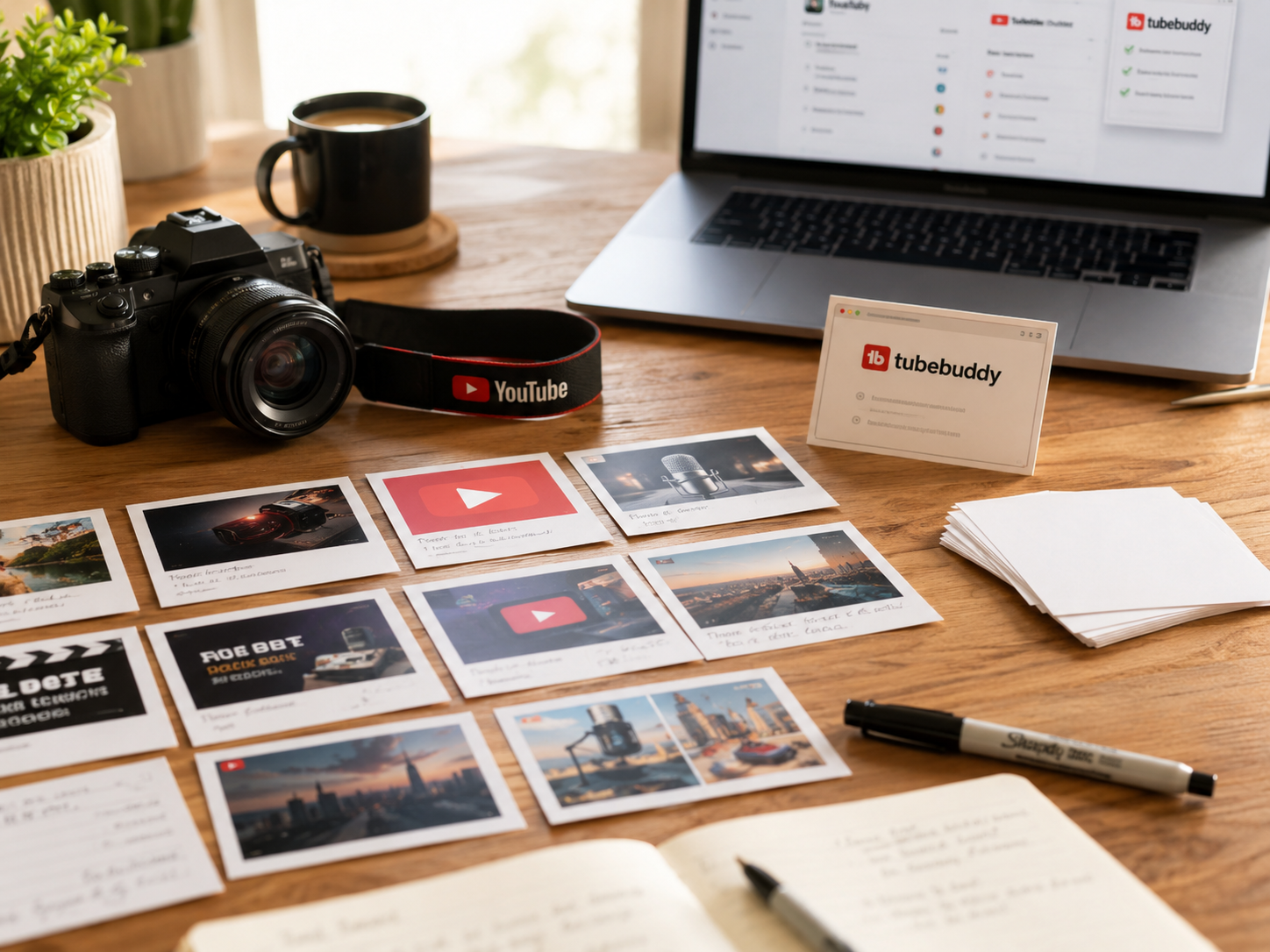
A video optimisation setup supporting search visibility improvement.
Productivity Tools
The platform includes features supporting:
Those time savings become more noticeable once upload libraries start growing. Somebody managing tutorials, affiliate content, newsletters, and client work simultaneously quickly notices how much repetitive publishing admin consumes every week.
Reducing smaller repetitive tasks creates more time for scripting, audience engagement, and improving overall content quality.
A creator workspace supporting faster content management.
Browser Extension Convenience
TubeBuddy works mainly through a browser extension integrated directly into YouTube Studio.
That setup makes optimisation tasks feel more connected to the publishing process itself instead of requiring separate complicated dashboards. The convenience matters because smaller publishers already juggle editing software, storage management, thumbnails, scripts, and social promotion simultaneously.
Keeping everything integrated inside YouTube Studio reduces friction during the publishing workflow considerably.
A YouTube creator workspace supporting integrated optimisation tools.
What TubeBuddy Actually Helps With
TubeBuddy Reduces Decision Fatigue
New YouTubers often feel stuck deciding:
TubeBuddy simplifies parts of those decisions. That reduction in mental clutter becomes surprisingly valuable once somebody starts uploading consistently every week.
Publishing feels less chaotic when creators have clearer optimisation guidance during the planning process.
Smaller Channels Usually Benefit Most
Larger channels often already have:
Smaller publishers usually gain more practical value from guided optimisation support because they are still learning how YouTube discovery behaves.
The learning curve feels far less intimidating when tools simplify the basics gradually.
Time Savings Quietly Add Up
Saving:
Eventually creates noticeable relief across larger upload libraries. Less admin friction leaves more time available for planning stronger content and improving viewer experience.
Those smaller workflow improvements become increasingly valuable as publishing schedules become more demanding.
TubeBuddy Helps Beginners Learn Faster
TubeBuddy review discussions become far more useful once people realise YouTube growth depends heavily on packaging, discoverability, viewer retention, and audience behaviour rather than uploading randomly and hoping videos perform naturally.
The platform helps beginners connect optimisation decisions with actual audience behaviour more clearly over time.
Frequently read together: Ring light vs softbox
A channel growth setup supporting discoverability and publishing clarity.
TubeBuddy Still Cannot Fix Weak Videos
This is where expectations sometimes become unrealistic.
Optimisation tools help with organisation, search visibility, publishing efficiency, and performance analysis. They do not automatically create engaging videos. A poorly structured upload with weak pacing, confusing storytelling, or slow intros will still struggle regardless of how polished the metadata looks afterward.
Analytics can also become mentally exhausting. Some channel owners start checking rankings, click-through rates, tags, and competitor activity constantly after installing optimisation software. Eventually the publishing process starts feeling stressful instead of creative.
TubeBuddy works best as a support tool rather than a shortcut promising guaranteed growth. The strongest channels still focus heavily on audience satisfaction, clearer storytelling, stronger hooks, and genuinely useful content first.
Another important limitation involves pricing. Casual creators uploading occasionally may not receive enough practical value from advanced plans compared to creators publishing consistently every week.
Readers also enjoyed: Best content creator kits for beginners
Pros And Cons Of TubeBuddy
Pros
Cons
Final Verdict
TubeBuddy became popular because YouTube growth often feels confusing, repetitive, and heavily dependent on optimisation details newer channel owners struggle understanding clearly. The platform helps simplify keyword research, thumbnail testing, publishing management, and YouTube SEO without requiring deep technical marketing knowledge initially.
It will not magically grow a weak channel overnight. Still, for bloggers, educators, business owners, affiliate publishers, and growing YouTube channels wanting clearer optimisation guidance and smoother publishing management, TubeBuddy offers meaningful practical value without feeling excessively complicated.
The strongest benefit comes from reducing unnecessary guesswork. Instead of constantly wondering why videos fail to gain traction, creators receive clearer signals around search demand, packaging quality, and publishing efficiency. That guidance can make YouTube feel significantly less overwhelming for smaller channels still learning how discoverability works.


