



Host a Virtual Halloween Party: Audio,…

20 Minimalist Halloween Nail Ideas for…

Can Free Affinity Help You Build…

12 Lower-Sugar Halloween Treat Swaps Worth…

Can Hostinger AI Builder Launch a…

A 5-Step Screen-Free Autumn Reading Ritual…

Plug-In Solar Panels UK: Are They…

15 Last-Minute Zoom Halloween Costumes for…

Meta One Explained: Is the Subscription…

10 Low-Fuss Dog Halloween Ideas: Comfort…

Plaud One Explained: Can AI Earbuds…

9 Gothic Dinner Table Ideas for…

Namecheap vs Dynadot

7 UK Ghost Tours and How…

Convertkit Vs Beehiiv

Do You Really Need a £420…

Bluehost vs Siteground

15 Gentle Spooky Autumn Books to…

Namecheap review

How to Remove Halloween Face Paint…
Lighting quietly changes how professional content feels long before viewers consciously notice it. A creator can use a good camera, clear audio, and strong editing, yet the content still feels strangely “cheap” because the lighting looks harsh, flat, dim, or uneven. That frustration explains why ring lights and softboxes became extremely popular among YouTubers, bloggers, streamers, online teachers, and creators working from home. The difficult part is deciding which setup actually fits the workflow realistically instead of simply copying influencer studio setups online.
Quick Overview
In this guide you will learn:
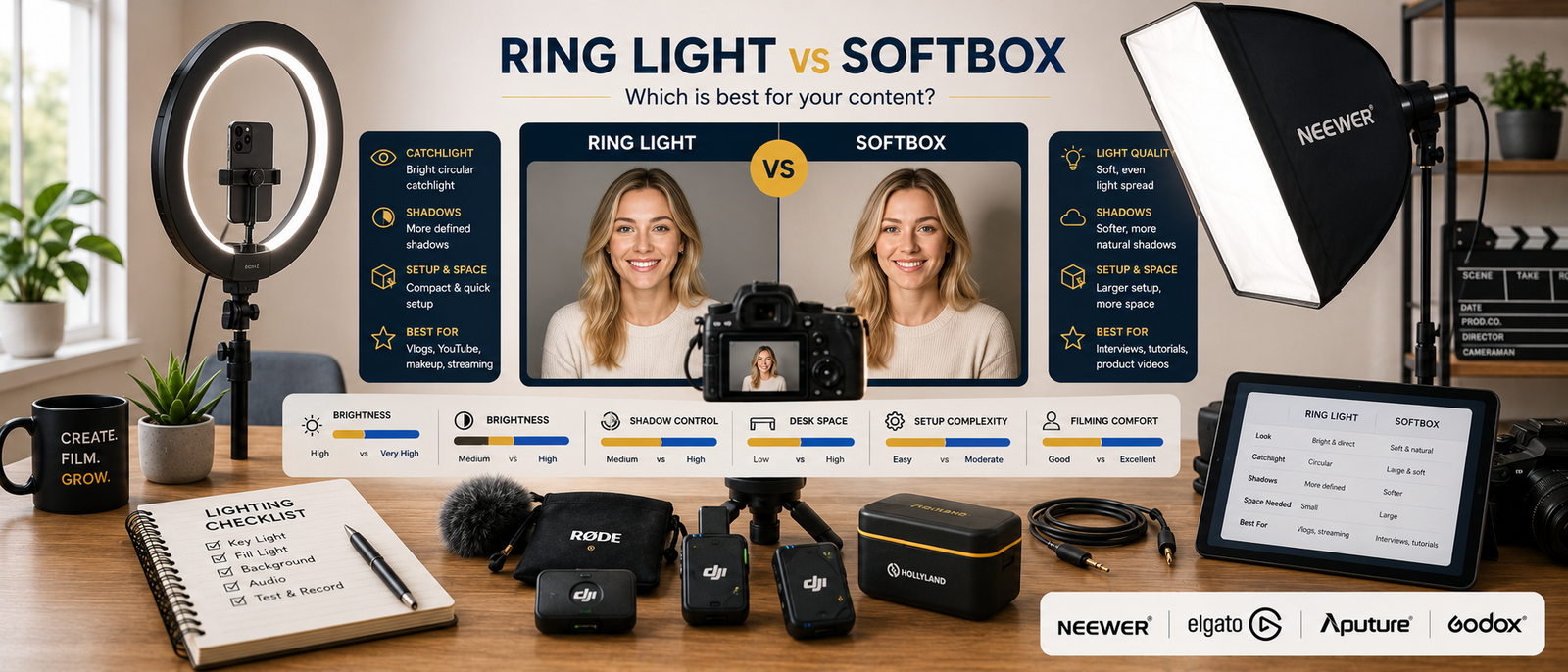
A home creator lighting setup supporting video production and filming.
Helpful next reads: Best content creator kits for beginners
Why Lighting Matters More Than Most Beginners Expect
Bad Lighting Makes Videos Feel Cheap Fast
Weak lighting creates harsh shadows, uneven skin tones, distracting darkness, and grainy footage surprisingly quickly. Viewers often tolerate average camera quality longer than uncomfortable lighting.
Home Offices Rarely Have Reliable Natural Light
A lot of creators film during darker evenings, grey weather, or inside rooms with poor window lighting. That inconsistency makes artificial lighting much more important than beginners usually expect initially.
Better Lighting Reduces Editing Frustration
Poor lighting frequently creates extra editing work afterward because footage needs colour correction, brightness adjustments, and noise reduction before it starts looking clean enough publishing.
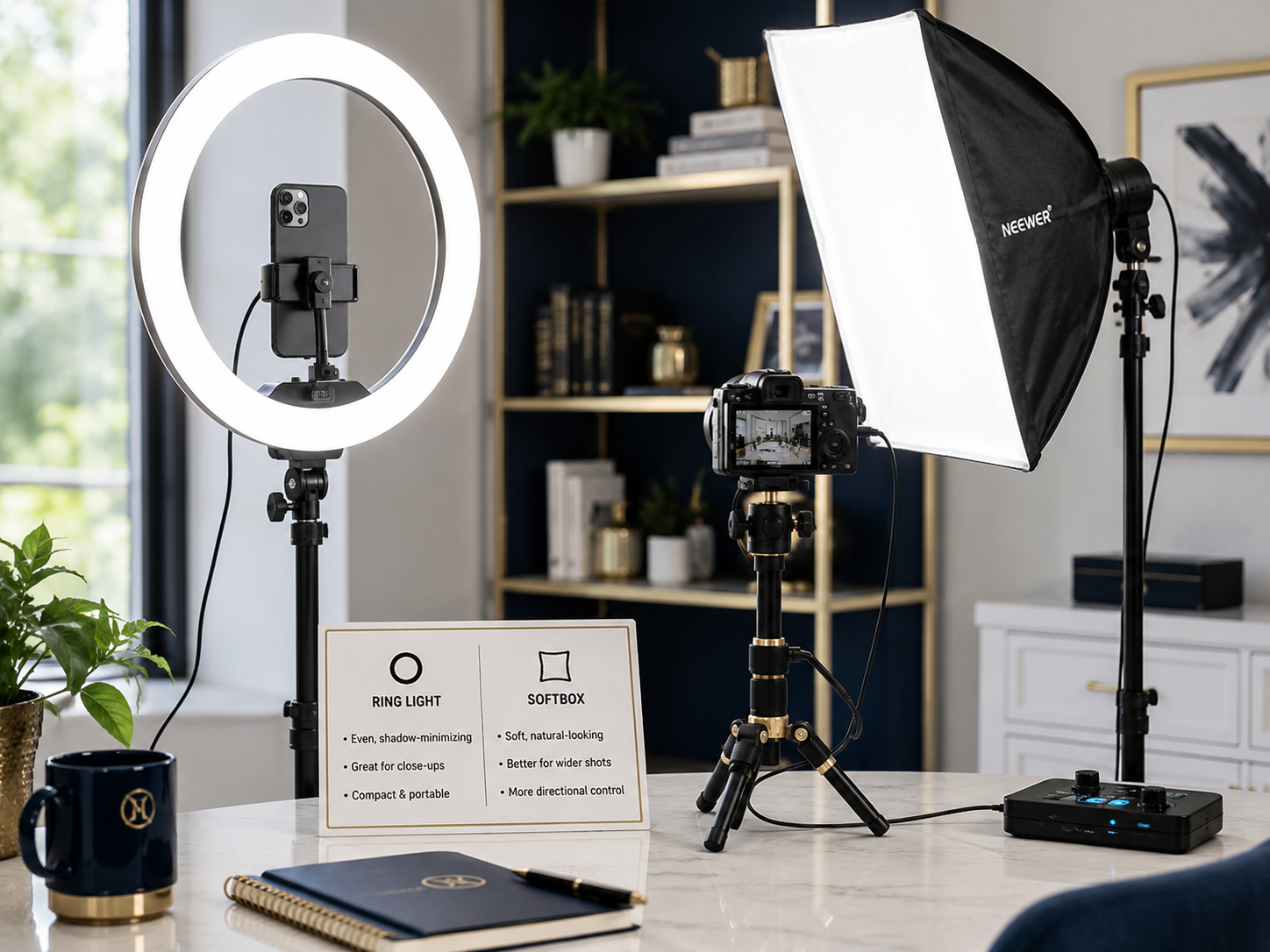
A home studio setup supporting clearer video production.
Good Lighting Makes Smaller Setups Feel Premium
A modest filming setup with strong lighting often looks significantly better than expensive equipment filmed under weak lighting conditions. That reality surprises many beginners once they compare footage side by side.
Ring Lights Became Popular Because They Feel Extremely Simple
Ring lights exploded across YouTube, TikTok, livestreaming, and beauty content because setup feels fast immediately. A creator positions the light behind the camera, adjusts brightness, then starts filming within minutes. That convenience matters heavily for people already balancing editing, thumbnails, scripting, customer messages, scheduling, and social media pressure daily.
The simplicity also reduces filming resistance. Complicated setups frequently delay production because preparation already feels mentally exhausting before recording even begins.
Explore more insights: Best webcams for bloggers and course creators
Ring Lights Vs Softboxes
Ring Lights Create Direct Front Lighting
Ring lights position light directly around the camera lens, creating bright even facial lighting with minimal setup complexity. That approach works especially well for beauty content, livestreams, Zoom calls, TikToks, and smaller desk setups.
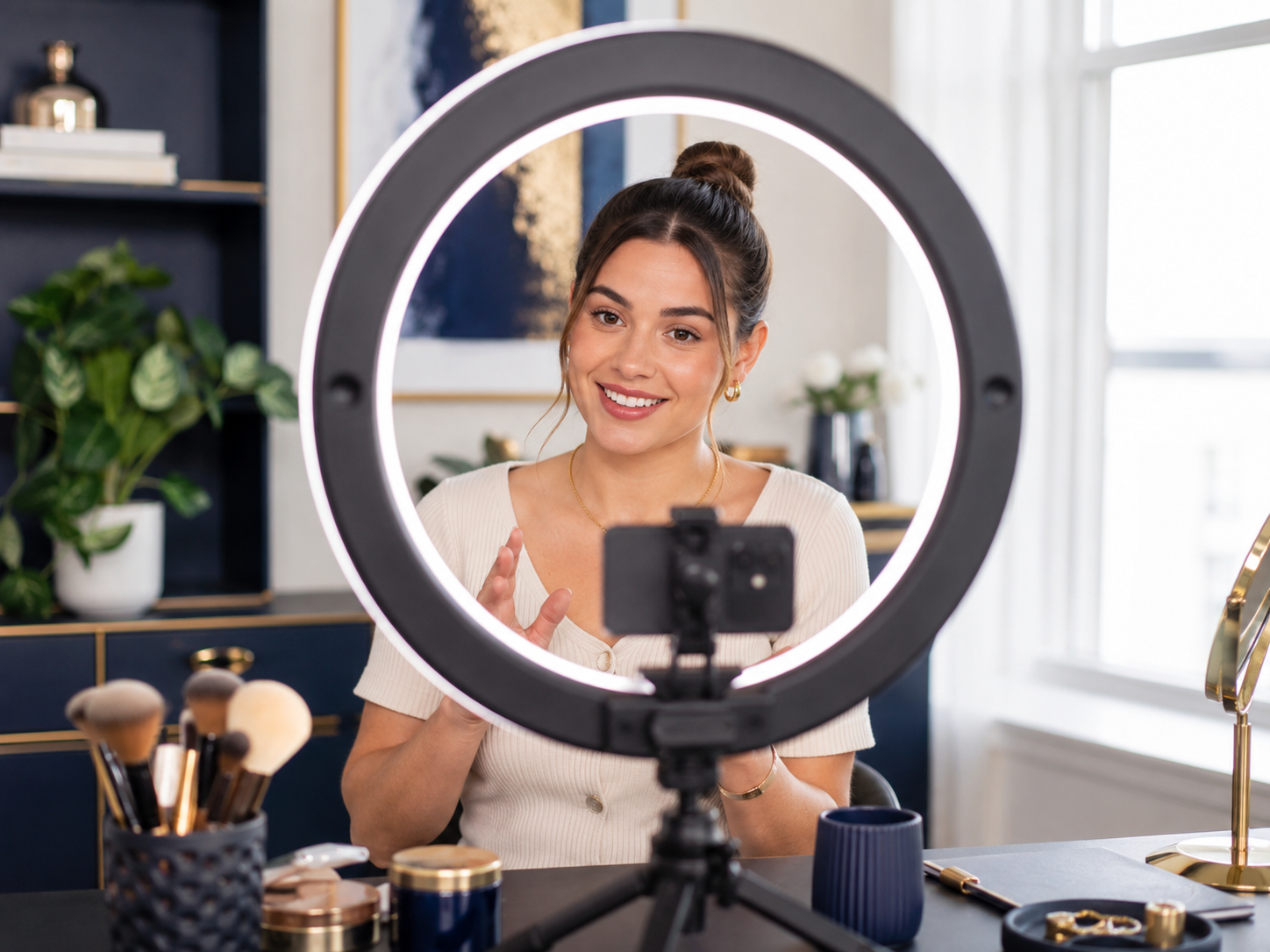
A front-facing creator lighting setup supporting streaming and filming.
Softboxes Create Softer More Natural Lighting
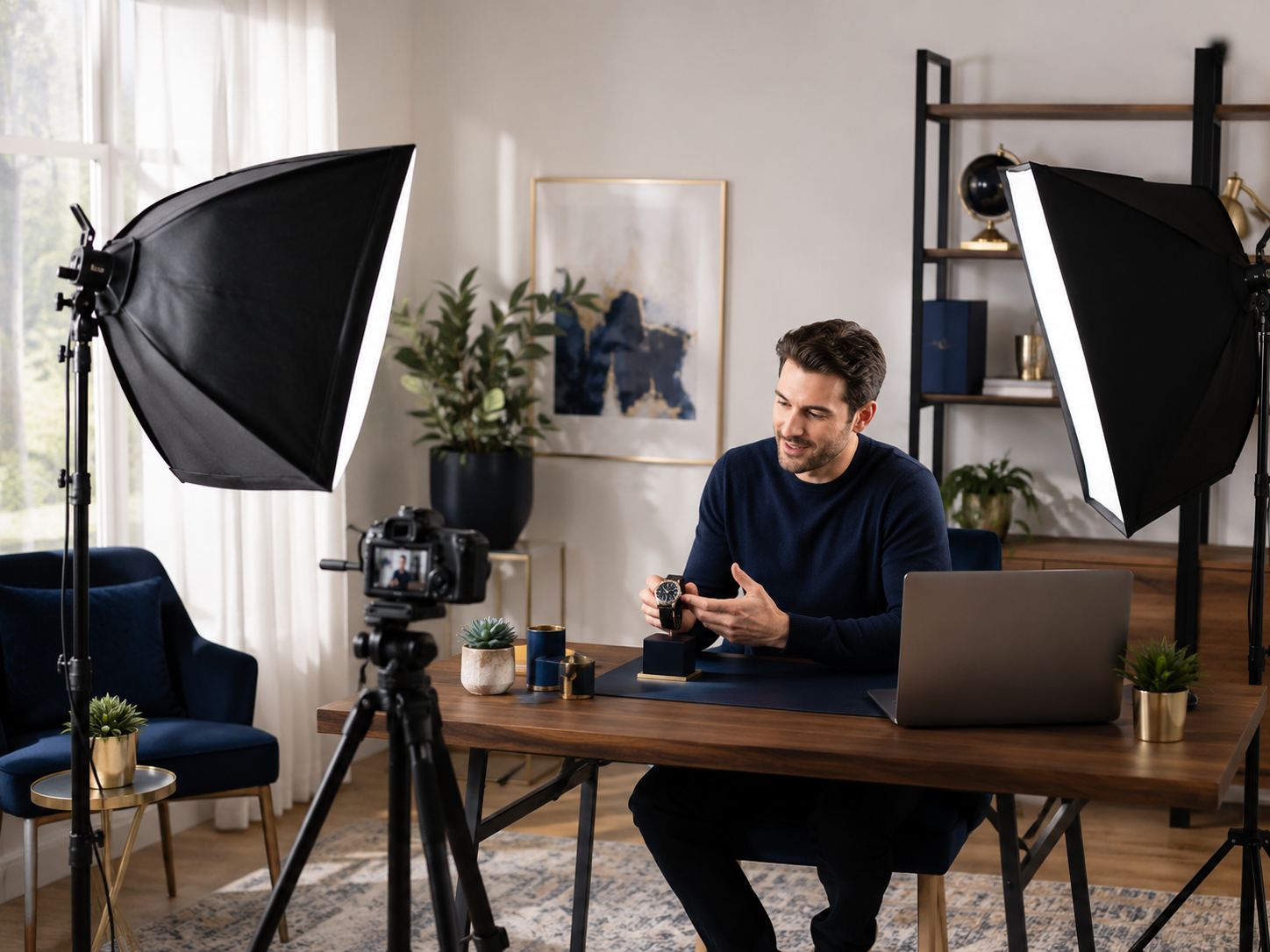
Softboxes diffuse light more widely across the environment, creating calmer shadows and softer-looking footage. That softer appearance usually feels more cinematic and less visually aggressive during longer viewing sessions.
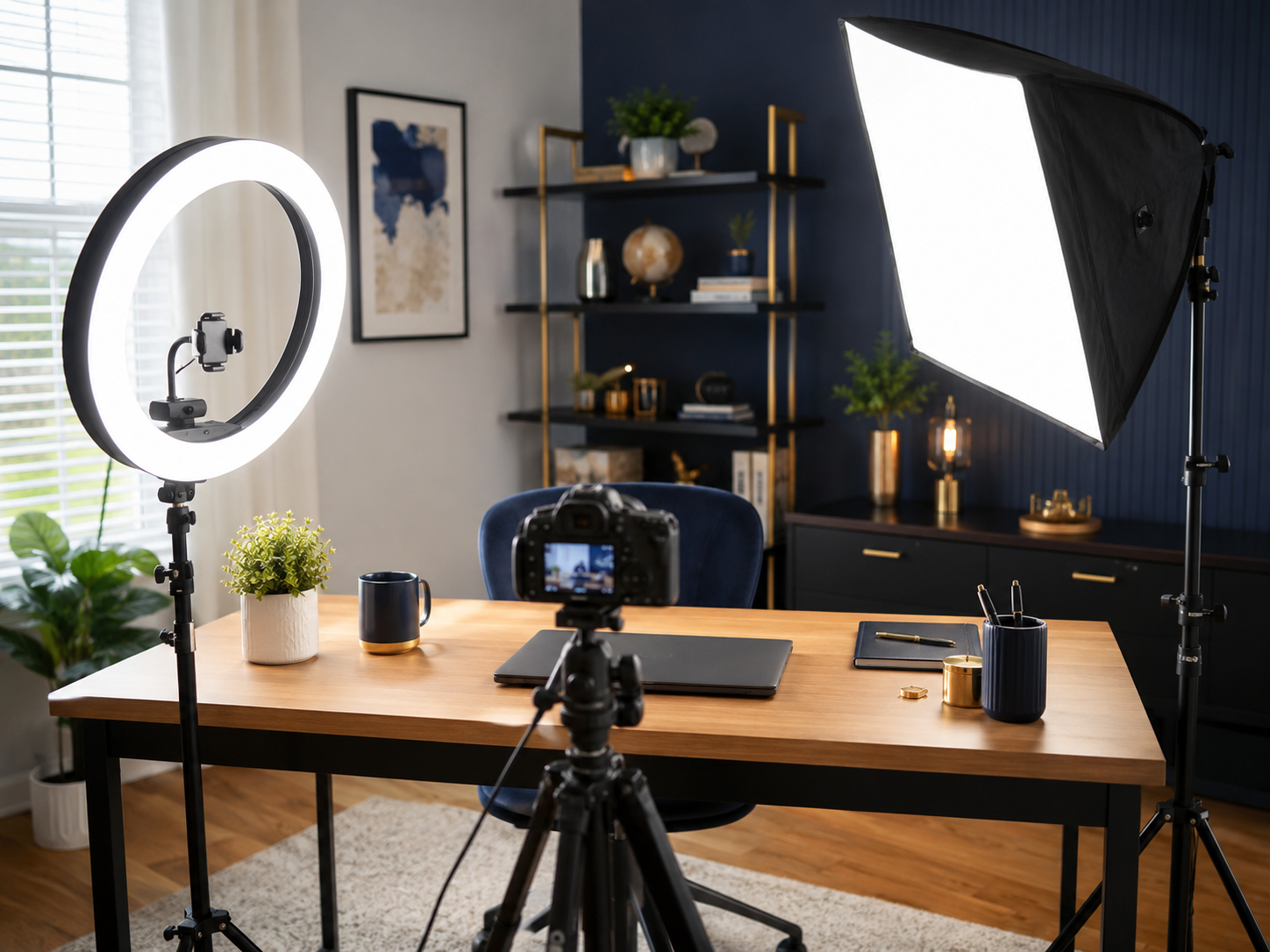
A soft studio lighting setup supporting professional video production.
Ring Lights Usually Work Better In Smaller Rooms
Ring lights stay compact, easier storing, and quicker repositioning. That practicality matters heavily for creators filming inside apartments, bedrooms, or tighter workspaces where larger lighting equipment quickly creates clutter.
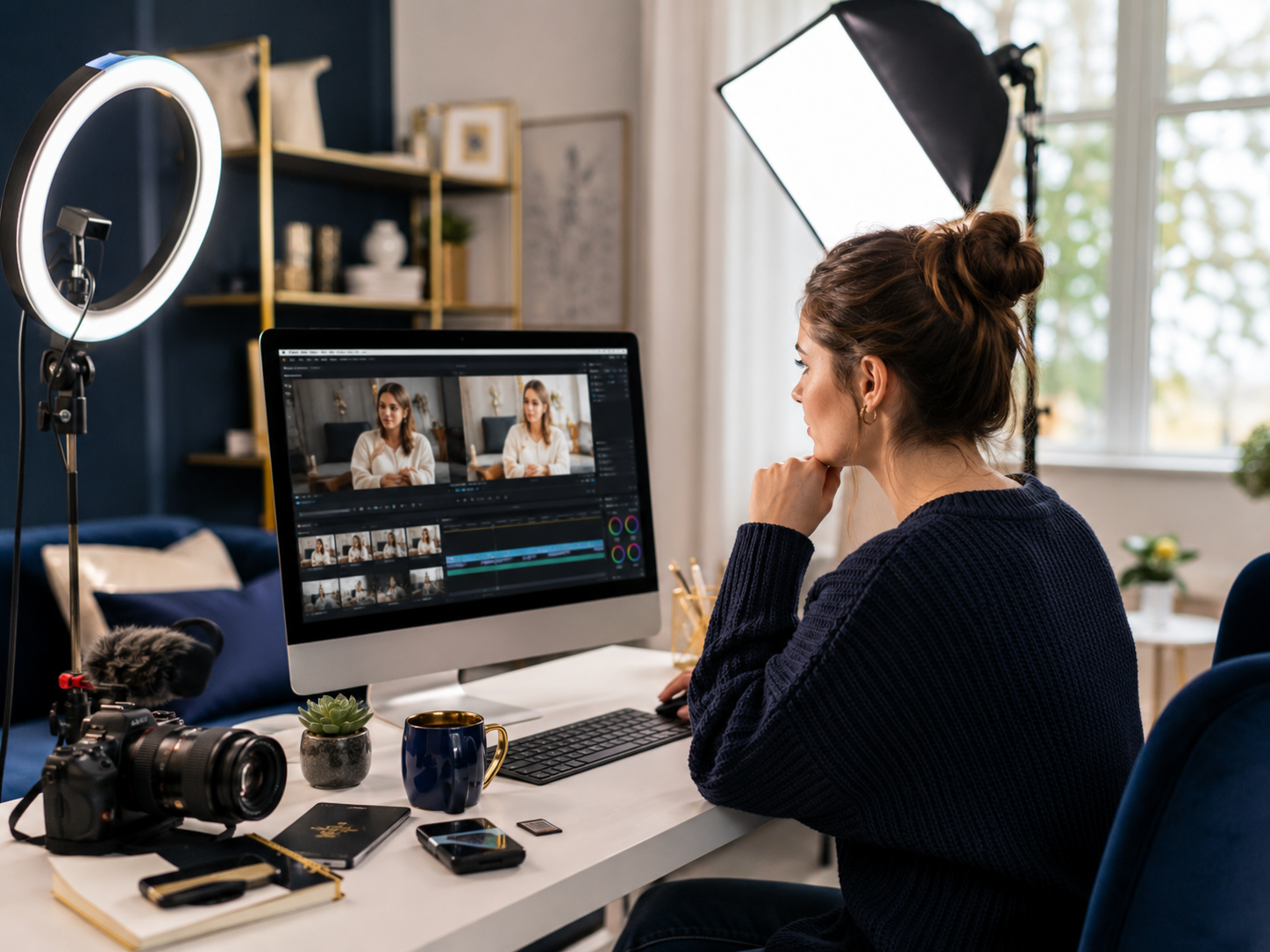
Softboxes Usually Feel Better For Longer Videos
Longer YouTube videos, interviews, online courses, and talking-head educational content frequently benefit from softer lighting because viewers spend extended time watching the footage. Harsh direct lighting eventually becomes visually tiring surprisingly quickly.
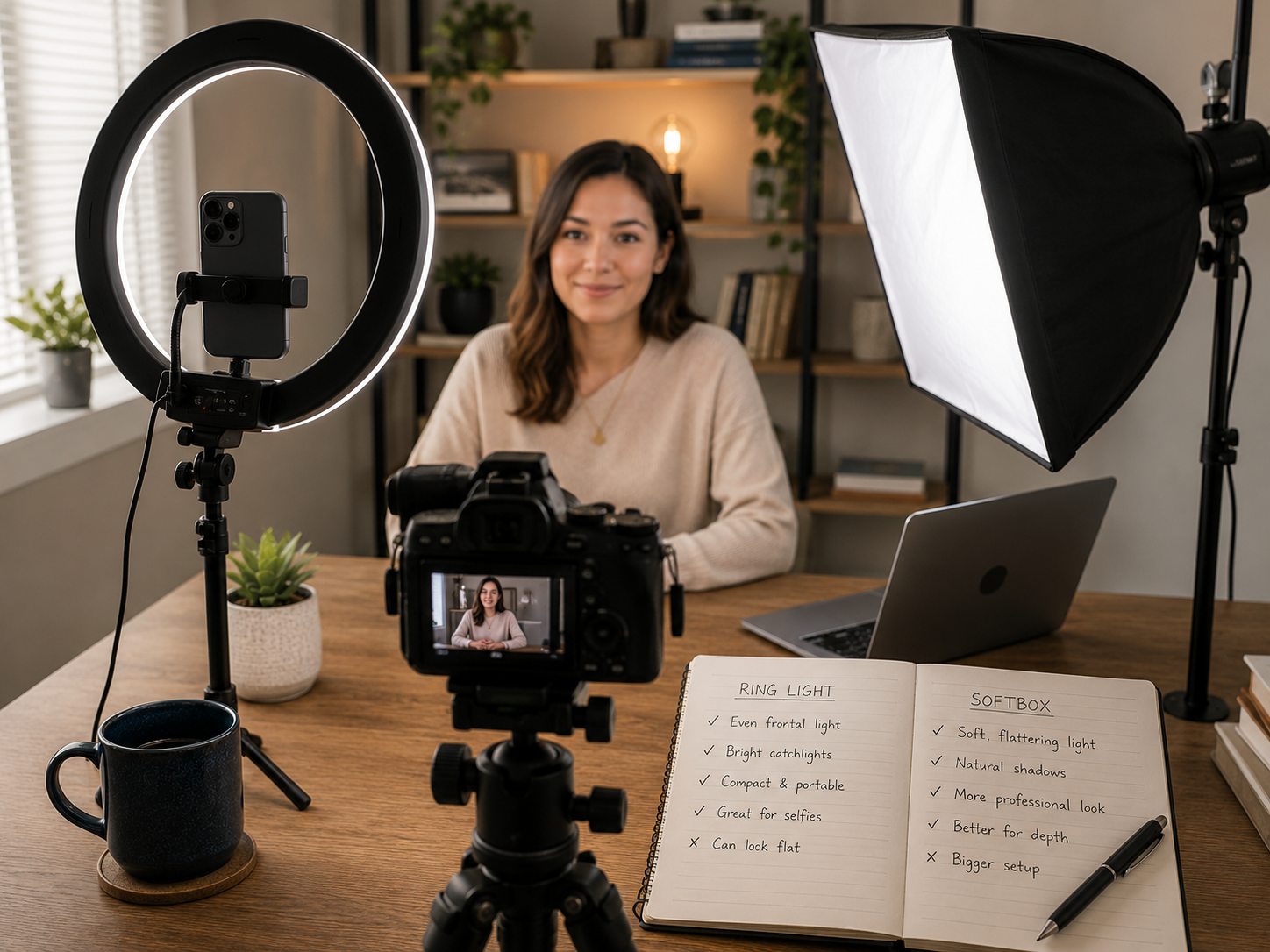
A professional creator setup supporting cinematic filming quality.
Which Setup Usually Fits Different Workflows Better
Ring Lights Usually Suit Faster Content
A creator filming reels, livestreams, quick tutorials, reaction videos, or video calls will usually appreciate the speed and convenience ring lights provide daily.
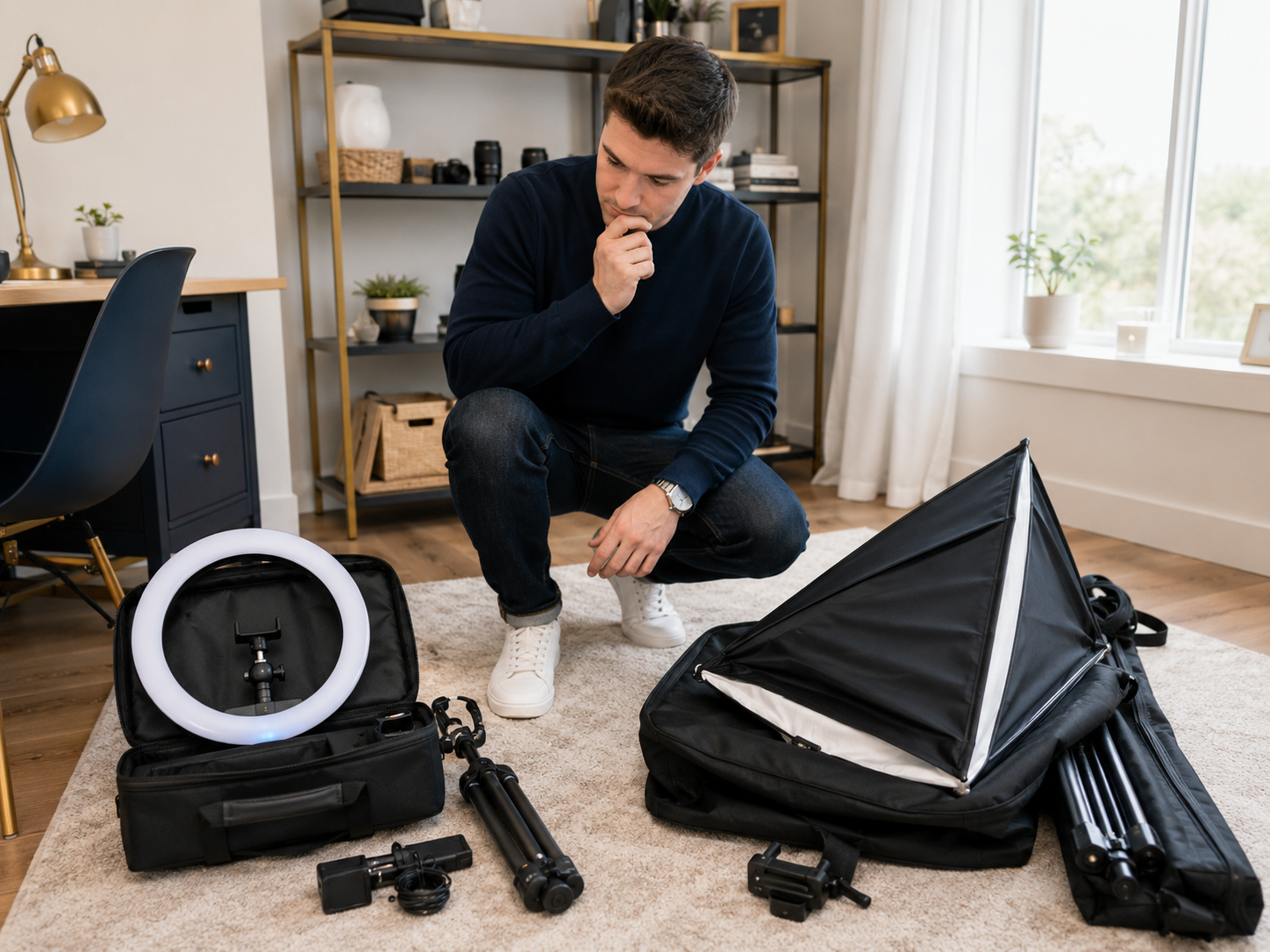
Softboxes Usually Suit Longer Educational Content
Longer YouTube videos, interviews, and course content often benefit from softer lighting because the footage feels calmer and easier watching over extended periods.
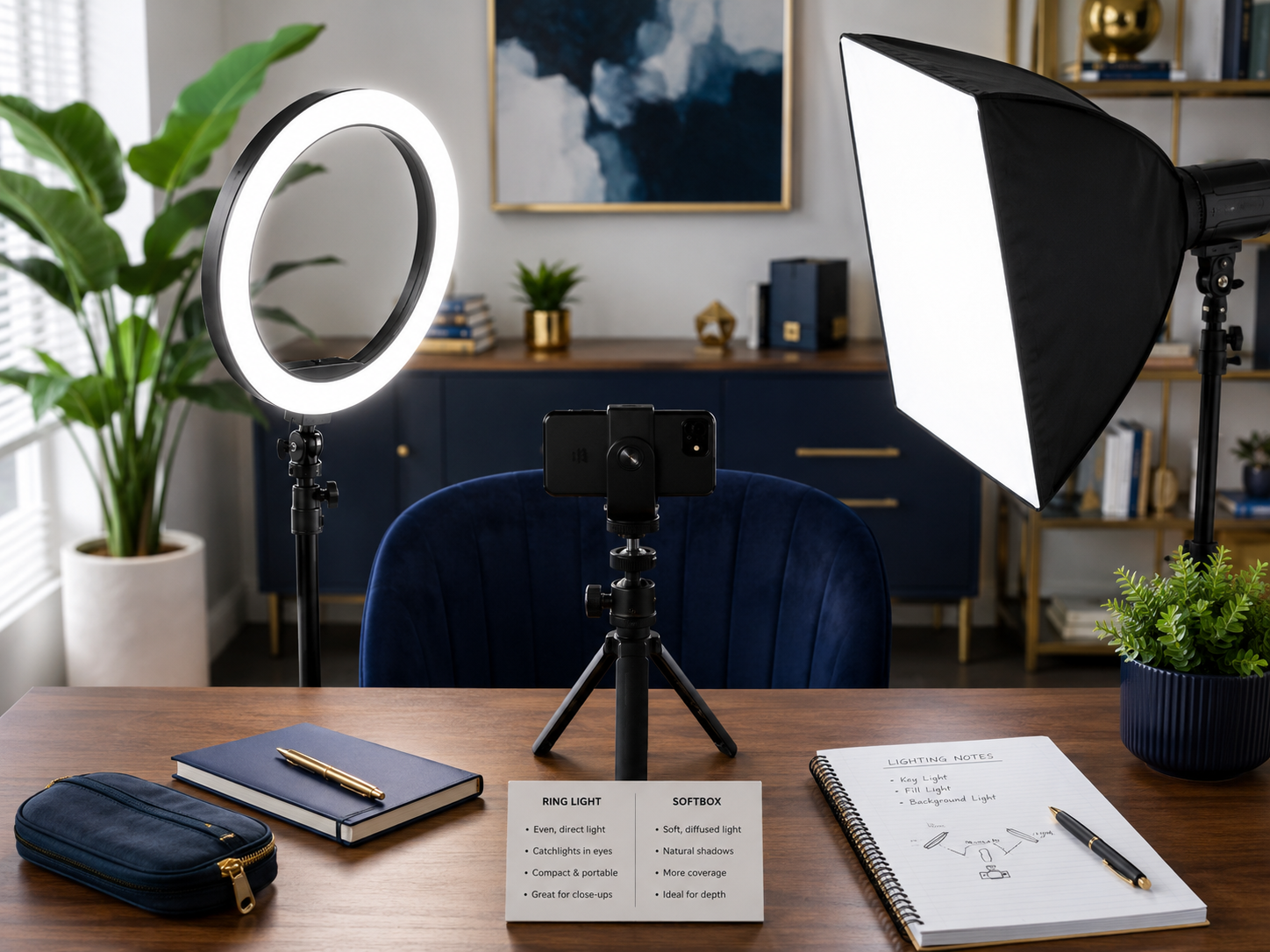
A professional filming setup supporting YouTube and course production.
Beginners Frequently Overbuy Lighting Equipment
Some creators watch studio tours online and immediately assume they need advanced lighting grids, RGB setups, multiple softboxes, and expensive ceiling rigs. Meanwhile, one decent light would already improve the content dramatically.
Simpler Setups Usually Create Better Consistency
Ring light vs softbox discussions become much more useful once creators realise easier filming workflows frequently matter more than endlessly chasing “perfect” cinematic production quality.
Frequently read together: Video content setup for small business owners
Most Creators Eventually Care More About Comfort Than “Gear”
This surprises people initially. A creator may start obsessing over cinematic studio setups online, then eventually realise they mainly want faster filming, less setup stress, cleaner visuals, easier editing, and more consistency. That shift explains why simpler lighting systems frequently outperform technically impressive studio environments that feel mentally exhausting maintaining daily.
Sustainable workflows usually matter more than endlessly chasing “perfect” production quality.
Readers also enjoyed: Best microphones for bloggers
Pros And Cons Of Ring Lights And Softboxes
Ring Light Pros And Cons
Pros
Cons
Softbox Pros And Cons
Pros
Cons
FAQ
Are ring lights better for beginners?
Usually, yes. Ring lights feel simpler setting up and work especially well for smaller desks, livestreams, video calls, and short-form content.
Why do softboxes look more professional?
Softboxes spread light more naturally across the environment, creating softer shadows and calmer-looking footage overall.
Do creators need expensive lighting setups?
Not usually. One decent light often improves video quality dramatically more than beginners expect initially.
Are softboxes difficult using?
No. They simply require slightly more space and setup effort compared to compact ring lights.
Which setup suits YouTube videos better?
Softboxes usually suit longer-form YouTube content better because the softer lighting feels more natural during extended viewing.
Final Verdict
Ring lights became popular because they deliver quick simple lighting for creators wanting faster filming workflows without complicated setup pressure. Softboxes became popular because they create softer more cinematic visuals better suited to longer-form professional-looking content.
The best option usually depends less on hype and more on filming style realistically matching the available space, energy levels, and production workflow. Faster short-form content usually benefits from the simplicity of ring lights, while longer educational or cinematic content frequently benefits from the softer calmer look softboxes create over time.


