



Host a Virtual Halloween Party: Audio,…

20 Minimalist Halloween Nail Ideas for…

Can Free Affinity Help You Build…

12 Lower-Sugar Halloween Treat Swaps Worth…

Can Hostinger AI Builder Launch a…

A 5-Step Screen-Free Autumn Reading Ritual…

Plug-In Solar Panels UK: Are They…

15 Last-Minute Zoom Halloween Costumes for…

Meta One Explained: Is the Subscription…

10 Low-Fuss Dog Halloween Ideas: Comfort…

Plaud One Explained: Can AI Earbuds…

9 Gothic Dinner Table Ideas for…

Namecheap vs Dynadot

7 UK Ghost Tours and How…

Convertkit Vs Beehiiv

Do You Really Need a £420…

Bluehost vs Siteground

15 Gentle Spooky Autumn Books to…

Namecheap review

How to Remove Halloween Face Paint…
Easy high protein lunches for desk workers should keep you full enough for the afternoon without making food feel like homework. You do not need gym-style meal prep, perfect macros or a fridge full of identical containers. You need lunches that are filling, repeatable and realistic between calls, school runs, client work, admin and the 3pm slump. Eggs, tuna, chicken, tofu, beans, lentils, Greek yoghurt, cottage cheese, leftovers, wraps and bowls can all work when they fit the day.
Protein helps lunch feel more filling
Bowls are flexible and repeatable
Wraps and toast are quick wins
Eggs suit fast desk lunches
Yoghurt and cottage cheese work cold
Plant-based options can be filling
Prep should reduce effort
Most Relevant Audience
This guide is for remote workers, home workers, freelancers, bloggers, creators, side hustlers, parents, carers and small business owners who want filling lunches without spending ages cooking.
It is especially useful if your lunch is often too small, too late, too snack-like or too dependent on whatever happens to be easiest when the afternoon is already asking too much.
Why Protein Matters During Desk-Heavy Days
It helps lunch feel more satisfying
Protein can help a lunch feel more complete, especially when paired with fibre, carbohydrates and healthy fats.
That matters during desk-heavy days because a weak lunch can turn the afternoon into repeated snack searching. The goal is not perfect tracking. It is a meal that supports the next work block.
It can reduce random snack chasing
If lunch leaves you hungry soon after, the kitchen starts looking very persuasive. A clear protein source can help make lunch feel steadier.
This does not mean every lunch has to be large or heavy. It means the meal should do enough work that snacks remain optional support, not the whole afternoon plan.
It works best with balance
A high-protein lunch is more useful when it is not only protein. Add vegetables, fruit, grains, potatoes, wraps, rice, beans, salad, soup or another filling base.
Desk workers need practical energy, not a restrictive plate. Balance helps lunch feel like real food.
It should fit your appetite
Some people want a warm bowl. Some prefer a cold plate. Some need a light lunch before calls. Others need something more substantial.
Choose protein options that match your appetite and schedule. A lunch you can repeat is more useful than an ideal one you keep avoiding.
It should not require perfect prep
Protein helps most when it is easy to access. Leftovers, tins, eggs, yoghurt, cottage cheese, tofu, beans and cooked chicken can all make lunch faster.
If a lunch needs too much effort every day, it may collapse by Wednesday. Simple still counts.

The useful starting point is not a perfect meal plan. It is whether lunch has enough staying power for the next work block. This guide focuses on protein-led lunches that are easy to assemble, easy to repeat and filling enough to stop lunch quietly turning into snacks all afternoon.
Easy High Protein Lunch Ideas
High Protein Lunch Bowls
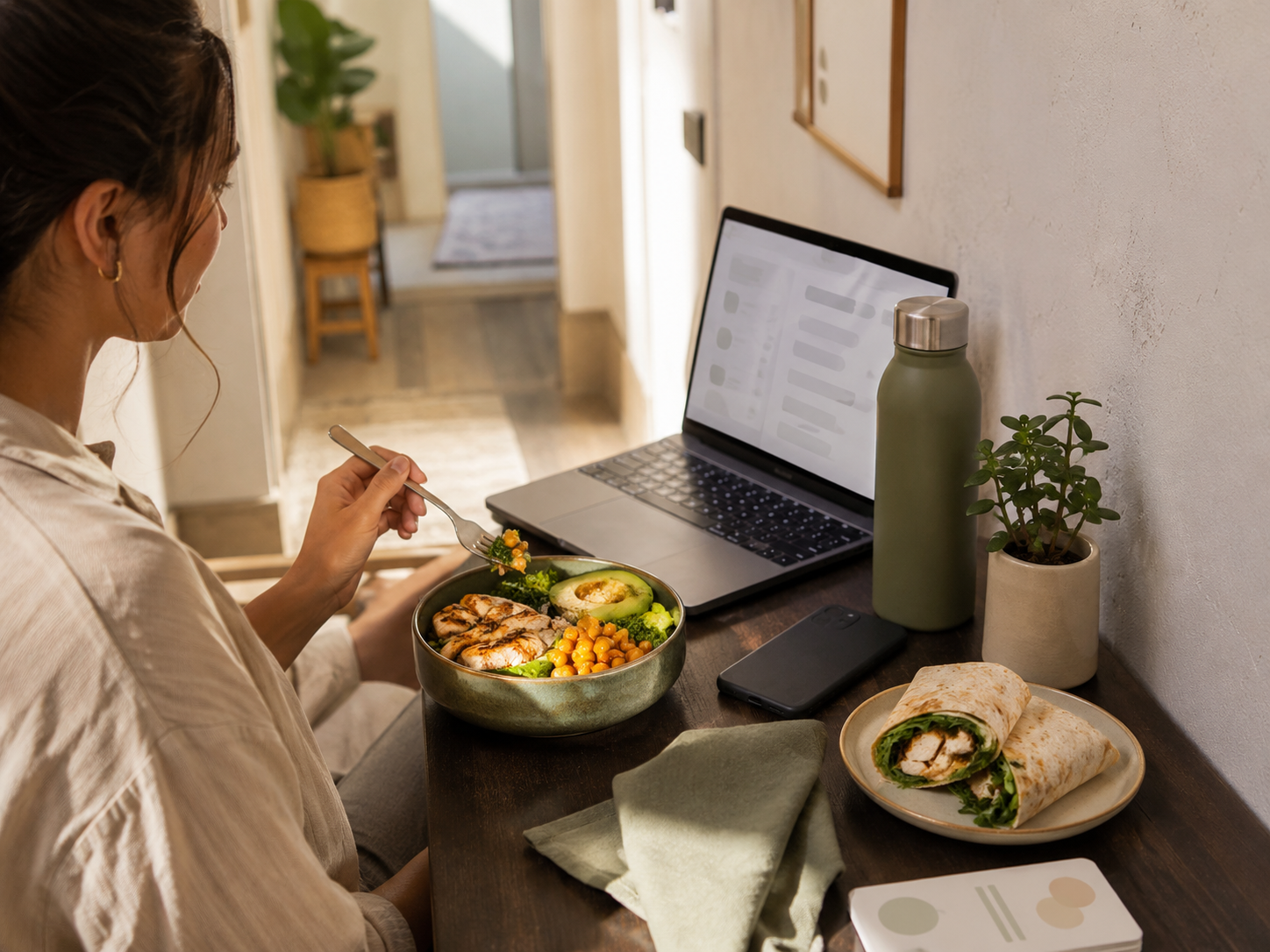
Lunch bowls are useful because they are flexible. Start with rice, quinoa, potatoes, salad, couscous or grains, then add protein.
Good options include chicken, tuna, eggs, tofu, beans, lentils, chickpeas, cottage cheese or leftover meat. Add vegetables, sauce or dressing so the bowl feels like lunch, not a collection of responsible ingredients.
Quick Wraps, Toasts And Sandwiches
Wraps, toast and sandwiches are useful when you need lunch quickly and do not want to cook from scratch.
Try tuna and salad, egg and spinach, chicken and avocado, hummus and chickpeas, tofu and slaw, or cottage cheese with tomatoes. Use bread, wraps or toast that help the meal feel substantial enough.
Egg-Based Lunch Ideas
Eggs are practical for desk lunches because they can be boiled ahead, scrambled quickly or added to toast, salads and bowls.
Try boiled eggs with salad and crackers, scrambled eggs on toast, an omelette with vegetables or egg mayo in a wrap. Egg lunches work best when they are easy to assemble.
Greek Yoghurt And Cottage Cheese Lunches
Greek yoghurt and cottage cheese can work as no-cook protein bases when you want something cold, quick and filling.
For sweet options, add fruit, oats, nuts or seeds. For savoury options, try cottage cheese with tomatoes, cucumber, crackers or toast. These are especially useful when cooking feels unrealistic.
Tuna, Chicken And Leftover Protein Ideas
Tuna, cooked chicken, turkey, salmon, prawns or leftover dinner protein can make lunch much faster.
Use them in bowls, wraps, sandwiches, salads, pasta, rice or jacket potatoes. Leftovers are especially helpful because they turn yesterday’s effort into today’s easier lunch.
Tofu, Beans And Lentils
Tofu, beans and lentils are useful plant-based protein options for bowls, wraps, soups and salads.
Try lentil salad, chickpea wraps, tofu rice bowls, bean chilli leftovers or hummus with added chickpeas. These options work well when you want filling lunches without relying on meat, eggs or dairy.
Helpful Lunch Tools And Staples
Greek Yoghurt And Cottage Cheese
Greek yoghurt and cottage cheese are useful staples because they work with sweet or savoury lunches and need very little preparation.
Keep them on hand for days when cooking is not happening. Add fruit, oats, nuts, crackers, tomatoes, cucumber or toast depending on what kind of lunch you want.
Tuna, Chicken And Eggs
Tuna, chicken and eggs are simple protein staples for fast lunches. They work in wraps, bowls, toast, salads and leftovers.
Keep a few reliable combinations ready so lunch does not require new ideas every day. The less you have to invent, the more likely lunch happens.
Tofu, Beans And Lentils
Tofu, beans and lentils are worth keeping around if you want plant-based lunches that still feel filling.
Choose options that match your cooking energy. Tinned beans, cooked lentils and ready-to-use tofu can be easier than starting every lunch from scratch.
No-Cook High Protein Lunches
Cottage cheese plate
Use cottage cheese with crackers, tomatoes, cucumber, fruit or toast. It is quick, cold and easy to scale up or down.
This works well when you want something more substantial than a snack but do not want to cook. Add fruit or vegetables so it feels more complete.
Tuna wrap
Mix tuna with yoghurt, light mayo, salad, sweetcorn, cucumber or seasoning, then add it to a wrap.
This is a fast lunch for days when you need something filling with minimal effort. Keep wraps and tins available so it does not depend on fresh cooking.
Greek yoghurt bowl
Greek yoghurt with fruit, oats, seeds and nuts can work as a simple lunch when you want something cold and quick.
It may not suit everyone as a full lunch, but it can be useful on warmer days or when appetite is lighter. Add enough toppings to make it satisfying.
Hummus and chickpea plate
Use hummus, chickpeas, vegetables, crackers, toast or salad to build a quick plant-based lunch.
This works well when you want something savoury but do not want to cook. Add extra chickpeas or beans if you need more staying power.
Leftover protein box
Use cooked chicken, tofu, eggs, beans or lentils from another meal and add salad, grains, bread or crackers.
This is one of the easiest ways to avoid skipping lunch. The work has already been done, which is exactly the point.

Lunch Prep Without Spending Sunday Cooking
Cook one extra portion
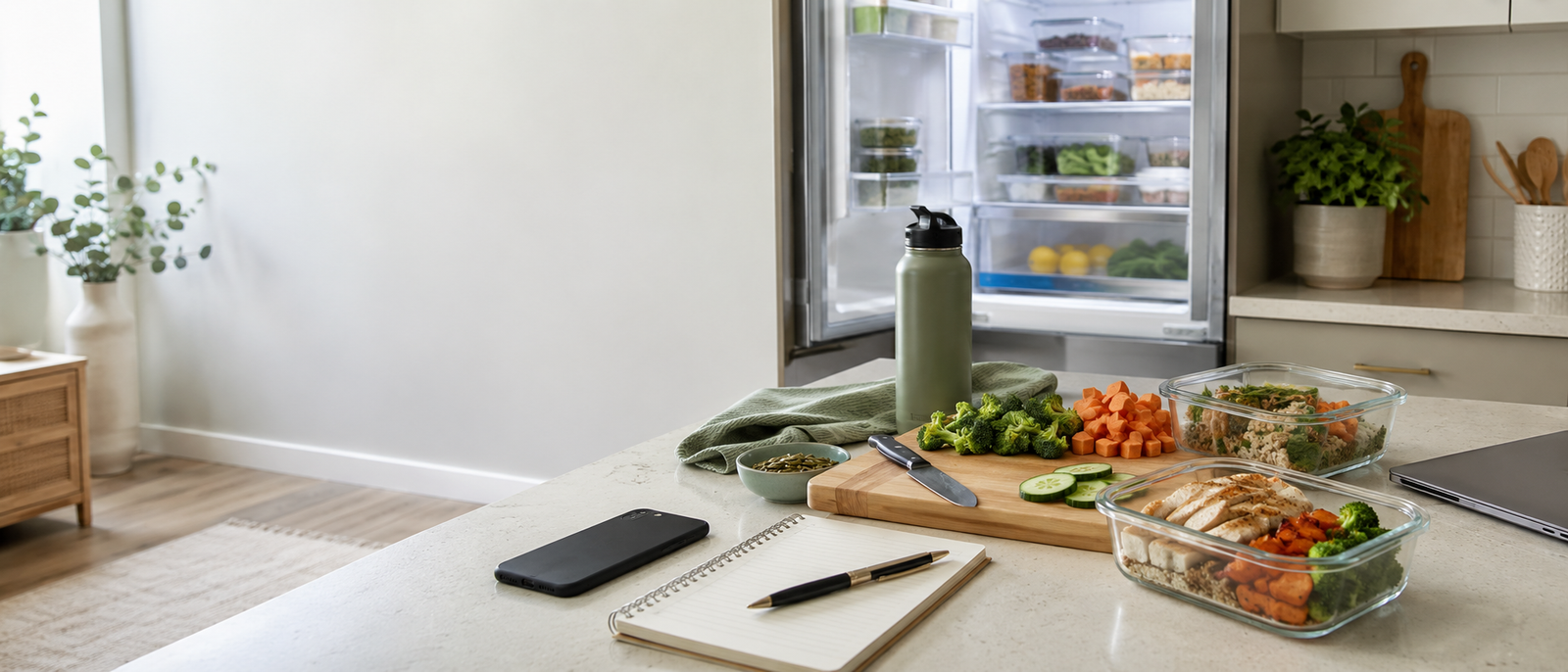
Instead of batch-cooking a full week, cook one extra portion at dinner. Tomorrow’s lunch becomes easier without taking over your weekend.
This works well for chilli, curry, pasta, rice bowls, roasted vegetables, chicken, tofu, beans and lentils.
Prep one protein
Prepare one protein source ahead: boiled eggs, cooked chicken, tofu, lentils or tuna mix.
Then build different lunches around it during the week. The aim is flexibility. You can make bowls, wraps, toast or salads without starting from zero.
Keep two no-cook backups
Choose two lunches you can make when cooking fails. For example, tuna wraps and Greek yoghurt bowls, or cottage cheese plates and hummus chickpea wraps.
Backups prevent the workday from becoming a choice between skipping lunch and raiding the snack cupboard.
Use sauces and toppings
Sauces, dressings, herbs, pickles, salsa, hummus or yoghurt-based toppings can make simple protein lunches feel more appealing.
This matters because boring lunches get abandoned. A small flavour upgrade can make leftovers or basic bowls much easier to repeat.
Repeat more than you invent
You do not need a new lunch idea every day. Choose three reliable lunches and rotate them.
Repetition reduces decision fatigue. If a meal keeps you full, tastes good and fits your schedule, it has already done enough.

Common High Protein Lunch Mistakes
Making lunch too complicated
A high-protein lunch does not need weighing, tracking and assembling like a full project.
If the plan is too complicated, you may skip it. Keep a few easy formulas: protein plus grain, protein plus wrap, protein plus toast, protein plus salad, or protein plus yoghurt and toppings.
Forgetting fibre and carbs
Protein helps, but lunch still needs balance. A plate of only protein may not feel satisfying or energising.
Add vegetables, fruit, grains, potatoes, beans, wraps, bread or oats where they fit. Desk-worker lunches should support focus, not feel like a restrictive challenge.
Letting lunch become snacks
If lunch is just a few bites grabbed between calls, you may end up grazing all afternoon.
Make lunch distinct from snacking. Sit down if possible, use a proper bowl or plate and give the meal enough substance to carry the next work block.
Relying only on protein bars
Protein bars can be useful backups, but they are not always the best daily lunch.
They may help when the day is crowded, but real food usually feels more satisfying. Keep bars as emergency support, not the whole plan.
Ignoring appetite and routine
The “best” lunch is not useful if it does not match your appetite, schedule or kitchen reality.
Some days need a warm bowl. Some days need a cold plate. Some days need a five-minute wrap. Build around the day you actually have.

FAQ
What are easy high protein lunches for desk workers?
Easy high protein lunches for desk workers include chicken bowls, tuna wraps, egg toast, Greek yoghurt bowls, cottage cheese plates, tofu bowls, lentil salads, bean chilli leftovers and hummus chickpea wraps.
The best options are filling, quick to assemble and realistic for busy workdays.
How much protein should a workday lunch include?
The right amount depends on your body, goals, diet, health needs and the rest of your day.
For a practical workday approach, include a clear protein source at lunch and check whether the meal keeps you satisfied. If you need precise targets, ask a qualified professional.
What high protein lunches can I make quickly?
Quick options include tuna wraps, scrambled eggs on toast, cottage cheese plates, Greek yoghurt bowls, leftover chicken bowls, tofu wraps, lentil salads and beans on toast.
Keep a few staples ready so lunch does not depend on cooking from scratch every day.
What are good no-cook high protein lunches?
Good no-cook options include tuna wraps, cottage cheese with crackers and vegetables, Greek yoghurt with fruit and oats, hummus with chickpeas, boiled eggs with salad and leftover protein boxes.
Use no-cook lunches for busy days when reheating or cooking is unrealistic.
Are protein smoothies enough for lunch?
Protein smoothies can work for some people, especially when appetite is light or time is limited.
They are more likely to feel like lunch if they include enough protein, fibre and substance. If you are hungry soon after, add something chewable or choose a more filling meal.
Quick Smoothie Recipes We Love
How do I meal prep high protein lunches without overcomplicating it?
Prep one protein, one base and one easy topping instead of making full meals for the week.
For example, cook chicken, lentils, tofu or eggs, then use them in bowls, wraps, salads or toast. Simple repeatable prep is better than an elaborate plan you avoid.
Final Verdict
Easy high protein lunches for desk workers should keep you steady without turning food into a tracking project. Bowls, wraps, eggs, Greek yoghurt, cottage cheese, tuna, chicken, tofu, beans, lentils and leftovers can all work when they are simple enough to repeat.
The goal is not perfect macros or meal-prep performance. It is a lunch that feels satisfying enough to carry you through the next part of the workday without turning the afternoon into snacks, coffee and low energy.


