


Fitbit Edge vs Fitbit Air vs…

Autumn Comfort Food: How to Eat…

Soup Maker vs Saucepan: Which Suits…

The Best Lighting for Darker Autumn…

Create an Autumn Wind-Down Routine That…

Heated Throw vs Heated Blanket vs…

Autumn Sleep Reset: Light, Temperature and…

Dehumidifiers Explained: When Are They Actually…

A Realistic Autumn Walking Routine for…

Autumn Social Reset: Small Plans for…

Sekonda Smart Ring vs Oura Ring…

Make Your Home Cosier Without Turning…
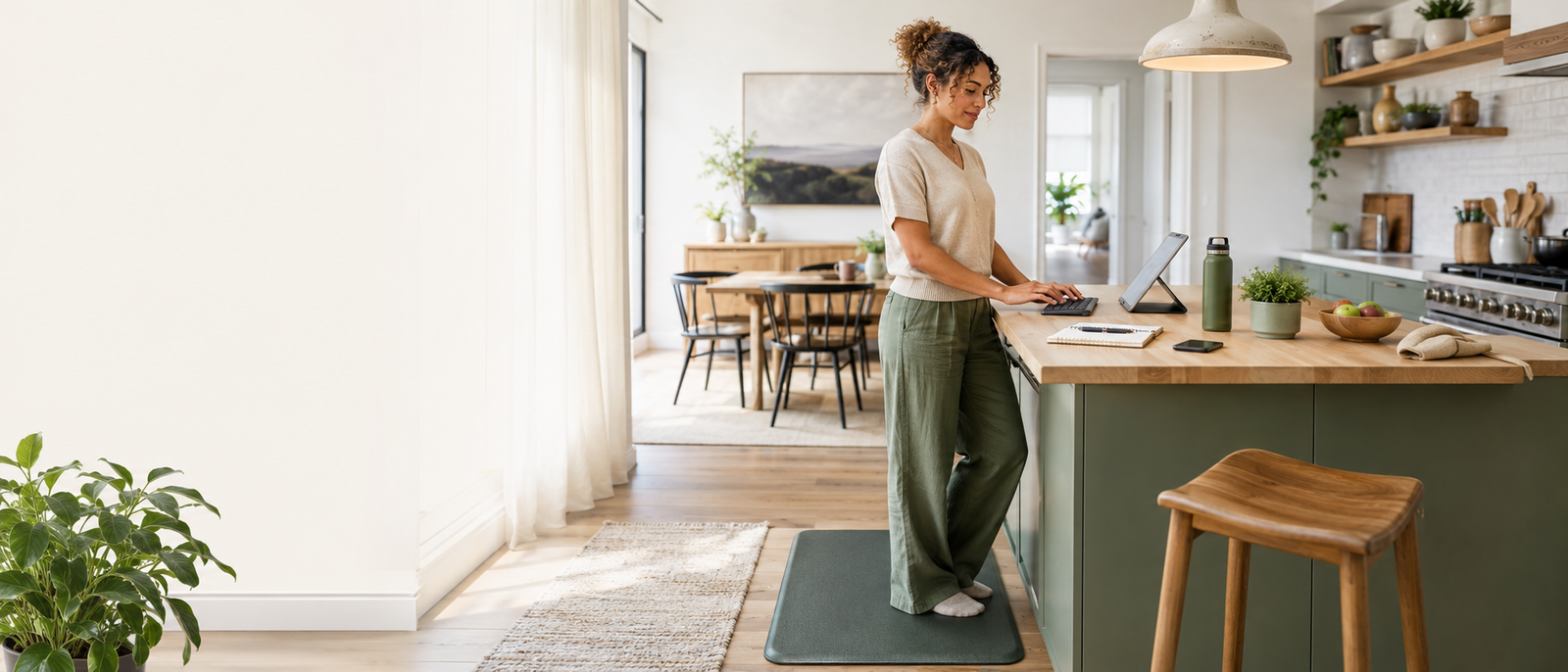
Standing at your desk can feel sensible for about 20 minutes. Then your feet start asking whether this was discussed with them first. The best standing desk mats do not make standing automatically healthy. They make short standing blocks more comfortable and, in some cases, encourage small shifts instead of frozen statue mode. The real choice is simple: active terrain if you stand too still, flat cushioning if hard floors are the main problem.
Topo is best for active standing
CubeFit suits varied foot positions
ComfiLife gives simple cushioning
Gorilla Grip suits everyday durability
Sky Solutions is budget-friendly comfort
Terrain mats prompt movement
Flat mats soften hard floors
Most Relevant Audience
This guide is for remote workers, home workers, desk workers, freelancers, bloggers, creators, side hustlers, parents, carers and small business owners who use a standing desk or want to stand more comfortably during the workday.
It is especially useful if you stand during calls, write from a sit-stand desk, move between desk and kitchen, or realise by school pickup time that your feet have quietly lost faith in your wellness intentions.
Which Type Should You Buy?
Choose Topo if you stand still too much
Choose Topo by Ergodriven if you want an active mat designed specifically for standing-desk users. Its raised terrain is built to encourage subtle movement, stretching and stance changes while you work.
This is the best fit if you tend to lock into one position, forget to shift your weight, and need the mat itself to nudge your feet into doing something more useful than silently suffering.
Choose CubeFit if you like varied positions
Choose CubeFit TerraMat if you want a more varied terrain feel underfoot. It is known for different raised areas that encourage foot movement, calf stretching, pressure changes and more active standing positions.
It suits people who enjoy fidgeting, shifting and exploring different foot placements. It may feel like too much if you just want a soft flat surface.
Choose ComfiLife if you want simple cushioning
Choose ComfiLife Anti-Fatigue Mat if your main goal is straightforward comfort underfoot. It is a traditional cushioned mat, so the appeal is softer standing rather than active terrain.
This is a good option if you stand for shorter work blocks, want a smooth surface and do not need raised features reminding your feet to join the productivity meeting.
Choose Gorilla Grip if durability matters
Choose Gorilla Grip Anti-Fatigue Mat if you want a practical everyday comfort mat that can handle regular use in a desk area, kitchen or shared home workspace.
It is still a flat cushioned mat, not a movement-focused terrain mat. The main reason to consider it is dependable daily cushioning with a more durable, household-friendly feel.
Choose Sky Solutions if budget matters most
Choose Sky Solutions Anti-Fatigue Mat if you want a lower-cost flat mat before spending more on a premium terrain option. Treat it as a budget comfort pick for reducing hard-floor pressure during standing blocks.
It is best for simple support, not active standing. Check current pricing, size options and availability before buying.
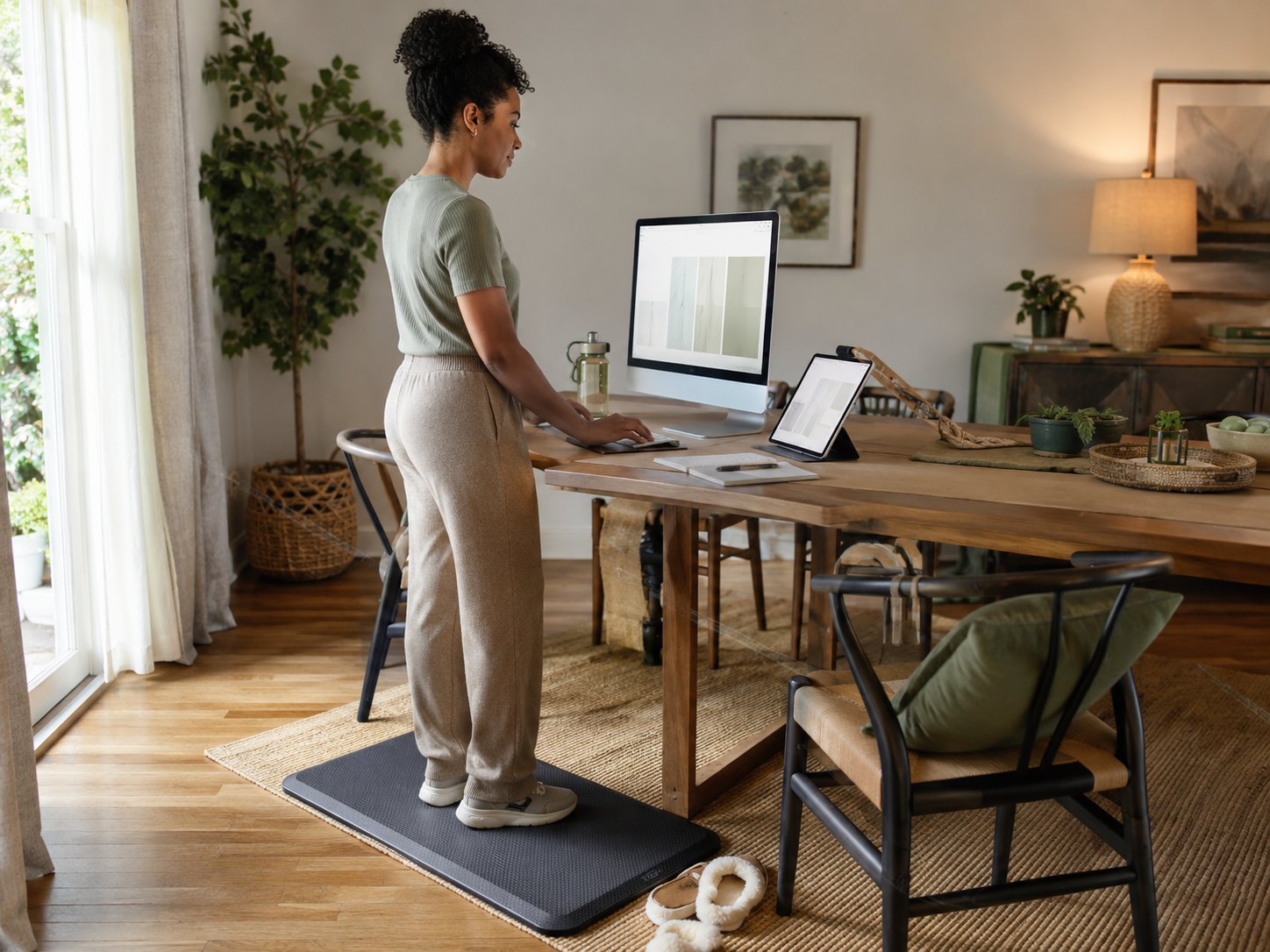
Do not start with the prettiest product photo. Start with how you stand. If you freeze in one position, active terrain makes more sense. If your main issue is hard-floor discomfort, flat cushioning may be enough. That one decision does more work than comparing every mat as if they all solve the same problem.
Best Standing Desk Mats Review
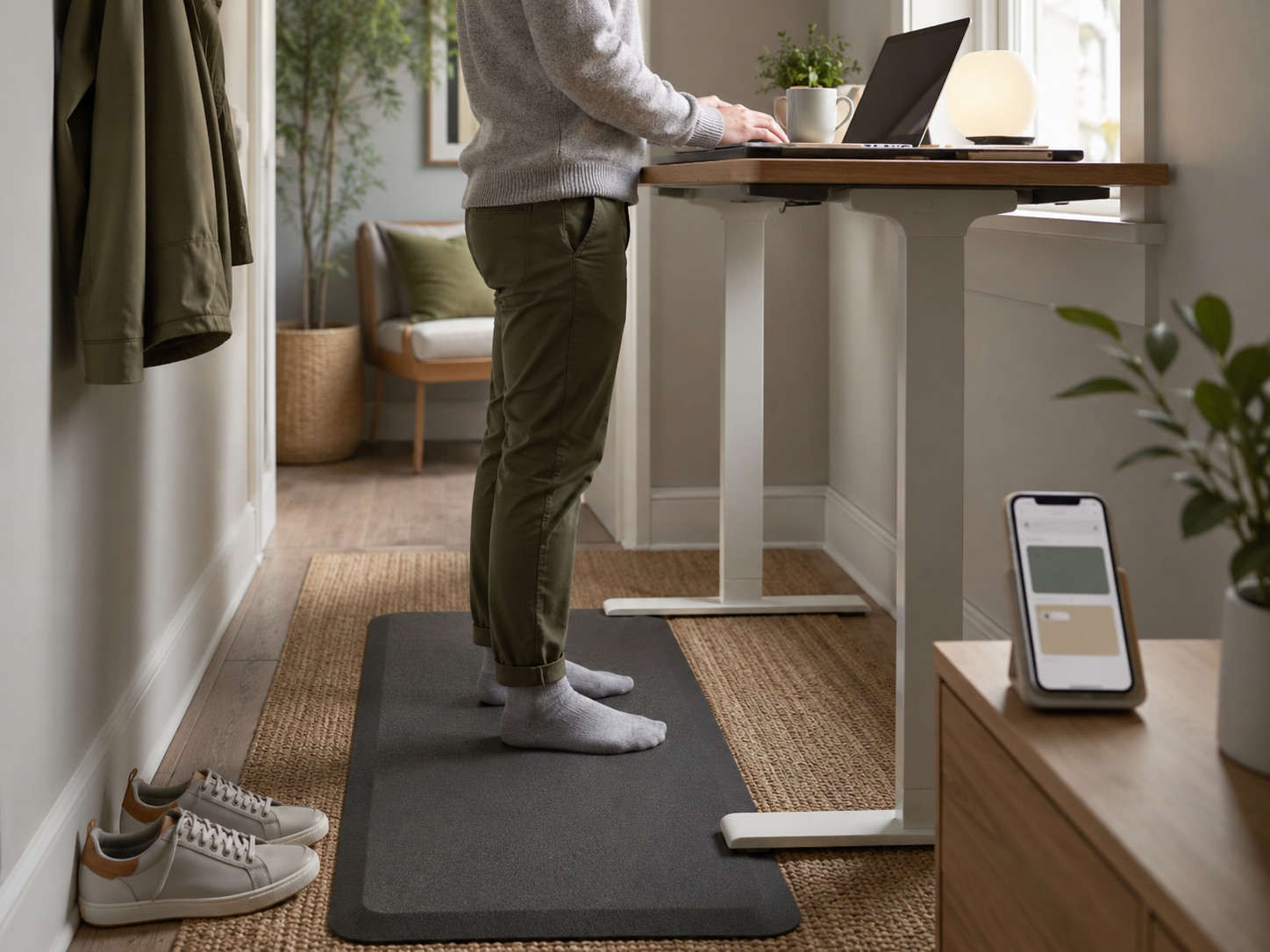
Topo and CubeFit TerraMat are movement-cue mats. ComfiLife, Gorilla Grip and Sky Solutions are cushioning mats. Neither group is automatically better. They solve different standing problems, which is why the right answer depends less on the product category and more on what your feet actually do during work.
What Makes A Standing Desk Mat Worth Buying?
Support that does not feel unstable
A good standing mat should reduce hard-floor pressure without making you feel like you are balancing on cake. Too firm can feel pointless. Too soft can make your feet work harder to stay stable.
Flat anti-fatigue mats often focus on thickness and cushioning. Active mats focus more on varied surfaces. Either way, support should feel comfortable, not distracting.
Enough room to shift
Standing comfort often improves when you can change position. A mat that is too small may keep your feet trapped in one stance. A mat that is too large may clash with chairs, desk legs or cables.
Check current dimensions before buying. You should be able to step, shift and return to sitting without turning your workspace into an obstacle course.
Edges that suit your home
Edges matter in real homes. Children, pets, chairs, tired morning feet and shared rooms all make mat shape more important than it looks online.
Flat mats often use lower or bevelled edges for easier stepping. Active terrain mats have raised features by design, so they need more floor awareness. The best mat should not become the thing everyone trips over while carrying coffee.
Cleaning that stays boring
Standing desk mats live on the floor, so dust, crumbs, pet hair and mystery grit will eventually attend meetings with you. A wipe-clean surface is useful, especially if your workspace also hosts snacks, parcels or school paperwork.
Check cleaning instructions before buying. A mat that needs delicate care may not suit a busy home office that also functions as real life.
Active Terrain Mats vs Flat Anti-Fatigue Mats
Active terrain mats encourage shifting
Active terrain mats use raised surfaces, slopes or shaped areas to invite subtle foot movement. Topo and CubeFit TerraMat are the better fits if you want to stretch, shift, press and change stance during standing blocks.
They are best for people who stand too still. They are less ideal if you want a smooth mat, minimal floor presence or something easy to tuck away.
Flat mats focus on softer standing
Flat anti-fatigue mats are more straightforward. ComfiLife, Gorilla Grip and Sky Solutions soften the surface underfoot so standing on hard floors feels less harsh.
They are usually easier to place, easier to understand and often more budget-friendly. The limitation is that they may not encourage much movement unless you already remember to shift and take breaks.
Neither type should keep you standing forever
A terrain mat can encourage movement. A flat mat can reduce hard-floor discomfort. Neither gives you a reason to stand for hours without changing position.
The healthier pattern is variety: stand, sit, shift, walk, stretch and repeat. The mat should make standing blocks better, not turn them into a personal endurance event nobody asked for.
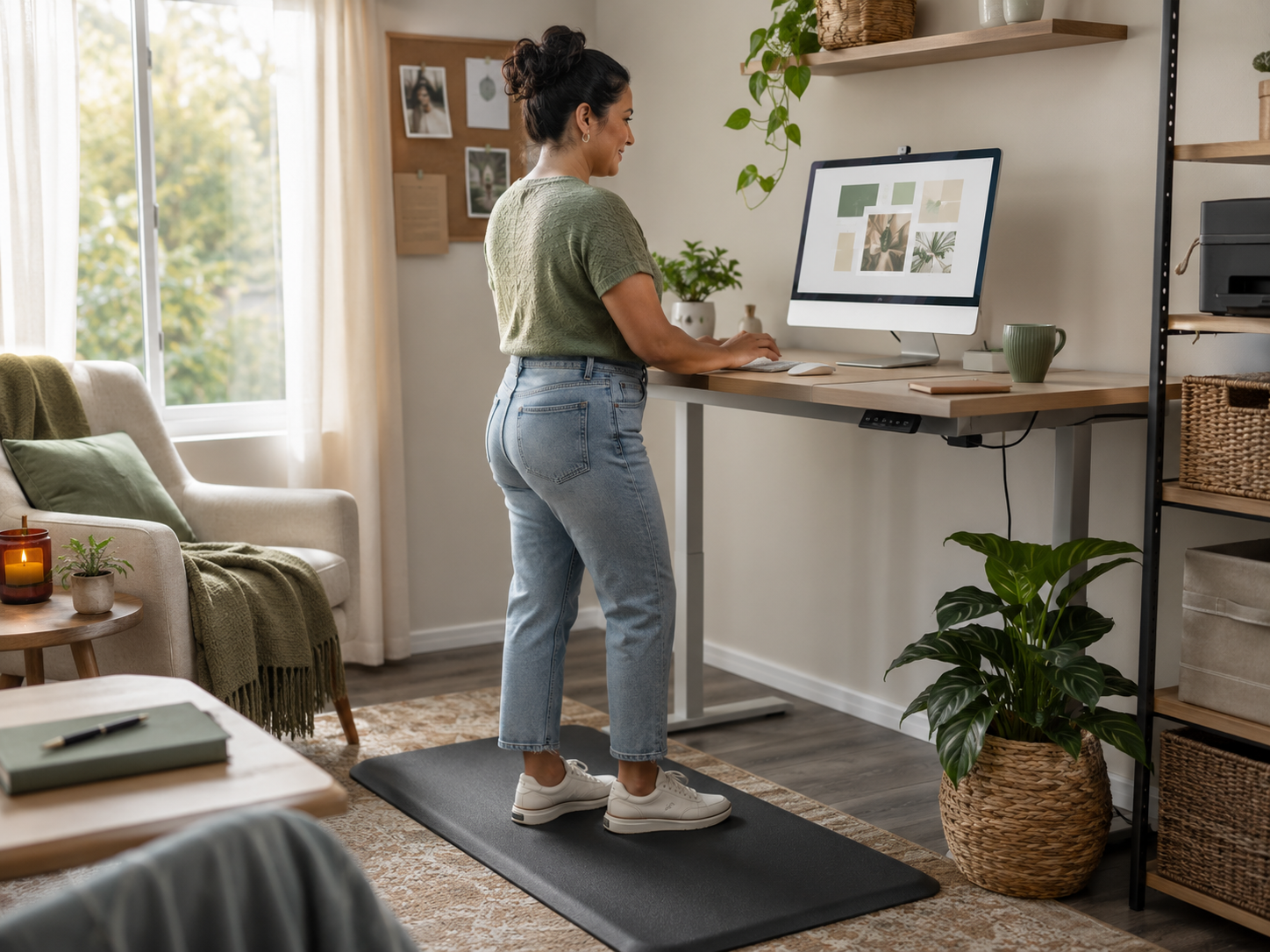
Standing Desk Mat vs Better Shoes vs More Movement
Try better shoes if your feet ache quickly
If your feet hurt quickly when standing, shoes may matter as much as the mat. Thin slippers, bare feet on hard floors or unsupportive shoes can make standing work feel worse.
A mat can help, but it cannot fully compensate for footwear that gives your feet the emotional support of wet cardboard.
Try more movement if you stand frozen
If you stand completely still, even a good mat may not save the session. Your body usually likes variation: shifting weight, bending knees slightly, walking away, stretching calves and changing between sitting and standing.
Active mats can help with this, but you still need the habit. The mat is a cue, not a manager.
Fix desk height if posture feels wrong
If your shoulders lift, wrists bend or screen height feels wrong, the mat is probably not the main issue. Your desk, monitor, keyboard or chair setup may need attention first.
A standing mat can make your feet happier while your neck and shoulders remain unimpressed. Fix the working height before blaming the floor.
Use the mat for standing blocks
A mat is most useful for planned standing blocks, not endless standing marathons. Try shorter periods first, then adjust based on how your feet, legs and back feel.
The goal is not to stand all day. It is to add comfortable variety to a desk-heavy workday.
When A Standing Mat Is The Wrong Fix
You need walking more than padding
If you are stiff because your day has very little movement, a mat may not be enough. You may need walking breaks, mini movement resets or a more active under-desk option.
This is where a walking pad may make more sense than another mat, especially if your goal is regular movement rather than softer standing.
Pain keeps returning
If foot, knee, hip, back or leg pain keeps returning, do not treat a mat as the whole answer. Equipment can improve comfort, but persistent or worsening symptoms need proper attention.
A standing mat is a support tool, not medical treatment. If discomfort continues, get appropriate advice instead of buying progressively softer rectangles.
Common Standing Desk Mat Mistakes
Standing still for too long
The biggest mistake is using the mat as permission to stand motionless for hours. That misses the point. Standing work should include shifting, sitting, moving and breaks.
Use a mat to make standing blocks more comfortable. Do not turn your legs into office furniture with shoes.
Buying terrain when you want flat comfort
Active terrain mats are useful, but they are not for everyone. If you want a simple cushioned surface, Topo or CubeFit TerraMat may feel too shaped, bulky or distracting.
Flat mats like ComfiLife, Gorilla Grip and Sky Solutions are better if your main goal is basic cushioning.
Buying flat when you need movement cues
A flat mat may feel comfortable but still let you stand in one fixed position for too long. If that is your pattern, an active terrain mat may be a better match.
Be honest about how you stand. Your feet know the truth, even if your shopping basket is feeling optimistic.
Ignoring mat size
A mat that is too small can feel restrictive. A mat that is too large can clash with your chair, desk legs, cables or room layout.
Check current dimensions before buying. Make sure you can stand naturally, step off safely and still move your chair when sitting.
Forgetting the chair
Many people buy a mat and forget that the chair still matters. If you switch between sitting and standing, both positions need to work.
The mat should be easy enough to move, slide or work around when you sit. If it traps your chair or becomes a daily nuisance, the setup needs adjusting.
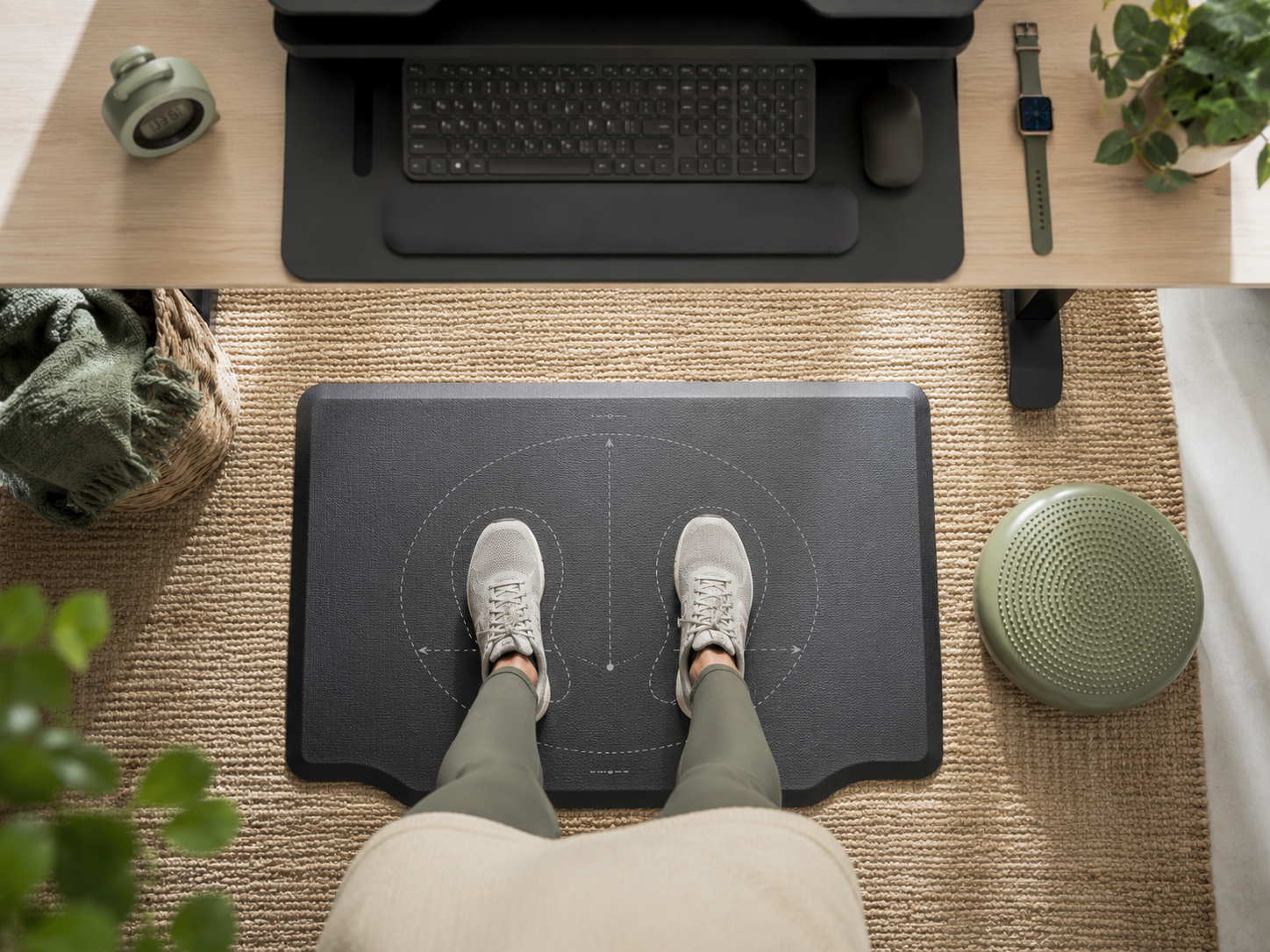
FAQ
What is the best standing desk mat?
The best standing desk mat depends on how you stand. Topo by Ergodriven is best for active standing, CubeFit TerraMat is best for varied terrain positions, ComfiLife is best for simple cushioning, Gorilla Grip is best for durable everyday comfort, and Sky Solutions is a useful budget anti-fatigue option.
Choose active terrain if you need movement cues. Choose flat cushioning if you mainly want softer support.
Are standing desk mats worth it?
Standing desk mats can be worth it if standing on a hard floor makes your feet, legs or lower back feel tired. They can make standing work blocks more comfortable and support better sit-stand habits.
They are not magic wellness equipment. You still need movement, sensible standing time, supportive footwear and a desk height that fits your body.
Is Topo better than a flat anti-fatigue mat?
Topo may be better if you want active standing and varied foot positions. Its terrain design encourages subtle movement instead of simple flat cushioning.
A flat anti-fatigue mat may be better if you want lower cost, easier placement, simpler cleaning or a smooth surface. The better choice depends on whether you want movement cues or basic comfort.
What is the difference between an active mat and anti-fatigue mat?
An active mat has raised terrain, slopes or features that encourage shifting, stretching and varied standing positions. Topo and CubeFit TerraMat are examples.
A flat anti-fatigue mat mainly provides cushioning underfoot. ComfiLife, Gorilla Grip and Sky Solutions are more traditional cushioned options. Both can help, but they solve slightly different standing problems.
Can standing desk mats help with foot fatigue?
Standing desk mats can help reduce hard-floor pressure and make standing more comfortable. Cushioned mats soften the surface underfoot, while terrain mats can encourage small position changes.
They may not solve foot fatigue caused by poor shoes, standing too long, hard floors, existing pain or a desk setup that forces awkward posture.
How long should you stand at a standing desk?
There is no perfect number that works for everyone. Start with shorter standing blocks, such as 15 to 30 minutes, then adjust based on comfort, energy and your body’s feedback.
The aim is not standing all day. A healthier pattern usually includes sitting, standing, walking, stretching and changing position regularly.
Final Verdict
The best standing desk mat depends on whether you need movement cues or simple cushioning. Topo by Ergodriven and CubeFit TerraMat are better if you freeze in place and want active terrain. ComfiLife, Gorilla Grip and Sky Solutions are better if hard-floor pressure is the main problem.
Buy the mat that matches how you actually stand. Then keep moving, sit when needed, check your desk height and avoid turning standing work into another performance system with sore feet.