



Host a Virtual Halloween Party: Audio,…

20 Minimalist Halloween Nail Ideas for…

Can Free Affinity Help You Build…

12 Lower-Sugar Halloween Treat Swaps Worth…

Can Hostinger AI Builder Launch a…

A 5-Step Screen-Free Autumn Reading Ritual…

Plug-In Solar Panels UK: Are They…

15 Last-Minute Zoom Halloween Costumes for…

Meta One Explained: Is the Subscription…

10 Low-Fuss Dog Halloween Ideas: Comfort…

Plaud One Explained: Can AI Earbuds…

9 Gothic Dinner Table Ideas for…

Namecheap vs Dynadot

7 UK Ghost Tours and How…

Convertkit Vs Beehiiv

Do You Really Need a £420…

Bluehost vs Siteground

15 Gentle Spooky Autumn Books to…

Namecheap review

How to Remove Halloween Face Paint…
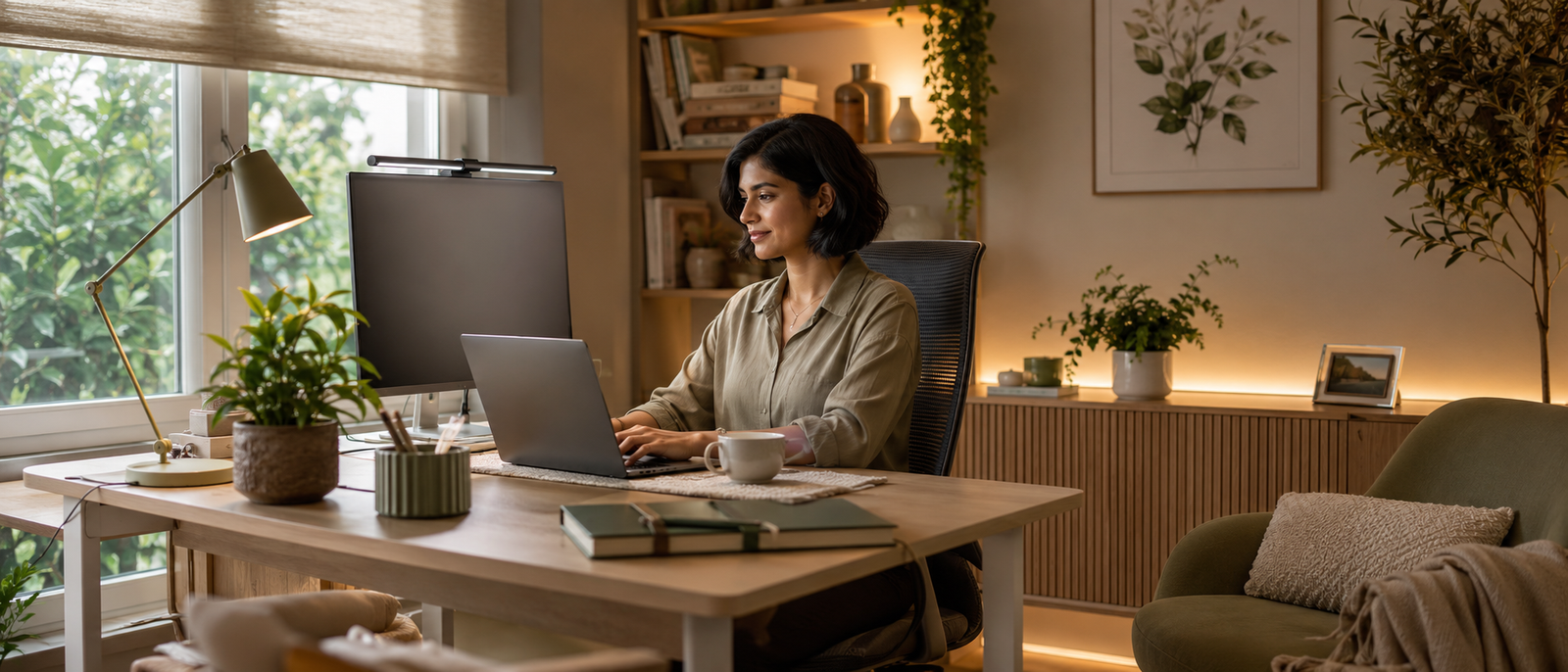
Your home office may not need a makeover. It may just need to stop attacking your eyes. If your “office” is a dining table, bedroom corner, desk beside laundry, or the only quiet spot after school drop-off, lighting matters more than it sounds. Bad light can make a short work window feel harder before the work even starts: screen glare, tired eyes, shadowy calls, gloomy corners, and a room that never quite switches out of work mode.
You probably have one of these lighting problems
Start here: the 10-minute calmer lighting reset
Best lighting ideas for a calmer home office
Lighting products worth considering
FAQ
Final verdict
Most Relevant Audience
This article is for remote workers, home workers, freelancers, bloggers, creators, side hustlers, small business owners and busy parents trying to work in small pockets of time. It is especially useful if your workspace is not a proper office, but a corner of the bedroom, kitchen table, box room, shared living room, or tiny desk that has to become home again later.
You probably have one of these lighting problems
Your screen feels too bright
Sometimes the screen is not the real villain. The room around it is too dark, so the laptop looks harsher than it should. That contrast makes your eyes work harder. Add softer light around the desk before you keep turning the screen brightness up and down like it owes you money.
Your room feels gloomy
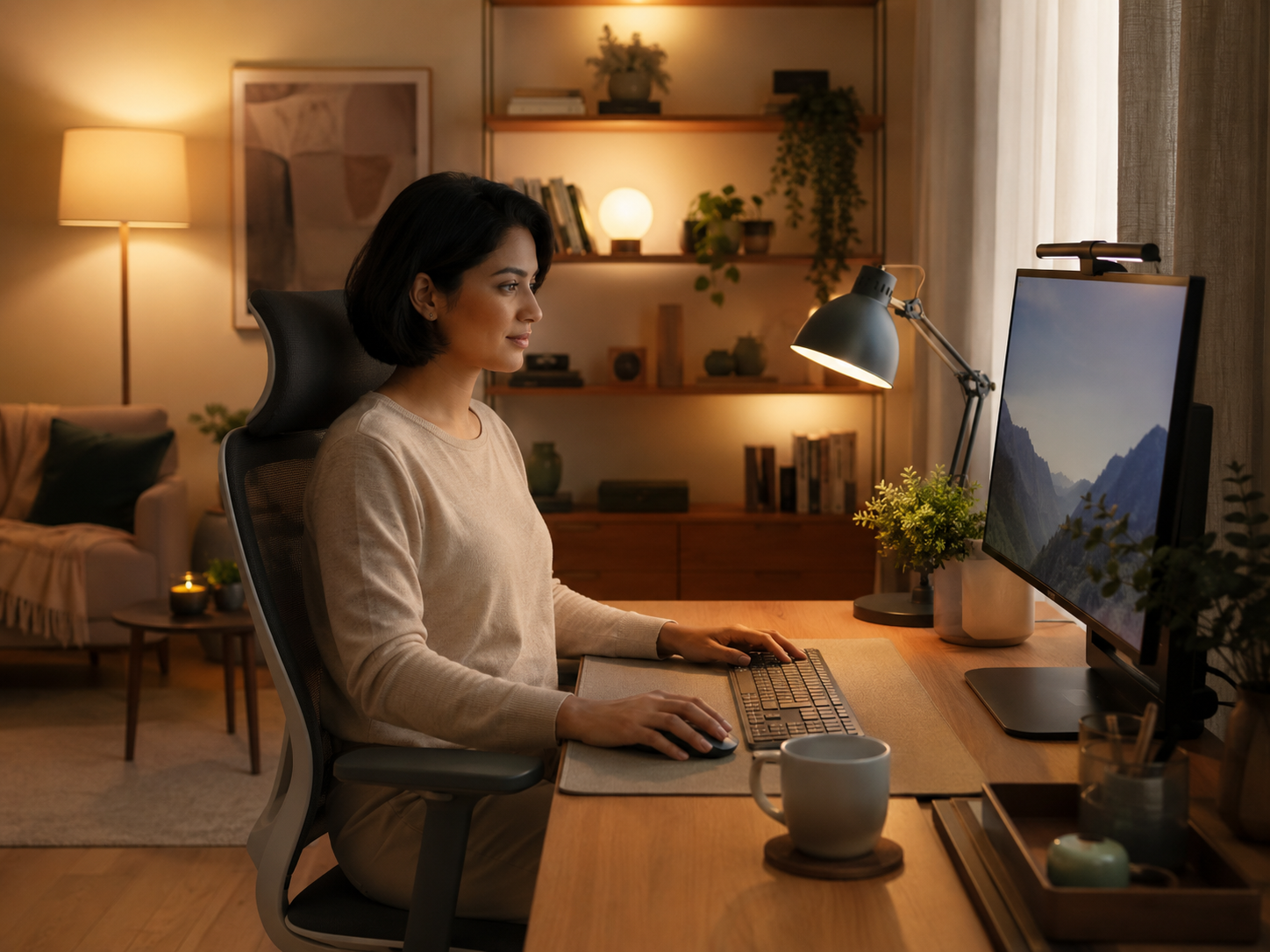
A gloomy workspace can make even simple admin feel heavier. This is common in corners, rooms under shelves, dining areas, and winter afternoons that arrive with the emotional range of a grey sock. A small desk light can help create a clearer work zone without needing a full room redesign.
Your ceiling light feels harsh
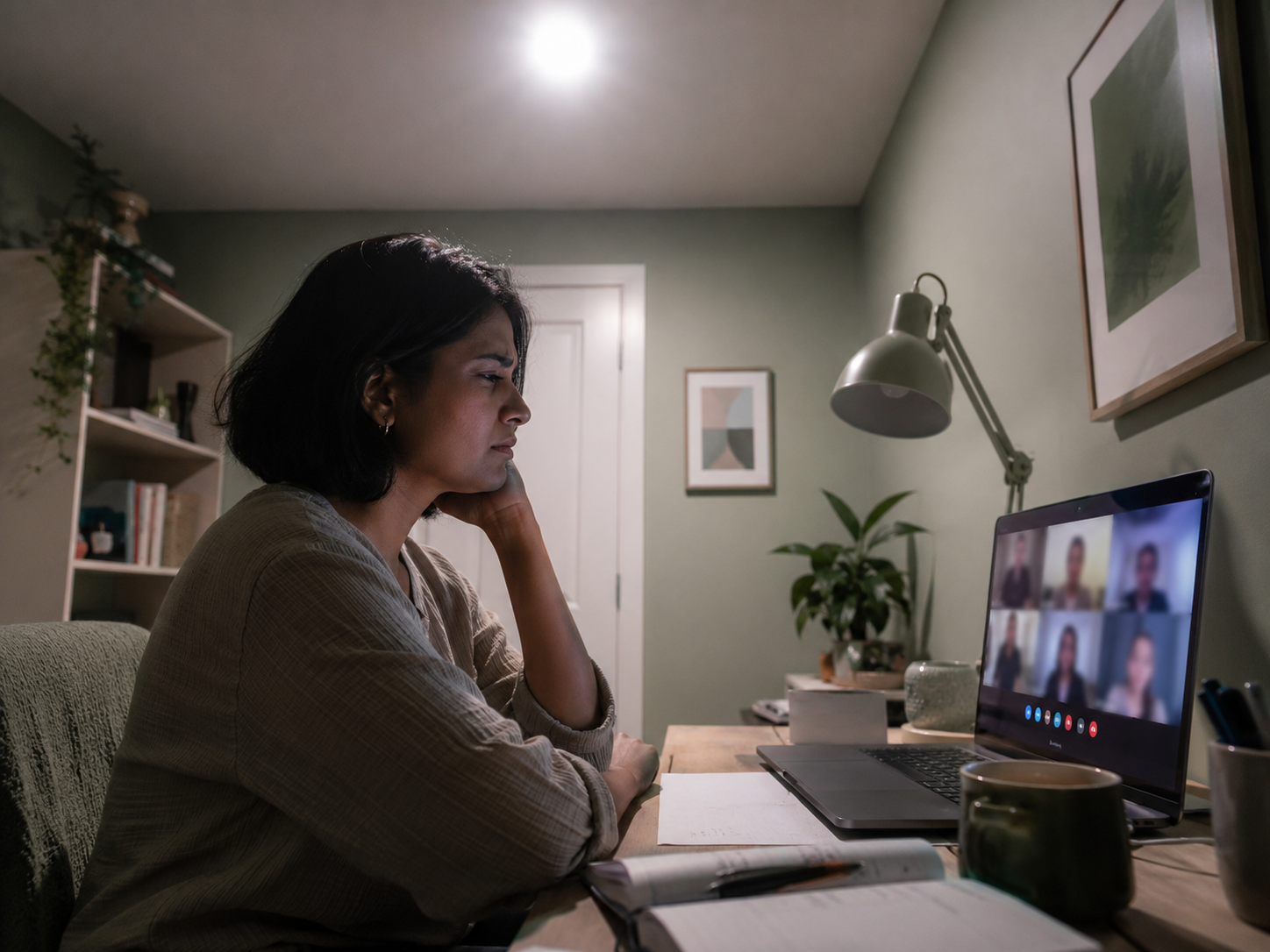
Overhead lighting can make a home office feel tense, especially in small rooms. It may be bright, but not comfortable. If the room feels flat, clinical, or strangely draining, the ceiling light may be doing too much. A softer desk light or side light can make the space feel easier to sit in.
Your desk still feels like work at night
When your office is also your bedroom, dining area, or living room, lighting needs to help the day finish. If the room looks exactly the same at 9pm as it did during emails, your brain may stay half attached to the laptop. Softer evening lighting helps the space return to home mode.
Start here: the 10-minute calmer lighting reset
Move your screen away from direct window glare. Turn off harsh overhead light if it makes the room feel tense. Add one softer light near your desk, preferably from the front or side. Lower screen brightness if it looks like a glowing lantern. Later in the day, switch to warmer light so the room stops feeling permanently open for work.
Best lighting ideas for a calmer home office
Use natural light without creating glare
Natural light can make a workspace feel more awake, but direct sunlight on a screen is exhausting. Place your desk sideways to the window where possible. Facing a bright window can make you squint, while sitting with the window behind you can create reflections. Side light is often calmer and easier to work with.
Add soft task light for real work
A soft desk light helps you see the keyboard, notebook, planner, product notes, or paperwork without flooding the whole room. This matters if you only have 45 minutes to work before the next interruption. The light should support the task, not make the room feel like a small administrative punishment.
Match light to the time of day
Cooler light can feel useful for daytime focus, especially for writing, planning, editing, research, and client work. Warmer light often feels better later in the day when the room needs to slow down. The best home office lighting is not one fixed setting. It changes with the workday.
Stop video calls looking shadowy
Video calls usually need soft front light, not stronger ceiling light. If your face looks dark, tired, or like you are joining from a cupboard, place light in front of you or slightly to the side. Avoid strong light behind you unless mysterious witness is the professional image you were aiming for.
Buy for the lighting problem, not the product photo
Before buying anything, name the job. Do you need a compact light for calls, softer desk light for daily work, portable creator lighting, or mood lighting that helps the room switch off? A good lighting product should solve one clear problem. Otherwise, it becomes another gadget on a desk that was already asking for mercy.
Lighting products worth considering
Small home office lighting ideas
If you work from a bedroom corner
Use focused light while working, then switch to warmer, softer light when the laptop closes. Bedroom offices need a clear change because the room has to feel restful again. Leaving the same bright work light on all evening makes the desk keep supervising your life from the corner.
If you work from the dining table
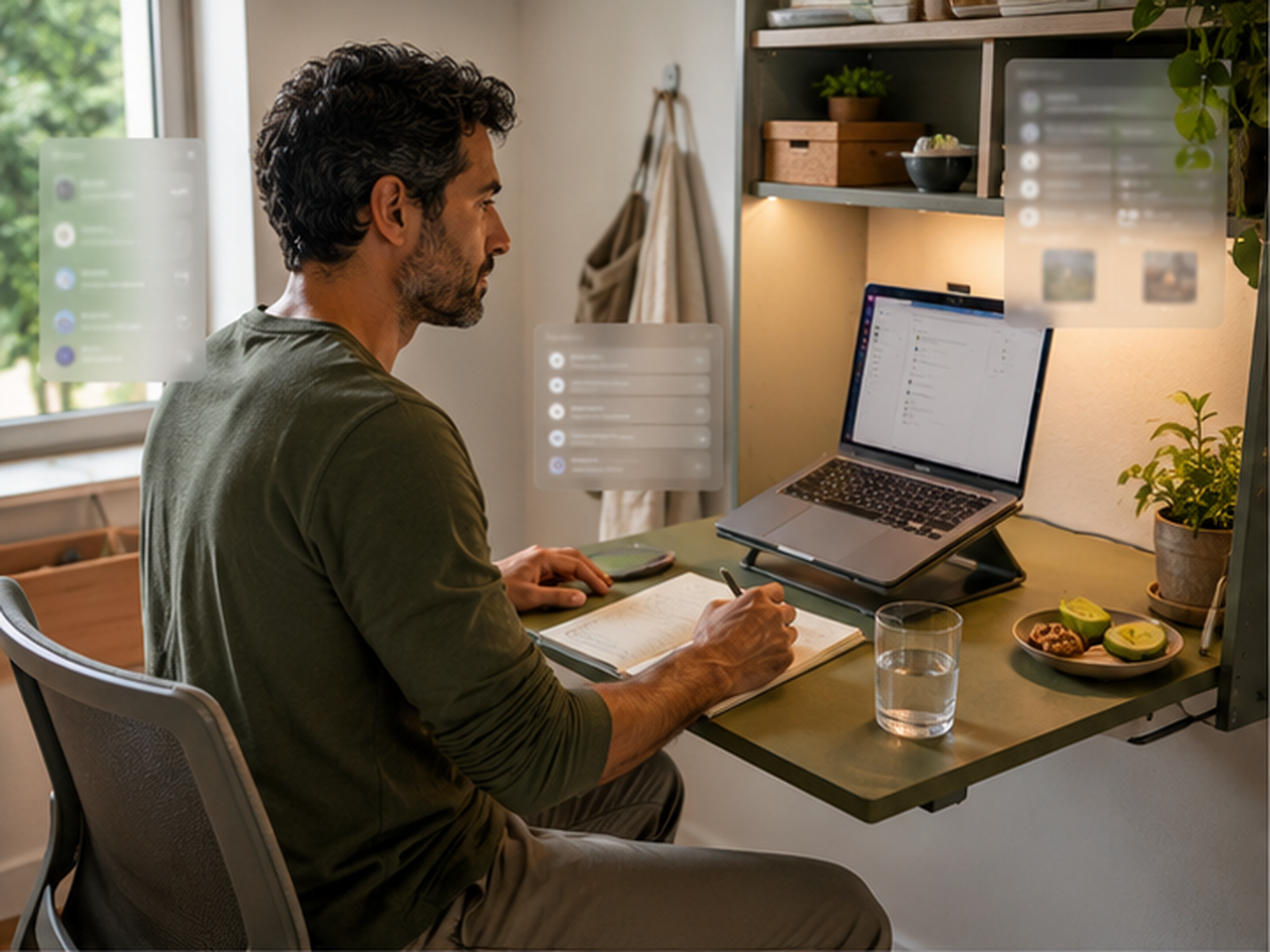
Choose lighting that can move or disappear easily. A compact light is better than a big permanent lamp if the table has to return to meals, homework, parcels, and snack-based negotiations. After work, clear the setup and change the light so the table stops feeling like an office with plates.
If you work in short quiet windows
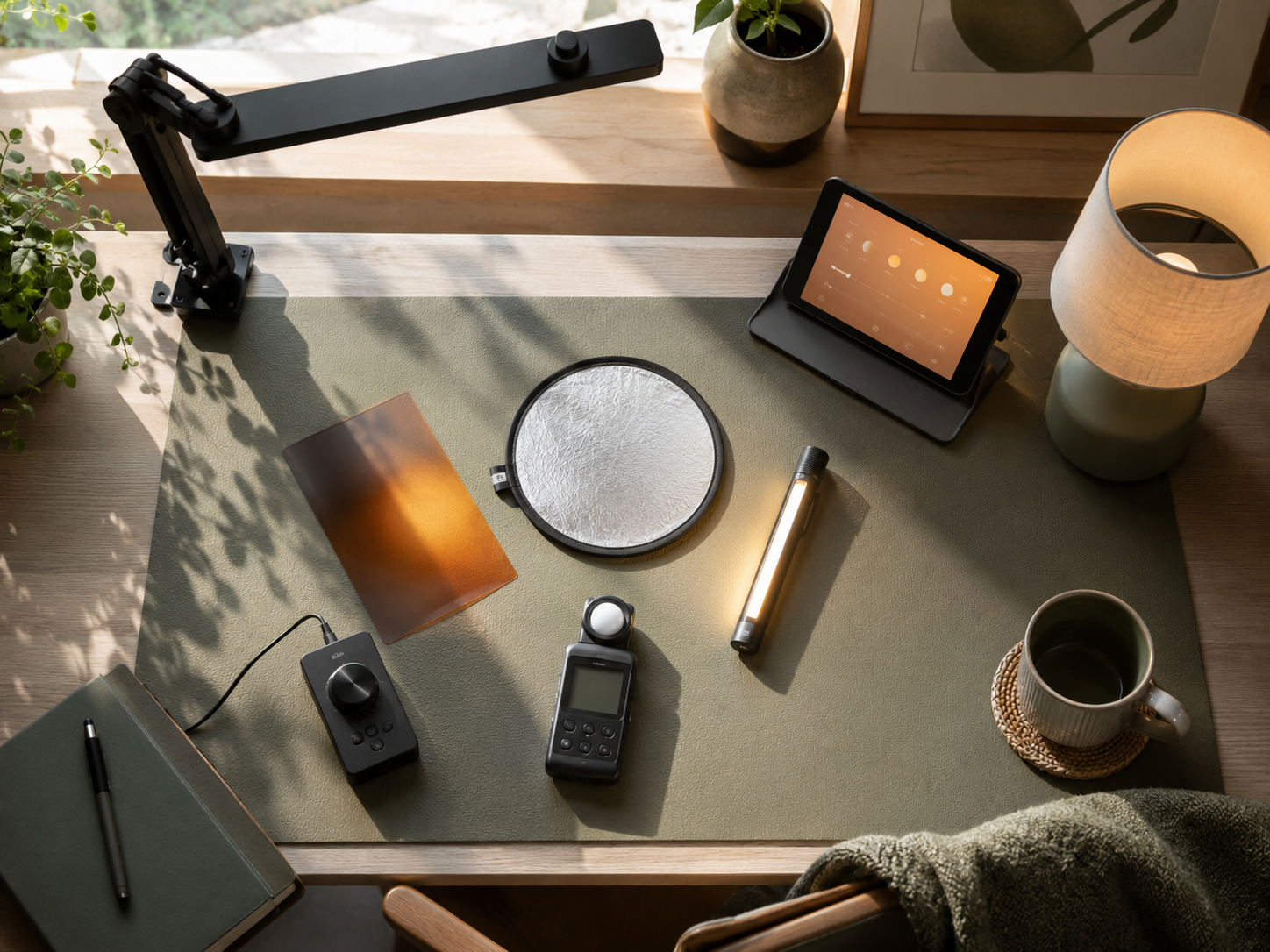
Lighting should help you start quickly. You should not have to rearrange the room just to write a blog post, answer client emails, record a quick video, or plan a side hustle. Keep one reliable light nearby so the space feels ready when you finally get a pocket of quiet.
If your room feels harsh after dark
Evening work can make a room feel wired if the screen is bright and the rest of the space is dark. Add soft background light and reduce harsh task lighting when possible. The goal is to stay functional without making the whole room feel like it is still on shift.
Why this matters if you are working from home
If you are building a blog, taking client calls, recording videos, managing a side hustle, or learning a new online skill during limited time, your setup matters. Bad lighting will not ruin your work, but it can make every small session feel heavier than it needs to. Home Office Setup On A Budget connects naturally here because better lighting can be a small upgrade with a big daily effect.
Common home office lighting mistakes
Relying only on overhead light
Overhead lighting can be bright but uncomfortable. It often creates shadows, glare, or a flat room that feels tiring. One softer desk light can make a workspace feel calmer than a ceiling light that seems personally committed to making everything worse.
Working beside glare all day
Glare makes you squint, lean, tilt the screen, and lose focus faster. Check windows, glossy surfaces, lamps, and screen angles. Sometimes moving the desk slightly does more than buying a stronger light.
Buying the wrong type of light
A video light, desk lamp, and mood light do different jobs. Video calls need soft front light. Desk work needs usable task light. Evening shutdown needs atmosphere. Choose based on the problem you actually have, not the product that looks calm in someone else’s perfect room.
Forgetting the room has to become home again
Lighting can help work end. Change brightness, warmth, or background lighting when the day finishes. This matters in bedrooms, shared spaces, and dining rooms because the room needs to stop feeling like your inbox has a lease.
FAQ
What is the best lighting for a calm home office?
The best lighting for a calm home office is soft, layered, and practical. Use natural light where possible, add task lighting for your desk, and reduce glare on your screen. The aim is clear visibility without harsh brightness.
How can I make my home office lighting less harsh?
Make lighting less harsh by switching off strong overheads, adding softer desk lighting, moving lamps away from direct eye level, and reducing screen glare. Curtains, blinds, warmer bulbs, and background lighting can also make the space feel calmer.
Is warm light or cool light better for working from home?
Cooler light can feel clearer for focused daytime work, while warmer light often feels calmer later in the day. A useful setup may use brighter task light during work and warmer background light in the evening.
How do I reduce screen glare in my home office?
Reduce screen glare by moving your desk away from direct sunlight, placing the screen at an angle to windows, adjusting lamp position, and softening bright light with curtains or blinds. Avoid placing lights where they reflect on the display.
What lighting is best for video calls?
Soft front-facing light is usually best for video calls. A compact desk light or creator light placed in front of you or slightly to the side can make your face clearer. Avoid strong backlighting from windows or lamps.
Final verdict
A calmer home office is not about making your workspace look expensive. It is about making the small pocket of time you do have feel easier to use. Start with the lighting problem you notice first: glare, gloom, harsh overhead light, shadowy calls, or a room that still feels like work at night.
You do not need designer lighting. You need softer layers, less screen glare, better task light, and clearer evening cues. Good lighting should make your eyes, brain, and mood work less hard, especially when your workday is squeezed into the noisy edges of home life.


