

Host a Virtual Halloween Party: Audio,…

20 Minimalist Halloween Nail Ideas for…

Can Free Affinity Help You Build…

12 Lower-Sugar Halloween Treat Swaps Worth…

Can Hostinger AI Builder Launch a…

A 5-Step Screen-Free Autumn Reading Ritual…

Plug-In Solar Panels UK: Are They…

15 Last-Minute Zoom Halloween Costumes for…

Meta One Explained: Is the Subscription…

10 Low-Fuss Dog Halloween Ideas: Comfort…

Plaud One Explained: Can AI Earbuds…

9 Gothic Dinner Table Ideas for…

Namecheap vs Dynadot

7 UK Ghost Tours and How…

Convertkit Vs Beehiiv

Do You Really Need a £420…

Bluehost vs Siteground

15 Gentle Spooky Autumn Books to…

Namecheap review

How to Remove Halloween Face Paint…
Sitting Too Long? What It’s Really Doing to Your Body
Sitting too long rarely feels dramatic while it is happening. You answer emails, edit content, check analytics, write one more paragraph, then suddenly your hips feel locked, your shoulders have moved north and your lower back is filing a complaint. The problem is not that sitting is a moral failure. It is that your body is being asked to stay still for hours while your brain keeps working overtime.
Sitting too long affects posture.
Stillness can drain energy.
Hips and shoulders tighten gradually.
Circulation may feel sluggish.
Screen work adds mental fog.
Exercise helps, but breaks matter.
Cushions, chairs and wearables can help.
This article is for remote workers, desk workers, creators, bloggers, freelancers, side hustlers and home workers who spend most of the day sitting. It is especially useful if you often feel stiff, heavy, tired, foggy or surprised that your body seems annoyed after a day of “just working”.
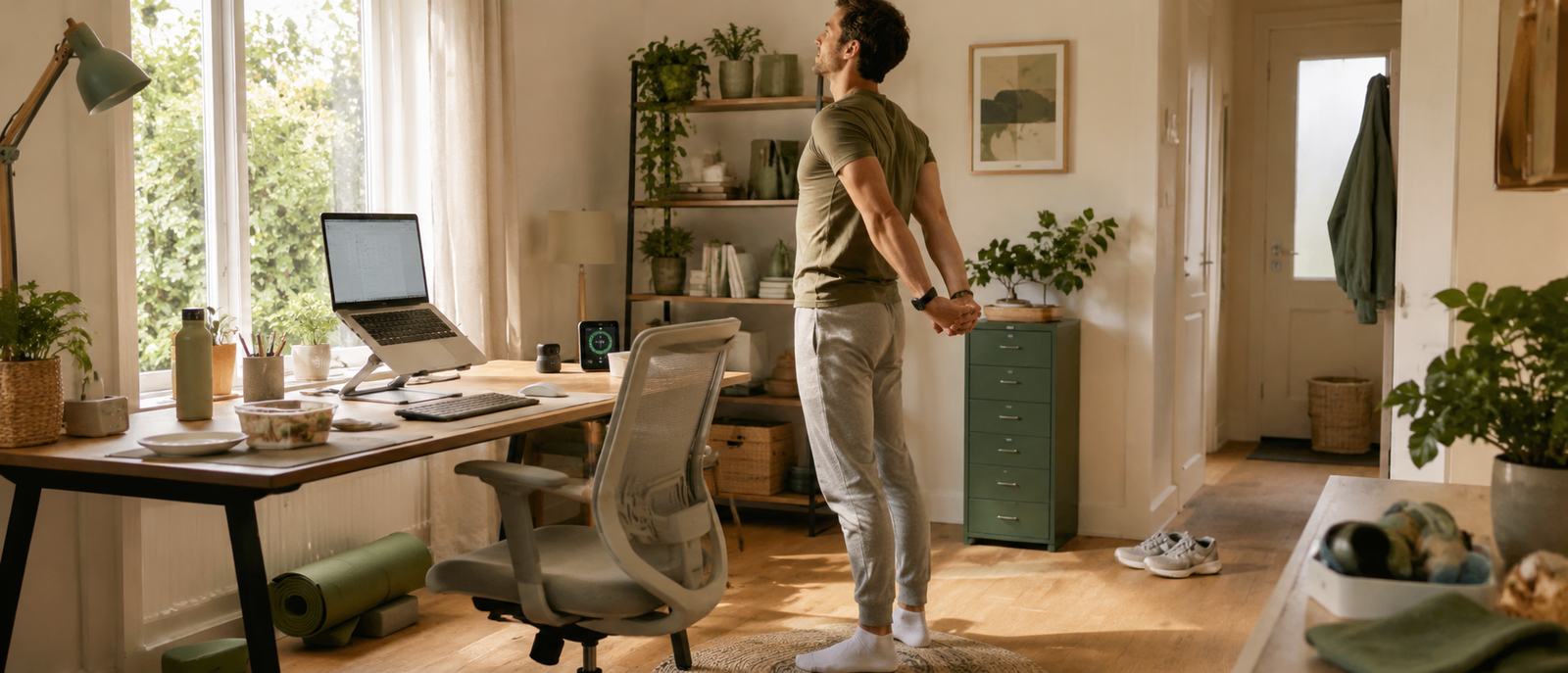
Why sitting feels harmless at first
Sitting feels harmless because nothing obvious happens immediately. You open the laptop, start working and the day slides forward. The discomfort usually arrives later: stiff hips, tired legs, tight shoulders or a foggy head.
What sitting does to your posture
That delay makes sitting easy to ignore. By the time your body complains, the habit has already become the default setting.
Long sitting can pull your posture into familiar desk-worker shapes. The head leans forward. Shoulders round. The lower back gets less support. Wrists and neck settle into awkward angles.
How sitting affects your back
None of this needs to happen perfectly to create strain. Small positions, repeated for hours, are often enough to make your body feel older than your inbox.
Back discomfort often comes from a mix of stillness, weak support and poor screen height. A laptop placed too low can encourage hunching. A chair without support can make the lower back work harder.
Hips, shoulders and stiffness
Staying in one position for too long adds to the problem. Your back generally prefers variation, not one heroic sitting pose all day.
Hips and shoulders often feel the desk day first. Hip flexors can feel tight after long sitting, while shoulders may creep upward during focused work.
Heavy legs and sluggish circulation
Add stress, screen concentration and a low laptop, and your upper body starts behaving like it is preparing for bad news. Movement breaks help because they interrupt that held position.
Long sitting can make legs feel heavy, restless or stiff because they are not moving much. The body is built for regular movement, not hours of stillness broken only by tea and delivery notifications.
The Sneaky Part
Standing, walking briefly or changing position can help the workday feel less physically stale.
Sitting too long is sneaky because it rarely ruins the day instantly. It builds through quiet repetition. One long session becomes a normal workday. A normal workday becomes a weekly pattern.

Energy crashes
Eventually, stiffness, low energy and poor focus feel like “just how work feels”, when the real issue may be too much stillness.
Stillness can make energy feel flat. When movement disappears from the day, your body gets fewer natural resets. You may feel oddly tired despite not doing anything physically demanding.
Screen time and mental fog
That can be confusing, but desk fatigue is real. Sometimes the answer is not more coffee. Sometimes it is standing up before your brain becomes office furniture.
Sitting often comes with long screen sessions. The eyes work hard, the brain processes information constantly and the body barely moves. That combination can create mental fog.
Exercise alone may not fix it
You are technically working, but focus feels dull. A short movement break can reset more than your legs. It can give your attention a proper restart.
Exercise is useful, but one workout does not automatically cancel a whole day of stillness. A person can go for a run and still sit for long, uninterrupted blocks afterwards.
Desk setup changes help
The goal is not to replace exercise. It is to add small movement through the day so your body is not stuck waiting for one big rescue session.
A better desk setup can reduce strain, but it cannot do everything. Raising your screen, improving chair support and using a separate keyboard can help posture.
The Real Fix Is Interruption
Seat cushions, ergonomic chairs, footrests, laptop stands and separate keyboards can all support a better setup. Even then, staying still for hours is still staying still. Ergonomics supports the body. Movement keeps it involved.
The goal is not to panic-buy a standing desk and spend tomorrow pretending your legs enjoy meetings. The real fix is interrupting long sitting blocks before they become the whole workday.
Stand between tasks
Small movement, better posture support and simple workday cues usually beat dramatic health plans that collapse by Wednesday.
Standing between tasks is one of the easiest habits to build. Finished an email block? Stand. Ended a call? Stand. Published a draft? Stand.
Products And Apps That Can Help
Walk during low-focus moments
The movement does not need to be impressive. A short reset tells your body the day is not one continuous sitting session with occasional keyboard drama.
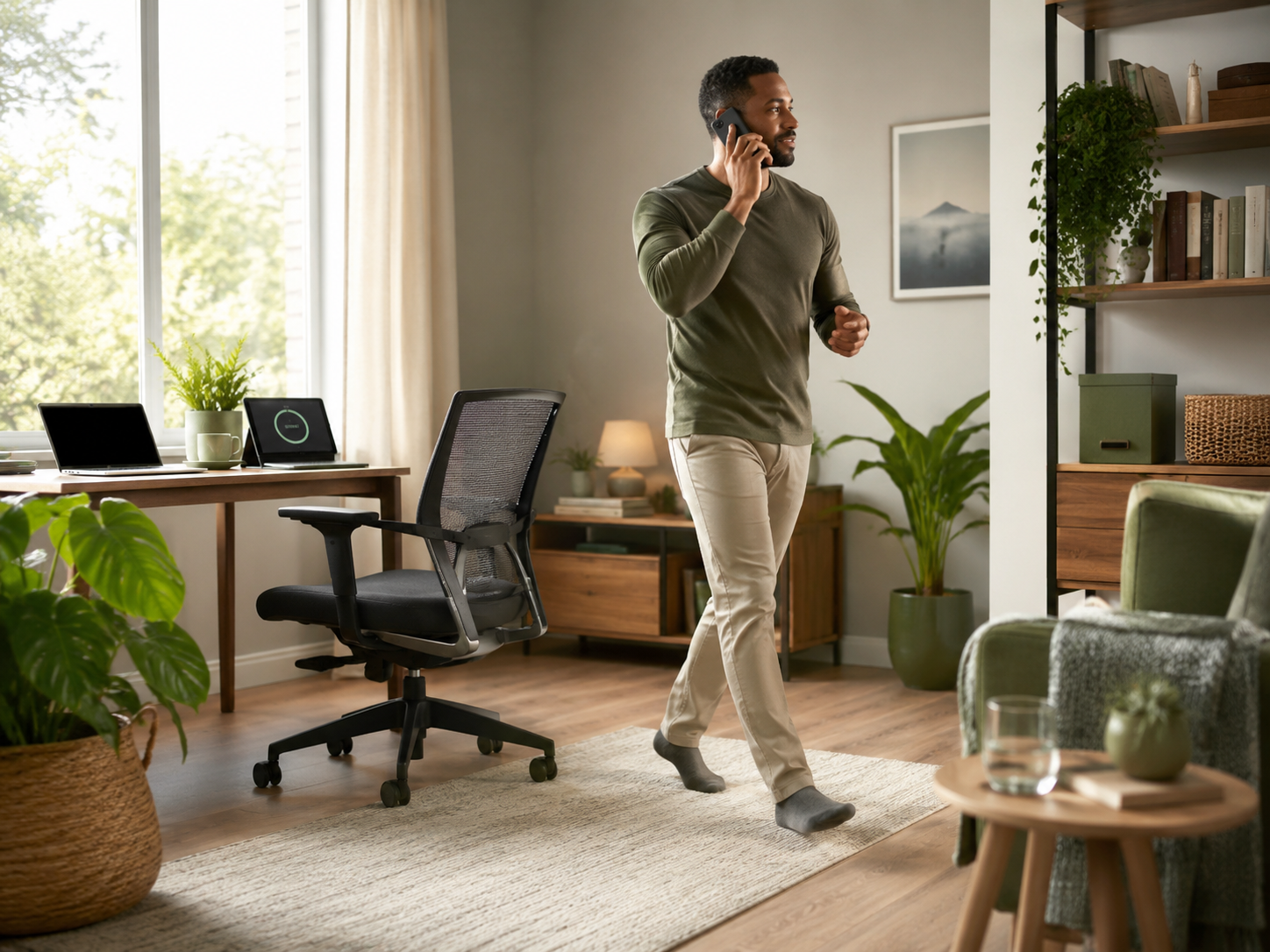
Some work moments do not need a chair. Phone calls, voice notes, thinking time and short planning breaks can often happen while walking around the room.
Use tiny mobility resets
If you work from home, even a quick loop through the kitchen or hallway helps. It may not look like fitness, but it breaks the stillness.
Tiny mobility resets can fit real work better than long routines. Roll your shoulders. Stretch your chest. Move your hips. Shake out your legs. Turn away from the screen.
Change your working position
These small actions help because they are easy to repeat. The best movement habit is the one you do before everything hurts.
Try changing position throughout the day. Sit normally, stand briefly, use a laptop stand, move to a better chair or take a short walking break.
Link movement to daily triggers
Variety matters because the body dislikes being locked into one shape. The perfect position is less important than avoiding one position for too long.
Movement sticks better when attached to something you already do. Stand after sending a draft. Stretch when the kettle boils. Walk after lunch. Move before opening social media.
Waiting for pain before changing
You do not need a perfect fitness routine to sit less. You need fewer long sitting blocks, a better setup and small movement habits that fit the work you actually do.
Waiting until pain forces a change is common, but not ideal. Stiffness, tired legs, tight shoulders and low energy are early clues.
Sitting well but never moving
Treat them as feedback, not background noise. Your body should not need to shout before the workday gets adjusted.
Good posture helps, but it is not a free pass to sit frozen for hours. Even a strong desk setup works better with movement.
Buying support but ignoring habits
A supported chair, raised screen and proper keyboard are useful. Regular breaks still matter. The best posture is often the next posture.
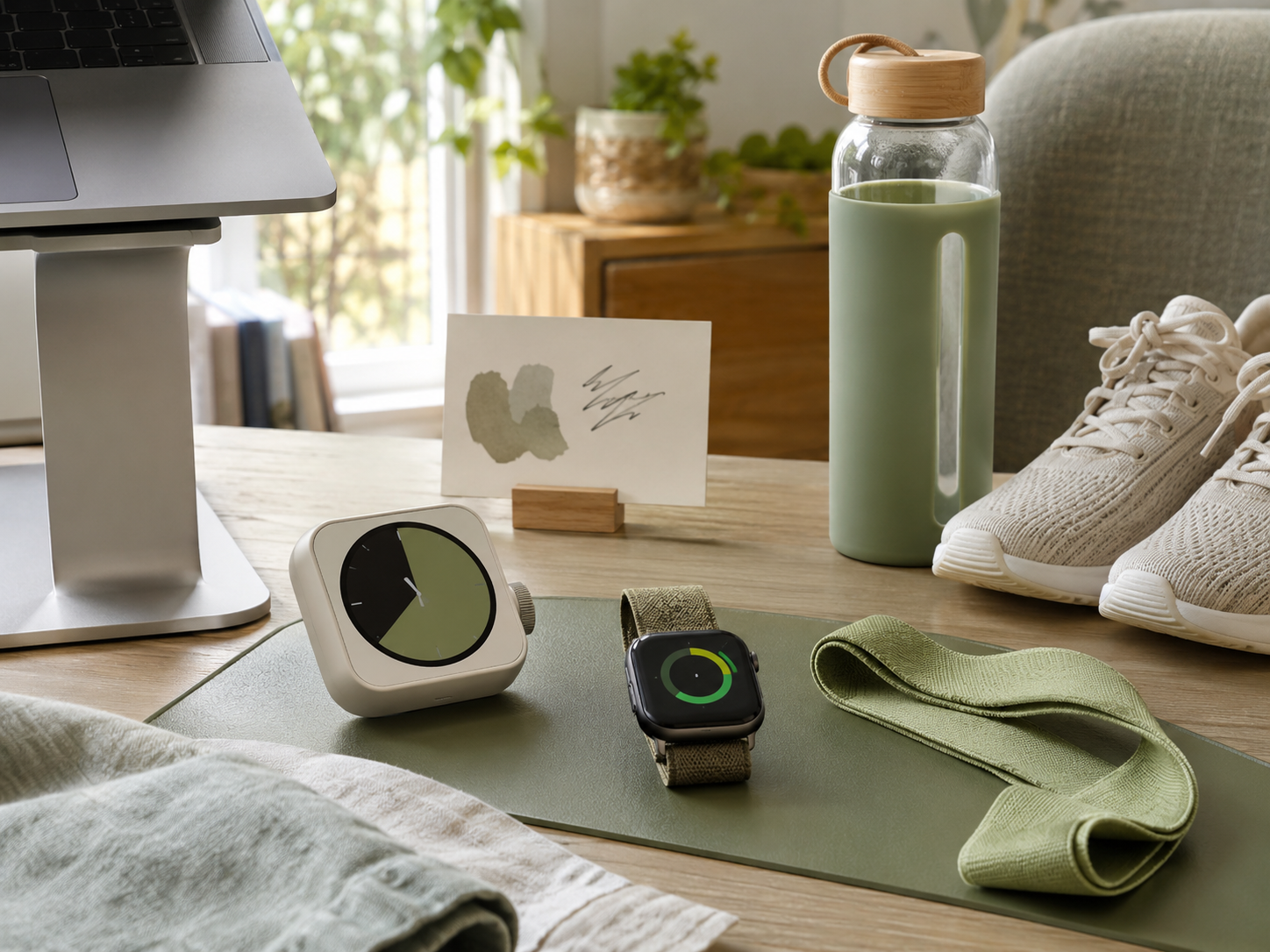
A cushion, chair, Apple Watch, Fitbit or movement app can help, but none of them can move for you. The product should support the habit, not replace it.
Using the sofa as a daily desk
If the reminder fires and you stay seated every time, the system is not failing. The routine needs to become easier, shorter or better linked to the workday.
A sofa can be fine for occasional reading or light admin. Daily sofa work is different. It often encourages twisting, slouching and awkward neck angles.
Turning breaks into scrolling
If you love working from softer spaces, keep it short. Longer writing, editing or client work usually deserves better support.
A break from work is less useful if it becomes another screen session. Switching from laptop to phone may rest the task, but it does not rest your eyes or body much.
Related Money Note
Stand up, look away, refill water or move for a minute. Let the break actually be a break.
You do not need expensive office furniture to reduce strain. A better screen height, separate keyboard, more comfortable mouse, supportive chair cushion or simple fitness tracker can make long work sessions less punishing and help your body stop negotiating with the laptop.
Working From Home Without Wrecking Your Health
Working From Home Without Wrecking Your Health is the broader pillar guide if sitting is only one part of the problem. It covers movement, posture, screens, food, hydration, boundaries and energy so remote work feels less physically and mentally expensive.
FAQ
Home Office Ergonomics Without Spending A Fortune is useful if your chair, screen height or desk setup is creating strain. It focuses on practical improvements that do not require a luxury office makeover. Small setup changes can make daily sitting much less uncomfortable.
How To Build A Healthier Work-From-Home Routine
Laptop Stands, Keyboards And Mouse Setup For Better Posture is the practical next step if your laptop position is pulling your neck and shoulders forward. A raised screen and separate input devices can make long writing, editing and admin sessions much easier on the body.
Home Office Ergonomics Without Spending A Fortune
Best Fitness Trackers For Desk Workers is useful if you want movement prompts, standing reminders or a simple way to notice how long you have been inactive. A wearable will not fix sitting by itself, but it can make the pattern harder to ignore.
What happens if you sit too long every day?
Sitting too long every day can contribute to stiffness, poor posture, heavy legs, low energy, back discomfort and reduced focus. The effect is usually gradual rather than dramatic. Breaking up long sitting blocks with short movement breaks can make the workday feel better.
Final Verdict
How long is too long to sit at a desk?
There is no perfect number that fits everyone, but long uninterrupted sitting blocks are the main issue. If hours pass without standing, stretching or walking, that is a sign to break the pattern. Aim to move regularly enough that sitting does not become one continuous workday position.
Can sitting too long cause back pain?
Sitting too long can contribute to back discomfort, especially if your chair, screen height or posture is poor. A low laptop, unsupported chair and long still periods can all add strain. Better setup and regular movement breaks often help reduce the pressure.
Can a seat cushion help if I sit all day?
A seat cushion can help if your chair is close to comfortable but needs better support or pressure relief. It will not fix everything by itself. Screen height, chair fit, foot position and movement breaks still matter.
Can Fitbit or Apple Watch help with sitting too long?
Fitbit, Apple Watch and similar fitness trackers can help by giving movement reminders and making inactive time more visible. They are most useful when you treat the prompts as cues to stand, stretch or walk briefly.
Are movement apps useful for desk workers?
Movement apps can be useful if they help you start small. Nike Training Club, Nike Run Club and similar apps can support short workouts, walking routines or mobility sessions. The best app is the one that helps you move without making the routine feel too big.
Is exercise enough if I sit all day?
Exercise helps, but it may not fully solve the effect of sitting for long uninterrupted blocks. A workout is useful, but your body still benefits from movement during the workday. Think of it as both: regular exercise when you can, plus small breaks that interrupt desk stillness.
Sitting too long quietly affects posture, energy, circulation, stiffness and focus. It usually does not feel dramatic at first, which is why it becomes so easy to ignore. Remote workers, creators, bloggers and desk workers often notice the effects only when the body starts feeling tight, tired or unusually heavy.
Final Verdict
You do not need a perfect fitness routine or a full ergonomic makeover to fix the pattern. Start by breaking up long sitting blocks, improving the obvious desk problem and adding small movement cues to the day. Seat cushions, better chairs, laptop stands, Fitbit, Apple Watch and apps like Nike Training Club can all help, but the point is simple: keep your body involved, even when your work happens through a screen.
You do not need a perfect fitness routine or a full ergonomic makeover to fix the pattern. Start by breaking up long sitting blocks, improving the obvious desk problem and adding small movement cues to the day. Seat cushions, better chairs, laptop stands, Fitbit, Apple Watch and apps like Nike Training Club can all help, but the point is simple: keep your body involved, even when your work happens through a screen.


