



Host a Virtual Halloween Party: Audio,…

20 Minimalist Halloween Nail Ideas for…

Can Free Affinity Help You Build…

12 Lower-Sugar Halloween Treat Swaps Worth…

Can Hostinger AI Builder Launch a…

A 5-Step Screen-Free Autumn Reading Ritual…

Plug-In Solar Panels UK: Are They…

15 Last-Minute Zoom Halloween Costumes for…

Meta One Explained: Is the Subscription…

10 Low-Fuss Dog Halloween Ideas: Comfort…

Plaud One Explained: Can AI Earbuds…

9 Gothic Dinner Table Ideas for…

Namecheap vs Dynadot

7 UK Ghost Tours and How…

Convertkit Vs Beehiiv

Do You Really Need a £420…

Bluehost vs Siteground

15 Gentle Spooky Autumn Books to…

Namecheap review

How to Remove Halloween Face Paint…
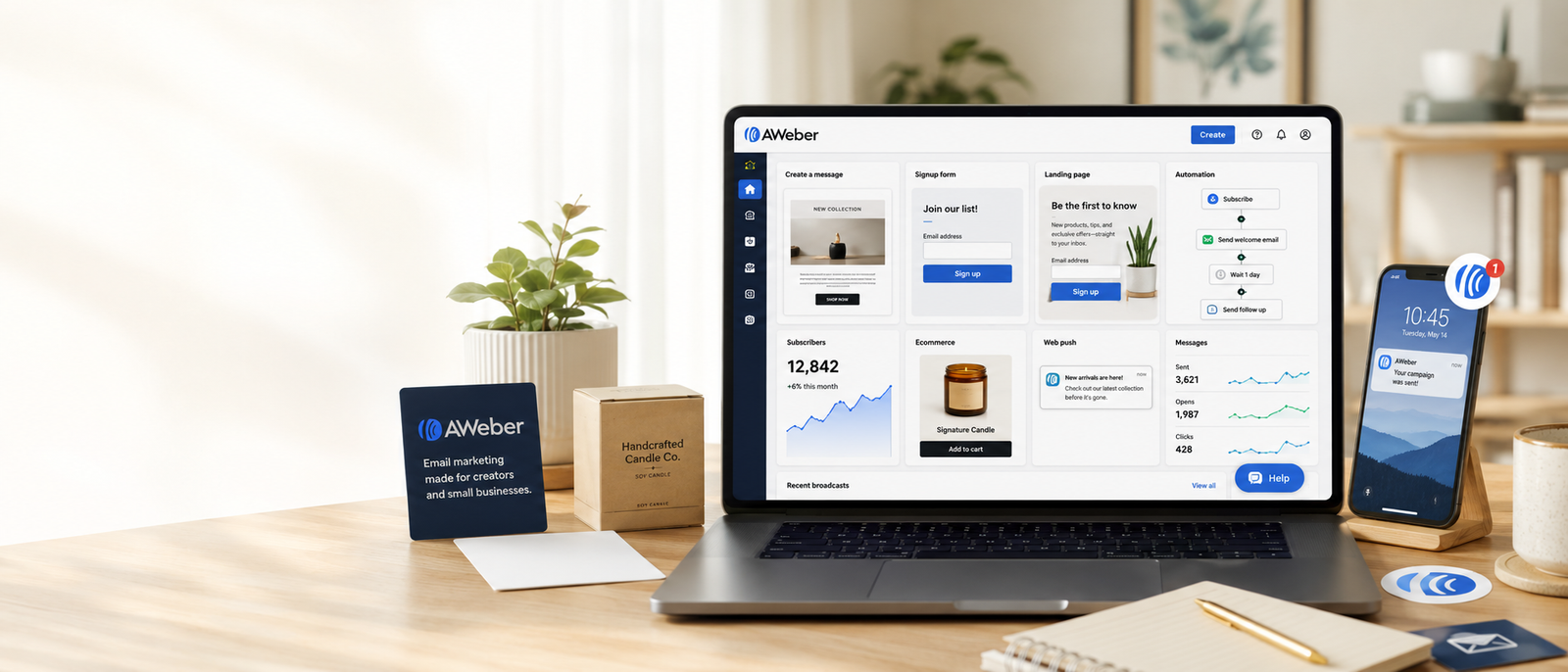
AWeber became popular because it made email marketing feel approachable for ordinary business owners. Bloggers, affiliate marketers, and small online businesses used it to send newsletters, grow email lists, and automate follow-up without dealing with confusing enterprise software. Unlike several competitors that expanded aggressively into advanced automation and complicated marketing systems, AWeber stayed relatively simple. That simplicity still appeals to creators wanting calmer workflows, although some businesses now prefer newer platforms offering deeper automation and more modern creator tools.
Quick Overview
Why Businesses Started Using AWeber
The Platform Felt Beginner-Friendly
Several creators originally chose AWeber because the dashboard felt easier understanding than heavier email marketing tools. Setting up newsletters, forms, and subscriber lists felt more approachable for beginners.
Bloggers And Affiliate Marketers Used It Constantly
AWeber became especially popular among bloggers and affiliate marketers needing welcome emails, lead magnet delivery, newsletters, and simple automation without technical overwhelm.
Reliability Built Long-Term Trust

One reason many users stayed with AWeber for years was consistency. Emails delivered reliably, automations stayed stable, and the platform rarely felt unpredictable during daily use.
Smaller Businesses Preferred Simpler Workflows
Several businesses mainly wanted:
Not massive marketing ecosystems requiring constant management.

Simpler Software Often Feels Easier Maintaining Long Term
This is something several creators realise only after trying larger marketing platforms.
A business may technically have access to stronger automation elsewhere while still preferring calmer workflows that feel easier managing every week. Not every creator needs advanced behavioural triggers, complicated customer journeys, or endless segmentation layers.
Several smaller businesses mainly need:
That operational simplicity still matters heavily.
Explore more insights: Email marketing automation explained
AWeber Features
Newsletter And Broadcast Campaigns
AWeber strongly supports newsletter publishing, scheduled campaigns, broadcast emails, and subscriber communication. For several smaller businesses, those core features still cover most daily operational needs comfortably.
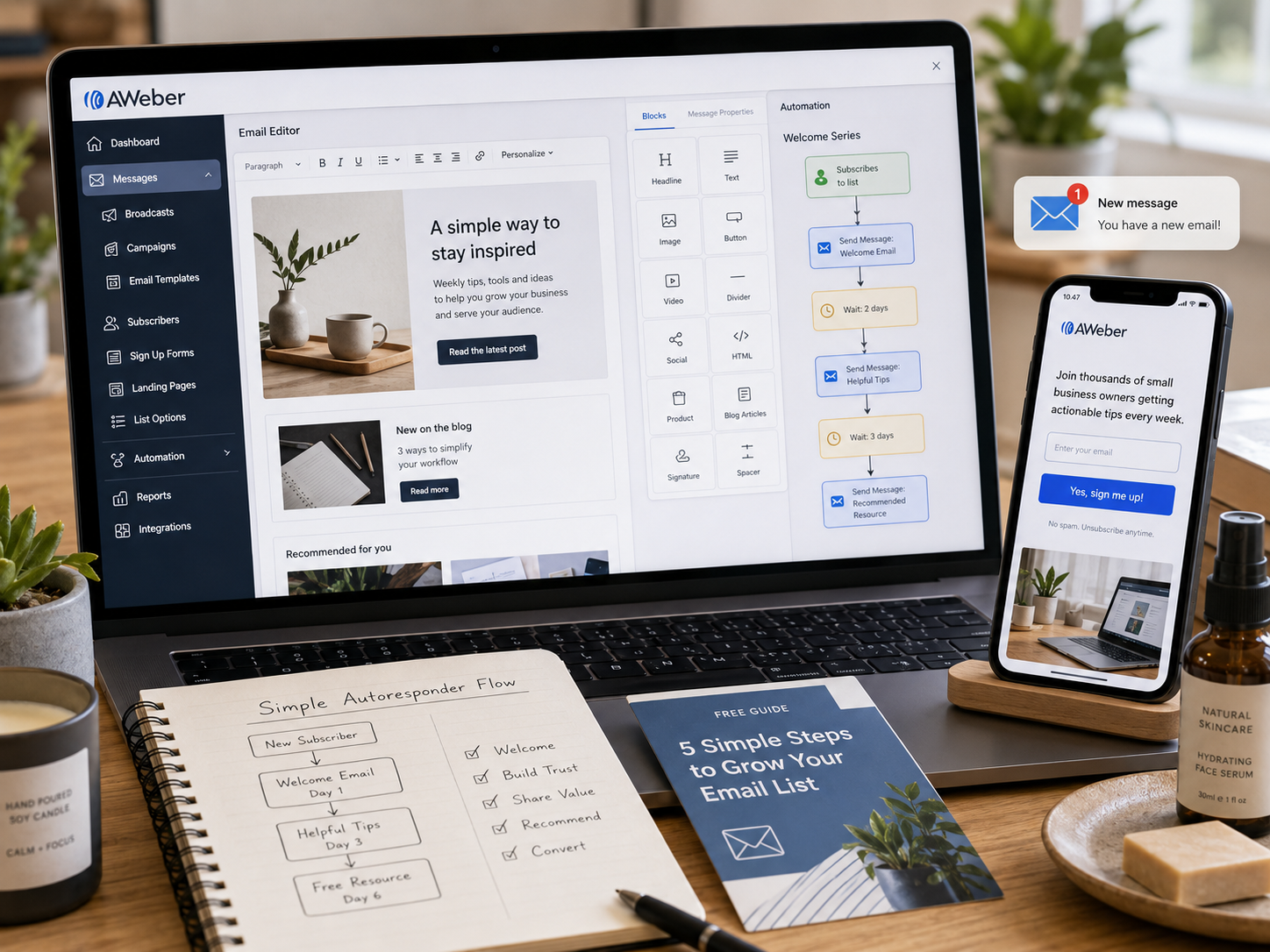
Automation Tools Simplify Follow-Up
The automation features help creators send:
Without manually emailing people every day.
Templates And Forms Reduce Setup Friction

Several beginners appreciate the built-in templates and signup forms because they make launching newsletters feel faster and less intimidating initially.
Landing Pages Keep Workflows Connected
Aweber review discussions become clearer once creators realise convenience matters operationally. Keeping forms, landing pages, newsletters, and subscriber management inside one platform reduces software clutter considerably.

Where AWeber Feels Weaker Today
The Platform Feels Older Than Newer Competitors

Several creators immediately notice the interface feels less modern compared to platforms like MailerLite or ConvertKit that prioritise cleaner creator-focused design.
Automation Flexibility Feels More Limited
Newer email marketing tools now offer:
AWeber stays much simpler by comparison.
Growing Businesses May Eventually Outgrow It

Businesses scaling into ecommerce campaigns, layered funnels, advanced automation, or complex segmentation may eventually feel restricted by AWeber’s lighter infrastructure.
Competitors Now Innovate Faster
Several creators eventually switch toward ConvertKit, MailerLite, or Systeme.io because those platforms evolved more aggressively around creator workflows and automation flexibility.

Several Businesses Mistake Complexity For Professional Growth
This happens constantly online.
A creator watches advanced marketing tutorials filled with giant automation maps and assumes successful businesses must look operationally complicated behind the scenes.
Then suddenly they spend more time managing dashboards than communicating with subscribers.
Several businesses actually improve faster once systems feel:
Complexity only helps when the business genuinely needs it.
Frequently read together: ConvertKit review
Which Businesses Fit AWeber Best?
Bloggers And Smaller Creators
AWeber still works well for bloggers wanting straightforward newsletter publishing without learning heavily layered marketing systems immediately.
Affiliate Marketing Businesses
Affiliate marketers frequently appreciate the easier onboarding, dependable delivery, and lower operational complexity supporting regular email campaigns.
Businesses Prioritising Stability

Several long-term users remain with AWeber simply because the platform feels reliable, familiar, and predictable during everyday publishing workflows.
Businesses Wanting Advanced Automation May Prefer Alternatives
Aweber review comparisons become easier once businesses decide whether they mainly want calm reliability or deeper automation infrastructure supporting larger marketing systems.
Pros And Cons Of AWeber
AWeber Pros
AWeber Cons
AWeber Workflow Pros
AWeber Workflow Cons
FAQs
Which businesses suit AWeber best?
AWeber usually suits bloggers, affiliate marketers, newsletter creators, and smaller businesses wanting simpler email marketing workflows.
Is AWeber beginner-friendly?
Yes. Several creators still appreciate how approachable the dashboard and onboarding process feel compared to heavier marketing platforms.
Why do some creators leave AWeber?
Several creators eventually want deeper automation, stronger segmentation, and more modern creator-focused workflows than AWeber currently provides.
Does AWeber still work well for newsletters?
Yes. AWeber still handles newsletters, onboarding emails, subscriber communication, and audience management reliably for smaller businesses.
Is AWeber outdated?
Not entirely. The platform still works reliably, although several competitors now feel more modern visually and operationally.
Final Verdict
AWeber still succeeds in an area several modern platforms quietly struggle with: simplicity. The platform remains approachable, dependable, and easier managing than several heavily layered marketing ecosystems overwhelming smaller creators daily.
The weakness is not reliability. The weakness is evolution.
Several competitors moved faster around automation, creator monetisation, workflow flexibility, and modern creator expectations. For bloggers and smaller newsletter businesses wanting calmer workflows, AWeber still works comfortably. For businesses needing advanced automation and deeper marketing infrastructure, stronger modern alternatives now exist.


