




Host a Virtual Halloween Party: Audio,…

The Calm Autumn Reset: 10 Small…

Can Free Affinity Help You Build…

Create an Autumn Wind-Down Routine That…

Can Hostinger AI Builder Launch a…

Heated Throw vs Heated Blanket vs…

Plug-In Solar Panels UK: Are They…

Autumn Sleep Reset: Light, Temperature and…

Meta One Explained: Is the Subscription…

The Best Ways to Dry Washing…

Plaud One Explained: Can AI Earbuds…

Dehumidifiers Explained: When Are They Actually…

Namecheap vs Dynadot

A Realistic Autumn Walking Routine for…

Convertkit Vs Beehiiv

Autumn Social Reset: Small Plans for…

Bluehost vs Siteground

Sekonda Smart Ring vs Oura Ring…

Namecheap review

Make Your Home Cosier Without Turning…
The clocks go back on 25 October 2026, and from that weekend your desk may be dark by teatime. This guide gives you a three-layer check (room light, task light and glare) and then matches lamp types to your situation.
It is not a ranked list. MyHotips has not tested any of the products it covers.
Quick Overview
- The clocks go back on 25 October 2026, so evening desk lighting matters from that weekend.
- Fix glare and screen position first, because moving a desk costs nothing.
- A task light covers the work area; room light covers everything around it.
- Choose a desk lamp or monitor light bar according to your desk space.
- LED bulbs are efficient, but lighting is only a small part of a household bill.
- Morning lamps are a separate topic and are not presented as treatment.
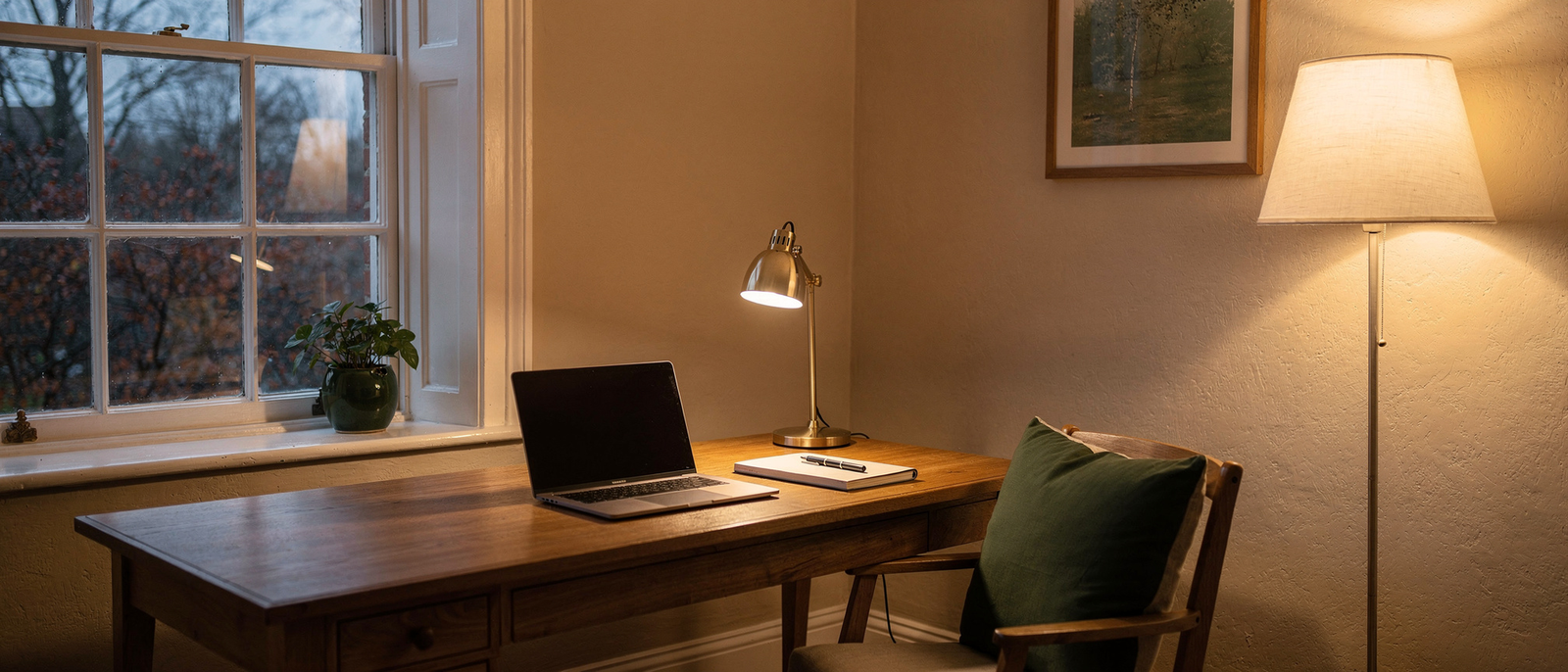
What changes when the clocks go back
Darker by teatime
The clocks go back at 2am on Sunday 25 October 2026, ending British Summer Time, according to Royal Museums Greenwich (checked on 18 October 2026). From that weekend, evenings get darker straight away.
A third-party sunrise and sunset calendar for London (Sunrise-Sunset.org) lists sunset at 5:48pm on 24 October and 4:46pm on 25 October, so think of it as around 4.45pm. Times vary by place, and other sources differ by a few minutes.
The desk that coped in September may now be the brightest thing in the room by late afternoon. That is when reflections, a dim work surface and a harsh screen start to show.
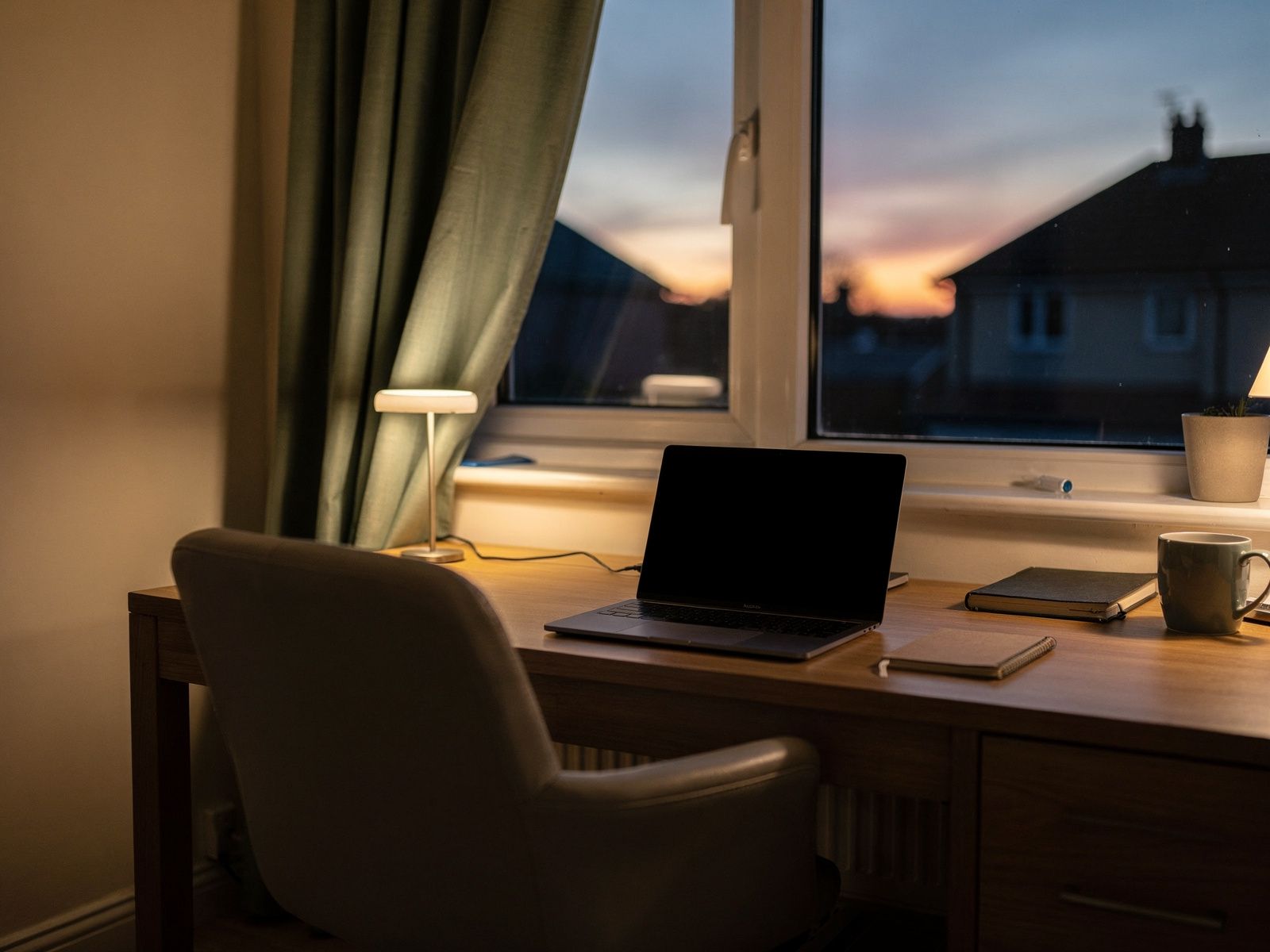
The three-layer set-up
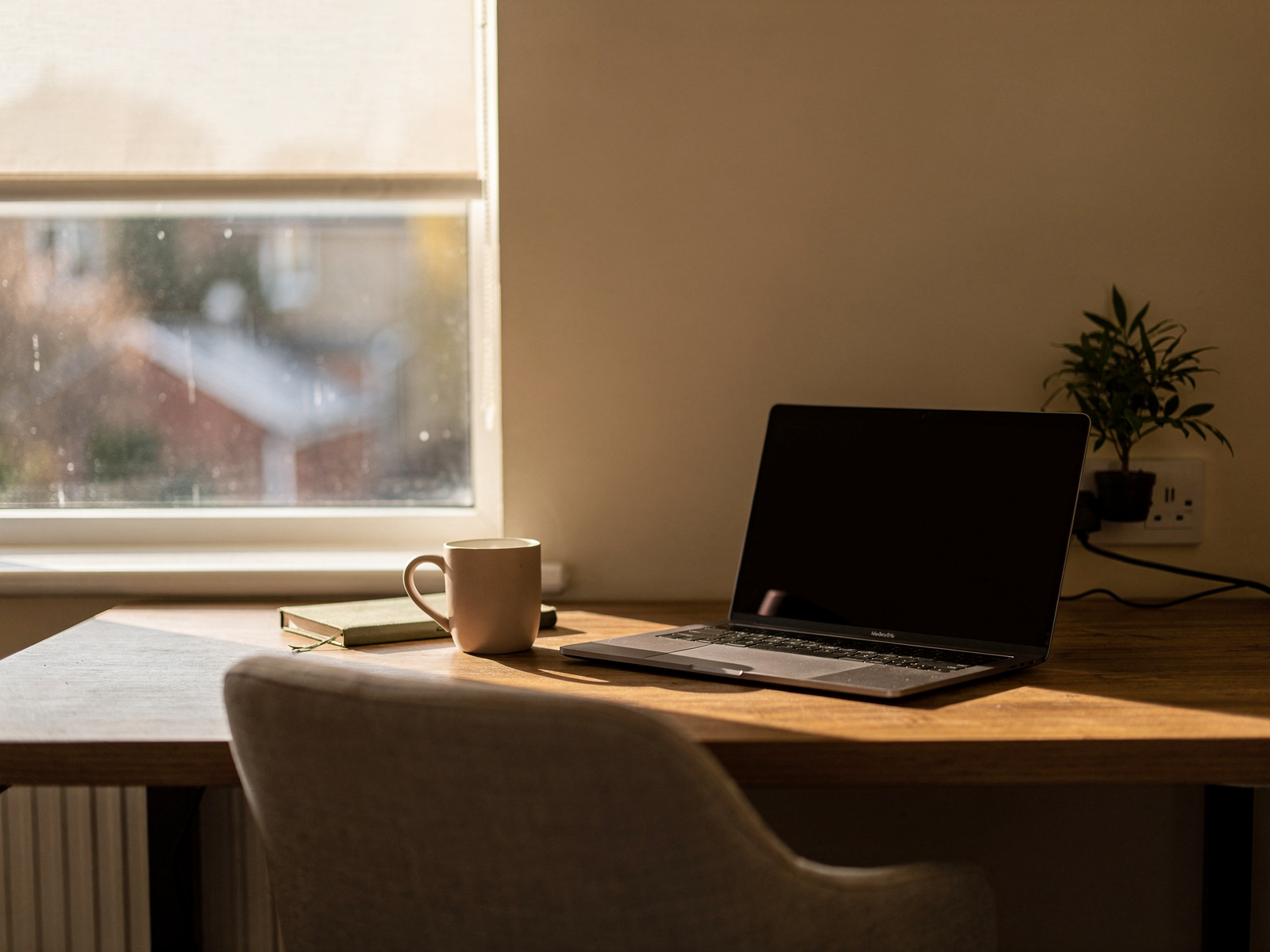
Room, task and glare
Think of evening desk lighting as three layers, each with its own job. Often a single layer is the weak one:
- Room light: the general light in the space, so the screen is not the only bright thing you look at.
- Task light: light aimed at the work itself, such as paper, a keyboard or a notebook.
- Glare control: where the desk and screen sit, so no bare window or bulb shows in the picture.
The one-minute rule
Check the free fixes first. If the screen reflects a window or bulb, or you are facing one, move the desk or tilt the screen before buying anything. If the work area is dim compared with the screen, add a task light. If the screen looks harsh against the room, raise the room light or lower the screen brightness. Stop buying once the problem is solved.
A word on eye strain
Moorfields Eye Hospital (NHS) lists poor lighting among the factors that contribute to digital eye strain. It says adjusting screen brightness and contrast to match the lighting around you can help reduce eye strain and fatigue.
No lamp prevents or cures eye strain or headaches. If problems persist, see an optician or your GP.
Cut glare and reflections first
Late-afternoon window glare
HSENI, the Northern Ireland health and safety regulator, says the desk and screen should be positioned to avoid glare or bright reflections. It says this is best done by not directly facing windows or bright lights.
When the sun is low in the late afternoon, check for window glare:
- Sit at your desk and see whether the window sits in your line of sight.
- Turn the desk or screen so the glass is to one side.
- Close the blind when the sun is low, then open it again later.
Evening reflections from bulbs
The HSE says training for people who use display screens should include adjusting screens and lighting to avoid reflections and glare. That is practical advice, not legal advice.
After dark, the problem moves indoors. Check it this way:
- Switch the screen off and look for bulbs or lamps reflected in the dark glass.
- Move the desk or tilt the screen until the reflections go.
- Shade any bare bulb, and close the blinds at dusk so the window does not mirror the room.
Task light: desk lamp or monitor light bar?
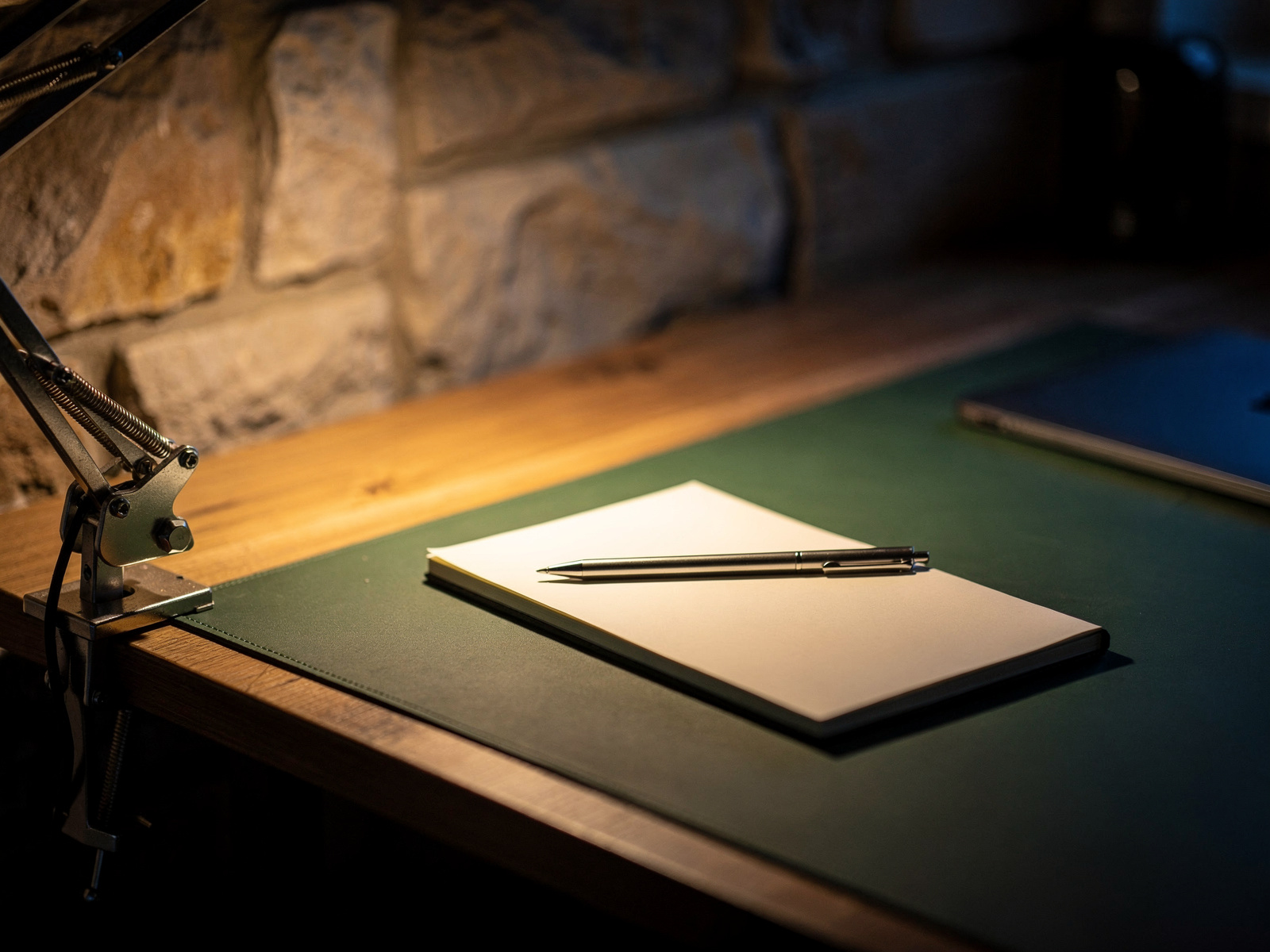
Adjustable desk lamp
A desk lamp suits a shared surface where you also read or write on paper. Its adjustable arm lets you aim light onto the page, and a clamp or small base keeps it from eating into your desk.
Its weakness is that it needs somewhere to stand. On a crowded desk it can end up in the way, or throw its own reflection onto the screen if it is aimed carelessly.
Monitor light bar
A monitor light bar sits on top of the screen and points down at the desk. It suits a tight desk, because it uses no surface space, and it works for people who mostly use a laptop or monitor with a keyboard.
It needs a screen it can sit on, and it is only useful if aimed at the desk, not at the glass.
What to look for in either
Specs such as brightness and colour range are manufacturer-stated and vary by model, so treat them as claims, not guarantees. These practical features matter more:
- An adjustable arm or head, so you can aim light at the work.
- Dimming, so the lamp can match the room as the evening goes on.
- A warm-to-cool setting, if you want one.
- A stable base or clamp that does not wobble when you type.
- Light directed at the work, not into your eyes or onto the screen.
A one-line rule for choosing
If your desk is tight and you mostly work on a screen, try a light bar. If you share the surface and read or write on paper, choose a desk lamp. Either way, aim the light at your work and keep it out of the screen.
Room light, LED bulbs and running costs
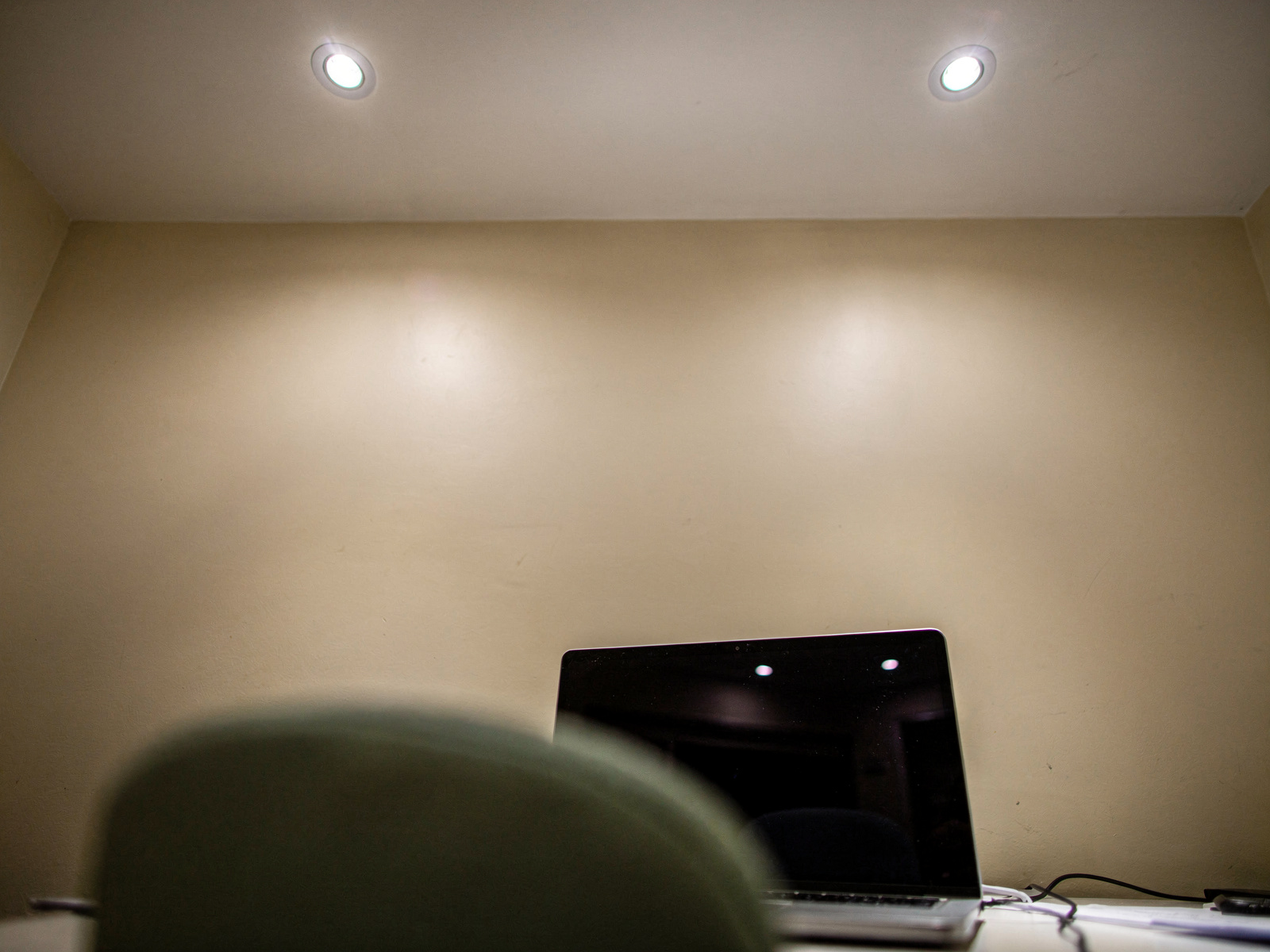
The room-light layer
Moorfields Eye Hospital (NHS) says adjusting screen brightness and contrast to match the lighting around you can help reduce eye strain and fatigue. As plain advice, room light also stops the screen being the only bright thing in view.
You do not need an elaborate set-up. A shaded ceiling light or a lamp elsewhere in the room is often enough, as long as no bare bulb shows in the screen.
What the Energy Saving Trust says
The Energy Saving Trust (checked on 18 October 2026) says LED bulbs are just as powerful as halogens but use 80% less electricity. It also says LEDs can last up to 20 times longer than halogens in many cases.
It says replacing the remaining halogen spotlights in a home with LEDs could save £45 a year in Great Britain (£55 in Northern Ireland). That is a whole-home figure, not a saving for one desk lamp, and figures can change.
Lighting is only a small part of the average UK household energy bill, so let comfort lead and treat cost as a tie-breaker.
Dimmable bulbs and a simple rule
Dimmable or schedulable bulbs are an option for the room layer, but check the bulb fits your fitting and works with your dimmer switch. Swap any halogens in the room you work in first. Do not replace working bulbs just for the saving.
A careful note on morning lamps
What the NHS says
The NHS describes seasonal affective disorder (SAD) as a type of depression that usually happens in the winter, and says it is thought to be linked to reduced daylight. That is context only.
If you are struggling with low mood, see the NHS page on SAD or speak to your GP. Nothing in this guide is treatment.
Why desk lighting is kept separate
NHS Inform says there is mixed evidence about how effective light therapy is for SAD, and that it may work better if used first thing in the morning. That is why ordinary desk lighting is kept separate here. The lamp types below are ordinary products, not treatment.
Sunrise-style bedside lamps
A sunrise-style lamp brightens gradually before your alarm, so the room is not pitch dark when you wake on a winter morning. Some people simply find that a more pleasant start. It is an ordinary bedside product.
Daylight-style desk lamps
A daylight-style desk lamp can light a dark workday morning at your desk. Brightness and colour specs are manufacturer-stated and vary by model.
Which lighting suits your situation
Small desk
Save surface space. A compact clamp lamp or a monitor light bar leaves the desk free for your laptop and notebook. Rule of thumb: if you cannot spare a base, choose something that clamps or sits on the screen.
Shared room
Use a directional task light so the rest of the room stays usable for others. Pick one with shading and a dimmer. Rule of thumb: light the work, not the whole room, and dim the lamp as the evening goes on.
Video calls
Light your face from the front or from one side, and avoid light from behind. Keep the screen free of reflections and keep any bare bulb out of the picture. Rule of thumb: if you can see a bulb in the screen, move it or shade it.
Tight budget
Fix placement first, because it is free. Then buy a basic LED task lamp. Upgrade bulbs where halogens remain. Rule of thumb: stop buying when the weakest layer stops being a problem.
FAQs
When do the clocks go back and how early does it get dark?
The clocks go back at 2am on Sunday 25 October 2026. A sunrise and sunset calendar for London lists sunset at 4:46pm that day, so around 4.45pm. Times vary by place and by source, so check your own area.
Do I need a special lamp if I work at a screen in the evening?
Not necessarily. Fix glare and screen position first, then add a task light only if your work area is dim compared with the screen. A basic adjustable LED lamp can do the job.
Can a lamp help with winter low mood?
The NHS says SAD is thought to be linked to reduced daylight, and NHS Inform notes mixed evidence for light therapy. This guide makes no claim that any lamp helps. If you are struggling, see the NHS page or speak to your GP.
Do the HSE rules apply to me at home?
HSE says its display screen rules can apply to people who work at home long term or split their time between home and workplace. The page is written for employers, so if you are employed, you can ask your employer. This is not legal advice.
Are LED bulbs really cheaper to run?
The Energy Saving Trust (checked on 18 October 2026) says LEDs use 80% less electricity than halogens. It also says lighting is only a small part of the average UK household energy bill, so bulbs should not drive your choice alone.
Will blue light glasses fix tired eyes?
Moorfields Eye Hospital (NHS) lists poor lighting among the factors that contribute to digital eye strain, and says matching screen brightness and contrast to the room lighting can help reduce it. If problems persist, see an optician or your GP.
Verdict
Fix glare and placement first, add a task light second and upgrade bulbs third, stopping once the problem is solved. The biggest reservation is that MyHotips has not tested any lamp, and we found no UK regulator brightness figures, so this is a method, not a ranking. Persistent eye or mood concerns belong with an optician, your GP or the NHS. Next step: do the reflection check this weekend, before the clocks change.


