



Host a Virtual Halloween Party: Audio,…

20 Minimalist Halloween Nail Ideas for…

Can Free Affinity Help You Build…

12 Lower-Sugar Halloween Treat Swaps Worth…

Can Hostinger AI Builder Launch a…

A 5-Step Screen-Free Autumn Reading Ritual…

Plug-In Solar Panels UK: Are They…

15 Last-Minute Zoom Halloween Costumes for…

Meta One Explained: Is the Subscription…

10 Low-Fuss Dog Halloween Ideas: Comfort…

Plaud One Explained: Can AI Earbuds…

9 Gothic Dinner Table Ideas for…

Namecheap vs Dynadot

7 UK Ghost Tours and How…

Convertkit Vs Beehiiv

Do You Really Need a £420…

Bluehost vs Siteground

15 Gentle Spooky Autumn Books to…

Namecheap review

How to Remove Halloween Face Paint…
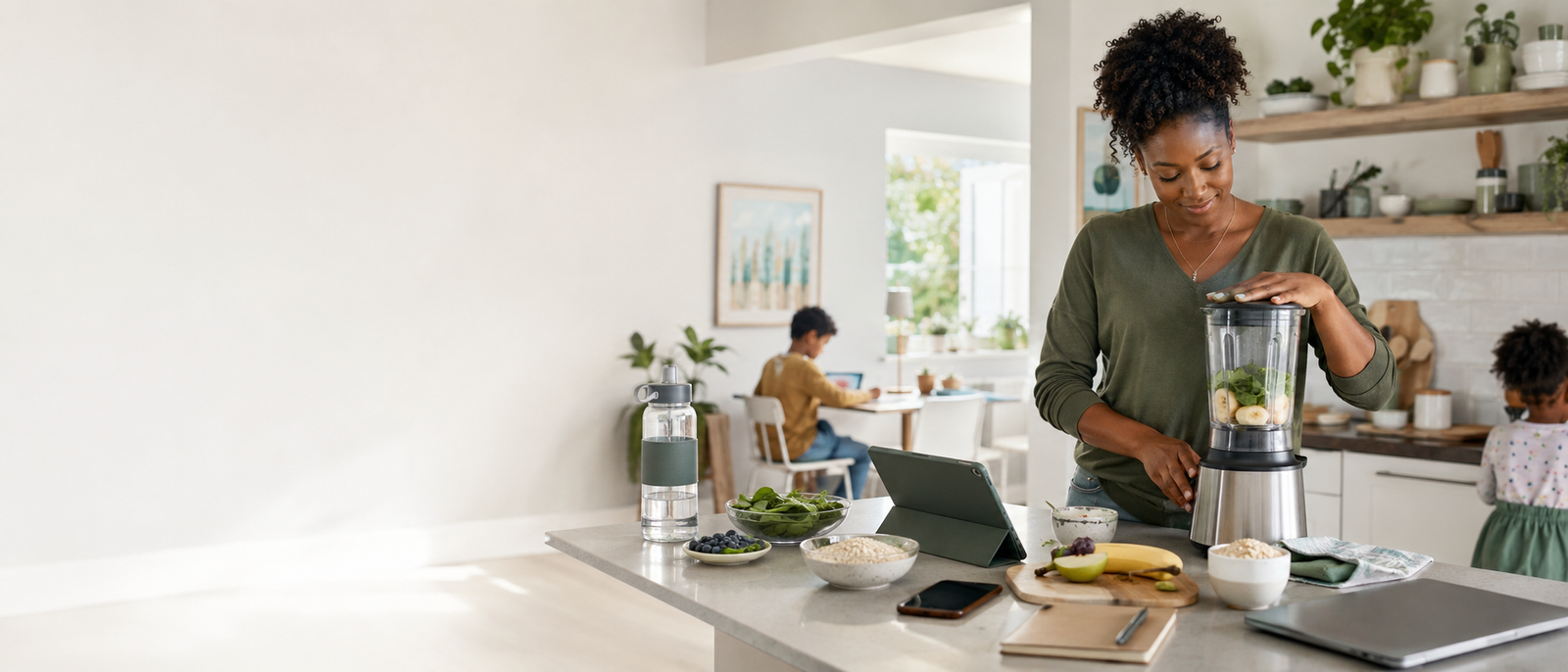
Quick smoothie recipes are useful when food needs to fit around a real work-from-home day: rushed mornings, light lunches, snack breaks and the moments when proper meal planning has slipped. The goal is not a perfect-looking breakfast or a complicated wellness routine. It is something fast, filling and simple enough to make again before lunch turns into coffee, calls and whatever you can find in the cupboard.
Berry and banana is easiest
Protein smoothies feel more filling
Green smoothies should taste friendly
Coffee smoothies suit rushed mornings
Hydrating fruit works for afternoons
Prep ingredients before chaos arrives
The blender must be easy to clean
Most Relevant Audience
This guide is for remote workers, home workers, freelancers, bloggers, creators, side hustlers, parents, carers and small business owners who want simple smoothie ideas that fit busy days.
It is especially useful if breakfast often becomes coffee, lunch becomes “I’ll sort it after this call,” and your afternoon snack strategy has started relying too heavily on whatever is in the cupboard and emotionally available.
Choose Your Smoothie By Workday Problem
If breakfast is rushed
Choose a berry and banana smoothie. Frozen berries, banana, yoghurt or milk and a spoon of oats can become breakfast quickly.
It works because the flavour is familiar and forgiving. You do not need rare powders, ceremonial seeds or a freezer arranged like a wellness influencer’s mood board. You need something you can blend before the day starts asking for things.
If lunch keeps disappearing
Choose a protein smoothie. Add Greek yoghurt, milk, protein powder, peanut butter, oats, tofu or seeds so the smoothie feels more like food.
This is the best route when you need something filling between calls. A fruit-only smoothie may taste cheerful but leave you hungry suspiciously soon, like lunch submitted a very weak application.
If you want more fruit and veg
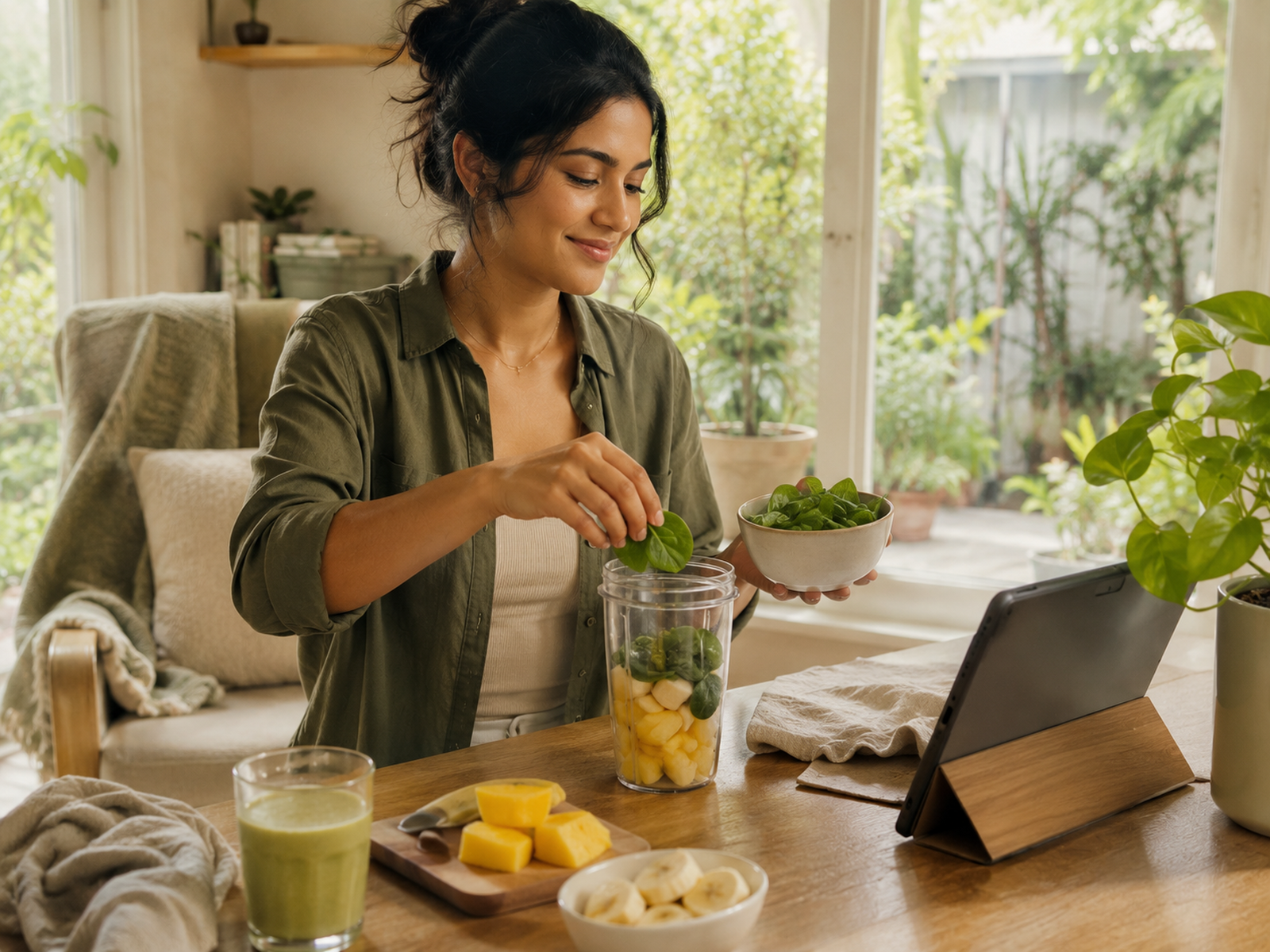
Choose a gentle green smoothie. Start with banana, mango, apple or pineapple, then add a handful of spinach.
The word “gentle” matters. Green smoothies should not taste like you blended the garden during a difficult moment. Keep the fruit friendly, use a smooth liquid base and avoid throwing in every green thing you own.
If mornings need caffeine and food
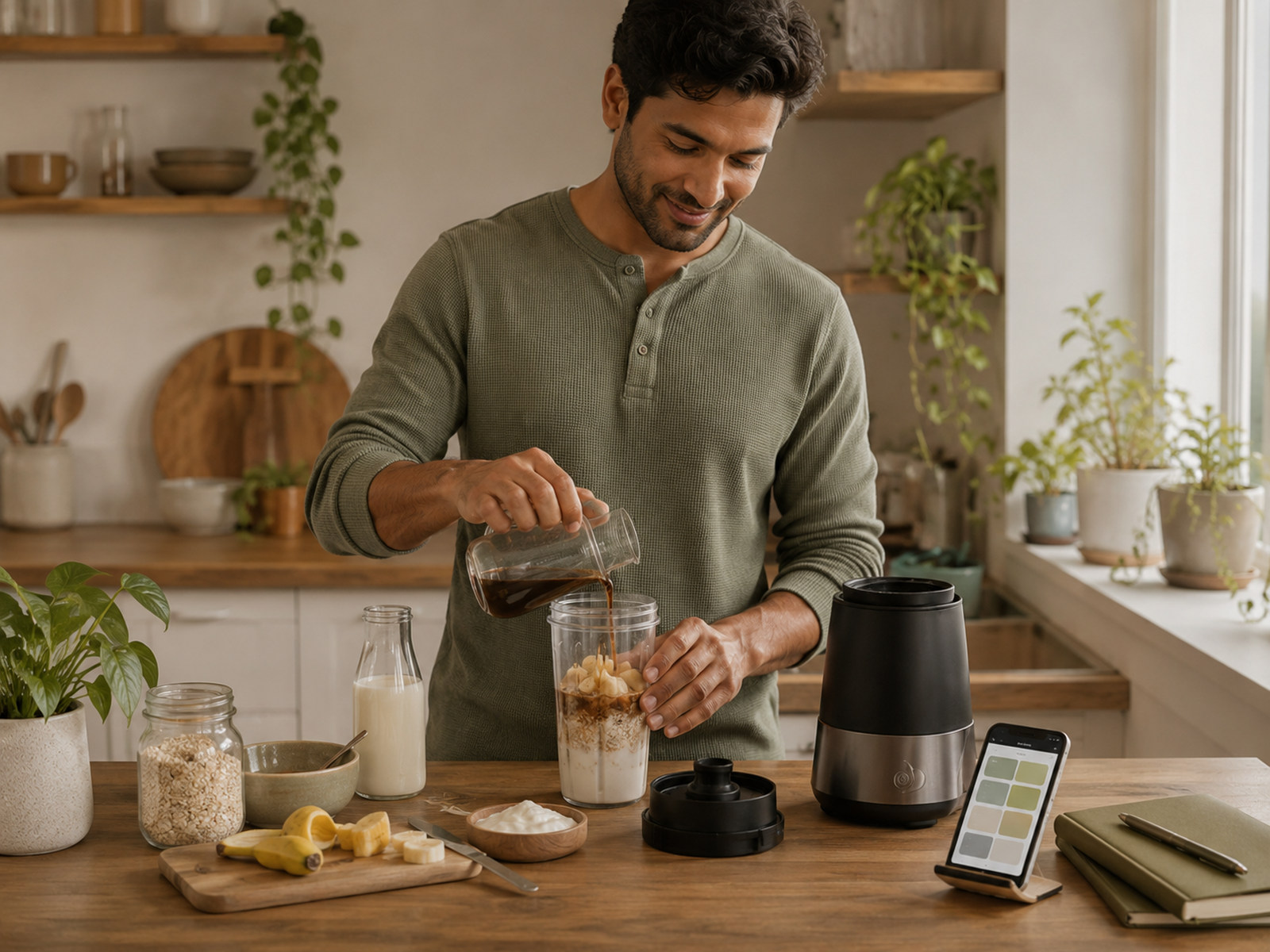
Choose a coffee smoothie. Blend cooled coffee or cold brew with banana, milk, oats and yoghurt or protein powder.
This works when breakfast and caffeine need to stop pretending they are separate departments. Keep it balanced so it does not become a sweet iced coffee wearing a false moustache as nutrition.
If the afternoon feels heavy
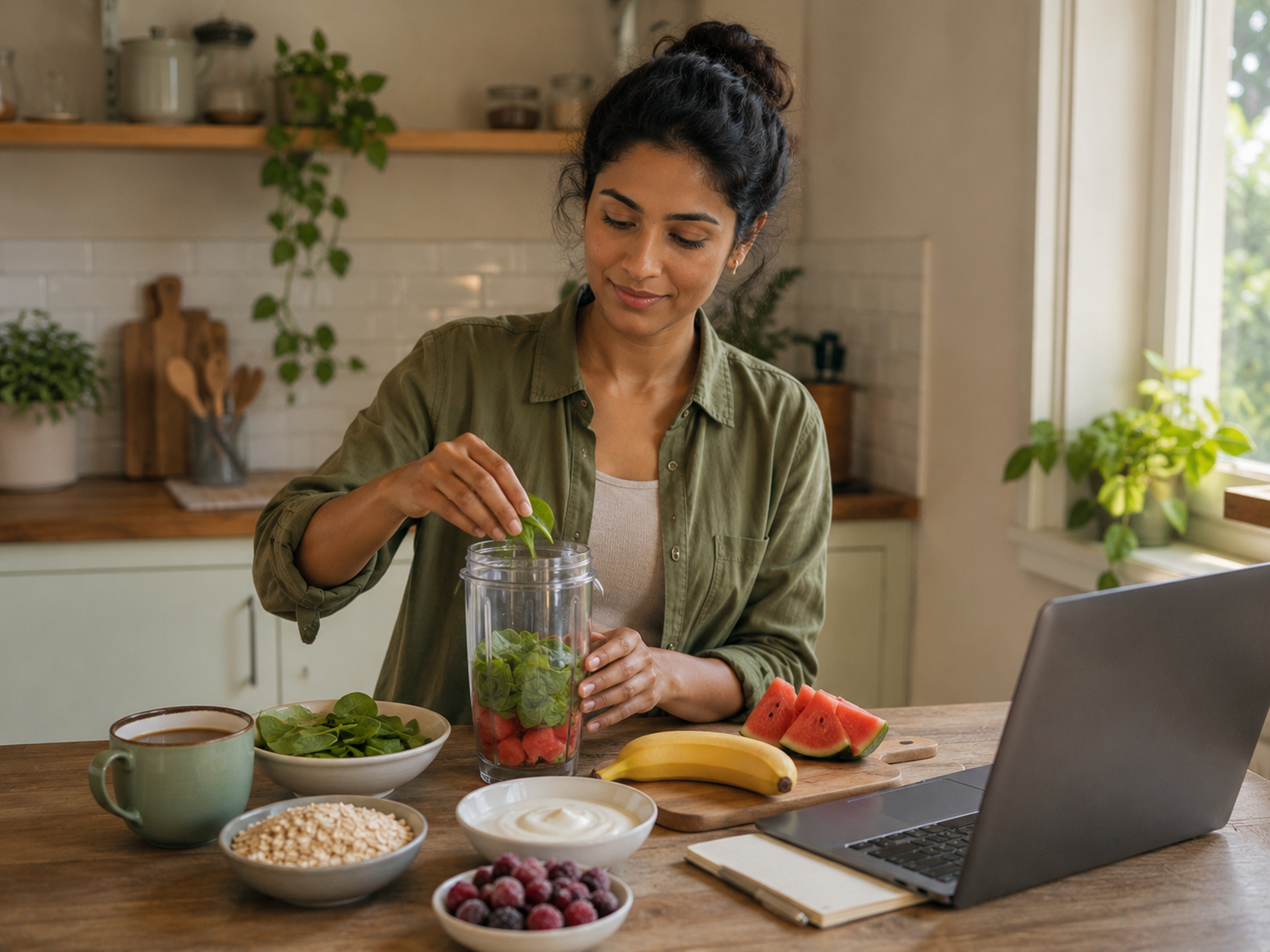
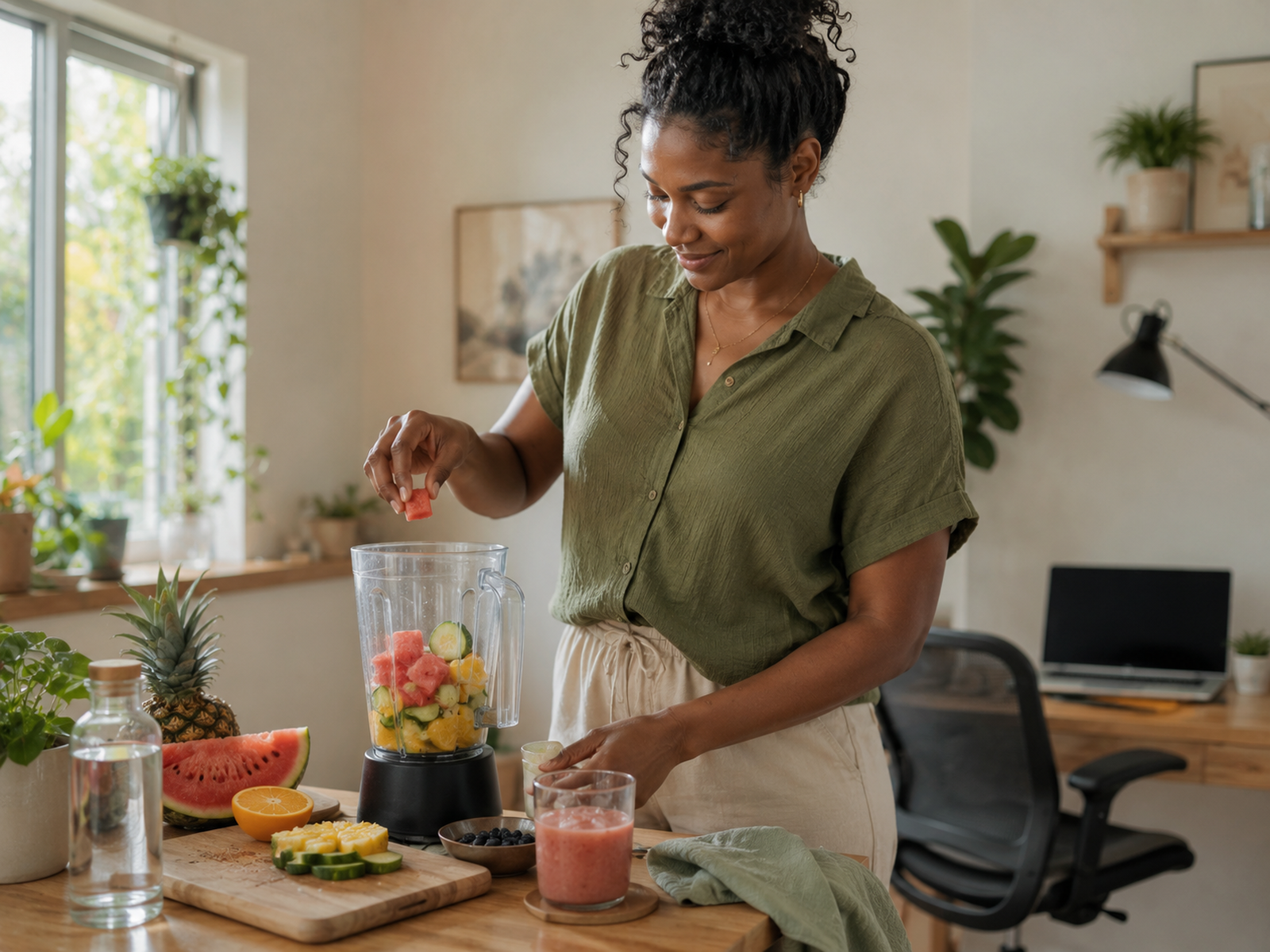
Choose a hydrating fruit smoothie. Blend watermelon, orange, berries, cucumber, pineapple or mango with water, coconut water or a light yoghurt base.
This is useful when you want something refreshing rather than heavy. It can work as a snack break, screen reset or gentle way to stop the afternoon becoming biscuits with a side of regret.
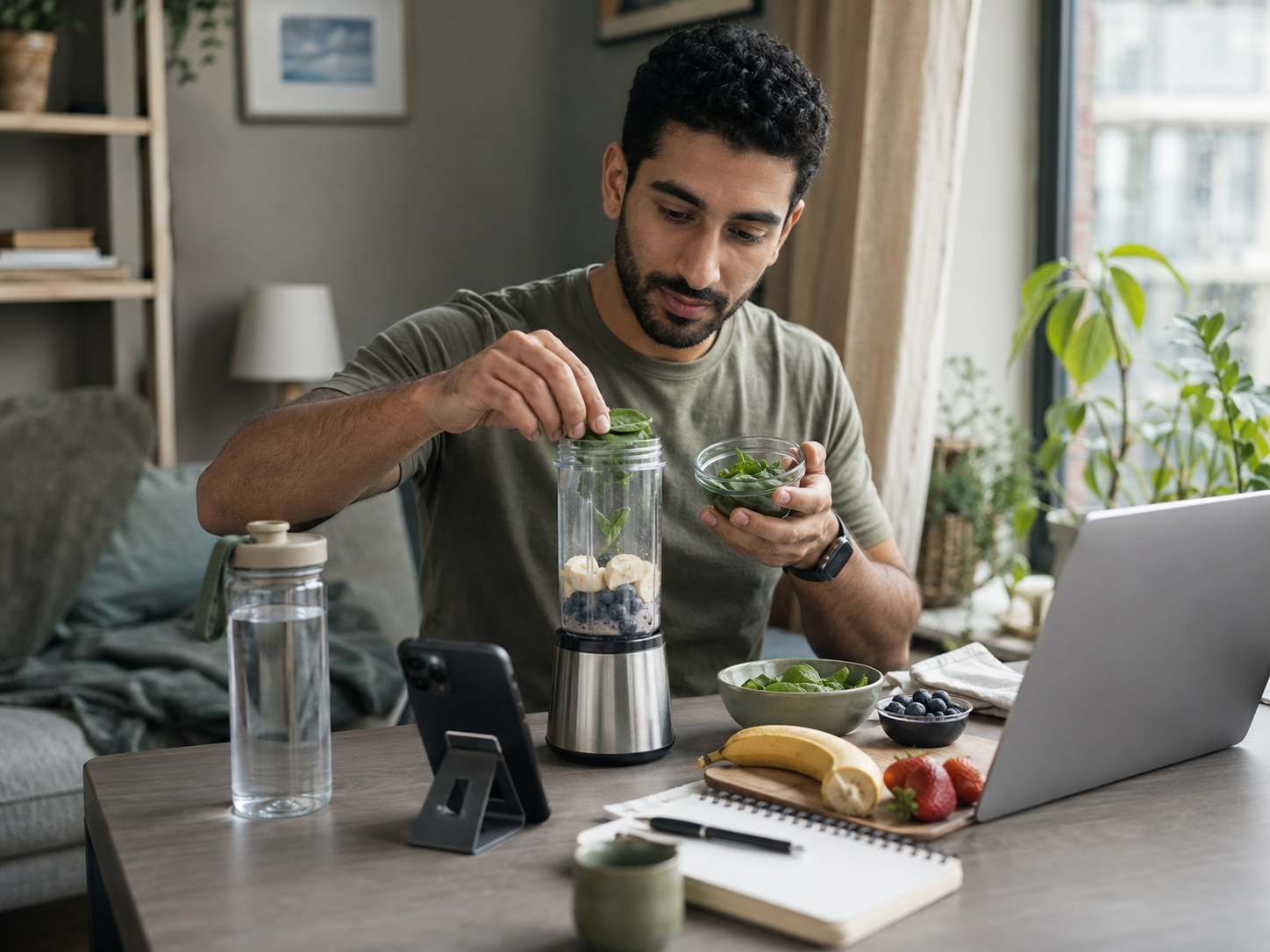
A smoothie is not automatically useful because it is cold, colourful and in a glass. The best quick smoothies balance fruit, protein, fibre, liquid and taste. If it does not fill you, you will snack immediately after. If it tastes terrible, it will become one sad experiment and a sticky blender.
Quick Smoothie Recipes To Try
Berry And Banana Smoothie
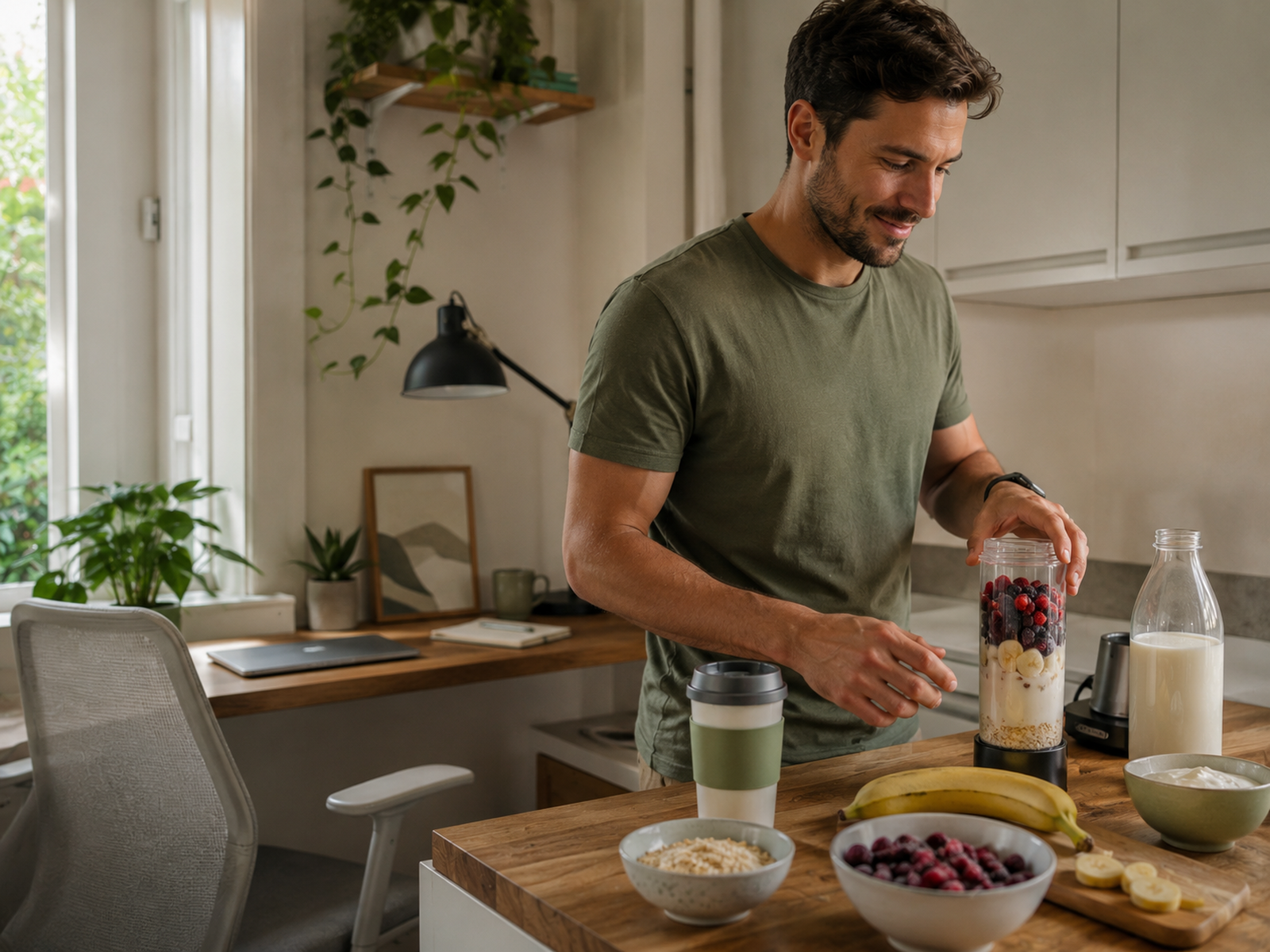
Blend one banana, a handful of frozen berries, Greek yoghurt or milk, one spoon of oats and enough liquid to loosen it.
This is the safest starter smoothie because it is sweet, familiar and hard to ruin. Add peanut butter for more richness or chia seeds for extra texture. Frozen berries help avoid the “fresh fruit went furry again” household disappointment.
Protein Smoothie For Busy Schedules
Blend milk, Greek yoghurt or a plant-based alternative with banana, oats and your preferred protein source. Peanut butter, protein powder, silken tofu or seeds can all work depending on your taste and dietary needs.
This is best when the smoothie needs to carry you through a work block. Keep it simple. If the ingredient list looks like a supplement cupboard had a meeting, remove something.
Gentle Green Smoothie
Blend banana, mango or pineapple with a handful of spinach, yoghurt or milk and a little water if needed.
Spinach is a good beginner green because it blends softly and does not usually dominate the flavour. Start small. You can always add more later, once trust has been established between you and the leaf department.
Coffee Breakfast Smoothie
Blend cooled coffee or cold brew with banana, milk, oats and yoghurt or protein powder. Add cinnamon if you want it to feel slightly more deliberate.
This works well for busy mornings when you want breakfast but your brain has already sprinted toward the inbox. Avoid adding too much sugar or syrup, or it becomes dessert with a productivity badge.
Hydrating Fruit Smoothie
Blend watermelon, pineapple, orange, berries or cucumber with water, coconut water or a light yoghurt base.
This is best for lighter afternoon resets, especially when you want something fresh but not overly filling. Add mint, lemon or lime if you like brighter flavours. Keep it easy enough that making it does not require a motivational speech.
What Makes A Smoothie Filling?
Protein helps it last longer
Protein is what turns a smoothie from “nice drink” into something more useful. Greek yoghurt, milk, protein powder, tofu, nut butter and seeds can all help.
You do not need to overdo it. The goal is steady fullness, not a blender that sounds like it is processing gym equipment.
Fibre slows things down
Fibre helps a smoothie feel more satisfying. Oats, berries, banana, seeds and some vegetables can all add texture and staying power.
A smoothie made only from juice and fruit may be quick, but it can leave you hungry soon after. Add something with more substance if it is standing in for breakfast or lunch.
Fat can make it more satisfying
A small amount of nut butter, avocado, seeds or yoghurt can make a smoothie feel richer and more satisfying.
Use enough to help, not so much that the smoothie becomes a spoonable project. This is workday food, not a nut-butter excavation.
Taste decides whether you repeat it
A technically healthy smoothie that tastes miserable will not become a habit. Choose combinations you actually enjoy.
Start with familiar flavours, then adjust slowly. More spinach, less banana, extra oats, different milk, thicker texture. Smoothies work best when they become boringly repeatable in the nicest way.

Simple Smoothie Setup Worth Having
Countertop blender
A compact blender such as a Nutribullet-style setup makes sense if you want fast smoothies at home without a complicated appliance routine.
Look for enough power for frozen fruit, easy cup cleaning, sensible capacity and parts you will actually wash. The best blender is not the fanciest one. It is the one that does not become sink furniture.
Portable blender
A portable blender can help if you work between rooms, commute occasionally, travel, or want single-serve smoothies without a full blender setup.
Check battery life, cup size, blade strength, cleaning, leak resistance and whether it can handle frozen fruit. Some portable blenders are better for soft fruit than ambitious frozen mango boulders.
Freezer prep containers
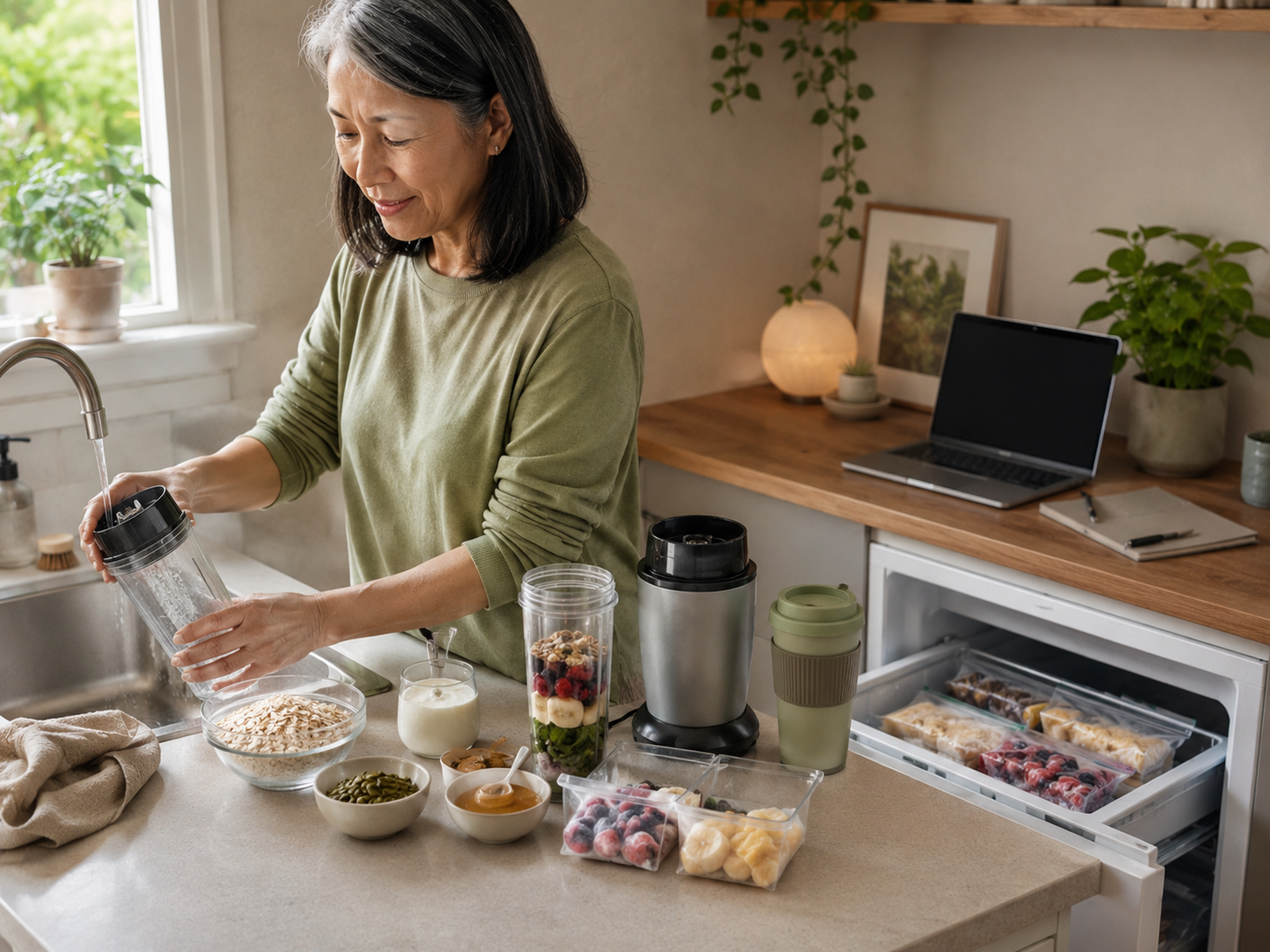
Small containers or bags can make smoothies easier by keeping fruit portions ready. Add berries, banana slices, mango, spinach or pineapple ahead of time.
This helps busy mornings because the decision is mostly done. You still have to blend it, but at least breakfast is no longer asking for project management.
Reliable base ingredients
Keep a few repeat ingredients in: frozen fruit, yoghurt or milk, oats, seeds, nut butter and one protein option you actually like.
Do not build a cupboard of powders you resent. Smoothie supplies should make food easier, not turn your kitchen into a hopeful wellness stockroom.
Quick cleaning habit
A smoothie habit survives better when cleaning is easy. Rinse the cup straight away, blend warm water with a drop of washing-up liquid, then wash properly.
Nothing ruins tomorrow’s good intentions like yesterday’s blender waiting in the sink like a small domestic accusation.
Best Smoothies For Real Workday Moments
Best for busy mornings
Berry and banana or coffee smoothies are the easiest morning options. They are quick, familiar and forgiving when your first meeting is close enough to feel rude.
Keep frozen fruit, oats and yoghurt ready so the decision is almost made for you. Morning food should not require a strategy document.
Best for light lunches
Protein smoothies work best for light lunches because they can be more filling. Add oats, yoghurt, protein powder, nut butter or seeds so the smoothie has some staying power.
This is useful when you cannot face cooking but still need more than caffeine and optimism.
Best for snack breaks
Hydrating fruit smoothies are good for snack breaks because they feel fresh without being too heavy. They can help when you want something cold, sweet and simple.
Use water, coconut water or a light yoghurt base. Keep portions sensible if it is a snack rather than a meal.
Best for screen-heavy afternoons
A lighter fruit smoothie or gentle green smoothie can make a useful screen break. It gives you a reason to stand up, look away and do something physical for a few minutes.
That tiny interruption matters. Sometimes the smoothie helps partly because it gets you out of the chair before your body starts submitting complaints.
Best for people who skip lunch
A protein smoothie is the better choice if lunch keeps vanishing. Make it more substantial with oats, yoghurt, nut butter or protein powder.
If you often skip meals, smoothies can help, but they should not become a way to avoid proper food forever. Your body is not a side project.
Common Smoothie Mistakes
Making every smoothie fruit-only
Fruit-only smoothies can taste great, but they may not keep you full for long. If the smoothie is replacing breakfast or lunch, add protein, fibre or fat.
A better smoothie supports your next few hours. It does not just look cheerful while hunger waits outside the door.
Adding too many ingredients
Smoothies become harder to repeat when every recipe needs twelve items, three powders and one ingredient you bought once during a hopeful Tuesday.
Keep a few base formulas. Berry and banana. Protein and oats. Mango and spinach. Coffee and banana. Repeatable beats impressive.
Letting the blender stay dirty
Nothing kills a smoothie habit faster than yesterday’s blender sitting in the sink like a small domestic accusation.
Rinse straight away if you can. Add water and a drop of washing-up liquid, blend briefly, then wash properly. Future-you will be annoyingly grateful.
Treating smoothies as the whole routine
Smoothies can support busy days, but they do not replace regular meals, sleep, breaks, hydration and proper food planning.
Use them as a helpful option, not a complete wellness system. A smoothie can make lunch easier. It cannot run your life, answer emails or remember where the good container lid went.
FAQ
What are the best quick smoothie recipes?
The best quick smoothie recipes are simple combinations you can repeat. Try berry and banana, protein banana oat, gentle green mango spinach, coffee breakfast smoothie or hydrating watermelon fruit smoothie.
Choose based on the moment: breakfast, lunch, snack, energy or lighter afternoon reset.
Are smoothies good for busy mornings?
Smoothies can be good for busy mornings because they are fast, flexible and easy to drink while the day gets moving.
They work best when they include something filling, such as yoghurt, milk, oats, nut butter, seeds or protein powder. Fruit and juice alone may not last long.
How do I make a smoothie more filling?
Add protein, fibre or healthy fats. Good options include Greek yoghurt, milk, protein powder, oats, chia seeds, flaxseed, nut butter, avocado or silken tofu.
Start small and adjust texture. A filling smoothie should still be drinkable, not require architectural support.
Can smoothies replace breakfast?
A smoothie can replace breakfast if it is balanced enough to keep you full. Include fruit, protein, fibre and a liquid base.
If you are hungry soon after, add more substance next time. A smoothie should feel like breakfast, not a drinkable apology.
What can I add to smoothies for protein?
You can add Greek yoghurt, milk, protein powder, nut butter, seeds, silken tofu or higher-protein plant-based alternatives.
Choose what suits your dietary needs and taste. The best protein option is the one you will actually use regularly.
Are green smoothies actually worth making?
Green smoothies can be worth making if they help you add fruit and vegetables in a way you enjoy. Start with mild greens like spinach and pair them with sweet fruit.
They are not worth it if they taste awful and make you avoid the blender. Gentle is better than heroic.
Final Verdict
Quick smoothie recipes work best when they are simple, filling and repeatable. Berry and banana smoothies suit beginners, protein smoothies help busy schedules, green smoothies can add a gentle fruit-and-veg boost, coffee smoothies help chaotic mornings, and hydrating fruit smoothies make lighter afternoon resets easier.
A good smoothie does not need to be impressive. It needs to fit your real day, taste good and be easy enough to make again before lunch becomes coffee with regret.


