



Plug-In Solar Panels UK: Are They…

Lifesum Review UK: Is Premium Worth…

Meta One Explained: Is the Subscription…

Garmin CIRQA Review: Is Screen-Free Tracking…

Plaud One Explained: Can AI Earbuds…

Garden Gatherings – Summer Is The…

Namecheap vs Dynadot

Portable Outdoor Speakers for Garden Offices

Convertkit Vs Beehiiv

Outdoor WiFi Extenders For Garden Offices

Bluehost vs Siteground

Portable Pools For Home Workers This…

Namecheap review

Best Polarised Sunglasses

Cloudways Vs WP Engine

Best Office Desks For Small Spaces

Dropshipping Explained

Cooling A Garden Office During Summer

Email Subject Lines That Improve Open…

Best Portable Power Stations For Garden…
Kajabi is powerful, but it is not the platform every new creator needs first. It is built for knowledge businesses that want courses, coaching, payments, email, landing pages and community in one place. That can be brilliant if you are ready for a serious all-in-one setup. It can also be too much if you only need a simple course page or a cheap way to test your first digital product.
Best for serious knowledge businesses.
Strong for courses and coaching.
Includes marketing and payments.
Useful for communities and digital products.
More premium than beginner tools.
Not ideal for testing tiny ideas.
Compare cheaper alternatives carefully.

Kajabi features that matter
Kajabi Course Builder
Kajabi Course Builder is one of the main reasons to use the platform. It lets creators package lessons, modules, resources and paid learning experiences inside one system. This suits coaches, consultants, educators and creators who want a polished course environment without stitching together separate tools for hosting, sales pages, payments and student access.
Kajabi Website Builder
Kajabi Website Builder helps creators build a public-facing home for their knowledge business. It is useful if you want your site, offers, pages and products connected inside the same platform. It will not suit everyone who wants full website control, but it can reduce tool clutter when your website mainly exists to sell courses, coaching or digital products.
Kajabi Email Marketing
Kajabi Email Marketing lets you communicate with leads, customers and students without needing a separate email platform straight away. It can support product launches, nurture sequences, announcements and follow-up. It is not mainly for people who only want cheap newsletters.
It works best when email is tied to a bigger course, coaching or product business.
Kajabi Funnels And Landing Pages
Kajabi funnels and landing pages help move people from interest to purchase. That might mean a free resource, webinar-style campaign, product launch, coaching offer or course sales page. The value is having the page, email and checkout closer together. Less copying between tools. Fewer tabs pretending to be a “streamlined system”.
Kajabi Communities
Kajabi Communities can help creators build a more connected learning or membership experience. This matters if your business depends on engagement, support, discussion, accountability or ongoing access. A community can make a course feel less like a lonely folder of lessons and more like a real customer experience.
Kajabi Coaching And Digital Products
Kajabi supports coaching, digital products and knowledge-based offers beyond traditional courses. That makes it useful for consultants, educators and creators who sell expertise in different formats. The platform makes most sense when your offers need a proper home, not just a checkout link and a hopeful follow-up email.
Kajabi Payments And Checkout
Kajabi payments and checkout help creators sell directly through the platform. This keeps product delivery, payment flow and customer access closer together. For serious creators, that can reduce friction. For very early beginners, it may be more checkout power than needed if the real goal is simply testing whether anyone wants the product.

What Kajabi is really good at
Kajabi is strongest when your knowledge business has moved beyond “I just need somewhere to put a course.” It works best when courses, coaching, email marketing, payments, landing pages and community all need to support one joined-up customer experience. That is the appeal: fewer separate tools, fewer broken handovers and less tech-stack spaghetti pretending to be strategy.
Kajabi pricing and value
Kajabi is a premium platform, and that is one of the biggest things to understand before choosing it. Its current pricing page lists annual pricing from $71 per month for Starter, billed annually, with monthly pricing available at a higher rate. That puts it above many beginner-friendly tools.
The real question is not whether Kajabi is cheap. It is not trying to be. The better question is whether one platform can replace enough separate tools to justify the cost.
If Kajabi replaces course hosting, landing pages, email marketing, checkout, community and client experience tools, the value can make sense.
If you are testing your first idea, Kajabi may feel heavy. A cheaper platform may be better while you prove demand. Paying premium pricing before your offer has traction can feel like renting a theatre before learning whether anyone wants the show.
Day-to-day performance
Kajabi performs best when your business has a clear offer and needs a polished system around it. A course creator can build lessons, create a sales path, collect payments, email students and support the customer experience from one place. That joined-up workflow is where Kajabi feels useful.
The platform can feel less appealing if your needs are narrow. If you only want email marketing, MailerLite Email Marketing may be more sensible. If you mainly need funnels on a lower budget, Systeme.io Funnel & Email Platform is easier to justify. If you want a calmer creator storefront, Podia may feel lighter.
Kajabi is not really about being the simplest option. It is about giving serious knowledge businesses a premium operating base. That distinction matters. Simple tools help you start. Kajabi helps more when the business is already becoming a system.
Who Kajabi is best for
Most Relevant Audience
Kajabi is best for serious course creators, coaches, consultants, educators and knowledge-business owners who want courses, coaching, marketing, payments and client experience in one place. It is less suited to beginners who only need a simple landing page, basic email list or low-cost way to test an idea.
Course Creators
Course creators are one of Kajabi’s strongest audiences. The platform gives them a place to build, sell and deliver paid learning experiences. It is especially useful when the course needs marketing pages, email follow-up, checkout and student access connected. If the course is central to the business, Kajabi makes more sense.
Coaches And Consultants
Coaches and consultants can use Kajabi for programmes, client resources, digital products and education-led offers. It suits people who want to package expertise into a more structured experience. If your offer is high-value and relationship-led, Kajabi can help make the delivery feel more polished and less patched together.
Membership And Community Builders
Kajabi can work well for creators building memberships or communities around expertise. The community element matters when customers need support, discussion or ongoing engagement. It is not just about selling access. It is about keeping people involved after they buy, which is where many digital products quietly fade into the login graveyard.
Early-Stage Creators
Early-stage creators should be careful. Kajabi can be excellent, but it may be more than you need if you are still validating your first offer. If you do not yet know what people will buy, a cheaper or simpler platform may reduce risk. Start with the tool that fits the stage, not the one that looks most serious.
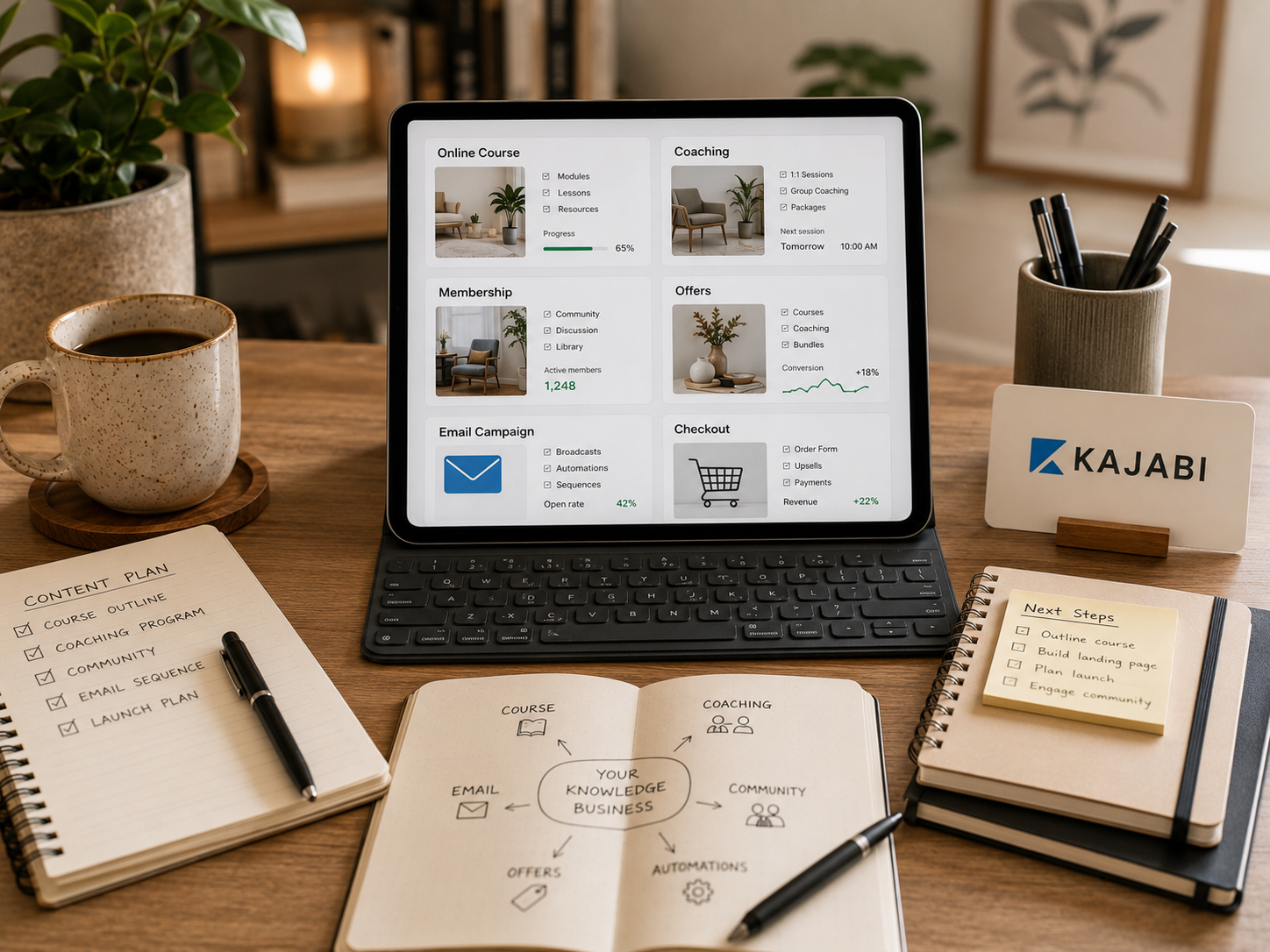
The readiness test
Kajabi makes the most sense when your offer is clear, your audience exists and your business needs a more complete delivery system. If you are still testing ideas, start simpler. The platform is powerful, but power only helps when there is already something real to build around.
Pros and cons
Pros
Strong all-in-one knowledge business platform.
Good for courses and coaching.
Includes marketing and payments.
Supports landing pages and funnels.
Community features add customer experience depth.
Reduces the need for multiple tools.
Good fit for serious creators.
Cons
Expensive for early beginners.
Too much for simple product testing.
Not the cheapest email option.
May feel heavy for small offers.
Less budget-friendly than Systeme.io.
Simpler creators may prefer Podia.
Premium value depends on real usage.
Kajabi alternatives to compare

Related wellness note
All-in-one platforms can reduce tool clutter, but only if they actually simplify your day. If the dashboard becomes another place you constantly check, tweak and worry about, Digital Calm for Home Business Owners is the natural wellness follow-up. A business platform should support your work, not become a second business that only sells settings.
FAQ
What is Kajabi and how does it work?
Kajabi is an all-in-one platform for knowledge businesses. It helps creators build and sell courses, coaching, digital products, communities and related offers. It also includes tools for websites, landing pages, email marketing, payments and customer experience, so more of the business can run from one system.
How much does Kajabi cost?
Kajabi’s current pricing page lists annual pricing from $71 per month for Starter, billed annually. Monthly pricing is available at a higher rate. Kajabi is best treated as a premium platform, so compare the cost against what it may replace in your current tool stack.
Is Kajabi worth it for course creators?
Kajabi can be worth it for serious course creators who need course delivery, marketing, payments, landing pages, email and community features together. It is harder to justify if you only need a simple course page or are still testing whether your first digital product will sell.
Is Kajabi better than Systeme.io?
Kajabi is better if you want a premium knowledge-business platform with strong course, coaching, community and customer experience features. Systeme.io Funnel & Email Platform is better if you want a cheaper all-in-one setup for funnels, courses, email and affiliate marketing. The better choice depends on budget and business stage.
Is Kajabi better than Podia?
Kajabi is better for creators who want a more premium all-in-one platform with stronger marketing and customer experience depth. Podia is better if you want a simpler creator platform for selling courses, downloads, memberships and coaching. Podia feels lighter; Kajabi feels more complete.
What are the best Kajabi alternatives?
The best Kajabi alternatives depend on what you need. Systeme.io Funnel & Email Platform is best for cheaper all-in-one funnels and courses. Podia is best for simpler creator selling. ClickFunnels Funnel Builder suits sales funnels. GetResponse Email Marketing suits campaigns. MailerLite Email Marketing suits affordable email and landing pages.
Final verdict
Kajabi is best for serious course creators, coaches, consultants, educators and knowledge-business owners who want a premium all-in-one platform for courses, coaching, marketing, payments, landing pages and community. It can reduce tool clutter when your business is ready for a joined-up system.
Skip Kajabi if you only need a cheap way to test your first product, a basic email list or a simple course page. Choose Systeme.io Funnel & Email Platform for a cheaper all-in-one route, Podia for simpler creator selling, ClickFunnels Funnel Builder for sales funnels, and MailerLite Email Marketing for affordable email marketing.






